This page ranks 71 passive center channel speakers using anechoic Spinorama measurements. In a home theater the center carries nearly all of the dialogue, so it matters more than any other speaker in the room. A good one keeps voices clear and natural, and keeps the same tonal balance for every seat on the sofa, not just the one in the middle.
Most center channels lie on their side with the woofers to the left and right of the tweeter. That layout lets two woofers cancel each other at certain frequencies when you sit off to the side, so horizontal coverage is worth checking alongside the on-axis numbers. Three-way designs with a dedicated midrange, and coaxial drivers like KEF’s Uni-Q, avoid most of that problem. Center channels are sold individually, so prices here are for one speaker. Most of them roll off well above 50Hz and are meant to be paired with a subwoofer.
For our top picks by budget, room size and placement, see the best center channel speakers.
| Select to compare | |||||||
|---|---|---|---|---|---|---|---|
| 1 | Perlisten S7c | $8,795 each | 92dB | 4 ohms nominal, 3.2 o… | 61.7Hz | 73.9 lbs | |
| 2 | Ascend Acoustics ELX Ribbon Horizon | $3,098 each | 88dB anechoic, 91dB i… | 8 ohms nominal | 51.3Hz | 52 lbs | |
| 3 | Perlisten R5c | $2,995 each | 88.6dB | 4 ohms nominal, 3.4 o… | 78.1Hz | 33.1 lbs | |
| 4 | KEF Reference 4 Meta | $8,999.99 each | 88dB | 4 ohms nominal, 3.2 o… | 46.5Hz | 99.6 lbs | |
| 5 | KEF Reference 2 Meta | $5,999.99 each | 86dB | 4 ohms nominal, 3.2 o… | 76.9Hz | 50.3 lbs | |
| 6 | Infinity Reference RC252 | $299 each | 87dB | 6 ohms nominal | 87.2Hz | 16.5 lbs | |
| 7 | KEF R2 Meta | $1,599.99 each | 87dB | 4 ohms nominal, 3.2 o… | 78.1Hz | 34 lbs | |
| 8 | JBL Performance PC600 | $499.99 each | 91dB | 8 ohms nominal | 89.1Hz | 33.1 lbs | |
| 9 | Revel Ultima2 Voice2 | $8,000 each | 89dB | 6 ohms nominal, 3.6 o… | 63.9Hz | 62.2 lbs | |
| 10 | Ascend Acoustics Sierra Horizon V2 | $1,998 each | 88dB anechoic, 91dB i… | 8 ohms nominal | - | 41.9 lbs | |
| 11 | KEF R6 Meta | $2,199.99 each | 88dB | 4 ohms nominal, 3.2 o… | 79.9Hz | 39.2 lbs | |
| 12 | Infinity Reference RC263 | $499.95 each | 89dB | 6 ohms nominal | 79.1Hz | 29.3 lbs | |
| 13 | Ascend Acoustics Sierra Horizon | $1,490 each | - | - | 63.0Hz | - | |
| 14 | Polk Audio XT35 | $279.00 each | 87dB | 8 ohms nominal | 85.0Hz | 14.1 lbs | |
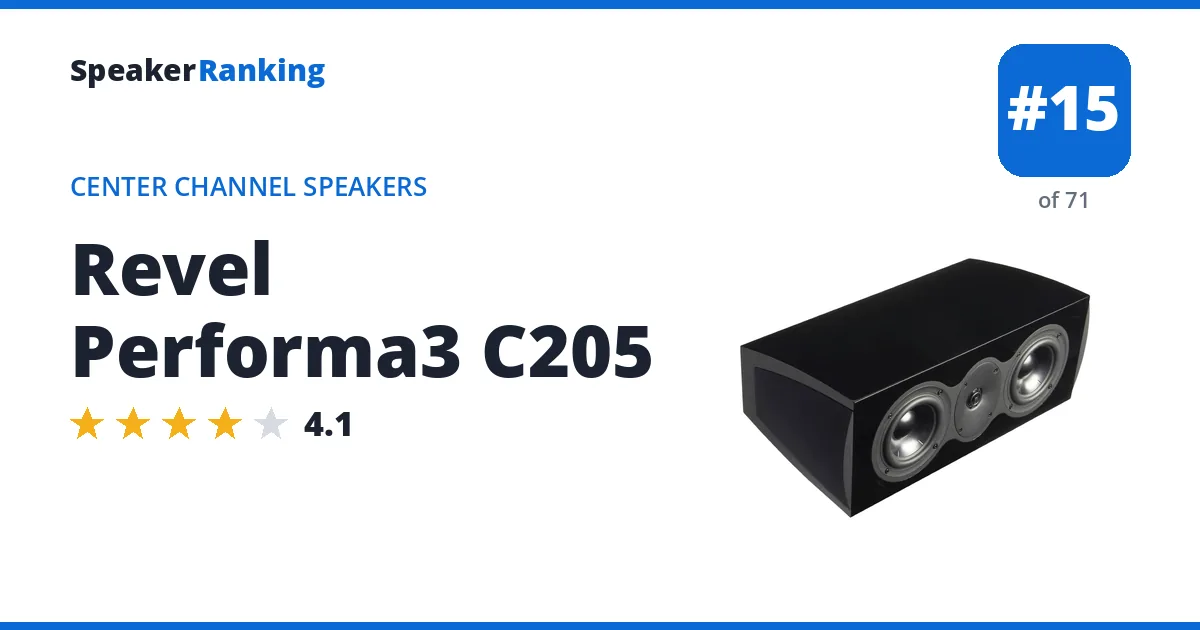
| 15 | Revel Performa3 C205 | $1,000 each | 89dB | 8 ohms nominal | 92.2Hz | 26.5 lbs | |
| 16 | Revel Concerta2 C25 | $750 each | 89dB | 6 ohms nominal | 117.2Hz | 20.1 lbs | |
| 17 | Pioneer SP-C22 | $75 each | 88dB | 6 ohms nominal | 74.7Hz | 13.4 lbs | |
| 18 | Monolith THX-365C | $499.99 each | 89.5dB | 4 ohms nominal | 82.0Hz | 26.5 lbs | |
| 19 | KEF Reference 4c | $7,500 each | 90dB | 8 ohms nominal, 3.2 o… | 67.4Hz | 99.6 lbs | |
| 20 | Revel C426Be | $5,444.95 each | 90dB | 8 ohms nominal | 66.7Hz | 71 lbs | |
| 21 | Revel Performa3 C208 | $2,000 each | 89dB | 8 ohms nominal | 71.8Hz | 51.6 lbs | |
| 22 | Revel Performa C52 | $2,500 each | 90dB | 6 ohms nominal, 3.1 o… | 76.9Hz | 40.8 lbs | |
| 23 | JBL Synthesis SAM3HA | $1,500 each | 89dB | 6 ohms nominal | 64.8Hz | 30.9 lbs | |
| 24 | KEF R2c | $1,299.99 each | 87dB | 8 ohms nominal | 79.8Hz | 37.3 lbs | |
| 25 | Revel Performa4 C245 | $1,499.95 each | 86dB | 6 ohms nominal | - | 27.1 lbs | |
| 26 | KEF Q6 Meta | $849.99 each | 86dB | 4 ohms nominal, 3.2 o… | 60.7Hz | 31.1 lbs | |
| 27 | Klipsch RP-500C II | $329.99 each | 94dB | 8 ohms nominal | 82.0Hz | 18.3 lbs | |
| 28 | KEF Q250c | $599.99 each | 87dB | 8 ohms nominal, 3.4 o… | 90.8Hz | 16.5 lbs | |
| 29 | Klipsch RP-504C II | $499.99 each | 96dB | 8 ohms nominal | 71.8Hz | 36.4 lbs | |
| 30 | JBL HDI-4500 | $2,119.95 each | 90dB | 4 ohms nominal | 67.4Hz | - | |
| 31 | Klipsch RP-404C II | $399.99 each | 94dB | 8 ohms nominal | 124.5Hz | 20.4 lbs | |
| 32 | Polk Audio Reserve R350 | $519.00 each | 87dB | 3.9 ohms minimum, com… | 85.0Hz | 19.8 lbs | |
| 33 | Monolith Encore C6 | $249.99 each | 87.7dB | 4 ohms nominal | 79.1Hz | 22 lbs | |
| 34 | KEF Q650c | $749.99 each | 87dB | 8 ohms nominal, 4.2 o… | 67.4Hz | 30 lbs | |
| 35 | Ascend Acoustics CMT-340 SE Center | $299 each | 90dB anechoic | - | 85.7Hz | 26 lbs | |
| 36 | Arendal Sound 1961 Center | $650 each | 87dB | 4 ohms nominal | 101.1Hz | 16 lbs | |
| 37 | Polk Audio XT30 | $139.00 each | 89dB | - | 77.6Hz | 13 lbs | |
| 38 | Aperion Audio Novus N5C | $349.30 each | 88dB | 4 ohms nominal | 82.0Hz | 18.7 lbs | |
| 39 | JBL Synthesis Array 880 | $3,800 each | 90dB | 8 ohms nominal | 77.6Hz | 46.3 lbs | |
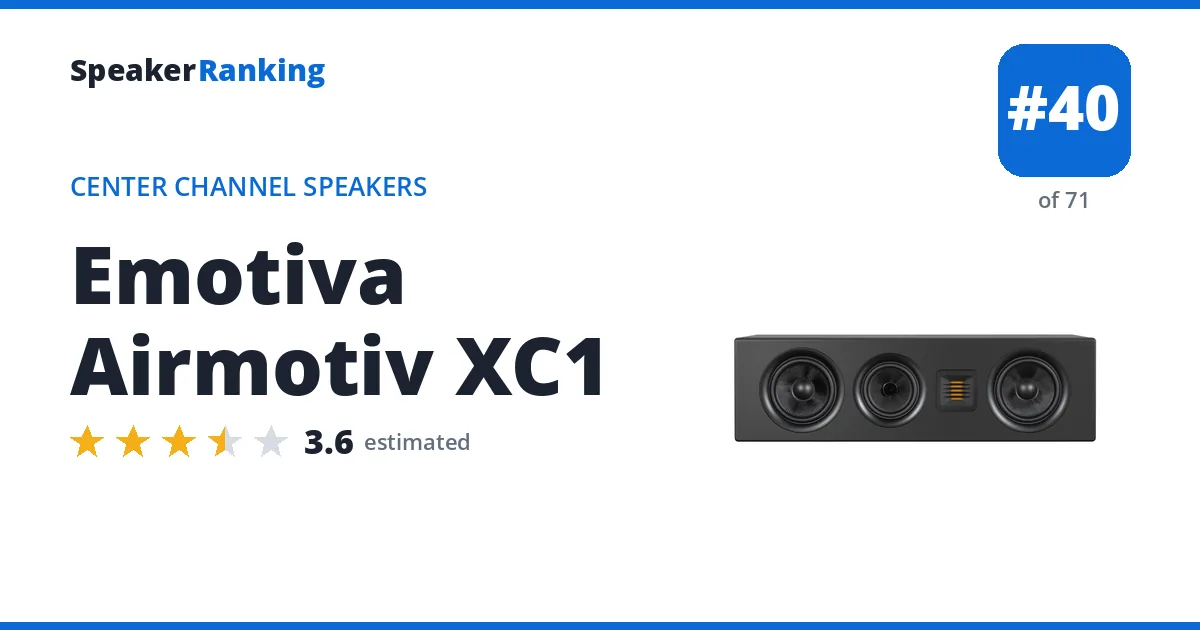
| 40 | Emotiva Airmotiv XC1 | $229 each | 88dB | 4 ohms nominal | - | 24.9 lbs | |
| 41 | Wharfedale Diamond 12.Ci | $399.00 each | 90dB | - | - | - | |
| 42 | Polk Audio Signature S30 | $229 each | 89dB | 8 ohms nominal | 71.8Hz | 19 lbs | |
| 43 | Polk Audio Signature Elite ES30 | $299.00 each | 89dB | compatible with 4 and… | - | 19 lbs | |
| 44 | Micca MB42X-C G2 | $89.99 each | 86dB | 4 to 8 ohms | - | - | |
| 45 | DALI Sonik Cinema | $900.00 each | 89.5dB | 6 ohms nominal | - | 17.4 lbs | |
| 46 | Wharfedale Diamond 12.C | $399 each | 87dB | 8 ohms nominal, 3.7 o… | - | 18.7 lbs | |
| 47 | Vandersteen VCC-5 | $3,300 each | 85dB | 6 ohms nominal, 4 ohm… | 52.7Hz | 67.9 lbs | |
| 48 | SVS Prime Center | $449.00 each | 86dB | 8 ohms nominal | 71.8Hz | 20.3 lbs | |
| 49 | Aperion Audio Verus III Grand V6C | $799.20 each | 87dB | 4 ohms nominal | 74.7Hz | 33.1 lbs | |
| 50 | Micca MB42X-C | $89.99 each | 86dB | 4 to 8 ohms | 101.1Hz | - | |
| 51 | Emotiva Airmotiv C1+ | $299 each | 89dB | 4 ohms nominal | 112.8Hz | - | |
| 52 | JBL Stage A125C | $119.95 each | 88dB | 6 ohms nominal | 98.1Hz | 17.5 lbs | |
| 53 | JBL Studio 520C | $349.95 each | 88dB | 6 ohms nominal | 98.1Hz | 16.5 lbs | |
| 54 | DALI Oberon Vokal | $599 each | 89.5dB | 4 ohms nominal | 95.2Hz | 17.1 lbs | |
| 55 | AV123 X-CS | $199 each | 90.5dB | 8 ohms nominal | 64.5Hz | 33.1 lbs | |
| 56 | Emotiva Airmotiv XC2 | $399 each | 89dB | 4 ohms nominal | - | 37 lbs | |
| 57 | Atlantic Technology 8600eC | $1,400 each | 93dB | 6 ohms nominal | 60.1Hz | 91.5 lbs | |
| 58 | Bowers & Wilkins HTM81 D4 | $10,500 each | 90dB | 8 ohms nominal, 3.0 o… | 52.7Hz | 71 lbs | |
| 59 | ELAC Uni-Fi Reference UCR52 | $799.00 each | 85dB | 6 ohms nominal | 60.1Hz | 29.1 lbs | |
| 60 | Pioneer Elite SP-EC73 | $399 each | 85dB | 4 ohms nominal | 67.4Hz | 17.6 lbs | |
| 61 | JBL Stage 2 245C | $439.95 each | 91dB | 6 ohms nominal | - | 26.5 lbs | |
| 62 | Phase Technology PC3.5 | $1,803 each | - | - | - | - | |
| 63 | Emotiva Airmotiv C2+ | $499 each | 92dB | 4 ohms nominal | 63.0Hz | 36.2 lbs | |
| 64 | JBL Stage A135C | $299.95 each | 90dB | 6 ohms nominal | 128.9Hz | 16.4 lbs | |
| 65 | Phase Technology PC 3.1 | $600 each | 87dB | 6 ohms nominal | 60.1Hz | 39.9 lbs | |
| 66 | BIC America FH6-LCR | $131.53 each | 95dB | 8 ohms nominal | - | 24.9 lbs | |
| 67 | Revel Concerta C10 | $500 each | 89dB | 8 ohms nominal | - | 6.8 lbs | |
| 68 | Paradigm Millenia LP 2 | $549 each | 89dB anechoic | compatible with 8 ohms | 151.0Hz | 6.6 lbs | |
| 69 | Paradigm Founder 90C | $2,899.99 each | 91dB anechoic, 94dB i… | 8 ohms nominal | 52.7Hz | 48.1 lbs | |
| 70 | RSL CG25 | $425 each | 88dB | - | 58.6Hz | 22.9 lbs | |
| 71 | KEF T301c | $499.99 each | 88dB | 8 ohms nominal | 159.7Hz | 3.3 lbs |
Prices on this page were last checked October 5, 2026 at 10:21 PM UTC. Product prices and availability are accurate as of that date/time and are subject to change; the price and availability shown on Amazon at the time of purchase will apply to the purchase of this product.
As an eBay Partner, we may be compensated if you make a purchase.
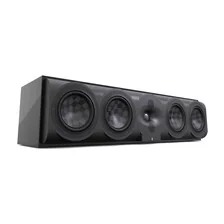 #1 Perlisten S7c: $8,795 each Audiolab eBay
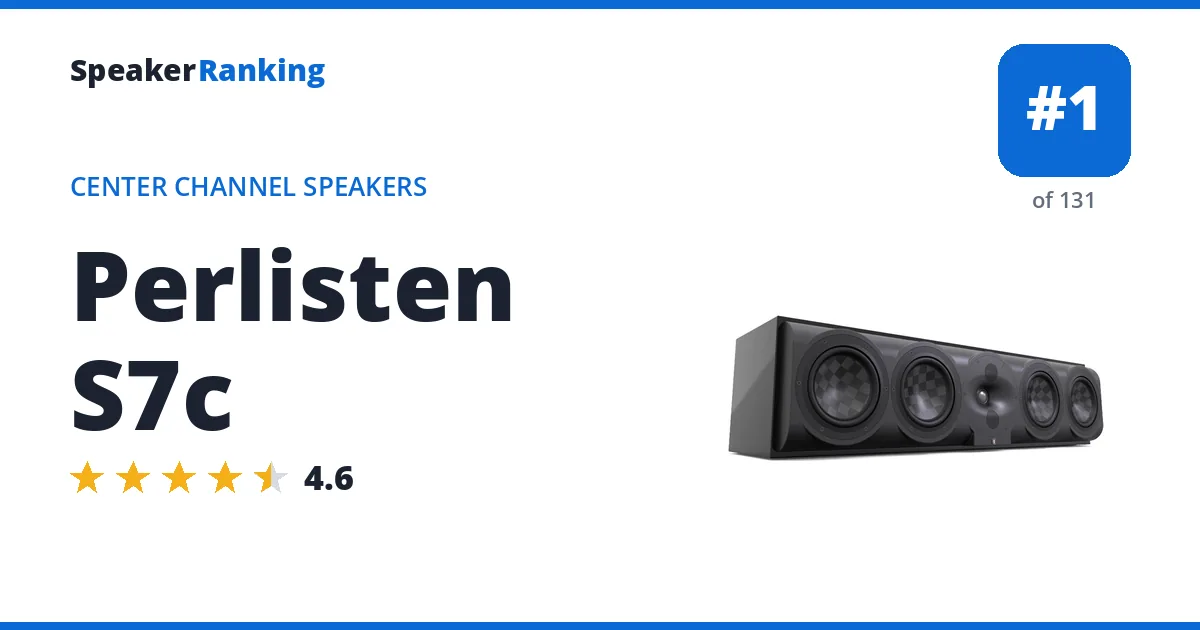
Pros: A four-way center built on Perlisten’s DPC array: a 28mm beryllium tweeter flanked by two 28mm Textreme domes that control vertical dispersion, over four 7” Textreme woofers. Perlisten’s own measurements hold the listening window within 1.9dB from 300Hz to 5kHz and give the smoothest predicted in-room response of any center channel here (0.94), for a preference score of 6.26 that reaches 8.63 with an ideal subwoofer, the highest of any center. Bass reaches 61.7Hz (-3dB) and about 37Hz (-10dB), and a 92dB sensitivity with a 117dB peak rating means it keeps up with large rooms.
Cons: The only measurements are Perlisten’s own, which spinorama.org rates low quality, so the results have not been independently verified. At $8795 for one speaker it is among the most expensive center channels ranked here. It is 960mm wide and weighs 33.5kg, so it needs a large, sturdy shelf or its matching stand, and the 3.2 ohm minimum impedance calls for a capable amplifier.
Full Perlisten S7c review and specifications →
| Bass Extension (-10dB) | about 36.8Hz (measured, manufacturer data via spinorama.org) |
|---|---|
| Bass Extension (-3dB) | 61.7Hz (measured, manufacturer data via spinorama.org) |
| Certification | THX Dominus |
| DIY Kit | No |
| Dimensions | 9.4”H x 37.8”W x 11.8”D (240 x 960 x 300 mm) |
| Drivers | 28mm beryllium dome tweeter, 2x 28mm Textreme dome DPC array, 4x 180mm (7”) Textreme woofers |
| Frequency Response | 80Hz-20kHz ±1.5dB, 38Hz-37kHz -10dB (manufacturer specified) |
| Impedance | 4 ohms nominal, 3.2 ohms minimum (manufacturer specified) |
| Maximum SPL | 117dB peak (manufacturer specified) |
| Sensitivity | 92dB (2.83V/1m, manufacturer specified) |
| Spinorama Preference Score | 6.26 |
| Spinorama Preference Score with Perfect Sub | 8.63 |
| Weight | 73.9 lbs (33.5 kg) |
| Woofer Cabinet | sealed |
- Links
- Reviews, Comparisons and Sound Samples
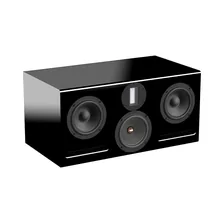 #2 Ascend Acoustics ELX Ribbon Horizon: $3,098 each Ascend Acoustics eBay
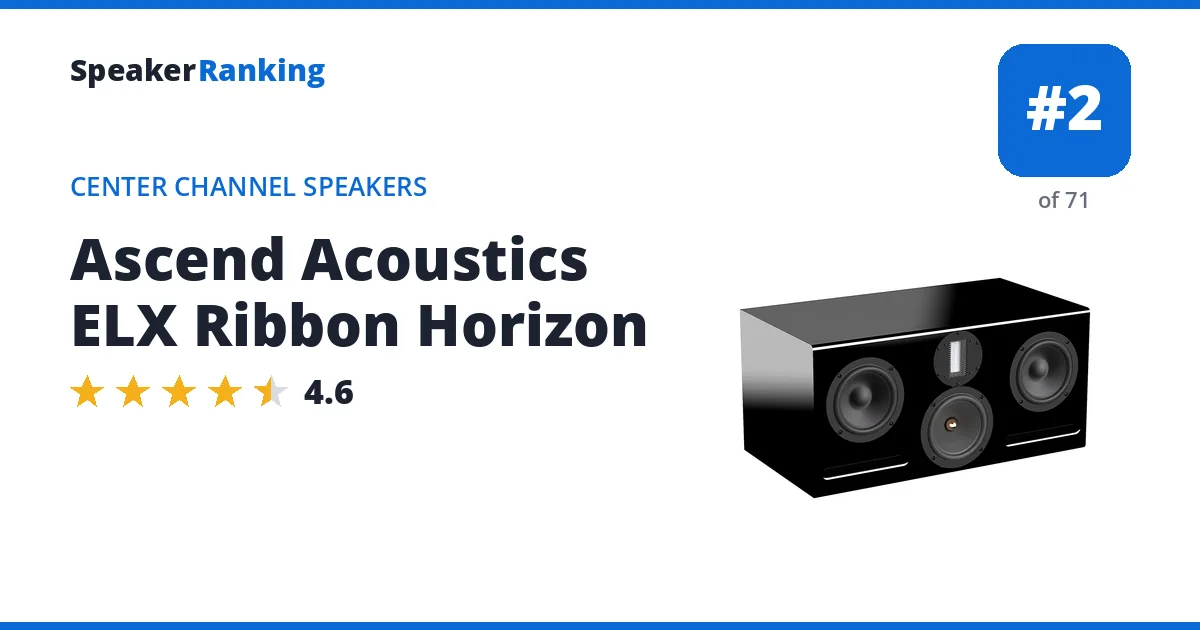
Pros: A RAAL true ribbon tweeter and a 6” SEAS Curv midrange in its own sealed chamber sit between two 6” long-throw SEAS woofers in a laminated bamboo cabinet. Ascend’s Klippel near-field measurements show the lowest on-axis deviation of any center channel ranked here (0.15) and a listening window within 1.9dB from 300Hz to 5kHz, and its preference score of 6.17 without a subwoofer is second only to Perlisten’s S7c. Bass is among the deepest of any center here, reaching 51.3Hz (-3dB) and about 30Hz (-10dB), so it can play full range in most rooms. Dispersion is wide horizontally (about ±60 degrees), which keeps dialogue consistent for off-center seats.
Cons: The measurements come from Ascend itself, not an independent reviewer. The ribbon’s vertical dispersion is narrow (about ±25 degrees), so aim the tweeter at ear height rather than tilting it from far above or below the screen. It is sold only direct from Ascend, and at 584mm wide and 52 lb it needs a deep, sturdy shelf.
Full Ascend Acoustics ELX Ribbon Horizon review and specifications →
| Bass Extension (-10dB) | about 29.8Hz (measured, manufacturer data via spinorama.org) |
|---|---|
| Bass Extension (-3dB) | 51.3Hz (measured, manufacturer data via spinorama.org) |
| DIY Kit | No |
| Dimensions | 11”H x 23”W x 12.5”D (279 x 584 x 318 mm) |
| Drivers | RAAL 70-20xram ribbon tweeter, 6” SEAS Curv cone midrange (sealed chamber), 2x 6” aluminum cone woofers |
| Frequency Response | 36Hz-27kHz ±3dB anechoic (manufacturer specified) |
| Impedance | 8 ohms nominal (manufacturer specified) |
| Sensitivity | 88dB anechoic, 91dB in-room (2.83V/1m, manufacturer specified) |
| Spinorama Preference Score | 6.17 |
| Spinorama Preference Score with Perfect Sub | 7.83 |
| Weight | 52 lbs (23.6 kg) |
| Woofer Cabinet | ported (dual front slots) |
- Links
- Reviews, Comparisons and Sound Samples
 #3 Perlisten R5c: $2,995 each Verdant Audio eBay
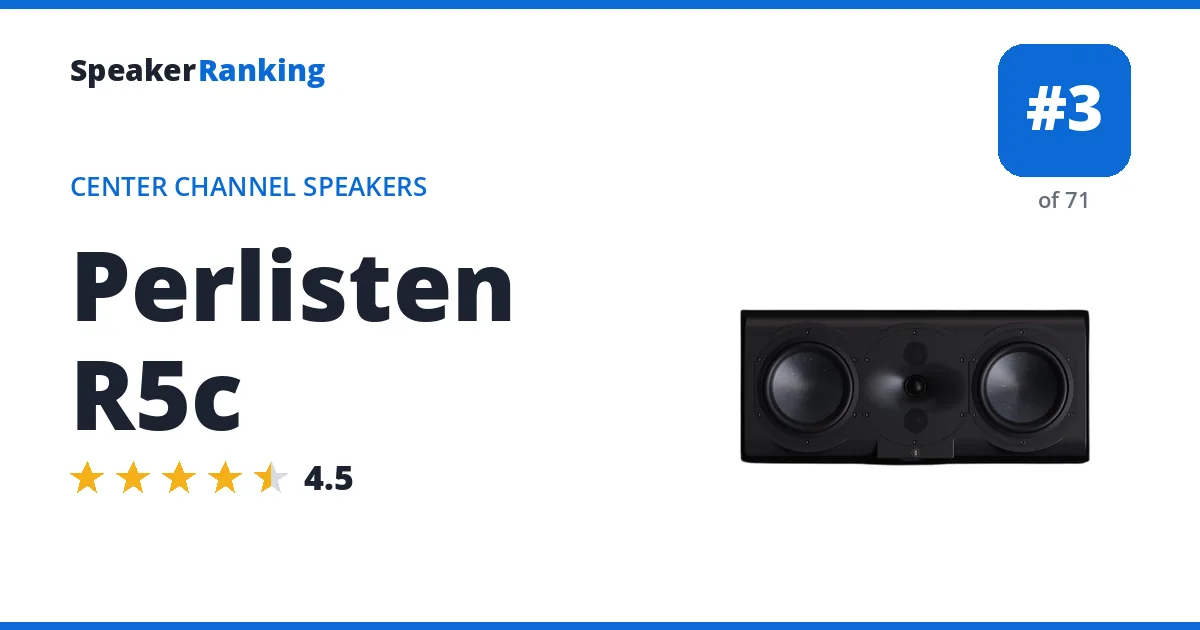
Pros: Uses Perlisten’s DPC array of three 26mm silk domes, which narrows vertical dispersion so the ceiling and floor reflect less sound, with two 6.5” woofers in a sealed cabinet. Perlisten’s measurements hold the listening window within 1.6dB from 300Hz to 5kHz, the tightest of any center channel here, and predict a very smooth in-room response (0.89), for a preference score of 6.03 that rises to 8.49 with an ideal subwoofer. THX Dominus and Ultra certified.
Cons: The only measurements are Perlisten’s own and have not been independently verified. Bass rolls off at 78.1Hz (-3dB) and about 49Hz (-10dB), so it needs a subwoofer for movies. Its directivity index varies more across frequency than most centers here (4.14dB deviation), so reflected sound in a lively room has a slightly different tone than the direct sound. The 4 ohm load suits a capable receiver or amplifier.
Full Perlisten R5c review and specifications →
| Bass Extension (-10dB) | about 48.6Hz (measured, manufacturer data via spinorama.org) |
|---|---|
| Bass Extension (-3dB) | 78.1Hz (measured, manufacturer data via spinorama.org) |
| Certification | THX Dominus, THX Ultra |
| DIY Kit | No |
| Dimensions | 9.4”H x 21.7”W x 10.6”D (240 x 550 x 270 mm) |
| Drivers | 3x 26mm silk dome DPC array, 2x 165mm (6.5”) HPF woofers |
| Frequency Response | 80Hz-20kHz ±1.5dB, 49Hz-32kHz -10dB (manufacturer specified) |
| Impedance | 4 ohms nominal, 3.4 ohms minimum (manufacturer specified) |
| Maximum SPL | 112.6dB peak (manufacturer specified) |
| Sensitivity | 88.6dB (2.83V/1m, manufacturer specified) |
| Spinorama Preference Score | 6.03 |
| Spinorama Preference Score with Perfect Sub | 8.49 |
| Weight | 33.1 lbs (15.0 kg) |
| Woofer Cabinet | sealed |
- Links
- Reviews, Comparisons and Sound Samples
 #4 KEF Reference 4 Meta: $8,999.99 each KEF eBay
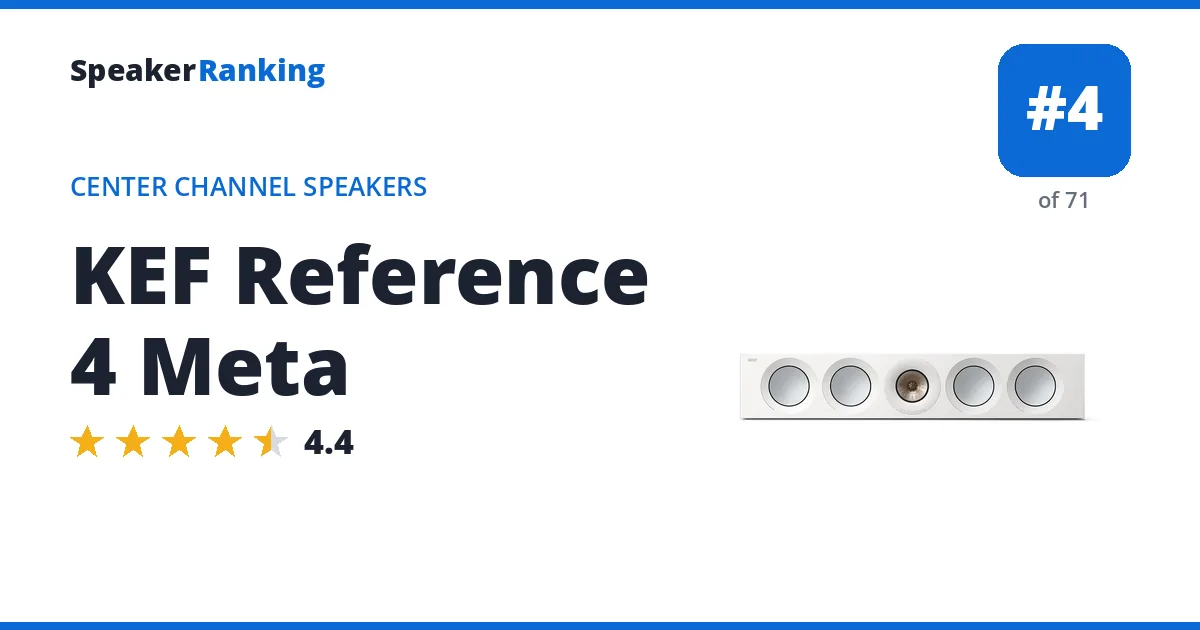
Older model: the KEF Reference 4c (ranked lower, rated 4.1/5).
Pros: KEF’s flagship center pairs the 12th generation Uni-Q coaxial driver (25mm aluminium tweeter with MAT inside a 125mm midrange) with four 6.5” bass drivers. KEF’s own Spinorama data, published on spinorama.org, shows bass reaching 46.5Hz (-3dB) and about 29Hz (-10dB), the deepest of any center channel ranked here, with the listening window held within 1.7dB from 300Hz to 5kHz and an even directivity index (3.03dB deviation). Rated to 116dB with under 0.5% distortion at 90dB.
Cons: The only measurements are KEF’s own, and spinorama.org computes no preference score for them, so the ranking is an estimate from the published curves. At $9000 it is among the most expensive centers here, and it is huge: 1090mm wide, 463mm deep and 45.2kg. The 3.2 ohm minimum impedance needs a strong amplifier.
Full KEF Reference 4 Meta review and specifications →
| Bass Extension (-10dB) | about 28.7Hz (measured, manufacturer data via spinorama.org) |
|---|---|
| Bass Extension (-3dB) | 46.5Hz (measured, manufacturer data via spinorama.org) |
| DIY Kit | No |
| Dimensions | 8.1”H x 42.9”W x 18.2”D (205 x 1090 x 463 mm) |
| Drivers | Uni-Q: 25mm aluminium dome tweeter with MAT, 125mm aluminium midrange; 4x 165mm (6.5”) aluminium bass units |
| Frequency Response | 48Hz-35kHz ±3dB (manufacturer specified) |
| Impedance | 4 ohms nominal, 3.2 ohms minimum (manufacturer specified) |
| Maximum SPL | 116dB (manufacturer specified) |
| Sensitivity | 88dB (2.83V/1m, manufacturer specified) |
| Weight | 99.6 lbs (45.2 kg) |
| Woofer Cabinet | ported (adjustable port length) |
- Links
- Reviews, Comparisons and Sound Samples
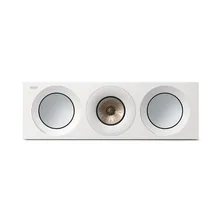 #5 KEF Reference 2 Meta: $5,999.99 each KEF eBay
Pros: A three-way sealed center with KEF’s 12th generation Uni-Q coaxial driver (25mm aluminium tweeter with MAT inside a 125mm midrange) between two 6.5” bass drivers. Measured by Erin’s Audio Corner, the listening window stays within 2.1dB from 300Hz to 5kHz and the coaxial driver spreads sound evenly out to about ±50 degrees, so dialogue sounds the same from every seat on a wide sofa. Preference score 5.23, rising to 7.84 with an ideal subwoofer. Measured bass extension of 76.9Hz (-3dB).
Cons: Bass rolls off at 76.9Hz (-3dB) and about 46Hz (-10dB) in the sealed cabinet, so plan on a subwoofer. Sensitivity is a modest 86dB and the impedance dips to 3.2 ohms, so it needs a capable amplifier. At $6000 it costs far more than KEF’s R2 Meta, which measures nearly as well.
Full KEF Reference 2 Meta review and specifications →
| Bass Extension (-10dB) | about 46.2Hz (measured, Erin’s Audio Corner) |
|---|---|
| Bass Extension (-3dB) | 76.9Hz (measured, Erin’s Audio Corner) |
| DIY Kit | No |
| Dimensions | 8.1”H x 24.8”W x 13.2”D (205 x 630 x 335 mm) |
| Drivers | Uni-Q: 25mm aluminium dome tweeter with MAT, 125mm aluminium midrange; 2x 165mm (6.5”) aluminium bass units |
| Frequency Response | 80Hz-35kHz ±3dB (manufacturer specified) |
| Impedance | 4 ohms nominal, 3.2 ohms minimum (manufacturer specified) |
| Maximum SPL | 113.5dB (manufacturer specified) |
| Sensitivity | 86dB (2.83V/1m, manufacturer specified) |
| Spinorama Preference Score | 5.23 |
| Spinorama Preference Score with Perfect Sub | 7.84 |
| Weight | 50.3 lbs (22.8 kg) |
| Woofer Cabinet | sealed |
- Links
- Reviews, Comparisons and Sound Samples
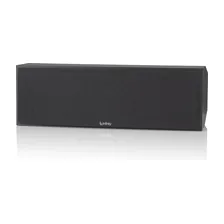 #6 Infinity Reference RC252: $299 each Discontinued eBay
Pros: A 2.5-way center with a 1” CMMD tweeter in a waveguide between two 5.25” woofers. Infinity’s own measurements show a smooth predicted in-room response (0.89) and very consistent directivity (2.75dB directivity index deviation), for a preference score of 5.48 that reaches 8.16 with an ideal subwoofer, among the highest of any center ranked here.
Cons: The measurements are Infinity’s own, not independently verified. Bass rolls off at 87.2Hz (-3dB) and about 49Hz (-10dB), so it needs a subwoofer. It is no longer made, since Harman ended Infinity’s home speaker line.
Full Infinity Reference RC252 review and specifications →
| Bass Extension (-10dB) | about 48.9Hz (measured, manufacturer data via spinorama.org) |
|---|---|
| Bass Extension (-3dB) | 87.2Hz (measured, manufacturer data via spinorama.org) |
| DIY Kit | No |
| Dimensions | 6.7”H x 20.4”W x 8.6”D (171 x 519 x 219 mm) |
| Drivers | 1” CMMD tweeter with waveguide, 2x 5.25” woofers |
| Frequency Response | 58Hz-22kHz (manufacturer specified) |
| Impedance | 6 ohms nominal (manufacturer specified) |
| Sensitivity | 87dB (manufacturer specified) |
| Spinorama Preference Score | 5.48 |
| Spinorama Preference Score with Perfect Sub | 8.16 |
| Weight | 16.5 lbs (7.5 kg) |
- Links
- Reviews, Comparisons and Sound Samples
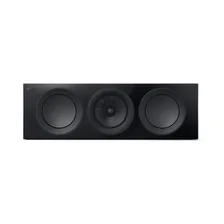 #7 KEF R2 Meta: $1,599.99 each Amazon eBay
Older model: the KEF R2c (ranked lower, rated 4/5).
Pros: A compact three-way sealed center with KEF’s 12th generation Uni-Q coaxial driver (25mm vented aluminium tweeter with MAT inside a 125mm midrange) and two 5.25” bass drivers. KEF’s Spinorama data shows low on-axis deviation (0.29) and a listening window within 2.3dB from 300Hz to 5kHz, for a preference score of 5.03 that reaches 7.75 with an ideal subwoofer. At 175mm tall it fits under most TVs.
Cons: The only measurements are KEF’s own and have not been independently verified. Bass rolls off at 78.1Hz (-3dB) and about 53Hz (-10dB), so it needs a subwoofer for movies. The 4 ohm load dips to 3.2 ohms, which suits a receiver with solid current delivery.
Full KEF R2 Meta review and specifications →
| Bass Extension (-10dB) | about 52.9Hz (measured, manufacturer data via spinorama.org) |
|---|---|
| Bass Extension (-3dB) | 78.1Hz (measured, manufacturer data via spinorama.org) |
| DIY Kit | No |
| Dimensions | 6.9”H x 21.7”W x 12.2”D (175 x 550 x 309 mm) |
| Drivers | Uni-Q: 25mm vented aluminium dome tweeter with MAT, 125mm aluminium midrange; 2x 130mm (5.25”) hybrid aluminium bass units |
| Frequency Response | 67Hz-28kHz ±3dB (manufacturer specified) |
| Impedance | 4 ohms nominal, 3.2 ohms minimum (manufacturer specified) |
| Sensitivity | 87dB (2.83V/1m, manufacturer specified) |
| Spinorama Preference Score | 5.03 |
| Spinorama Preference Score with Perfect Sub | 7.75 |
| Weight | 34 lbs (15.4 kg) |
| Woofer Cabinet | sealed |
- Links
- Reviews, Comparisons and Sound Samples
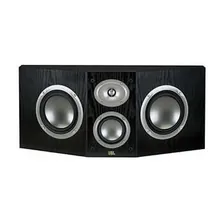 #8 JBL Performance PC600: $499.99 each Discontinued eBay
Pros: A three-way center with a 1” titanium dome tweeter, a 4” titanium inverted dome midrange and two 6” woofers, from JBL’s Revel-engineered Performance series. Published Spinorama data shows a listening window within 2.6dB from 300Hz to 5kHz and a smooth predicted in-room response (0.82), for a preference score of 5.24 that reaches 8.04 with an ideal subwoofer. 91dB sensitivity. Measured bass extension of 89.1Hz (-3dB).
Cons: The only Spinorama data is low quality, digitized from a published chart, so the details are less certain than a full measurement. Bass rolls off at 89.1Hz (-3dB) and about 55Hz (-10dB), so it needs a subwoofer. It has long been out of production. Discontinued.
Full JBL Performance PC600 review and specifications →
| Bass Extension (-10dB) | about 55.3Hz (measured, spinorama.org) |
|---|---|
| Bass Extension (-3dB) | 89.1Hz (measured, spinorama.org) |
| DIY Kit | No |
| Dimensions | 11.6”H x 26.5”W x 7.2”D (295 x 672 x 184 mm) |
| Drivers | 1” titanium dome tweeter, 4” titanium inverted dome midrange, 2x 6” woofers |
| Frequency Response | 80Hz-22kHz -6dB (manufacturer specified) |
| Impedance | 8 ohms nominal (manufacturer specified) |
| Sensitivity | 91dB (2.83V/1m, manufacturer specified) |
| Spinorama Preference Score | 5.24 |
| Spinorama Preference Score with Perfect Sub | 8.04 |
| Weight | 33.1 lbs (15 kg) |
- Reviews, Comparisons and Sound Samples
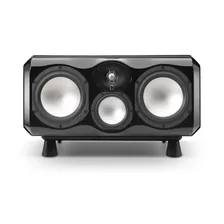 #9 Revel Ultima2 Voice2: $8,000 each Discontinued eBay
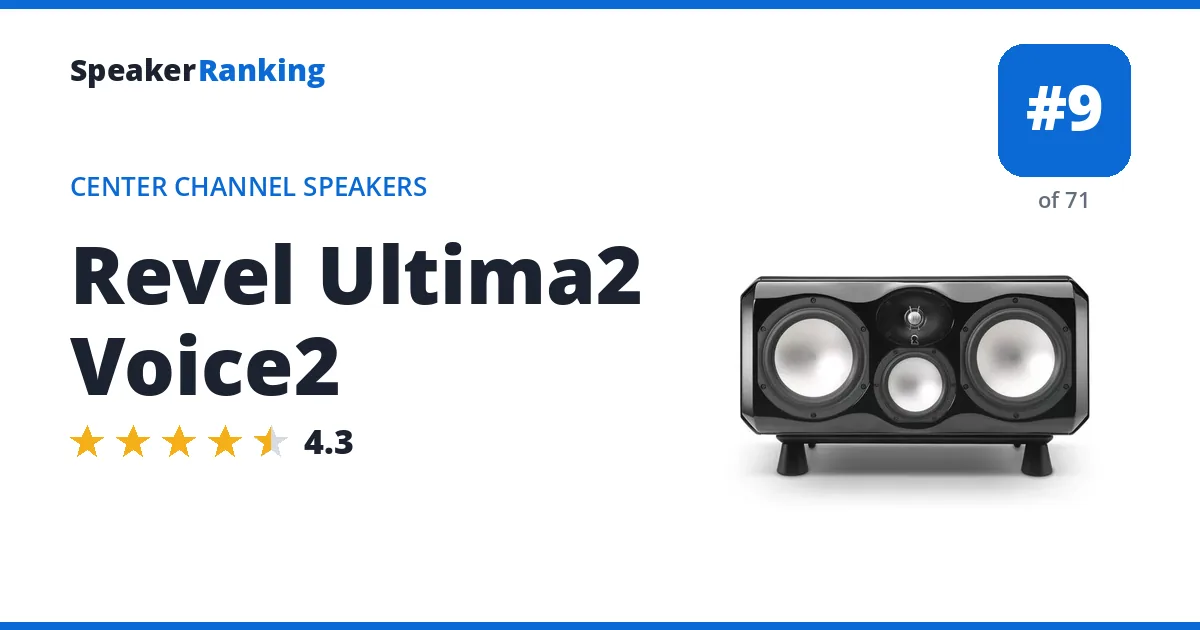
Pros: Revel’s former flagship center: a 1” beryllium dome tweeter, a 5.25” titanium cone midrange and two 8” titanium cone woofers in a sealed cabinet. Revel’s measurements show very low on-axis deviation (0.23), consistent directivity (2.7dB directivity index deviation) and a smooth predicted in-room response (0.87), for a preference score of 5.37 that reaches 7.77 with an ideal subwoofer. Bass reaches 63.9Hz (-3dB) and about 36Hz (-10dB).
Cons: The measurements are Revel’s own. It weighs 28.2kg and needs a sturdy shelf or its stand, and its 3.6 ohm minimum impedance calls for a capable amplifier. The Ultima2 line has been discontinued with no direct replacement.
Full Revel Ultima2 Voice2 review and specifications →
| Bass Extension (-10dB) | about 36.3Hz (measured, manufacturer data via spinorama.org) |
|---|---|
| Bass Extension (-3dB) | 63.9Hz (measured, manufacturer data via spinorama.org) |
| DIY Kit | No |
| Dimensions | 14.7”H x 25.5”W x 14”D (373 x 648 x 356 mm) |
| Drivers | 1” beryllium dome tweeter, 5.25” titanium cone midrange, 2x 8” titanium cone woofers |
| Impedance | 6 ohms nominal, 3.6 ohms minimum (manufacturer specified) |
| Sensitivity | 89dB (2.83V/1m, manufacturer specified) |
| Spinorama Preference Score | 5.37 |
| Spinorama Preference Score with Perfect Sub | 7.77 |
| Weight | 62.2 lbs (28.2 kg) |
| Woofer Cabinet | sealed |
- Links
- Reviews, Comparisons and Sound Samples
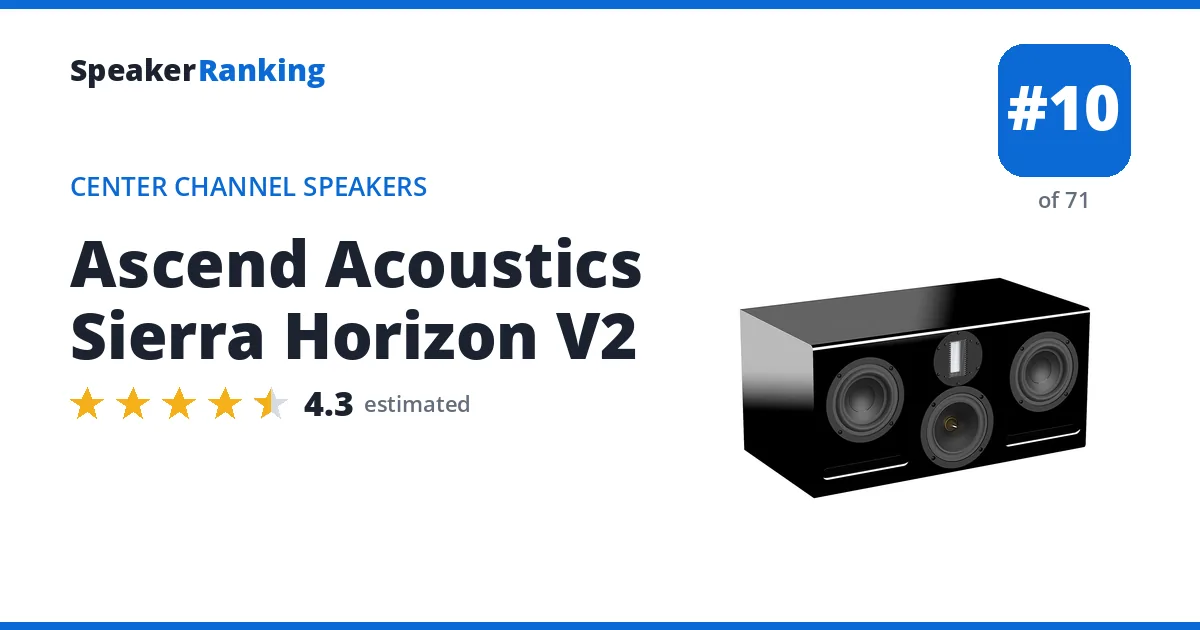
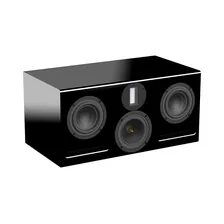 #10 Ascend Acoustics Sierra Horizon V2: $1,998 each Estimated Ascend Acoustics eBay
Older model: the Ascend Acoustics Sierra Horizon (ranked lower, rated 4.2/5).
Pros: The revised Sierra Horizon center with a custom RAAL true ribbon tweeter, an underhung mineral-filled polypropylene midrange and two long-throw woofers on cast aluminum frames, in a laminated bamboo cabinet. Ascend rates it from Klippel near-field measurements at 60Hz to 27kHz (±3dB) anechoic and 48Hz at -6dB, with 88dB anechoic sensitivity.
Cons: No independent measurements yet, so its tonal balance and directivity can’t be compared directly with measured centers; the rating is estimated from its predecessor’s measurements. Ascend publishes Klippel-based specifications but not the full Spinorama data. It is sold only direct from Ascend.
Full Ascend Acoustics Sierra Horizon V2 review and specifications →
| Dimensions | 11”H x 23”W x 12.5”D (279 x 584 x 318 mm) |
|---|---|
| Drivers | RAAL true ribbon tweeter, mineral-filled polypropylene midrange, 2x mineral-filled polypropylene woofers |
| Frequency Response | 60Hz-27kHz ±3dB anechoic, -6dB at 48Hz (manufacturer specified) |
| Impedance | 8 ohms nominal (manufacturer specified) |
| Sensitivity | 88dB anechoic, 91dB in-room (2.83V/1m, manufacturer specified) |
| Weight | 41.9 lbs (19 kg) |
- Links
- Reviews, Comparisons and Sound Samples
- No independent measurement review is linked for this model; it is ranked from hands-on listening and comparison against similarly priced speakers.
- Head-to-Head Comparisons
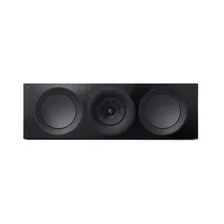 #11 KEF R6 Meta: $2,199.99 each Amazon eBay
Pros: The larger R Series center uses the same 12th generation Uni-Q coaxial driver as the R2 Meta (25mm vented aluminium tweeter with MAT inside a 125mm midrange) with two 6.5” bass drivers, so it matches R Series left and right speakers tonally. KEF’s Spinorama data holds the listening window within 2.5dB from 300Hz to 5kHz. KEF rates it at 88dB, 1dB more sensitive than the R2 Meta.
Cons: The only measurements are KEF’s own, and spinorama.org computes no preference score for them, so the ranking is an estimate. Despite the bigger woofers, KEF’s data shows no deeper bass than the R2 Meta: 79.9Hz (-3dB) and about 56Hz (-10dB), so it still needs a subwoofer. It costs $2200 and is 625mm wide.
Full KEF R6 Meta review and specifications →
| Bass Extension (-10dB) | about 55.6Hz (measured, manufacturer data via spinorama.org) |
|---|---|
| Bass Extension (-3dB) | 79.9Hz (measured, manufacturer data via spinorama.org) |
| DIY Kit | No |
| Dimensions | 7.9”H x 24.6”W x 13.3”D (200 x 625 x 339 mm) |
| Drivers | Uni-Q: 25mm vented aluminium dome tweeter with MAT, 125mm aluminium midrange; 2x 165mm (6.5”) hybrid aluminium bass units |
| Frequency Response | 65Hz-28kHz ±3dB (manufacturer specified) |
| Impedance | 4 ohms nominal, 3.2 ohms minimum (manufacturer specified) |
| Sensitivity | 88dB (2.83V/1m, manufacturer specified) |
| Weight | 39.2 lbs (17.8 kg) |
| Woofer Cabinet | sealed |
- Links
- Reviews, Comparisons and Sound Samples
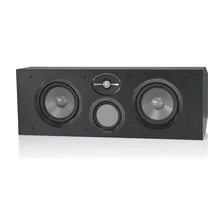 #12 Infinity Reference RC263: $499.95 each Discontinued eBay
Pros: A true three-way center: a 1” CMMD tweeter in a waveguide and a 4” CMMD midrange in its own sub-enclosure between two 6.5” woofers. Audio Science Review measured a listening window within 2.1dB from 300Hz to 5kHz and very consistent directivity (2.69dB directivity index deviation), with even horizontal coverage out to about ±55 degrees, so off-center seats hear the same voice balance. Preference score 4.71, rising to 7.50 with an ideal subwoofer. Measured bass extension of 79.1Hz (-3dB).
Cons: Bass rolls off at 79.1Hz (-3dB) and about 53Hz (-10dB), so pair it with a subwoofer. Infinity’s home speaker line has ended, so it is only available used. Discontinued.
Full Infinity Reference RC263 review and specifications →
| Bass Extension (-10dB) | about 52.6Hz (measured, Audio Science Review) |
|---|---|
| Bass Extension (-3dB) | 79.1Hz (measured, Audio Science Review) |
| DIY Kit | No |
| Dimensions | 9.1”H x 25.2”W x 10.6”D (230 x 639 x 270 mm) |
| Drivers | 1” CMMD tweeter with waveguide, 4” CMMD midrange, 2x 6.5” woofers |
| Frequency Response | 52Hz-22kHz (manufacturer specified) |
| Impedance | 6 ohms nominal (manufacturer specified) |
| Sensitivity | 89dB (manufacturer specified) |
| Spinorama Preference Score | 4.71 |
| Spinorama Preference Score with Perfect Sub | 7.50 |
| Weight | 29.3 lbs (13.3 kg) |
- Links
- Reviews, Comparisons and Sound Samples
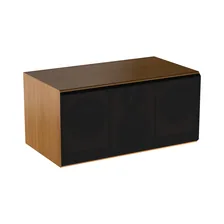 #13 Ascend Acoustics Sierra Horizon: $1,490 each Discontinued eBay
Newer model: the Ascend Acoustics Sierra Horizon V2, ranked higher, estimated 4.3/5.
Pros: Ascend’s original Horizon center uses the same drivers and internal volume as its Sierra Tower, with a RAAL ribbon tweeter in a laminated bamboo cabinet. Audio Science Review measured very low on-axis deviation (0.20), consistent directivity (2.69dB directivity index deviation) and deep bass for a center, 63.0Hz (-3dB) and about 37Hz (-10dB), for a preference score of 5.24 that reaches 7.44 with an ideal subwoofer. Measured bass extension of 63.0Hz (-3dB).
Cons: The ribbon’s horizontal coverage in this measurement is narrow (about ±20 degrees), and the listening window spans 3.1dB from 300Hz to 5kHz. Ascend now sells the revised Sierra Horizon V2. Discontinued.
Full Ascend Acoustics Sierra Horizon review and specifications →
| Bass Extension (-10dB) | about 36.6Hz (measured, Audio Science Review) |
|---|---|
| Bass Extension (-3dB) | 63.0Hz (measured, Audio Science Review) |
| DIY Kit | No |
| Dimensions | 11”H x 23”W x 12.5”D (279 x 584 x 318 mm) |
| Drivers | RAAL ribbon tweeter, midrange and woofers shared with the Sierra Tower |
| Spinorama Preference Score | 5.24 |
| Spinorama Preference Score with Perfect Sub | 7.44 |
- Reviews, Comparisons and Sound Samples
- Head-to-Head Comparisons
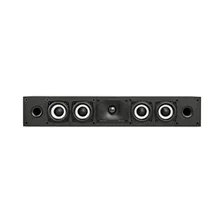 #14 Polk Audio XT35: $279.00 each Amazon eBay
Pros: A slim center only 106mm tall, built to sit under a TV, with a 1” Terylene dome tweeter between four 3” woofers. Erin’s Audio Corner measured very low on-axis deviation (0.19, among the flattest of any center here) and a listening window within 2.2dB from 300Hz to 5kHz, for a preference score of 4.43 that reaches 7.34 with an ideal subwoofer. That is a remarkable result at $279. Measured bass extension of 85.0Hz (-3dB).
Cons: Small woofers limit bass to 85Hz (-3dB) and about 59Hz (-10dB), so it really needs a subwoofer with a crossover around 100Hz. Its predicted in-room response is less smooth (0.57) than the top centers here, so reflections color the sound more in a lively room.
Full Polk Audio XT35 review and specifications →
| Bass Extension (-10dB) | about 59.4Hz (measured, Erin’s Audio Corner) |
|---|---|
| Bass Extension (-3dB) | 85.0Hz (measured, Erin’s Audio Corner) |
| DIY Kit | No |
| Dimensions | 4.2”H x 24.4”W x 5.6”D (106 x 620 x 141 mm) |
| Drivers | 1” Terylene dome tweeter, 4x 3” bi-laminate paper woofers |
| Frequency Response | 84Hz-26kHz (manufacturer specified) |
| Impedance | 8 ohms nominal (manufacturer specified) |
| Sensitivity | 87dB (manufacturer specified) |
| Spinorama Preference Score | 4.43 |
| Spinorama Preference Score with Perfect Sub | 7.34 |
| Weight | 14.1 lbs (6.4 kg) |
- Links
- Reviews, Comparisons and Sound Samples
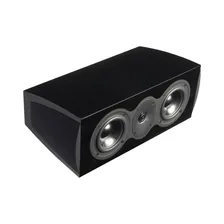 #15 Revel Performa3 C205: $1,000 each Discontinued eBay
Newer model: the Revel Performa4 C245, ranked lower, estimated 4/5.
Pros: A two-way center with a 1” aluminum tweeter in Revel’s acoustic lens waveguide between two 5.25” aluminum cone woofers. Revel’s measurements hold the listening window within 1.7dB from 300Hz to 5kHz with consistent directivity (2.92dB directivity index deviation), for a preference score of 4.85 that reaches 7.53 with an ideal subwoofer. 89dB sensitivity.
Cons: The only Spinorama data is Revel’s own, rated low quality. Bass rolls off at 92.2Hz (-3dB) and about 45Hz (-10dB), so a subwoofer is needed. Revel replaced the Performa3 series with Performa4 in 2026. Discontinued.
Full Revel Performa3 C205 review and specifications →
| Bass Extension (-10dB) | about 45.3Hz (measured, manufacturer data via spinorama.org) |
|---|---|
| Bass Extension (-3dB) | 92.2Hz (measured, manufacturer data via spinorama.org) |
| DIY Kit | No |
| Dimensions | 7.9”H x 20.9”W x 11.5”D (200 x 532 x 292 mm) |
| Drivers | 1” aluminum tweeter with acoustic lens waveguide, 2x 5.25” aluminum cone woofers |
| Frequency Response | -3dB at 80Hz, -10dB at 46Hz (manufacturer specified) |
| Impedance | 8 ohms nominal (manufacturer specified) |
| Sensitivity | 89dB (manufacturer specified) |
| Spinorama Preference Score | 4.85 |
| Spinorama Preference Score with Perfect Sub | 7.53 |
| Weight | 26.5 lbs (12 kg) |
| Woofer Cabinet | sealed |
- Links
- Reviews, Comparisons and Sound Samples
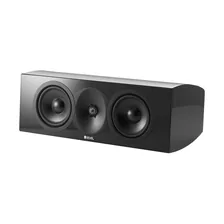 #16 Revel Concerta2 C25: $750 each Discontinued eBay
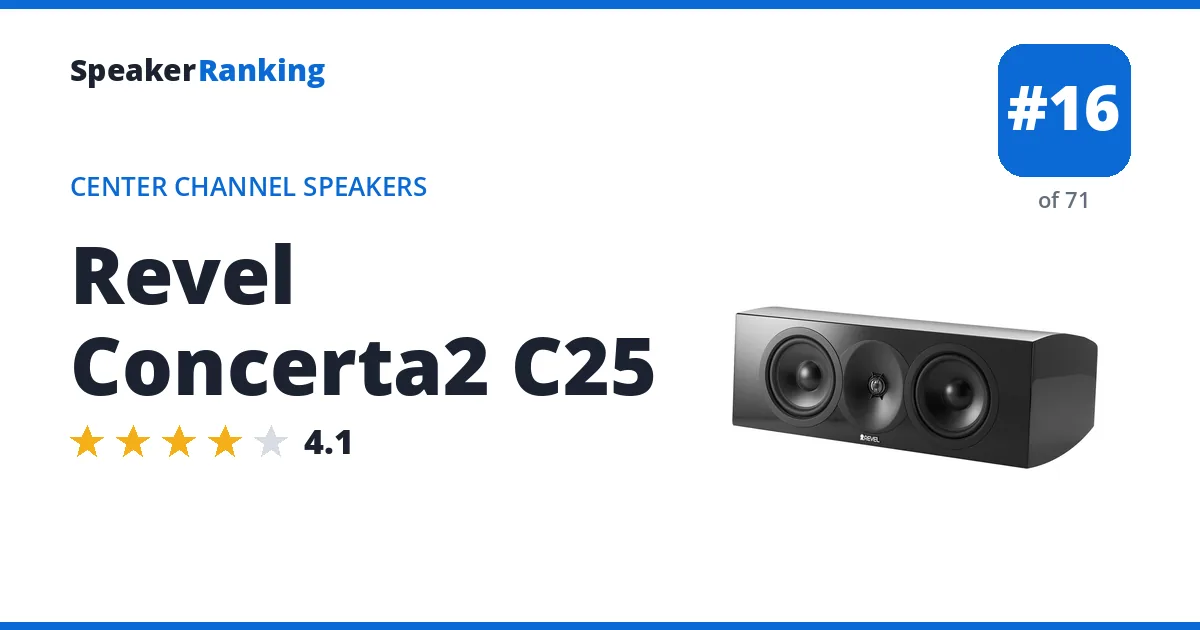
Pros: A compact sealed two-way center with a 1” tweeter in Revel’s acoustic lens waveguide between two 5.25” aluminum woofers. Audio Science Review measured a listening window within 2.1dB from 300Hz to 5kHz and consistent directivity (2.93dB directivity index deviation), for a preference score that reaches 7.42 with an ideal subwoofer. Measured bass extension of 117.2Hz (-3dB).
Cons: Bass rolls off very early, at 117.2Hz (-3dB) and about 66Hz (-10dB), so it needs a subwoofer crossed over above the usual 80Hz, and its score without one is 4.18. Horizontal coverage is narrow (about ±20 degrees). It is no longer sold by major retailers.
Full Revel Concerta2 C25 review and specifications →
| Bass Extension (-10dB) | about 66.0Hz (measured, Audio Science Review) |
|---|---|
| Bass Extension (-3dB) | 117.2Hz (measured, Audio Science Review) |
| DIY Kit | No |
| Dimensions | 7.4”H x 19.5”W x 10.2”D (187 x 495 x 259 mm) |
| Drivers | 1” tweeter with acoustic lens waveguide, 2x 5.25” aluminum cone woofers |
| Frequency Response | -3dB at 80Hz, -10dB at 48Hz (manufacturer specified) |
| Impedance | 6 ohms nominal (manufacturer specified) |
| Sensitivity | 89dB (manufacturer specified) |
| Spinorama Preference Score | 4.18 |
| Spinorama Preference Score with Perfect Sub | 7.42 |
| Weight | 20.1 lbs (9.1 kg) |
| Woofer Cabinet | sealed |
- Links
- Reviews, Comparisons and Sound Samples
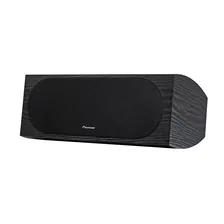 #17 Pioneer SP-C22: $75 each Discontinued eBay
Pros: An Andrew Jones design that sold for only $75, with a 1” soft dome tweeter between two 4” woofers in a curved cabinet. Audio Science Review measured a smooth predicted in-room response (0.79) and a preference score of 4.51 that reaches 7.38 with an ideal subwoofer, a remarkable result for the price. Measured bass extension of 74.7Hz (-3dB).
Cons: The listening window spans 3.9dB from 300Hz to 5kHz and on-axis deviation is moderate (0.63). Bass falls to about 63Hz at -10dB. It is discontinued and found mainly used.
Full Pioneer SP-C22 review and specifications →
| Bass Extension (-10dB) | about 63.0Hz (measured, Audio Science Review) |
|---|---|
| Bass Extension (-3dB) | 74.7Hz (measured, Audio Science Review) |
| DIY Kit | No |
| Dimensions | 7.1”H x 18.1”W x 8.4”D (180 x 460 x 213 mm) |
| Drivers | 1” soft dome tweeter, 2x 4” structured surface woofers |
| Frequency Response | 55Hz-20kHz (manufacturer specified) |
| Impedance | 6 ohms nominal (manufacturer specified) |
| Sensitivity | 88dB (manufacturer specified) |
| Spinorama Preference Score | 4.51 |
| Spinorama Preference Score with Perfect Sub | 7.38 |
| Weight | 13.4 lbs (6.1 kg) |
| Woofer Cabinet | ported |
- Reviews, Comparisons and Sound Samples
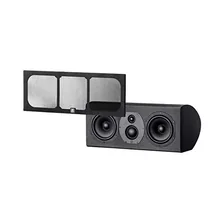 #18 Monolith THX-365C: $499.99 each Discontinued eBay
Pros: A THX Ultra certified sealed three-way center with a 1” silk dome tweeter, a 2” silk dome midrange and two 6.5” woofers. Erin’s Audio Corner measured a listening window within 2.3dB from 300Hz to 5kHz, a smooth predicted in-room response (0.84) and wide coverage (about ±60 degrees horizontally), for a preference score of 4.38 that reaches 7.37 with an ideal subwoofer. Measured bass extension of 82.0Hz (-3dB).
Cons: Bass rolls off at 82Hz (-3dB) and about 55Hz (-10dB), so it needs a subwoofer. The 4 ohm load needs a capable receiver. Monoprice has wound down the Monolith speaker line. Discontinued.
Full Monolith THX-365C review and specifications →
| Bass Extension (-10dB) | about 54.9Hz (measured, Erin’s Audio Corner) |
|---|---|
| Bass Extension (-3dB) | 82.0Hz (measured, Erin’s Audio Corner) |
| Certification | THX Ultra |
| DIY Kit | No |
| Dimensions | 9.7”H x 22.9”W x 10.8”D (246 x 582 x 274 mm) |
| Drivers | 1” silk dome tweeter, 2” silk dome midrange, 2x 6.5” woofers |
| Frequency Response | 65Hz-24kHz (manufacturer specified) |
| Impedance | 4 ohms nominal (manufacturer specified) |
| Sensitivity | 89.5dB (2.83V/1m, manufacturer specified) |
| Spinorama Preference Score | 4.38 |
| Spinorama Preference Score with Perfect Sub | 7.37 |
| Weight | 26.5 lbs (12 kg) |
| Woofer Cabinet | sealed |
- Reviews, Comparisons and Sound Samples
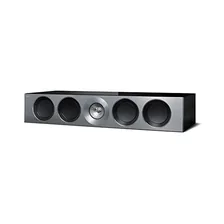 #19 KEF Reference 4c: $7,500 each Discontinued eBay
Newer model: the KEF Reference 4 Meta, ranked higher, rated 4.4/5.
Pros: KEF’s previous flagship center: a Uni-Q coaxial driver (1” aluminum tweeter inside a 5” midrange) between four 6.5” bass drivers. Audio Science Review measured very low on-axis deviation (0.21) and bass to 67.4Hz (-3dB) and about 30Hz (-10dB), for a preference score of 5.79 without a subwoofer, one of the highest of any center ranked here. Measured bass extension of 67.4Hz (-3dB).
Cons: Directivity varies more across frequency than most centers here (3.77dB directivity index deviation), so room reflections sound slightly different from the direct sound. It is 1090mm wide and 45.2kg. KEF replaced it with the Reference 4 Meta. Discontinued.
Full KEF Reference 4c review and specifications →
| Bass Extension (-10dB) | about 30.3Hz (measured, Audio Science Review) |
|---|---|
| Bass Extension (-3dB) | 67.4Hz (measured, Audio Science Review) |
| DIY Kit | No |
| Dimensions | 8.1”H x 42.9”W x 18.5”D (205 x 1090 x 470 mm) |
| Drivers | Uni-Q: 1” vented aluminum dome tweeter, 5” aluminum midrange; 4x 6.5” aluminum bass units |
| Frequency Response | 48Hz-35kHz ±3dB (manufacturer specified) |
| Impedance | 8 ohms nominal, 3.2 ohms minimum (manufacturer specified) |
| Maximum SPL | 116dB (manufacturer specified) |
| Sensitivity | 90dB (2.83V/1m, manufacturer specified) |
| Spinorama Preference Score | 5.79 |
| Spinorama Preference Score with Perfect Sub | 7.20 |
| Weight | 99.6 lbs (45.2 kg) |
- Reviews, Comparisons and Sound Samples
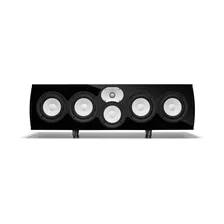 #20 Revel C426Be: $5,444.95 each Audio Advice eBay
Pros: A three-way center with a 1” beryllium tweeter in Revel’s acoustic lens waveguide, a 5.25” midrange and four 6.5” woofers. Erin’s Audio Corner measured a preference score of 5.27 without a subwoofer, behind only the Perlisten and Ascend centers, helped by deep bass of 66.7Hz (-3dB) and about 35Hz (-10dB). Horizontal dispersion is wide (about ±60 degrees), so off-center seats hear the same dialogue balance, and 90dB sensitivity makes it easy to drive. Measured bass extension of 66.7Hz (-3dB).
Cons: The listening window is less even than the best centers here, spanning 3.1dB from 300Hz to 5kHz, and the directivity index varies more across frequency (3.8dB deviation). It is 977mm wide and 32.2kg, and at $5445 it is one of the more expensive centers here.
Full Revel C426Be review and specifications →
| Bass Extension (-10dB) | about 35.2Hz (measured, Erin’s Audio Corner) |
|---|---|
| Bass Extension (-3dB) | 66.7Hz (measured, Erin’s Audio Corner) |
| DIY Kit | No |
| Dimensions | 10.6”H x 38.5”W x 14”D (268 x 977 x 356 mm) |
| Drivers | 1” beryllium dome tweeter with acoustic lens, 5.25” DCC aluminum midrange, 4x 6.5” DCC aluminum woofers |
| Frequency Response | 38Hz-40kHz -6dB (manufacturer specified) |
| Impedance | 8 ohms nominal (manufacturer specified) |
| Sensitivity | 90dB (2.83V/1m, manufacturer specified) |
| Spinorama Preference Score | 5.27 |
| Spinorama Preference Score with Perfect Sub | 6.96 |
| Weight | 71 lbs (32.2 kg) |
| Woofer Cabinet | ported (dual rear ports) |
- Links
- Reviews, Comparisons and Sound Samples
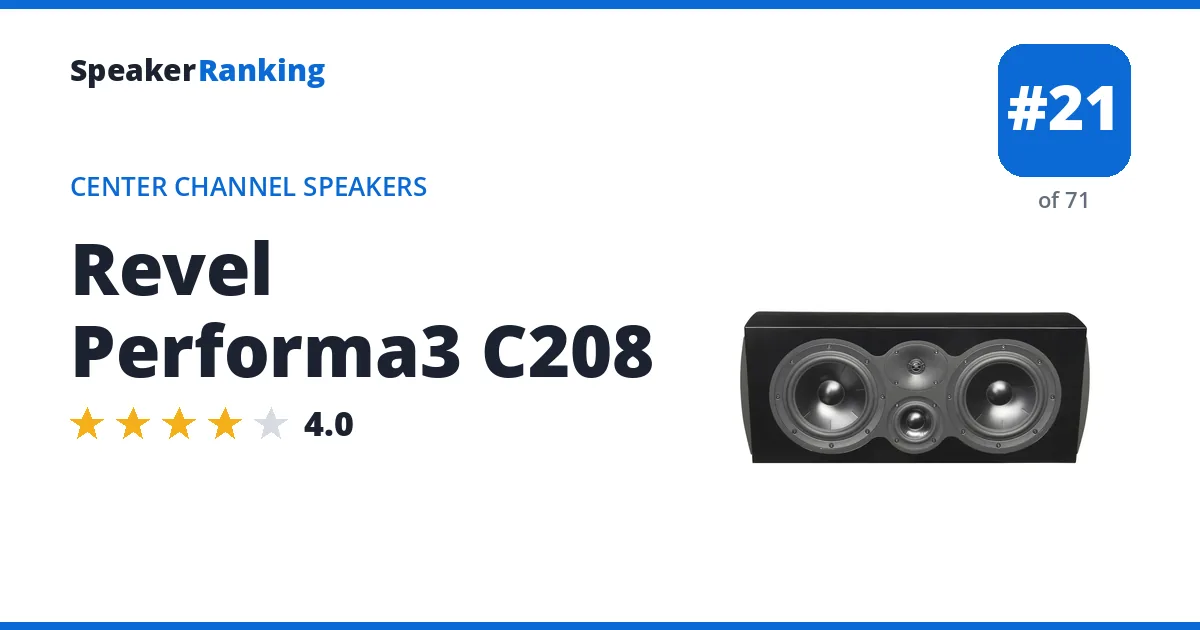
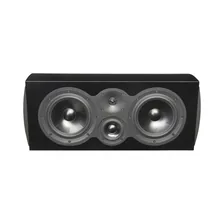 #21 Revel Performa3 C208: $2,000 each Discontinued eBay
Newer model: the Revel Performa4 C245, ranked lower, estimated 4/5.
Pros: A three-way sealed center with a 1” tweeter in Revel’s acoustic lens waveguide, a 4” midrange and two 8” aluminum woofers. Audio Science Review measured consistent directivity (2.8dB directivity index deviation), a smooth predicted in-room response (0.83) and wide horizontal coverage (about ±60 degrees), plus deep bass for a center at 71.8Hz (-3dB) and about 43Hz (-10dB). Preference score 4.55, rising to 7.17 with an ideal subwoofer. Measured bass extension of 71.8Hz (-3dB).
Cons: The listening window spans 2.8dB from 300Hz to 5kHz. It is 737mm wide and weighs 23.4kg. Revel replaced the Performa3 series with Performa4 in 2026. Discontinued.
Full Revel Performa3 C208 review and specifications →
| Bass Extension (-10dB) | about 42.8Hz (measured, Audio Science Review) |
|---|---|
| Bass Extension (-3dB) | 71.8Hz (measured, Audio Science Review) |
| DIY Kit | No |
| Dimensions | 12.1”H x 29”W x 13.7”D (307 x 737 x 348 mm) |
| Drivers | 1” tweeter with acoustic lens waveguide, 4” midrange, 2x 8” anodized aluminum woofers |
| Frequency Response | 50Hz-20kHz (manufacturer specified) |
| Impedance | 8 ohms nominal (manufacturer specified) |
| Sensitivity | 89dB (manufacturer specified) |
| Spinorama Preference Score | 4.55 |
| Spinorama Preference Score with Perfect Sub | 7.17 |
| Weight | 51.6 lbs (23.4 kg) |
| Woofer Cabinet | sealed |
- Links
- Reviews, Comparisons and Sound Samples
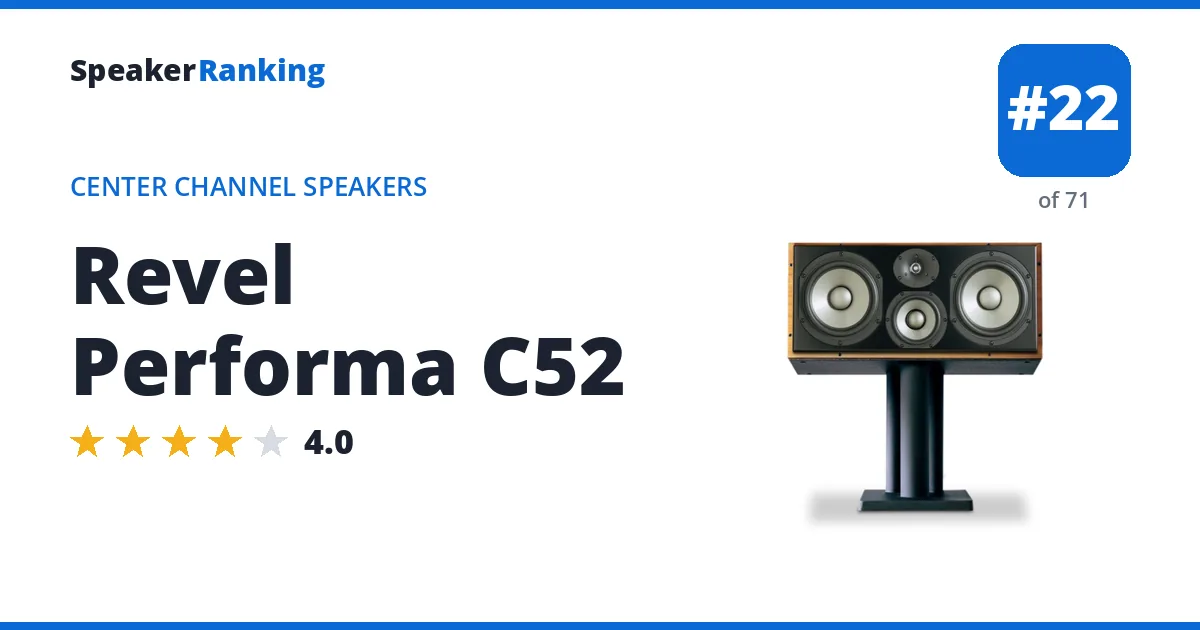
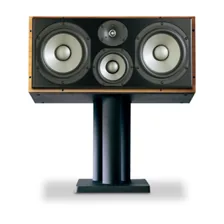 #22 Revel Performa C52: $2,500 each Discontinued eBay
Newer model: the Revel Performa4 C245, ranked lower, estimated 4/5.
Pros: A three-way center with a 1” aluminum tweeter in Revel’s waveguide, a 5.25” midrange and two 8” ceramic composite woofers. Audio Science Review measured low on-axis deviation (0.35) and even horizontal coverage out to about ±50 degrees, for a preference score of 4.39 that reaches 7.25 with an ideal subwoofer. 90dB sensitivity. Measured bass extension of 76.9Hz (-3dB).
Cons: Bass rolls off at 76.9Hz (-3dB) and about 52Hz (-10dB), and the listening window spans 3.0dB from 300Hz to 5kHz. The impedance dips to 3.1 ohms. It dates from the original Performa series and is only available used. Discontinued.
Full Revel Performa C52 review and specifications →
| Bass Extension (-10dB) | about 51.9Hz (measured, Audio Science Review) |
|---|---|
| Bass Extension (-3dB) | 76.9Hz (measured, Audio Science Review) |
| DIY Kit | No |
| Dimensions | 10.9”H x 24.6”W x 10.6”D (276 x 626 x 268 mm) |
| Drivers | 1” aluminum dome tweeter with waveguide, 5.25” midrange, 2x 8” MCC woofers |
| Impedance | 6 ohms nominal, 3.1 ohms minimum (manufacturer specified) |
| Sensitivity | 90dB (2.83V/1m, manufacturer specified) |
| Spinorama Preference Score | 4.39 |
| Spinorama Preference Score with Perfect Sub | 7.25 |
| Weight | 40.8 lbs (18.5 kg) |
- Links
- Reviews, Comparisons and Sound Samples
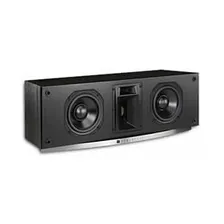 #23 JBL Synthesis SAM3HA: $1,500 each Discontinued eBay
Pros: A horizontal LCR from JBL’s Synthesis Three Array system with a 1” titanium compression driver on a constant-directivity horn between two 6.5” woofers. Published Spinorama data shows bass to 64.8Hz (-3dB) and about 43Hz (-10dB), and a preference score of 4.86 that reaches 7.37 with an ideal subwoofer. Measured bass extension of 64.8Hz (-3dB).
Cons: The only Spinorama data is low quality, digitized from a published chart. On-axis deviation is moderate (0.85). It is long discontinued and available only used.
Full JBL Synthesis SAM3HA review and specifications →
| Bass Extension (-10dB) | about 42.5Hz (measured, spinorama.org) |
|---|---|
| Bass Extension (-3dB) | 64.8Hz (measured, spinorama.org) |
| DIY Kit | No |
| Dimensions | 9.6”H x 28.6”W x 9.1”D (244 x 727 x 230 mm) |
| Drivers | 1” titanium compression driver with constant-directivity horn, 2x 6.5” woofers |
| Frequency Response | 48Hz-40kHz -3dB (manufacturer specified) |
| Impedance | 6 ohms nominal (manufacturer specified) |
| Sensitivity | 89dB (2.83V/1m, manufacturer specified) |
| Spinorama Preference Score | 4.86 |
| Spinorama Preference Score with Perfect Sub | 7.37 |
| Weight | 30.9 lbs (14 kg) |
- Reviews, Comparisons and Sound Samples
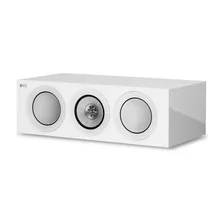 #24 KEF R2c: $1,299.99 each Discontinued eBay
Newer model: the KEF R2 Meta, ranked higher, rated 4.3/5.
Pros: A sealed three-way center with KEF’s Uni-Q coaxial driver (1” aluminum tweeter inside a 5” midrange) between two 5.25” woofers. Erin’s Audio Corner measured even coverage of about ±50 degrees both horizontally and vertically, so it sounds consistent above or below a screen and across a wide sofa. Preference score 4.37, rising to 7.22 with an ideal subwoofer. Measured bass extension of 79.8Hz (-3dB).
Cons: Bass rolls off at 79.8Hz (-3dB) and about 54Hz (-10dB), and the listening window spans 3.4dB from 300Hz to 5kHz. KEF replaced it with the R2 Meta. Discontinued.
Full KEF R2c review and specifications →
| Bass Extension (-10dB) | about 53.9Hz (measured, Erin’s Audio Corner) |
|---|---|
| Bass Extension (-3dB) | 79.8Hz (measured, Erin’s Audio Corner) |
| DIY Kit | No |
| Dimensions | 6.9”H x 21.7”W x 12.4”D (176 x 551 x 316 mm) |
| Drivers | Uni-Q: 1” vented aluminum dome tweeter, 5” aluminum midrange; 2x 5.25” hybrid aluminum woofers |
| Frequency Response | 74Hz-28kHz ±3dB (manufacturer specified) |
| Impedance | 8 ohms nominal (manufacturer specified) |
| Sensitivity | 87dB (manufacturer specified) |
| Spinorama Preference Score | 4.37 |
| Spinorama Preference Score with Perfect Sub | 7.22 |
| Weight | 37.3 lbs (16.9 kg) |
| Woofer Cabinet | sealed |
- Reviews, Comparisons and Sound Samples
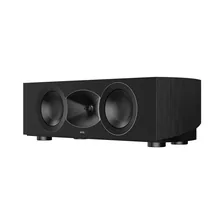 #25 Revel Performa4 C245: $1,499.95 each Estimated Audio Advice eBay
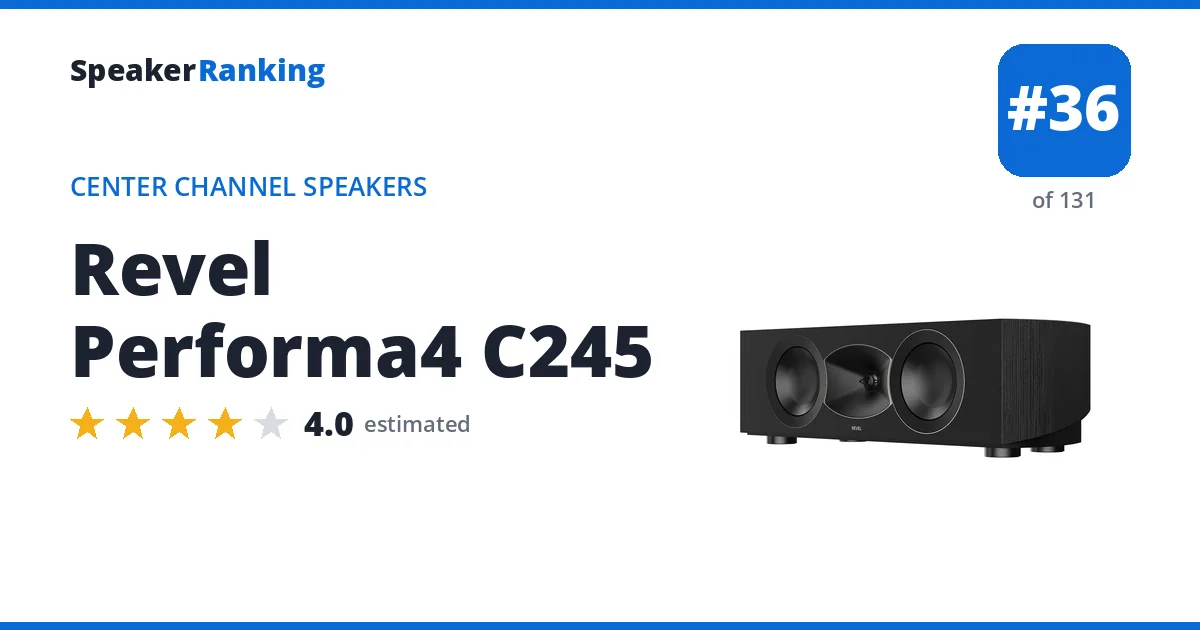
Older models: the Revel Performa3 C205 (ranked higher, rated 4.1/5), the Revel Performa3 C208 (ranked higher, rated 4/5) and the Revel Performa C52 (ranked higher, rated 4/5).
Pros: The center channel of Revel’s Performa4 series, launched in 2026 to replace Performa3. A 1” Deep Ceramic Composite dome tweeter sits in Revel’s seventh generation Acoustic Lens waveguide between two 5.25” ceramic composite woofers, in a ported cabinet 181mm tall.
Cons: No independent measurements yet, so its tonal balance and directivity can’t be compared directly with measured centers; the rating is estimated from its predecessor’s measurements. Sensitivity is a modest 86dB, and two 5.25” woofers in a ported box will need a subwoofer for full-range movie bass.
Full Revel Performa4 C245 review and specifications →
| Dimensions | 7.1”H x 23.4”W x 10.9”D (181 x 595 x 277 mm) |
|---|---|
| Drivers | 1” DCC dome tweeter with Acoustic Lens waveguide, 2x 5.25” MCC woofers |
| Frequency Response | 55Hz-40kHz ±6dB (manufacturer specified) |
| Impedance | 6 ohms nominal (manufacturer specified) |
| Sensitivity | 86dB (manufacturer specified) |
| Weight | 27.1 lbs (12.3 kg) |
| Woofer Cabinet | ported |
- Links
- Reviews, Comparisons and Sound Samples
- No independent measurement review is linked for this model; it is ranked from hands-on listening and comparison against similarly priced speakers.
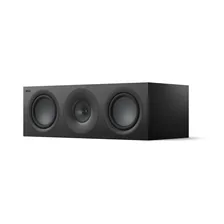 #26 KEF Q6 Meta: $849.99 each Amazon eBay
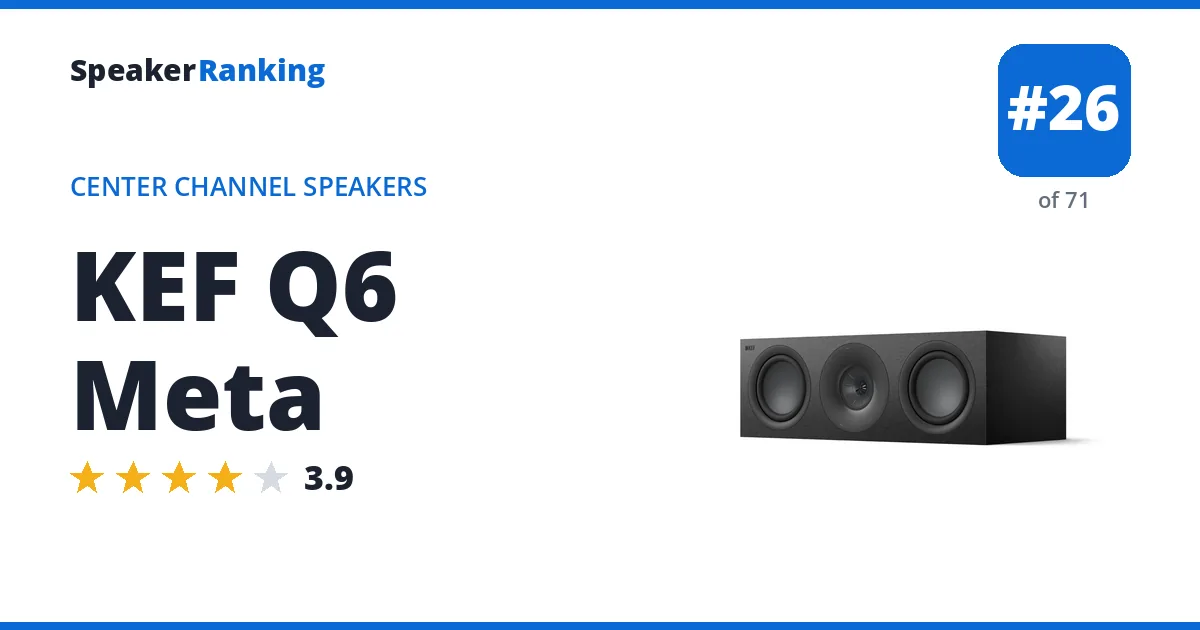
Older models: the KEF Q250c (ranked lower, rated 3.9/5) and the KEF Q650c (ranked lower, rated 3.7/5).
Pros: A true three-way center with a Uni-Q coaxial driver (0.75” vented aluminium tweeter with MAT inside a 4” midrange) between two 6.5” bass drivers, replacing the two-way Q650c at about the same price. KEF’s Spinorama data shows the most consistent directivity of any center here (2.78dB directivity index deviation), so reflected sound matches the direct sound closely, with the listening window within 2.1dB from 300Hz to 5kHz. Bass reaches 60.7Hz (-3dB) and about 40Hz (-10dB), deep for a center at $850.
Cons: The only measurements are KEF’s own, and spinorama.org computes no preference score for them, so the ranking is an estimate. Sensitivity is a low 86dB and the impedance dips to 3.2 ohms, so it wants a receiver with some power in reserve. Maximum output is rated at 109dB.
Full KEF Q6 Meta review and specifications →
| Bass Extension (-10dB) | about 39.6Hz (measured, manufacturer data via spinorama.org) |
|---|---|
| Bass Extension (-3dB) | 60.7Hz (measured, manufacturer data via spinorama.org) |
| DIY Kit | No |
| Dimensions | 8.3”H x 24.8”W x 11.9”D (210 x 629 x 303 mm) |
| Drivers | Uni-Q: 19mm (0.75”) vented aluminium dome tweeter with MAT, 100mm (4”) aluminium midrange; 2x 165mm (6.5”) hybrid aluminium bass units |
| Frequency Response | 63Hz-20kHz ±3dB (manufacturer specified) |
| Impedance | 4 ohms nominal, 3.2 ohms minimum (manufacturer specified) |
| Maximum SPL | 109dB (manufacturer specified) |
| Sensitivity | 86dB (2.83V/1m, manufacturer specified) |
| Weight | 31.1 lbs (14.1 kg) |
| Woofer Cabinet | sealed |
- Links
- Reviews, Comparisons and Sound Samples
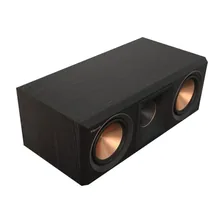 #27 Klipsch RP-500C II: $329.99 each Amazon eBay
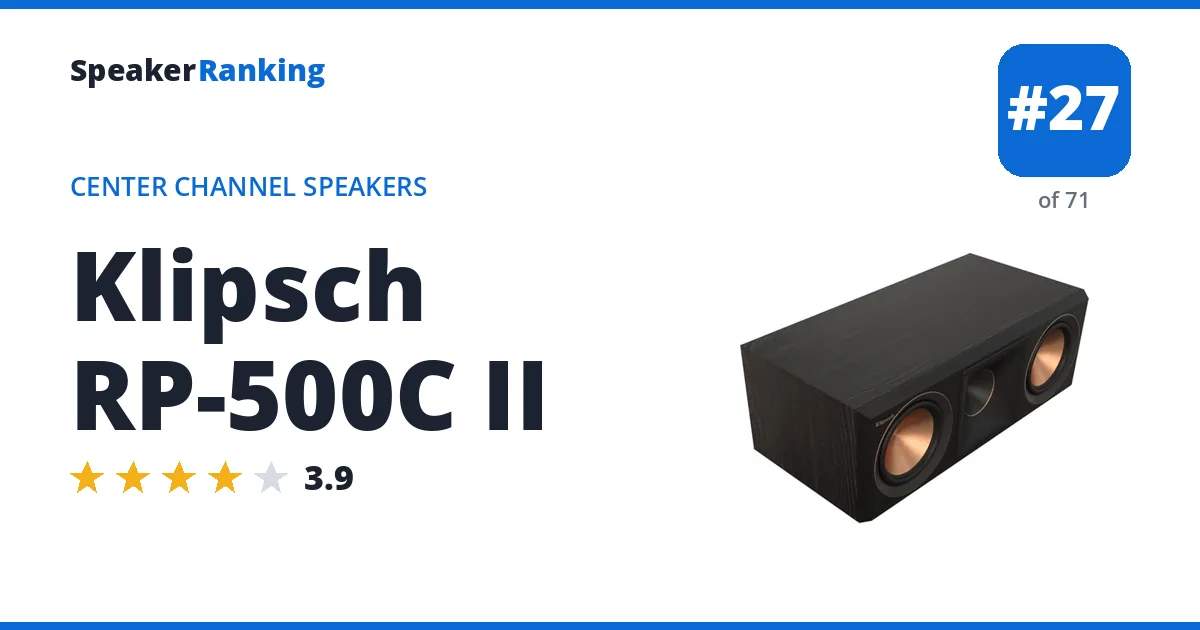
Pros: A 1” titanium tweeter in Klipsch’s Tractrix horn between two 5.25” Cerametallic woofers, with a very high 94dB sensitivity, so even a modest receiver drives it to loud levels. Erin’s Audio Corner measured a listening window within 2.6dB from 300Hz to 5kHz and a preference score of 4.53 that reaches 7.28 with an ideal subwoofer, a strong result at $330. Measured bass extension of 82.0Hz (-3dB).
Cons: On-axis response is uneven (1.09dB average deviation), and the horn’s directivity changes more across frequency than any other center here (4.34dB directivity index deviation), so tone shifts between the direct sound and room reflections. Bass rolls off at 82Hz (-3dB) and about 54Hz (-10dB).
Full Klipsch RP-500C II review and specifications →
| Bass Extension (-10dB) | about 54.4Hz (measured, Erin’s Audio Corner) |
|---|---|
| Bass Extension (-3dB) | 82.0Hz (measured, Erin’s Audio Corner) |
| DIY Kit | No |
| Dimensions | 6.9”H x 19.3”W x 10.6”D (174 x 491 x 269 mm) |
| Drivers | 1” titanium LTS vented tweeter with Tractrix horn, 2x 5.25” Cerametallic woofers |
| Frequency Response | 56Hz-25kHz ±3dB (manufacturer specified) |
| Impedance | 8 ohms nominal (manufacturer specified) |
| Sensitivity | 94dB (2.83V/1m, manufacturer specified) |
| Spinorama Preference Score | 4.53 |
| Spinorama Preference Score with Perfect Sub | 7.28 |
| Weight | 18.3 lbs (8.3 kg) |
| Woofer Cabinet | ported (rear Tractrix port) |
- Links
- Reviews, Comparisons and Sound Samples
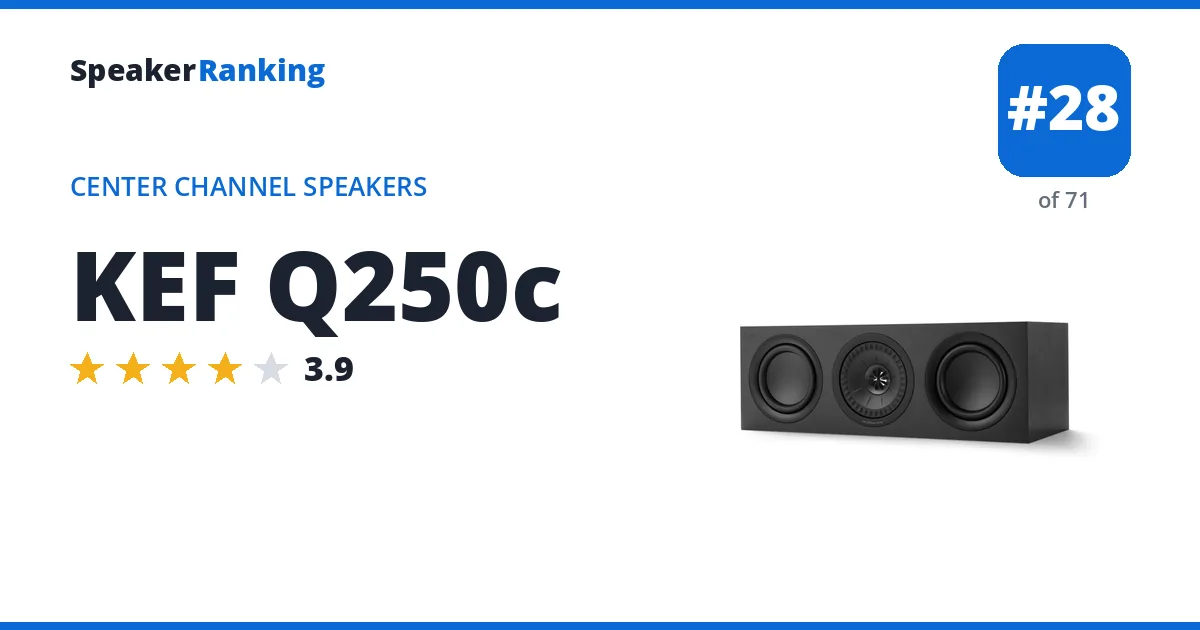
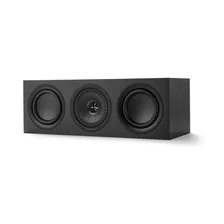 #28 KEF Q250c: $599.99 each Discontinued eBay
Newer model: the KEF Q6 Meta, ranked higher, rated 3.9/5.
Pros: A compact two-way center with a 5.25” Uni-Q coaxial driver and two 5.25” passive radiators, so it has no rear port and can sit close to a wall. Erin’s Audio Corner measured even coverage of about ±45 degrees both horizontally and vertically, and a preference score that reaches 6.94 with an ideal subwoofer. Measured bass extension of 90.8Hz (-3dB).
Cons: On-axis response is uneven (0.97dB average deviation) and bass rolls off at 90.8Hz (-3dB) and about 55Hz (-10dB), so its score without a subwoofer is 4.19. KEF replaced it with the Q6 Meta. Discontinued.
Full KEF Q250c review and specifications →
| Bass Extension (-10dB) | about 54.7Hz (measured, Erin’s Audio Corner) |
|---|---|
| Bass Extension (-3dB) | 90.8Hz (measured, Erin’s Audio Corner) |
| DIY Kit | No |
| Dimensions | 8.4”H x 20.7”W x 7.2”D (214 x 525 x 184 mm) |
| Drivers | Uni-Q: 1” vented aluminum dome tweeter in 5.25” aluminum cone; 2x 5.25” passive radiators |
| Frequency Response | 68Hz-28kHz ±3dB (manufacturer specified) |
| Impedance | 8 ohms nominal, 3.4 ohms minimum (manufacturer specified) |
| Maximum SPL | 108dB (manufacturer specified) |
| Sensitivity | 87dB (2.83V/1m, manufacturer specified) |
| Spinorama Preference Score | 4.19 |
| Spinorama Preference Score with Perfect Sub | 6.94 |
| Weight | 16.5 lbs (7.5 kg) |
- Reviews, Comparisons and Sound Samples
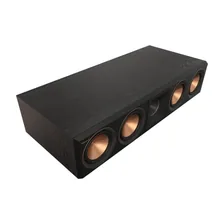 #29 Klipsch RP-504C II: $499.99 each Amazon eBay
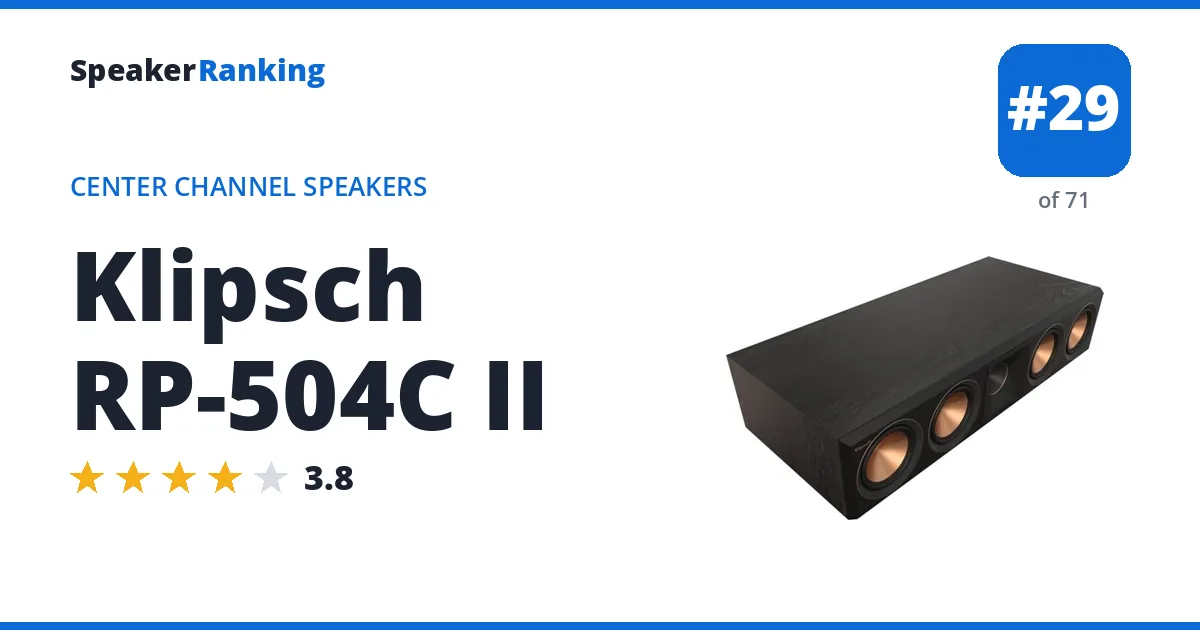
Pros: The largest Reference Premiere center puts four 5.25” Cerametallic woofers around a 1” titanium tweeter in a Tractrix horn, for a very high 96dB sensitivity. Erin’s Audio Corner measured the deepest bass of the Klipsch centers here, 71.8Hz (-3dB) and about 43Hz (-10dB), and a preference score of 4.58 without a subwoofer. Measured bass extension of 71.8Hz (-3dB).
Cons: On-axis response is the least even of the Klipsch centers (1.13dB average deviation), and directivity varies strongly with frequency (4.27dB directivity index deviation), so the tone changes for off-center seats and in reflective rooms. It is 814mm wide and 383mm deep, so check shelf depth before buying.
Full Klipsch RP-504C II review and specifications →
| Bass Extension (-10dB) | about 43.4Hz (measured, Erin’s Audio Corner) |
|---|---|
| Bass Extension (-3dB) | 71.8Hz (measured, Erin’s Audio Corner) |
| DIY Kit | No |
| Dimensions | 6.9”H x 32”W x 15.1”D (174 x 814 x 383 mm) |
| Drivers | 1” titanium LTS vented tweeter with Tractrix horn, 4x 5.25” Cerametallic woofers |
| Frequency Response | 50Hz-25kHz ±3dB (manufacturer specified) |
| Impedance | 8 ohms nominal (manufacturer specified) |
| Sensitivity | 96dB (2.83V/1m, manufacturer specified) |
| Spinorama Preference Score | 4.58 |
| Spinorama Preference Score with Perfect Sub | 6.83 |
| Weight | 36.4 lbs (16.5 kg) |
| Woofer Cabinet | ported (rear Tractrix ports) |
- Links
- Reviews, Comparisons and Sound Samples
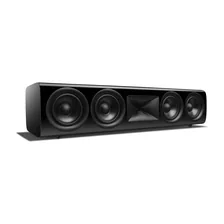 #30 JBL HDI-4500: $2,119.95 each JBL eBay
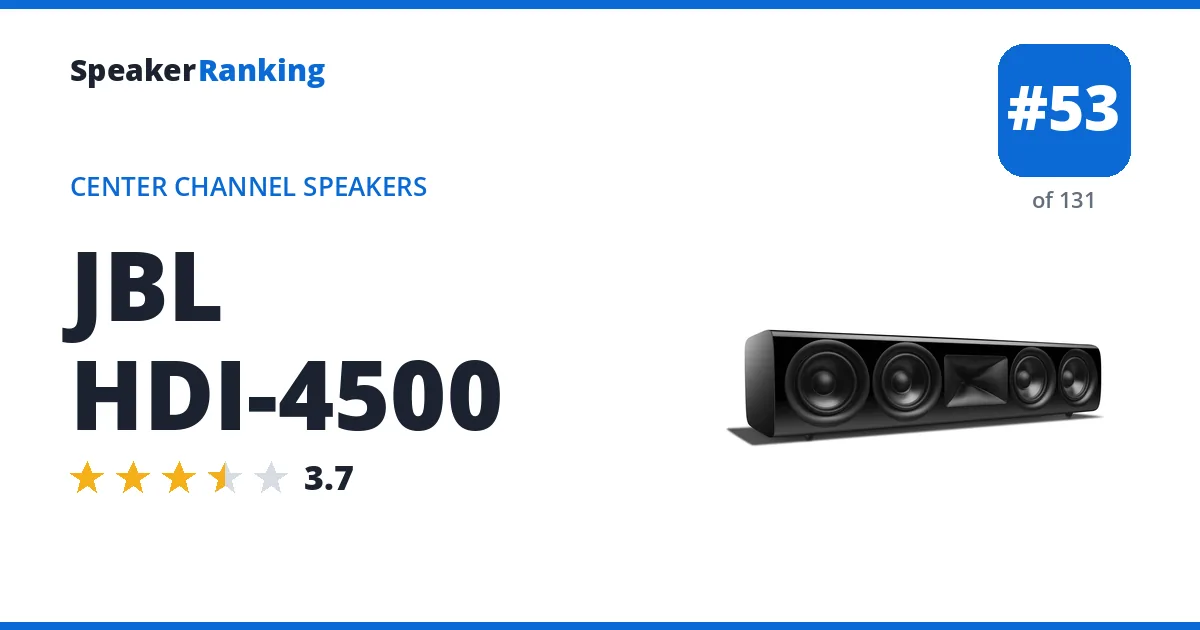
Pros: A 1” compression driver in JBL’s High Definition Imaging horn sits between four 5.25” aluminum matrix woofers. Erin’s Audio Corner measured a fairly flat on-axis response (0.30 average deviation) and a preference score of 4.08 without a subwoofer, with bass reaching 67.4Hz (-3dB) and about 44Hz (-10dB). 90dB sensitivity and a compression driver give it plenty of clean output for large rooms. Measured bass extension of 67.4Hz (-3dB).
Cons: The listening window spans 3.2dB from 300Hz to 5kHz and the predicted in-room response is only moderately smooth (0.60), so it is less neutral than the best centers here. At $2120 it costs more than several centers that measure better.
Full JBL HDI-4500 review and specifications →
| Bass Extension (-10dB) | about 43.9Hz (measured, Erin’s Audio Corner) |
|---|---|
| Bass Extension (-3dB) | 67.4Hz (measured, Erin’s Audio Corner) |
| DIY Kit | No |
| Drivers | 1” 2410H-2 compression driver with HDI horn, 4x 5.25” aluminum matrix woofers |
| Frequency Response | 50Hz-30kHz -6dB (manufacturer specified) |
| Impedance | 4 ohms nominal (manufacturer specified) |
| Sensitivity | 90dB (2.83V/1m, manufacturer specified) |
| Spinorama Preference Score | 4.08 |
| Spinorama Preference Score with Perfect Sub | 6.28 |
| Woofer Cabinet | ported (rear) |
- Links
- Reviews, Comparisons and Sound Samples
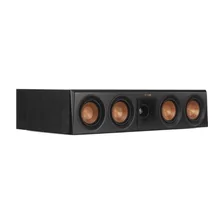 #31 Klipsch RP-404C II: $399.99 each Amazon eBay
Pros: A shallow sealed center only 164mm deep, easy to wall mount or tuck under a TV, with four 4” Cerametallic woofers around a 1” titanium tweeter in a Tractrix horn and a 94dB sensitivity. Erin’s Audio Corner measured a preference score of 7.17 when paired with an ideal subwoofer. Measured bass extension of 124.5Hz (-3dB).
Cons: Bass rolls off very early, at 124.5Hz (-3dB) and about 77Hz (-10dB), so it needs a subwoofer crossed over higher than the usual 80Hz, and without one its score drops to 3.54. On-axis response is uneven (0.87dB average deviation) and the listening window spans 3.5dB from 300Hz to 5kHz.
Full Klipsch RP-404C II review and specifications →
| Bass Extension (-10dB) | about 76.8Hz (measured, Erin’s Audio Corner) |
|---|---|
| Bass Extension (-3dB) | 124.5Hz (measured, Erin’s Audio Corner) |
| DIY Kit | No |
| Dimensions | 5.7”H x 26.9”W x 6.5”D (145 x 682 x 164 mm) |
| Drivers | 1” titanium LTS vented tweeter with Tractrix horn, 4x 4” Cerametallic woofers |
| Frequency Response | 87Hz-25kHz ±3dB (manufacturer specified) |
| Impedance | 8 ohms nominal (manufacturer specified) |
| Sensitivity | 94dB (2.83V/1m, manufacturer specified) |
| Spinorama Preference Score | 3.54 |
| Spinorama Preference Score with Perfect Sub | 7.17 |
| Weight | 20.4 lbs (9.25 kg) |
| Woofer Cabinet | sealed |
- Links
- Reviews, Comparisons and Sound Samples
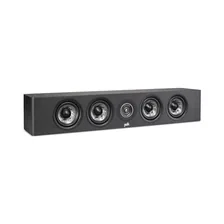 #32 Polk Audio Reserve R350: $519.00 each Amazon eBay
Pros: A slim sealed center, 141mm tall and 188mm deep, with a 1” Pinnacle ring radiator tweeter and four 4” Turbine cone woofers, designed to sit under a TV or mount on a wall. Audio Science Review measured a fairly flat on-axis response (0.31 average deviation), and the score rises to 6.72 with an ideal subwoofer. Measured bass extension of 85.0Hz (-3dB).
Cons: Bass rolls off at 85Hz (-3dB) and about 49Hz (-10dB), so a subwoofer is needed. The listening window spans 3.0dB from 300Hz to 5kHz, and the preference score without a subwoofer is a middling 3.97.
Full Polk Audio Reserve R350 review and specifications →
| Bass Extension (-10dB) | about 48.7Hz (measured, Audio Science Review) |
|---|---|
| Bass Extension (-3dB) | 85.0Hz (measured, Audio Science Review) |
| DIY Kit | No |
| Dimensions | 5.6”H x 30”W x 7.4”D (141 x 762 x 188 mm) |
| Drivers | 1” Pinnacle ring radiator tweeter, 4x 4” Turbine cone woofers |
| Frequency Response | 75Hz-35kHz -3dB (manufacturer specified) |
| Impedance | 3.9 ohms minimum, compatible with 4 to 8 ohm outputs (manufacturer specified) |
| Sensitivity | 87dB (2.83V/1m, manufacturer specified) |
| Spinorama Preference Score | 3.97 |
| Spinorama Preference Score with Perfect Sub | 6.72 |
| Weight | 19.8 lbs (9 kg) |
| Woofer Cabinet | sealed |
- Links
- Reviews, Comparisons and Sound Samples
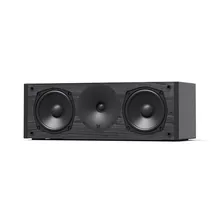 #33 Monolith Encore C6: $249.99 each Discontinued eBay
Pros: A budget two-way center with a 1” silk dome tweeter in a waveguide between two 6.5” woofers. Erin’s Audio Corner measured low on-axis deviation (0.24) and bass to 79.1Hz (-3dB) and about 51Hz (-10dB). Measured bass extension of 79.1Hz (-3dB).
Cons: The listening window spans 3.4dB from 300Hz to 5kHz and the predicted in-room response is not smooth (0.54), so the preference score is 3.62 without a subwoofer. The 4 ohm load suits a capable receiver. Discontinued.
Full Monolith Encore C6 review and specifications →
| Bass Extension (-10dB) | about 51.1Hz (measured, Erin’s Audio Corner) |
|---|---|
| Bass Extension (-3dB) | 79.1Hz (measured, Erin’s Audio Corner) |
| DIY Kit | No |
| Dimensions | 7.9”H x 22.2”W x 9.9”D (201 x 564 x 251 mm) |
| Drivers | 1” silk dome tweeter with waveguide, 2x 6.5” long fiber pulp woofers |
| Frequency Response | 56Hz-20kHz (manufacturer specified) |
| Impedance | 4 ohms nominal (manufacturer specified) |
| Sensitivity | 87.7dB (2.83V/1m, manufacturer specified) |
| Spinorama Preference Score | 3.62 |
| Spinorama Preference Score with Perfect Sub | 6.49 |
| Weight | 22 lbs (10 kg) |
| Woofer Cabinet | ported |
- Reviews, Comparisons and Sound Samples
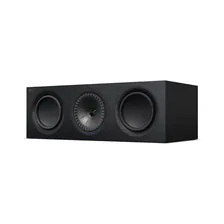 #34 KEF Q650c: $749.99 each Discontinued eBay
Newer model: the KEF Q6 Meta, ranked higher, rated 3.9/5.
Pros: A 2.5-way center with KEF’s 5.25” Uni-Q coaxial driver between two 6.5” woofers. Erin’s Audio Corner measured bass to 67.4Hz (-3dB) and about 46Hz (-10dB), deeper than the smaller Q250c. Measured bass extension of 67.4Hz (-3dB).
Cons: On-axis response is uneven (0.98dB average deviation) and the listening window spans 4.7dB from 300Hz to 5kHz, and horizontal coverage is narrow (about ±20 degrees), the classic side-to-side cancellation of a two-woofer center. Preference score 3.92 without a subwoofer. KEF replaced it with the Q6 Meta. Discontinued.
Full KEF Q650c review and specifications →
| Bass Extension (-10dB) | about 45.7Hz (measured, Erin’s Audio Corner) |
|---|---|
| Bass Extension (-3dB) | 67.4Hz (measured, Erin’s Audio Corner) |
| DIY Kit | No |
| Dimensions | 8.3”H x 24.8”W x 12”D (210 x 629 x 304 mm) |
| Drivers | Uni-Q: 1” vented aluminum dome tweeter in 5.25” aluminum cone; 2x 6.5” woofers |
| Frequency Response | 64Hz-28kHz ±3dB (manufacturer specified) |
| Impedance | 8 ohms nominal, 4.2 ohms minimum (manufacturer specified) |
| Maximum SPL | 110dB (manufacturer specified) |
| Sensitivity | 87dB (2.83V/1m, manufacturer specified) |
| Spinorama Preference Score | 3.92 |
| Spinorama Preference Score with Perfect Sub | 6.53 |
| Weight | 30 lbs (13.6 kg) |
| Woofer Cabinet | ported |
- Reviews, Comparisons and Sound Samples
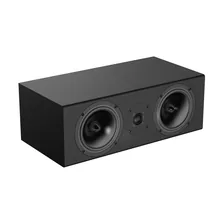 #35 Ascend Acoustics CMT-340 SE Center: $299 each Discontinued eBay
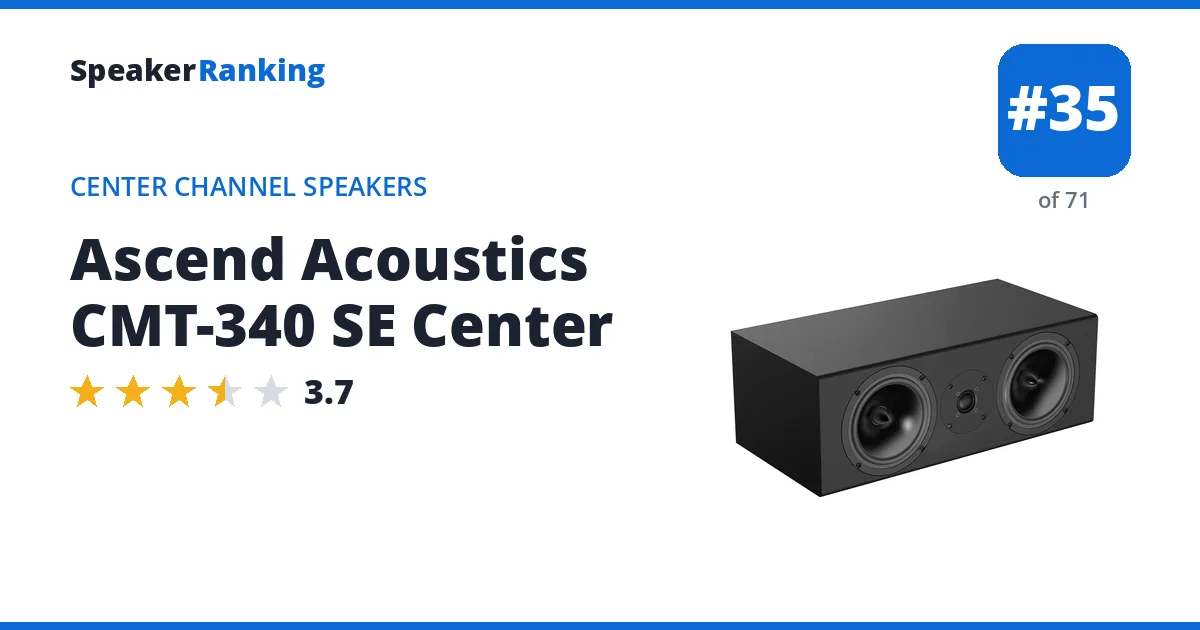
Newer model: the Ascend Acoustics CMT-340 SE2, rated 4.4/5. Ascend sells the SE2 both as this horizontal center and as the vertical mini-tower pair.
Pros: A two-way center with a SEAS 27mm soft dome tweeter between two 6.5” long-throw woofers and a high 90dB anechoic sensitivity. Audio Science Review measured wide horizontal coverage (about ±60 degrees) and a preference score that reaches 6.59 with an ideal subwoofer. Measured bass extension of 85.7Hz (-3dB).
Cons: On-axis deviation is moderate (0.84) and the listening window spans 3.6dB from 300Hz to 5kHz. Bass rolls off at 85.7Hz (-3dB) and about 57Hz (-10dB), so its score without a subwoofer is 3.65. Ascend now sells the revised CMT-340SE2. Discontinued.
Full Ascend Acoustics CMT-340 SE Center review and specifications →
| Bass Extension (-10dB) | about 56.7Hz (measured, Audio Science Review) |
|---|---|
| Bass Extension (-3dB) | 85.7Hz (measured, Audio Science Review) |
| DIY Kit | No |
| Dimensions | 7.5”H x 21”W x 10.5”D (191 x 533 x 267 mm) |
| Drivers | 27mm SEAS soft dome tweeter, 2x 6.5” long-throw polygel woofers |
| Frequency Response | 48Hz-22kHz ±3dB (manufacturer specified) |
| Sensitivity | 90dB anechoic (2.83V/1m, manufacturer specified) |
| Spinorama Preference Score | 3.65 |
| Spinorama Preference Score with Perfect Sub | 6.59 |
| Weight | 26 lbs (11.8 kg) |
| Woofer Cabinet | ported (rear) |
- Reviews, Comparisons and Sound Samples
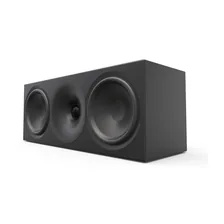 #36 Arendal Sound 1961 Center: $650 each Arendal Sound eBay
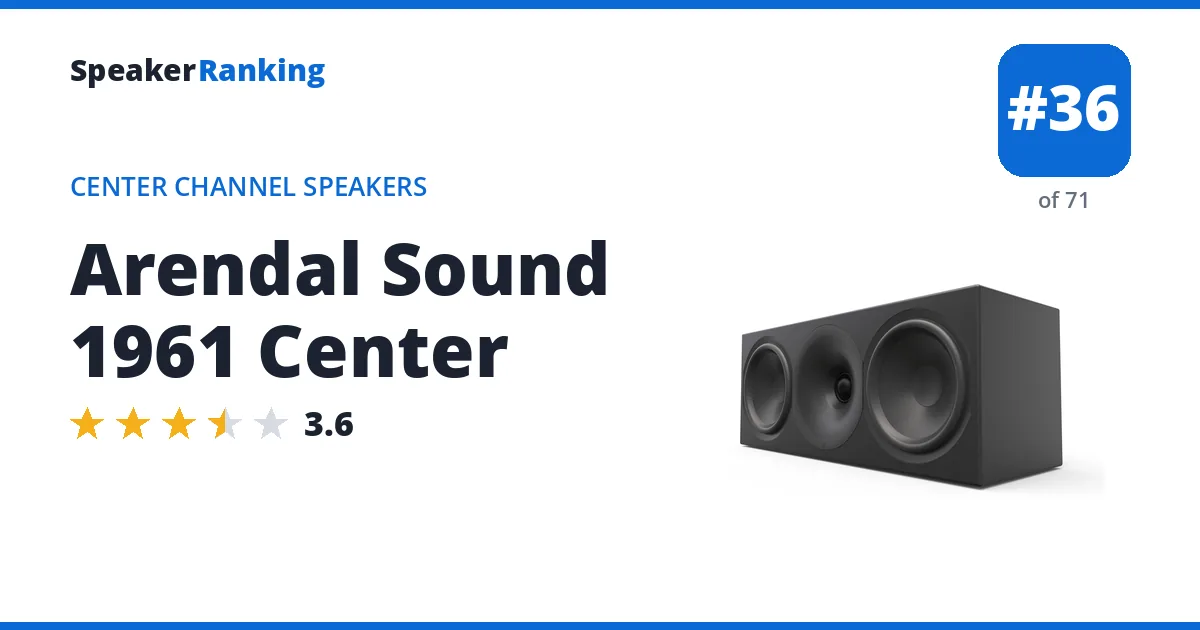
Pros: A sealed two-way center with a 28mm soft dome tweeter in a waveguide between two 5.5” woofers; it is the same speaker as the 1961 Monitor, so it matches 1961 left and right speakers exactly. Audio Science Review measured low on-axis deviation (0.46) and a listening window within 2.7dB from 300Hz to 5kHz, and the score rises to 6.56 with an ideal subwoofer. Measured bass extension of 101.1Hz (-3dB).
Cons: Bass is limited for a speaker this size, rolling off at 101Hz (-3dB) and about 72Hz (-10dB), so it depends on a subwoofer. Its preference score without one is 3.32. It is sold only direct from Arendal.
Full Arendal Sound 1961 Center review and specifications →
| Bass Extension (-10dB) | about 72.2Hz (measured, Audio Science Review) |
|---|---|
| Bass Extension (-3dB) | 101.1Hz (measured, Audio Science Review) |
| DIY Kit | No |
| Dimensions | 6.4”H x 16.7”W x 5.9”D (163 x 425 x 150 mm) |
| Drivers | 28mm soft dome tweeter with waveguide, 2x 5.5” woofers |
| Frequency Response | 70Hz-20kHz anechoic (manufacturer specified) |
| Impedance | 4 ohms nominal (manufacturer specified) |
| Sensitivity | 87dB (2.83V/1m, manufacturer specified) |
| Spinorama Preference Score | 3.32 |
| Spinorama Preference Score with Perfect Sub | 6.56 |
| Weight | 16 lbs (7.25 kg) |
| Woofer Cabinet | sealed |
- Links
- Reviews, Comparisons and Sound Samples
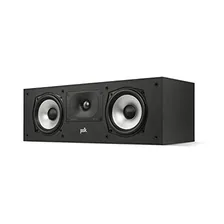 #37 Polk Audio XT30: $139.00 each Amazon eBay
Pros: One of the least expensive centers here at $139, with a 1” Terylene dome tweeter between two 5.25” woofers and 89dB sensitivity. Erin’s Audio Corner measured a flat on-axis response (0.26 average deviation) and deeper bass than the slimmer XT35, reaching 77.6Hz (-3dB) and about 51Hz (-10dB). Measured bass extension of 77.6Hz (-3dB).
Cons: The listening window spans 3.0dB from 300Hz to 5kHz and the predicted in-room response is not very smooth (0.51), so it sounds less even off axis and in reflective rooms. The preference score without a subwoofer is 3.89.
Full Polk Audio XT30 review and specifications →
| Bass Extension (-10dB) | about 50.7Hz (measured, Erin’s Audio Corner) |
|---|---|
| Bass Extension (-3dB) | 77.6Hz (measured, Erin’s Audio Corner) |
| DIY Kit | No |
| Dimensions | 6.5”H x 19”W x 8.1”D (166 x 483 x 207 mm) |
| Drivers | 1” Terylene dome tweeter, 2x 5.25” bi-laminate paper woofers |
| Frequency Response | 77Hz-26kHz -3dB (manufacturer specified) |
| Sensitivity | 89dB (manufacturer specified) |
| Spinorama Preference Score | 3.89 |
| Spinorama Preference Score with Perfect Sub | 6.50 |
| Weight | 13 lbs (5.9 kg) |
| Woofer Cabinet | ported (rear) |
- Links
- Reviews, Comparisons and Sound Samples
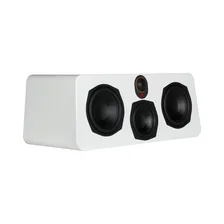 #38 Aperion Audio Novus N5C: $349.30 each Aperion Audio eBay
Pros: A sealed three-way center with a 1” silk dome tweeter stacked above a 4” aramid midrange in a vertical array between two 5.25” woofers, which keeps horizontal dispersion wide: Erin’s Audio Corner measured even coverage out to about ±70 degrees, so dialogue stays clear across a wide seating row. Measured bass extension of 82.0Hz (-3dB).
Cons: The listening window spans 4.3dB from 300Hz to 5kHz, among the least even of the centers here, and bass rolls off at 82Hz (-3dB) and about 55Hz (-10dB). Preference score 3.55 without a subwoofer. The 4 ohm load suits a receiver with solid current delivery.
Full Aperion Audio Novus N5C review and specifications →
| Bass Extension (-10dB) | about 54.9Hz (measured, Erin’s Audio Corner) |
|---|---|
| Bass Extension (-3dB) | 82.0Hz (measured, Erin’s Audio Corner) |
| DIY Kit | No |
| Dimensions | 7.3”H x 19.1”W x 9.1”D (186 x 485 x 231 mm) |
| Drivers | 1” silk dome tweeter, 4” aramid fiber midrange, 2x 5.25” aramid fiber woofers |
| Frequency Response | 55Hz-30kHz ±3dB (manufacturer specified) |
| Impedance | 4 ohms nominal (manufacturer specified) |
| Sensitivity | 88dB (manufacturer specified) |
| Spinorama Preference Score | 3.55 |
| Spinorama Preference Score with Perfect Sub | 6.46 |
| Weight | 18.7 lbs (8.5 kg) |
| Woofer Cabinet | sealed |
- Links
- Reviews, Comparisons and Sound Samples
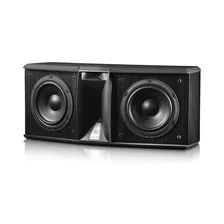 #39 JBL Synthesis Array 880: $3,800 each Discontinued eBay
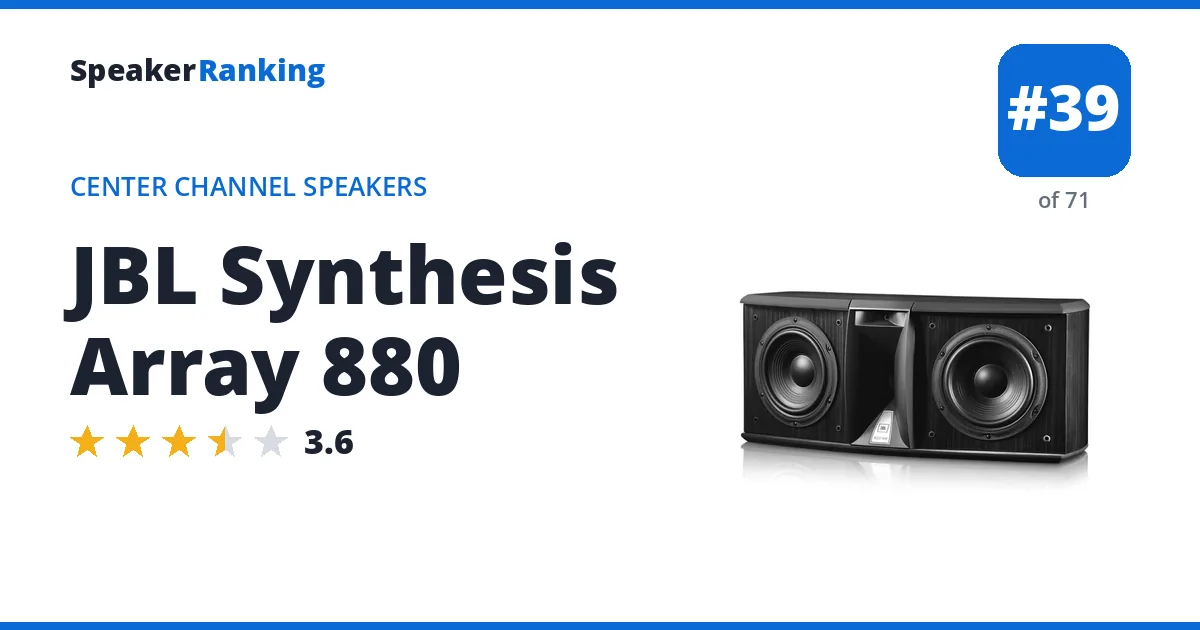
Pros: A three-way center with two compression drivers on horns (a 3” aluminum midrange and a 1” titanium tweeter) above two 8” woofers. Audio Science Review measured an exceptionally flat on-axis response (0.11 average deviation), and 90dB sensitivity with compression drivers gives it high clean output. Measured bass extension of 77.6Hz (-3dB).
Cons: Off-axis behavior is weaker: the predicted in-room response is only moderately smooth (0.60) and horizontal coverage is about ±35 degrees, so its preference score is 3.66 without a subwoofer. Bass rolls off at 77.6Hz (-3dB) and about 53Hz (-10dB). The Synthesis Array line is discontinued.
Full JBL Synthesis Array 880 review and specifications →
| Bass Extension (-10dB) | about 53.1Hz (measured, Audio Science Review) |
|---|---|
| Bass Extension (-3dB) | 77.6Hz (measured, Audio Science Review) |
| DIY Kit | No |
| Dimensions | 12.2”H x 28.7”W x 11”D (311 x 730 x 279 mm) |
| Drivers | 1” titanium compression driver, 3” aluminum dome compression driver, 2x 8” woofers |
| Frequency Response | 70Hz-40kHz (manufacturer specified) |
| Impedance | 8 ohms nominal (manufacturer specified) |
| Sensitivity | 90dB (2.83V/1m, manufacturer specified) |
| Spinorama Preference Score | 3.66 |
| Spinorama Preference Score with Perfect Sub | 6.41 |
| Weight | 46.3 lbs (21 kg) |
- Reviews, Comparisons and Sound Samples
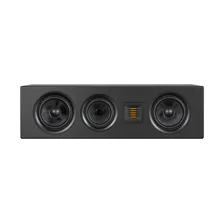 #40 Emotiva Airmotiv XC1: $229 each Estimated Emotiva eBay
Older model: the Emotiva Airmotiv C1+ (ranked lower, rated 3.4/5).
Pros: A three-way center with a 25x32mm Airmotiv folded ribbon tweeter, a 4.5” woven cone midrange and two 5.25” long-throw woofers, in a larger cabinet than the C1+ it replaces. Emotiva rates it at 50Hz to 27kHz (±3dB) and 88dB, and dual binding posts allow bi-amping.
Cons: No independent measurements yet, so its tonal balance and directivity can’t be compared directly with measured centers; the rating is estimated from its predecessor’s measurements. The 4 ohm load suits a receiver with solid current delivery; Emotiva recommends 60W or more.
Full Emotiva Airmotiv XC1 review and specifications →
| Dimensions | 7.5”H x 26”W x 9.5”D (191 x 660 x 241 mm) |
|---|---|
| Drivers | 25x32mm Airmotiv folded ribbon tweeter, 4.5” woven cone midrange, 2x 5.25” woven cone woofers |
| Frequency Response | 50Hz-27kHz ±3dB (manufacturer specified) |
| Impedance | 4 ohms nominal (manufacturer specified) |
| Sensitivity | 88dB (2.83V/1m, manufacturer specified) |
| Weight | 24.9 lbs (11.3 kg) |
- Links
- Reviews, Comparisons and Sound Samples
- No independent measurement review is linked for this model; it is ranked from hands-on listening and comparison against similarly priced speakers.
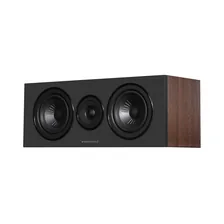 #41 Wharfedale Diamond 12.Ci: $399.00 each Estimated Wharfedale eBay
Older model: the Wharfedale Diamond 12.C (ranked lower, estimated 3.5/5).
Pros: The refined Diamond 12 center swaps the 12.C’s Kevlar woofers for 5” polypropylene cones and reworks the port and internal damping, raising rated sensitivity from 87dB to 90dB and peak output from 90dB to 96dB in a smaller cabinet.
Cons: No independent measurements yet, so its tonal balance and directivity can’t be compared directly with measured centers; the rating is estimated from its predecessor and lineup siblings. Like the 12.C it is a two-woofer horizontal layout, which tends to narrow horizontal coverage.
Full Wharfedale Diamond 12.Ci review and specifications →
| Drivers | 1” textile dome tweeter, 2x 5” advanced polypropylene woofers |
|---|---|
| Maximum SPL | 96dB peak (manufacturer specified) |
| Sensitivity | 90dB (manufacturer specified) |
| Woofer Cabinet | ported |
- Links
- Reviews, Comparisons and Sound Samples
- No independent measurement review is linked for this model; it is ranked from hands-on listening and comparison against similarly priced speakers.
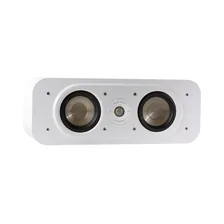 #42 Polk Audio Signature S30: $229 each Discontinued eBay
Newer model: the Polk Audio Signature Elite ES30, ranked lower, estimated 3.5/5.
Pros: A two-way center with a 1” Terylene dome tweeter between two 5.25” woofers and 89dB sensitivity. Audio Science Review measured bass to 71.8Hz (-3dB) and about 54Hz (-10dB) and fairly wide horizontal coverage (about ±55 degrees). Measured bass extension of 71.8Hz (-3dB).
Cons: The listening window spans 4.2dB from 300Hz to 5kHz and directivity is uneven (3.82dB directivity index deviation), for a preference score of 3.61 without a subwoofer. Polk replaced it with the Signature Elite ES30. Discontinued.
Full Polk Audio Signature S30 review and specifications →
| Bass Extension (-10dB) | about 54.2Hz (measured, Audio Science Review) |
|---|---|
| Bass Extension (-3dB) | 71.8Hz (measured, Audio Science Review) |
| DIY Kit | No |
| Dimensions | 7.5”H x 20”W x 10.6”D (191 x 508 x 269 mm) |
| Drivers | 1” Terylene dome tweeter, 2x 5.25” woofers |
| Impedance | 8 ohms nominal (manufacturer specified) |
| Sensitivity | 89dB (manufacturer specified) |
| Spinorama Preference Score | 3.61 |
| Spinorama Preference Score with Perfect Sub | 6.23 |
| Weight | 19 lbs (8.6 kg) |
- Links
- Reviews, Comparisons and Sound Samples
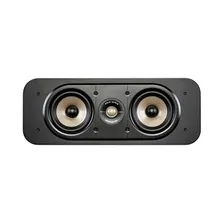 #43 Polk Audio Signature Elite ES30: $299.00 each Estimated Amazon eBay
Older model: the Polk Audio Signature S30 (ranked higher, rated 3.5/5).
Pros: The updated version of the Signature S30 with the same two-way layout: a 1” Terylene dome tweeter between two 5.25” polypropylene woofers in a bass reflex cabinet, rated at 89dB and compatible with 4 or 8 ohm amplifier outputs.
Cons: No independent measurements yet, so its tonal balance and directivity can’t be compared directly with measured centers; the rating is estimated from its predecessor’s measurements. Its predecessor measured with an uneven listening window, and this design keeps the same basic two-woofer layout, which limits horizontal coverage.
Full Polk Audio Signature Elite ES30 review and specifications →
| Dimensions | 7.5”H x 20”W x 10.6”D (191 x 508 x 269 mm) |
|---|---|
| Drivers | 1” Terylene dome tweeter, 2x 5.25” polypropylene woofers |
| Frequency Response | 55Hz-40kHz (manufacturer specified) |
| Impedance | compatible with 4 and 8 ohm outputs (manufacturer specified) |
| Sensitivity | 89dB (manufacturer specified) |
| Weight | 19 lbs (8.6 kg) |
| Woofer Cabinet | ported |
- Links
- Reviews, Comparisons and Sound Samples
- No independent measurement review is linked for this model; it is ranked from hands-on listening and comparison against similarly priced speakers.
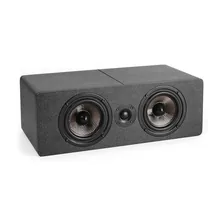 #44 Micca MB42X-C G2: $89.99 each Estimated Amazon eBay
Older model: the Micca MB42X-C (ranked lower, rated 3.4/5).
Pros: The second generation of Micca’s budget center keeps the 0.75” silk dome tweeter and two 4” carbon fiber woofers in the same compact ported cabinet, with a reworked 12dB per octave crossover that Micca says gives a more neutral tonal balance. It costs $90.
Cons: No independent measurements yet, so its tonal balance and directivity can’t be compared directly with measured centers; the rating is estimated from its predecessor’s measurements. The 4” woofers limit bass, so it needs a subwoofer, and 86dB sensitivity is modest.
Full Micca MB42X-C G2 review and specifications →
| Dimensions | 5.3”H x 15”W x 7.1”D (135 x 381 x 180 mm) |
|---|---|
| Drivers | 0.75” silk dome tweeter, 2x 4” carbon fiber woofers |
| Frequency Response | 55Hz-20kHz (manufacturer specified) |
| Impedance | 4 to 8 ohms (manufacturer specified) |
| Sensitivity | 86dB (1W/1m, manufacturer specified) |
| Woofer Cabinet | ported |
- Links
- Reviews, Comparisons and Sound Samples
- No independent measurement review is linked for this model; it is ranked from hands-on listening and comparison against similarly priced speakers.
- Head-to-Head Comparisons
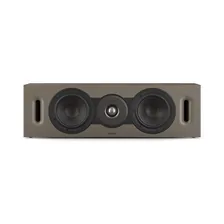 #45 DALI Sonik Cinema: $900.00 each Estimated Amazon eBay
Older model: the DALI Oberon Vokal (ranked lower, rated 3.4/5).
Pros: The center of DALI’s 2026 Sonik series, which replaced Oberon: a 29mm soft dome tweeter between two 5.25” Clarity Cone woofers with DALI’s SMC magnet system to lower distortion. Rated at 46Hz to 26kHz (±3dB), 89.5dB and 109dB maximum output.
Cons: No independent measurements yet, so its tonal balance and directivity can’t be compared directly with measured centers; the rating is estimated from its predecessor’s measurements. The two-woofer layout of its predecessor measured with narrow horizontal coverage. Nominal impedance is 6 ohms.
Full DALI Sonik Cinema review and specifications →
| Dimensions | 6.7”H x 22.5”W x 8.4”D (170 x 571 x 214 mm) |
|---|---|
| Drivers | 29mm soft dome tweeter, 2x 5.25” Clarity Cone woofers |
| Frequency Response | 46Hz-26kHz ±3dB (manufacturer specified) |
| Impedance | 6 ohms nominal (manufacturer specified) |
| Maximum SPL | 109dB (manufacturer specified) |
| Sensitivity | 89.5dB (2.83V/1m, manufacturer specified) |
| Weight | 17.4 lbs (7.9 kg) |
- Links
- Reviews, Comparisons and Sound Samples
- No independent measurement review is linked for this model; it is ranked from hands-on listening and comparison against similarly priced speakers.
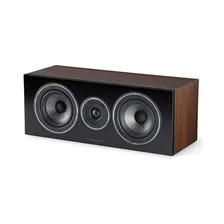 #46 Wharfedale Diamond 12.C: $399 each Discontinued Estimated eBay
Newer model: the Wharfedale Diamond 12.Ci, ranked higher, estimated 3.6/5.
Pros: A two-way center with a 1” textile dome tweeter between two 5” woven Kevlar woofers, from the Diamond 12 series whose 12.1 bookshelf measured well. The only Spinorama data, digitized from a third-party chart, shows consistent directivity (2.59dB directivity index deviation) and a listening window within 2.5dB from 300Hz to 5kHz.
Cons: That measurement is low quality and spinorama.org computes no score for it, so the rating is estimated from the series. Horizontal coverage in it is narrow (about ±20 degrees), and Wharfedale rates bass at 90Hz (-3dB), so it needs a subwoofer. Replaced by the Diamond 12.Ci. Discontinued.
Full Wharfedale Diamond 12.C review and specifications →
| DIY Kit | No |
|---|---|
| Dimensions | 7”H x 18.9”W x 8.1”D (178 x 480 x 206 mm) |
| Drivers | 1” textile dome tweeter, 2x 5” woven Kevlar woofers |
| Frequency Response | 90Hz-20kHz ±3dB (manufacturer specified) |
| Impedance | 8 ohms nominal, 3.7 ohms minimum (manufacturer specified) |
| Sensitivity | 87dB (2.83V/1m, manufacturer specified) |
| Weight | 18.7 lbs (8.5 kg) |
| Woofer Cabinet | ported |
- Reviews, Comparisons and Sound Samples
 #47 Vandersteen VCC-5: $3,300 each Audio Connection eBay
Pros: A triaxial design: a 1” alloy dome tweeter mounted coaxially in a 6.5” midrange, with two 6.5” woofers inside the cabinet and first-order crossovers. Audio Science Review measured deep bass for a center, 52.7Hz (-3dB) and about 41Hz (-10dB), and dispersion that stays even both horizontally and vertically (about ±40 degrees each), so it tolerates being placed above or below the screen. Measured bass extension of 52.7Hz (-3dB).
Cons: On-axis response is uneven (0.96dB average deviation) and the listening window spans 4.5dB from 300Hz to 5kHz. Sensitivity is a low 85dB and it weighs 68 lb. At $3300 it costs much more than centers that measure better.
Full Vandersteen VCC-5 review and specifications →
| Bass Extension (-10dB) | about 41.0Hz (measured, Audio Science Review) |
|---|---|
| Bass Extension (-3dB) | 52.7Hz (measured, Audio Science Review) |
| DIY Kit | No |
| Dimensions | 9.8”H x 24”W x 18”D (248 x 610 x 457 mm) |
| Drivers | 1” alloy dome tweeter coaxial with 6.5” mineral-filled polycone midrange, 2x 6.5” mineral-filled polycone woofers |
| Frequency Response | 50Hz-30kHz ±2dB (manufacturer specified) |
| Impedance | 6 ohms nominal, 4 ohms minimum (manufacturer specified) |
| Sensitivity | 85dB (2.83V/1m, manufacturer specified) |
| Spinorama Preference Score | 3.85 |
| Spinorama Preference Score with Perfect Sub | 6.05 |
| Weight | 67.9 lbs (30.8 kg) |
- Links
- Reviews, Comparisons and Sound Samples
 #48 SVS Prime Center: $449.00 each Amazon eBay
Pros: A three-way center with a 3.5” midrange between the 1” aluminum tweeter and two 5.25” woofers, which avoids the side-to-side cancellation of two-way centers: Erin’s Audio Corner measured the widest horizontal coverage of any center here, about ±75 degrees. Bass reaches 71.8Hz (-3dB) and about 48Hz (-10dB). Measured bass extension of 71.8Hz (-3dB).
Cons: On-axis response is uneven (1.29dB average deviation), and the preference score is 3.34 without a subwoofer and 6.0 with one. Sensitivity is a modest 86dB.
Full SVS Prime Center review and specifications →
| Bass Extension (-10dB) | about 48.2Hz (measured, Erin’s Audio Corner) |
|---|---|
| Bass Extension (-3dB) | 71.8Hz (measured, Erin’s Audio Corner) |
| DIY Kit | No |
| Dimensions | 7.7”H x 18.6”W x 9.2”D (196 x 472 x 234 mm) |
| Drivers | 1” aluminum dome tweeter, 3.5” midrange, 2x 5.25” woofers |
| Frequency Response | 48Hz-25kHz ±3dB (manufacturer specified) |
| Impedance | 8 ohms nominal (manufacturer specified) |
| Sensitivity | 86dB (2.83V/1m, manufacturer specified) |
| Spinorama Preference Score | 3.34 |
| Spinorama Preference Score with Perfect Sub | 6.00 |
| Weight | 20.3 lbs (9.2 kg) |
- Links
- Reviews, Comparisons and Sound Samples
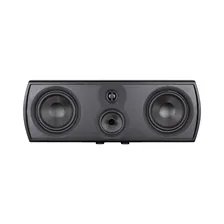 #49 Aperion Audio Verus III Grand V6C: $799.20 each Aperion Audio eBay
Pros: A sealed three-way center with a 1.1” tweeter and a 4” Kevlar midrange in a vertical array between two 6.5” Kevlar woofers. Erin’s Audio Corner measured bass to 74.7Hz (-3dB) and about 48Hz (-10dB). Measured bass extension of 74.7Hz (-3dB).
Cons: On-axis response is uneven (1.01dB average deviation) and horizontal coverage is narrow (about ±25 degrees), so seats far to the sides hear a different tonal balance. Preference score 3.34 without a subwoofer. The 4 ohm load suits a receiver with solid current delivery.
Full Aperion Audio Verus III Grand V6C review and specifications →
| Bass Extension (-10dB) | about 48.2Hz (measured, Erin’s Audio Corner) |
|---|---|
| Bass Extension (-3dB) | 74.7Hz (measured, Erin’s Audio Corner) |
| DIY Kit | No |
| Dimensions | 9.3”H x 24.8”W x 11”D (235 x 629 x 279 mm) |
| Drivers | 1.1” ASR tweeter, 4” woven Kevlar midrange, 2x 6.5” woven Kevlar woofers |
| Frequency Response | 40Hz-35kHz ±3dB (manufacturer specified) |
| Impedance | 4 ohms nominal (manufacturer specified) |
| Sensitivity | 87dB (manufacturer specified) |
| Spinorama Preference Score | 3.34 |
| Spinorama Preference Score with Perfect Sub | 5.96 |
| Weight | 33.1 lbs (15 kg) |
| Woofer Cabinet | sealed |
- Links
- Reviews, Comparisons and Sound Samples
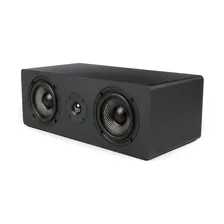 #50 Micca MB42X-C: $89.99 each Discontinued eBay
Newer model: the Micca MB42X-C G2, ranked higher, estimated 3.5/5.
Pros: A low cost compact center with a 0.75” silk dome tweeter between two 4” carbon fiber woofers. Erin’s Audio Corner measured a preference score that reaches 6.17 with an ideal subwoofer, good for $90. Measured bass extension of 101.1Hz (-3dB).
Cons: On-axis response is very uneven (1.82dB average deviation), and bass rolls off at 101.1Hz (-3dB) and about 65Hz (-10dB), so it needs a subwoofer crossed over high. Its score without one is 3.00. Micca replaced it with the MB42X-C G2. Discontinued.
Full Micca MB42X-C review and specifications →
| Bass Extension (-10dB) | about 65.2Hz (measured, Erin’s Audio Corner) |
|---|---|
| Bass Extension (-3dB) | 101.1Hz (measured, Erin’s Audio Corner) |
| DIY Kit | No |
| Dimensions | 5.3”H x 15”W x 7.1”D (135 x 381 x 180 mm) |
| Drivers | 0.75” silk dome tweeter, 2x 4” woven carbon fiber woofers |
| Frequency Response | 60Hz-20kHz (manufacturer specified) |
| Impedance | 4 to 8 ohms (manufacturer specified) |
| Sensitivity | 86dB (1W/1m, manufacturer specified) |
| Spinorama Preference Score | 3.00 |
| Spinorama Preference Score with Perfect Sub | 6.17 |
| Woofer Cabinet | ported |
- Reviews, Comparisons and Sound Samples
- Head-to-Head Comparisons
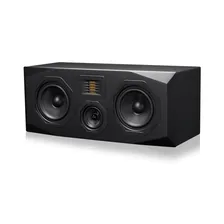 #51 Emotiva Airmotiv C1+: $299 each Discontinued eBay
Newer model: the Emotiva Airmotiv XC1, ranked higher, estimated 3.6/5.
Pros: A three-way center with a 32mm Airmotiv folded ribbon tweeter, a 3” midrange and two 5.25” woofers. Erin’s Audio Corner measured wide horizontal coverage (about ±60 degrees) and a listening window within 2.8dB from 300Hz to 5kHz, and the score reaches 6.15 with an ideal subwoofer. Measured bass extension of 112.8Hz (-3dB).
Cons: Bass rolls off very early, at 112.8Hz (-3dB) and about 67Hz (-10dB), so it needs a subwoofer crossed over high, and its score without one is 2.71. The 4 ohm load suits a capable receiver. Emotiva replaced it with the Airmotiv XC1. Discontinued.
Full Emotiva Airmotiv C1+ review and specifications →
| Bass Extension (-10dB) | about 67.1Hz (measured, Erin’s Audio Corner) |
|---|---|
| Bass Extension (-3dB) | 112.8Hz (measured, Erin’s Audio Corner) |
| DIY Kit | No |
| Dimensions | 7.8”H x 20.5”W x 8.3”D (197 x 521 x 210 mm) |
| Drivers | 32mm Airmotiv folded ribbon tweeter, 3” woven fiber midrange, 2x 5.25” woven fiber woofers |
| Frequency Response | 50Hz-28kHz (manufacturer specified) |
| Impedance | 4 ohms nominal (manufacturer specified) |
| Sensitivity | 89dB (manufacturer specified) |
| Spinorama Preference Score | 2.71 |
| Spinorama Preference Score with Perfect Sub | 6.15 |
- Reviews, Comparisons and Sound Samples
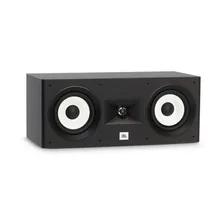 #52 JBL Stage A125C: $119.95 each Discontinued eBay
Newer model: the JBL Stage 2 245C, ranked lower, estimated 3.2/5.
Pros: A low cost sealed two-way center with a 1” aluminum tweeter in JBL’s HDI waveguide between two 5.25” woofers. Audio Science Review measured low on-axis deviation (0.28) and a listening window within 2.7dB from 300Hz to 5kHz, and the score reaches 6.00 with an ideal subwoofer. Measured bass extension of 98.1Hz (-3dB).
Cons: Bass rolls off at 98.1Hz (-3dB) and about 59Hz (-10dB), and the predicted in-room response is not smooth (0.46), so its preference score without a subwoofer is 2.86. JBL replaced the Stage line with Stage 2. Discontinued.
Full JBL Stage A125C review and specifications →
| Bass Extension (-10dB) | about 58.8Hz (measured, Audio Science Review) |
|---|---|
| Bass Extension (-3dB) | 98.1Hz (measured, Audio Science Review) |
| DIY Kit | No |
| Dimensions | 7.5”H x 18.5”W x 8.7”D (190 x 469 x 220 mm) |
| Drivers | 1” aluminum dome tweeter with HDI waveguide, 2x 5.25” polycellulose woofers |
| Frequency Response | 75Hz-40kHz (manufacturer specified) |
| Impedance | 6 ohms nominal (manufacturer specified) |
| Sensitivity | 88dB (manufacturer specified) |
| Spinorama Preference Score | 2.86 |
| Spinorama Preference Score with Perfect Sub | 6.00 |
| Weight | 17.5 lbs (7.95 kg) |
| Woofer Cabinet | sealed |
- Links
- Reviews, Comparisons and Sound Samples
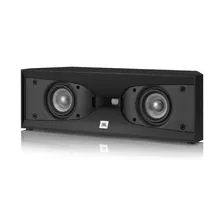 #53 JBL Studio 520C: $349.95 each Discontinued eBay
Pros: A two-way center with a 1” compression driver on a horn between two 4” woofers. Erin’s Audio Corner measured low on-axis deviation (0.30) and bass to about 51Hz at -10dB, and the score reaches 5.92 with an ideal subwoofer. Measured bass extension of 98.1Hz (-3dB).
Cons: The listening window spans 4.3dB from 300Hz to 5kHz and directivity is uneven (3.81dB directivity index deviation), for a preference score of 2.92 without a subwoofer. Discontinued.
Full JBL Studio 520C review and specifications →
| Bass Extension (-10dB) | about 51.1Hz (measured, Erin’s Audio Corner) |
|---|---|
| Bass Extension (-3dB) | 98.1Hz (measured, Erin’s Audio Corner) |
| DIY Kit | No |
| Dimensions | 6.8”H x 21.9”W x 6.6”D (172 x 555 x 168 mm) |
| Drivers | 1” compression driver with horn, 2x 4” woofers |
| Frequency Response | 60Hz-40kHz -6dB (manufacturer specified) |
| Impedance | 6 ohms nominal (manufacturer specified) |
| Sensitivity | 88dB (2.83V/1m, manufacturer specified) |
| Spinorama Preference Score | 2.92 |
| Spinorama Preference Score with Perfect Sub | 5.92 |
| Weight | 16.5 lbs (7.5 kg) |
- Reviews, Comparisons and Sound Samples
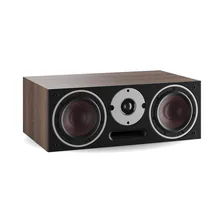 #54 DALI Oberon Vokal: $599 each Discontinued eBay
Newer model: the DALI Sonik Cinema, ranked higher, estimated 3.5/5.
Pros: A two-way center with a 29mm soft dome tweeter between two 5.25” wood fiber woofers, a front port for placement close to a wall and 89.5dB sensitivity. Audio Science Review measured low on-axis deviation (0.37) and bass to about 48Hz at -10dB. Measured bass extension of 95.2Hz (-3dB).
Cons: Horizontal coverage is narrow (about ±20 degrees), so off-center seats hear a duller voice, and bass rolls off at 95.2Hz (-3dB). Preference score 3.29 without a subwoofer. DALI replaced the Oberon line with Sonik in 2026. Discontinued.
Full DALI Oberon Vokal review and specifications →
| Bass Extension (-10dB) | about 47.6Hz (measured, Audio Science Review) |
|---|---|
| Bass Extension (-3dB) | 95.2Hz (measured, Audio Science Review) |
| DIY Kit | No |
| Dimensions | 6.3”H x 17.4”W x 11.6”D (161 x 441 x 295 mm) |
| Drivers | 29mm soft dome tweeter, 2x 5.25” wood fiber woofers |
| Frequency Response | 47Hz-26kHz ±3dB (manufacturer specified) |
| Impedance | 4 ohms nominal (manufacturer specified) |
| Maximum SPL | 109dB (manufacturer specified) |
| Sensitivity | 89.5dB (2.83V/1m, manufacturer specified) |
| Spinorama Preference Score | 3.29 |
| Spinorama Preference Score with Perfect Sub | 5.95 |
| Weight | 17.1 lbs (7.74 kg) |
| Woofer Cabinet | ported (front) |
- Links
- Reviews, Comparisons and Sound Samples
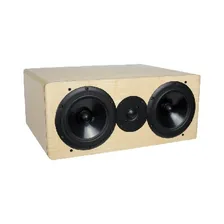 #55 AV123 X-CS: $199 each Discontinued eBay
Pros: A sealed two-way speaker with a 1” fabric dome tweeter between two 6.5” woofers and 90.5dB sensitivity, usable upright or on its side. Audio Science Review measured bass to 64.5Hz (-3dB) and about 44Hz (-10dB), and the score reaches 5.98 with an ideal subwoofer. Measured bass extension of 64.5Hz (-3dB).
Cons: On-axis response is uneven (1.26dB average deviation) and the listening window spans 3.4dB from 300Hz to 5kHz, for a preference score of 3.51 without a subwoofer. AV123 has long since closed, so it is only available used. Discontinued.
Full AV123 X-CS review and specifications →
| Bass Extension (-10dB) | about 43.8Hz (measured, Audio Science Review) |
|---|---|
| Bass Extension (-3dB) | 64.5Hz (measured, Audio Science Review) |
| DIY Kit | No |
| Dimensions | 8.5”H x 20”W x 15.5”D (216 x 508 x 394 mm) |
| Drivers | 1” treated fabric dome tweeter, 2x 6.5” treated paper woofers |
| Frequency Response | 65Hz-20kHz (manufacturer specified) |
| Impedance | 8 ohms nominal (manufacturer specified) |
| Sensitivity | 90.5dB (1W/1m, manufacturer specified) |
| Spinorama Preference Score | 3.51 |
| Spinorama Preference Score with Perfect Sub | 5.98 |
| Weight | 33.1 lbs (15 kg) |
| Woofer Cabinet | sealed |
- Reviews, Comparisons and Sound Samples
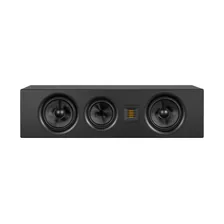 #56 Emotiva Airmotiv XC2: $399 each Estimated Emotiva eBay
Older model: the Emotiva Airmotiv C2+ (ranked lower, rated 2.9/5).
Pros: The larger Airmotiv center: a 25x32mm folded ribbon tweeter, a 5.25” woven cone midrange and two 6” long-throw woofers, rated at 45Hz to 27kHz (±3dB) and 89dB. It replaces the C2+ with a simpler single-midrange layout.
Cons: No independent measurements yet, so its tonal balance and directivity can’t be compared directly with measured centers; the rating is estimated from its predecessor’s measurements. Its predecessor measured poorly off axis, so the estimate is wide. The 4 ohm load suits a strong receiver; Emotiva recommends 100W or more. It is 800mm wide.
Full Emotiva Airmotiv XC2 review and specifications →
| Dimensions | 8.5”H x 31.5”W x 10.2”D (216 x 800 x 260 mm) |
|---|---|
| Drivers | 25x32mm Airmotiv folded ribbon tweeter, 5.25” woven cone midrange, 2x 6” woven cone woofers |
| Frequency Response | 45Hz-27kHz ±3dB (manufacturer specified) |
| Impedance | 4 ohms nominal (manufacturer specified) |
| Sensitivity | 89dB (2.83V/1m, manufacturer specified) |
| Weight | 37 lbs (16.8 kg) |
- Links
- Reviews, Comparisons and Sound Samples
- No independent measurement review is linked for this model; it is ranked from hands-on listening and comparison against similarly priced speakers.
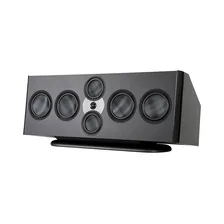 #57 Atlantic Technology 8600eC: $1,400 each Atlantic Technology eBay
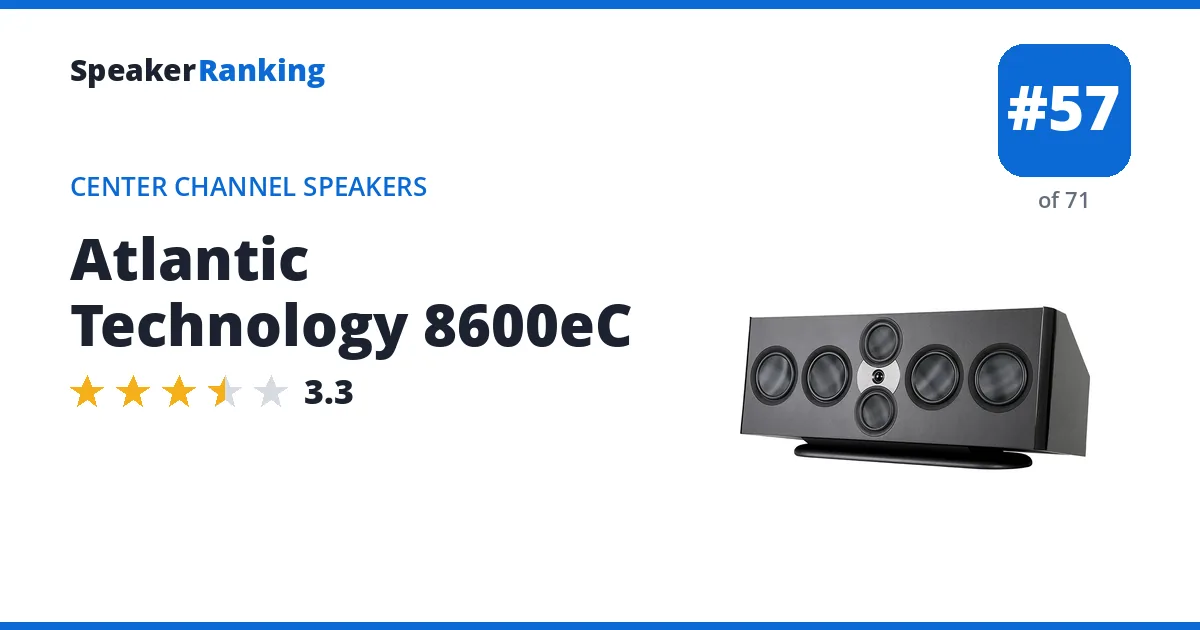
Pros: A large sealed three-way center with four 6.5” woofers and two 5.25” midranges around a 1” silk dome tweeter, on a tilting base to aim it at the seats. Erin’s Audio Corner measured bass to 60.1Hz (-3dB) and about 43Hz (-10dB) and wide horizontal coverage (about ±60 degrees), and the 93dB sensitivity means it plays loud on modest power. Measured bass extension of 60.1Hz (-3dB).
Cons: On-axis deviation (0.66) and a 3.2dB listening window spread from 300Hz to 5kHz keep its preference score at 3.46 without a subwoofer. It is 955mm wide and weighs 41.5kg.
Full Atlantic Technology 8600eC review and specifications →
| Bass Extension (-10dB) | about 43.4Hz (measured, Erin’s Audio Corner) |
|---|---|
| Bass Extension (-3dB) | 60.1Hz (measured, Erin’s Audio Corner) |
| DIY Kit | No |
| Dimensions | 13.7”H x 37.6”W x 14.5”D (347 x 955 x 369 mm) |
| Drivers | 1” silk dome tweeter, 2x 5.25” glass fiber midranges, 4x 6.5” glass fiber woofers |
| Frequency Response | 45Hz-25kHz ±3dB (manufacturer specified) |
| Impedance | 6 ohms nominal (manufacturer specified) |
| Sensitivity | 93dB (manufacturer specified) |
| Spinorama Preference Score | 3.46 |
| Spinorama Preference Score with Perfect Sub | 5.88 |
| Weight | 91.5 lbs (41.5 kg) |
| Woofer Cabinet | sealed |
- Links
- Reviews, Comparisons and Sound Samples
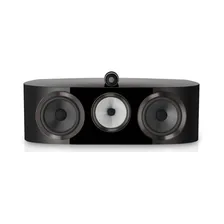 #58 Bowers & Wilkins HTM81 D4: $10,500 each Bowers & Wilkins eBay
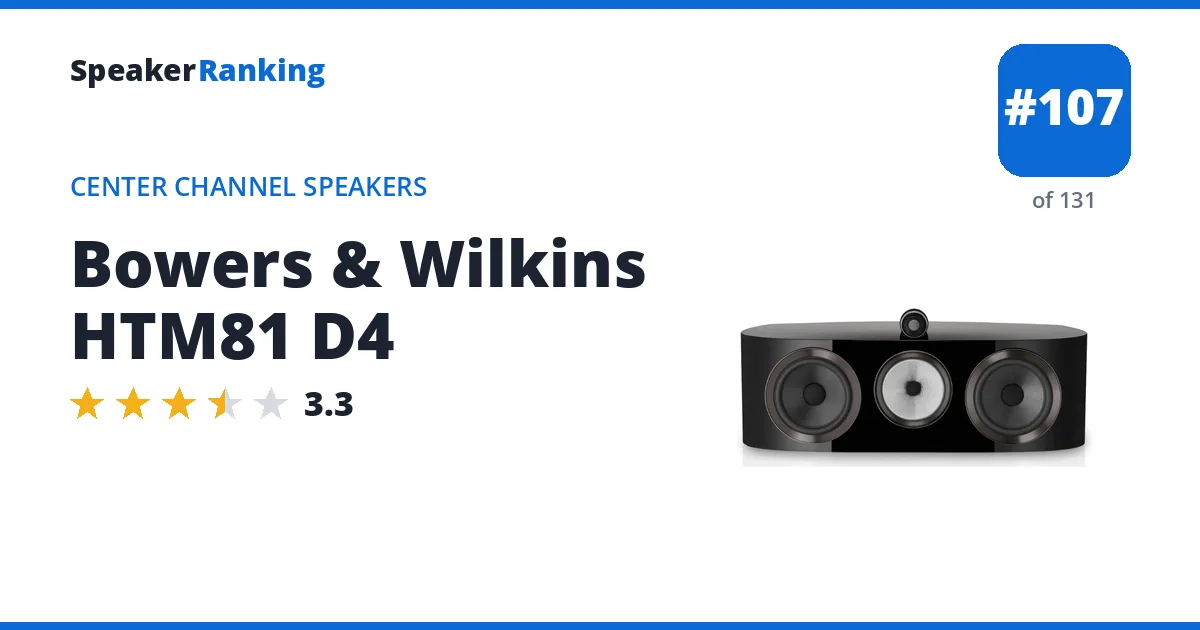
Pros: The largest 800 Series Diamond center: a 1” diamond dome tweeter in a separate pod on top, a 6” Continuum cone FST midrange and two 8” Aerofoil bass units. Erin’s Audio Corner measured deep bass for a center, 52.7Hz (-3dB) and about 34Hz (-10dB), and a fairly flat on-axis response (0.49 average deviation). 90dB sensitivity. Measured bass extension of 52.7Hz (-3dB).
Cons: The listening window spans 4.9dB from 300Hz to 5kHz and the predicted in-room response is not smooth (0.47), so off-axis seats and room reflections hear a different balance than the main seat. Preference score 3.93 without a subwoofer. At $10500 it is the most expensive center here, and the impedance dips to 3 ohms.
Full Bowers & Wilkins HTM81 D4 review and specifications →
| Bass Extension (-10dB) | about 34.4Hz (measured, Erin’s Audio Corner) |
|---|---|
| Bass Extension (-3dB) | 52.7Hz (measured, Erin’s Audio Corner) |
| DIY Kit | No |
| Dimensions | 13.1”H x 33.3”W x 14.6”D (334 x 847 x 371 mm) |
| Drivers | 1” diamond dome tweeter, 6” Continuum cone FST midrange, 2x 8” Aerofoil cone bass units |
| Frequency Response | 28Hz-28kHz ±3dB (manufacturer specified) |
| Impedance | 8 ohms nominal, 3.0 ohms minimum (manufacturer specified) |
| Sensitivity | 90dB (2.83V/1m, manufacturer specified) |
| Spinorama Preference Score | 3.93 |
| Spinorama Preference Score with Perfect Sub | 5.78 |
| Weight | 71 lbs (32.2 kg) |
- Links
- Reviews, Comparisons and Sound Samples
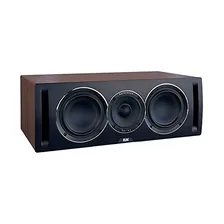 #59 ELAC Uni-Fi Reference UCR52: $799.00 each Amazon eBay
Pros: A three-way center with a 1” soft dome tweeter mounted concentrically in a 4” aluminum midrange, between two 5.25” aluminum woofers. The concentric driver keeps dispersion even in every direction: Audio Science Review measured about ±55 degrees both horizontally and vertically, so it works above or below a screen. Bass reaches 60.1Hz (-3dB) and about 44Hz (-10dB). Measured bass extension of 60.1Hz (-3dB).
Cons: On-axis response is among the least even of any center here (1.34dB average deviation), and its listening window spans 5.7dB from 300Hz to 5kHz, the widest spread of any center here, which colors voices. Sensitivity is a low 85dB. Preference score 3.40 without a subwoofer.
Full ELAC Uni-Fi Reference UCR52 review and specifications →
| Bass Extension (-10dB) | about 44.4Hz (measured, Audio Science Review) |
|---|---|
| Bass Extension (-3dB) | 60.1Hz (measured, Audio Science Review) |
| DIY Kit | No |
| Dimensions | 7.3”H x 20.7”W x 13.1”D (185 x 527 x 334 mm) |
| Drivers | 1” soft dome tweeter concentric with 4” aluminum midrange, 2x 5.25” aluminum woofers |
| Frequency Response | 47Hz-35kHz (manufacturer specified) |
| Impedance | 6 ohms nominal (manufacturer specified) |
| Sensitivity | 85dB (manufacturer specified) |
| Spinorama Preference Score | 3.40 |
| Spinorama Preference Score with Perfect Sub | 5.77 |
| Weight | 29.1 lbs (13.2 kg) |
| Woofer Cabinet | ported (dual flared slots) |
- Links
- Reviews, Comparisons and Sound Samples
 #60 Pioneer Elite SP-EC73: $399 each Discontinued eBay
Pros: An Andrew Jones three-way center with a concentric driver (1” soft dome tweeter inside a 4” aluminum midrange) between aluminum woofers. Audio Science Review measured even coverage of about ±50 degrees horizontally and vertically, so it works above or below a screen. Measured bass extension of 67.4Hz (-3dB).
Cons: Sensitivity is a low 85dB and the impedance is 4 ohms, so it needs a capable receiver. The listening window spans 3.3dB from 300Hz to 5kHz and the preference score is 2.98 without a subwoofer. Discontinued.
Full Pioneer Elite SP-EC73 review and specifications →
| Bass Extension (-10dB) | about 54.7Hz (measured, Audio Science Review) |
|---|---|
| Bass Extension (-3dB) | 67.4Hz (measured, Audio Science Review) |
| DIY Kit | No |
| Dimensions | 7.4”H x 19.5”W x 8.7”D (188 x 495 x 221 mm) |
| Drivers | Concentric 1” soft dome tweeter in 4” aluminum midrange, 5.25” aluminum woofers |
| Frequency Response | 45Hz-20kHz (manufacturer specified) |
| Impedance | 4 ohms nominal (manufacturer specified) |
| Sensitivity | 85dB (manufacturer specified) |
| Spinorama Preference Score | 2.98 |
| Spinorama Preference Score with Perfect Sub | 5.68 |
| Weight | 17.6 lbs (8 kg) |
- Reviews, Comparisons and Sound Samples
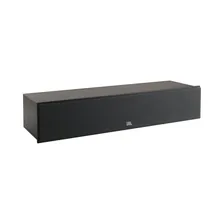 #61 JBL Stage 2 245C: $439.95 each Estimated Amazon eBay
Older models: the JBL Stage A125C (ranked higher, rated 3.4/5) and the JBL Stage A135C (ranked lower, rated 2.9/5).
Pros: The only center in JBL’s Stage 2 line: a 1” anodized aluminum tweeter in JBL’s HDI waveguide with four 4.5” polycellulose woofers in a 2.5-way layout, rated at a high 91dB so it plays loud on modest receivers.
Cons: No independent measurements yet, so its tonal balance and directivity can’t be compared directly with measured centers; the rating is estimated from its predecessor’s measurements. Four small woofers in a long, low cabinet tend to narrow horizontal coverage, as measured on the Stage A135C it replaces. It is 740mm wide.
Full JBL Stage 2 245C review and specifications →
| Dimensions | 6.1”H x 29.1”W x 8.5”D (156 x 740 x 217 mm) |
|---|---|
| Drivers | 1” anodized aluminum tweeter with HDI waveguide, 4x 4.5” polycellulose woofers |
| Frequency Response | 55Hz-25kHz -6dB (manufacturer specified) |
| Impedance | 6 ohms nominal (manufacturer specified) |
| Sensitivity | 91dB (2.83V/1m, manufacturer specified) |
| Weight | 26.5 lbs (12 kg) |
| Woofer Cabinet | ported (dual rear ports) |
- Links
- Reviews, Comparisons and Sound Samples
- No independent measurement review is linked for this model; it is ranked from hands-on listening and comparison against similarly priced speakers.
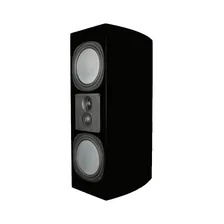 #62 Phase Technology PC3.5: $1,803 each Estimated House of Stereo eBay
Older model: the Phase Technology PC 3.1 (ranked lower, rated 2.9/5).
Pros: The current Premier Collection LCR keeps the PC 3.1’s layout: a 1” soft dome tweeter and 1.5” soft dome midrange on a rotatable baffle between two 6.5” tri-laminate Kevlar/RPF/glass fiber flat-piston woofers, rated down to 36Hz.
Cons: No independent measurements yet, so its tonal balance and directivity can’t be compared directly with measured centers; the rating is estimated from its predecessor and lineup siblings. Its measured predecessor had narrow horizontal coverage and an uneven listening window, so the estimate is cautious. Phase Technology’s own site no longer lists it, so stock is limited to remaining dealers.
Full Phase Technology PC3.5 review and specifications →
| Drivers | 1” soft dome tweeter, 1.5” soft dome midrange (rotatable), 2x 6.5” tri-laminate Kevlar/RPF/glass fiber woofers |
|---|---|
| Frequency Response | 36Hz-22kHz (manufacturer specified) |
- Reviews, Comparisons and Sound Samples
- No independent measurement review is linked for this model; it is ranked from hands-on listening and comparison against similarly priced speakers.
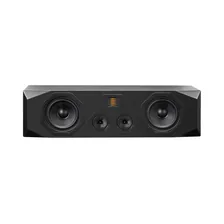 #63 Emotiva Airmotiv C2+: $499 each Discontinued eBay
Newer model: the Emotiva Airmotiv XC2, ranked higher, estimated 3.4/5.
Pros: A large three-way center with an Airmotiv folded ribbon tweeter, two 3” midranges and two 6.5” woofers, rated at a high 92dB sensitivity. Erin’s Audio Corner measured bass to 63.0Hz (-3dB) and about 43Hz (-10dB). Measured bass extension of 63.0Hz (-3dB).
Cons: The listening window spans 5.9dB from 300Hz to 5kHz, the predicted in-room response is not smooth (0.30) and horizontal coverage is narrow (about ±20 degrees), for a preference score of 2.89 without a subwoofer. Emotiva replaced it with the Airmotiv XC2. Discontinued.
Full Emotiva Airmotiv C2+ review and specifications →
| Bass Extension (-10dB) | about 42.9Hz (measured, Erin’s Audio Corner) |
|---|---|
| Bass Extension (-3dB) | 63.0Hz (measured, Erin’s Audio Corner) |
| DIY Kit | No |
| Dimensions | 8.6”H x 31.9”W x 10.5”D (219 x 811 x 267 mm) |
| Drivers | 25x32mm Airmotiv folded ribbon tweeter, 2x 3” woven fiber midranges, 2x 6.5” woven fiber woofers |
| Frequency Response | 45Hz-28kHz ±3dB (manufacturer specified) |
| Impedance | 4 ohms nominal (manufacturer specified) |
| Sensitivity | 92dB (2.83V/1m, manufacturer specified) |
| Spinorama Preference Score | 2.89 |
| Spinorama Preference Score with Perfect Sub | 5.03 |
| Weight | 36.2 lbs (16.4 kg) |
| Woofer Cabinet | ported (rear) |
- Reviews, Comparisons and Sound Samples
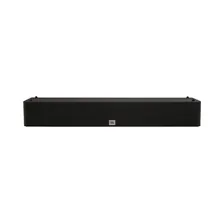 #64 JBL Stage A135C: $299.95 each Discontinued eBay
Newer model: the JBL Stage 2 245C, ranked higher, estimated 3.2/5.
Pros: A long, low-profile center only 104mm deep, with a 1” aluminum tweeter in JBL’s HDI waveguide between six 3” woofers and 90dB sensitivity, designed to sit in front of a TV. Measured bass extension of 128.9Hz (-3dB).
Cons: Audio Science Review measured an uneven on-axis response (1.56dB average deviation) and bass that rolls off at 128.9Hz (-3dB) and about 93Hz (-10dB), for a preference score of 1.62 without a subwoofer. It needs a subwoofer crossed over well above 80Hz. JBL replaced the Stage line with Stage 2. Discontinued.
Full JBL Stage A135C review and specifications →
| Bass Extension (-10dB) | about 92.7Hz (measured, Audio Science Review) |
|---|---|
| Bass Extension (-3dB) | 128.9Hz (measured, Audio Science Review) |
| DIY Kit | No |
| Dimensions | 6.5”H x 29.3”W x 4.1”D (166 x 745 x 104 mm) |
| Drivers | 1” aluminum dome tweeter with HDI waveguide, 6x 3” polycellulose woofers |
| Frequency Response | 75Hz-40kHz (manufacturer specified) |
| Impedance | 6 ohms nominal (manufacturer specified) |
| Sensitivity | 90dB (2.83V/1m, manufacturer specified) |
| Spinorama Preference Score | 1.62 |
| Spinorama Preference Score with Perfect Sub | 5.39 |
| Weight | 16.4 lbs (7.45 kg) |
| Woofer Cabinet | ported (rear) |
- Reviews, Comparisons and Sound Samples
 #65 Phase Technology PC 3.1: $600 each Discontinued eBay
Newer model: the Phase Technology PC3.5, ranked higher, estimated 3/5.
Pros: A three-way LCR speaker with a 1” soft dome tweeter and 1.5” soft dome midrange on a baffle that rotates for vertical or horizontal use, between two 6.5” woofers. Audio Science Review measured deep bass for a center, 60.1Hz (-3dB) and about 36Hz (-10dB). Measured bass extension of 60.1Hz (-3dB).
Cons: The listening window spans 3.9dB from 300Hz to 5kHz, horizontal coverage is narrow (about ±20 degrees) and the predicted in-room response is not smooth (0.29), for a preference score of 2.95 without a subwoofer. Discontinued; Phase Technology now sells the PC3.5.
Full Phase Technology PC 3.1 review and specifications →
| Bass Extension (-10dB) | about 35.6Hz (measured, Audio Science Review) |
|---|---|
| Bass Extension (-3dB) | 60.1Hz (measured, Audio Science Review) |
| DIY Kit | No |
| Dimensions | 22”H x 8.3”W x 11.7”D (559 x 210 x 298 mm) (vertical) |
| Drivers | 1” soft dome tweeter, 1.5” soft dome midrange (rotatable baffle), 2x 6.5” RPF woofers |
| Impedance | 6 ohms nominal (manufacturer specified) |
| Sensitivity | 87dB (manufacturer specified) |
| Spinorama Preference Score | 2.95 |
| Spinorama Preference Score with Perfect Sub | 4.90 |
| Weight | 39.9 lbs (18.1 kg) |
- Reviews, Comparisons and Sound Samples
 #66 BIC America FH6-LCR: $131.53 each Amazon eBay
Pros: A low cost $132 all-channel speaker with two 6.5” woofers and a horn-loaded tweeter, very high 95dB sensitivity and 175W power handling. It includes brackets for vertical or horizontal mounting, so it can serve as left, center or right. Measured bass extension of 82.2Hz (-10dB).
Cons: Audio Science Review’s measurements give it the lowest preference score of any center here (1.28 without a subwoofer), with uneven on-axis response (1.39dB average deviation) and the least smooth predicted in-room response (0.24). Horizontal coverage is narrow (about ±20 degrees), and bass falls to about 82Hz at -10dB.
Full BIC America FH6-LCR review and specifications →
| Bass Extension (-10dB) | about 82.2Hz (measured, Audio Science Review) |
|---|---|
| DIY Kit | No |
| Dimensions | 8”H x 21.9”W x 6.1”D (203 x 556 x 156 mm) |
| Drivers | 1x horn-loaded aluminum dome tweeter, 2x 6.5” injection-molded woofers |
| Frequency Response | 40Hz-23kHz (manufacturer specified) |
| Impedance | 8 ohms nominal (manufacturer specified) |
| Sensitivity | 95dB (1W/1m, manufacturer specified) |
| Spinorama Preference Score | 1.28 |
| Spinorama Preference Score with Perfect Sub | 5.05 |
| Weight | 24.9 lbs (11.3 kg) |
- Links
- Reviews, Comparisons and Sound Samples
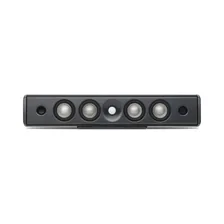 #67 Revel Concerta C10: $500 each Discontinued eBay
Pros: A slim on-wall center only 113mm deep in an aluminum enclosure, with a 1” ceramic composite tweeter, two 3” midranges and two 3” woofers. It comes with both a wall bracket and a tabletop stand. Measured bass extension of 127.7Hz (-10dB).
Cons: Audio Science Review measured a very uneven on-axis response (2.37dB average deviation) and a preference score of only 0.67 without a subwoofer. Its tiny drivers roll off early, about 128Hz at -10dB, so it needs a subwoofer crossed over high. It is discontinued.
Full Revel Concerta C10 review and specifications →
| Bass Extension (-10dB) | about 127.7Hz (measured, Audio Science Review) |
|---|---|
| DIY Kit | No |
| Dimensions | 4.2”H x 22.9”W x 4.4”D (107 x 582 x 113 mm) |
| Drivers | 1” MCC dome tweeter with waveguide, 2x 3” aluminum midranges, 2x 3” aluminum woofers |
| Frequency Response | 110Hz-21kHz ±3dB (manufacturer specified) |
| Impedance | 8 ohms nominal (manufacturer specified) |
| Sensitivity | 89dB (manufacturer specified) |
| Spinorama Preference Score | 0.67 |
| Spinorama Preference Score with Perfect Sub | 5.09 |
| Weight | 6.8 lbs (3.1 kg) |
- Links
- Reviews, Comparisons and Sound Samples
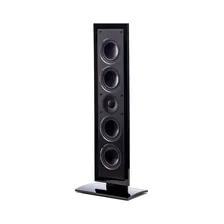 #68 Paradigm Millenia LP 2: $549 each Discontinued eBay
Pros: An ultra-slim on-wall LCR speaker only 25mm deep, with a 1” S-PAL dome tweeter, two 4.5” drivers and two 4.5” passive radiators, sized to pair with a flat-panel TV. Measured bass extension of 151.0Hz (-3dB).
Cons: The only Spinorama data is a third-party measurement of medium quality showing a very uneven on-axis response (1.73dB average deviation) and bass that rolls off at about 151Hz (-3dB), for a preference score of 1.00 without a subwoofer. It depends entirely on a subwoofer. Discontinued.
Full Paradigm Millenia LP 2 review and specifications →
| Bass Extension (-10dB) | about 105.2Hz (measured, spinorama.org) |
|---|---|
| Bass Extension (-3dB) | 151.0Hz (measured, spinorama.org) |
| DIY Kit | No |
| Dimensions | 25”H x 6”W x 1”D (635 x 152 x 25 mm) |
| Drivers | 1” S-PAL dome tweeter, 2x 4.5” anodized cone drivers, 2x 4.5” passive radiators |
| Frequency Response | 120Hz-21kHz ±3dB (manufacturer specified) |
| Impedance | compatible with 8 ohms (manufacturer specified) |
| Sensitivity | 89dB anechoic (manufacturer specified) |
| Spinorama Preference Score | 1.00 |
| Spinorama Preference Score with Perfect Sub | 5.09 |
| Weight | 6.6 lbs (3 kg) |
- Reviews, Comparisons and Sound Samples
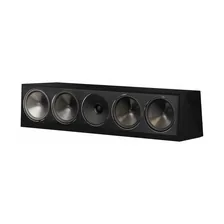 #69 Paradigm Founder 90C: $2,899.99 each Audio Advice eBay
Pros: A three-way center with a coaxial 1” AL-MAC ceramic dome tweeter in a 6” AL-MAG midrange, plus two 7” Carbon-X passive radiators in a sealed cabinet. Erin’s Audio Corner measured bass to 52.7Hz (-3dB) and about 42Hz (-10dB), and Paradigm rates it at a high 91dB sensitivity. Measured bass extension of 52.7Hz (-3dB).
Cons: Its preference score is low for the price, 2.08 without a subwoofer and 4.22 with one: the listening window spans 4.6dB from 300Hz to 5kHz and the predicted in-room response is not smooth (0.40). At $2900 several far cheaper centers here measure better. It is 908mm wide and weighs 48 lb.
Full Paradigm Founder 90C review and specifications →
| Bass Extension (-10dB) | about 42.0Hz (measured, Erin’s Audio Corner) |
|---|---|
| Bass Extension (-3dB) | 52.7Hz (measured, Erin’s Audio Corner) |
| DIY Kit | No |
| Dimensions | 8.9”H x 35.7”W x 12.9”D (226 x 908 x 327 mm) |
| Drivers | Coaxial 1” AL-MAC ceramic dome tweeter and 6” AL-MAG midrange, 2x 7” Carbon-X passive radiators |
| Frequency Response | 55Hz-23kHz ±2dB (manufacturer specified) |
| Impedance | 8 ohms nominal (manufacturer specified) |
| Sensitivity | 91dB anechoic, 94dB in-room (manufacturer specified) |
| Spinorama Preference Score | 2.08 |
| Spinorama Preference Score with Perfect Sub | 4.22 |
| Weight | 48.1 lbs (21.8 kg) |
| Woofer Cabinet | sealed with passive radiators |
- Links
- Reviews, Comparisons and Sound Samples
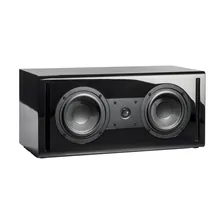 #70 RSL CG25: $425 each Discontinued eBay
Pros: A two-way speaker with a 1” silk dome tweeter between two 5.25” aramid fiber woofers, usable upright as a main speaker or on its side as a center. Audio Science Review measured bass to 58.6Hz (-3dB) and about 41Hz (-10dB), deep for its size. Measured bass extension of 58.6Hz (-3dB).
Cons: On-axis response is very uneven (1.80dB average deviation) and horizontal coverage in the center orientation is narrow (about ±20 degrees), for a preference score of 2.11 without a subwoofer. RSL no longer sells it. Discontinued.
Full RSL CG25 review and specifications →
| Bass Extension (-10dB) | about 41.0Hz (measured, Audio Science Review) |
|---|---|
| Bass Extension (-3dB) | 58.6Hz (measured, Audio Science Review) |
| DIY Kit | No |
| Dimensions | 5.6”H x 19”W x 9.7”D (141 x 482 x 247 mm) |
| Drivers | 1” silk dome tweeter, 2x 5.25” aramid fiber woofers |
| Frequency Response | 51Hz-35kHz ±3dB (manufacturer specified) |
| Sensitivity | 88dB (manufacturer specified) |
| Spinorama Preference Score | 2.11 |
| Spinorama Preference Score with Perfect Sub | 4.18 |
| Weight | 22.9 lbs (10.4 kg) |
- Reviews, Comparisons and Sound Samples
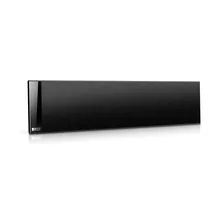 #71 KEF T301c: $499.99 each Discontinued eBay
Pros: An ultra-thin center only 35mm deep, built to hang flat on a wall under a TV, with a 1” aluminum tweeter and two 4.5” flat midrange/bass drivers. Measured bass extension of 159.7Hz (-3dB).
Cons: Audio Science Review measured a very uneven on-axis response (2.24dB average deviation) and a listening window spanning 5.2dB from 300Hz to 5kHz, for a negative preference score (-0.51) without a subwoofer. Bass rolls off at 159.7Hz (-3dB), so it depends entirely on a subwoofer. Discontinued.
Full KEF T301c review and specifications →
| Bass Extension (-10dB) | about 118.9Hz (measured, Audio Science Review) |
|---|---|
| Bass Extension (-3dB) | 159.7Hz (measured, Audio Science Review) |
| DIY Kit | No |
| Dimensions | 5.5”H x 23.6”W x 1.4”D (140 x 600 x 35 mm) |
| Drivers | 1” aluminum tweeter, 2x 4.5” dual layer midrange/bass drivers |
| Frequency Response | 80Hz-30kHz (manufacturer specified) |
| Impedance | 8 ohms nominal (manufacturer specified) |
| Sensitivity | 88dB (2.83V/1m, manufacturer specified) |
| Spinorama Preference Score | -0.51 |
| Spinorama Preference Score with Perfect Sub | 3.78 |
| Weight | 3.3 lbs (1.5 kg) |
| Woofer Cabinet | sealed |
- Links
- Reviews, Comparisons and Sound Samples