Editor's top picks
Start with these speakers
Our leading recommendations at a glance. Each card links to its primary retailer.
A discount only matters if the speaker is worth buying. Most Black Friday lists rank deals by the size of the markdown, which rewards speakers that were overpriced to begin with. This page starts from our rankings instead: the best rated speakers in each size first, because many of them are already the best value at their normal price, then the well rated speakers that are genuinely selling for less than usual right now.
How a deal is judged here. We track the price of every speaker we rank each time prices are refreshed, and compare today’s price with that speaker’s own typical price over the last three months. A speaker only counts as on sale when it is at least 15% below that. Retailer “list prices” are often set high so a sale looks bigger, so they are only used, with a stricter cutoff, for speakers we have not been tracking long enough.
Prices on this page update automatically. Ratings are relative to each size class, so compare a speaker with others its size. For the full lists, see the portable, powered, passive and subwoofer rankings.
Quick Navigation
- Portable Bluetooth at Full Price
- Powered Home at Full Price
- Passive Home at Full Price
- Subwoofers at Full Price
- On Sale Now
Prices on this page were last checked September 26, 2026 at 11:14 PM UTC. Product prices and availability are accurate as of that date/time and are subject to change; the price and availability shown on Amazon at the time of purchase will apply to the purchase of this product.
As an eBay Partner, we may be compensated if you make a purchase.
Portable Bluetooth at Full Price
The top rated speaker in each size, plus a much cheaper one that comes close where there is one. A sale on these is a bonus, not the reason to buy.
 The best small size speaker, worth buying at its normal price, is the Tribit Stormbox Micro 2: $49.99 Amazon AliExpress eBay
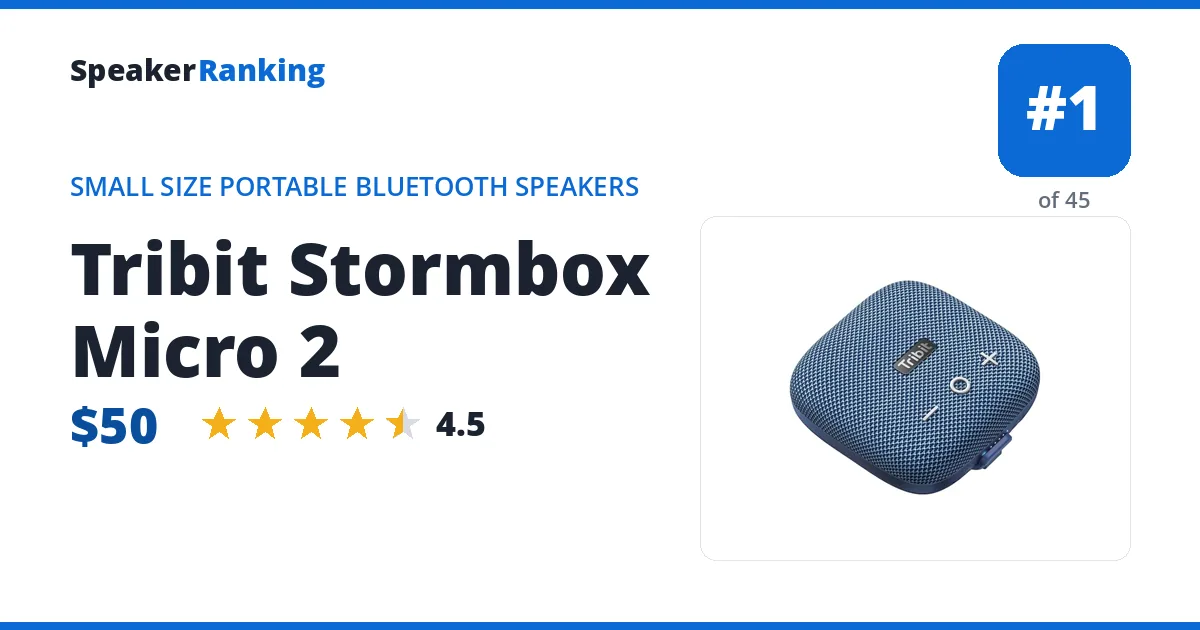
Newer model: the Tribit Stormbox Micro 3, ranked lower, rated 4.2/5.
Pros: Best in class sound. Much deeper bass than most other speakers in the size. Built in strap is super useful for attaching it to things. Very neutral. To have it aimed directly at you unclip the strap and the speaker will sit upright with a slight lean back. Measured bass extension of 65Hz (-10dB).
Cons: Finicky phone charging, which doesn’t usually work.
Setup: Use in Music EQ mode, when you switch to custom it’s not able to boost the bass properly as it is missing an EQ band that Music EQ mode uses
Full Tribit Stormbox Micro 2 review and specifications →
| Amplifier Power | 10W |
|---|---|
| App | Yes |
| Aux Input | No |
| Bass Extension (-10dB) | 65Hz |
| Battery Life | 12 hours (Manufacturer specified) |
| Bluetooth Codecs | SBC |
| Bluetooth Latency | 265ms |
| Bluetooth Version | 5.3 |
| Built-in Microphone | Yes |
| Digital Aux Input | No |
| Dimensions | 3.9” x 3.9” x 1.7” (99.1 x 99.1 x 42.7 mm) |
| Drivers | 48mm NdFeB driver |
| EQ | Yes (9 Band) |
| IP Rating | IP67 |
| Maximum SPL | 94dB (measured by Alan Ross Reviews) |
| Omnidirectional | Pointing up |
| Party Mode | No |
| Power Bank | Yes (but it doesn’t usually work; USB-C, 10W) |
| Power Input | USB-C |
| Stereo | No |
| Strap | Yes (built-in strap) |
| TWS | Yes |
| Weight | 0.7 lbs (317 g) |
- Links
- Reviews, Comparisons and Sound Samples
- Alan Ross Reviews: TRIBIT StormBox Micro 3, fully tested vs Micro 2, not clickbait More from alanrossreviews →
- Alan Ross Reviews: Tribit Stormbox Micro 2 ultimate review 🤭 vs Micro 1 - small and mighty!
- Alan Ross Reviews: Tribit Stormbox Micro 2 vs Bose Soundlink Micro for best small speaker! 👌
- Storytripper HD: Bose Micro 2 vs Soundcore Boom Go 3i vs Tribit Micro 2 More from storytripperhd →
- Danny Pops: I WAS BLOWN AWAY - Tribit Stormbox Micro 2 VS Marshall Willen More from DannyPops →
- Sound Quality Joss: Tribit Stormbox Micro 2 VS Anker Soundcore Mini 3 Pro
- Storytripper HD: Marshall Willen vs Tribit Stormbox Micro 2
- Alkar Audio: Speaker Bluetooth Marshall Willen Review VS Tribit Stormbox Micro 2
- MyTechAudio: MARSHALL WILLEN Detail Review Indonesia Vs TRIBIT Micro 1 & Micro 2
- Gi Rides: Tribit Stormbox Micro 2 vs JBL Clip 4 - sound battle
- Joy & Oluv’Sone: Best portable speakers 2025 - get the best bang for your buck $$$ More from Oluv’Sone →
- Storytripper HD: Marshall Willen vs Tribit StormBox Micro 2 vs Klipsch Austin
- DIY Subwoofers - Stormbox Micro 2 Measurements and Review
- Head-to-Head Comparisons
- Tribit Stormbox Micro 2 vs Soundcore Boom Go 3i
- Tribit Stormbox Micro 2 vs Minirig Mini 2
- Tribit Stormbox Micro 2 vs Minirig Mini
- Tribit Stormbox Micro 2 vs Tribit Stormbox Micro
- Tribit Stormbox Micro 2 vs Tribit Stormbox Micro 3
- Tribit Stormbox Micro 2 vs Teufel Boomster Go
- Tribit Stormbox Micro 2 vs Soundcore Mini 3 Pro
- Tribit Stormbox Micro 2 vs Soundcore Mini 3
- See all 63 comparisons
 The best medium size speaker, worth buying at its normal price, is the Earfun Uboom L: $49.79 after coupon UBOOMLWC Amazon EarFun eBay
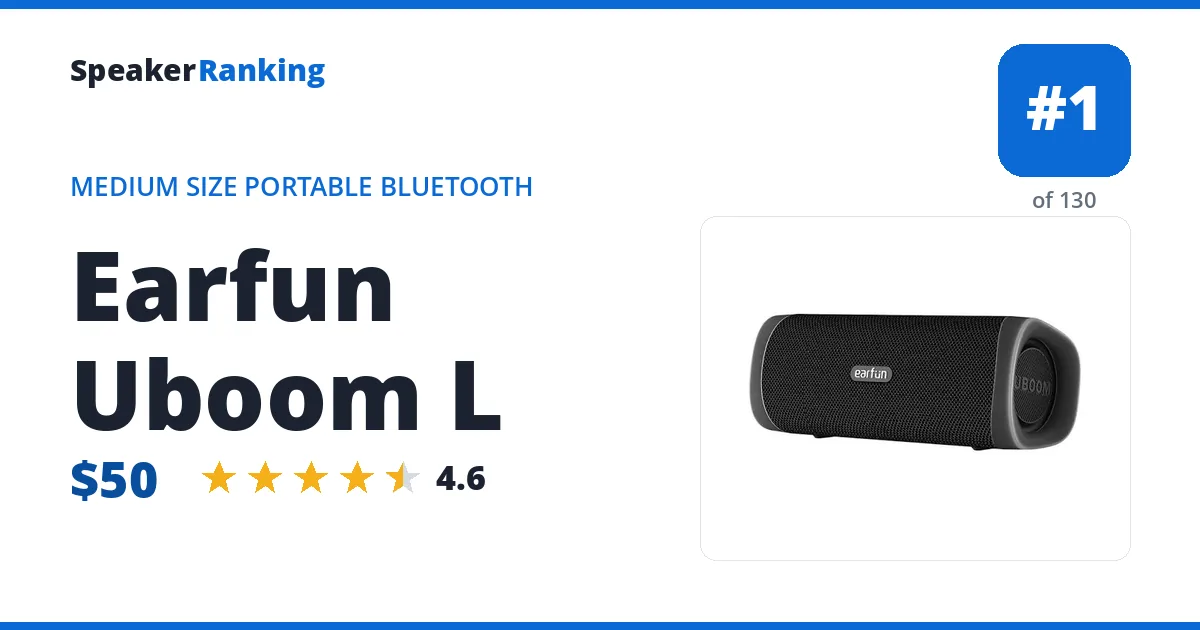
Pros: One of the strongest small-speaker values for music: reviews praise clear vocals, a natural overall balance and a genuinely convincing stereo image when two are paired. IP67 protection, indoor/outdoor sound modes and Video Mode make it unusually adaptable; Video Mode substantially improves lip-sync for a single speaker. Measured bass extension of 56Hz (-10dB).
Cons: It cannot produce real low-bass rumble or fill a large, noisy space, and the top end loses some detail. Low-latency Video Mode disables stereo pairing, so a two-speaker setup is not a good movie system. Firmware and app behavior have also varied over the model’s long life, and the physical controls can be easy to trigger in a bag. Latency is about 400ms by default and 66ms in Video Mode, which you enable by pressing the Bluetooth button twice.
Setup: Try setting up the Earfun App (Android or iOS) to see if that works. If not, you’ll need to flash firmware 1.2.7 to work with the app and set with Oluv’s EQ in the Earfun app which sounds the best. The instructions say that you need a USB3 cable, but most USB2 cables work just fine, try the one included with your phone. Check the current firmware version by turning it on, then pressing the power and Bluetooth buttons at the same time. To flash, turn the speaker off then hold down the Bluetooth button while plugging in the cable. To flash on a mac, see these instructions. In TWS mode, long press the outdoor button for 2 seconds to change TWS to Party mode and back.
Full Earfun Uboom L review and specifications →
| Amplifier Power | 28W |
|---|---|
| App | Yes (firmware >= 1.2.6) |
| Aux Input | Yes |
| Aux Latency | 216ms |
| Bass Extension (-10dB) | 56Hz |
| Battery Life | 16 hours (Manufacturer specified) |
| Bluetooth Codecs | AAC, SBC |
| Bluetooth Latency | 400ms normal / 66ms low latency mode |
| Bluetooth Version | 5.0 |
| Built-in Microphone | Yes |
| Digital Aux Input | No |
| Dimensions | 3.1” x 8.3” x 2.8” (78 x 210 x 72 mm) |
| Drivers | 2x 55mm drivers + 2x passive radiators |
| EQ | Yes (10 band, firmware >= 1.2.6) |
| IP Rating | IP67 |
| Maximum SPL | 103dB (measured by Alan Ross Reviews) |
| Omnidirectional | No |
| Party Mode | No |
| Power Bank | No |
| Power Input | USB-C |
| Stereo | Yes |
| TWS | Yes |
| Weight | 1.4 lbs (650 g) |
- Links
- Reviews, Comparisons and Sound Samples
- Joy & Oluv’Sone: Best portable speakers 2025 - get the best bang for your buck $$$ More from Oluv’Sone →
- Oluv Patreon: SoundCore Boom 3i - first impressions & EQs
- Joy & Oluv’Sone: New Beats Pill 2024: sound demo
- CEONTHEMAKING: Earfun Uboom L - This Speaker Replaced My JBL Flip 6… More from CEONTHEMAKING →
- Techder Audios: EARFUN UBOOM L VS SOUNDCORE MOTION+ More from techderaudios →
- Alan Ross Reviews: Earfun UBoom L Review Speaker tuned by a Geek vs Soundcore Motion Plus $100 dollar best portable? More from alanrossreviews →
- Oluv Patreon: Soundcore Motion 300 = Bose Soundlink Flex = Earfun UBoom L?
- Jay’s Straight Up Reviews & More: Earfun UBoom L 💣(EQ2) 🆚 Tribit XSound Mega 🔥(XBass EQ)- Bluetooth Speaker Bedroom Bash. Who U Got?🔝 More from JaysStraightUpReviews →
- Joy & Oluv’Sone: JBL, Bose, B&O, Sonos, Earfun, SoundCore… which portable speaker sounds best?
- DIY Subwoofers - Uboom L Measurements and Review
- Head-to-Head Comparisons
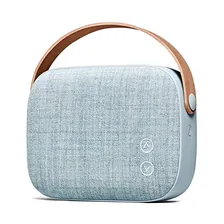 The best large size speaker, worth buying at its normal price, is the Vifa Helsinki: $449.00 Amazon eBay
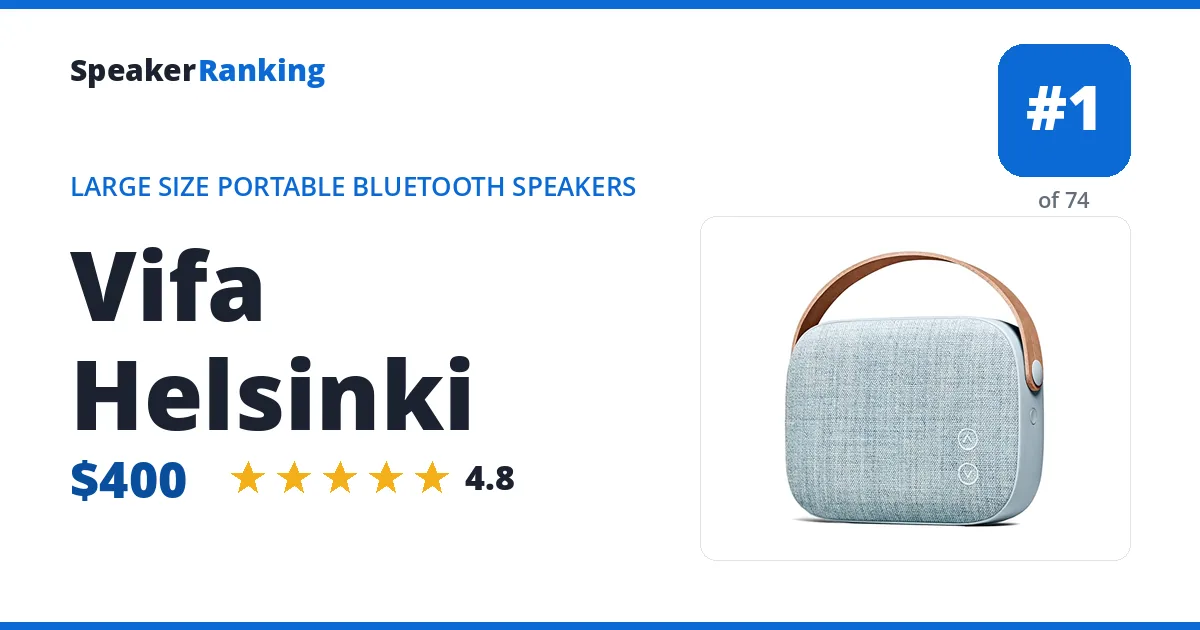
Pros: Generally regarded as the best midrange and treble sound quality of any battery powered Bluetooth speaker. Measured bass extension of 48Hz (-10dB).
Cons: No TWS pairing, looks like a purse, requires a hacked Vifa app (Android only post #48) to enable night mode to sound good. This one is hard to recommend generally these days: the Uboom L has 98% of the sound quality with more features and a much cheaper price. There are mentions that the 2022 “new” version of this speaker doesn’t sound as good as Vifa was purchased by a Chinese company and laid off all the great sound engineers in the Austria office.
Full Vifa Helsinki review and specifications →
| Amplifier Power | 50W |
|---|---|
| App | No (official app is broken, 3rd party android app only) |
| Aux Input | Yes |
| Bass Extension (-10dB) | 48Hz |
| Battery Life | 8 hours (Manufacturer specified) |
| Bluetooth Codecs | aptX, SBC |
| Bluetooth Version | 4.1 |
| Built-in Microphone | Yes |
| Digital Aux Input | No |
| Dimensions | 6.1” x 8.3” x 2.8” (156 x 210 x 70 mm) |
| Drivers | 2x 50mm fullrange, 2x 66mm woofers + 2x passive radiators |
| EQ | No |
| Frequency Response | 58Hz - 18kHz (Manufacturer specified) |
| IP Rating | None |
| Omnidirectional | No |
| Party Mode | No |
| Power Bank | No |
| Power Input | AC Power brick |
| Stereo | Partially (shared woofer) |
| Strap | Yes (built-in strap) |
| TWS | No |
| Weight | 3.1 lbs (1.4 kg) |
- Links
- Reviews, Comparisons and Sound Samples
- Head-to-Head Comparisons
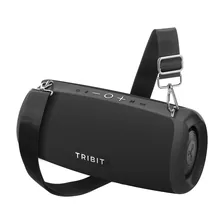 For much less, the large size speaker that comes closest is the Tribit Stormbox Lava: $100 Amazon AliExpress eBay
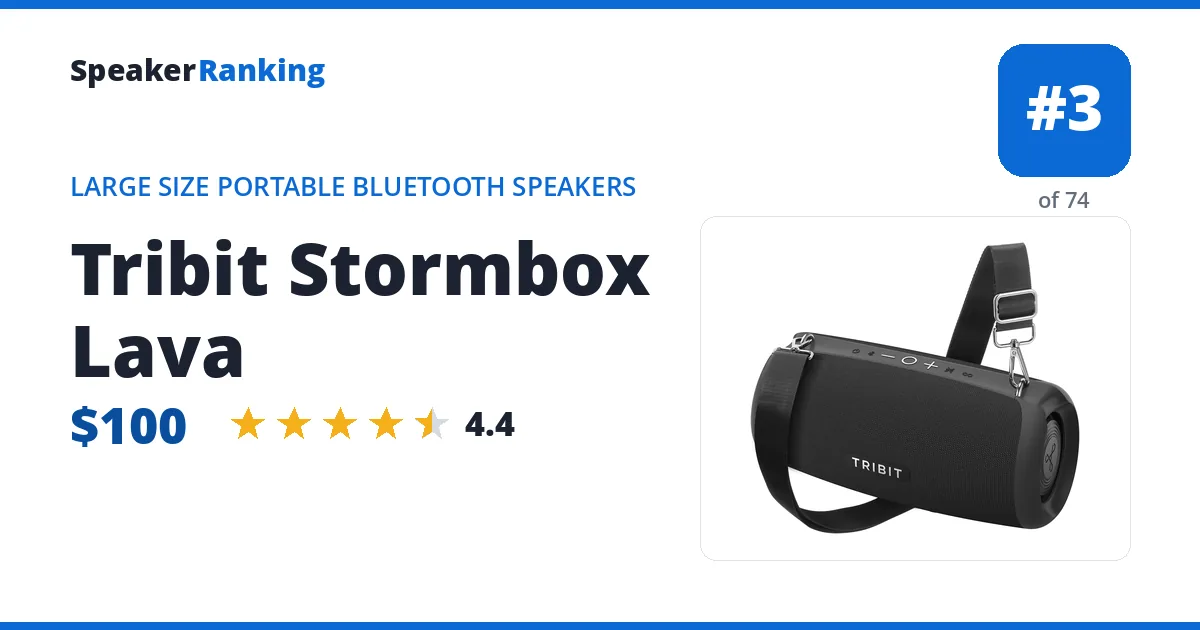
Pros: A powerful, IP67-rated portable speaker with a measured 44Hz -10dB bass point, 10-band app EQ, aux input and 24-hour claimed battery life. Independent reviews find that it gets loud with impactful bass, and careful EQ or current firmware can produce relatively clean sound through the mids and highs. Measured bass extension of 44Hz (-10dB).
Cons: XBass can make the low end muddy and obscure vocals, while the deepest notes lose authority and clarity falls at maximum volume. It is heavy for its size, its front-facing design has a narrow soundstage, and one review noted a brief sound interruption while changing volume; use a restrained EQ rather than expecting neutral sound out of the box.
Setup: Try out the Alan Ross EQ’s at this timestamp in his video There’s also a max bass EQ from Oluv and you can turn down the lowest slider for it to be more neutral
Full Tribit Stormbox Lava review and specifications →
| Amplifier Power | 80W |
|---|---|
| App | Yes |
| Aux Input | Yes |
| Aux Latency | 20ms |
| Bass Extension (-10dB) | 44Hz |
| Battery Life | 24 hours (Manufacturer specified) |
| Bluetooth Codecs | AAC, SBC |
| Bluetooth Latency | 128ms AAC, 144ms SBC |
| Bluetooth Version | 5.4 |
| Built-in Microphone | Yes |
| Digital Aux Input | No |
| Dimensions | 12.2” x 5.8” x 6” (310 x 147 x 152 mm) |
| Drivers | 2x 70mm woofers, 2x 30mm tweeters |
| EQ | Yes (10 band) |
| Frequency Response | 43Hz - 20kHz (Manufacturer specified) |
| IP Rating | IP67 |
| Maximum SPL | 108dB (measured by Alan Ross Reviews) |
| Omnidirectional | No |
| Party Mode | No |
| Power Bank | Yes (USB-A) |
| Power Input | USB-C |
| Stereo | Yes |
| Strap | Yes (detachable shoulder strap) |
| TWS | Yes |
| Weight | 5.2 lbs (2.37 kg) |
- Links
- Reviews, Comparisons and Sound Samples
- JOY‘s 3D Audio Show: Tribit StormBox Lava vs SoundCore Boom 2 - sound quality demo More from Oluv’Sone →
- Oluv Patreon: An evening with the “best portable speakers”?
- Alan Ross Reviews: Tribit Stormbox Lava Latest Firmware Update Result! v2.0.3 More from alanrossreviews →
- Alan Ross Reviews: From harsh to smooth with these EQ settings - Tribit StormBox Lava
- Alan Ross Reviews: Tribit StormBox Lava Just Got a MASSIVE Update… WOW! 🔥
- Alan Ross Reviews: Some people love the Tribit Stormbox Lava, highly professional review 😁
- Mateusz Cholewa: Tribit Stormbox Blast 🎶 🆚Deep BASS - Tribit Stormbox LAVA More from Mateusz Cholewa →
- Mateusz Cholewa: TRIBIT StormBox LAVA vs EarFun UBOOM X
- Mateusz Cholewa: TRIBIT StormBox LAVA vs Soundcore BOOM 2
- Mateusz Cholewa: TRIBIT StormBox LAVA - Unboxing.📦 Short Test vs Xtreme 4
- Mateusz Cholewa: TRIBIT StormBox LAVA Deep BASS 🆚 JBL XTREME 4
- Oluv Patreon: Tribit Stormbox Lava - quick look
- Mateusz Cholewa: 👌TRIBIT StormBox LAVA Deep Bass 🆚 Bogasing S8 Pro MAX - HiFi?
- Head-to-Head Comparisons
- Tribit Stormbox Lava vs JBL Xtreme 5
- Tribit Stormbox Lava vs Brane X
- Tribit Stormbox Lava vs Minirig 4 with subwoofer
- Tribit Stormbox Lava vs Vifa Helsinki
- Tribit Stormbox Lava vs Minirig 3 with subwoofer
- Tribit Stormbox Lava vs Vifa Oslo
- Tribit Stormbox Lava vs Soundcore Boom 2
- Tribit Stormbox Lava vs Marshall Stockwell II
- See all 76 comparisons
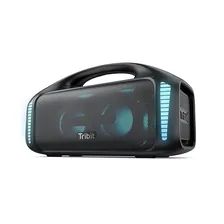 The best boombox size speaker, worth buying at its normal price, is the Tribit Stormbox Blast: $179.99 Amazon eBay
Newer model: the Tribit Stormbox Blast 2, ranked lower, rated 3.8/5.
Pros: Amazing speaker given its size, competes well with some speakers in the Party size class, bass almost as deep as a Partybox 100. Quite neutral in the default and xbass modes, but try Oluv’s EQ or Alan Ross’s EQ for a slightly more neutral sound. Oluv has mentioned v3.5 now uses his EQ as the defaults and sounds extremely good. 2 different light modes or can be turned off. Measured bass extension of 43Hz (-10dB).
Cons: Lacks a bit of detail compared to the top ranked speakers in other size categories, dip at 5.5kHz. Without the above EQ this speaker would rank around #4 in the rankings. The curved underside of the handle makes it a little harder to grip and can be uncomfortable to carry long distances.
Full Tribit Stormbox Blast review and specifications →
| Amplifier Power | 90W RMS (140W peak) |
|---|---|
| App | Yes (Tribit App) |
| Aux Input | Yes |
| Aux Latency | 0ms |
| Bass Extension (-10dB) | 43Hz |
| Battery Life | 30 hours (Manufacturer specified) |
| Bluetooth Codecs | SBC |
| Bluetooth Latency | 66ms |
| Bluetooth Version | 5.3 |
| Built-in Microphone | No |
| Digital Aux Input | No |
| Dimensions | 15.7” x 6.3” x 9.1” (400 x 160 x 230 mm) |
| Drivers | 2x ~107mm (4.2”) woofers + 2x ~25mm tweeters |
| EQ | Yes (10 band) |
| FM Tuner | No |
| IP Rating | IPX7 |
| Lights | Yes |
| Maximum SPL | 108dB (measured by Alan Ross Reviews) |
| MicroSD Playback | No |
| Microphone Input | No |
| Omnidirectional | No |
| Party Mode | No |
| Power Bank | Yes (USB-A) |
| Power Input | AC Power cord |
| Stereo | Yes |
| Strap | No |
| TWS | Yes |
| USB Playback | No |
| Weight | 12 lbs (5.45 kg) |
- Links
- Reviews, Comparisons and Sound Samples
- Alan Ross Reviews: Tribit Stormbox Blast Firmware Update 5.2 and other things……. More from alanrossreviews →
- Alan Ross Reviews: Tribit Stormbox Blast vs JBL Boombox 2 big bass boombox speakers 💕
- Alan Ross Reviews: pound for pound battle! WKing X20 D20 vs Stormbox Blast! OMG its a shocker!
- Alan Ross Reviews: Tribit Stormbox Blast compared to the 2022 StormBox Blast, i wasn’t expecting this!
- Alan Ross Reviews: Soundcore Motion x600 (best speaker ever) or two motion booms?
- Mateusz Cholewa: Tribit Stormbox Blast 🎶 🆚Deep BASS - Tribit Stormbox LAVA More from Mateusz Cholewa →
- Jay’s Straight Up Reviews & More: Tribit Stormbox Blast 🆚 Sony SRS-XG500 - Tailgater Special - Battery Powered ☢️ Bass Boost Enabled. More from JaysStraightUpReviews →
- Alan Ross Reviews: Tribit Stormbox Blast or two Motion Boom Pluses for best cheap boombox?
- Alan Ross Reviews: Tribit Stormbox Blast or Harman Kardon Go+ Play 2 Mini by an old bloke!
- InFaze Audio: SPEAKER SHOOTOUT Does the Tribit Stormbox Blast Beat the InFaze Audio MS5CX?
- Jay’s Straight Up Reviews & More: Soundcore Boom 2 Plus VS Tribit Stormbox Blast 🛜 Boombox Basement Battle 📊Custom EQ 🔥Who You Got?
- Alan Ross Reviews: Not quite! JBL Authentics 300 review and sound test vs Boombox 3, Encore and Stormbox Blast
- Techder Audios: Tribit Stormbox Blast VS Teufel Boomster "BASS VS FUNCTIONS!" More from techderaudios →
- Oluv Patreon: SoundBoks 4 vs Stormbox Blast - first impressions More from Oluv’Sone →
- Joy & Oluv’Sone: Tribit Stormbox Blast vs Earfun UBoom X, a PROPER sound test 😎
- Mateusz Cholewa: EarFun UBOOM X Deep Bass 🆚 Tribit Stormbox Blast🎶Review👌
- Oluv Patreon: Tribit Stormbox Blast vs Earfun UBoom X - outdoor test
- Oluv Patreon: Harman Kardon go+play 3 vs Tribit Stormbox Blast - outdoor soundtest
- Dominik Reviews: JBL Boombox 3 vs 2x Tribit Stormbox Blast 🤑 Huge difference? More from Dominik Reviews →
- Jay’s Straight Up Reviews & More: W-King X20 vs Tribit Stormbox Blast 🍿 Garage Battle of Boombox Speakers 🍻Custom & Standard EQ’s
- Jay’s Straight Up Reviews & More: W-King X20 vs Tribit Stormbox Blast 🍿 Garage Battle of Boombox Speakers 🍻Custom & Standard EQ’s
- Dominik Reviews: Sony ULT Field 7 vs Tribit Stormbox Blast Both good? 😂
- Jay’s Straight Up Reviews & More: Bugani Boost Max vs Tribit Stormbox Blast - GhettoBlaster Battle 🏠Indoors 🔋Battery Powered
- Jay’s Straight Up Reviews & More: Soundcore Rave Party 2 vs. Tribit Stormbox Blast - Bluetooth Speaker Basement ⚒ Battle
- Jagist reviews: Tribit Stormbox Blast vs Sony SRS XG 500 More from Jagistreviews →
- Alan Ross Reviews: Tribit Stormbox Blast or Soundcore Motion Boom Plus or W King D10? 🤪
- Alan Ross Reviews: Tribit Stormbox Blast Review vs Soundcore Motion Boom Plus - cheap bass!
- DLX Willington: Tough Game! Tribit Stormbox Blast vs Soundcore Motion Boom Plus Binaural sound samples More from DLXWillington →
- Alan Ross Reviews: Tribit Stormbox Blast or Soundcore Motion Boom Plus or W King D10? 🤪
- Jagist reviews: Tribit Stormbox Blast vs Altec Lansing Mix 2.0
- Alan Ross Reviews: Spatial Audio: Soundcore Motion X600 Vs Tribit Stormbox Blast
- Oluv Patreon: Audiocase S5 vs Tribit Stormbox Blast - first impressions
- Head-to-Head Comparisons
- Tribit Stormbox Blast vs Earfun Uboom X
- Tribit Stormbox Blast vs Harman Kardon Go + Play 3
- Tribit Stormbox Blast vs JBL Partybox Encore 2
- Tribit Stormbox Blast vs JBL Partybox Encore Essential 2
- Tribit Stormbox Blast vs JBL Partybox Encore
- Tribit Stormbox Blast vs JBL Partybox Encore Essential
- Tribit Stormbox Blast vs Yeahbox Sonic Boom Ultra
- Tribit Stormbox Blast vs Harman Kardon Onyx Studio 8
- See all 90 comparisons
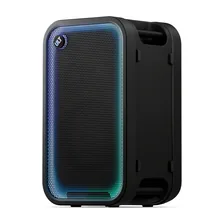 The best party size speaker, worth buying at its normal price, is the Sony ULT Tower 7: $649.99 Amazon eBay
Pros: A compelling large-party value at $650: 420W output, an IPX4-rated 30-hour battery, 360-degree sound, wheels and four carry handles at 22.8kg. The full review praises its punchy, clean ULT1 bass, ULT2’s higher-output mode, simplified controls and unusually complete I/O: USB-C, USB-A, RCA, balanced XLR and mic input.
Cons: The reviewer notes that Auracast pairing is not backward-compatible with Sony’s older Party Connect speakers, and the hard-plastic corners lack protective rubber bumpers. IPX4 is splash resistance rather than full weatherproofing; the 30-hour claim requires lights off.
Full Sony ULT Tower 7 review and specifications →
| Amplifier Power | 420W |
|---|---|
| App | Yes (Sony Sound Connect) |
| Aux Input | RCA input |
| Battery Life | 30 hours (lights off; manufacturer specified) |
| Bluetooth Codecs | SBC, AAC, LDAC |
| Bluetooth Version | 5.3 |
| Built-in Microphone | No |
| Digital Aux Input | Yes (USB-C) |
| Dimensions | 13.7” x 16.6” x 28” (348 x 422 x 711 mm) |
| Drivers | 7 drivers: 1x woofer, 2x midrange, 2x front tweeter, 2x rear tweeter |
| EQ | Yes (10 band; ULT1 / ULT2 / Flat) |
| Guitar Input | No |
| IP Rating | IPX4 |
| Lights | Yes |
| Microphone Input | Yes |
| Omnidirectional | Yes (360 degree Party Sound) |
| Party Mode | Yes (Auracast) |
| Power Bank | Yes (USB charging) |
| Power Input | AC power cord |
| Removable Battery | No |
| Stereo | Yes |
| Strap | No |
| TWS | Yes (Stereo Pair) |
| USB Playback | Yes (USB-A) |
| Weight | 50.3 lbs (22.8 kg) |
| Wheels | Yes |
| Wi-Fi | No |
- Links
- Reviews, Comparisons and Sound Samples
- Head-to-Head Comparisons
- Sony ULT Tower 7 vs JBL Partybox 330
- Sony ULT Tower 7 vs JBL Partybox Stage 320
- Sony ULT Tower 7 vs Sony ULT Tower 5
- Sony ULT Tower 7 vs JBL Partybox Club 120
- Sony ULT Tower 7 vs JBL Partybox 130
- Sony ULT Tower 7 vs JBL Partybox 110
- Sony ULT Tower 7 vs Onn XL Wireless Party Speaker
- Sony ULT Tower 7 vs Zealot PT21
- See all 55 comparisons
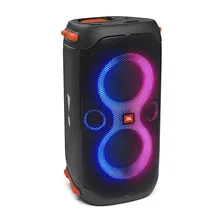 For much less, the party size speaker that comes closest is the JBL Partybox 110: $379.95 Amazon eBay
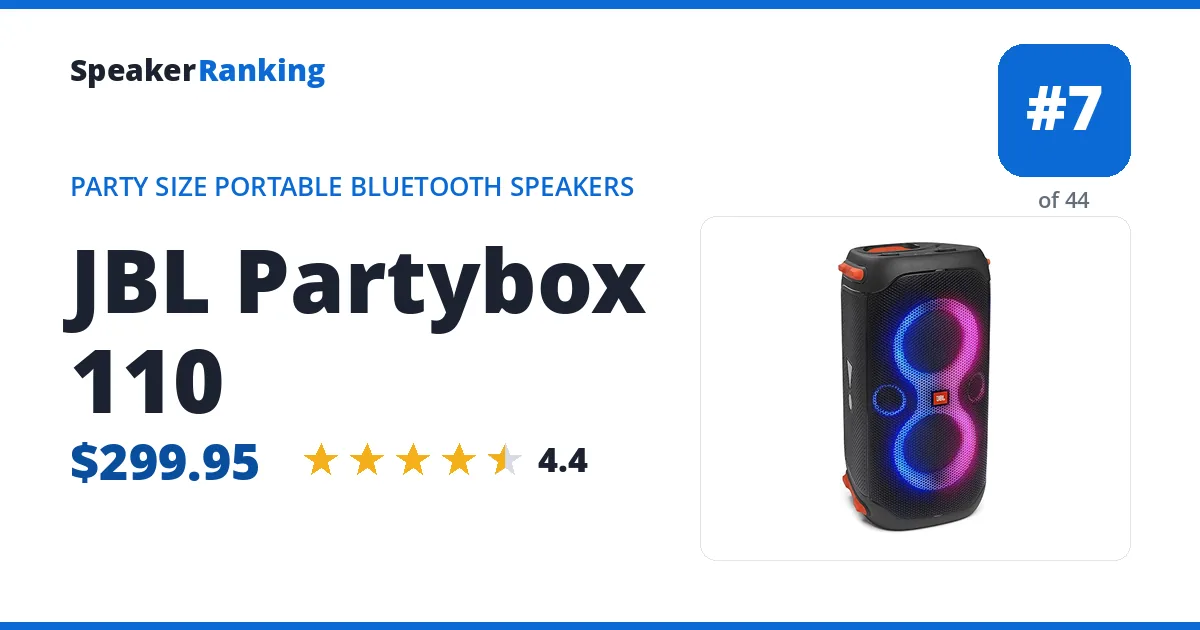
Newer model: the JBL Partybox Club 120, ranked higher, rated 4.5/5.
Pros: Very neutral sound, slightly better than the Partybox 100. Measured bass extension of 41Hz (-10dB).
Cons: Bass isn’t as deep as the Partybox 100. Just as loud and slightly deeper than a Stormbox Blast which is way smaller with better sound. Increase treble one step in the app to make it more neutral.
Full JBL Partybox 110 review and specifications →
| Amplifier Power | 160W |
|---|---|
| App | Yes |
| Aux Input | Yes |
| Bass Extension (-10dB) | 41Hz |
| Battery Life | 12 hours (Manufacturer specified) |
| Bluetooth Codecs | SBC |
| Bluetooth Version | 5.1 |
| Charging Time | 3.5 hours |
| Digital Aux Input | No |
| Dimensions | 22.4”H x 11.6”W x 11.8”D (568 x 295 x 300 mm) |
| Drivers | 2x 5.25” woofers, 2x 2.25” tweeters |
| EQ | Yes (3 band) |
| Guitar Input | Yes |
| IP Rating | IPX4 |
| Lights | Yes |
| Microphone Input | Yes (Karaoke mode with echo effect) |
| Omnidirectional | No |
| Party Mode | No |
| Power Bank | Yes (USB-A, 5V/2.1A) |
| Power Input | AC Power cord |
| Stereo | Partially |
| Strap | No |
| TWS | Yes |
| USB Playback | Yes |
| Weight | 23.8 lbs (10.8 kg) |
- Links
- Reviews, Comparisons and Sound Samples
- Turtlebox Gen 1 vs JBL Partybox 110 Review
- GYMCADDY: Soundboks Go Vs JBL Partybox 110 Vs Sony XP500 More from GYMCADDY →
- Jay’s Straight Up Reviews & More: ONN Large Party Speaker Gen. 2 (Bass Boost On) vs JBL Partybox 110 (Bass Boost 1)🩻Battery Powered🔋 More from JaysStraightUpReviews →
- Jay’s Straight Up Reviews & More: ONN Large Party Speaker Gen 2 vs JBL Partybox 110 ☀️ Outdoors Pole Mounted 🤯 Bass Boost On
- Jay’s Straight Up Reviews & More: Klipsch Gig XXL vs JBL Partybox 110 🎉 Bluetooth Party Speaker Comparison. Is The Party Over For Gig?
- HQ AUDIO Exchange: Samsung MX-ST50B vs. JBL Partybox 110 Bass Test!🔥
- W. Weiss: The $400 Club - Budget Portable PA’s Mackie Thump Go, JBL Partybox 110, Yamaha DBR10
- Jay’s Straight Up Reviews & More: W-King T9 Pro vs JBL Partybox 110 😯Can the Budget King Hang With the PB110?
- Jay’s Straight Up Reviews & More: JBL Partybox 110 🆚 Onn Large Party Speaker - Both Plugged In🔌 The Legend vs. the Budget Banger 🍿
- Jay’s Straight Up Reviews & More: Triple Threat Match ✨ JBL Partybox 110, Soundcore Rave+, ONN Large Party Speaker. Indoor Battle⚠️
- Jay’s Straight Up Reviews & More: PHILIPS NX200 🦨 (TANX200) 🆚 JBL PARTYBOX 110 - Bluetooth Speaker Comparison, Both on Bass mode One.
- Jay’s Straight Up Reviews & More: Triple Threat Match ✨ JBL Partybox 110, Soundcore Rave+, ONN Large Party Speaker. Indoor Battle⚠️
- Jay’s Straight Up Reviews & More: Dual W-King T11 (EQ1, EQ2) 🆚 JBL Partybox 110 (Bass One) 📛 Are two T11’s TWS Louder than one PB110?
- KULAS TECH SHOW: JBL Partybox on the go vs JBL Partybox 110 Bass Comparison More from KULASTECHSHOW20 →
- Head-to-Head Comparisons
- JBL Partybox 110 vs JBL Partybox 300
- JBL Partybox 110 vs JBL Partybox 100
- JBL Partybox 110 vs JBL Partybox 130
- JBL Partybox 110 vs Onn XL Wireless Party Speaker
- JBL Partybox 110 vs JBL Partybox Club 120
- JBL Partybox 110 vs Zealot PT21
- JBL Partybox 110 vs Sony SRS-XP700
- JBL Partybox 110 vs Sony ULT Tower 5
- See all 56 comparisons
 The best large party size speaker, worth buying at its normal price, is the Sony ULT Tower Max: $1,499.99 Amazon eBay
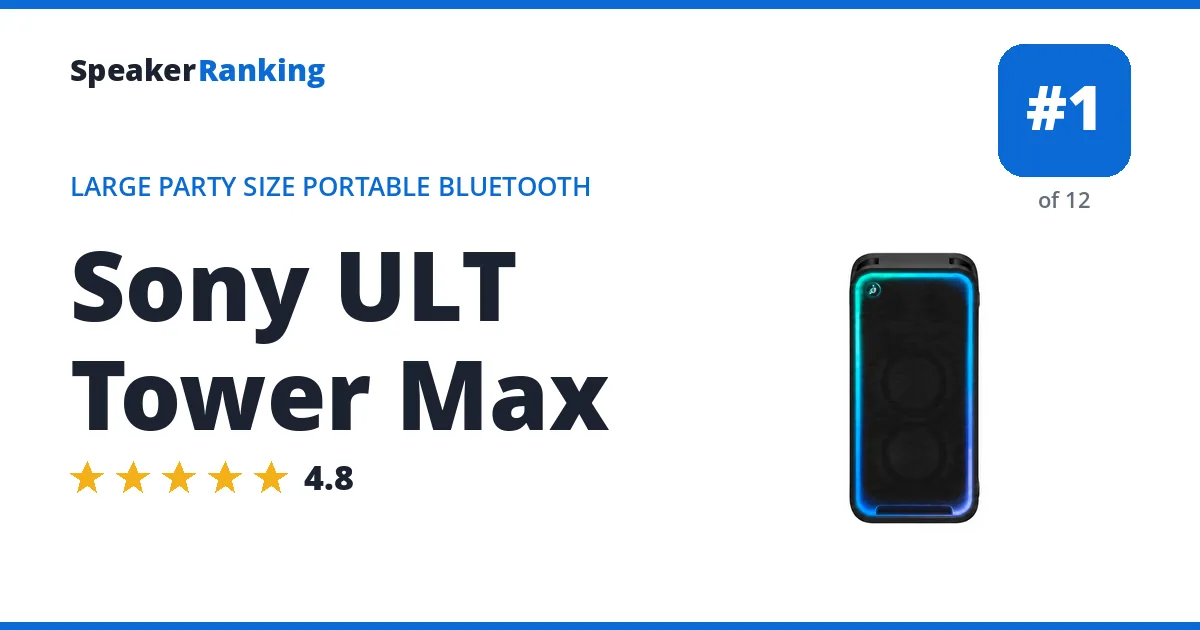
Pros: AudioTribe measured 110.6dBC at roughly 6m outdoors with Flat EQ and ULT1 enabled, 4.4dB above the JBL PartyBox Ultimate in the same setup. Its three 11-inch woofers held about 110dB from 40-100Hz; Sony also provides 10-band EQ, Sound Field Optimization, RCA and XLR inputs, USB-C, a mic input, and XLR output.
Cons: The same comparison found it 1.2dB behind the JBL in A-weighted loudness and weaker below 40Hz. At 56.3kg (124lb) and AC-only, this is a wheeled event speaker rather than a portable battery model.
Full Sony ULT Tower Max review and specifications →
| Amplifier Power | 2,150W (manufacturer specified) |
|---|---|
| App | Yes (Sony Sound Connect) |
| Aux Input | RCA input |
| Battery Life | No Battery |
| Bluetooth Codecs | SBC, AAC, LDAC |
| Bluetooth Version | 5.3 |
| Built-in Microphone | No |
| Digital Aux Input | No |
| Dimensions | 21” x 41.8” x 18.6” (534 x 1062 x 472 mm) |
| Drivers | 9 drivers: 3x 11” woofer (2 front, 1 rear), 2x 4.7” midrange, 2x 1” tweeter, 2x 1.6” rear tweeter |
| EQ | Yes (10 band; ULT1 / ULT2 / Flat / Live) |
| Guitar Input | No |
| IP Rating | Splashproof top surface |
| Lights | Yes |
| Microphone Input | Yes (6.3mm) |
| Omnidirectional | Yes (360 degree Party Sound) |
| Party Mode | Yes (Party Chain) |
| Power Bank | Yes (USB charging) |
| Power Input | AC 120-240V, 50/60Hz |
| Removable Battery | No |
| Stereo | Yes |
| Strap | No |
| TWS | Yes (Stereo Pair) |
| USB Playback | Yes (USB-A) |
| Weight | 124.1 lbs (56.3 kg) |
| Wheels | Yes |
| Wi-Fi | No |
- Links
- Reviews, Comparisons and Sound Samples
- Head-to-Head Comparisons
- Sony ULT Tower Max vs JBL Partybox Ultimate
- Sony ULT Tower Max vs JBL Partybox 1000
- Sony ULT Tower Max vs Teufel Rockster 2
- Sony ULT Tower Max vs JBL Partybox 720
- Sony ULT Tower Max vs JBL Partybox 710
- Sony ULT Tower Max vs JBL Partybox 520
- Sony ULT Tower Max vs Sony ULT Tower 9
- Sony ULT Tower Max vs Sony ULT Tower 10
- See all 28 comparisons
Powered Home at Full Price
The top rated speaker in each size, plus a much cheaper one that comes close where there is one. A sale on these is a bonus, not the reason to buy.
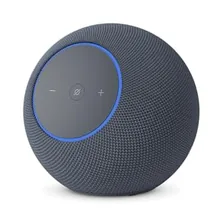 The best small desktop powered speaker, worth buying at its normal price, is the Amazon Echo Studio 2nd Gen: $219.99 each Amazon eBay
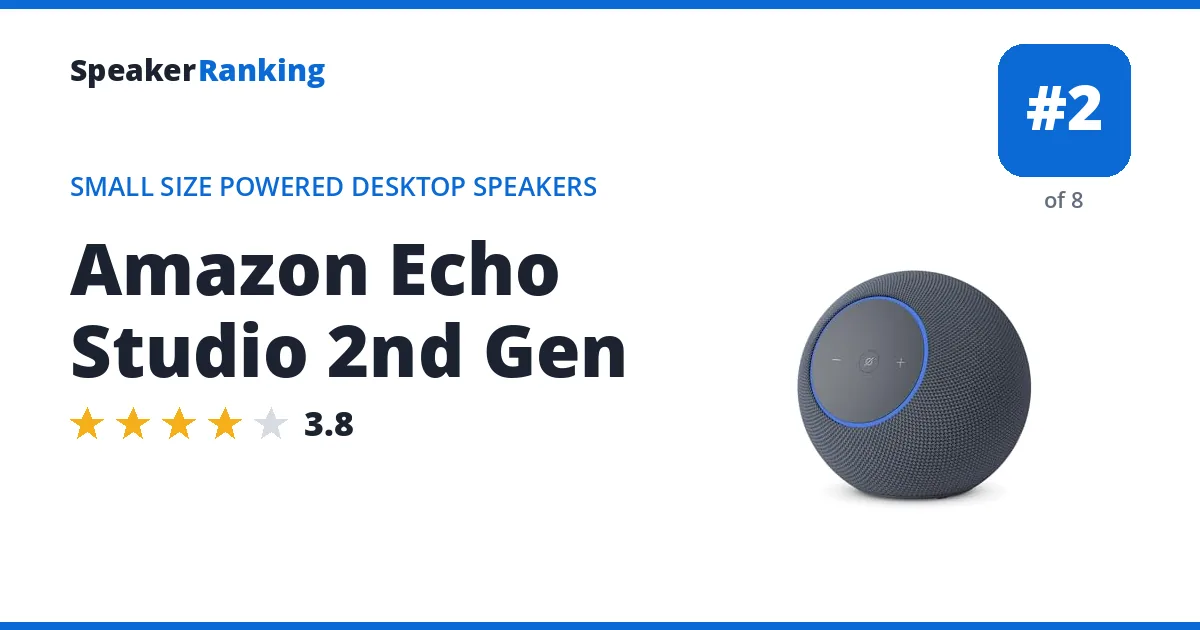
Pros: SoundGuys called it the best-sounding Amazon speaker they have tested, scoring it 7.8 of 10. A 3.75-inch high-excursion woofer and three 2.25-inch full-range drivers fire left, right and upward, giving a real sense of width and instrument separation from a single enclosure, with vocals sitting forward and clean cymbals even at moderate volume. It supports Dolby Atmos and spatial audio on compatible content, stays distortion-free up to about 70% volume, and includes a built-in Zigbee, Matter and Thread smart home hub plus a 3-band EQ with a Dolby Virtualizer toggle.
Cons: SoundGuys still marked it down on Value (4.0 of 10) given the $219.99 list price, and it is explicitly not true left-right stereo from one cabinet, so a stereo pair is needed for real width in a larger room. There are no wired audio inputs of any kind and no battery, so it must stay plugged in, and Bluetooth is limited to the SBC codec. Voice recognition wasn’t perfectly reliable in testing, occasionally playing the wrong track for a specific artist-title request.
Full Amazon Echo Studio 2nd Gen review and specifications →
| AES Input | No |
|---|---|
| App | Yes (Alexa) |
| Aux Input | No |
| Battery Life | No Battery |
| Bluetooth | Yes, 5.3 |
| Bluetooth Codecs | SBC |
| Built-in Microphone | Yes (mic mute button, far-field) |
| Coaxial Input | No |
| Dimensions | 6.1” x 5.6” x 5.8” (155 x 142 x 147 mm) |
| Discontinued | No |
| Drivers | 3.75in high-excursion woofer, 3x 2.25in full-range drivers (L/R/up) |
| EQ | Yes (Bass/Mid/Treble + Dolby Virtualizer, via Alexa app) |
| HDMI Input | No |
| IP Rating | None |
| Inputs | Wi-Fi, Bluetooth |
| Optical Input | No |
| Party Mode | Yes (Wi-Fi multi-room, Alexa Home Theater) |
| Power Bank | No |
| Power Input | External AC adapter |
| RCA Input | No |
| Stereo | No |
| Streaming Services | Amazon Music, Apple Music, Spotify, SiriusXM |
| TRS Input | No |
| TWS | Yes (Wi-Fi stereo pairing via Alexa app) |
| USB Input | No |
| Voice Assistants | Amazon Alexa / Alexa+ |
| Weight | 3.6 lbs (1.632 kg) |
| Wi-Fi | Yes (Wi-Fi 6E) |
| XLR Input | No |
- Links
- Reviews, Comparisons and Sound Samples
- Head-to-Head Comparisons
- Amazon Echo Studio 2nd Gen vs Amazon Echo Dot Max
- Amazon Echo Studio 2nd Gen vs Denon Home 150
- Amazon Echo Studio 2nd Gen vs Google Nest Audio
- Amazon Echo Studio 2nd Gen vs Apple HomePod Mini
- Amazon Echo Studio 2nd Gen vs Amazon Echo Dot 5th Gen
- Amazon Echo Studio 2nd Gen vs Google Home Speaker
- Amazon Echo Studio 2nd Gen vs Google Nest Mini 2nd Gen
- Amazon Echo Studio 2nd Gen vs Amazon Echo Pop
- See all 27 comparisons
 For much less, the small desktop powered speaker that comes closest is the Amazon Echo Dot Max: $119.99 each Amazon eBay
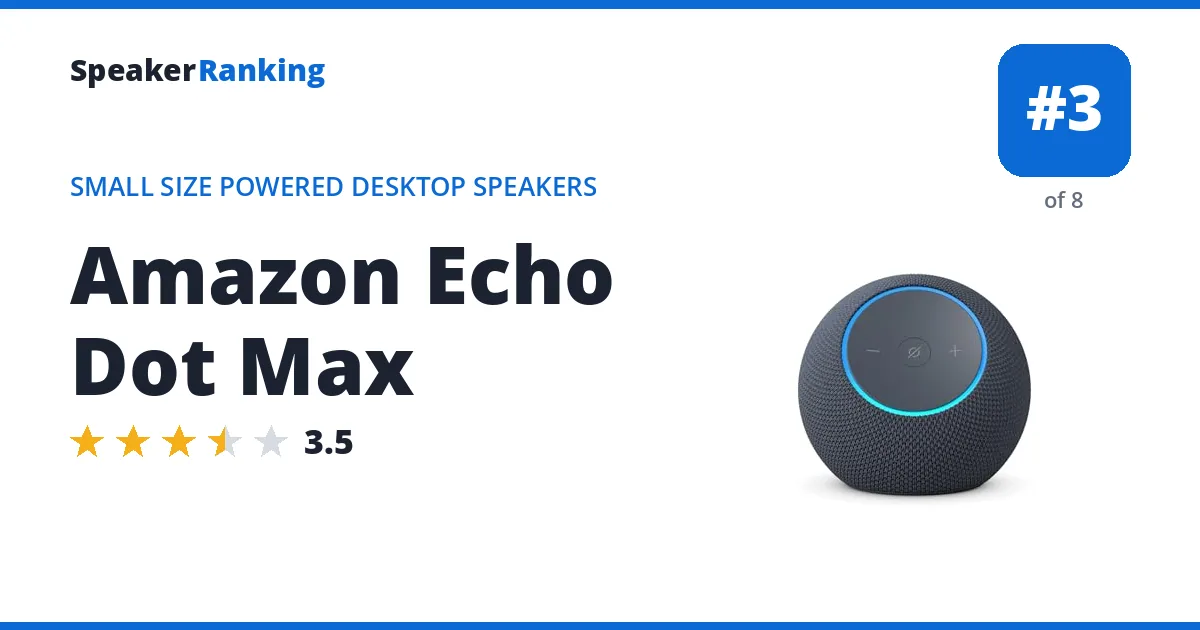
Pros: Engadget’s direct verdict against the base Echo Dot: “it’s worth stepping up to the Dot Max over the standard Dot” for sound, since it’s louder and bassier from a 2.5-inch woofer plus a dedicated tweeter rather than one small full-range driver. RTINGS names it their best budget Alexa speaker, finding the microphone excellent at picking up commands from a distance or in noise, with a balanced midrange for accurate voices, consistent sound across listening angles, and sound quality it calls good for the price. It supports Alexa+ and Alexa Home Theater pairing with a Fire TV Stick.
Cons: Engadget’s main complaint was that it is a real step down from the discontinued Echo (4th Gen) it effectively replaces at the same price: that older speaker paired a 3-inch woofer with dual 0.8-inch tweeters, against the Dot Max’s single 2.5-inch woofer and one tweeter, and frequencies felt smushed together without a clean bass-to-treble separation. RTINGS’ one listed con is that the wired-only design means you cannot carry it around. There is no 3.5mm input, no battery, and Bluetooth is limited to SBC and AAC.
Full Amazon Echo Dot Max review and specifications →
| AES Input | No |
|---|---|
| App | Yes (Alexa) |
| Aux Input | No |
| Battery Life | No Battery |
| Bluetooth | Yes |
| Bluetooth Codecs | SBC, AAC |
| Built-in Microphone | Yes (far-field, mic mute) |
| Coaxial Input | No |
| Dimensions | 3.9” x 4.4” x 4.9” (99 x 112 x 124 mm) |
| Discontinued | No |
| Drivers | 2.5in woofer, 1x tweeter |
| EQ | No |
| HDMI Input | No |
| IP Rating | None |
| Inputs | Wi-Fi, Bluetooth |
| Optical Input | No |
| Party Mode | Yes (Wi-Fi multi-room, Alexa Home Theater) |
| Power Bank | No |
| Power Input | External AC adapter |
| RCA Input | No |
| Stereo | No |
| Streaming Services | Amazon Music, Spotify, Apple Music, Pandora, iHeartRadio, SiriusXM, TuneIn |
| TRS Input | No |
| TWS | Yes (Wi-Fi stereo pairing via Alexa app) |
| USB Input | No |
| Voice Assistants | Amazon Alexa / Alexa+ |
| Wi-Fi | Yes |
| XLR Input | No |
- Links
- Reviews, Comparisons and Sound Samples
- Head-to-Head Comparisons
- Amazon Echo Dot Max vs Amazon Echo Studio 2nd Gen
- Amazon Echo Dot Max vs Denon Home 150
- Amazon Echo Dot Max vs Google Nest Audio
- Amazon Echo Dot Max vs Apple HomePod Mini
- Amazon Echo Dot Max vs Amazon Echo Dot 5th Gen
- Amazon Echo Dot Max vs Google Home Speaker
- Amazon Echo Dot Max vs Google Nest Mini 2nd Gen
- Amazon Echo Dot Max vs Amazon Echo Pop
- See all 27 comparisons
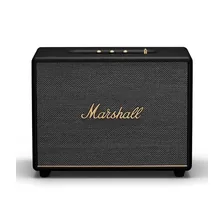 The best medium desktop powered speaker, worth buying at its normal price, is the Marshall Woburn III: $599.99 each Amazon eBay
Older models: the Marshall Woburn II (ranked lower, rated 4/5) and the Marshall Woburn I (ranked lower, rated 4/5).
Pros: At 7.44 kg, Marshall Woburn III combines 6” woofer, 2x 2” midranges, 2x 0.75” Dome tweeters with Bluetooth, HDMI ARC, RCA, Aux. Up to 100.5db @ 1m and stereo playback make its feature set practical for its intended room or portable use. Measured bass extension of ~45Hz (-10dB).
Cons: Bass is limited by its ~45Hz specification.
Full Marshall Woburn III review and specifications →
| AES Input | No |
|---|---|
| Amplifier Power | 150W (Woofer: 90W, Midrange: 2x15W, Tweeters: 2x15W) |
| App | Yes |
| Aux Input | Yes |
| Bass Extension (-10dB) | ~45Hz |
| Battery Life | No Battery |
| Bluetooth | Yes, 5.2 |
| Bluetooth Codecs | SBC |
| Bluetooth Version | 5.2 |
| Coaxial Input | No |
| Dimensions | 15.7” x 12.5” x 8” (400 x 317 x 203 mm) |
| Drivers | 6” woofer, 2x 2” midranges, 2x 0.75” Dome tweeters |
| EQ | Yes (Bass/Treble) |
| Frequency Response | 35Hz - 20kHz (Manufacturer specified) |
| HDMI Input | Yes |
| IP Rating | None |
| Inputs | Bluetooth, HDMI ARC, RCA, Aux |
| Maximum SPL | 100.5dB @ 1m |
| Optical Input | No |
| Party Mode | No |
| Power Input | AC Power cord |
| RCA Input | Yes |
| Stereo | Yes |
| TRS Input | No |
| TWS | No |
| USB Input | No |
| Weight | 16.4 lbs (7.44 kg) |
| Wi-Fi | No |
| Woofer Cabinet | ported |
| XLR Input | No |
- Links
- Reviews, Comparisons and Sound Samples
- Head-to-Head Comparisons
- Marshall Woburn III vs Marshall Woburn II
- Marshall Woburn III vs Audio Pro C5 MkII
- Marshall Woburn III vs Marshall Woburn I
- Marshall Woburn III vs Apple HomePod 2nd Gen
- Marshall Woburn III vs Marshall Stanmore III
- Marshall Woburn III vs Edifier D12
- Marshall Woburn III vs JBL Authentics 200
- Marshall Woburn III vs Marshall Acton III
- See all 13 comparisons
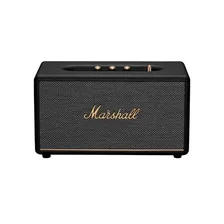 For much less, the medium desktop powered speaker that comes closest is the Marshall Stanmore III: $345.99 each Amazon eBay
Older model: the Marshall Stanmore II (ranked lower, rated 3.7/5).
Pros: At 4.4 kg, Marshall Stanmore III combines 5” (midrange/woofer), 1x 5” midrange, 2x 0.75” Dome tweeters with Bluetooth, RCA, Aux. Ac-powered operation and limited-stereo playback make its feature set practical for its intended room or portable use.
Cons: Bass is limited by its 45Hz - 20kHz (Manufacturer specified) specification.
Full Marshall Stanmore III review and specifications →
| AES Input | No |
|---|---|
| Amplifier Power | 80W (Woofer: 50W, Tweeters: 2x15W) |
| App | Yes |
| Aux Input | Yes |
| Battery Life | No Battery |
| Bluetooth | Yes, 5.2 |
| Bluetooth Codecs | SBC |
| Bluetooth Version | 5.2 |
| Coaxial Input | No |
| Dimensions | 13.8” x 8” x 7.4” (350 x 203 x 188 mm) |
| Drivers | 5” (midrange/woofer), 1x 5” midrange, 2x 0.75” Dome tweeters |
| EQ | Yes (Bass/Treble) |
| Frequency Response | 45Hz - 20kHz (Manufacturer specified) |
| HDMI Input | No |
| IP Rating | None |
| Inputs | Bluetooth, RCA, Aux |
| Optical Input | No |
| Party Mode | No |
| Power Bank | No |
| Power Input | AC Power cord |
| RCA Input | Yes |
| Stereo | Partially (1 woofer) |
| TRS Input | No |
| TWS | No |
| USB Input | No |
| Weight | 9.7 lbs (4.4 kg) |
| Wi-Fi | No |
| Woofer Cabinet | ported |
| XLR Input | No |
- Links
- Reviews, Comparisons and Sound Samples
- Head-to-Head Comparisons
- Marshall Stanmore III vs Edifier D12
- Marshall Stanmore III vs Apple HomePod 2nd Gen
- Marshall Stanmore III vs Marshall Woburn I
- Marshall Stanmore III vs JBL Authentics 200
- Marshall Stanmore III vs Marshall Woburn II
- Marshall Stanmore III vs Marshall Acton III
- Marshall Stanmore III vs Marshall Stanmore II
- Marshall Stanmore III vs Marshall Woburn III
- See all 13 comparisons
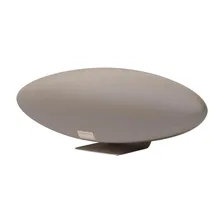 The best large desktop powered speaker, worth buying at its normal price, is the B&W Zeppelin Pro: $639.00 each Amazon eBay
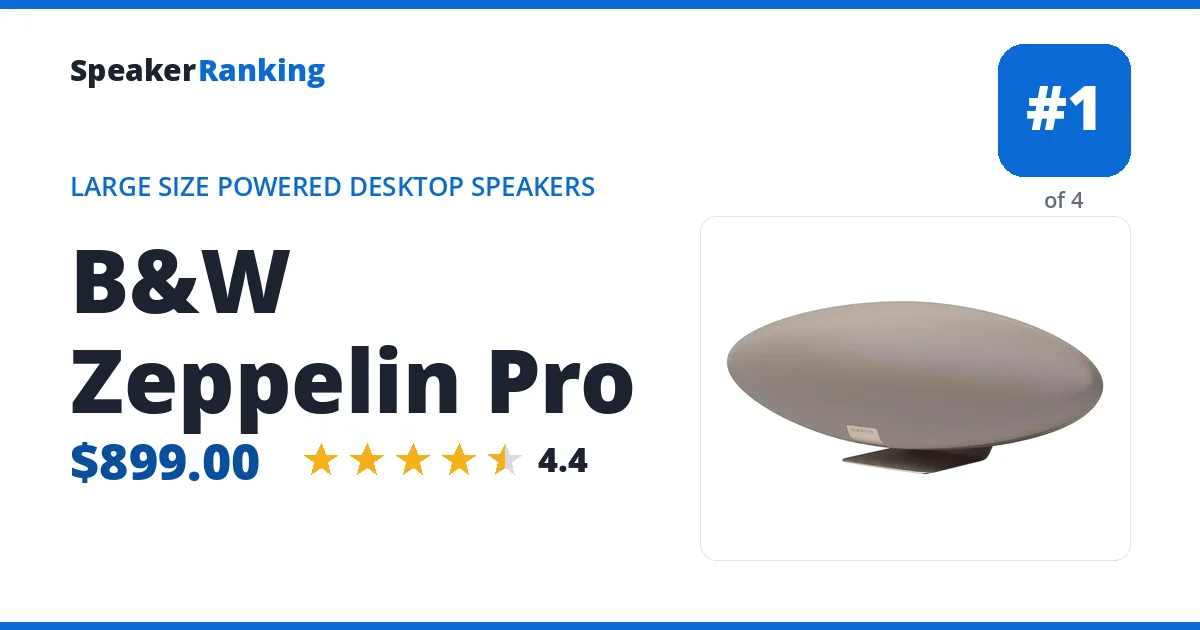
Older model: the B&W Zeppelin (ranked lower, rated 4.3/5).
Pros: Titanium dome tweeters and an improved 24-bit DAC over the standard Zeppelin for slightly better high-frequency detail on hi-res streams. Dynamic EQ DSP. Customizable downward-firing light. Same wide soundstage and deep bass extension as the standard Zeppelin.
Cons: Same price as the standard Zeppelin for a fairly modest tweeter/DAC upgrade. Nothing besides the lack of battery, lack of waterproofing, high cost and the Earfun Uboom X that’s so close to it in terms of sound quality for 7x less money. Basically an indoor only speaker. At this price point the Top Recommended Bookshelf Speakers are the better buy, with even better soundstage.
Full B&W Zeppelin Pro review and specifications →
| AES Input | No |
|---|---|
| Amplifier Power | 240W (80W woofer, 2x 40W midrange, 2x 40W tweeter) |
| App | No |
| Aux Input | No |
| Battery Life | No Battery |
| Bluetooth | Yes |
| Bluetooth Codecs | aptX Adaptive, AAC, SBC |
| Bluetooth Version | 5.0 |
| Coaxial Input | No |
| DSP | Yes |
| Dimensions | 25.6” x 8.3” x 7.6” (650 x 210 x 194 mm) |
| Drivers | 150mm woofer, 2x 90mm FST midrange drivers, 2x 25mm Titanium Dome tweeters |
| EQ | Yes (Dynamic EQ) |
| Frequency Response | 35Hz - 24kHz (Manufacturer specified) |
| HDMI Input | No |
| IP Rating | None |
| Inputs | Bluetooth, AirPlay 2, Spotify Connect |
| Optical Input | No |
| Party Mode | No |
| Power Bank | No |
| Power Input | AC Power cord |
| RCA Input | No |
| Stereo | Yes |
| Streaming Services | AirPlay 2, Spotify Connect |
| TRS Input | No |
| TWS | No |
| USB Input | No |
| Weight | 14.6 lbs (6.6 kg) |
| Wi-Fi | Yes |
| XLR Input | No |
- Links
- Reviews, Comparisons and Sound Samples
- Head-to-Head Comparisons
 The best small bookshelf powered speaker, worth buying at its normal price, is the Genelec 8010A: $900 per pair B&H Photo Video eBay
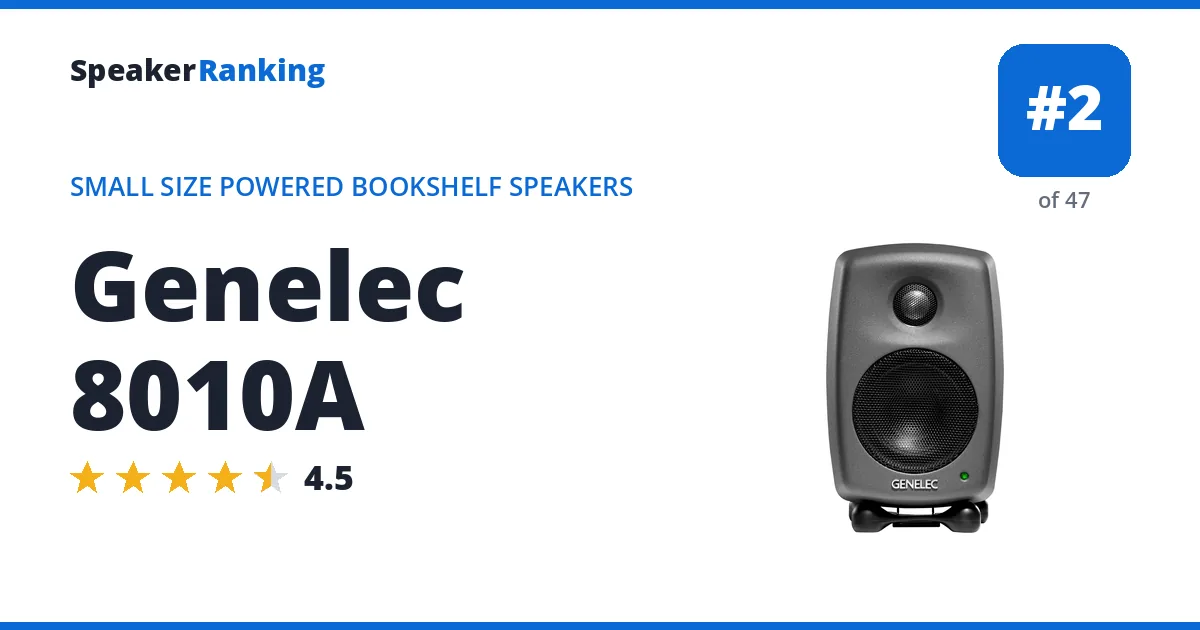
Pros: ASR’s Klippel measurements support a neutral compact monitor: the response spans 2.5dB from 300Hz to 5kHz, with lower narrow-band variation in the listening window than directly on-axis. Spinorama predicts 4.10 standalone and 7.01 with an ideal subwoofer, making it a strong choice when bass is handled separately. Its measured balance provides firmer evidence for critical listening than a recorded sound demonstration alone. Measured bass extension of 74Hz (-3dB).
Cons: The measured -3dB point is about 78Hz, so deep bass is missing without a subwoofer. The small enclosure and woofer are better suited to close listening than room-filling levels; the preference score does not measure headroom. The D3V offers substantially deeper measured bass in a similarly compact format, while the Genelec’s premium price is harder to justify for casual desktop use.
Full Genelec 8010A review and specifications →
| AES Input | No |
|---|---|
| Amplifier Power | 50W (25W woofer + 25W tweeter) |
| App | No |
| Aux Input | No |
| Bass Extension (-10dB) | 67Hz (measured, Audio Science Review) |
| Bass Extension (-3dB) | 74Hz (measured, Audio Science Review) |
| Bluetooth | No |
| Coaxial Input | No |
| Dimensions | 7.7”H x 4.8”W x 4.5”D (195.6 x 121.9 x 114.3 mm) |
| Drivers | 3” woofer, 0.75” metal dome tweeter |
| EQ | Yes (Bass tilt, Desk proximity) |
| Frequency Response | 67 Hz-25 kHz (-6dB) (Manufacturer specified) |
| HDMI Input | No |
| Inputs | XLR |
| Maximum SPL | 96dB @ 1m (manufacturer specified) |
| Optical Input | No |
| RCA Input | No |
| TRS Input | No |
| USB Input | No |
| Weight | 3.3 lbs (1.5 kg) |
| XLR Input | Yes |
- Links
- Reviews, Comparisons and Sound Samples
- Audio Science Review Measurements More from Audio Science Review →
- DSAUDIO.review: Genelec 8010A (Genelec G One) vs iLoud Micro Monitor Sound Demo w/ Bass Test More from DSAUDIOreview →
- DSAUDIO.review: Genelec 8010A (Genelec G One) vs Presonus Eris E4.5 Sound Demo w/ Bass Test
- DSAUDIO.review: Genelec 8010A (G One) vs JBL LSR305 Sound Demo w/ Bass Test
- DSAUDIO.review: Genelec 8010A (Genelec G One) vs Audioengine A2+ Sound Demo w/ Bass Test
- DSAUDIO.review: Genelec 8010A (Genelec G One) vs Yamaha HS5 Sound Demo w/ Bass Test
- Audio Science Review Measurements (spinorama.org)
- Head-to-Head Comparisons
- Genelec 8010A vs Adam Audio D3v
- Genelec 8010A vs Cambridge Audio L/R S
- Genelec 8010A vs IK Multimedia iLoud Micro Monitor
- Genelec 8010A vs Edifier M60
- Genelec 8010A vs HiVi Swan X3
- Genelec 8010A vs Edifier MR3
- Genelec 8010A vs Audioengine A2+
- Genelec 8010A vs Klipsch ProMedia Lumina
- See all 13 comparisons
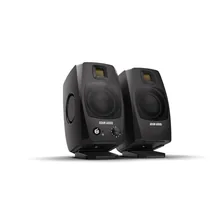 For much less, the small bookshelf powered speaker that comes closest is the Adam Audio D3v: $339.99 per pair Amazon eBay
Pros: Excellent midrange linearity for a tiny desktop speaker: Erin’s Klippel data spans just 1.7dB from 300Hz to 5kHz. Side passive radiators help bass reach -3dB at about 51Hz, substantially deeper than the Genelec 8010A or Audio Smile LBM. Predicted preference scores of 5.37 standalone and 7.59 with an ideal subwoofer support it as a particularly useful compact system without a sub. USB-C, analog inputs and placement filters simplify desk setup. Measured bass extension of 50Hz (-3dB), with a measured sensitivity of 86.5dB.
Cons: A rising upper-frequency balance and vertical crossover interference keep it from being uniformly neutral at every angle; aim the tweeters toward ear height. The limiter reduces bass and midrange output as volume rises, with the existing review’s compression tests putting usable maximum output around 89-90dB at 1m. Deep bass at moderate volume should not be confused with high output capability.
Full Adam Audio D3v review and specifications →
| AES Input | No |
|---|---|
| Amplifier Power | 100W RMS per speaker (70W woofer + 30W tweeter) (Manufacturer specified) |
| App | No |
| Aux Input | No |
| Bass Extension (-10dB) | 45Hz (measured, Erin’s Audio Corner) |
| Bass Extension (-3dB) | 50Hz (measured, Erin’s Audio Corner) |
| Bluetooth | No |
| Coaxial Input | No |
| Dimensions | 200H (240H on included stand) x 115W x 150D mm |
| Drivers | 3.5” aluminium woofer, D-ART folded ribbon tweeter, 2 x 3.5” passive radiators (each) |
| EQ | Yes (Room adjustment filters) |
| Frequency Response | 48Hz - 22.6kHz (-3dB) (Manufacturer specified) |
| HDMI Input | No |
| Headphone Output | Yes |
| Inputs | USB-C, balanced 1/4-inch TRS |
| Maximum SPL | 98dB peak @ 1m (IEC-weighted noise, manufacturer specified) |
| Optical Input | No |
| Outputs | 3.5mm headphone |
| RCA Input | No |
| Sensitivity | 86.5dB (measured at 0.3V/1m, Erin’s Audio Corner) |
| Spinorama Preference Score | 5.37 |
| Spinorama Preference Score with Perfect Sub | 7.59 |
| TRS Input | Yes |
| USB Input | Yes |
| Weight | 7.9 lbs (3.58 kg) (pair) |
| XLR Input | No |
- Links
- Reviews, Comparisons and Sound Samples
- Erin’s Audio Corner: ADAM Audio D3V: Mighty Small But Mighty Awesome Desktop Speaker More from Erin’s Audio Corner →
- Erin’s Audio Review Adam Audio D3v
- Erin’s Audio Corner Measurements (spinorama.org)
- Jasper Tech: Best Desktop Computer Speakers for Every Budget – 2026 More from Jasper Tech →
- Jasper Tech: Are the D3V The Best Studio Monitors For The Money?
- Erin’s Audio Corner: The Best Budget Desktop Speakers, Tested & Rated
- Head-to-Head Comparisons
- Adam Audio D3v vs Genelec 8010A
- Adam Audio D3v vs Cambridge Audio L/R S
- Adam Audio D3v vs IK Multimedia iLoud Micro Monitor
- Adam Audio D3v vs Audio Smile Little British Monitor
- Adam Audio D3v vs Edifier M60
- Adam Audio D3v vs HiVi Swan X3
- Adam Audio D3v vs Edifier MR3
- Adam Audio D3v vs Audioengine A2+
- See all 15 comparisons
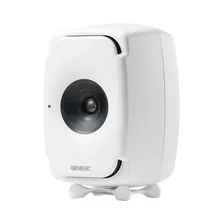 The best medium bookshelf powered speaker, worth buying at its normal price, is the Genelec 8331A: $4,500 per pair B&H Photo Video eBay
Pros: Erin’s Klippel measurements support its reference-monitor credentials: a 1.4dB response span from 300Hz to 5kHz, low listening-window and predicted-room irregularity, and preference scores of 6.57 standalone and 8.51 with an ideal subwoofer. The coaxial mid/tweeter and concealed woofers maintain coherent radiation as listening position changes. Bass reaches -3dB around 48Hz, and GLM adds level, delay and room-response calibration. Measured bass extension of 49Hz (-3dB).
Cons: Expensive, with studio-oriented XLR connectivity rather than consumer streaming. The compact woofers still limit deep-bass output, and the review reports protection muting when pushed beyond its operating range. GLM calibration hardware is an additional purchase. Its excellent tonal score does not remove the need for a subwoofer or larger monitor at demanding levels.
Full Genelec 8331A review and specifications →
| AES Input | Yes |
|---|---|
| Amplifier Power | 72W LF + 36W MF + 36W HF |
| Aux Input | No |
| Bass Extension (-10dB) | 39Hz (measured, Erin’s Audio Corner) |
| Bass Extension (-3dB) | 49Hz (measured, Erin’s Audio Corner) |
| Bluetooth | No |
| Coaxial Input | No |
| Dimensions | 12”H x 7.4”W x 8.3”D (305 x 189 x 212 mm) |
| Drivers | Dual 130x65mm woofers; 90mm coaxial mid; 19mm tweeter |
| Frequency Response | 45Hz - 37kHz (-6dB) (Manufacturer specified) |
| HDMI Input | No |
| Inputs | XLR, AES/EBU |
| Maximum SPL | 100dB at 3m before protection (measured, Erin’s Audio Corner) |
| Optical Input | No |
| RCA Input | No |
| Spinorama Preference Score | 6.57 |
| Spinorama Preference Score with Perfect Sub | 8.51 |
| TRS Input | No |
| USB Input | No |
| Weight | 14.8 lbs (6.7kg) each |
| XLR Input | Yes |
- Links
- Reviews, Comparisons and Sound Samples
- Head-to-Head Comparisons
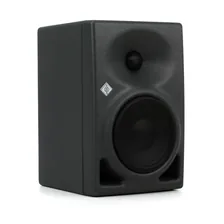 For much less, the medium bookshelf powered speaker that comes closest is the Neumann KH120 MKII: $2000 per pair B&H Photo Video eBay
Pros: ASR’s Klippel data shows exceptional neutrality: only a 1.5dB span from 300Hz to 5kHz and low listening-window narrow-band deviation of 0.208. Scores of 6.49 standalone and 8.44 with an ideal subwoofer place it among the strongest measured options here. Bass reaches -3dB around 45Hz. The review reports very low distortion at 86dB/1m and clean performance outside deep bass at 96dB. Measured bass extension of 46Hz (-3dB).
Cons: Vertical crossover interference makes listening height important even though horizontal dispersion is well controlled. A small directivity irregularity remains around 2kHz. Distortion increases below about 50Hz at high output; a subwoofer can extend the system and reduce low-frequency demands. High price, and a flat anechoic response still needs suitable placement in the room.
Full Neumann KH120 MKII review and specifications →
| AES Input | No |
|---|---|
| Amplifier Power | 245W (145W woofer + 100W tweeter) |
| App | Yes (MA 1 alignment) |
| Aux Input | No |
| Bass Extension (-10dB) | 36Hz (measured, Audio Science Review) |
| Bass Extension (-3dB) | 46Hz (measured, Audio Science Review) |
| Bluetooth | No |
| Coaxial Input | No |
| DSP | Yes |
| Dimensions | 11.3”H x 7.2”W x 8.9”D (287 x 182.9 x 226.1 mm) |
| Drivers | 5.25” woofer, 1” titanium fabric dome tweeter |
| EQ | Yes (via DSP) |
| Frequency Response | 44Hz - 21kHz (±3dB) (Manufacturer specified) |
| HDMI Input | No |
| Inputs | XLR |
| Maximum SPL | 116.8dB @ 1m (manufacturer specified) |
| Optical Input | No |
| RCA Input | No |
| Spinorama Preference Score | 6.49 |
| Spinorama Preference Score with Perfect Sub | 8.44 |
| TRS Input | No |
| USB Input | No |
| Weight | 14.6 lbs (6.6 kg) each |
| XLR Input | Yes |
- Links
- Reviews, Comparisons and Sound Samples
- Head-to-Head Comparisons
- Neumann KH120 MKII vs Genelec 8030C
- Neumann KH120 MKII vs Genelec 8331A
- Neumann KH120 MKII vs Neumann KH80 DSP
- Neumann KH120 MKII vs Dynaudio LYD 5
- Neumann KH120 MKII vs Genelec 8330A
- Neumann KH120 MKII vs Genelec 8320A
- Neumann KH120 MKII vs Devialet Phantom II 98 dB
- Neumann KH120 MKII vs Topping MA4
- See all 51 comparisons
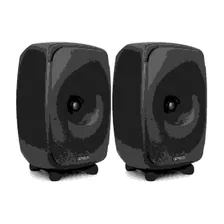 The best large bookshelf powered speaker, worth buying at its normal price, is the Genelec 8351B: $9150 per pair B&H Photo Video eBay
Pros: The vertical ASR measurement scores 7.75 with an ideal subwoofer and reaches 35.2Hz at -3dB. Coaxial midrange and treble help maintain consistent sound as the listening angle changes. Low measured distortion at ordinary listening levels and GLM calibration make it a strong precision-monitoring choice. Measured bass extension of 33Hz (-3dB).
Cons: Bass distortion increases at higher playback levels, so a subwoofer remains useful for demanding material. Upper-treble distortion in the test also cautions against assuming unlimited output. Calibration hardware adds to an already expensive system, and the quoted result is for the measured vertical orientation.
Full Genelec 8351B review and specifications →
| AES Input | No |
|---|---|
| Amplifier Power | 550w Per Speaker |
| App | Yes (GLM) |
| Aux Input | No |
| Bass Extension (-10dB) | 28Hz (measured, Audio Science Review) |
| Bass Extension (-3dB) | 33Hz (measured, Audio Science Review) |
| Bluetooth | No |
| Coaxial Input | No |
| DSP | Yes |
| Dimensions | 17”H x 11.3”W x 10.9”D (431.8 x 287 x 276.9 mm) |
| Drivers | 8.6” woofer, 5” coaxial with tweeter midrange, 0.75” (19mm) coaxial tweeter |
| EQ | Yes (via GLM software) |
| Frequency Response | 32Hz - 40kHz (±1.5dB) (Manufacturer specified) |
| HDMI Input | No |
| Inputs | XLR |
| Maximum SPL | 113dB @ 1m (manufacturer specified) |
| Optical Input | No |
| RCA Input | No |
| TRS Input | No |
| USB Input | No |
| Weight | 31.1 lbs (14.1 kg) each |
| XLR Input | Yes |
- Links
- Reviews, Comparisons and Sound Samples
- Head-to-Head Comparisons
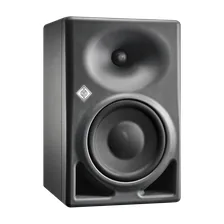 For much less, the large bookshelf powered speaker that comes closest is the Neumann KH 150: $3,398 per pair B&H Photo Video eBay
Pros: An exceptionally tight 1.0dB response span from 300Hz to 5kHz supports neutral vocals and instruments. The measured ideal-subwoofer score is 8.38, with -3dB bass extension to 39.6Hz. DSP and optional MA 1 alignment offer useful control over room-related response errors. Measured bass extension of 39.6Hz (-3dB).
Cons: A two-way nearfield monitor cannot match the largest three-way systems for deep-bass output at distance. Keep the tweeter near ear height to avoid crossover-related changes off the vertical axis. MA 1 calibration requires additional equipment, and studio connections are less convenient than a consumer streaming system.
Full Neumann KH 150 review and specifications →
| AES Input | No |
|---|---|
| Amplifier Power | 245W total (145W woofer, 100W tweeter, 10% THD+N) |
| Aux Input | No |
| Bass Extension (-10dB) | 34.2Hz (measured, Audio Science Review) |
| Bass Extension (-3dB) | 39.6Hz (measured, Audio Science Review) |
| Bluetooth | No |
| Coaxial Input | Yes |
| Country | Germany |
| Crossover Frequency | 1.7kHz |
| Dimensions | 13.6”H x 8.9”W x 10.7”D (345 x 225 x 273 mm) |
| Drivers | 1” tweeter, 6.5” woofer |
| Enclosure | ported |
| Frequency Response | 39Hz-20.4kHz +/-3dB |
| HDMI Input | No |
| Inputs | XLR (balanced analog), RCA S/PDIF (digital) |
| Maximum SPL | 118.7dB @ 1m half space (manufacturer specified) |
| Optical Input | No |
| RCA Input | Yes |
| Spinorama Preference Score | 6.65 |
| Spinorama Preference Score with Perfect Sub | 8.38 |
| TRS Input | No |
| USB Input | No |
| Warranty | 2 years |
| Weight | 17.6 lbs (8.0 kg) each |
| XLR Input | Yes |
- Links
- Reviews, Comparisons and Sound Samples
- Head-to-Head Comparisons
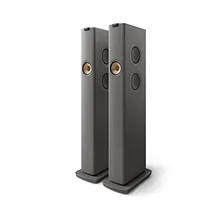 The best large floorstanding powered speaker, worth buying at its normal price, is the KEF LS60: $5,999.99 per pair Crutchfield eBay
Pros: Erin’s on-axis measurement combines a 1.9dB response span from 300Hz to 5kHz with a 7.91 ideal-subwoofer preference score, supporting even vocal and instrumental balance. Extended-mode bass reaches roughly 25Hz at -3dB. The coaxial Uni-Q arrangement maintains unusually consistent tonality across listening positions, while HDMI, digital and analog inputs plus network streaming make this a convenient complete music and TV system. Measured bass extension of 23Hz (-3dB), with a measured sensitivity of 97.7dB.
Cons: A diffraction dip around 9kHz can soften cymbal shimmer when aimed directly at the listener; 10-20 degrees of toe-out helps. DSP limiting reduces bass reach and dynamic output at high volume, so its deep low-level extension is not a promise of the same performance on loud peaks. App placement and tone controls are less flexible than parametric room correction. Each roughly 31kg tower is awkward to move.
Full KEF LS60 review and specifications →
| AES Input | No |
|---|---|
| Amplifier Power | 700W (500W LF Class D + 100W MF Class D + 100W HF Class AB) |
| App | Yes (KEF Connect) |
| Aux Input | No |
| Bass Extension (-10dB) | <20Hz (measured, Erin’s Audio Corner) |
| Bass Extension (-3dB) | 23Hz (measured, Erin’s Audio Corner) |
| Bluetooth | Yes (5.0 with SBC, AAC) |
| Bluetooth Codecs | SBC, AAC |
| Coaxial Input | Yes |
| DSP | Yes (Music Integrity Engine) |
| Dimensions | 42.9”H x 8.3”W x 15.5”D (1089.7 x 210.8 x 393.7 mm) |
| Drivers | 4 x 135 mm (5.25 in.) Uni-Core Force Cancelling Driver: woofers, 100 mm (4in.) aluminium cone midrange, 19 mm (0.75 in.) vented aluminium dome with Metamaterial Absorption Technology tweeter |
| EQ | Yes (Normal and Expert modes, room adaptation) |
| Frequency Response | 31Hz - 24kHz (±3dB) (Manufacturer specified) |
| HDMI Input | Yes |
| Inputs | Wifi, Optical, Digital coaxial, RCA, HDMI eARC, Ethernet |
| Maximum SPL | 111dB @ 1m (pink noise) (manufacturer specified) |
| Optical Input | Yes |
| Outputs | Subwoofer RCA |
| RCA Input | Yes |
| Sensitivity | 97.7dB (measured at 0.3V/1m, Erin’s Audio Corner) |
| Spinorama Preference Score | 7.26 |
| Spinorama Preference Score with Perfect Sub | 7.91 |
| Streaming Services | Yes (AirPlay 2, Chromecast, Roon Ready, Spotify Connect, Tidal Connect, Amazon Music, Qobuz, Deezer) |
| Subwoofer Output | Yes |
| TRS Input | No |
| USB Input | No |
| Weight | 69 lbs (31.3 kg) each |
| Wi-Fi | Yes (dual-band) |
| XLR Input | No |
- Links
- Reviews, Comparisons and Sound Samples
- Head-to-Head Comparisons
Passive Home at Full Price
The top rated speaker in each size, plus a much cheaper one that comes close where there is one. A sale on these is a bonus, not the reason to buy.
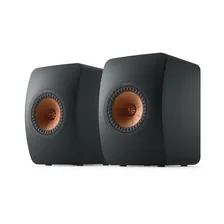 The best medium bookshelf passive speaker, worth buying at its normal price, is the KEF LS50 Meta: $1,599.00 per pair Amazon Crutchfield eBay
Pros: Uni-Q concentric driver mounts a 1” vented aluminum dome tweeter at the center of a 5.25” aluminum cone woofer, rated 79Hz-20kHz+. Speaker-to-speaker matching measured tight at roughly 0.5dB deviation between the pair tested, versus 2-3dB seen on some other speakers - likely why imaging stayed so precise. Imaging stays tight and focused even toed out, unlike most coincident designs where toe-out typically diffuses the image, giving more of an oval-shaped soundstage than a hard rectangular boundary. Horizontal and vertical directivity both hold to about ±50° at the -6dB point, so tonality stays consistent across roughly a 100° listening cone. The extended bass shelf is deliberately tuned for near-wall/boundary placement rather than the usual “pull it 3 feet into the room” advice, playing lower without excess boominess when placed close to a wall. At $1,000 (a frequent sale price versus $1,600 list), called a no-brainer for a compact stand-mount speaker. Independent ASR Klippel measurements corroborate this: very good directivity with the on- and off-axis curves tracking closely, and a predicted in-room response the reviewer called “very close to ideal.”. Measured bass extension of 68Hz (-3dB), with a measured sensitivity of 83dB.
Cons: F3 of 67Hz and F10 of 42Hz mean it doesn’t get much below 50Hz in-room; a subwoofer is recommended for real bass. A 2-3dB scoop around 2-4kHz shows up in both the listening window and sound power measurements, matching a subjectively noticed lack of attack and vocal clarity that the reviewer wanted to correct with about 2dB of EQ. An on-axis diffraction dip around 8kHz smooths out with about 15° of toe-out (typical for concentric designs, but still present at 0°). Distortion is elevated at low frequencies since the single 5.25” cone shares surface area with the tweeter housing, reducing effective radiating area; multitone distortion crosses the 3% threshold at 96dB/1m, making roughly 88dB or below the safer output ceiling. Moderate sensitivity (~83dB average) needed 2-3dB more amplifier gain than typical in testing. Adding a subwoofer at an 80Hz crossover only helps lower-midrange distortion, not the elevated distortion in the 1-2kHz and above-5kHz regions. ASR’s own Klippel testing found the same pattern in starker terms: THD is very good at 86dB SPL/1m but climbs past 100% in the bass at 96dB SPL/1m, confirming this is not a near-field speaker for high-output bass-heavy material. Cumulative spectral decay (waterfall) also shows a couple of resonances lingering in the 1-2kHz region.
Full KEF LS50 Meta review and specifications →
| Bass Extension (-10dB) | 43Hz (measured, Erin’s Audio Corner) |
|---|---|
| Bass Extension (-3dB) | 68Hz (measured, Erin’s Audio Corner) |
| DIY Kit | No |
| Dimensions | 11.9”H x 7.9”W x 11”D (302 x 200 x 280.5 mm) |
| Drivers | 130 mm (5.25 in.) aluminium cone woofer, 25 mm (1 in.) vented aluminium dome with Metamaterial Absorption tweeter |
| Impedance | 8 ohms nominal (3.7 ohms minimum above 80Hz, measured by Erin’s Audio Corner) |
| Sensitivity | 83dB (measured average, Erin’s Audio Corner; 85dB manufacturer specified) |
| Spinorama Preference Score | 5.74 |
| Spinorama Preference Score with Perfect Sub | 7.88 |
| Weight | 17.2 lbs (7.8 kg) each |
| Woofer Cabinet | ported, rear |
- Links
- Reviews, Comparisons and Sound Samples
- Erin’s Audio Corner: Unveiling the KEF LS50 Meta: The Truth Behind the Hype More from Erin’s Audio Corner →
- Erin’s Audio Corner Website KEF LS50 Meta
- Audio Science Review KEF LS50 Meta More from Audio Science Review →
- GR-Research: KEF LS50 Meta! Worthy of HYPE? More from GR-Research →
- Erin’s Audio Corner: My Top Picks of 2023: Must-Haves Under $3000
- Erin’s Audio Corner Measurements (spinorama.org)
- Head-to-Head Comparisons
- KEF LS50 Meta vs Ascend Sierra 1 v2
- KEF LS50 Meta vs Ascend Acoustics Luna V2 Mini-Monitor Ribbon
- KEF LS50 Meta vs Philharmonic Ceramic Mini
- KEF LS50 Meta vs XMechanik Mechano23 DIY
- KEF LS50 Meta vs Audio First Fidelia
- KEF LS50 Meta vs Ascend Acoustics HTM-200SE2
- KEF LS50 Meta vs Arendal 1961 Monitor
- KEF LS50 Meta vs SunAudio Purified 4
- See all 86 comparisons
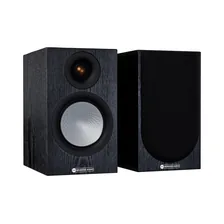 For much less, the medium bookshelf passive speaker that comes closest is the Monitor Audio Silver 50 7G: $799 per pair Crutchfield eBay
Pros: The 7th generation C-CAM Gold Dome tweeter with UD Waveguide II and RST II mid bass driver produce a listening window smoothness score of 0.50 at an accessible price, earning a Hi-Fi News Outstanding Product Award. A HiVe II reflex port system is tuned to 58Hz for real bass weight from a compact 5.25 inch two way. Measured bass extension of 87.9Hz (-3dB).
Cons: The on axis response trends noticeably upward toward the treble (measured slope +0.50 per octave, the steepest of any speaker in this batch), which can read as bright on already bright recordings. The sound power directivity index also has the widest standard deviation in this batch, 3.95, meaning off axis energy tracks the on axis response less consistently than the rest of this group. Bass extension is limited to a measured 87.9Hz at -3dB, so a subwoofer is recommended for full range use, and minimum impedance dips to 3.9 ohms at 250Hz.
Full Monitor Audio Silver 50 7G review and specifications →
| Bass Extension (-10dB) | 50.7Hz (measured, Erin’s Audio Corner) |
|---|---|
| Bass Extension (-3dB) | 87.9Hz (measured, Erin’s Audio Corner) |
| Country | China |
| Crossover Frequency | 2.6kHz |
| DIY Kit | No |
| Dimensions | 11.1”H x 6.5”W x 10.7”D (282 x 165 x 272 mm) |
| Drivers | 1” C-CAM Gold Dome tweeter, 5.25” C-CAM RST II mid bass driver |
| Enclosure | ported |
| Impedance | 8 ohms nominal, 3.9 ohms minimum |
| Maximum SPL | 104dB (manufacturer specified) |
| Port Tuning | 58Hz |
| Power Handling | 100W RMS handling, 40-100W recommended amplifier power |
| Sensitivity | 86dB @ 2.83V/1m |
| Spinorama Preference Score | 5.40 |
| Spinorama Preference Score with Perfect Sub | 8.01 |
| Warranty | Lifetime, parts and labor |
| Weight | 12.3 lbs (5.6 kg) each |
- Links
- Reviews, Comparisons and Sound Samples
- Head-to-Head Comparisons
- Monitor Audio Silver 50 7G vs Revel M105
- Monitor Audio Silver 50 7G vs Elac Carina BS243.4
- Monitor Audio Silver 50 7G vs Aalto Speakers Aalto 1 EVO
- Monitor Audio Silver 50 7G vs Klipsch RP-500M II
- Monitor Audio Silver 50 7G vs Ascend Acoustics Luna V2 Mini-Monitor Titan
- Monitor Audio Silver 50 7G vs Wharfedale Super Denton
- Monitor Audio Silver 50 7G vs Arendal 1961 Monitor
- Monitor Audio Silver 50 7G vs Wharfedale Diamond 12.1
- See all 28 comparisons
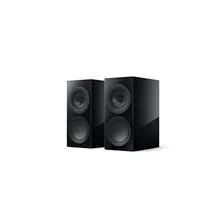 The best large bookshelf passive speaker, worth buying at its normal price, is the KEF R3 Meta: $2,499.99 per pair Amazon Crutchfield eBay
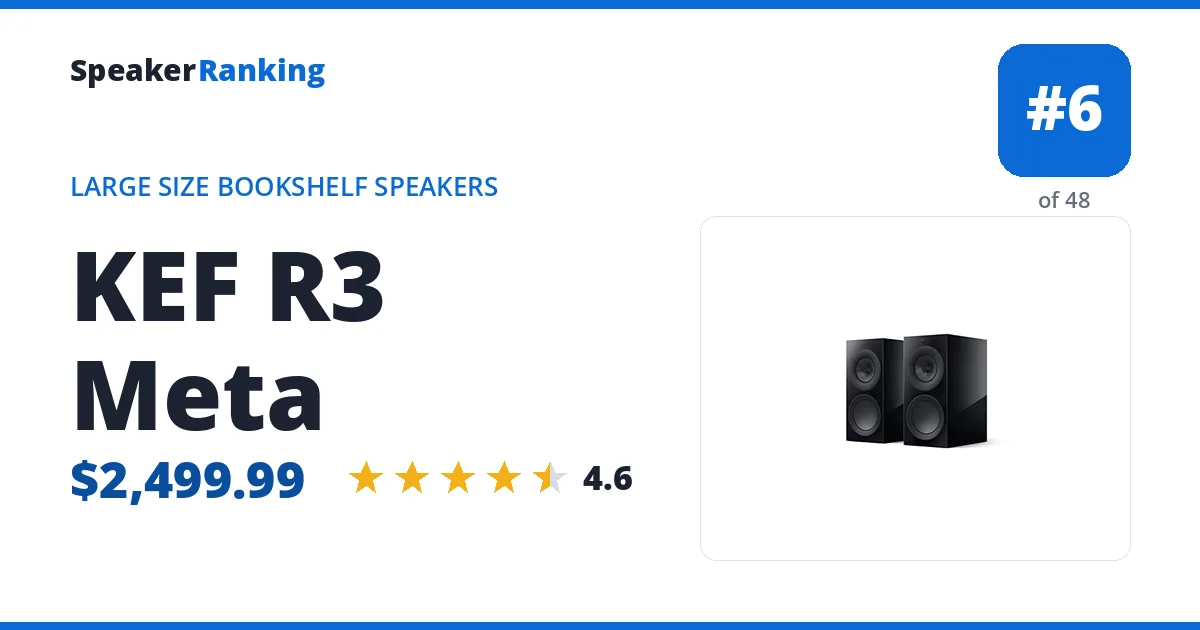
Pros: Three-way design with an unconventional concentric layout: the 1” tweeter is recessed into the throat of the 5.25” midrange driver, deeper integration than a standard coaxial arrangement. A quasi sealed/ported bass alignment gives an extended low-end shelf tuned to match typical in-room gain, reaching about 50Hz for most content - deeper than recently-tested rivals like the Focal Aria 906, Polk R200, and an 8” Aperion design. Spinorama measurements show class-leading directivity and sound power, plus very linear on-axis response (at the recommended 10° toe-out) and early-reflections directivity, so it takes EQ exceptionally well. The vertical sweet spot extends to about ±20-30° off the reference axis with nearly identical tonality, unusually wide for a two- or three-way design. A clear upgrade over the earlier, non-Meta R3, eliminating the treble brightness the original had even when toed off-axis. Outperforms similarly-priced rivals (Revel M106, Wharfedale Linton, Philharmonic BMR V2, JBL HDI 1600) specifically on directivity and linearity in the reviewer’s measurements. At $2500/pair, called the best value in its class with near-reference-level anechoic performance. Measured bass extension of 76Hz (-3dB), with a measured sensitivity of 85.9dB.
Cons: Pointed straight on-axis, there’s a 1-2dB bump around 9kHz that stays consistent across angles thanks to the constant-directivity waveguide - only toeing the speaker out about 10° tames it. Minimum impedance dips to about 3.2 ohms nominal (EPDR as low as 1.9 ohms), so it needs a 4-ohm-stable amplifier; a standard AVR likely won’t cut it. Distortion crosses the reviewer’s 3% threshold around 80Hz at 96dB output and shows added deviation again near 50Hz, indicating it runs out of headroom at higher volumes - a subwoofer is recommended for loud listening. Horizontal radiation narrows from about ±70° at low frequency to ±40° at high frequency. Below about 100Hz, compression testing shows fairly wide deviations at both 86dB and 96dB output, though the reviewer notes this is typical for speakers in this size and price class. Current R3 owners who are already happy with that speaker have little reason to upgrade.
Full KEF R3 Meta review and specifications →
| Bass Extension (-10dB) | 37Hz (measured, Erin’s Audio Corner) |
|---|---|
| Bass Extension (-3dB) | 76Hz (measured, Erin’s Audio Corner) |
| DIY Kit | No |
| Dimensions | 16.6”H x 7.9”W x 13.2”D (421.6 x 200.7 x 335.3 mm) |
| Drivers | 6.5” Hybrid aluminum ported woofer, 5” aluminum cone midrange, 1” vented aluminium dome with MAT tweeter |
| Impedance | 4 ohms nominal (3.2 ohms minimum above 80Hz, measured, Erin’s Audio Corner) |
| Sensitivity | 85.9dB (measured, Erin’s Audio Corner; 87dB manufacturer specified) |
| Spinorama Preference Score | 6.10 |
| Spinorama Preference Score with Perfect Sub | 7.91 |
| Weight | 27.3 lbs (12.4 kg) each |
| Woofer Cabinet | ported |
- Links
- Reviews, Comparisons and Sound Samples
- Erin’s Audio Corner: KEF R3 Meta: The Speaker to Beat. More from Erin’s Audio Corner →
- Erin’s Audio Corner Website KEF R3 Meta Review
- Erin’s Audio Corner: Upgrade Your Sound with These 6 Surprisingly Affordable Speakers!
- Erin’s Audio Corner: My Personal Favorite Speakers Under $2500
- Erin’s Audio Corner: My Top Picks of 2023: Must-Haves Under $3000
- GR-Research: Finally… a Speaker Danny Doesn’t Have to Fix? More from GR-Research →
- New Record Day: The Gold Standard Of "Pretty Good" KEF R3 Meta Review
- Erin’s Audio Corner Measurements (spinorama.org)
- Head-to-Head Comparisons
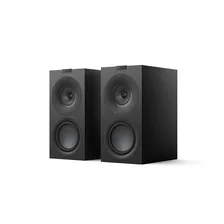 For much less, the large bookshelf passive speaker that comes closest is the KEF Q Concerto Meta: $1,399.99 per pair Amazon Crutchfield eBay
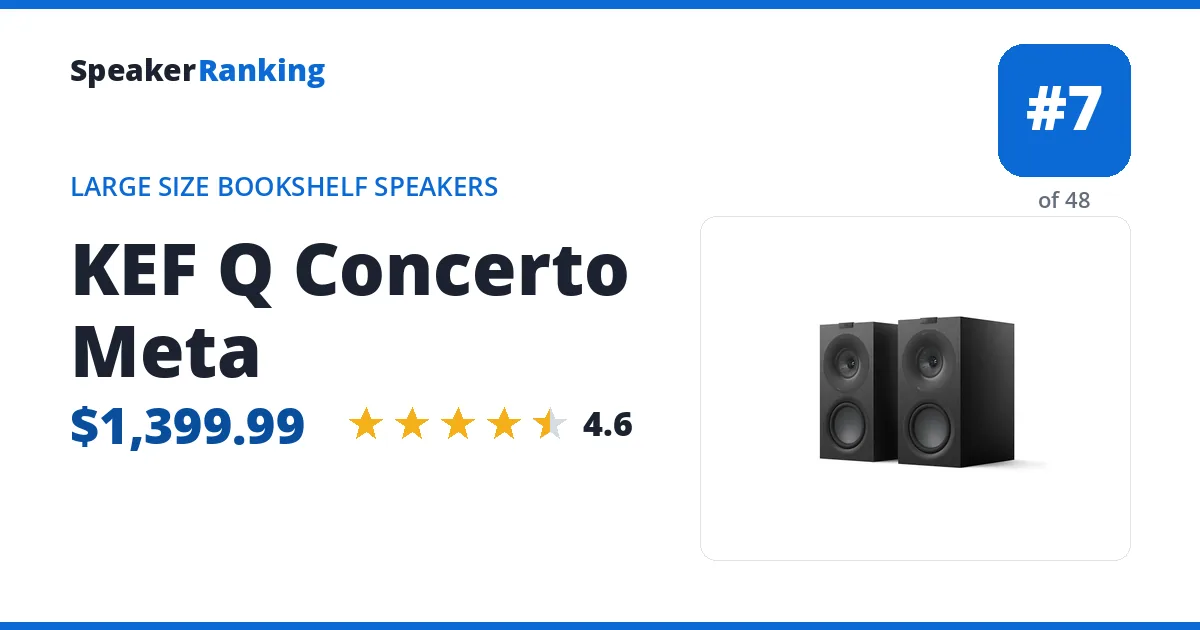
Pros: Really good in-room neutrality with consistent horizontal directivity from seat to seat. Directivity holds remarkably steady from lower treble into upper treble, where many similarly-priced speakers narrow sharply as frequency rises - one of the reviewer’s top 10 picks under $1,500. Measured bass extension of 53Hz (-3dB), with a measured sensitivity of 84.2dB.
Cons: Radiation pattern measures about ±50°, narrower than the reviewer’s preferred ±60° for a stronger sense of envelopment. Needs to be pointed closer to on-axis rather than heavily toed out - combined with its rolled-off, shelved-down top end, too much toe-out makes it sound noticeably dark.
Full KEF Q Concerto Meta review and specifications →
| Bass Extension (-10dB) | 35Hz (measured, Erin’s Audio Corner) |
|---|---|
| Bass Extension (-3dB) | 53Hz (measured, Erin’s Audio Corner) |
| DIY Kit | No |
| Dimensions | 16.3”H x 8.3”W x 12.4”D (414 x 210.8 x 315 mm) |
| Drivers | 165 mm (6.5 in.) hybrid aluminium cone woofer, 100 mm (4 in.) aluminium cone midrange, 19 mm (0.75 in.) vented aluminium dome with MAT tweeter |
| Impedance | 4 ohms nominal (3.3 ohms minimum above 80Hz, measured by Erin’s Audio Corner) |
| Sensitivity | 84.2dB (measured average, Erin’s Audio Corner) |
| Spinorama Preference Score | 6.01 |
| Spinorama Preference Score with Perfect Sub | 7.71 |
| Weight | 20.9 lbs (9.5 kg) each |
| Woofer Cabinet | ported, rear |
- Links
- Reviews, Comparisons and Sound Samples
- Erin’s Audio Corner: HiFi Perfection? KEF CONCERTO META Delivers! More from Erin’s Audio Corner →
- Erin’s Audio Corner Website KEF Q Concerto Meta
- Erin’s Audio Corner: I Tested 250 Speakers So You Don’t Have To!
- Erin’s Audio Corner: HiFi Perfection? KEF CONCERTO META Delivers!
- Erin’s Audio Corner: My Absolute Favorite Products of 2024 Revealed
- Erin’s Audio Corner Measurements (spinorama.org)
- Head-to-Head Comparisons
- KEF Q Concerto Meta vs KEF R3 Meta
- KEF Q Concerto Meta vs AsciLab F6B
- KEF Q Concerto Meta vs Wharfedale Aura 2
- KEF Q Concerto Meta vs Revel M106
- KEF Q Concerto Meta vs KEF R3
- KEF Q Concerto Meta vs Audio First Cadentia 3
- KEF Q Concerto Meta vs AsciLab C6B
- KEF Q Concerto Meta vs Buchardt Audio E50
- See all 72 comparisons
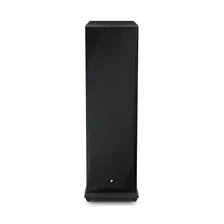 The best large floorstanding passive speaker, worth buying at its normal price, is the MoFi SourcePoint V10 Master Edition: $7995 per pair Crutchfield eBay
Pros: Extended bass to approximately 30 Hz in-room without subwoofer; images with excellent precision indicating tight frequency response matching between speakers. Integrated bass management with three-way treble attenuation switches for room tuning. New design from Andrew Jones represents reviewer personal second choice (behind only KEF Blade 2 Meta at 29k) among hundreds of systems auditioned; ranks above Dutch & Dutch 8C, JBL 4367, and JBL M2. Measured bass extension of 38Hz (-3dB), with a measured sensitivity of 88.8dB.
Cons: Moderate sensitivity (~89 dB) means amplifier power requirements higher than many alternatives. Deep bass extension ends above subsonic frequencies (pipe organ territory below 17 Hz requires subwoofer).
Full MoFi SourcePoint V10 Master Edition review and specifications →
| Bass Extension (-10dB) | 25Hz (measured, Erin’s Audio Corner) |
|---|---|
| Bass Extension (-3dB) | 38Hz (measured, Erin’s Audio Corner) |
| DIY Kit | No |
| Dimensions | 48.8”H x 15.5”W x 19.9”D (1239.5 x 393.7 x 505.5 mm) |
| Drivers | 10” woofer, 10” paper‑cone concentric midrange, 1.25” soft‑dome concentric tweeter |
| Impedance | 6 ohms nominal, 5.3 ohms minimum (measured, Erin’s Audio Corner) |
| Sensitivity | 88.8dB (measured, Erin’s Audio Corner) |
| Spinorama Preference Score | 5.00 |
| Spinorama Preference Score with Perfect Sub | 6.31 |
| Weight | 160.9 lbs (73 kg) |
| Woofer Cabinet | passive radiator |
- Links
- Reviews, Comparisons and Sound Samples
- Head-to-Head Comparisons
- MoFi SourcePoint V10 Master Edition vs KEF Blade Two Meta
- MoFi SourcePoint V10 Master Edition vs MoFi SourcePoint 888
- MoFi SourcePoint V10 Master Edition vs GR-Research NX-Treme
- MoFi SourcePoint V10 Master Edition vs Revel F328Be
- MoFi SourcePoint V10 Master Edition vs Radiant Acoustics Clarity 66
- MoFi SourcePoint V10 Master Edition vs Ascend Acoustics ELX Ribbon Tower
- MoFi SourcePoint V10 Master Edition vs Revel F226Be
- MoFi SourcePoint V10 Master Edition vs JBL 4367
- See all 29 comparisons
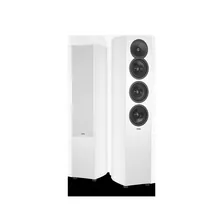 For much less, the large floorstanding passive speaker that comes closest is the Revel Concerta2 F35: $900 per pair Crutchfield eBay
Pros: Two-and-a-half-way, four-driver design: a 1” aluminum dome tweeter on a waveguide, a 5.25” mid-range, and dual 5.25” mid-bass drivers in a rear-ported cabinet. Measured sensitivity of 89.4dB closely matches the 90dB spec, and distortion looks good at both 86dB and 96dB, holding up well even with a high-pass filter applied. At its sale price (around $900/pair, down from full retail), the reviewer calls it a “no-brainer,” undercutting comparable budget floorstanders like the ELAC DF63. Frequency response and directivity mismatches are largely EQ-able, since most of what shows up in measurements traces to physical tweeter/mid-range separation rather than a fundamental flaw. Compression is fairly well controlled for the price - about 1dB of loss around 100Hz under long-term compression, described as “par for the course” at this cost. Measured bass extension of 70Hz (-3dB), with a measured sensitivity of 89.4dB.
Cons: F3 of 61Hz and F10 of 39Hz mean a subwoofer is needed for real bass extension. A dip in the lower midrange/2-3kHz region reduces attack and detail, and a peak around 5kHz adds some edge and sibilance in the lower treble. A peak in off-axis energy around 3kHz reflects off sidewalls at roughly 60-70° off-axis and arrives louder than the direct sound - this specific issue can’t be fixed with EQ (boosting the direct sound would boost the stronger reflection too) and would need acoustic absorption to properly address, though the reviewer considers it a minor, optional fix at this price. A couple of minor resonances appear in the impedance plot, including one around 300Hz that may partly explain a subtle sense of vocal warmth noticed in listening, though it’s more likely room-related. Minimum impedance around 3.8 ohms. Short-term compression testing shows some increased distortion in the tweeter and higher-frequency compression at loud output.
Full Revel Concerta2 F35 review and specifications →
| Bass Extension (-10dB) | 50Hz (measured, Erin’s Audio Corner) |
|---|---|
| Bass Extension (-3dB) | 70Hz (measured, Erin’s Audio Corner) |
| DIY Kit | No |
| Dimensions | 40.3”H x 8.4”W x 12.2”D (1023.6 x 213.4 x 309.9 mm) |
| Drivers | 3x 5.25” deep anodized aluminum cone woofers, 1” Aluminum Tweeter |
| Impedance | 6 ohms nominal (3.8 ohms minimum, measured by Erin’s Audio Corner) |
| Sensitivity | 89.4dB (measured, Erin’s Audio Corner; 90dB manufacturer specified) |
| Spinorama Preference Score | 5.35 |
| Spinorama Preference Score with Perfect Sub | 7.30 |
| Weight | 41 lbs (18.6 kg) each |
| Woofer Cabinet | ported, rear |
- Links
- Reviews, Comparisons and Sound Samples
- Head-to-Head Comparisons
- Revel Concerta2 F35 vs Revel F206
- Revel Concerta2 F35 vs Perlisten S7t
- Revel Concerta2 F35 vs Revel F228Be
- Revel Concerta2 F35 vs Revel F208
- Revel Concerta2 F35 vs KEF R5
- Revel Concerta2 F35 vs Focal Chora 816
- Revel Concerta2 F35 vs JBL HDI-3800
- Revel Concerta2 F35 vs KEF R11 Meta
- See all 56 comparisons
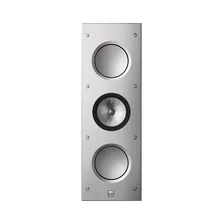 The best in-wall & in-ceiling passive speaker, worth buying at its normal price, is the KEF Ci3160RLM-THX: $4,579.98 per pair Amazon eBay
Pros: Independently measured by Audio Science Review on a Klippel rig to a genuine 58.6Hz at -3dB and roughly 36Hz at -10dB, with an on-axis slope of just -0.02dB per octave, essentially flat. Directivity is the most consistent of any in-wall or in-ceiling speaker in this category, with the tightest spread in its sound-power directivity index across the measured band. The rotatable, tiltable driver module (the RLM in its name) lets the tweeter and midrange aim toward the listening area even when the cabinet itself has to be installed off to one side. THX Ultra2 certified, with a 4-driver, 3-way layout: dual 6.5” woofers flanking a 6.5” Uni-Q coaxial midrange/tweeter. Measured bass extension of 58.6Hz (-3dB).
Cons: At $2290 each, a stereo pair runs roughly $4,600, among the most expensive options in this category. Listening-window and sound-power smoothness are moderate rather than class-leading, meaning some unevenness remains once you move off the main listening axis despite the flat on-axis trace. The 660 x 209mm cutout and 106mm mounting depth are large enough that they won’t fit inside a standard 2x4 wall stud bay without modification.
Full KEF Ci3160RLM-THX review and specifications →
| Bass Extension (-10dB) | 36Hz (measured, spinorama.org ASR data) |
|---|---|
| Bass Extension (-3dB) | 58.6Hz (measured, spinorama.org ASR data) |
| Certification | THX Ultra2 |
| DIY Kit | No |
| Dimensions | 26.8” x 9.1” x 4.2” (680 x 230 x 105.7 mm) |
| Drivers | 2x 6.5” LF woofers, 6.5” Uni-Q coaxial midrange, 1” vented aluminum dome tweeter with MAT (rotatable/tiltable module) |
| Enclosure | Open-backed, in-wall |
| Frequency Response | 43Hz-28kHz +/-6dB (manufacturer, open-backed) |
| Impedance | 4 ohms |
| Mounting Cutout | 660mm (H) x 209mm (W) |
| Power Handling | 50-350W recommended amplifier power |
| Sensitivity | 89dB |
| Spinorama Preference Score | 5.32 |
| Spinorama Preference Score with Perfect Sub | 7.83 |
| Weight | 26.5 lbs (12 kg) |
- Links
- Reviews, Comparisons and Sound Samples
- Head-to-Head Comparisons
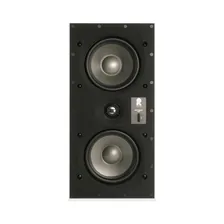 For much less, the in-wall & in-ceiling passive speaker that comes closest is the Revel W553L: $1,089.90 per pair Crutchfield eBay
Pros: Erin’s Audio Corner’s Klippel measurement gives a preference score of 4.84, or 7.50 with a perfect subwoofer, a strong result for an in-wall speaker at this price. On-axis response is smooth (0.68 smoothness) and directivity is well controlled (SPDI deviation 2.35dB), so the sound off to the sides stays close to the sound you hear straight on. Bass measures to 64.5Hz at -3dB and 51.3Hz at -6dB. The 1” aluminum dome tweeter swivels toward the listening seat, a three-position switch trims treble to suit the room, and the cabinet mounts vertically or horizontally, so it works as a left, right or center channel. Measured bass extension of 64.5Hz (-3dB).
Cons: At $545 each a stereo pair costs twice that, and a separate amplifier is required. Bass ends early for a main speaker, with -3dB at 64.5Hz, so a subwoofer is needed for music and movies. Audio Science Review’s own measurement was less flattering (preference score 4.04, -3dB at 82Hz), so results differ between test benches. Two 5.25” woofers give less output headroom than the larger Revel in-wall models.
Full Revel W553L review and specifications →
| Bass Extension (-10dB) | 39.3Hz (measured, Erin’s Audio Corner) |
|---|---|
| Bass Extension (-3dB) | 64.5Hz (measured, Erin’s Audio Corner) |
| DIY Kit | No |
| Dimensions | 15.1”H x 7.4”W (384 x 188 mm) (74mm mounting depth) |
| Drivers | 2x 5.25” micro-ceramic composite (MCC) woofers, 1” swiveling aluminum dome tweeter with waveguide |
| Enclosure | In-wall, LCR (vertical or horizontal mounting) |
| Mounting Cutout | 163W x 359H mm |
| Power Handling | 10-150W recommended amplifier power |
| Sensitivity | 90dB |
| Spinorama Preference Score | 4.84 |
| Spinorama Preference Score with Perfect Sub | 7.50 |
| Warranty | Lifetime |
| Weight | 7.7 lbs (3.5 kg) |
- Links
- Reviews, Comparisons and Sound Samples
- Head-to-Head Comparisons
Subwoofers at Full Price
The top rated subwoofer in each size, plus a much cheaper one that comes close where there is one. A sale on these is a bonus, not the reason to buy.
 The best small size subwoofer, worth buying at its normal price, is the Edifier T5s: $199.99 Amazon eBay
Pros: Independent CEA-2010 testing records 115.7 dB through 40-80 Hz, strong output for its 8” driver. The ported enclosure suits a small-to-mid room.
Cons: The 400.0H x 398.8W x 169.9D mm cabinet and 10.4 kg mass still need deliberate placement and calibration. Warranty is a below-average 2 years.
Full Edifier T5s review and specifications →
| CEA-2010-A Average (40-80Hz) | 115.7 dB |
|---|---|
| Country | China |
| Dimensions | 15.7”H x 15.7”W x 6.7”D (400.0 x 398.8 x 169.9 mm) |
| Drivers | 8” (203mm) driver |
| Enclosure | ported |
| Measurement Source | Brent Butterworth |
| Output SPL at 25 Hz | 99.9 dB |
| Output SPL at 31.5 Hz | 106.7 dB |
| Output SPL at 40 Hz | 111.0 dB |
| Output SPL at 50 Hz | 115.5 dB |
| Output SPL at 63 Hz | 117.6 dB |
| Output SPL at 80 Hz | 118.5 dB |
| Warranty | 2 |
| Weight | 22.9 lbs (10.4 kg) |
- Reviews, Comparisons and Sound Samples
- Independently measured by Brent Butterworth; the published figures above come from this ASR subwoofer measurement thread.
- Head-to-Head Comparisons
 The best medium size subwoofer, worth buying at its normal price, is the Monoprice SW-12: $266.37 Amazon eBay
Pros: 12-inch ported with 400W RMS (600W peak) on a budget at just $266. Hits hard with clean tight transient response. Variable crossover and volume controls for setup flexibility. Speaker-level and line-level inputs for easy integration.
Cons: Entry-level build quality, ported enclosure room interaction, and lower 112.3 dB output capability.
Notes: Product # 41498
Full Monoprice SW-12 review and specifications →
| Amplifier Power | 400W RMS / 600W peak |
|---|---|
| CEA-2010-A Average (40-80Hz) | 121.2 dB |
| Cabinet Color | black |
| Country | United States |
| Dimensions | 14.9”H x 18.3”W x 19.1”D (378.5 x 464.8 x 485.1 mm) |
| Drivers | 12” (305mm) driver |
| Enclosure | ported, bottom |
| Frequency Response | 35-150Hz, -10dB |
| Measurement Source | Brent Butterworth |
| Output SPL at 16 Hz | 90.6 dB |
| Output SPL at 20 Hz | 102.7 dB |
| Output SPL at 25 Hz | 111.1 dB |
| Output SPL at 31.5 Hz | 115.2 dB |
| Output SPL at 40 Hz | 119.0 dB |
| Output SPL at 50 Hz | 119.7 dB |
| Output SPL at 63 Hz | 122.9 dB |
| Output SPL at 80 Hz | 123.0 dB |
| Warranty | 1 |
| Weight | 50.7 lbs (23.0 kg) |
- Links
- Reviews, Comparisons and Sound Samples
- Independently measured by Brent Butterworth; the published figures above come from this ASR subwoofer measurement thread.
- Head-to-Head Comparisons
- Monoprice SW-12 vs HSU Research ULS-15 MK2
- Monoprice SW-12 vs MartinLogan Dynamo 1600X
- Monoprice SW-12 vs JTR Speakers Captivator 212PRO
- Monoprice SW-12 vs Power Sound Audio (PSA) XV15
- Monoprice SW-12 vs Monoprice SW-15
- Monoprice SW-12 vs SVS SB-3000
- Monoprice SW-12 vs Klipsch SPL-120
- Monoprice SW-12 vs Rythmik F12
- See all 20 comparisons
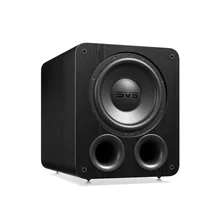 The best large size subwoofer, worth buying at its normal price, is the SVS PB-3000: $1,799.00 Amazon eBay
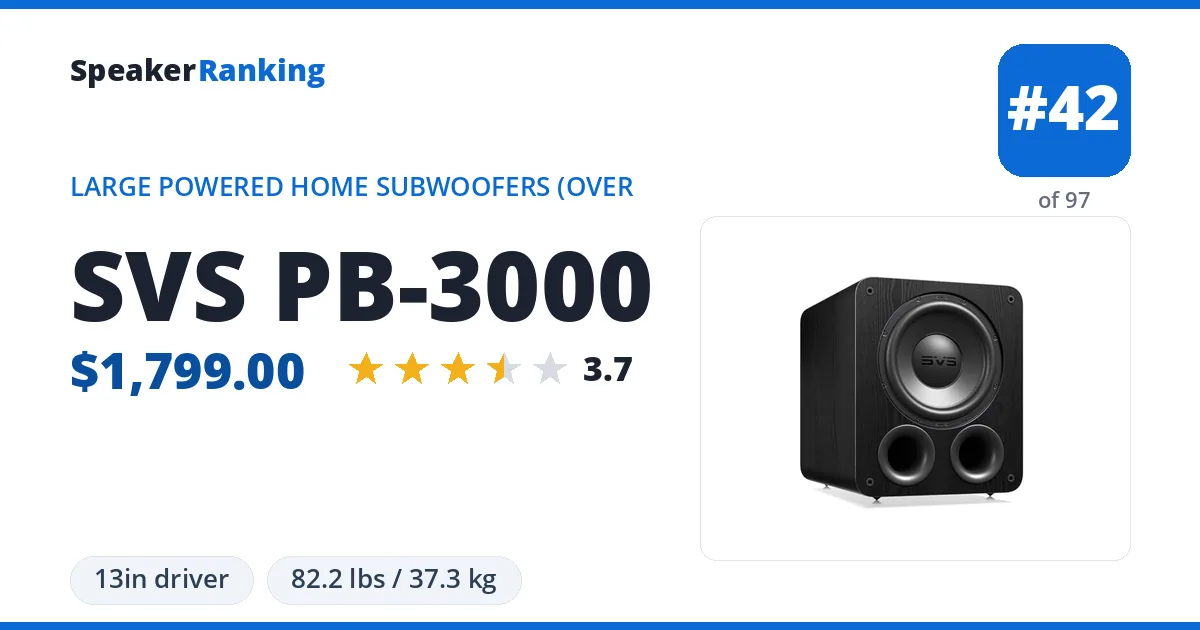
Pros: Independent CEA-2010 testing records 111.3 dB at 20 Hz and 121.5 dB through 40-80 Hz. The ported, front enclosure with 13” (330mm) driver has the headroom for demanding film bass in a large room.
Cons: The 556.3H x 464.8W x 596.9D mm cabinet and 37.3 kg mass make this a serious placement and moving commitment. Ported output does not solve room modes, so careful placement and calibration remain essential.
Full SVS PB-3000 review and specifications →
| CEA-2010-A Average (40-80Hz) | 121.5 dB |
|---|---|
| Cabinet Color | black |
| Country | United States |
| Dimensions | 21.9”H x 18.3”W x 23.5”D (556.3 x 464.8 x 596.9 mm) |
| Drivers | 13” (330mm) driver |
| Enclosure | ported, front |
| Measurement Source | Audioholics |
| Output SPL at 12.5 Hz | 85.1 dB |
| Output SPL at 15 Hz | 99.2 dB |
| Output SPL at 20 Hz | 111.3 dB |
| Output SPL at 25 Hz | 116.3 dB |
| Output SPL at 31.5 Hz | 117.9 dB |
| Output SPL at 40 Hz | 121.0 dB |
| Output SPL at 50 Hz | 122.6 dB |
| Output SPL at 63 Hz | 121.6 dB |
| Output SPL at 80 Hz | 120.8 dB |
| Output SPL at 100 Hz | 121.7 dB |
| Output SPL at 125 Hz | 121.0 dB |
| Warranty | 5 |
| Weight | 82.2 lbs (37.3 kg) |
- Links
- Reviews, Comparisons and Sound Samples
- Independently measured by Audioholics; the published figures above come from this ASR subwoofer measurement thread.
- Head-to-Head Comparisons
On Sale Now
Well rated speakers selling at least 15% below their usual price, judged against their own recent prices rather than a list price.
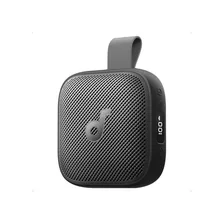 Down 25% from its usual $79.99, the best small size speaker deal is the Soundcore Boom Go 3i: $59.99 Amazon AliExpress eBay
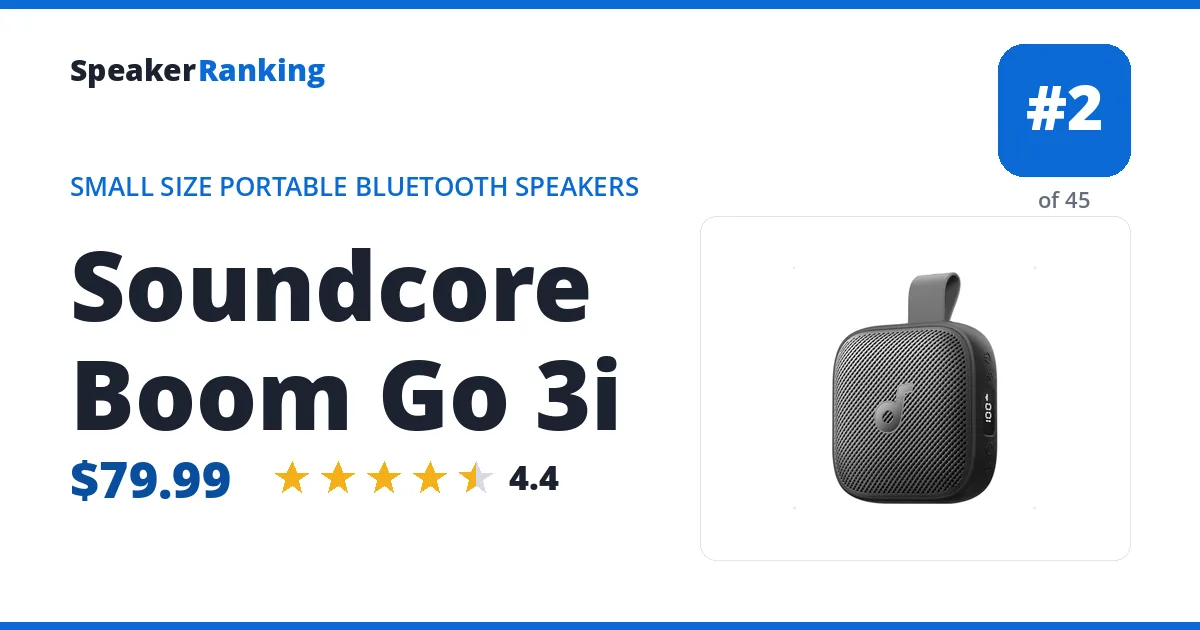
Pros: An exceptionally rugged 380g mini speaker with IP68 protection, a floating sound-forward design, app EQ, RGB lighting, a battery display, USB-C power-bank output and Auracast/TWS linking. It reaches about 92dB and independent testing finds it lasts nearly six hours at maximum volume with lights and BassUp enabled, matching its demanding claim.
Cons: This is still a 15W mono speaker: bass impact and stereo width are limited, and critical listeners may find the upper treble piercing or metallic. It is directional by design, so the sound changes off-axis, and independent reviews note it lacks a built-in microphone; it is far better for rugged outdoor background music than a large gathering.
Setup: Try out Oluv’s EQ which slightly improves the sound
Full Soundcore Boom Go 3i review and specifications →
| Amplifier Power | 15W |
|---|---|
| App | Yes |
| Aux Input | No |
| Battery Life | 24 hours (Manufacturer specified) |
| Bluetooth Codecs | SBC |
| Bluetooth Version | 6.0 |
| Built-in Microphone | Yes |
| Digital Aux Input | No |
| Dimensions | 4” x 4.2” x 1.8” (102.1 x 105.9 x 45.5 mm) |
| Drivers | 25mm tweeter + 42mm woofer + passive radiators |
| EQ | Yes |
| IP Rating | IP68 |
| Lights | Yes |
| Maximum SPL | 92dB (Manufacturer specified) |
| Omnidirectional | Pointing up |
| Party Mode | Yes (Auracast) |
| Power Bank | Yes (USB-C) |
| Power Input | USB-C |
| Stereo | No |
| Strap | Yes (detachable strap) |
| TWS | Yes |
| Weight | 0.8 lbs (380 g) |
- Links
- Reviews, Comparisons and Sound Samples
- Oluv Patreon: SoundCore Boom Go 3i - first look More from Oluv’Sone →
- Techder Audios: Soundcore Boom Go 3i - Soundtest HOW GOOD IS 15W? WITH BASS UP 2.0!? More from techderaudios →
- Storytripper HD: Bose Micro 2 vs Soundcore Boom Go 3i vs Tribit Micro 2 More from storytripperhd →
- Gi Rides: Soundcore Boom Go 3i vs Tribit Stormbox Micro 2 Binaural Audio
- TecH Moe: Soundcore Boom Go 3i: The Mini Speaker to Buy! More from TecHMoE →
- Head-to-Head Comparisons
- Soundcore Boom Go 3i vs Tribit Stormbox Micro 2
- Soundcore Boom Go 3i vs Minirig Mini 2
- Soundcore Boom Go 3i vs Minirig Mini
- Soundcore Boom Go 3i vs Tribit Stormbox Micro
- Soundcore Boom Go 3i vs Tribit Stormbox Micro 3
- Soundcore Boom Go 3i vs Teufel Boomster Go
- Soundcore Boom Go 3i vs Soundcore Mini 3 Pro
- Soundcore Boom Go 3i vs Soundcore Mini 3
- See all 60 comparisons
 Down 25% from its usual $199.95, the best medium size speaker deal is the JBL Charge 6: $149.95 Amazon B&H Photo Video eBay
Older models: the JBL Charge 5 (ranked lower, rated 4/5), the JBL Charge 4 (ranked lower, rated 3.5/5), the JBL Charge 3 (ranked lower, rated 3.2/5) and the JBL Charge 2 (ranked lower, rated 3.2/5).
Pros: Seems more neutral than the Charge 5. Flatter frequency response through the mids and treble as the Charge 5 was quite rolled off up high. Use this EQ from Joy/Oluv and turn down the lowest bass slider for the best sound quality. Oluv has even more paid EQs specifically for the GG and TL models indoors and outdoors here IP68 protection, a 7-band app EQ, Auracast, USB-C charging and a power bank output. Measured bass extension of 53Hz (-10dB).
Cons: Still some boosted bass by default. Mids are recessed. Bright above 2kHz. Quite a V shaped frequency response.
Full JBL Charge 6 review and specifications →
| Amplifier Power | 45W |
|---|---|
| App | Yes |
| Aux Input | No |
| Bass Extension (-10dB) | 53Hz |
| Battery Life | 24 hours (Manufacturer specified) |
| Bluetooth Codecs | SBC, AAC |
| Bluetooth Version | 5.4 |
| Built-in Microphone | No |
| Digital Aux Input | Yes (USB-C) |
| Dimensions | 9” x 3.9” x 3.7” (228.8 x 98.5 x 94 mm) |
| Drivers | 53mm x 93mm woofer, 20mm tweeter |
| EQ | Yes (7 band) |
| Frequency Response | 56Hz - 20kHz (-6dB) (Manufacturer specified) |
| IP Rating | IP68 |
| Maximum SPL | 102dB (measured by Alan Ross Reviews) |
| Omnidirectional | No |
| Party Mode | Yes (Auracast) |
| Power Bank | Yes (USB-C, 5V/2.4A) |
| Power Input | USB-C |
| Stereo | No |
| Strap | Yes (detachable strap) |
| TWS | Yes |
| Weight | 2.2 lbs (990 g) |
- Links
- Reviews, Comparisons and Sound Samples
- JOY‘s 🎧3D🔈Audio-Show: JBL Charge 6 vs JBL Xtreme 4 - outdoor test More from Oluv’Sone →
- JOY‘s 🎧3D🔈Audio-Show: JBL Charge 6 vs SoundCore Boom 2 - David vs Goliath
- JOY‘s 🎧3D🔈Audio-Show: JBL Charge 6 vs JBL Xtreme 4 - basstest (bigger=better?)
- JOY‘s 🎧3D🔈Audio-Show: JBL Charge 6, Xtreme 4 & Earfun UBoom X - taking sound to the top
- Alan Ross Reviews: JBL Charge 6 or the JBL Charge 5? don’t go home till you watch this! More from alanrossreviews →
- Alan Ross Reviews: JBL Xtreme 4 vs Flip 7 vs Charge 6 – The ULTIMATE JBL Speaker Showdown!
- Oluv Patreon: Marshall Middleton II - better with EQ?
- Oluv Patreon: An evening with the “best portable speakers”?
- Oluv Patreon: Bose Soundlink Plus vs JBL Charge 6 - fight!
- Mateusz Cholewa: JBL Charge 6 🎶👌Unboxing 📦vs Jbl Charge 5 Short Test Audio i Hz. More from Mateusz Cholewa →
- GYMCADDY: JBL Charge 6 Review - Worth Upgrading Even If You Have The JBL Charge 5 More from GYMCADDY →
- Oluv Patreon: JBL Charge 6 - good or bad?
- Joy & Oluv’Sone: JBL, Bose, B&O, Sonos, Earfun, SoundCore… which portable speaker sounds best?
- M1MTechChannel: Welche JBL Partybox ist die BESTE ? Alle Partyboxen im Vergleich | 2026 More from M1MTechChannel →
- Head-to-Head Comparisons
 Down 17% from its usual $119.99, the best large size speaker deal is the LG Xboom Bounce: $99.00 Amazon eBay
Pros: Unique spherical design. Up to 30 hours battery at 50% volume. IP67 + MIL-STD-810H military certification for impact/vibration/temperature. Multipoint pairing stays connected to two devices. LED lights add flair. Measured bass extension of 54Hz (-10dB).
Cons: Bass extension not as deep as the top speakers. Overpriced. This may move around in the rankings as we get better sound samples
Full LG Xboom Bounce review and specifications →
| Amplifier Power | 40W |
|---|---|
| App | Yes |
| Aux Input | Yes |
| Bass Extension (-10dB) | 54Hz |
| Battery Life | 30 hours (Manufacturer specified) |
| Bluetooth Codecs | AAC, SBC |
| Bluetooth Version | 5.4 |
| Built-in Microphone | Yes |
| Digital Aux Input | No |
| Dimensions | 10.3” x 3.7” x 3.9” (261.6 x 94 x 99.1 mm) |
| Drivers | 63mm woofer + dual dome tweeters (Peerless) |
| EQ | Yes |
| IP Rating | IP67 |
| Lights | Yes |
| Omnidirectional | No |
| Party Mode | Yes (Auracast) |
| Power Bank | No |
| Power Input | USB-C |
| Stereo | Partially (1 woofer) |
| Strap | Yes (adjustable strap) |
| TWS | No |
| Weight | 2.9 lbs (1.32 kg) |
| Wi-Fi | No |
- Links
- Reviews, Comparisons and Sound Samples
- tech reviews daily: LG XBOOM Bounce Review – BASS, LIGHTS & VIBES! 🔊🎉
- Mike O’Brien: What Did LG Just Launch? (NEW will.i.am x LG xboom Speakers)
- 정민수 (언리얼엔진): LG XBOOM BOUNCE 40W vs BOGASING S9 PRO 50W TWS Sound Samples
- GYMCADDY: LG’s New xboom Speaker And Earbud Lineup Explained - Meet The Stage 301, Bounce, Grab And Buds! More from GYMCADDY →
- Mateusz Cholewa: LG XBOOM Bounce vs BOGASING S8 Pro Max More from Mateusz Cholewa →
- Head-to-Head Comparisons
- LG Xboom Bounce vs Marshall Middleton
- LG Xboom Bounce vs Mee audio PartySPKR
- LG Xboom Bounce vs Ultimate Ears Everboom
- LG Xboom Bounce vs Marshall Middleton II
- LG Xboom Bounce vs Sonos Move
- LG Xboom Bounce vs Sonos Move 2
- LG Xboom Bounce vs Soundcore Motion X500
- LG Xboom Bounce vs Marshall Kilburn II
- See all 45 comparisons
 Down 17% from its usual $298.90, the best boombox size speaker deal is the Harman Kardon Onyx Studio 7: $248.90 Amazon eBay
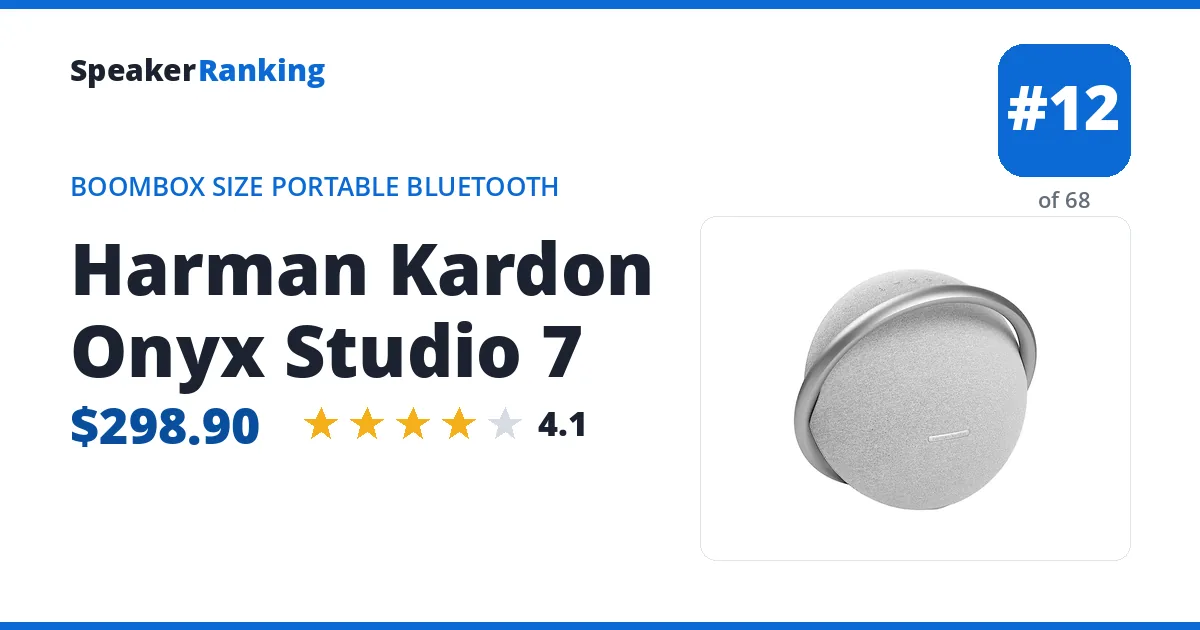
Newer model: the Harman Kardon Onyx Studio 9, ranked lower, rated 4.1/5.
Pros: The addition of dual tweeters gives the Studio 7 a wider, more spacious presentation than older Onyx models. It delivers strong, deep bass, useful large-room volume and can pair with a second Studio 7 for stereo. Measured bass extension of 37Hz (-10dB).
Cons: Consumer Reports finds the bass prominent and boomy, mids hazy, treble slightly smeared and the soundstage congested. Battery life remains only about eight hours, it has no water rating or advanced codecs, and it is not an especially loud outdoor speaker.
Full Harman Kardon Onyx Studio 7 review and specifications →
| Amplifier Power | 50W RMS |
|---|---|
| App | No |
| Aux Input | Yes |
| Aux Latency | 0ms |
| Bass Extension (-10dB) | 37Hz |
| Battery Life | 8 hours (Manufacturer specified) |
| Bluetooth Codecs | SBC |
| Bluetooth Latency | 266ms |
| Bluetooth Version | 4.2 |
| Built-in Microphone | Yes |
| Digital Aux Input | No |
| Dimensions | 11.3” x 11.3” (285.8 x 285.8 mm) (round design) |
| Drivers | 120mm woofer + 2x 25mm tweeters |
| EQ | No |
| IP Rating | None |
| Maximum SPL | 96dB (measured by Alan Ross Reviews) |
| Omnidirectional | No |
| Party Mode | Yes (Wireless Dual Sound) |
| Power Bank | No |
| Power Input | DC Barrel Connector (19V/2.1A) |
| Stereo | Partially (1 woofer) |
| Strap | No |
| TWS | No |
| USB Playback | No |
| Weight | 6.4 lbs (2.9 kg) |
- Links
- Reviews, Comparisons and Sound Samples
- Alan Ross Reviews: JBL Boombox 2 vs Onyx Studio 7 big bass battle 💋 More from alanrossreviews →
- Alan Ross Reviews: Onyx Studio 7 vs Onyx Studio 6 - massive deep bass battle 😁
- Geri’s Collection: Harman Kardon Onyx 7 vs Onyx 4
- KULAS TECH SHOW: Harman / Kardon Onyx Studio 5 vs Onyx Studio 7 - Close battle🔥🔥 More from KULASTECHSHOW20 →
- Alan Ross Reviews: Ultimate HK Onyx Studio speaker review and comparison! 8 speakers!
- Head-to-Head Comparisons
- Harman Kardon Onyx Studio 7 vs Harman Kardon Onyx Studio 6
- Harman Kardon Onyx Studio 7 vs Harman Kardon Onyx Studio 9
- Harman Kardon Onyx Studio 7 vs Harman Kardon Onyx Studio 8
- Harman Kardon Onyx Studio 7 vs Zealot ZE51
- Harman Kardon Onyx Studio 7 vs Zealot ZE41
- Harman Kardon Onyx Studio 7 vs Yeahbox Sonic Boom Ultra
- Harman Kardon Onyx Studio 7 vs Zealot ZE21
- Harman Kardon Onyx Studio 7 vs Zealot S89
- See all 60 comparisons
 Down 22% from its usual $549.95, the next best boombox size speaker deal is the JBL Boombox 4: $429.95 Amazon B&H Photo Video eBay
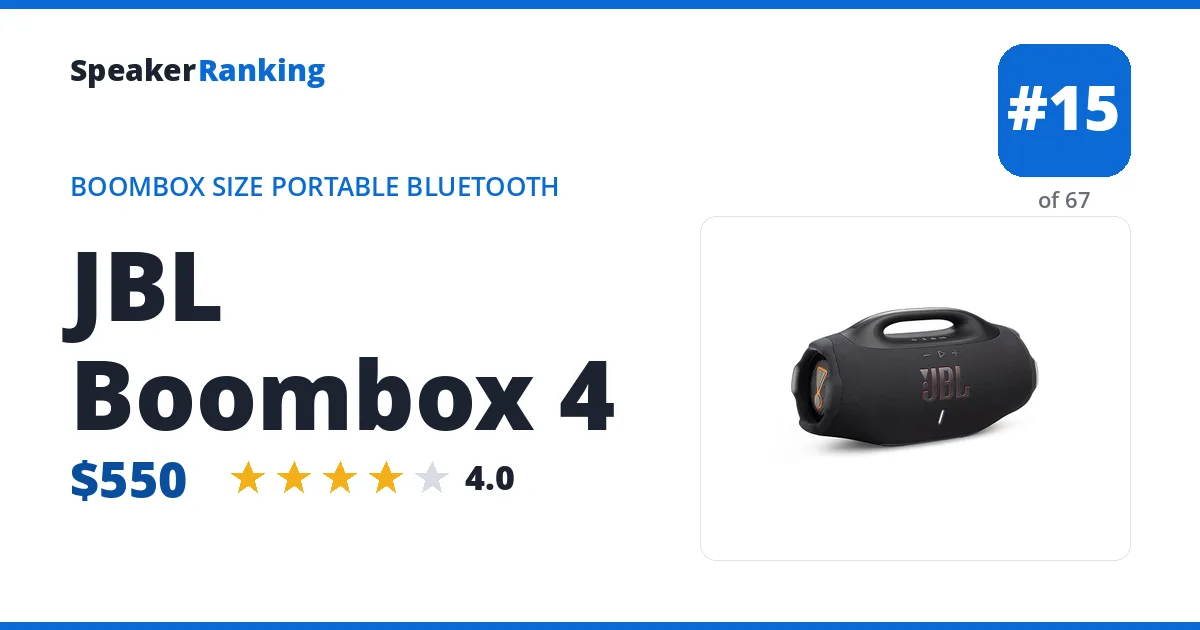
Older models: the JBL Boombox 3 (ranked lower, rated 3.8/5), the JBL Boombox 2 (ranked lower, rated 3.5/5) and the JBL Boombox (ranked lower, rated 2.9/5).
Pros: Pretty insane output capability for the size. IP68 protection and Auracast pairing with other current JBL speakers. Measured bass extension of 41Hz (-10dB).
Cons: Pretty overpriced for the category. Better than the Boombox 3 mostly because there are more 7 EQ bands instead of just 3 and it can be better tuned. Try Oluv’s EQ for it. Out of the box sounds worse than the Boombox 3. No Aux input.
Full JBL Boombox 4 review and specifications →
| Amplifier Power | 210W AC / 200W battery |
|---|---|
| App | Yes |
| Aux Input | No |
| Bass Extension (-10dB) | 41Hz |
| Battery Life | 28 hours (Manufacturer specified) |
| Bluetooth Codecs | SBC, LC3, AAC |
| Bluetooth Latency | AAC 144ms, SBC 48ms |
| Bluetooth Version | 5.4 |
| Built-in Microphone | No |
| Digital Aux Input | Yes (USB-C) |
| Dimensions | 20.1” x 10.2” x 8.3” (510 x 260 x 210 mm) |
| Drivers | 2x 123mm woofers + 2x 20mm tweeters with passive radiators |
| EQ | Yes (7 band) |
| FM Tuner | No |
| IP Rating | IP68 |
| Maximum SPL | 115dB (measured by Alan Ross Reviews) |
| MicroSD Playback | No |
| Microphone Input | No |
| Omnidirectional | No |
| Party Mode | Yes (Auracast) |
| Power Bank | Yes (USB-C, up to 30W) |
| Power Input | AC Power cord |
| Removable Battery | Yes |
| Stereo | Yes |
| Strap | No |
| TWS | Yes |
| USB Playback | No |
| Weight | 13.2 lbs (5.98 kg) |
- Links
- Reviews, Comparisons and Sound Samples
- JOY‘s 🎧3D🔈Audio-Show: JBL Boombox 4 vs Boombox 3 - old one sounding better? 🤔 More from Oluv’Sone →
- JOY‘s 🎧3D🔈Audio-Show: JBL Boombox 4 vs Earfun UBoom X - sound test
- JOY‘s 🎧3D🔈Audio-Show: JBL Boombox 4 vs Boombox 3 - any improvement?
- JOY‘s 🎧3D🔈Audio-Show: JBL Boombox 4 vs Partybox Encore 2 - outdoor loudness & basstest
- JOY‘s 🎧3D🔈Audio-Show: JBL Boombox 4 - finally a real BOOMbox from JBL 👏
- Alan Ross Reviews: JBL Boombox 4 HUMILIATES Brane X?! Ultimate Bass Battle! More from alanrossreviews →
- Alan Ross Reviews: JBL Boombox 4 Compared to Boombox 3 & 3 WiFi – Worth the Upgrade?
- Alan Ross Reviews: JBL Boombox 4 distortion fest bonanza! how bad can it be lol 🤣
- Jagist reviews: Jbl Boombox 4 Vs Zealot Ze21!!! More from Jagistreviews →
- Techder Audios: JBL Boombox 4 VS Zealot ZE21 BATTLE OF THE BOOMBOXES! More from techderaudios →
- Dominik Reviews: Zealot S89 vs JBL Boombox 4 - JBL Alternative? Sound Test More from Dominik Reviews →
- Jagist reviews: Jbl Boombox 4 Vs Zealot S89!!!
- Jagist reviews: Jbl Boombox 4 Vs Zealot S95!!!
- M1MTechChannel: Welche JBL Partybox ist die BESTE ? Alle Partyboxen im Vergleich | 2026 More from M1MTechChannel →
- M1MTechChannel: JBL BOOMBOX 4 - Einfach komplett GEISTESKRANK
- Head-to-Head Comparisons
Down 29% from its usual $899, the best large desktop powered speaker deal is the B&W Zeppelin Pro: $639.00 each Amazon eBay
Older model: the B&W Zeppelin (ranked lower, rated 4.3/5).
Pros: Titanium dome tweeters and an improved 24-bit DAC over the standard Zeppelin for slightly better high-frequency detail on hi-res streams. Dynamic EQ DSP. Customizable downward-firing light. Same wide soundstage and deep bass extension as the standard Zeppelin.
Cons: Same price as the standard Zeppelin for a fairly modest tweeter/DAC upgrade. Nothing besides the lack of battery, lack of waterproofing, high cost and the Earfun Uboom X that’s so close to it in terms of sound quality for 7x less money. Basically an indoor only speaker. At this price point the Top Recommended Bookshelf Speakers are the better buy, with even better soundstage.
Full B&W Zeppelin Pro review and specifications →
| AES Input | No |
|---|---|
| Amplifier Power | 240W (80W woofer, 2x 40W midrange, 2x 40W tweeter) |
| App | No |
| Aux Input | No |
| Battery Life | No Battery |
| Bluetooth | Yes |
| Bluetooth Codecs | aptX Adaptive, AAC, SBC |
| Bluetooth Version | 5.0 |
| Coaxial Input | No |
| DSP | Yes |
| Dimensions | 25.6” x 8.3” x 7.6” (650 x 210 x 194 mm) |
| Drivers | 150mm woofer, 2x 90mm FST midrange drivers, 2x 25mm Titanium Dome tweeters |
| EQ | Yes (Dynamic EQ) |
| Frequency Response | 35Hz - 24kHz (Manufacturer specified) |
| HDMI Input | No |
| IP Rating | None |
| Inputs | Bluetooth, AirPlay 2, Spotify Connect |
| Optical Input | No |
| Party Mode | No |
| Power Bank | No |
| Power Input | AC Power cord |
| RCA Input | No |
| Stereo | Yes |
| Streaming Services | AirPlay 2, Spotify Connect |
| TRS Input | No |
| TWS | No |
| USB Input | No |
| Weight | 14.6 lbs (6.6 kg) |
| Wi-Fi | Yes |
| XLR Input | No |
- Links
- Reviews, Comparisons and Sound Samples
- Head-to-Head Comparisons
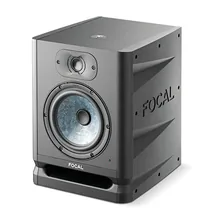 Down 19% from its usual $998, the best large bookshelf powered speaker deal is the Focal Alpha 65 EVO: $804 per pair Amazon eBay
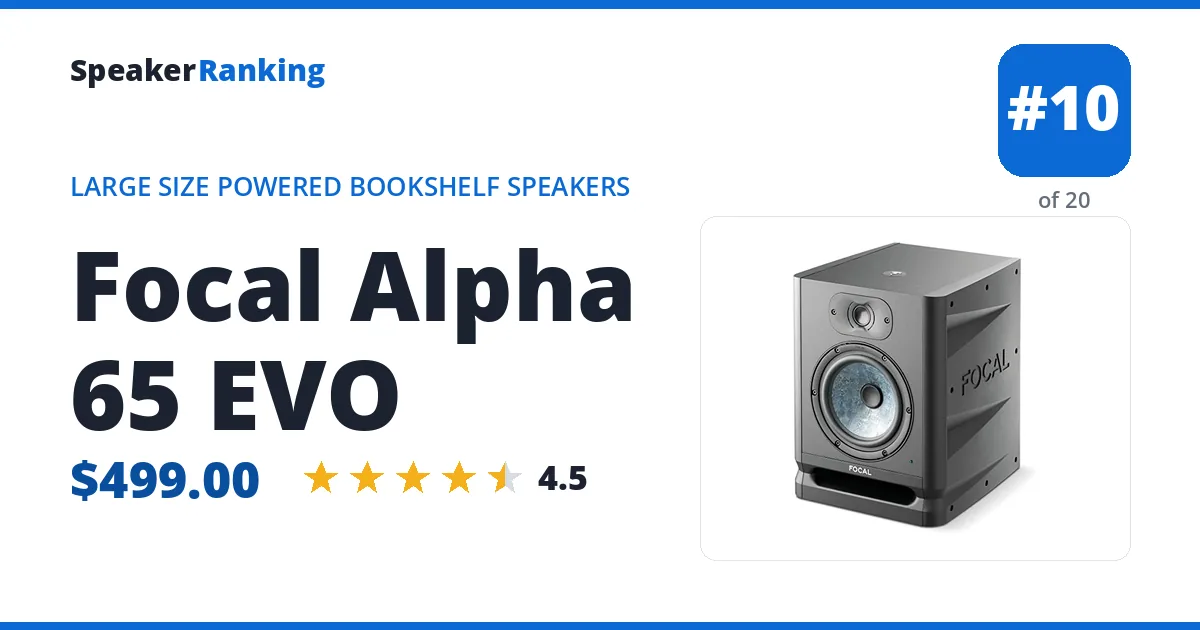
Pros: ASR measured 42.5Hz -3dB extension, providing useful low-end reach for music. Analog input options and tonal controls make it straightforward to integrate into a studio, with a 6.59 ideal-subwoofer score indicating respectable but not leading tonality. Measured bass extension of 45Hz (-3dB).
Cons: The measured 2.7dB response span from 300Hz to 5kHz and listening-window variation do not support a claim of reference-level neutrality. Placement and external correction may help. An anomalous distortion result from an individual sample should not be treated as a proven defect in every unit.
Full Focal Alpha 65 EVO review and specifications →
| AES Input | No |
|---|---|
| Amplifier Power | 85w Per Speaker |
| App | No |
| Aux Input | No |
| Bass Extension (-10dB) | 36Hz (measured, Audio Science Review) |
| Bass Extension (-3dB) | 45Hz (measured, Audio Science Review) |
| Bluetooth | No |
| Coaxial Input | No |
| DSP | No |
| Dimensions | 13.4”H x 10.3”W x 11.4”D (340.4 x 261.6 x 289.6 mm) |
| Drivers | 6.5” (165mm) woofer |
| EQ | Yes (Room adjustment) |
| Frequency Response | 40Hz - 22kHz (+-3dB) (Manufacturer specified) |
| HDMI Input | No |
| Inputs | TRS, XLR, RCA |
| Optical Input | No |
| RCA Input | Yes |
| Spinorama Preference Score | 4.71 |
| Spinorama Preference Score with Perfect Sub | 6.59 |
| TRS Input | Yes |
| USB Input | No |
| Weight | 16.8 lbs (7.6 kg) each |
| XLR Input | Yes |
- Links
- Reviews, Comparisons and Sound Samples
- Audio Science Review Measurements More from Audio Science Review →
- DSAUDIO.review: DSAUDIO.review Focal Alpha 65 EVO vs Yamaha HS8 sound.DEMO More from DSAUDIOreview →
- DSAUDIO.review: DSAUDIO.review Focal Alpha 65 EVO vs Focal Alpha 65 sound.DEMO
- DSAUDIO.review: DSAUDIO.review Focal Alpha 65 EVO vs Kali Audio IN-5 sound.DEMO
- DSAUDIO.review: DSAUDIO.review Focal Alpha 50 EVO vs Focal Alpha 65 EVO sound.DEMO
- DSAUDIO.review: DSAUDIO.review Focal Alpha 65 EVO vs Adam Audio A7X sound.DEMO
- DSAUDIO.review: DSAUDIO.review Focal Alpha 65 EVO vs Adam Audio T7V sound.DEMO
- Audio Science Review Measurements (spinorama.org)
- Head-to-Head Comparisons
- Focal Alpha 65 EVO vs Adam Audio A7V
- Focal Alpha 65 EVO vs Emotiva Airmotiv 6s
- Focal Alpha 65 EVO vs Adam Audio T8V
- Focal Alpha 65 EVO vs Cambridge Audio L/R X
- Focal Alpha 65 EVO vs Adam Audio T7V
- Focal Alpha 65 EVO vs Kali Audio LP-8
- Focal Alpha 65 EVO vs KRK Rokit 8 G4
- Focal Alpha 65 EVO vs JBL 4329P
- See all 47 comparisons