Editor's top picks
Start with these speakers
Our leading recommendations at a glance. Each card links to its primary retailer.
Looking for the best studio monitors for mixing and mastering? These picks from the 194 powered speakers ranked here prioritize measured tonal accuracy and smooth directivity, while accounting for bass extension, distortion and output at your listening distance. Each speaker’s pros and cons explain the evidence; see the measurement and review sources.
Prices on this page were last checked September 22, 2026 at 5:11 AM UTC. Product prices and availability are accurate as of that date/time and are subject to change; the price and availability shown on Amazon at the time of purchase will apply to the purchase of this product.
As an eBay Partner, we may be compensated if you make a purchase.
What Actually Matters In A Monitor
Flat on-axis response, and a smooth off-axis curve. The first is what you hear directly, the second is what the room sends back at you a few milliseconds later. A monitor that measures flat on-axis but has a ragged off-axis response will sound different in every room it’s put in. Both are in the measurements linked on each pick.
Balanced inputs. XLR or TRS reject noise picked up over a cable run, which matters when the speaker sits next to a computer, an interface and a rack of gear. Of the powered speakers ranked here, 99 have XLR and 44 have TRS, and almost all of them are monitors.
Nearfield or midfield. Follow the model’s recommended listening distance and orientation rather than choosing by woofer diameter alone. Driver integration, vertical directivity and clean output all matter.
Appropriate DSP and tuning. DSP can improve crossover behavior, tonal accuracy and bass extension. Use the measured reference tuning and appropriate boundary settings; room correction is useful but cannot fix every reflection or output limitation.
Include the room in the plan. Placement, treatment and alignment remain important at every price. Budget for stands, cables, a volume-controlled source and, where needed, a subwoofer.
Best Value Studio Monitors
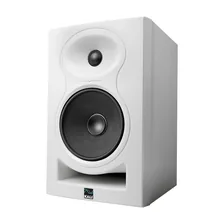 Our full-size budget pick, with good measured linearity and bass reaching about 42 Hz (-3 dB), is the Kali Audio LP-6 V2: $398 per pair Amazon B&H Photo Video eBay
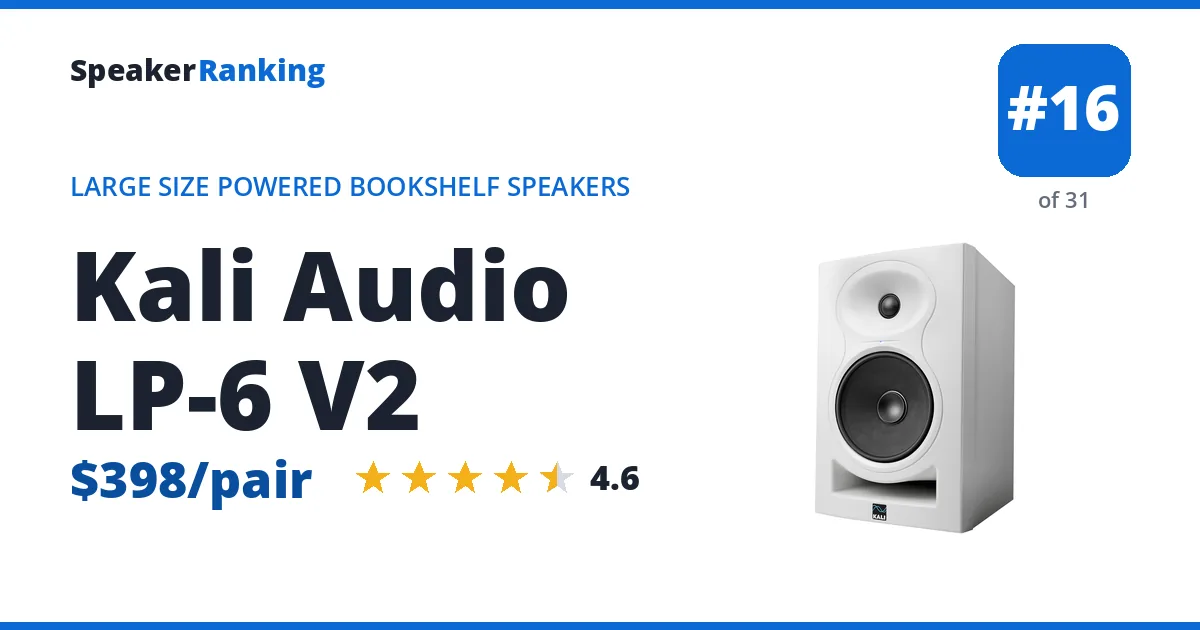
Pros: Erin’s measurements give a 6.62 ideal-subwoofer score and 42.5Hz -3dB bass extension, a strong combination for an affordable nearfield monitor. The waveguide and placement switches help with practical setup, and the second generation improves close-range noise behavior. Measured bass extension of 42Hz (-3dB).
Cons: The 2.5dB response span from 300Hz to 5kHz leaves some tonal unevenness. Vertical crossover behavior makes ear-height placement important, and compression limits loud bass playback. Its good tonal score is not evidence of the output capability of a much larger monitor.
Full Kali Audio LP-6 V2 review and specifications →
| AES Input | No |
|---|---|
| Amplifier Power | 40W LF + 40W HF per speaker; Bi-amplified Class D |
| Aux Input | No |
| Bass Extension (-10dB) | 39.1Hz (measured, Erin's Audio Corner) |
| Bass Extension (-3dB) | 42Hz (measured, Erin's Audio Corner) |
| Bluetooth | No |
| Coaxial Input | No |
| DSP | Yes; boundary presets and LF/HF trims |
| Dimensions | 14.1"H x 8.8"W x 10.2"D |
| Drivers | 1" soft-dome tweeter; 6.5" woofer |
| Frequency Response | 47Hz - 21kHz (±3dB) (Manufacturer specified) |
| HDMI Input | No |
| Inputs | XLR, balanced TRS and RCA |
| Maximum SPL | Approximately 102dB per pair with good measured linearity (Erin's Audio Corner) (manufacturer specified) |
| Optical Input | No |
| RCA Input | Yes |
| Spinorama Preference Score | 4.67 |
| Spinorama Preference Score with Perfect Sub | 6.62 |
| TRS Input | Yes |
| USB Input | No |
| Weight | 15.5 lbs (7.05 kg) each |
| XLR Input | Yes |
- Links
- Reviews, Comparisons and Sound Samples
- Head-to-Head Comparisons
- Kali Audio LP-6 V2 vs Kali Audio IN-8 V2
- Kali Audio LP-6 V2 vs Yamaha HS8
- Kali Audio LP-6 V2 vs Genelec 8050B
- Kali Audio LP-6 V2 vs JBL 4305P
- Kali Audio LP-6 V2 vs JBL 308P MKII
- Kali Audio LP-6 V2 vs SHIVAUDYO Point Zero
- Kali Audio LP-6 V2 vs Focal Solo6 ST6
- Kali Audio LP-6 V2 vs Thomann Swissonic A306
- See all 45 comparisons
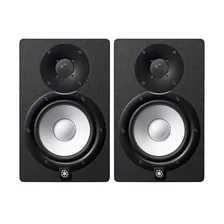 For an 8-inch monitor with good measured tonal balance and bass reaching about 44 Hz (-3 dB), consider the Yamaha HS8: $797.98 per pair Amazon eBay
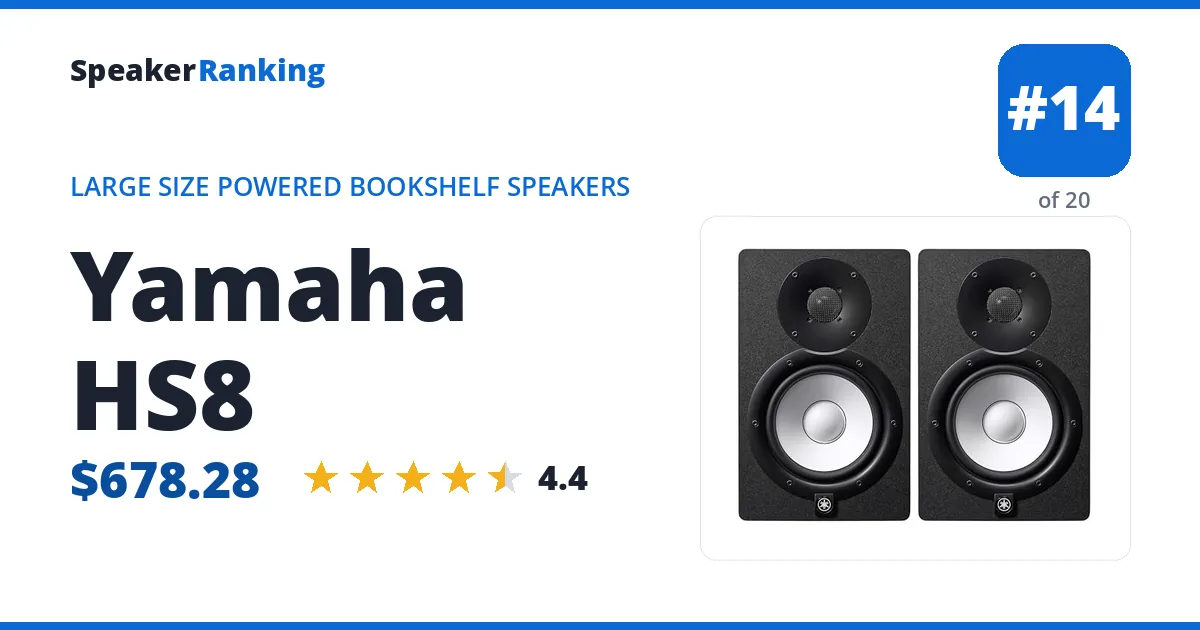
Pros: ASR measurements support broadly neutral sound: a 2.3dB response span from 300Hz to 5kHz and 6.68 ideal-subwoofer score. Measured -3dB bass extension of 43.9Hz gives useful weight for music, with straightforward analog connections and room-adjustment controls. Measured bass extension of 43.9Hz (-3dB).
Cons: Its response and off-axis behavior are not as refined as the leading monitors. Vertical positioning around the crossover matters, and a subwoofer remains useful for deep bass. Basic rear-panel controls do not replace measured room correction.
Full Yamaha HS8 review and specifications →
| AES Input | No |
|---|---|
| Amplifier Power | 120w Per Speaker |
| App | No |
| Aux Input | No |
| Bass Extension (-10dB) | 34.7Hz (measured, Audio Science Review) |
| Bass Extension (-3dB) | 43.9Hz (measured, Audio Science Review) |
| Bluetooth | No |
| Coaxial Input | No |
| DSP | No |
| Dimensions | 15.4"H x 9.8"W x 13.1"D (391.2 x 248.9 x 332.7 mm) |
| Drivers | 8" woofer, 1" dome tweeter |
| EQ | Yes (Room adjustment) |
| Frequency Response | 47Hz - 24kHz (-3dB) (Manufacturer specified) |
| HDMI Input | No |
| Inputs | XLR |
| Optical Input | No |
| RCA Input | No |
| Spinorama Preference Score | 4.95 |
| Spinorama Preference Score with Perfect Sub | 6.68 |
| TRS Input | No |
| USB Input | No |
| Weight | 22.5 lbs (10.2 kg) |
| XLR Input | Yes |
- Links
- Reviews, Comparisons and Sound Samples
- Audio Science Review: Yamaha HS8 Studio Monitor Review More from Audio Science Review →
- Sercan Solmaz: Adam Audio T8V vs Yamaha HS8 vs KRK Rokit 8 (STUDIO SPEAKER SOUND TEST)
- DSAUDIO.review: DSAUDIO.review Edifier R2850DB vs Yamaha HS8 sound.DEMO More from DSAUDIOreview →
- DSAUDIO.review: DSAUDIO.review Adam Audio A7X vs Yamaha HS8 sound.DEMO
- DSAUDIO.review: Yamaha HS7 vs Yamaha HS8 Sound & Frequency Response Comparison
- DSAUDIO.review: Yamaha HS8 vs Yamaha HS5 Sound & Frequency Response Comparison
- DSAUDIO.review: Genelec 8020D vs Yamaha HS8 Sound & Frequency Response Comparison
- DSAUDIO.review: DSAUDIO.review APS Klasik 2020 vs Yamaha HS8 sound.DEMO
- DSAUDIO.review: DSAUDIO.review Focal Alpha 65 EVO vs Yamaha HS8 sound.DEMO
- DSAUDIO.review: Yamaha HS8 vs PreSonus Eris E8 XT Sound & Frequency Response Comparison
- DSAUDIO.review: Yamaha HS8 vs Kali Audio LP-8 Sound & Frequency Response Comparison
- DSAUDIO.review: KRK Rokit 8 G4 RP8G4 vs Yamaha HS8 Sound & Frequency Response Comparison
- DSAUDIO.review: Neumann KH80 DSP vs Yamaha HS8 Sound & Frequency Response Comparison
- DSAUDIO.review: Yamaha HS8 vs IK Multimedia iLoud MTM Sound & Frequency Response Comparison
- Audio Science Review Measurements (spinorama.org)
- Head-to-Head Comparisons
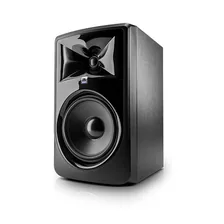 For an 8-inch alternative with smooth directivity and bass reaching about 43 Hz (-3 dB), consider the JBL 308P MKII: $498 per pair B&H Photo Video eBay
Pros: A 1.8dB response span from 300Hz to 5kHz and 6.89 ideal-subwoofer score support unusually good tonal balance for an accessible studio monitor. Measured -3dB extension of 42.5Hz supplies useful musical bass, and the waveguide helps maintain consistent horizontal coverage. Measured bass extension of 82Hz (-3dB).
Cons: Amplifier hiss may be noticeable in quiet, close-range use. Bass distortion and output limits matter when playing loudly, despite the 8-inch woofer. Keep the tweeter near ear height; vertical crossover behavior is less forgiving than the best coaxial designs.
Full JBL 308P MKII review and specifications →
| AES Input | No |
|---|---|
| Amplifier Power | 112W total |
| App | No |
| Aux Input | No |
| Bass Extension (-10dB) | 60Hz (measured, Audio Science Review) |
| Bass Extension (-3dB) | 82Hz (measured, Audio Science Review) |
| Bluetooth | No |
| Coaxial Input | No |
| DSP | No |
| Dimensions | 16.5"H x 10"W x 12.1"D (419.1 x 254 x 307.3 mm) |
| Drivers | 8" woofer, 1" neodymium tweeter |
| EQ | No |
| Frequency Response | 45Hz - 20kHz (+/-3dB) (Manufacturer specified) |
| HDMI Input | No |
| Inputs | XLR, 1/4" TRS |
| Optical Input | No |
| RCA Input | No |
| Spinorama Preference Score | 5.08 |
| Spinorama Preference Score with Perfect Sub | 6.89 |
| TRS Input | Yes |
| USB Input | No |
| Weight | 17.9 lbs (8.1 kg) each |
| XLR Input | Yes |
- Links
- Reviews, Comparisons and Sound Samples
- Head-to-Head Comparisons
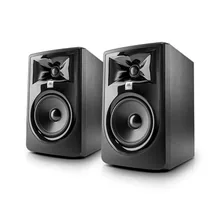 For a budget 5-inch nearfield with a strong acoustic ranking for its price, consider the JBL 305P MKII: $319.00 per pair Amazon eBay
Pros: Erin’s Klippel data gives 4.47 standalone and 6.61 with an ideal subwoofer, with bass reaching -3dB around 51Hz. Broad horizontal coverage and reasonably smooth reflected sound support stable imaging across a desk. The existing review reports effective limiting and little sustained thermal compression, making it a strong budget-monitor option rather than just a speaker with a promising frequency curve. Measured bass extension of 50Hz (-3dB), with a measured sensitivity of 91.1dB.
Cons: The 3.3dB midrange span and rising response show it is not perfectly neutral. A port-related feature around 1.6kHz and some excess treble can be audible; the review recommends the treble-trim switch. Vertical crossover interference makes ear height important. Amplifier hiss may matter in very quiet nearfield use, and rear-port placement needs room-boundary adjustment.
Full JBL 305P MKII review and specifications →
| AES Input | No |
|---|---|
| Amplifier Power | 81w Per Speaker |
| App | No |
| Aux Input | No |
| Bass Extension (-10dB) | 43Hz (measured, Erin's Audio Corner) |
| Bass Extension (-3dB) | 50Hz (measured, Erin's Audio Corner) |
| Bluetooth | No |
| Coaxial Input | No |
| Dimensions | 11.7"H x 7.3"W x 9.1"D (297.2 x 185.4 x 231.1 mm) |
| Drivers | 5" (127mm) woofer |
| EQ | Yes (Room adjustment) |
| Frequency Response | 49 Hz - 20 kHz (+-3 dB) (Manufacturer specified) |
| HDMI Input | No |
| Inputs | XLR, TRS |
| Optical Input | No |
| RCA Input | No |
| Sensitivity | 91.1dB (measured at 0.3V/1m, Erin's Audio Corner) |
| Spinorama Preference Score | 4.47 |
| Spinorama Preference Score with Perfect Sub | 6.61 |
| TRS Input | Yes |
| USB Input | No |
| Weight | 10.4 lbs (4.7 kg) each |
| XLR Input | Yes |
- Links
- Reviews, Comparisons and Sound Samples
- Erin’s Audio Corner Review Measurements More from Erin’s Audio Corner →
- Audio Science Review Measurements More from Audio Science Review →
- Erin’s Audio Corner: LIVE! JBL 305P MkII Powered Studio Monitor Review
- DSAUDIO.review: DSAUDIO.review Focal Alpha 50 EVO vs JBL 305P MKII sound.DEMO More from DSAUDIOreview →
- DSAUDIO.review: JBL 305P MKII vs Yamaha HS5 6-Track Comparison
- DSAUDIO.review: DSAUDIO.review JBL 305P MKII vs KRK Classic 5 CL5G3 sound.DEMO
- DSAUDIO.review: JBL 305P MKII vs Adam Audio T5V 6-Track Comparison
- DSAUDIO.review: DSAUDIO.review Adam Audio A5X vs JBL 305P MKII sound.DEMO
- DSAUDIO.review: DSAUDIO.review Kali Audio LP-6 V2 (2nd Wave) vs JBL 305P MKII sound.DEMO
- DSAUDIO.review: DSAUDIO.review Edifier MR4 vs JBL 305P MKII sound.DEMO
- DSAUDIO.review: Kali Audio IN-5 vs JBL 305P MKII Sound & Frequency Response Comparison
- DSAUDIO.review: JBL 308P MKII vs JBL 305P MKII Sound & Frequency Response Comparison
- DSAUDIO.review: Neumann KH80 DSP vs JBL 305P MKII Sound & Frquency Response Comparison
- DSAUDIO.review: JBL 305P MKII vs PreSonus Eris E5 6-Track Comparison
- Erin’s Audio Corner Measurements (spinorama.org)
- Jasper Tech: Best Desktop Computer Speakers for Every Budget – 2026 More from Jasper Tech →
- Jasper Tech: Best Powered Bookshelf Speakers for Every Budget - 2025
- Jasper Tech: Are the iLoud Micro Monitor Pro the Best Studio Monitor Speakers for your Home Studio?
- Head-to-Head Comparisons
- JBL 305P MKII vs KEF LS50 Wireless II
- JBL 305P MKII vs Klipsch The Fives
- JBL 305P MKII vs Genelec 8020D
- JBL 305P MKII vs Vanatoo Transparent One Encore Plus
- JBL 305P MKII vs IK Multimedia iLoud MTM MKII
- JBL 305P MKII vs Topping MA4
- JBL 305P MKII vs Devialet Phantom II 98 dB
- JBL 305P MKII vs Sigberg Audio SBS Gen 2
- See all 65 comparisons
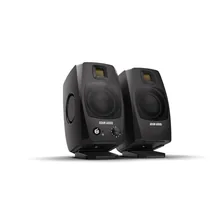 For a compact USB desktop system with balanced TRS inputs and an especially even midrange, consider the Adam Audio D3v: $349.99 per pair Amazon eBay
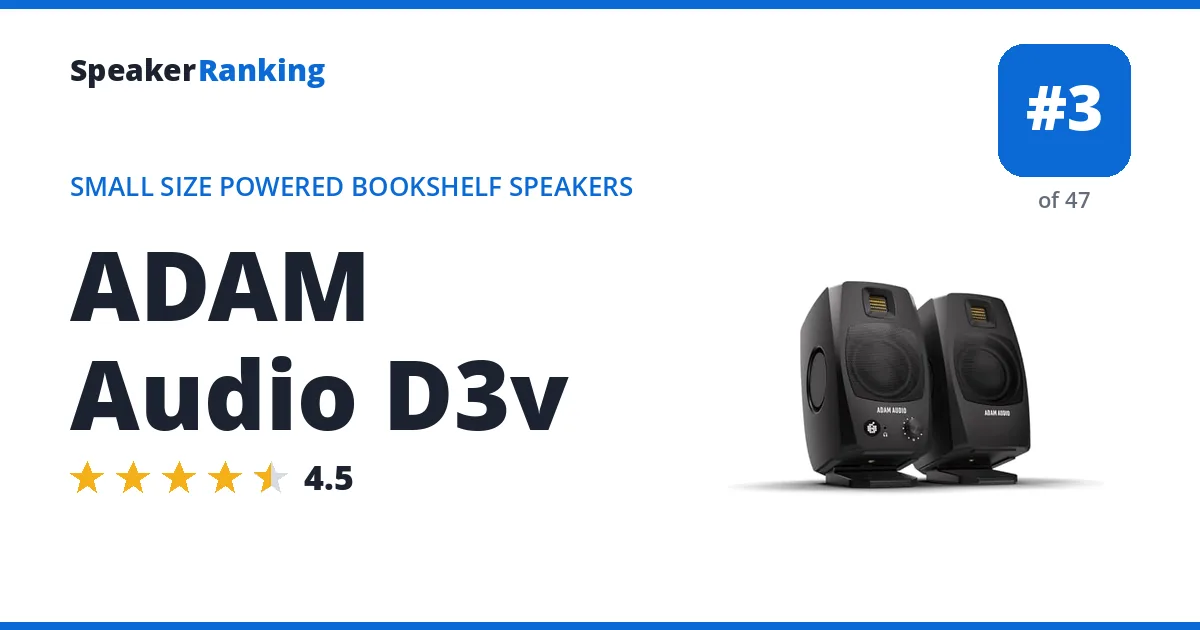
Pros: Excellent midrange linearity for a tiny desktop speaker: Erin’s Klippel data spans just 1.7dB from 300Hz to 5kHz. Side passive radiators help bass reach -3dB at about 51Hz, substantially deeper than the Genelec 8010A or Audio Smile LBM. Predicted preference scores of 4.47 standalone and 6.70 with an ideal subwoofer support it as a particularly useful compact system without a sub. USB-C, analog inputs and placement filters simplify desk setup. Measured bass extension of 50Hz (-3dB), with a measured sensitivity of 86.5dB.
Cons: A rising upper-frequency balance and vertical crossover interference keep it from being uniformly neutral at every angle; aim the tweeters toward ear height. The limiter reduces bass and midrange output as volume rises, with the existing review’s compression tests putting usable maximum output around 89-90dB at 1m. Deep bass at moderate volume should not be confused with high output capability.
Full Adam Audio D3v review and specifications →
| AES Input | No |
|---|---|
| Amplifier Power | 50W (30W woofer + 20W tweeter) |
| App | No |
| Aux Input | No |
| Bass Extension (-10dB) | 45Hz (measured, Erin's Audio Corner) |
| Bass Extension (-3dB) | 50Hz (measured, Erin's Audio Corner) |
| Bluetooth | No |
| Coaxial Input | No |
| Dimensions | 6.7"H x 4.3"W x 5.9"D (170.2 x 109.2 x 149.9 mm) |
| Drivers | 3.5" woofer, U-ART accelerated ribbon tweeter |
| EQ | Yes (Room adjustment filters) |
| Frequency Response | 50Hz - 50kHz (Manufacturer specified) |
| HDMI Input | No |
| Inputs | USB-C, balanced 1/4-inch TRS |
| Maximum SPL | 102dB @ 1m (manufacturer specified) |
| Optical Input | No |
| RCA Input | No |
| Sensitivity | 86.5dB (measured at 0.3V/1m, Erin's Audio Corner) |
| Spinorama Preference Score | 4.47 |
| Spinorama Preference Score with Perfect Sub | 6.70 |
| TRS Input | Yes |
| USB Input | Yes |
| Weight | 3.7 lbs (1.7 kg) |
| XLR Input | No |
- Links
- Reviews, Comparisons and Sound Samples
- Erin’s Audio Corner: ADAM Audio D3V: Mighty Small But Mighty Awesome Desktop Speaker More from Erin’s Audio Corner →
- Erin’s Audio Review Adam Audio D3v
- Erin’s Audio Corner Measurements (spinorama.org)
- Jasper Tech: Best Desktop Computer Speakers for Every Budget – 2026 More from Jasper Tech →
- Jasper Tech: Are the D3V The Best Studio Monitors For The Money?
- Erin’s Audio Corner: The Best Budget Desktop Speakers, Tested & Rated
- Head-to-Head Comparisons
- Adam Audio D3v vs Genelec 8010A
- Adam Audio D3v vs Cambridge Audio L/R S
- Adam Audio D3v vs IK Multimedia iLoud Micro Monitor
- Adam Audio D3v vs Audio Smile Little British Monitor
- Adam Audio D3v vs Edifier M60
- Adam Audio D3v vs HiVi Swan X3
- Adam Audio D3v vs Edifier MR3
- Adam Audio D3v vs Audioengine A2+
- See all 15 comparisons
Best For Serious Work
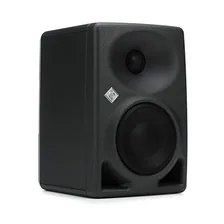 For a compact DSP monitor with accurate tonal balance and optional MA 1 alignment, consider the Neumann KH80 DSP: $598.98 per pair Amazon B&H Photo Video eBay
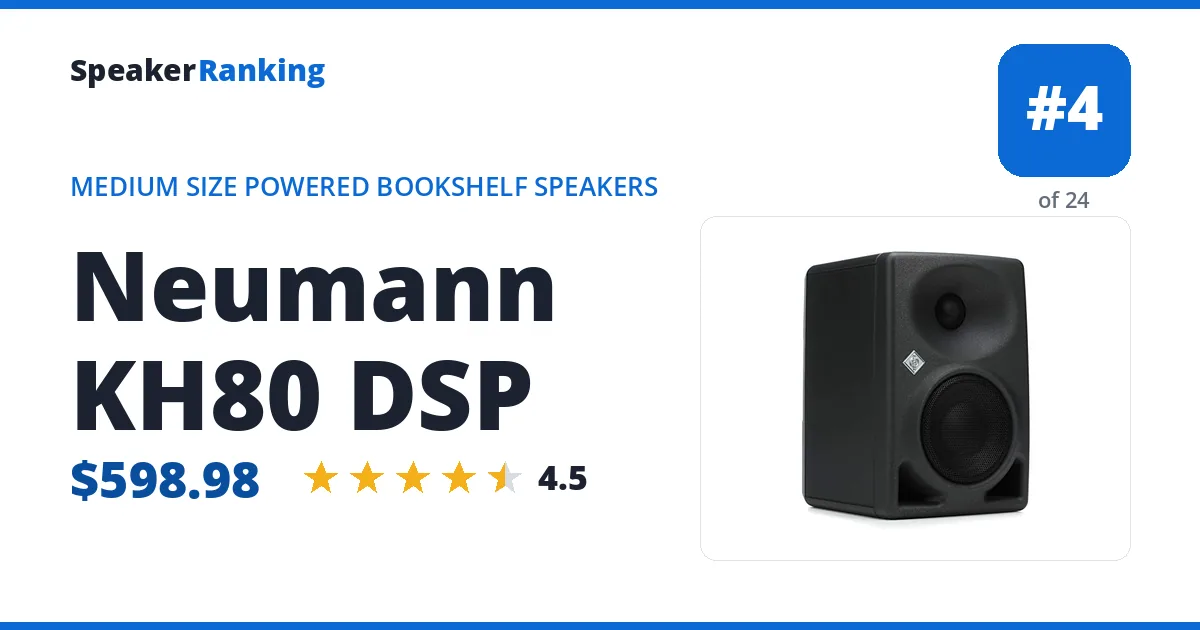
Pros: ASR’s selected Klippel measurement has a 1.4dB midrange response span and virtually no overall on-axis tilt. Scores of 5.03 standalone and 7.39 with an ideal subwoofer indicate excellent tonal accuracy in a compact monitor. The waveguide and steep crossover provide useful control of reflected sound, while placement filters help compensate for a desk or nearby boundaries. Existing multitone testing supports good moderate-level clarity. Measured bass extension of 57Hz (-3dB), with a measured sensitivity of 91.9dB.
Cons: Bass reaches -3dB around 59Hz in this measurement, less deep than the KH120 II. Output protection and increasing multitone distortion limit loud listening, especially in the bass. Room reflections and listening distance can alter perceived treble balance despite its flat direct response. Calibration equipment adds to the cost; the preference score is not a measurement of maximum clean output.
Full Neumann KH80 DSP review and specifications →
| AES Input | No |
|---|---|
| Amplifier Power | 140W (90W woofer + 50W tweeter) |
| App | Yes (MA 1 alignment) |
| Aux Input | No |
| Bass Extension (-10dB) | 51Hz (measured, Erin's Audio Corner) |
| Bass Extension (-3dB) | 57Hz (measured, Erin's Audio Corner) |
| Bluetooth | No |
| Coaxial Input | No |
| DSP | Yes |
| Dimensions | 13.6"H x 10.8"W x 9.6"D (345.4 x 274.3 x 243.8 mm) |
| Drivers | 4.1" woofer, 1" fabric dome tweeter |
| EQ | Yes (via DSP) |
| Frequency Response | 57 Hz - 25 kHz (+-3 dB) (Manufacturer specified) |
| HDMI Input | No |
| Inputs | XLR |
| Maximum SPL | 110.7dB @ 1m (manufacturer specified) |
| Optical Input | No |
| RCA Input | No |
| Sensitivity | 91.9dB (measured at 0.3V/1m, Erin's Audio Corner) |
| Spinorama Preference Score | 5.03 |
| Spinorama Preference Score with Perfect Sub | 7.39 |
| TRS Input | No |
| USB Input | No |
| Weight | 9 lbs (4.1 kg) each |
| XLR Input | Yes |
- Links
- Reviews, Comparisons and Sound Samples
- Erin’s Audio Corner: Neumann KH 80 Studio Monitor Review. Excellent Performance. Small Size. More from Erin’s Audio Corner →
- Erin’s Audio Corner Review Measurements
- Audio Science Review Measurements More from Audio Science Review →
- DSAUDIO.review: Neumann KH80 DSP vs Genelec 8020D Sound & Frequency Response Comparison More from DSAUDIOreview →
- DSAUDIO.review: Neumann KH80 DSP vs Yamaha HS8 Sound & Frequency Response Comparison
- DSAUDIO.review: Neumann KH80 DSP vs Focal Shape 40 Sound & Frequency Response Comparison
- DSAUDIO.review: Neumann KH80 DSP vs IK Multimedia iLoud MTM Sound & Frequency Response Comparison
- DSAUDIO.review: Neumann KH80 DSP vs JBL 305P MKII Sound & Frquency Response Comparison
- DSAUDIO.review: KEF LSX vs Neumann KH80 DSP Sound & Frequency Response Comparison
- DSAUDIO.review: Adam Audio A3X vs Neumann KH80 DSP Sound & Frequency Response Comparison
- DSAUDIO.review: Neumann KH80 DSP vs KRK Rokit 5 G4 RP5G4 Sound & Frequency Response Comparison
- Joy & Oluv’Sone: 🎃🔥 UBoom X - Halloween Rock Special 🎸🤘 More from Oluv’Sone →
- Audio Science Review Measurements (spinorama.org)
- Head-to-Head Comparisons
- Neumann KH80 DSP vs Genelec 8030C
- Neumann KH80 DSP vs Reflector Audio Square Two
- Neumann KH80 DSP vs Neumann KH120 MKII
- Neumann KH80 DSP vs Dynaudio LYD 5
- Neumann KH80 DSP vs Genelec 8331A
- Neumann KH80 DSP vs Genelec 8330A
- Neumann KH80 DSP vs Genelec 8320A
- Neumann KH80 DSP vs Devialet Phantom II 98 dB
- See all 64 comparisons
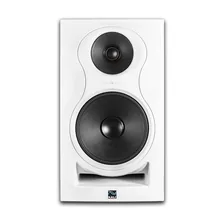 For an affordable three-way with coaxial midrange and tweeter, consider the Kali Audio IN-8 V2: $998 per pair Amazon eBay
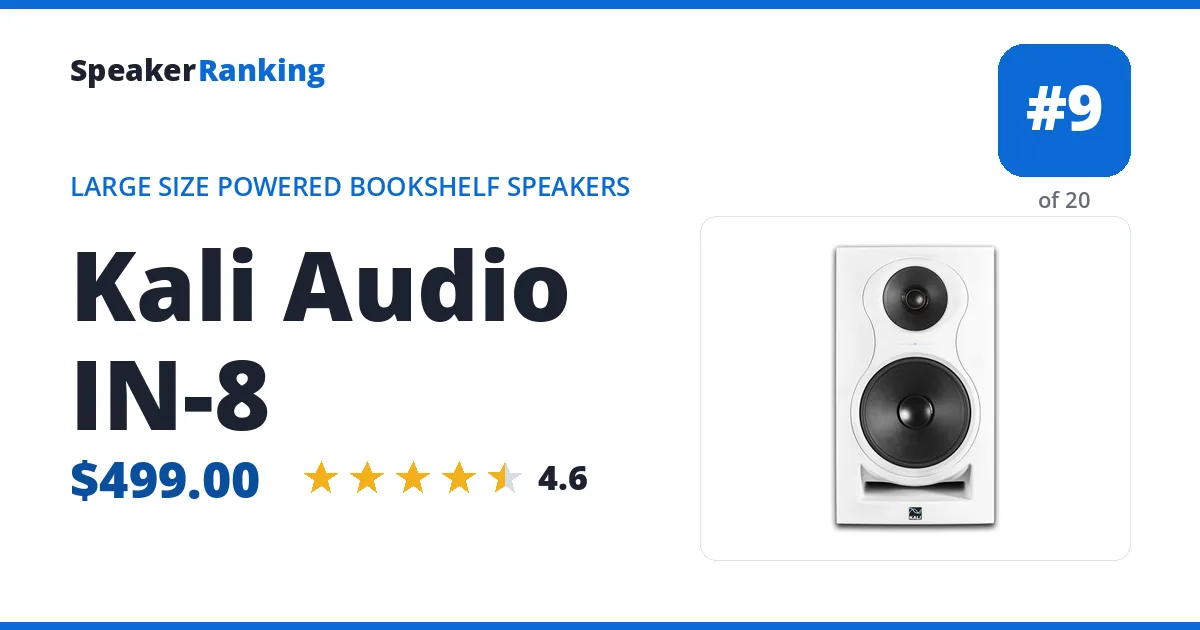
Pros: The IN-8 V2’s coaxial midrange/tweeter supports coherent imaging, and low distortion at ordinary levels complements its 6.54 ideal-subwoofer score. Measured -3dB extension of 45.4Hz provides useful bass; boundary settings assist placement. Measured bass extension of 44Hz (-3dB), with a measured sensitivity of 89dB.
Cons: The measured 3.0dB response span from 300Hz to 5kHz includes unevenness that can make some vocals sound forward. Bass and limiter behavior constrain high-level playback. These measurements apply to the V2, not the first-generation IN-8.
Full Kali Audio IN-8 V2 review and specifications →
| AES Input | No |
|---|---|
| Amplifier Power | 140w Per Speaker |
| App | No |
| Aux Input | No |
| Bass Extension (-10dB) | 36Hz (measured, Erin's Audio Corner) |
| Bass Extension (-3dB) | 44Hz (measured, Erin's Audio Corner) |
| Bluetooth | No |
| Coaxial Input | No |
| DSP | No |
| Dimensions | 17.8"H x 10"W x 11.3"D (452.1 x 254 x 287 mm) |
| Drivers | 8" (203mm) woofer |
| EQ | Yes (Room adjustment) |
| Frequency Response | 45Hz - 21kHz (±3dB) (Manufacturer specified) |
| HDMI Input | No |
| Inputs | XLR, RCA |
| Optical Input | No |
| RCA Input | Yes |
| Sensitivity | 89dB (measured at 0.3V/1m, Erin's Audio Corner) |
| Spinorama Preference Score | 3.53 |
| Spinorama Preference Score with Perfect Sub | 5.40 |
| TRS Input | No |
| USB Input | No |
| Weight | 22.9 lbs (10.4 kg) each |
| XLR Input | Yes |
- Links
- Reviews, Comparisons and Sound Samples
- Head-to-Head Comparisons
- Kali Audio IN-8 V2 vs Genelec 8050B
- Kali Audio IN-8 V2 vs Kali Audio LP-6 V2
- Kali Audio IN-8 V2 vs Yamaha HS8
- Kali Audio IN-8 V2 vs JBL 4305P
- Kali Audio IN-8 V2 vs Focal Solo6 ST6
- Kali Audio IN-8 V2 vs JBL 308P MKII
- Kali Audio IN-8 V2 vs Kali Audio LP-6
- Kali Audio IN-8 V2 vs Genelec 8040B
- See all 38 comparisons
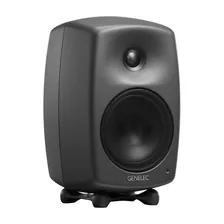 For a compact analog two-way monitor with excellent measured tonal balance, consider the Genelec 8030C: $1,750 per pair B&H Photo Video eBay
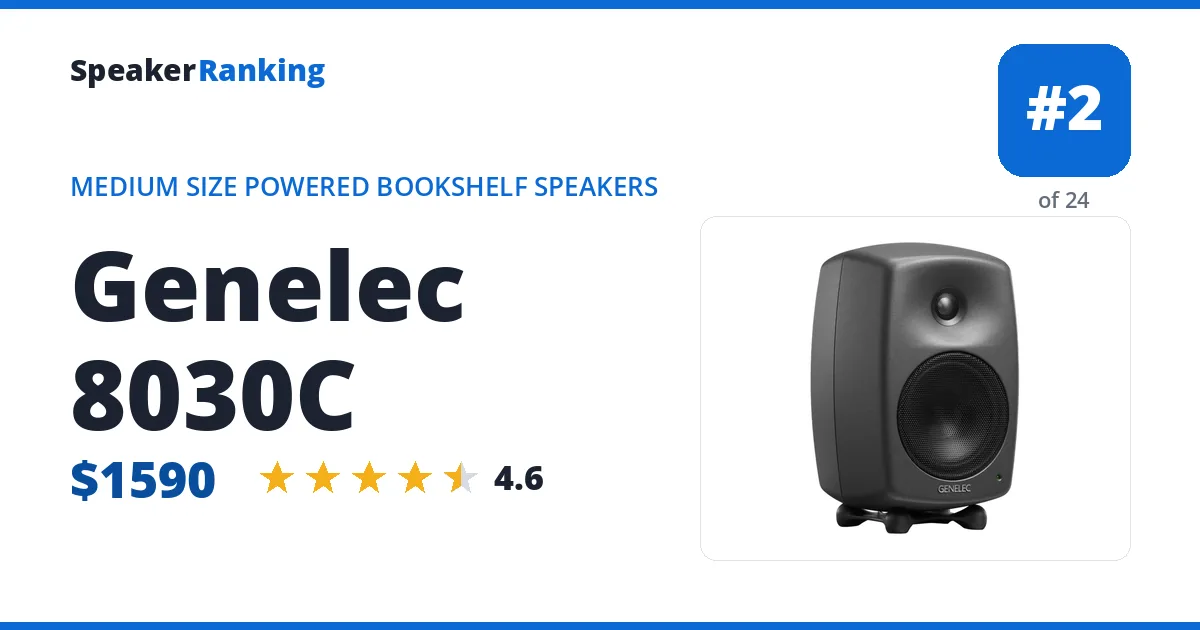
Pros: ASR’s Klippel measurements show a 1.9dB response span from 300Hz to 5kHz and smooth listening-window behavior. Predicted preference scores of 5.35 standalone and 7.60 with an ideal subwoofer support its high position for tonal accuracy. Broad, controlled horizontal radiation makes the balance relatively stable across a desk, and bass reaches -3dB around 56Hz. Measured bass extension of 59Hz (-3dB).
Cons: A dip around 2-3kHz remains, and vertical placement is less forgiving than the horizontal coverage suggests. Deep-bass headroom is limited; isolated high-output measurements at higher frequencies do not describe full-band loudness. The review found demanding bass material could cause audible distress beyond moderate levels. A subwoofer is useful for full-range monitoring.
Full Genelec 8030C review and specifications →
| AES Input | No |
|---|---|
| Amplifier Power | 100W (50W woofer + 50W tweeter) |
| App | No |
| Aux Input | No |
| Bass Extension (-10dB) | 47Hz (measured, Audio Science Review) |
| Bass Extension (-3dB) | 59Hz (measured, Audio Science Review) |
| Bluetooth | No |
| Coaxial Input | No |
| Dimensions | 11.7"H x 7.4"W x 7"D (297.2 x 188 x 177.8 mm) |
| Drivers | 5.1" woofer, 0.75" metal dome tweeter |
| EQ | Yes (Bass tilt, treble tilt, room response) |
| Frequency Response | 54Hz - 20kHz (±2.5dB) (Manufacturer specified) |
| HDMI Input | No |
| Inputs | XLR |
| Maximum SPL | 110dB @ 1m (manufacturer specified) |
| Optical Input | No |
| RCA Input | No |
| TRS Input | No |
| USB Input | No |
| Weight | 11 lbs (5 kg) each |
| XLR Input | Yes |
- Links
- Reviews, Comparisons and Sound Samples
- Head-to-Head Comparisons
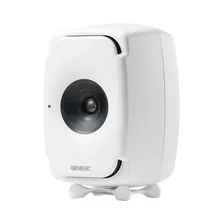 The highest-ranked compact three-way coaxial monitor, with Genelec GLM room correction support, is the Genelec 8331A: $4,500 per pair B&H Photo Video eBay
Pros: Erin’s Klippel measurements support its reference-monitor credentials: a 1.4dB response span from 300Hz to 5kHz, low listening-window and predicted-room irregularity, and preference scores of 5.91 standalone and 7.85 with an ideal subwoofer. The coaxial mid/tweeter and concealed woofers maintain coherent radiation as listening position changes. Bass reaches -3dB around 48Hz, and GLM adds level, delay and room-response calibration. Measured bass extension of 49Hz (-3dB).
Cons: Expensive, with studio-oriented XLR connectivity rather than consumer streaming. The compact woofers still limit deep-bass output, and the review reports protection muting when pushed beyond its operating range. GLM calibration hardware is an additional purchase. Its excellent tonal score does not remove the need for a subwoofer or larger monitor at demanding levels.
Full Genelec 8331A review and specifications →
| AES Input | Yes |
|---|---|
| Amplifier Power | 72W LF + 36W MF + 36W HF |
| Aux Input | No |
| Bass Extension (-10dB) | 39Hz (measured, Erin's Audio Corner) |
| Bass Extension (-3dB) | 49Hz (measured, Erin's Audio Corner) |
| Bluetooth | No |
| Coaxial Input | No |
| Dimensions | 12"H x 7.4"W x 8.3"D (305 x 189 x 212 mm) |
| Drivers | Dual 130x65mm woofers; 90mm coaxial mid; 19mm tweeter |
| Frequency Response | 45Hz - 37kHz (-6dB) (Manufacturer specified) |
| HDMI Input | No |
| Inputs | XLR, AES/EBU |
| Maximum SPL | 100dB at 3m before protection (measured, Erin's Audio Corner) |
| Optical Input | No |
| RCA Input | No |
| Spinorama Preference Score | 5.91 |
| Spinorama Preference Score with Perfect Sub | 7.85 |
| TRS Input | No |
| USB Input | No |
| Weight | 14.8 lbs (6.7kg) each |
| XLR Input | Yes |
- Links
- Reviews, Comparisons and Sound Samples
- Head-to-Head Comparisons
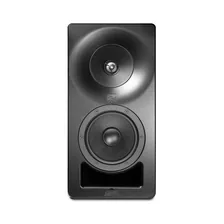 For a higher-output three-way nearfield with per-speaker DSP and network control, the Kali Audio SM-5: $3400 per pair B&H Photo Video eBay
Pros: Erin’s measurements show bass reaching -3dB around 43Hz and a 2.8dB midrange response span. The coaxial mid/tweeter and large waveguide give useful consistency horizontally and vertically, reducing sensitivity to listening height. Built-in per-speaker DSP and mounting options make placement flexible. Existing testing reports low midrange distortion at 96dB. Measured bass extension of 45Hz (-3dB).
Cons: Scores of 4.29 standalone and 6.23 with an ideal subwoofer are good but below the leading reference monitors, so its advanced driver layout does not justify a near-top ranking by itself. A small upper-midrange irregularity remains. The five-inch woofer and limiter constrain loud bass; the review places compression onset roughly in the 96-102dB/1m region.
Full Kali Audio SM-5 review and specifications →
| AES Input | Yes |
|---|---|
| Amplifier Power | 150W total |
| App | Kali Audio DSP software (free download) |
| Aux Input | No |
| Bass Extension (-10dB) | 39Hz (measured, Erin's Audio Corner) |
| Bass Extension (-3dB) | 45Hz (measured, Erin's Audio Corner) |
| Bluetooth | No |
| Coaxial Input | No |
| Dimensions | 15.7"H x 7.9"W x 9.8"D (400 x 200 x 250 mm) |
| Drivers | 1" coaxial tweeter, 4" coaxial midrange, 5" mid-bass woofer |
| EQ | Yes, per-speaker DSP |
| Frequency Response | 39Hz - 35kHz ±10dB (47Hz - 21kHz ±3dB, Manufacturer specified) |
| HDMI Input | No |
| Inputs | XLR/TRS, AES/EBU (BNC), RJ45 network control |
| Maximum SPL | 117dB (manufacturer specified) |
| Optical Input | No |
| RCA Input | No |
| Spinorama Preference Score | 4.29 |
| Spinorama Preference Score with Perfect Sub | 6.23 |
| TRS Input | Yes |
| USB Input | No |
| Weight | 20.9 lbs (9.5 kg) each |
| XLR Input | Yes |
- Links
- Reviews, Comparisons and Sound Samples
- Head-to-Head Comparisons
- Kali Audio SM-5 vs Kali Audio IN-5
- Kali Audio SM-5 vs IK Multimedia iLoud MTM
- Kali Audio SM-5 vs IK Multimedia iLoud MTM MKII
- Kali Audio SM-5 vs Vanatoo Transparent One Encore Plus
- Kali Audio SM-5 vs Pioneer DJ VM-50
- Kali Audio SM-5 vs KEF LS50 Wireless II
- Kali Audio SM-5 vs JBL 305P MKII
- Kali Audio SM-5 vs Airpulse A100
- See all 50 comparisons
Reference Monitors
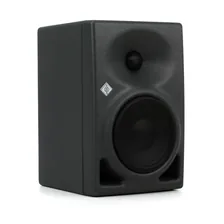 For a compact two-way reference monitor with excellent measured neutrality and MA 1 alignment support, consider the Neumann KH120 MKII: $2000 per pair B&H Photo Video eBay
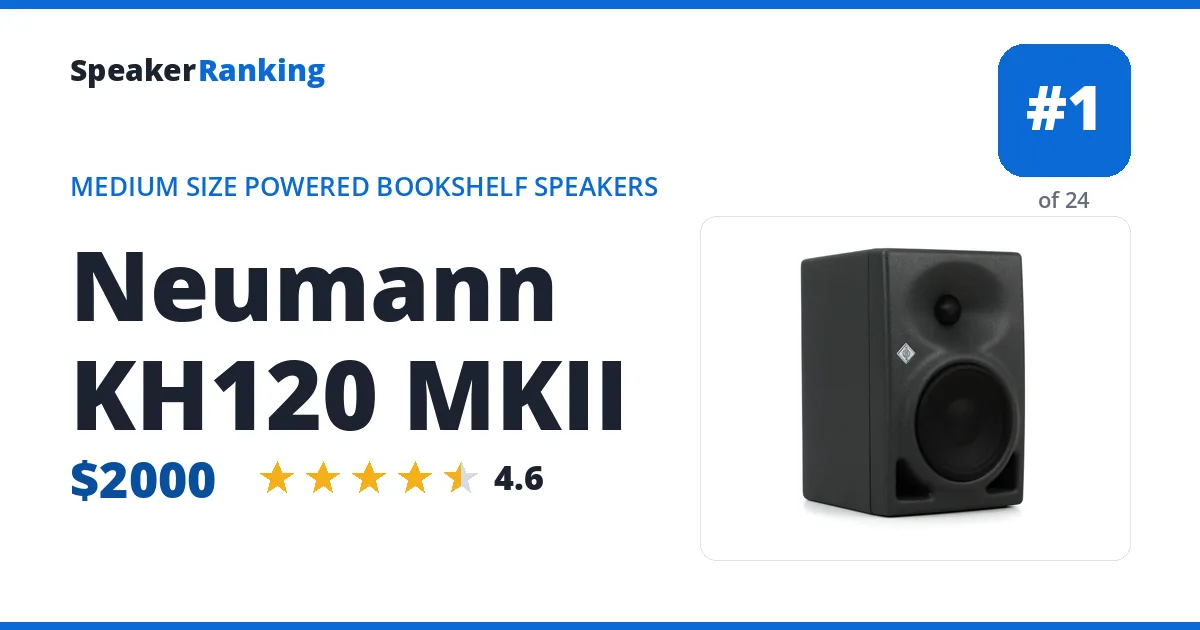
Pros: ASR’s Klippel data shows exceptional neutrality: only a 1.5dB span from 300Hz to 5kHz and low listening-window narrow-band deviation of 0.208. Scores of 5.75 standalone and 7.70 with an ideal subwoofer place it among the strongest measured options here. Bass reaches -3dB around 45Hz. The review reports very low distortion at 86dB/1m and clean performance outside deep bass at 96dB. Measured bass extension of 46Hz (-3dB).
Cons: Vertical crossover interference makes listening height important even though horizontal dispersion is well controlled. A small directivity irregularity remains around 2kHz. Distortion increases below about 50Hz at high output; a subwoofer can extend the system and reduce low-frequency demands. High price, and a flat anechoic response still needs suitable placement in the room.
Full Neumann KH120 MKII review and specifications →
| AES Input | No |
|---|---|
| Amplifier Power | 245W (145W woofer + 100W tweeter) |
| App | Yes (MA 1 alignment) |
| Aux Input | No |
| Bass Extension (-10dB) | 36Hz (measured, Audio Science Review) |
| Bass Extension (-3dB) | 46Hz (measured, Audio Science Review) |
| Bluetooth | No |
| Coaxial Input | No |
| DSP | Yes |
| Dimensions | 11.3"H x 7.2"W x 8.9"D (287 x 182.9 x 226.1 mm) |
| Drivers | 5.25" woofer, 1" titanium fabric dome tweeter |
| EQ | Yes (via DSP) |
| Frequency Response | 44Hz - 21kHz (±3dB) (Manufacturer specified) |
| HDMI Input | No |
| Inputs | XLR |
| Maximum SPL | 116.8dB @ 1m (manufacturer specified) |
| Optical Input | No |
| RCA Input | No |
| Spinorama Preference Score | 5.75 |
| Spinorama Preference Score with Perfect Sub | 7.70 |
| TRS Input | No |
| USB Input | No |
| Weight | 14.6 lbs (6.6 kg) each |
| XLR Input | Yes |
- Links
- Reviews, Comparisons and Sound Samples
- Head-to-Head Comparisons
- Neumann KH120 MKII vs Genelec 8030C
- Neumann KH120 MKII vs Genelec 8331A
- Neumann KH120 MKII vs Neumann KH80 DSP
- Neumann KH120 MKII vs Dynaudio LYD 5
- Neumann KH120 MKII vs Genelec 8330A
- Neumann KH120 MKII vs Genelec 8320A
- Neumann KH120 MKII vs Devialet Phantom II 98 dB
- Neumann KH120 MKII vs Topping MA4
- See all 51 comparisons
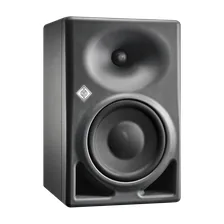 For more bass reach in a two-way design, with about 40 Hz extension (-3 dB) and MA 1 alignment support, consider the Neumann KH 150: $3,398 per pair B&H Photo Video eBay
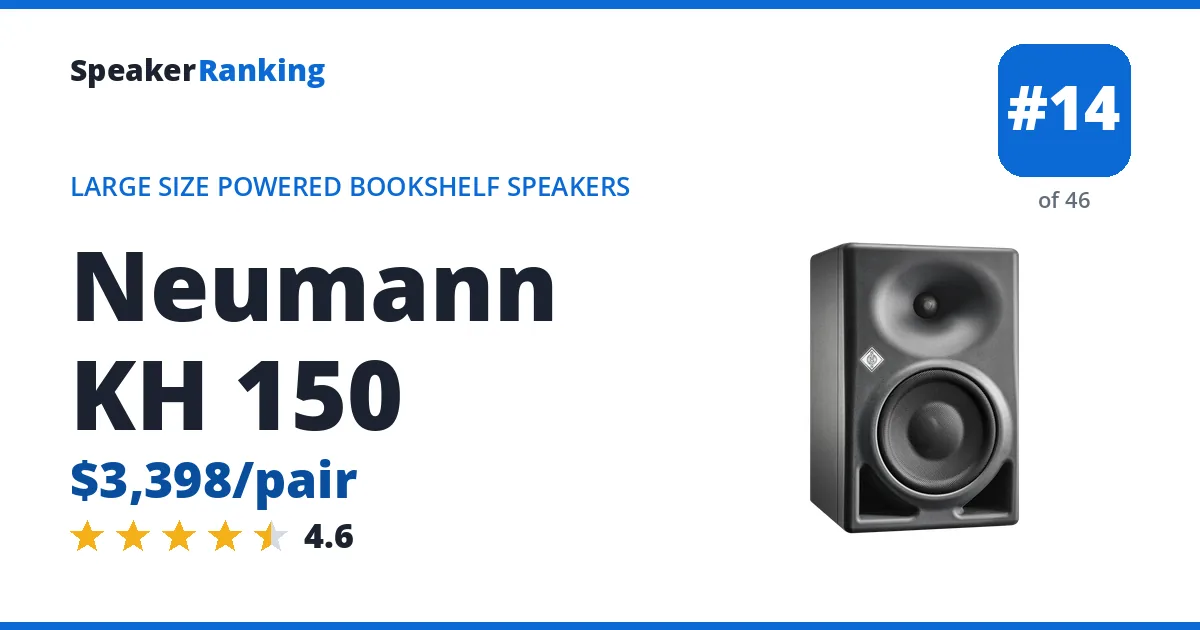
Pros: An exceptionally tight 1.0dB response span from 300Hz to 5kHz supports neutral vocals and instruments. The measured ideal-subwoofer score is 7.58, with -3dB bass extension to 39.6Hz. DSP and optional MA 1 alignment offer useful control over room-related response errors. Measured bass extension of 39.6Hz (-3dB).
Cons: A two-way nearfield monitor cannot match the largest three-way systems for deep-bass output at distance. Keep the tweeter near ear height to avoid crossover-related changes off the vertical axis. MA 1 calibration requires additional equipment, and studio connections are less convenient than a consumer streaming system.
Full Neumann KH 150 review and specifications →
| AES Input | No |
|---|---|
| Amplifier Power | 245W total (145W woofer, 100W tweeter, 10% THD+N) |
| Aux Input | No |
| Bass Extension (-10dB) | 34.2Hz (measured, Audio Science Review) |
| Bass Extension (-3dB) | 39.6Hz (measured, Audio Science Review) |
| Bluetooth | No |
| Coaxial Input | Yes |
| Country | Germany |
| Crossover Frequency | 1.7kHz |
| Dimensions | 13.6"H x 8.9"W x 10.7"D (345 x 225 x 273 mm) |
| Drivers | 1" tweeter, 6.5" woofer |
| Enclosure | ported |
| Frequency Response | 39Hz-20.4kHz +/-3dB |
| HDMI Input | No |
| Inputs | XLR (balanced analog), RCA S/PDIF (digital) |
| Maximum SPL | 118.7dB @ 1m half space (manufacturer specified) |
| Optical Input | No |
| RCA Input | Yes |
| Spinorama Preference Score | 5.84 |
| Spinorama Preference Score with Perfect Sub | 7.58 |
| TRS Input | No |
| USB Input | No |
| Warranty | 2 years |
| Weight | 17.6 lbs (8.0 kg) each |
| XLR Input | Yes |
- Links
- Reviews, Comparisons and Sound Samples
- Head-to-Head Comparisons
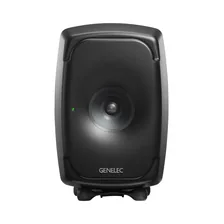 For a larger coaxial reference monitor with excellent directivity and GLM alignment support, consider the Genelec 8341A: $6590 per pair B&H Photo Video eBay
Pros: An 8.09 ideal-subwoofer preference score and 1.2dB response span from 300Hz to 5kHz place the measured vertical configuration among the strongest tonal performers here. Coaxial radiation and GLM support precise nearfield imaging and room integration. Measured bass extension of 58Hz (-3dB).
Cons: Measured -3dB extension is 47.6Hz, so the larger 8351B and 8361A provide more useful low-end reach and headroom. The review found bass-output limitations at demanding levels. Its excellent ideal-subwoofer score should not be read as equivalent full-range output to those larger models.
Full Genelec 8341A review and specifications →
| AES Input | Yes |
|---|---|
| Amplifier Power | 550W total (250W bass, 150W mid, 150W treble) |
| App | No |
| Aux Input | No |
| Bass Extension (-10dB) | 40Hz (measured, Audio Science Review) |
| Bass Extension (-3dB) | 58Hz (measured, Audio Science Review) |
| Bluetooth | No |
| Coaxial Input | No |
| DSP | No |
| Dimensions | 13.8" x 9.3" x 9.6" (351 x 237 x 243 mm) (H x W x D) |
| Drivers | 2x 6.5" woofers, 3.5" midrange, 0.75" tweeter (coaxial mid/tweeter) |
| EQ | Yes (Room adjustment) |
| Frequency Response | 338Hz - 37kHz (-6dB) (Manufacturer specified) |
| HDMI Input | No |
| Inputs | XLR, AES/EBU |
| Optical Input | No |
| RCA Input | No |
| Spinorama Preference Score | 6.32 |
| Spinorama Preference Score with Perfect Sub | 8.09 |
| TRS Input | No |
| USB Input | No |
| Weight | 21.6 lbs (9.8 kg) |
| XLR Input | Yes |
- Links
- Reviews, Comparisons and Sound Samples
- Head-to-Head Comparisons
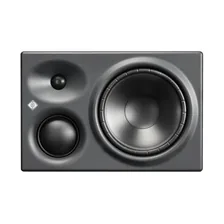 For a tri-amplified 3-way reference monitor between the KH120 MkII and KH420, the Neumann KH 310 A: $4,998 per pair B&H Photo Video eBay
Pros: The sealed three-way design combines 35.2Hz measured -3dB extension with low distortion in the review’s demanding playback tests. Its 2.2dB response span from 300Hz to 5kHz and 6.86 ideal-subwoofer score support balanced monitoring with useful full-range capability. Measured bass extension of 70Hz (-3dB).
Cons: Its measured tonal balance is not as even as the KH 150 or the best coaxial alternatives. Correct orientation and listening height matter for the separated drivers. The analog system lacks the integrated calibration workflow of newer DSP models, so room correction requires additional equipment.
Full Neumann KH 310 A review and specifications →
| AES Input | No |
|---|---|
| Amplifier Power | 290W total (150W woofer, 70W mid, 70W tweeter) |
| App | No |
| Aux Input | No |
| Bass Extension (-10dB) | 42Hz (measured, Audio Science Review) |
| Bass Extension (-3dB) | 70Hz (measured, Audio Science Review) |
| Bluetooth | No |
| Coaxial Input | No |
| DSP | No |
| Dimensions | 10" x 15.1" x 11.5" (253 x 383 x 292 mm) (H x W x D) |
| Drivers | 8.25" woofer, 3" midrange, 1" tweeter |
| EQ | No |
| Frequency Response | 34Hz - 21kHz (+/-3dB) (Manufacturer specified) |
| HDMI Input | No |
| Inputs | XLR (balanced analog) |
| Optical Input | No |
| RCA Input | No |
| Spinorama Preference Score | 5.36 |
| Spinorama Preference Score with Perfect Sub | 6.86 |
| TRS Input | No |
| USB Input | No |
| Weight | 28.7 lbs (13.0 kg) |
| XLR Input | Yes |
- Links
- Reviews, Comparisons and Sound Samples
- Head-to-Head Comparisons
- Neumann KH 310 A vs HEDD Type 20 MK2
- Neumann KH 310 A vs Genelec S360
- Neumann KH 310 A vs Adam Audio S2V
- Neumann KH 310 A vs JBL 308P MKII
- Neumann KH 310 A vs Buchardt A10
- Neumann KH 310 A vs Yamaha HS8
- Neumann KH 310 A vs Kali Audio LP-6 V2
- Neumann KH 310 A vs Kali Audio IN-8 V2
- See all 35 comparisons
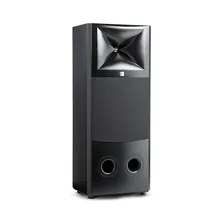 For studio-scale output with dedicated external amplification and DSP, the specialist choice is the JBL M2 Master Reference Monitor: $15,000 per pair JBL Professional Dealer Locator eBay
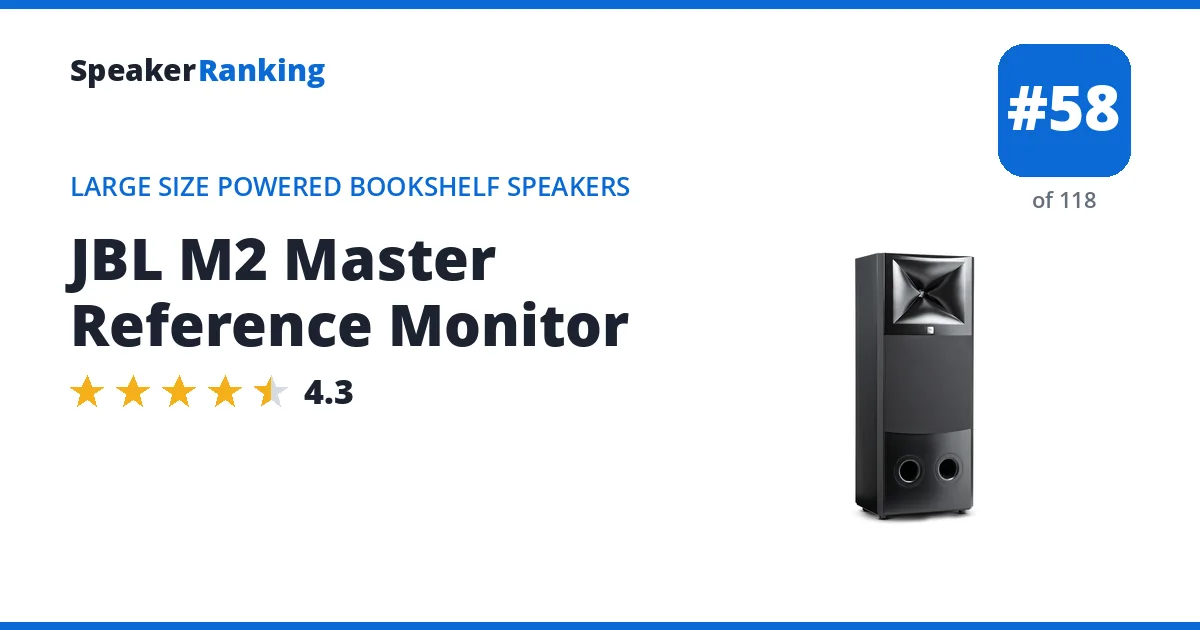
Pros: A high-output specialist: Erin’s low-distortion and compression tests support considerable dynamic capability, beyond what a single preference score captures. Measured -3dB extension is 33.7Hz. The large woofer and waveguide are particularly useful for greater listening distances. Measured bass extension of 34Hz (-3dB).
Cons: Its 4.1dB response span from 300Hz to 5kHz and 5.67 ideal-subwoofer score do not support a top tonal-accuracy ranking. It requires the correct external amplification and DSP rather than a simple built-in amplifier. The very large cabinet, installation cost and possible amplifier fan noise make it impractical for most desks.
Full JBL M2 Master Reference Monitor review and specifications →
| AES Input | No |
|---|---|
| Amplifier Power | External two-channel amplification and JBL DSP tuning required |
| Aux Input | No |
| Bass Extension (-10dB) | 21.0Hz (measured, Erin's Audio Corner) |
| Bass Extension (-3dB) | 34Hz (measured, Erin's Audio Corner) |
| Bluetooth | No |
| Coaxial Input | No |
| Crossover Frequency | 800Hz active DSP |
| Dimensions | 49.4"H x 20"W x 14"D (1256 x 508 x 355.6 mm) |
| Drivers | 15" 2216Nd woofer; D2 compression driver in Image Control Waveguide |
| Frequency Response | 20Hz - 40kHz (±3dB) (Manufacturer specified) |
| HDMI Input | No |
| Inputs | None (passive cabinet driven by a matched Crown amplifier via speaker-level connection) |
| Maximum SPL | 123dB manufacturer specified |
| Optical Input | No |
| RCA Input | No |
| Spinorama Preference Score | 4.83 |
| Spinorama Preference Score with Perfect Sub | 5.67 |
| TRS Input | No |
| USB Input | No |
| Weight | 130.1 lbs (59 kg) each |
| XLR Input | No |
- Links
- Reviews, Comparisons and Sound Samples
- Head-to-Head Comparisons
- JBL M2 Master Reference Monitor vs Genelec 8040B
- JBL M2 Master Reference Monitor vs JBL 708P
- JBL M2 Master Reference Monitor vs Klipsch The Nines
- JBL M2 Master Reference Monitor vs JBL 4305P
- JBL M2 Master Reference Monitor vs Genelec 8050B
- JBL M2 Master Reference Monitor vs Kali Audio IN-8 V2
- JBL M2 Master Reference Monitor vs Kali Audio LP-6 V2
- JBL M2 Master Reference Monitor vs Yamaha HS8
- See all 23 comparisons
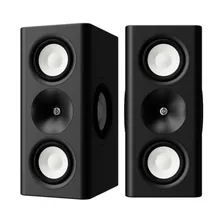 Our highest-ranked large powered bookshelf monitor, with even response and bass reaching about 31 Hz (-3 dB), is the AsciLab C8C: $6,200 per pair Audiophonics eBay
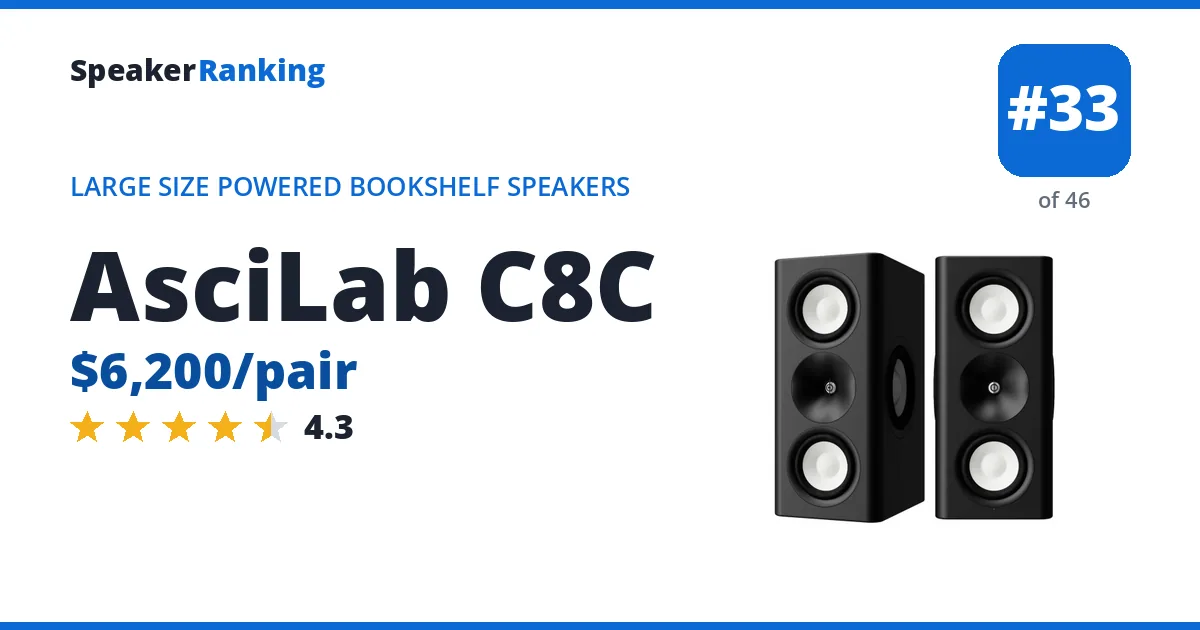
Pros: ASR’s revised measurement combines an 8.02 ideal-subwoofer preference score with a 1.7dB response span from 300Hz to 5kHz, supporting highly even vocal and instrumental balance. Bass reaches 30.8Hz at -3dB and 23.4Hz at -6dB, giving substantial low-end reach without an added subwoofer. Measured bass extension of 30.8Hz (-3dB).
Cons: The result applies to the revised measured configuration; confirm that the speaker’s tuning matches it. Each cabinet weighs about 27.5kg and needs a substantial stand. Deep extension and excellent tonality do not guarantee unlimited bass output or eliminate the need to adjust placement.
Full AsciLab C8C review and specifications →
| AES Input | Yes |
|---|---|
| Amplifier Power | 600W total (100W tweeter, 250W midrange, 250W subwoofer) |
| Aux Input | No |
| Bass Extension (-10dB) | 20.5Hz (measured, Audio Science Review) |
| Bass Extension (-3dB) | 30.8Hz (measured, Audio Science Review) |
| Bass Extension (-6dB) | 23.4Hz (measured, Audio Science Review) |
| Bluetooth | No |
| Coaxial Input | Yes |
| Country | South Korea |
| Crossover Frequency | 150Hz, 1.2kHz |
| Dimensions | 22"H x 10"W x 13.8"D (560 x 254 x 350 mm) |
| Drivers | 1" alumina ceramic dome tweeter with waveguide, 2x 6" alumina ceramic midrange/woofers, 2x 8" side mounted opposed cardioid subwoofers |
| Enclosure | sealed |
| Frequency Response | 30Hz - 20kHz (±1.5dB) (Manufacturer specified) |
| HDMI Input | No |
| Inputs | XLR, RCA, AES/EBU, Coaxial, Optical |
| Optical Input | Yes |
| RCA Input | Yes |
| Spinorama Preference Score | 7.25 |
| Spinorama Preference Score with Perfect Sub | 8.02 |
| TRS Input | No |
| USB Input | No |
| Warranty | 2 years |
| Weight | 60.6 lbs (27.5 kg) each |
| XLR Input | Yes |
- Links
- Reviews, Comparisons and Sound Samples
- Head-to-Head Comparisons
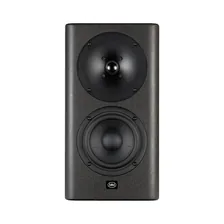 For exceptionally even midrange response, switchable cardioid operation and bass reaching about 37 Hz (-3 dB), consider the Mesanovic CDM65: $5,300 per pair Front End Audio eBay
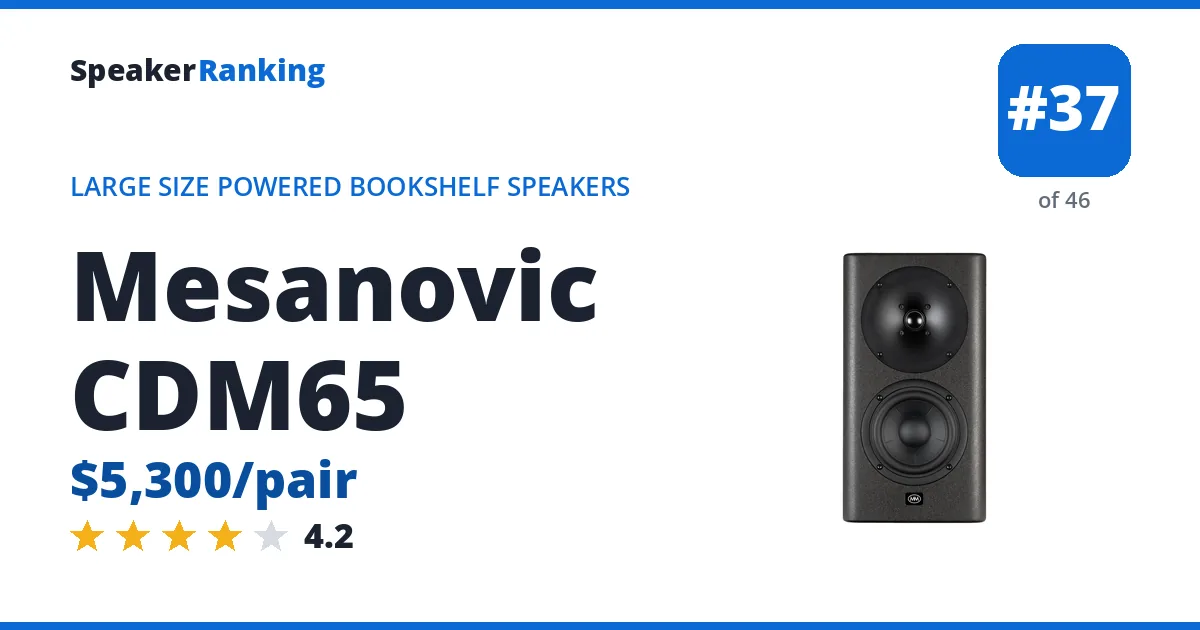
Pros: Erin’s measurements show a very even 1.1dB span from 300Hz to 5kHz and an 8.08 ideal-subwoofer preference score, strong evidence for natural tonal balance. Measured -3dB bass extension is 36.6Hz. Switchable cardioid operation offers useful control of rearward radiation; an optional WiSA hub adds wireless system integration. Measured bass extension of 36.6Hz (-3dB).
Cons: Cardioid operation and bass tuning affect placement and output, so use the appropriate mode for the room. A subwoofer is still useful for deep bass at high levels. These are substantial, roughly 14.5kg cabinets, and the optional hub adds cost rather than being necessary for wired playback.
Full Mesanovic CDM65 review and specifications →
| AES Input | No |
|---|---|
| Amplifier Power | 600W total (150W tweeter, 150W midrange, 300W subwoofers combined) |
| Aux Input | No |
| Bass Extension (-10dB) | 29.8Hz (measured, Erin's Audio Corner) |
| Bass Extension (-3dB) | 36.6Hz (measured, Erin's Audio Corner) |
| Bluetooth | No |
| Coaxial Input | No |
| Country | United States |
| Crossover Frequency | 150Hz, 2,300Hz |
| Dimensions | 15"H x 8"W x 14"D (381 x 203 x 356 mm) |
| Drivers | 1" aluminum dome waveguide tweeter, 5" aluminum cone midrange, 2x 6.5" paper Kevlar side mounted subwoofers |
| Enclosure | sealed |
| Frequency Response | 40Hz-20kHz +/-1.0dB |
| HDMI Input | No |
| Inputs | XLR (balanced analog), WiSA wireless |
| Maximum SPL | 103dB @ 1m (manufacturer specified) |
| Optical Input | No |
| RCA Input | No |
| Spinorama Preference Score | 6.58 |
| Spinorama Preference Score with Perfect Sub | 8.08 |
| TRS Input | No |
| USB Input | No |
| Warranty | 2 years |
| Weight | 32 lbs (14.5 kg) each |
| XLR Input | Yes |
- Links
- Reviews, Comparisons and Sound Samples
- Head-to-Head Comparisons
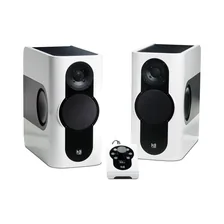 For a cardioid reference system with bass reaching about 29 Hz (-3 dB), consider the Kii THREE: $14,000 per pair Vintage King eBay
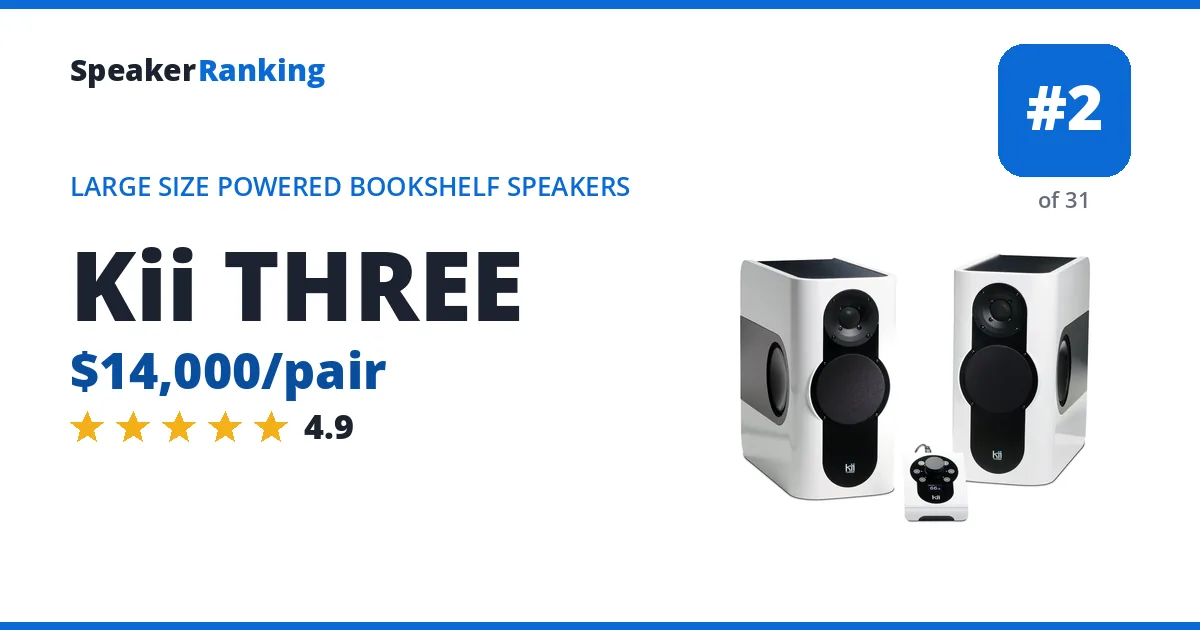
Pros: Exceptionally even measured balance: the 300Hz-5kHz response spans only 1.2dB, with preference scores of 7.06 standalone and 7.71 with an ideal subwoofer. Cardioid control reduces rearward low-midrange energy, while measured -3dB extension of 29.3Hz provides convincing full-range bass in a compact system. Measured bass extension of 28Hz (-3dB).
Cons: Deep-bass output has limits: demanding low-frequency material at high levels can trigger compression or audible distress. The reviewer preferred a small treble reduction, so the high score is not a promise of ideal tonal balance for every listener. Linear-phase operation adds latency, and the system is expensive.
Full Kii THREE review and specifications →
| AES Input | Yes |
|---|---|
| Amplifier Power | 1,500W total per speaker; Six Ncore channels |
| Aux Input | No |
| Bass Extension (-10dB) | 20.5Hz (measured, Erin's Audio Corner) |
| Bass Extension (-3dB) | 28Hz (measured, Erin's Audio Corner) |
| Bluetooth | No |
| Coaxial Input | No |
| Coverage | DSP-controlled cardioid above approximately 70-90Hz |
| DSP | Yes; boundary, contour, phase-exact and low-latency modes |
| Dimensions | 15.7"H x 7.9"W x 15.7"D |
| Drivers | Four 6.5" woofers; 5" midrange; 1" waveguided tweeter |
| Frequency Response | 20Hz - 20kHz (-6dB at 20Hz; ±0.5dB 100Hz-10kHz; ±1dB 10kHz-20kHz) (Manufacturer specified) |
| HDMI Input | No |
| Inputs | XLR (analog), XLR AES/EBU (digital), proprietary KiiLink digital multi-pin |
| Optical Input | No |
| RCA Input | No |
| Spinorama Preference Score | 7.06 |
| Spinorama Preference Score with Perfect Sub | 7.71 |
| TRS Input | No |
| USB Input | No |
| Weight | 42.1 lbs (19.1 kg) each |
| XLR Input | Yes |
- Links
- Reviews, Comparisons and Sound Samples
- Head-to-Head Comparisons
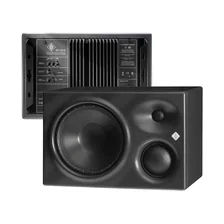 For a conventional large monitor with critical-mixing output and no price ceiling, the Neumann KH420: $10500 per pair B&H Photo Video eBay
Pros: A 1.2dB response span from 300Hz to 5kHz, 7.51 ideal-subwoofer score and 27.8Hz measured -3dB extension combine accurate mids with genuinely deep bass. Its three-way design and low distortion at normal levels make it particularly attractive for larger listening distances and dynamic material. Measured bass extension of 32Hz (-3dB).
Cons: It is a large, heavy studio monitor rather than an easy desktop speaker. Vertical alignment matters around the crossover regions. Bass distortion rises as playback levels increase, and the measured high-level limits still apply despite the substantial drivers and amplifiers.
Full Neumann KH420 review and specifications →
| AES Input | No |
|---|---|
| Amplifier Power | 555w Per Speaker |
| App | Yes (MA 1 alignment) |
| Aux Input | No |
| Bass Extension (-10dB) | 24Hz (measured, Audio Science Review) |
| Bass Extension (-3dB) | 32Hz (measured, Audio Science Review) |
| Bluetooth | No |
| Coaxial Input | No |
| DSP | No |
| Dimensions | 25.4"H x 13"W x 17.5"D (645.2 x 330.2 x 444.5 mm) |
| Drivers | 10" woofer, 4" dome midrange, 1" fabric dome tweeter |
| EQ | Yes (Room response controls) |
| Frequency Response | 31Hz - 21kHz (±3dB) (Manufacturer specified) |
| HDMI Input | No |
| Inputs | XLR |
| Maximum SPL | 124dB @ 1m (manufacturer specified) |
| Optical Input | No |
| RCA Input | No |
| Spinorama Preference Score | 6.39 |
| Spinorama Preference Score with Perfect Sub | 7.51 |
| TRS Input | No |
| USB Input | No |
| Weight | 77.2 lbs (35 kg) each |
| XLR Input | Yes |
- Links
- Reviews, Comparisons and Sound Samples
- Head-to-Head Comparisons
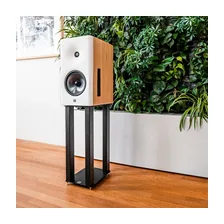 For a cardioid system with especially deep bass, reaching about 23 Hz (-3 dB), and boundary-aware setup, consider the Dutch & Dutch 8C: $13000 per pair Tidepoolaudio eBay
Pros: Very deep measured bass reaches 23.4Hz at -3dB, while the 1.8dB response span from 300Hz to 5kHz supports even mids. The 6.51 standalone score reflects that full-range strength. Cardioid midrange radiation and boundary-aware bass adjustment help integrate the system with nearby walls. Measured bass extension of 23Hz (-3dB), with a measured sensitivity of 106dB.
Cons: Cardioid operation reduces some reflections; it does not make the speaker independent of the room. Rear-woofer placement and setup remain important. Its 7.16 ideal-subwoofer score trails the strongest tonal performers here, although its deep native bass is a meaningful advantage for listening without a sub.
Full Dutch & Dutch 8C review and specifications →
| AES Input | No |
|---|---|
| Amplifier Power | 1000W (250W tweeter + 250W mid + 500W dual woofers) |
| App | Yes (Ascend) |
| Aux Input | No |
| Bass Extension (-10dB) | <20Hz (measured, Erin's Audio Corner) |
| Bass Extension (-3dB) | 23Hz (measured, Erin's Audio Corner) |
| Bluetooth | No |
| Coaxial Input | No |
| DSP | Yes |
| Dimensions | 19"H x 10.5"W x 15"D (482.6 x 266.7 x 381 mm) |
| Drivers | 2x 8" Aluminium Cone woofers, 8" Aluminium Cone midrange, 1" Aluminium/Magnesium dome tweeter |
| EQ | Yes (24-band parametric) |
| Frequency Response | 20Hz - 20kHz (Manufacturer specified) |
| HDMI Input | No |
| Inputs | XLR |
| Maximum SPL | 106dB @ 1m continuous (manufacturer specified) |
| Optical Input | No |
| RCA Input | No |
| Sensitivity | ~106dB (measured at 0.30V/1m, Erin's Audio Corner) |
| Streaming Services | Yes (network streaming) |
| TRS Input | No |
| USB Input | No |
| Weight | 57.3 lbs (26 kg) each |
| Wi-Fi | Yes (Ethernet) |
| XLR Input | Yes |
- Links
- Reviews, Comparisons and Sound Samples
- Head-to-Head Comparisons
- Dutch & Dutch 8C vs Aalto Speakers Aalto 3 Active Pro
- Dutch & Dutch 8C vs Genelec 8361A
- Dutch & Dutch 8C vs Neumann KH420
- Dutch & Dutch 8C vs Kii THREE
- Dutch & Dutch 8C vs Yamaha HS8
- Dutch & Dutch 8C vs Kali Audio LP-6 V2
- Dutch & Dutch 8C vs Kali Audio IN-8 V2
- Dutch & Dutch 8C vs JBL M2 Master Reference Monitor
- See all 13 comparisons
Where To Go Next
Full rankings with specs and measurements: powered bookshelf small, medium and large.
Related picks: best powered speakers for a desk, best budget powered speakers, and the powered speaker buyer’s guide. Room treatment matters more than most upgrades, see how room acoustics affects speakers.