Coverage note. Speaker Ranking currently covers 29 KEF models across portable bluetooth speakers, powered speakers, passive speakers and subwoofers. These are the products in our database, not a complete list of everything KEF makes.
This page lists all 29 KEF speakers ranked on this site, each showing where it places in its category. KEF’s strength here is passive speakers, where it takes second place in both the bookshelf and floorstanding rankings.
Uni-Q is the reason the measurements look the way they do. KEF mounts the tweeter in the acoustic centre of the midrange cone, so both drivers radiate from the same point. The practical result is unusually consistent off-axis behaviour: the sound arriving at your ears after bouncing off the side walls resembles the sound arriving directly, which is most of what makes a speaker sound the same across a room and across seats. It is the single most consistent engineering advantage in this list, and it shows up in the directivity plots on nearly every KEF entry.
The trade is bass and price. KEF bookshelf speakers are consistently bass-light for their size. The LS50 Meta reaches an F3 of 67 Hz and an F10 of 42 Hz, which is to say it does not meaningfully play below 50 Hz in-room. That is a design choice in service of the midrange, not a defect, but it means most KEF bookshelves want a subwoofer, and you should budget for one. See the subwoofer buyer’s guide.
Price is the other constraint. The Reference 1 Meta is roughly four times the cost of the similarly sized R3 Meta, which measures very nearly as well. The R and Q series are where the value sits.
The active and lifestyle range (LSX, LS60, KC62) puts Uni-Q into powered and streaming products. They are convenient and well-finished; the KC62 in particular is bought for its size rather than its output, and measures accordingly.
Prices on this page were last checked September 22, 2026 at 5:11 AM UTC. Product prices and availability are accurate as of that date/time and are subject to change; the price and availability shown on Amazon at the time of purchase will apply to the purchase of this product.
As an eBay Partner, we may be compensated if you make a purchase.
Medium Size Portable Bluetooth Speakers
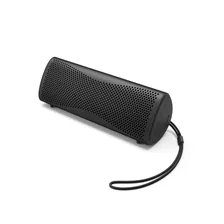 Ranked #76 of 142 in Medium Size Portable Bluetooth Speakers - KEF Muo gen2: $249.99 Amazon eBay
Pros: KEF seemed to have fixed the rolled off treble and overall balance
Cons: Lacking deeper bass. Very thuddy bass. Appears to be the exact same hardware but with updated tuning. Bass distorts as volume increases, and the claimed 43Hz extension is really only audible at low listening volumes, with a few seconds of lag after volume changes. Loses most of its bass off-axis. Customer reviews are mixed, ranging from praise for detail at low volume to complaints of a boxy, hollow sound.
Full KEF Muo gen2 review and specifications →
| Amplifier Power | 40W |
|---|---|
| App | Yes |
| Aux Input | No |
| Battery Life | 24 hours (Manufacturer specified) |
| Bluetooth Codecs | SBC, aptX Adaptive up to 48 kHz 24 bit |
| Bluetooth Version | 5.4 |
| Digital Aux Input | Yes (USB-C) |
| Dimensions | 8.5" x 3.2" x 2.3" (216 x 82 x 59 mm) |
| Drivers | 1x 58x117mm racetrack woofer, 1x 20mm tweeter |
| EQ | Yes |
| Frequency Response | 43Hz - 20kHz (Manufacturer specified) |
| IP Rating | IP67 |
| Maximum SPL | 90dB (Manufacturer specified) |
| Omnidirectional | No |
| Party Mode | Yes (Auracast) |
| Power Input | USB-C |
| Stereo | Yes |
| TWS | Yes |
| Weight | 1.6 lbs (740 g) |
- Links
- Reviews, Comparisons and Sound Samples
- Head-to-Head Comparisons
Medium Size Powered Bookshelf Speakers
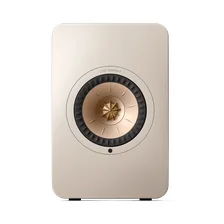 Ranked #14 of 65 in Medium Size Powered Bookshelf Speakers - KEF LS50 Wireless II: $2,999.00 per pair Amazon KEF Crutchfield eBay
Pros: Erin’s measurements give preference scores of 4.52 standalone and 6.59 with an ideal subwoofer, with a -3dB point around 51Hz. The coincident Uni-Q layout helps preserve tonal consistency across horizontal and vertical listening positions. Low listening-window narrow-band deviation of 0.308 supports relatively clean midrange reproduction. HDMI eARC and streaming functions make it a capable all-in-one stereo system. Measured bass extension of 51.3Hz (-3dB).
Cons: The 3.0dB response span is good but not reference-leading, and dispersion still varies with frequency. Compact bass drivers limit deep-bass output. App placement adjustments are not the same as microphone-based automatic room correction. The price and primary/secondary architecture are practical trade-offs; neither driver geometry nor a single directivity statistic guarantees the best sound in every room.
Full KEF LS50 Wireless II review and specifications →
| AES Input | No |
|---|---|
| Amplifier Power | 280W (LF) + 100W (HF) per speaker, bi-amped |
| App | KEF Connect (placement EQ presets, source selection, firmware updates) |
| Aux Input | Yes |
| Bass Extension (-10dB) | 41.5Hz (measured, spinorama.org) |
| Bass Extension (-3dB) | 51.3Hz (measured, spinorama.org) |
| Bluetooth | Yes, 4.2 |
| Coaxial Input | Yes |
| Dimensions | 12" x 7.9" x 12.2" (305 x 200 x 311 mm) each |
| Drivers | Uni-Q coincident array: 130mm aluminum woofer + 25mm MAT aluminum dome tweeter |
| EQ | Yes, fixed placement presets (desk/bookshelf/wall-mount) - no automatic room correction |
| Frequency Response | 45Hz - 28kHz ±3dB |
| HDMI Input | Yes |
| Inputs | HDMI eARC, optical, digital coaxial, 3.5mm analog, USB-A (service), Ethernet |
| Maximum SPL | 108dB at 1m (manufacturer specified) |
| Optical Input | Yes |
| Outputs | RCA subwoofer |
| RCA Input | No |
| Spinorama Preference Score | 4.52 |
| Spinorama Preference Score with Perfect Sub | 6.59 |
| Subwoofer Output | Yes |
| TRS Input | No |
| USB Input | No |
| Weight | 44.3 lbs (20.1 kg) for the pair |
| XLR Input | No |
- Links
- Reviews, Comparisons and Sound Samples
- Head-to-Head Comparisons
- KEF LS50 Wireless II vs JBL 305P MKII
- KEF LS50 Wireless II vs Vanatoo Transparent One Encore Plus
- KEF LS50 Wireless II vs IK Multimedia iLoud MTM MKII
- KEF LS50 Wireless II vs Klipsch The Fives
- KEF LS50 Wireless II vs Genelec 8020D
- KEF LS50 Wireless II vs Kali Audio SM-5
- KEF LS50 Wireless II vs Devialet Phantom II 98 dB
- KEF LS50 Wireless II vs Kali Audio IN-5
- See all 44 comparisons
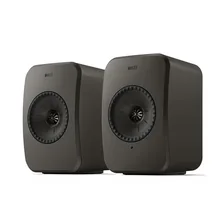 Ranked #26 of 65 in Medium Size Powered Bookshelf Speakers - KEF LSX II LT: $549.99 per pair Amazon eBay
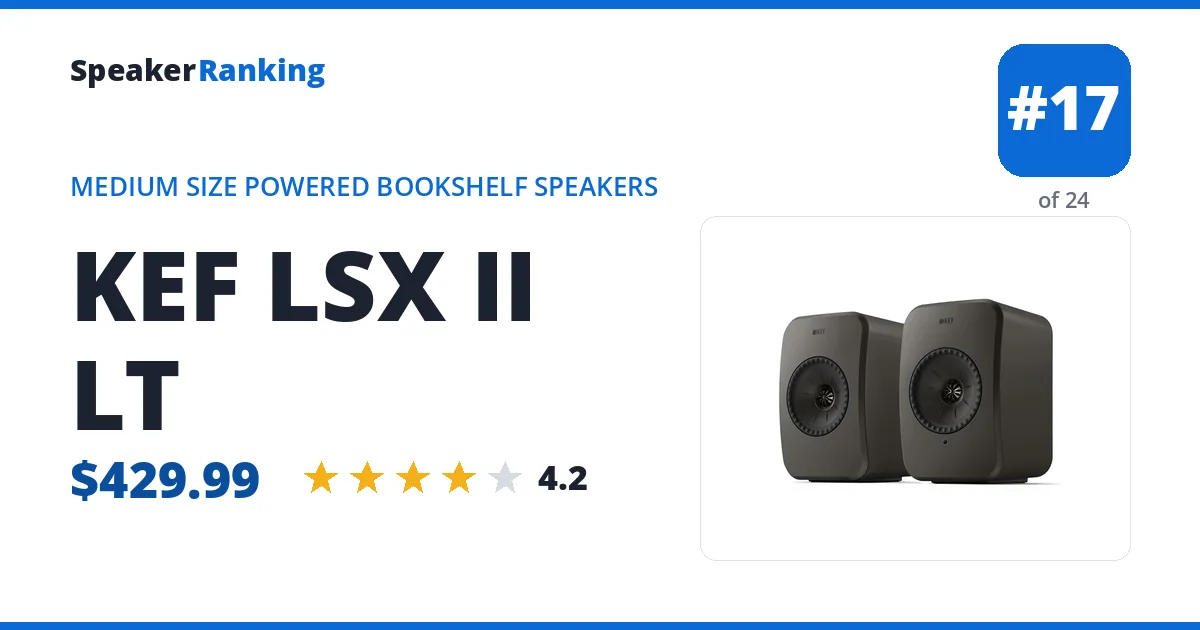
Pros: The coincident driver provides useful consistency across listening positions, and the app offers placement and subwoofer adjustments. Erin’s measurements give preference scores of 3.93 standalone and 6.16 with an ideal subwoofer, with -3dB bass around 56Hz. HDMI and USB connectivity make it convenient for a small TV or desktop system. Measured bass extension of 55Hz (-3dB), with a measured sensitivity of 84dB.
Cons: The 3.4dB midrange response span and treble-region dips keep it below more neutral monitors. The existing review finds bass compression around 88-92dB/1m and rising distortion at higher levels, so the small drivers suit close listening rather than a large room. This LT version has no analog input; a turntable cannot plug straight into it.
Full KEF LSX II LT review and specifications →
| AES Input | No |
|---|---|
| Amplifier Power | 100w RMS Per Speaker |
| App | No |
| Aux Input | No |
| Bass Extension (-10dB) | 46Hz (measured, Erin's Audio Corner) |
| Bass Extension (-3dB) | 55Hz (measured, Erin's Audio Corner) |
| Bluetooth | No |
| Coaxial Input | No |
| Dimensions | 9.5"H x 6.1"W x 7.1"D (241.3 x 154.9 x 180.3 mm) |
| Drivers | 115mm (4.5in.) magnesium/aluminium alloy cone woofer, 19mm (0.75in.) aluminium dome tweeter |
| EQ | No |
| Frequency Response | 54Hz - 28kHz (±3dB) (Manufacturer specified) |
| HDMI Input | Yes |
| Inputs | Wifi, USB-C, HDMI, Optical, Bluetooth |
| Optical Input | Yes |
| Outputs | RCA Subwoofer |
| RCA Input | No |
| Sensitivity | 84dB (measured at 0.3V/1m, Erin's Audio Corner) |
| Spinorama Preference Score | 3.26 |
| Spinorama Preference Score with Perfect Sub | 5.62 |
| Subwoofer Output | Yes |
| TRS Input | No |
| USB Input | Yes |
| Weight | 15 lbs (6.8 kg) |
| XLR Input | No |
- Links
- Reviews, Comparisons and Sound Samples
- Erin’s Audio Corner: Transform Your Sound System with the KEF LSX II LT Speaker More from Erin’s Audio Corner →
- Erin’s Audio Corner Website: KEF LSX II LT
- Erin’s Audio Corner Measurements (spinorama.org)
- Jasper Tech: Best Desktop Computer Speakers for Every Budget – 2026 More from Jasper Tech →
- Jasper Tech: Best Bookshelf Speakers For TV & Gaming - 2025
- Jasper Tech: Best Powered Bookshelf Speakers for Every Budget - 2025
- Head-to-Head Comparisons
Large Size Powered Floorstanding Speakers
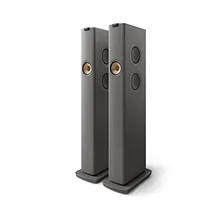 Ranked #1 of 6 in Large Size Powered Floorstanding Speakers - KEF LS60: $5,999.99 per pair Amazon Crutchfield eBay
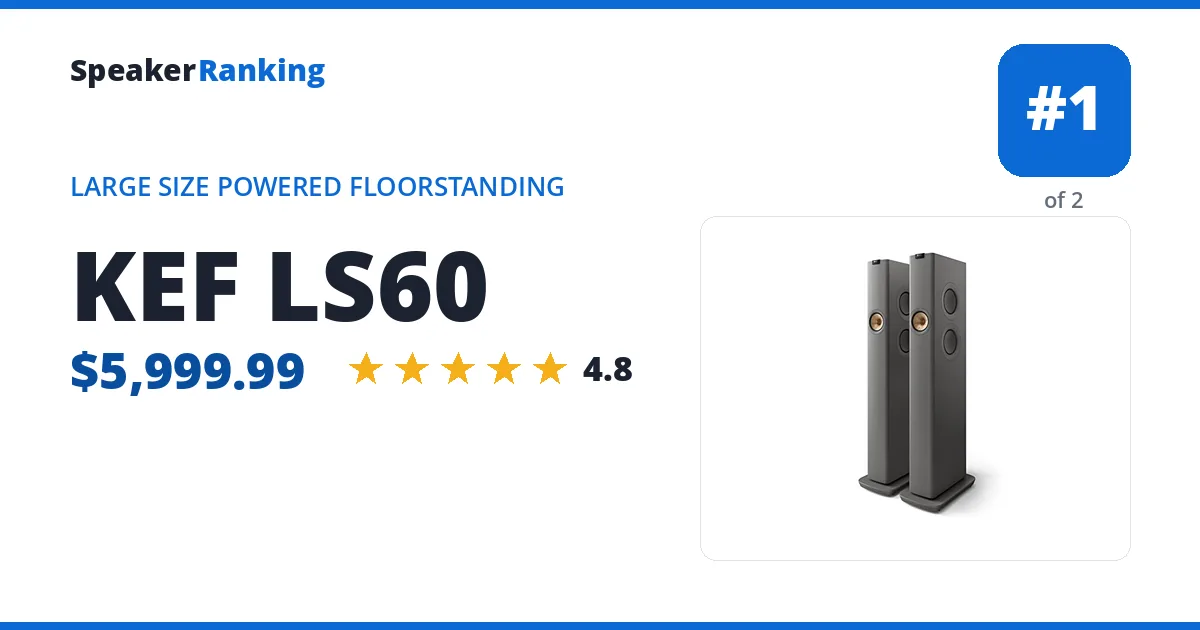
Pros: Erin’s on-axis measurement combines a 1.9dB response span from 300Hz to 5kHz with a 7.22 ideal-subwoofer preference score, supporting even vocal and instrumental balance. Extended-mode bass reaches roughly 25Hz at -3dB. The coaxial Uni-Q arrangement maintains unusually consistent tonality across listening positions, while HDMI, digital and analog inputs plus network streaming make this a convenient complete music and TV system. Measured bass extension of 23Hz (-3dB), with a measured sensitivity of 97.7dB.
Cons: A diffraction dip around 9kHz can soften cymbal shimmer when aimed directly at the listener; 10-20 degrees of toe-out helps. DSP limiting reduces bass reach and dynamic output at high volume, so its deep low-level extension is not a promise of the same performance on loud peaks. App placement and tone controls are less flexible than parametric room correction. Each roughly 31kg tower is awkward to move.
Full KEF LS60 review and specifications →
| AES Input | No |
|---|---|
| Amplifier Power | 700W (500W LF Class D + 100W MF Class D + 100W HF Class AB) |
| App | Yes (KEF Connect) |
| Aux Input | No |
| Bass Extension (-10dB) | <20Hz (measured, Erin's Audio Corner) |
| Bass Extension (-3dB) | 23Hz (measured, Erin's Audio Corner) |
| Bluetooth | Yes (5.0 with SBC, AAC) |
| Bluetooth Codecs | SBC, AAC |
| Coaxial Input | Yes |
| DSP | Yes (Music Integrity Engine) |
| Dimensions | 42.9"H x 8.3"W x 15.5"D (1089.7 x 210.8 x 393.7 mm) |
| Drivers | 4 x 135 mm (5.25 in.) Uni-Core Force Cancelling Driver: woofers, 100 mm (4in.) aluminium cone midrange, 19 mm (0.75 in.) vented aluminium dome with Metamaterial Absorption Technology tweeter |
| EQ | Yes (Normal and Expert modes, room adaptation) |
| Frequency Response | 31Hz - 24kHz (±3dB) (Manufacturer specified) |
| HDMI Input | Yes |
| Inputs | Wifi, Optical, Digital coaxial, RCA, HDMI eARC, Ethernet |
| Maximum SPL | 111dB @ 1m (pink noise) (manufacturer specified) |
| Optical Input | Yes |
| Outputs | Subwoofer RCA |
| RCA Input | Yes |
| Sensitivity | 97.7dB (measured at 0.3V/1m, Erin's Audio Corner) |
| Spinorama Preference Score | 6.57 |
| Spinorama Preference Score with Perfect Sub | 7.22 |
| Streaming Services | Yes (AirPlay 2, Chromecast, Roon Ready, Spotify Connect, Tidal Connect, Amazon Music, Qobuz, Deezer) |
| Subwoofer Output | Yes |
| TRS Input | No |
| USB Input | No |
| Weight | 69 lbs (31.3 kg) each |
| Wi-Fi | Yes (dual-band) |
| XLR Input | No |
- Links
- Reviews, Comparisons and Sound Samples
- Head-to-Head Comparisons
Medium Size Bookshelf Speakers
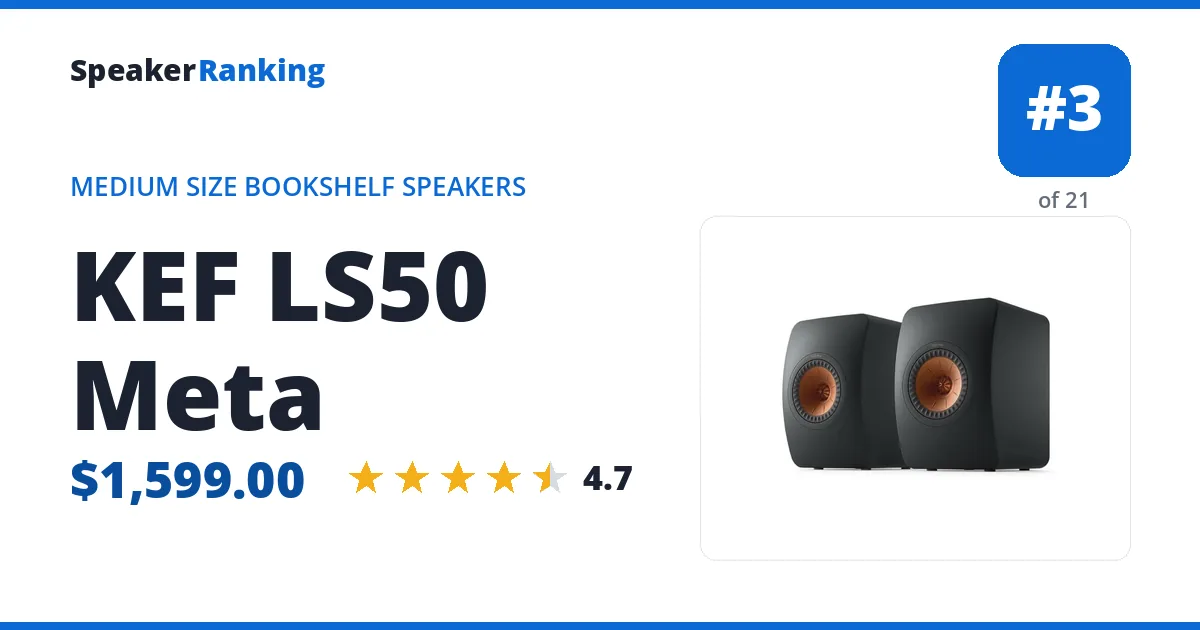
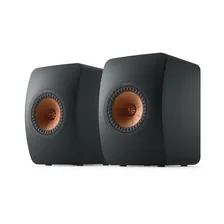 Ranked #4 of 88 in Medium Size Bookshelf Speakers - KEF LS50 Meta: $1,599.00 per pair Amazon Crutchfield eBay
Pros: Uni-Q concentric driver mounts a 1” vented aluminum dome tweeter at the center of a 5.25” aluminum cone woofer, rated 79Hz-20kHz+. Speaker-to-speaker matching measured tight at roughly 0.5dB deviation between the pair tested, versus 2-3dB seen on some other speakers - likely why imaging stayed so precise. Imaging stays tight and focused even toed out, unlike most coincident designs where toe-out typically diffuses the image, giving more of an oval-shaped soundstage than a hard rectangular boundary. Horizontal and vertical directivity both hold to about ±50° at the -6dB point, so tonality stays consistent across roughly a 100° listening cone. The extended bass shelf is deliberately tuned for near-wall/boundary placement rather than the usual “pull it 3 feet into the room” advice, playing lower without excess boominess when placed close to a wall. At $1,000 (a frequent sale price versus $1,600 list), called a no-brainer for a compact stand-mount speaker. Independent ASR Klippel measurements corroborate this: very good directivity with the on- and off-axis curves tracking closely, and a predicted in-room response the reviewer called “very close to ideal.”. Measured bass extension of 68Hz (-3dB), with a measured sensitivity of 83dB.
Cons: F3 of 67Hz and F10 of 42Hz mean it doesn’t get much below 50Hz in-room; a subwoofer is recommended for real bass. A 2-3dB scoop around 2-4kHz shows up in both the listening window and sound power measurements, matching a subjectively noticed lack of attack and vocal clarity that the reviewer wanted to correct with about 2dB of EQ. An on-axis diffraction dip around 8kHz smooths out with about 15° of toe-out (typical for concentric designs, but still present at 0°). Distortion is elevated at low frequencies since the single 5.25” cone shares surface area with the tweeter housing, reducing effective radiating area; multitone distortion crosses the 3% threshold at 96dB/1m, making roughly 88dB or below the safer output ceiling. Moderate sensitivity (~83dB average) needed 2-3dB more amplifier gain than typical in testing. Adding a subwoofer at an 80Hz crossover only helps lower-midrange distortion, not the elevated distortion in the 1-2kHz and above-5kHz regions. ASR’s own Klippel testing found the same pattern in starker terms: THD is very good at 86dB SPL/1m but climbs past 100% in the bass at 96dB SPL/1m, confirming this is not a near-field speaker for high-output bass-heavy material. Cumulative spectral decay (waterfall) also shows a couple of resonances lingering in the 1-2kHz region.
Full KEF LS50 Meta review and specifications →
| Bass Extension (-10dB) | 43Hz (measured, Erin's Audio Corner) |
|---|---|
| Bass Extension (-3dB) | 68Hz (measured, Erin's Audio Corner) |
| Dimensions | 11.9"H x 7.9"W x 11"D (302 x 200 x 280.5 mm) |
| Drivers | 130 mm (5.25 in.) aluminium cone woofer, 25 mm (1 in.) vented aluminium dome with Metamaterial Absorption tweeter |
| Impedance | 8 ohms nominal (3.7 ohms minimum above 80Hz, measured by Erin's Audio Corner) |
| Sensitivity | 83dB (measured average, Erin's Audio Corner; 85dB manufacturer specified) |
| Spinorama Preference Score | 4.88 |
| Spinorama Preference Score with Perfect Sub | 7.02 |
| Weight | 17.2 lbs (7.8 kg) each |
| Woofer Cabinet | ported, rear |
- Links
- Reviews, Comparisons and Sound Samples
- Erin’s Audio Corner: Unveiling the KEF LS50 Meta: The Truth Behind the Hype More from Erin’s Audio Corner →
- Erin’s Audio Corner Website KEF LS50 Meta
- Audio Science Review KEF LS50 Meta More from Audio Science Review →
- GR-Research: KEF LS50 Meta! Worthy of HYPE? More from GR-Research →
- Erin’s Audio Corner: My Top Picks of 2023: Must-Haves Under $3000
- Erin’s Audio Corner Measurements (spinorama.org)
- Head-to-Head Comparisons
- KEF LS50 Meta vs Ascend Sierra 1 v2
- KEF LS50 Meta vs Ascend Acoustics Luna V2 Mini-Monitor Ribbon
- KEF LS50 Meta vs Philharmonic Ceramic Mini
- KEF LS50 Meta vs XMechanik Mechano23 DIY
- KEF LS50 Meta vs Audio First Fidelia
- KEF LS50 Meta vs Ascend Acoustics HTM-200SE2
- KEF LS50 Meta vs Arendal 1961 Monitor
- KEF LS50 Meta vs SunAudio Purified 4
- See all 86 comparisons
Large Size Bookshelf Speakers
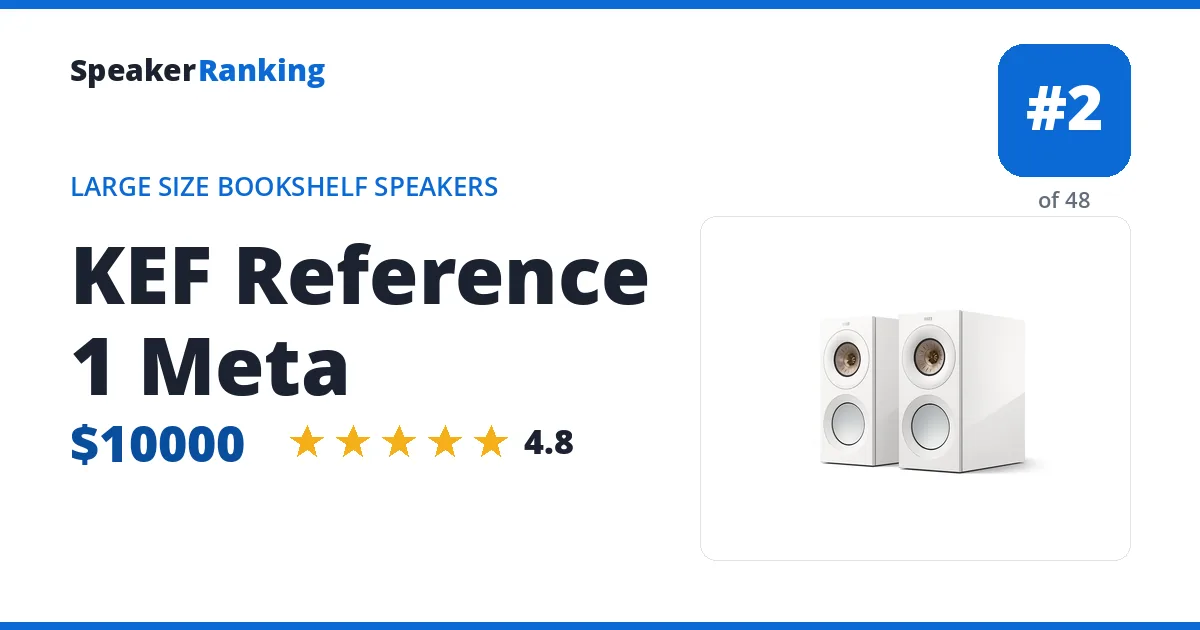
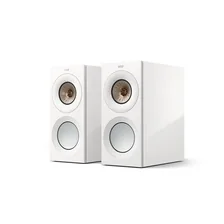 Ranked #3 of 130 in Large Size Bookshelf Speakers - KEF Reference 1 Meta: $10000 per pair Kef eBay
Pros: Meta technology places a Helmholtz-style resonator behind the tweeter to absorb rear-radiated resonance, and pair matching is within about ±0.5dB - unusually tight for a passive speaker. Sounds most neutral pointed straight on-axis rather than toed out, with no 5-8kHz harshness of the kind that plagues many speakers marketed as “detailed.” One of the most three-dimensional soundstages the reviewer has heard from a passive speaker, beaten only by $13,000+ active Xmachina Pulsar MK2 monitors (though this speaker’s tonality was preferred). Distortion stays below 1% down to about 70Hz at 86dB, and below 1% to ~150Hz / below 3% to ~70Hz even at 96dB. High-frequency response holds essentially flat as volume increases - no audible crossover or voice-coil compression - giving strong dynamic range up to its output limit (about 98dB at 3.5 meters before the woofer starts running out of excursion). All-passive design still measures ±1.5dB from 80Hz to 16kHz with zero DSP. Swappable dual-port system (long port for near-wall placement, short port for out-into-the-room placement with more bass extension) lets you tune bass behavior to where the speaker actually sits. Measured bass extension of 52Hz (-3dB), with a measured sensitivity of 82.5dB.
Cons: At roughly $10000/pair, nearly four times the cost of the similarly-sized KEF R3. Radiation narrows from about ±60° in the midrange to ±50° at high frequency - tighter than the reviewer’s ~70° preference (though wider than the R3’s ~±40°); toeing the speakers out for more width sacrifices treble energy that then needs EQ to restore. Moderate-to-low sensitivity (measured 83-84dB) calls for a solid amplifier. In-room bass only extends to about 40Hz, so a subwoofer is worth adding for bass-heavy material at higher volumes or listening beyond 3-4 meters. Minor directivity mismatch around 2kHz shows up in measurements, likely a vertical diffraction effect that wasn’t fully explained. Bass port choice (long vs. short) meaningfully changes the sound depending on placement, so the wrong port for your room can leave the bass sounding off until you experiment.
Full KEF Reference 1 Meta review and specifications →
| Bass Extension (-10dB) | 32Hz (measured, Erin's Audio Corner) |
|---|---|
| Bass Extension (-3dB) | 52Hz (measured, Erin's Audio Corner) |
| Dimensions | 17.3"H x 8.1"W x 16.6"D (439.4 x 205.7 x 421.6 mm) |
| Drivers | 165 mm (6.5 in.) aluminium cone woofer, 125 mm (5 in.) aluminium cone midrange, 25 mm (1 in.) aluminium dome with MAT tweeter |
| Impedance | 4 ohms nominal, 2.9 ohms minimum (measured, Erin's Audio Corner) |
| Sensitivity | 82.5dB (measured average, Erin's Audio Corner) |
| Spinorama Preference Score | 5.84 |
| Spinorama Preference Score with Perfect Sub | 7.65 |
| Weight | 40.1 lbs (18.2 kg) each |
| Woofer Cabinet | ported, rear |
- Links
- Reviews, Comparisons and Sound Samples
- Head-to-Head Comparisons
- KEF Reference 1 Meta vs GR-Research NX-Studio
- KEF Reference 1 Meta vs Perlisten S4b
- KEF Reference 1 Meta vs March Audio Sointuva AWG
- KEF Reference 1 Meta vs AsciLab C6B
- KEF Reference 1 Meta vs Audio First Cadentia 3
- KEF Reference 1 Meta vs Revel M106
- KEF Reference 1 Meta vs KEF R3 Meta
- KEF Reference 1 Meta vs KEF Q Concerto Meta
- See all 47 comparisons
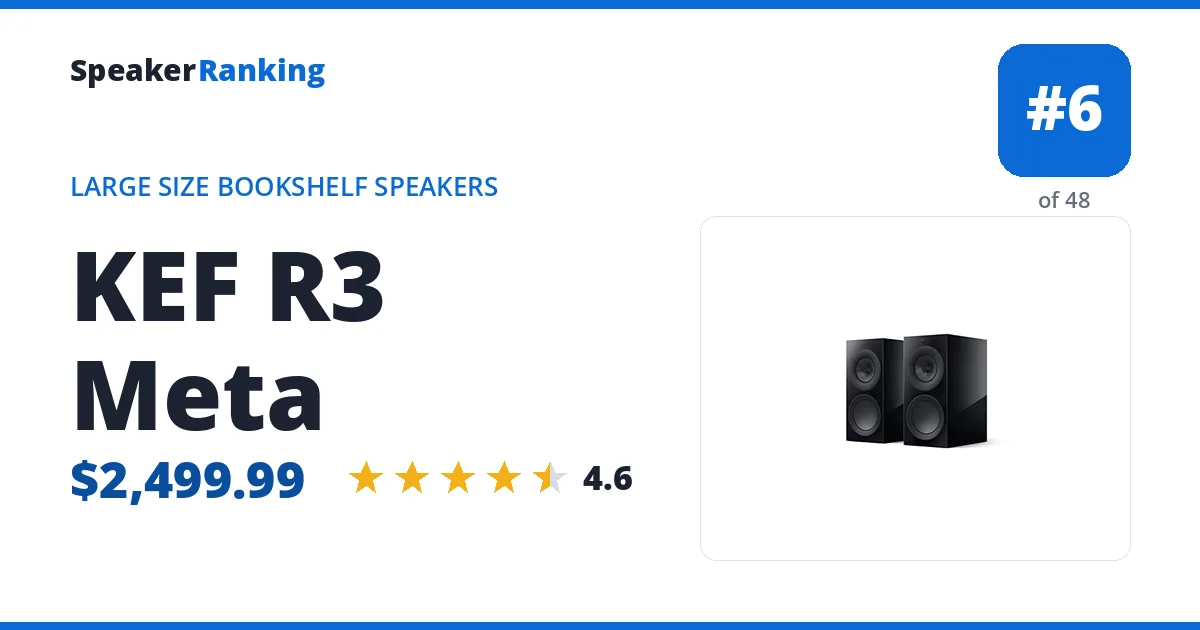
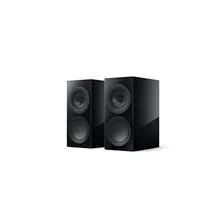 Ranked #10 of 130 in Large Size Bookshelf Speakers - KEF R3 Meta: $2,499.99 per pair Amazon Crutchfield eBay
Pros: Three-way design with an unconventional concentric layout: the 1” tweeter is recessed into the throat of the 5.25” midrange driver, deeper integration than a standard coaxial arrangement. A quasi sealed/ported bass alignment gives an extended low-end shelf tuned to match typical in-room gain, reaching about 50Hz for most content - deeper than recently-tested rivals like the Focal Aria 906, Polk R200, and an 8” Aperion design. Spinorama measurements show class-leading directivity and sound power, plus very linear on-axis response (at the recommended 10° toe-out) and early-reflections directivity, so it takes EQ exceptionally well. The vertical sweet spot extends to about ±20-30° off the reference axis with nearly identical tonality, unusually wide for a two- or three-way design. A clear upgrade over the earlier, non-Meta R3, eliminating the treble brightness the original had even when toed off-axis. Outperforms similarly-priced rivals (Revel M106, Wharfedale Linton, Philharmonic BMR V2, JBL HDI 1600) specifically on directivity and linearity in the reviewer’s measurements. At $2500/pair, called the best value in its class with near-reference-level anechoic performance. Measured bass extension of 76Hz (-3dB), with a measured sensitivity of 85.9dB.
Cons: Pointed straight on-axis, there’s a 1-2dB bump around 9kHz that stays consistent across angles thanks to the constant-directivity waveguide - only toeing the speaker out about 10° tames it. Minimum impedance dips to about 3.2 ohms nominal (EPDR as low as 1.9 ohms), so it needs a 4-ohm-stable amplifier; a standard AVR likely won’t cut it. Distortion crosses the reviewer’s 3% threshold around 80Hz at 96dB output and shows added deviation again near 50Hz, indicating it runs out of headroom at higher volumes - a subwoofer is recommended for loud listening. Horizontal radiation narrows from about ±70° at low frequency to ±40° at high frequency. Below about 100Hz, compression testing shows fairly wide deviations at both 86dB and 96dB output, though the reviewer notes this is typical for speakers in this size and price class. Current R3 owners who are already happy with that speaker have little reason to upgrade.
Full KEF R3 Meta review and specifications →
| Bass Extension (-10dB) | 37Hz (measured, Erin's Audio Corner) |
|---|---|
| Bass Extension (-3dB) | 76Hz (measured, Erin's Audio Corner) |
| Dimensions | 16.6"H x 7.9"W x 13.2"D (421.6 x 200.7 x 335.3 mm) |
| Drivers | 6.5" Hybrid aluminum ported woofer, 5" aluminum cone midrange, 1" vented aluminium dome with MAT tweeter |
| Impedance | 4 ohms nominal (3.2 ohms minimum above 80Hz, measured, Erin's Audio Corner) |
| Sensitivity | 85.9dB (measured, Erin's Audio Corner; 87dB manufacturer specified) |
| Spinorama Preference Score | 5.43 |
| Spinorama Preference Score with Perfect Sub | 7.23 |
| Weight | 27.3 lbs (12.4 kg) each |
| Woofer Cabinet | ported |
- Links
- Reviews, Comparisons and Sound Samples
- Erin’s Audio Corner: KEF R3 Meta: The Speaker to Beat. More from Erin’s Audio Corner →
- Erin’s Audio Corner Website KEF R3 Meta Review
- Erin’s Audio Corner: Upgrade Your Sound with These 6 Surprisingly Affordable Speakers!
- Erin’s Audio Corner: My Personal Favorite Speakers Under $2500
- Erin’s Audio Corner: My Top Picks of 2023: Must-Haves Under $3000
- GR-Research: Finally… a Speaker Danny Doesn’t Have to Fix? More from GR-Research →
- New Record Day: The Gold Standard Of "Pretty Good" KEF R3 Meta Review
- Erin’s Audio Corner Measurements (spinorama.org)
- Head-to-Head Comparisons
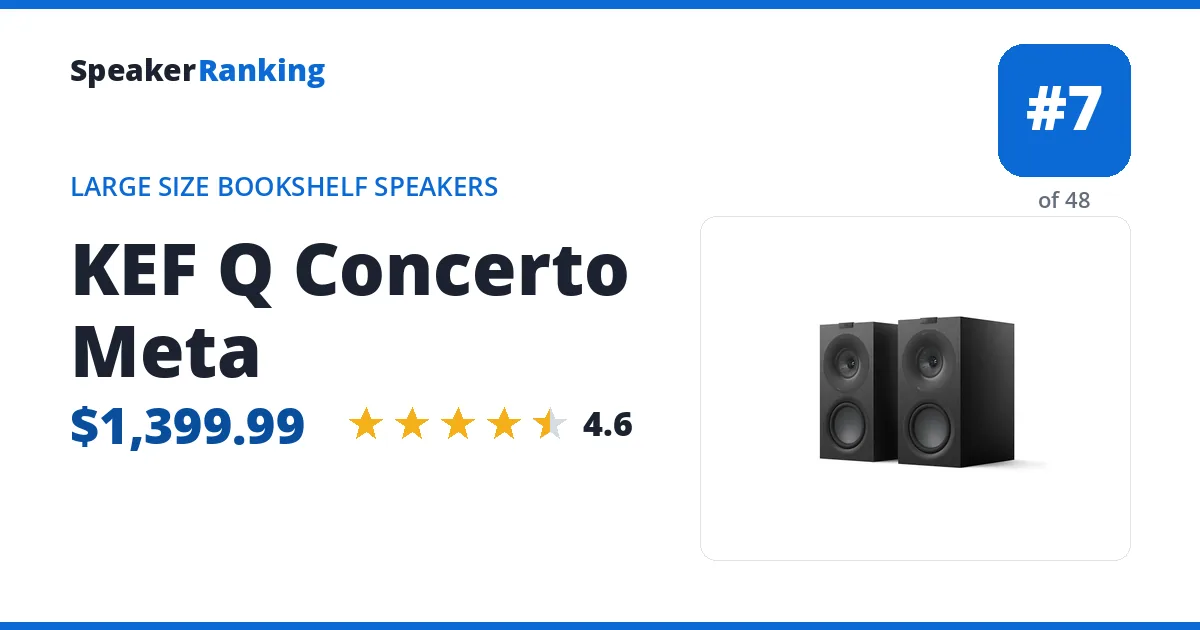
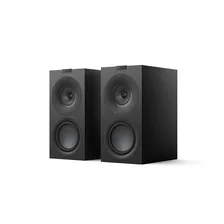 Ranked #11 of 130 in Large Size Bookshelf Speakers - KEF Q Concerto Meta: $1,399.99 per pair Amazon Crutchfield eBay
Pros: Really good in-room neutrality with consistent horizontal directivity from seat to seat. Directivity holds remarkably steady from lower treble into upper treble, where many similarly-priced speakers narrow sharply as frequency rises - one of the reviewer’s top 10 picks under $1,500. Measured bass extension of 53Hz (-3dB), with a measured sensitivity of 84.2dB.
Cons: Radiation pattern measures about ±50°, narrower than the reviewer’s preferred ±60° for a stronger sense of envelopment. Needs to be pointed closer to on-axis rather than heavily toed out - combined with its rolled-off, shelved-down top end, too much toe-out makes it sound noticeably dark.
Full KEF Q Concerto Meta review and specifications →
| Bass Extension (-10dB) | 35Hz (measured, Erin's Audio Corner) |
|---|---|
| Bass Extension (-3dB) | 53Hz (measured, Erin's Audio Corner) |
| Dimensions | 16.3"H x 8.3"W x 12.4"D (414 x 210.8 x 315 mm) |
| Drivers | 165 mm (6.5 in.) hybrid aluminium cone woofer, 100 mm (4 in.) aluminium cone midrange, 19 mm (0.75 in.) vented aluminium dome with MAT tweeter |
| Impedance | 4 ohms nominal (3.3 ohms minimum above 80Hz, measured by Erin's Audio Corner) |
| Sensitivity | 84.2dB (measured average, Erin's Audio Corner) |
| Spinorama Preference Score | 5.32 |
| Spinorama Preference Score with Perfect Sub | 7.01 |
| Weight | 20.9 lbs (9.5 kg) each |
| Woofer Cabinet | ported, rear |
- Links
- Reviews, Comparisons and Sound Samples
- Erin’s Audio Corner: HiFi Perfection? KEF CONCERTO META Delivers! More from Erin’s Audio Corner →
- Erin’s Audio Corner Website KEF Q Concerto Meta
- Erin’s Audio Corner: I Tested 250 Speakers So You Don’t Have To!
- Erin’s Audio Corner: HiFi Perfection? KEF CONCERTO META Delivers!
- Erin’s Audio Corner: My Absolute Favorite Products of 2024 Revealed
- Erin’s Audio Corner Measurements (spinorama.org)
- Head-to-Head Comparisons
- KEF Q Concerto Meta vs KEF R3 Meta
- KEF Q Concerto Meta vs Wharfedale Aura 2
- KEF Q Concerto Meta vs Revel M106
- KEF Q Concerto Meta vs Audio First Cadentia 3
- KEF Q Concerto Meta vs AsciLab C6B
- KEF Q Concerto Meta vs KEF R3
- KEF Q Concerto Meta vs Buchardt Audio E50
- KEF Q Concerto Meta vs MoFi SourcePoint 8
- See all 67 comparisons
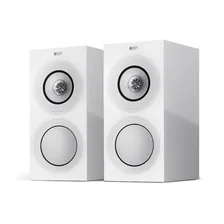 Ranked #15 of 130 in Large Size Bookshelf Speakers - KEF R3: $2,200 per pair Amazon eBay
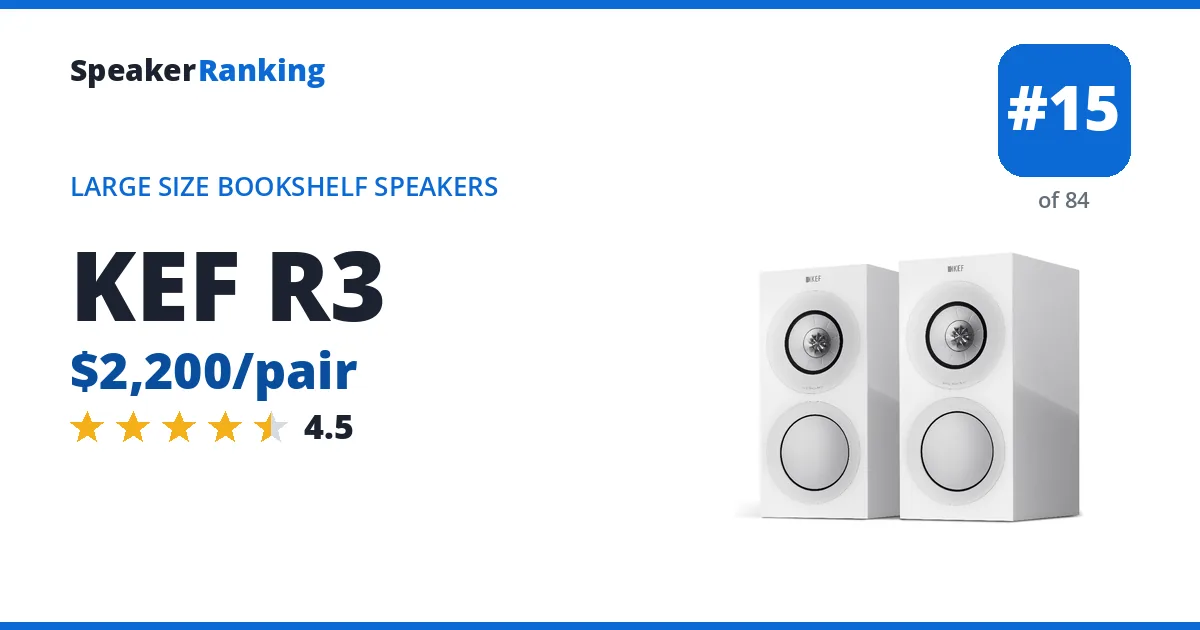
Pros: True three-way stand-mount with a 6.5-inch woofer below KEF’s 5-inch Uni-Q midrange/1-inch tweeter. Erin measured approximately 86-87dB/2.83V/1m sensitivity, exceptionally low sub-1% distortion at 86dB and orderly directivity in both planes. The coaxial geometry maintains image stability across seats, while Flexible Port Technology avoids the strong midrange port resonance common to rear-vented competitors. A 110W Parasound drove it successfully in Erin’s listening. Measured bass extension of 35.2Hz (-10dB), with a measured sensitivity of 87dB.
Cons: The low-frequency alignment rolls gradually rather than delivering high-output sub-bass; KEF specifies 58Hz +/-3dB and Erin’s high-level data supports using an 80Hz subwoofer crossover. Narrow high-frequency features and natural Uni-Q narrowing toward the top octave make toe angle audible, although off-axis tracking remains smooth. Sensitivity is moderate, the cabinet weighs almost 30 lb, and this original R3 lacks the Meta successor’s MAT absorber.
Full KEF R3 review and specifications →
| Bass Extension (-10dB) | 35.2Hz (measured, Audio Science Review) |
|---|---|
| Bass Extension (-3dB) | Approximately 58Hz (manufacturer specified; consistent with Erin's measured roll-off) |
| Dimensions | 16.6"H x 7.9"W x 13.2"D |
| Drivers | 1" tweeter coaxial with 5" midrange; 6.5" woofer |
| Impedance | 8 ohms nominal; suitable for Erin's 4/8-ohm-rated amplifier |
| Sensitivity | Approximately 86-87dB/2.83V/1m (measured, Erin's Audio Corner) |
| Spinorama Preference Score | 6.2 (spinorama.org) |
| Spinorama Preference Score with Perfect Sub | 7.97 (spinorama.org) |
| Weight | 29.9 lbs (13.55 kg) each |
| Woofer Cabinet | ported, rear Flexible Port |
- Links
- Reviews, Comparisons and Sound Samples
- Head-to-Head Comparisons
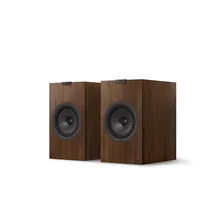 Ranked #89 of 130 in Large Size Bookshelf Speakers - KEF Q3 Meta: $899.99 per pair Amazon Crutchfield eBay
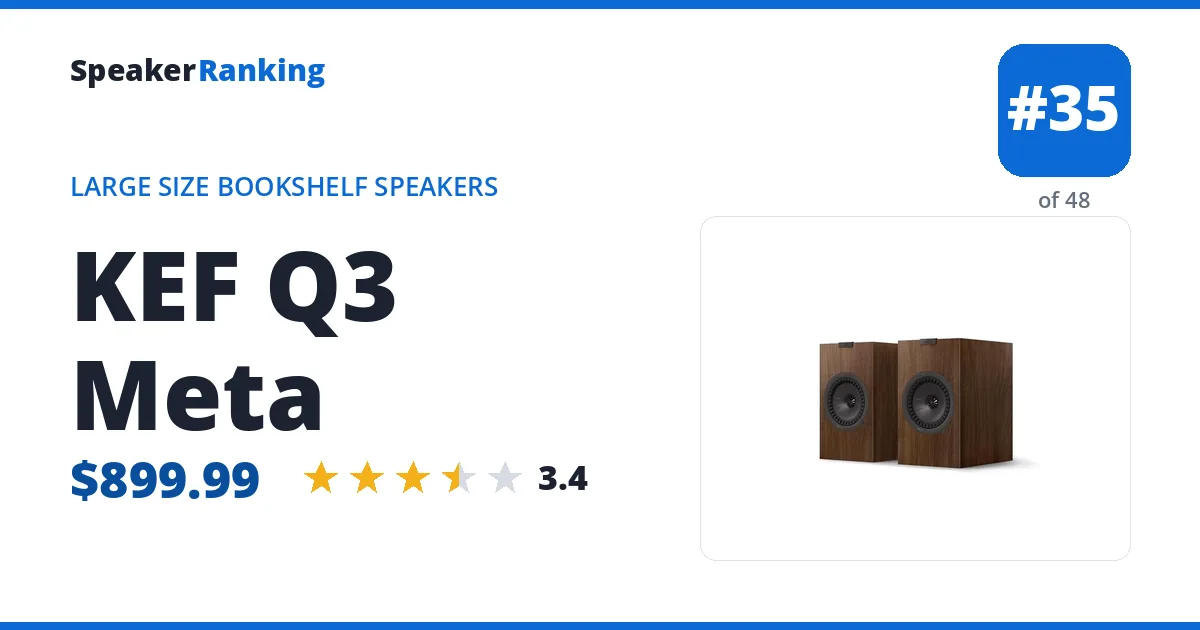
Pros: Coaxial two-way design (1” vented aluminum dome tweeter with Meta absorber embedded in a 6.5” aluminum cone mid/bass driver) delivering unusually wide dispersion both horizontally and vertically (about ±60° each) - wider than typical KEF models, which usually run closer to ±50° horizontal and ±15-20° vertical for non-coaxial designs. A deliberate ~2dB bump around 120Hz gives a satisfying sense of kick-drum impact, a voicing choice the reviewer personally favors even though it’s not strictly accurate. Extended bass-shelf tuning allows placement close to a rear wall (about 1 foot) without sounding boomy. Good directivity overall means it takes well to EQ correction if desired. Cabinet resonances around 350-370Hz and 600Hz look concerning in impedance measurements, but blind ABX testing (24 trials) after adding damping material couldn’t reliably distinguish the treated cabinet from the untreated one - these particular resonances appear to fall below the threshold of audibility. Sturdier build than previous KEF Q-series models. Measured bass extension of 52Hz (-3dB), with a measured sensitivity of 84.5dB.
Cons: Not well suited to high-output use: compression and strain in the 1-2kHz region emerge above about 90dB at 10 feet, so a high-output home theater setup isn’t the best application. A slight loss of attack and clarity around 1-2kHz was noticeable both subjectively and in measurements. F3 of 52Hz with a fairly quick rolloff below 50Hz means a subwoofer is still recommended for real bass extension, even for moderate-volume home theater use. Sealed configuration (using the included port bungs) pushes the bass rolloff up into the 100Hz+ region - the reviewer recommends leaving it in ported mode instead. Sounds best pointed directly at the listener; toeing it out 30° rolls off the top end without a meaningful soundstage benefit. Compression testing shows real breakdown at 102dB/1m, with the woofer losing excursion control - confirms the practical output ceiling. An unexplained -5dB dip appears in on-axis measurements that the reviewer couldn’t attribute to a specific cause.
Full KEF Q3 Meta review and specifications →
| Bass Extension (-10dB) | 37Hz (measured, Erin's Audio Corner) |
|---|---|
| Bass Extension (-3dB) | 52Hz (measured, Erin's Audio Corner) |
| Dimensions | 14.1"H x 8.3"W x 12"D (357.0 x 210.0 x 305.0 mm) |
| Drivers | 165 mm (6.5 in.) aluminium cone woofer, 25 mm (1 in.) vented aluminium dome with MAT tweeter |
| Impedance | 4 ohms nominal, 3.7 ohms minimum (measured above 80Hz, Erin's Audio Corner) |
| Sensitivity | 84.5dB (measured average 300Hz-3kHz @ 2.83V/1m, Erin's Audio Corner; 87dB manufacturer specified) |
| Spinorama Preference Score | 3.75 |
| Spinorama Preference Score with Perfect Sub | 5.59 |
| Weight | 15.9 lbs (7.2 kg) |
| Woofer Cabinet | ported, rear |
- Links
- Reviews, Comparisons and Sound Samples
- Head-to-Head Comparisons
Large Size Floorstanding Speakers
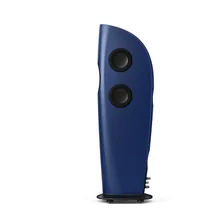 Ranked #2 of 71 in Large Size Floorstanding Speakers - KEF Blade Two Meta: $28000 per pair only sold in stores eBay
Pros: True point-source coaxial design (four 6.5in mid-bass drivers flanking a coincident mid/tweeter) with matched ~50 degree horizontal and vertical dispersion, unusual for a multi-driver speaker. Fully rounded, edgeless cabinet eliminates baffle diffraction. Frequency response holds within about 2.5dB across the listening window. Extremely low harmonic and multitone distortion even at 96dB, with under 0.5dB of compression at full output, rivaling the Reference 1 Meta and JBL 4367 in dynamic range. Reviewer described the imaging and soundstage depth as revealing recording details other speakers he tested (PS Audio FR10, MoFi SourcePoint 8, Neumann KH80) masked. Available in any custom finish at no extra charge. Measured bass extension of 31Hz (-3dB), with a measured sensitivity of 86.8dB.
Cons: 2dB dip and slight resonance around 200Hz, also visible in KEF white paper and likely cabinet-related. Bass rolls off fairly quickly below its 31Hz F3. Horizontal dispersion (~50 degrees) is narrower than the reviewer preferred 70-80 degrees; benefits from toeing out 10-20 degrees to open soundstage without losing image focus. Needs a separate power amp, not AVR-friendly.
Full KEF Blade Two Meta review and specifications →
| Bass Extension (-10dB) | 26Hz (measured, Erin's Audio Corner) |
|---|---|
| Bass Extension (-3dB) | 31Hz (measured, Erin's Audio Corner) |
| Dimensions | 46.6"H x 13.5"W x 14.8"D (1183.6 x 342.9 x 375.9 mm) |
| Drivers | 4 x 165 mm (6.5 in.) aluminium cone, force cancelling woofers, 125 mm (5 in.) aluminium cone midrange, 25 mm (1 in.) aluminium dome with MAT tweeter |
| Impedance | 4 ohms nominal (3.3 ohms minimum, measured, Erin's Audio Corner) |
| Sensitivity | 86.8dB (measured, Erin's Audio Corner) |
| Spinorama Preference Score | 6.25 |
| Spinorama Preference Score with Perfect Sub | 7.37 |
| Weight | 79.4 lbs (36 kg) each |
| Woofer Cabinet | ported, rear |
- Links
- Reviews, Comparisons and Sound Samples
- Head-to-Head Comparisons
- KEF Blade Two Meta vs GR-Research NX-Treme
- KEF Blade Two Meta vs MoFi SourcePoint V10 Master Edition
- KEF Blade Two Meta vs MoFi SourcePoint 888
- KEF Blade Two Meta vs Radiant Acoustics Clarity 66
- KEF Blade Two Meta vs Ascend Acoustics ELX Ribbon Tower
- KEF Blade Two Meta vs JBL HDI-3800
- KEF Blade Two Meta vs Revel F328Be
- KEF Blade Two Meta vs KEF R5 Meta
- See all 36 comparisons
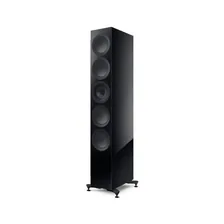 Ranked #26 of 71 in Large Size Floorstanding Speakers - KEF R11 Meta: $3,499.99 per pair Amazon eBay
Pros: CEA2034 spinorama shows a generally flat on-axis response with good directivity and very deep bass extension (F10 of 30Hz). Predicted in-room response is very smooth aside from the small 1-1.5kHz dip. The coaxial Uni-Q driver gives excellent, symmetric vertical directivity, unusual for a tower speaker. Distortion is incredibly low even down to 30Hz at 86dB SPL/1m, and stays low even at 96dB and 102dB SPL/1m - the reviewer found essentially no audible tonality change across that whole output range. Measured bass extension of 64Hz (-3dB).
Cons: A dip around 1-1.2kHz on-axis is attributed to a diffraction effect, and shows up as a smaller dip in the predicted in-room response. Horizontal beamwidth of about ±40 degrees is on the narrower side, though the transition from wide to constant directivity is smooth. Minimum impedance dips to 3.2 ohms around 580Hz, calling for an amplifier comfortable with a demanding load. 4-ohm nominal impedance overall.
Full KEF R11 Meta review and specifications →
| Bass Extension (-10dB) | 31Hz (measured, Audio Science Review) |
|---|---|
| Bass Extension (-3dB) | 64Hz (measured, Audio Science Review) |
| Dimensions | 51"H x 12.2"W x 15.1"D (1295.4 x 309.9 x 383.5 mm) |
| Drivers | 4 x 165 mm (6.5 in.) hybrid aluminium cone woofers, 125 mm (5 in.) aluminium cone midrange, 25 mm (1 in.) vented aluminium dome with MAT tweeter |
| Impedance | 4 ohms |
| Sensitivity | 89.5dB |
| Spinorama Preference Score | 5.05 |
| Spinorama Preference Score with Perfect Sub | 6.46 |
| Weight | 80.5 lbs (36.5 kg) each |
| Woofer Cabinet | ported, rear |
- Links
- Reviews, Comparisons and Sound Samples
- Head-to-Head Comparisons
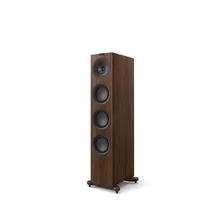 Ranked #46 of 71 in Large Size Floorstanding Speakers - KEF Q11 Meta: $1,249.99 per pair Amazon eBay
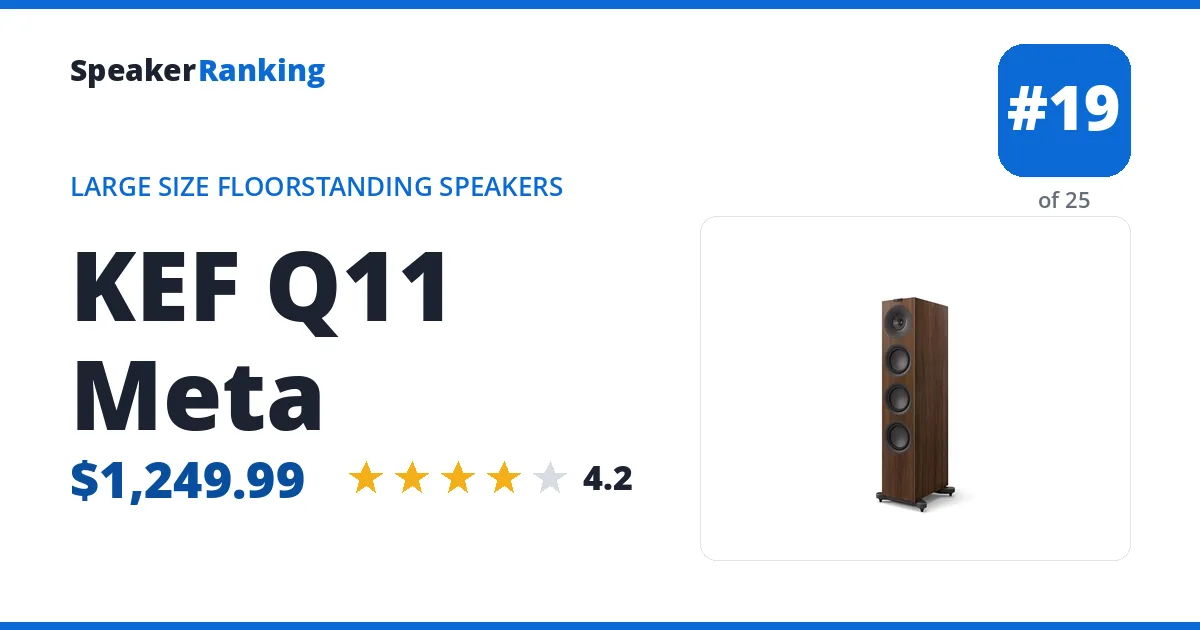
Pros: Three-way tower design with a coaxial layout: a 3/4” aluminum dome tweeter (with KEF’s Metamaterial Absorption Technology behind it) mounted at the center of a 4” mid-range, plus three 6.5” bass drivers. Extremely linear estimated in-room response when placed correctly, thanks to a deliberately declining on-axis response paired with well-controlled directivity - a technically sound design philosophy, even though it reads as “dark” in raw anechoic on-axis measurements. In-room bass extension to about 40-50Hz when placed near a wall, thanks to extended bass-shelf tuning. Sounds excellent whether pointed directly at the listener or toed out a full 30° parallel to the back wall - unusually flexible placement. More vertical listening leeway than standard non-coaxial two-way designs, thanks to the coincident tweeter/midrange. Distortion looks good at both 86dB and 96dB, and multitone distortion holds up well too. Comes with a plinth/outrigger kit for stability given its floorstanding height (about 43-44”). Measured bass extension of 60Hz (-3dB), with a measured sensitivity of 88.6dB.
Cons: Genuinely dark-sounding on raw on-axis measurement, and needs a typical room with sidewall reflections (within about 6 feet/2 meters) to sound properly neutral - in a large room with little sidewall interaction, it may sound too dull for some listeners. Must be placed close to a rear wall (about 1 foot) to get proper bass - pulling it out to the “standard” 3-foot audiophile recommendation causes bass output to drop off noticeably. Horizontal radiation of about ±50° is narrower than the reviewer’s preferred ±60°, giving a slightly less enveloping soundstage than some rivals. Notably darker than sibling KEF models in the same product family - measures 2-5dB less top-end energy than the R3 Meta and a few dB less than the Q Concerto Meta. Minor lingering resonances appear in burst decay measurements between 500Hz-1kHz. The tweeter shows some strain at very high output volumes, a limitation the reviewer notes is common even among more budget-friendly speakers generally.
Full KEF Q11 Meta review and specifications →
| Bass Extension (-10dB) | 29Hz (measured, Erin's Audio Corner) |
|---|---|
| Bass Extension (-3dB) | 60Hz (measured, Erin's Audio Corner) |
| Dimensions | 43.8"H x 12.5"W x 15"D (1112.8 x 317.5 x 381.0 mm) |
| Drivers | 25mm tweeter + dual 165mm drivers |
| Impedance | 4 ohms nominal (3.2 ohms minimum, measured, Erin's Audio Corner) |
| Sensitivity | 88.6dB (measured, Erin's Audio Corner) |
| Spinorama Preference Score | 6.08 |
| Spinorama Preference Score with Perfect Sub | 7.39 |
| Weight | 106.9 lbs (48.5 kg) |
| Woofer Cabinet | ported, rear |
- Links
- Reviews, Comparisons and Sound Samples
- Head-to-Head Comparisons
- KEF Q11 Meta vs KLH Model Five
- KEF Q11 Meta vs Klipsch RP-5000F II
- KEF Q11 Meta vs Klipsch Heresy IV
- KEF Q11 Meta vs SVS Ultra Evolution Pinnacle
- KEF Q11 Meta vs Polk Audio XT60
- KEF Q11 Meta vs Monolith THX-365T
- KEF Q11 Meta vs Klipsch Forte IV
- KEF Q11 Meta vs Klipsch RP-8000F II
- See all 46 comparisons
In-Wall & In-Ceiling Speakers
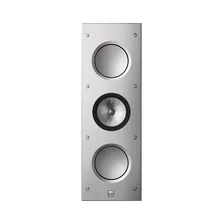 Ranked #1 of 5 in In-Wall & In-Ceiling Speakers - KEF Ci3160RLM-THX: $2,289.99 per pair Amazon eBay
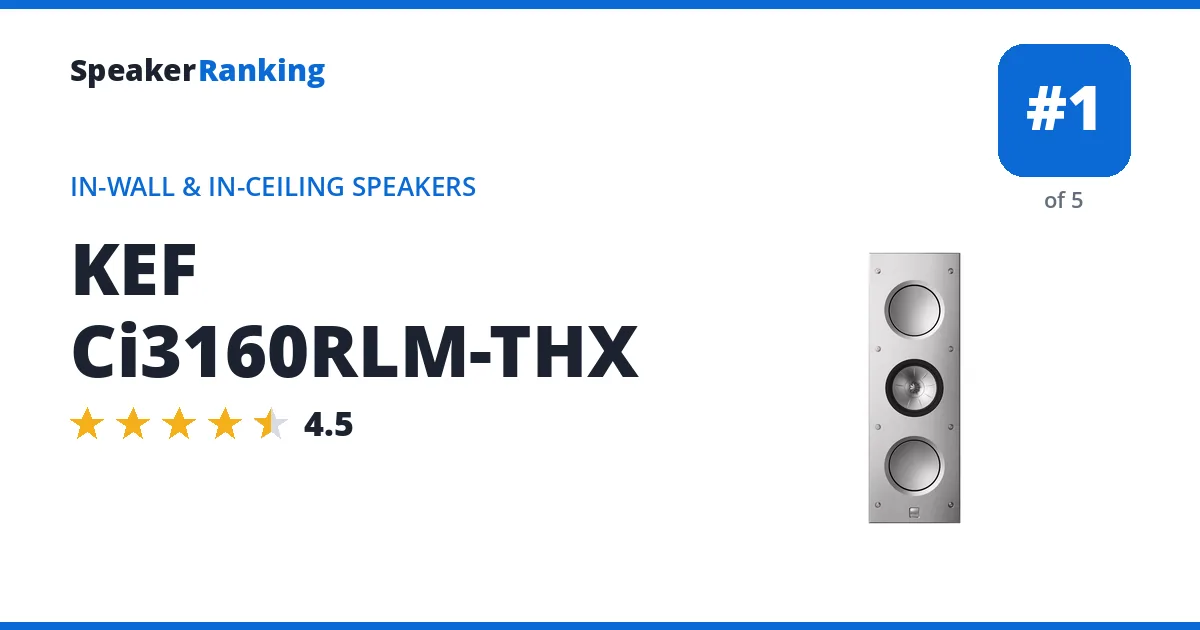
Pros: Independently measured by Audio Science Review on a Klippel rig to a genuine 58.6Hz at -3dB and roughly 36Hz at -10dB, with an on-axis slope of just -0.02dB per octave, essentially flat. Directivity is the most consistent of any in-wall or in-ceiling speaker in this category, with the tightest spread in its sound-power directivity index across the measured band. The rotatable, tiltable driver module (the RLM in its name) lets the tweeter and midrange aim toward the listening area even when the cabinet itself has to be installed off to one side. THX Ultra2 certified, with a 4-driver, 3-way layout: dual 6.5” woofers flanking a 6.5” Uni-Q coaxial midrange/tweeter. Measured bass extension of 58.6Hz (-3dB).
Cons: At $2290 each, a stereo pair runs roughly $4,600, among the most expensive options in this category. Listening-window and sound-power smoothness are moderate rather than class-leading, meaning some unevenness remains once you move off the main listening axis despite the flat on-axis trace. The 660 x 209mm cutout and 106mm mounting depth are large enough that they won’t fit inside a standard 2x4 wall stud bay without modification.
Full KEF Ci3160RLM-THX review and specifications →
| Bass Extension (-10dB) | 36Hz (measured, spinorama.org ASR data) |
|---|---|
| Bass Extension (-3dB) | 58.6Hz (measured, spinorama.org ASR data) |
| Certification | THX Ultra2 |
| Dimensions | 26.8" x 9.1" x 4.2" (680 x 230 x 105.7 mm) |
| Drivers | 2x 6.5" LF woofers, 6.5" Uni-Q coaxial midrange, 1" vented aluminum dome tweeter with MAT (rotatable/tiltable module) |
| Enclosure | Open-backed, in-wall |
| Frequency Response | 43Hz-28kHz +/-6dB (manufacturer, open-backed) |
| Impedance | 4 ohms |
| Mounting Cutout | 660mm (H) x 209mm (W) |
| Power Handling | 50-350W recommended amplifier power |
| Sensitivity | 89dB |
| Spinorama Preference Score | 4.62 |
| Spinorama Preference Score with Perfect Sub | 7.14 |
| Weight | 26.5 lbs (12 kg) |
- Links
- Reviews, Comparisons and Sound Samples
- Head-to-Head Comparisons
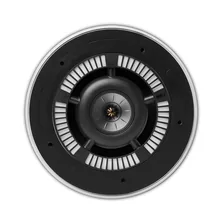 Ranked #2 of 5 in In-Wall & In-Ceiling Speakers - KEF CI250RRM-THX: $5,999.98 per pair Abt Electronics eBay
Pros: Independently measured by Audio Science Review to a genuine 51.3Hz at -3dB and roughly 23.3Hz at -10dB, the deepest bass extension of any in-wall or in-ceiling speaker in this category. It’s a THX-certified 3-way coaxial design, a 10” woofer built around a 4” Uni-Q midrange and 1” aluminum dome tweeter, deliberately voiced for the 30-60 degree off-axis angle typical of a ceiling-mounted Dolby Atmos height or surround channel rather than a straight-down listening position. Run through a receiver’s automated room correction, spinorama’s EQ-adjusted figures show its preference score climbing from 3.76 to 4.78, so it responds well to correction. Measured bass extension of 51.3Hz (-3dB).
Cons: At $3000 each, this is the most expensive speaker in this category. Its raw on-axis measurement trails the Ci3160RLM-THX (preference score 3.76 vs. 4.62) since the driver array is tuned for off-axis dispersion rather than a flat straight-ahead response, and its on-axis deviation averages 1.14dB, one of the roughest of the batch measured on-axis.
Full KEF CI250RRM-THX review and specifications →
| Bass Extension (-10dB) | 23.3Hz (measured, spinorama.org ASR data) |
|---|---|
| Bass Extension (-3dB) | 51.3Hz (measured, spinorama.org ASR data) |
| Certification | THX |
| Dimensions | 13.6" x 13.6" x 6.9" (346 x 346 x 175 mm) (168mm mounting depth) |
| Drivers | 10" LF woofer, 4" Uni-Q midrange, 1" vented aluminum dome tweeter with MAT (3-way coaxial) |
| Enclosure | Open-backed, in-ceiling |
| Frequency Response | 28Hz-20kHz +/-6dB (manufacturer, open-backed) |
| Impedance | 8 ohms |
| Mounting Cutout | 300mm (11.81 in) |
| Power Handling | 50-250W recommended amplifier power |
| Sensitivity | 89dB |
| Spinorama Preference Score | 3.76 |
| Spinorama Preference Score with Perfect Sub | 5.77 |
| Weight | 13.2 lbs (6 kg) |
- Links
- Reviews, Comparisons and Sound Samples
- Head-to-Head Comparisons
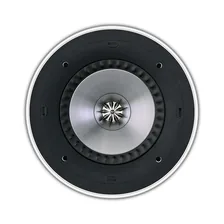 Ranked #3 of 5 in In-Wall & In-Ceiling Speakers - KEF CI200RR-THX: $1,189.00 per pair Amazon eBay
Pros: An 8” woofer paired with a 1.5” Uni-Q tweeter (crossing over at 2.2kHz) measures a genuine 82.5Hz at -3dB and roughly 30.5Hz at -10dB, respectable low-end reach for a mid-priced in-ceiling speaker. The 238mm cutout accepts a large enough driver to move real air in a family room or media room. At $1189 each, it costs about half of KEF’s flagship Ci3160RLM-THX while carrying the same THX certification. Measured bass extension of 82.5Hz (-3dB).
Cons: Spinorama’s measurement of this model is a lower-confidence manufacturer curve rather than an independently verified Klippel scan, so treat the extension figures as directionally useful rather than as precise as the ASR-measured entries in this category. No Harman-style preference score has been published for it.
Full KEF CI200RR-THX review and specifications →
| Bass Extension (-10dB) | 30.5Hz (measured, spinorama.org vendor data) |
|---|---|
| Bass Extension (-3dB) | 82.5Hz (measured, spinorama.org vendor data) |
| Certification | THX |
| Dimensions | 11.4" x 11.4" x 5.2" (290 x 290 x 132.6 mm) (126.5mm mounting depth) |
| Drivers | 8" woofer, 1.5" Uni-Q tweeter (2.2kHz crossover) |
| Enclosure | Open-backed, in-ceiling |
| Frequency Response | 33Hz-28kHz +/-6dB (manufacturer, open-backed) |
| Impedance | 4 ohms |
| Mounting Cutout | 238mm (9.37 in) |
| Power Handling | 10-190W recommended amplifier power |
| Sensitivity | 90dB |
| Weight | 7.9 lbs (3.6kg) |
- Links
- Reviews, Comparisons and Sound Samples
- Head-to-Head Comparisons
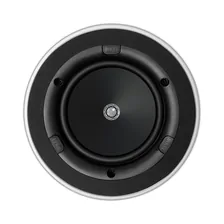 Ranked #4 of 5 in In-Wall & In-Ceiling Speakers - KEF CI130.2CR: $599.98 per pair World Wide Stereo eBay
Pros: A compact 158 x 158mm cutout and 82.3mm depth fit tight joist bays and shallow ceiling cavities where the larger Ci-THX models in this category won’t. At $300 each it’s the most affordable speaker in this category by a wide margin. The 5.25” Uni-Q driver keeps its 16mm aluminum dome tweeter coaxially centered on the woofer, so the two acoustic centers stay aligned regardless of listening position. Measured bass extension of 100Hz (-3dB).
Cons: KEF’s own frequency response spec bottoms out at 52Hz, and the measured curve reaches only about 100Hz at -3dB and roughly 53.5Hz at -10dB, the shallowest low end among the models in this category with a THX certification, so pairing it with a subwoofer is worth planning for. It’s open-backed with only medium-quality vendor measurement data behind it, not an independently verified Klippel scan.
Full KEF CI130.2CR review and specifications →
| Bass Extension (-10dB) | 53.5Hz (measured, spinorama.org vendor data) |
|---|---|
| Bass Extension (-3dB) | 100Hz (measured, spinorama.org vendor data) |
| Dimensions | 7.6" x 7.6" x 3.2" (193.4 x 193.4 x 82.3 mm) (77.7mm mounting depth) |
| Drivers | 5.25" Uni-Q coaxial woofer with 16mm aluminum dome tweeter |
| Enclosure | Open-backed, in-ceiling |
| Frequency Response | 52Hz-20kHz +/-6dB (manufacturer, open-backed) |
| Impedance | 8 ohms |
| Mounting Cutout | 158 x 158mm |
| Power Handling | 10-80W recommended amplifier power |
| Sensitivity | 87dB |
| Weight | 2.9 lbs (1.3kg) |
- Links
- Reviews, Comparisons and Sound Samples
- Head-to-Head Comparisons
Medium Home Subwoofers (30-75 lbs)
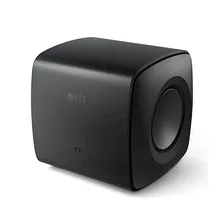 Ranked #145 of 145 in Medium Home Subwoofers (30-75 lbs) - Kef KC62: $1,699.99 Amazon eBay
Pros: Dual 6.5-inch force-canceling drivers with 1000W in ultra-compact basketball-sized sealed enclosure. Deep extension to 11Hz with five room placement EQ presets. Elegant design fits any décor.
Full Kef KC62 review and specifications →
| Amplifier Power | 1000W RMS |
|---|---|
| CEA-2010-A Average (40-80Hz) | 96.9 dB |
| Cabinet Color | black, white |
| Country | United Kingdom |
| Dimensions | 9.7"H x 10.1"W x 9.8"D (245.9 x 255.8 x 247.9 mm) |
| Drivers | 2x 6.5" (165mm) driver |
| Enclosure | sealed |
| Frequency Response | 11-200Hz |
| Measurement Source | ErinsAudioCorner |
| Output SPL at 20 Hz | 80.0 dB |
| Output SPL at 25 Hz | 84.6 dB |
| Output SPL at 31.5 Hz | 88.5 dB |
| Output SPL at 40 Hz | 92.2 dB |
| Output SPL at 50 Hz | 95.1 dB |
| Output SPL at 63 Hz | 97.7 dB |
| Output SPL at 80 Hz | 102.6 dB |
| Output SPL at 100 Hz | 104.2 dB |
| Warranty | 5/2/5 |
| Weight | 30.9 lbs (14.0 kg) |
- Links
- Reviews, Comparisons and Sound Samples
- Independently measured by ErinsAudioCorner; the published figures above come from this ASR subwoofer measurement thread.
- Head-to-Head Comparisons
Discontinued KEF Models
Still ranked, and often still worth buying used, but no longer in production. Check availability before planning around one of these.
Medium Size Bookshelf Speakers
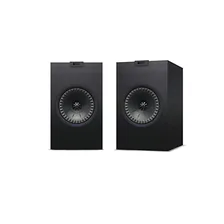 Ranked #26 of 88 in Medium Size Bookshelf Speakers - KEF Q150: $350 per pair Discontinued Amazon eBay
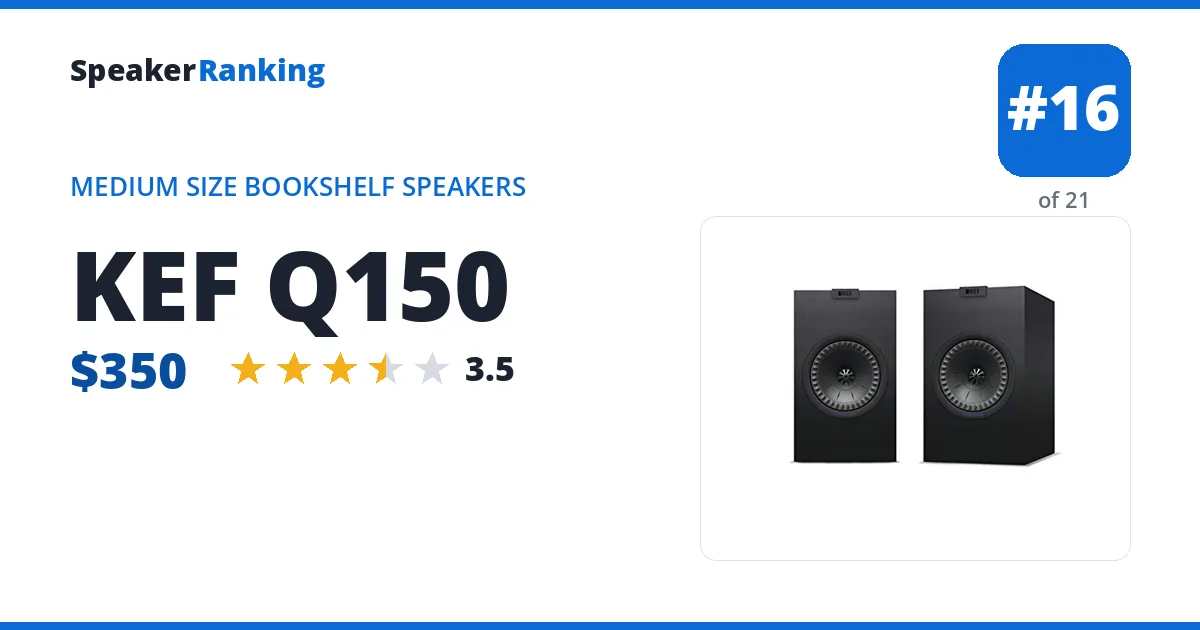
Pros: Two-way coaxial (Uni-Q) design with a 1” dome tweeter and 5.25” mid-range time-aligned in a single driver assembly, available in ported or sealed configuration. Exceptional soundstage depth, a hallmark of KEF’s coaxial designs that the reviewer says few other speakers match. Bass extension reaches into kick-drum territory, respectable for a compact bookshelf speaker. Resonances present in measurements are consistent across on- and off-axis readings, meaning they can be effectively corrected with EQ. Distortion profile is essentially the same whether run sealed or ported, since a subwoofer crossover point sits above where the differences would matter anyway. At its sale price (around $300, sometimes seen at $400), the reviewer considers it a clear step up from his previous budget favorite in this range, the Emotiva B1+, mainly due to the superior soundstage depth. Measured bass extension of 51Hz (-3dB), with a measured sensitivity of 85dB.
Cons: A high-frequency lift in the estimated in-room response makes it sound noticeably brighter in an untreated room than in a heavily acoustically-treated one - a real preference factor depending on your room’s furnishings. A mild dip in the 1-2kHz region reduces vocal fullness somewhat. Unexplained resonances appear in measurements and persist in both sealed and ported configurations, pointing to enclosure or panel vibration rather than the port. Horizontal radiation is narrower than the reviewer generally prefers from KEF’s lineup, with directivity that widens somewhat around 1.2kHz (near a resonance) and again above about 5kHz. Compression testing at high output (102dB) shows significant nonlinearity, especially at lower frequencies - noticeably worse than a comparable Arendal bookshelf speaker costing over twice as much, which held up better until 80Hz. Not intended for loud listening without a subwoofer - the woofer will over-exert itself without a high-pass filter, and the reviewer recommends crossing over at 80-120Hz. At full retail price (around $600/pair), the value proposition is far less certain than at sale pricing. Discontinued.
Full KEF Q150 review and specifications →
| Bass Extension (-10dB) | 44Hz (measured, Erin's Audio Corner) |
|---|---|
| Bass Extension (-3dB) | 51Hz (measured, Erin's Audio Corner) |
| Dimensions | 11.9"H x 7.1"W x 10.9"D (303 x 180 x 278 mm) |
| Discontinued | Yes |
| Drivers | 130mm (5.25") aluminium Uni-Q woofer, 25mm (1") vented aluminium dome tweeter |
| Impedance | 8 ohms nominal, about 4.7 ohms minimum (measured, Erin's Audio Corner) |
| Sensitivity | ~85dB (300Hz-3kHz on-axis, measured, Erin's Audio Corner) |
| Spinorama Preference Score | 3.95 |
| Spinorama Preference Score with Perfect Sub | 6.15 |
| Weight | 12.3 lbs (5.6 kg) each |
| Woofer Cabinet | ported, rear |
- Links
- Reviews, Comparisons and Sound Samples
- Erin’s Audio Corner: Kef’s Cheapest Bookshelf. Is the Q150 worth your money? More from Erin’s Audio Corner →
- Erin’s Audio Corner Website KEF Q150
- GR-Research: KEF Q150… can it get any BETTER? More from GR-Research →
- Erin’s Audio Corner: 5 AWESOME SPEAKERS Under $1000 You Won’t Regret
- Erin’s Audio Corner: Budget Stereo Systems You Will Love
- Erin’s Audio Corner Measurements (spinorama.org)
- Head-to-Head Comparisons
 Ranked #69 of 88 in Medium Size Bookshelf Speakers - KEF Q100: $550 per pair Discontinued eBay
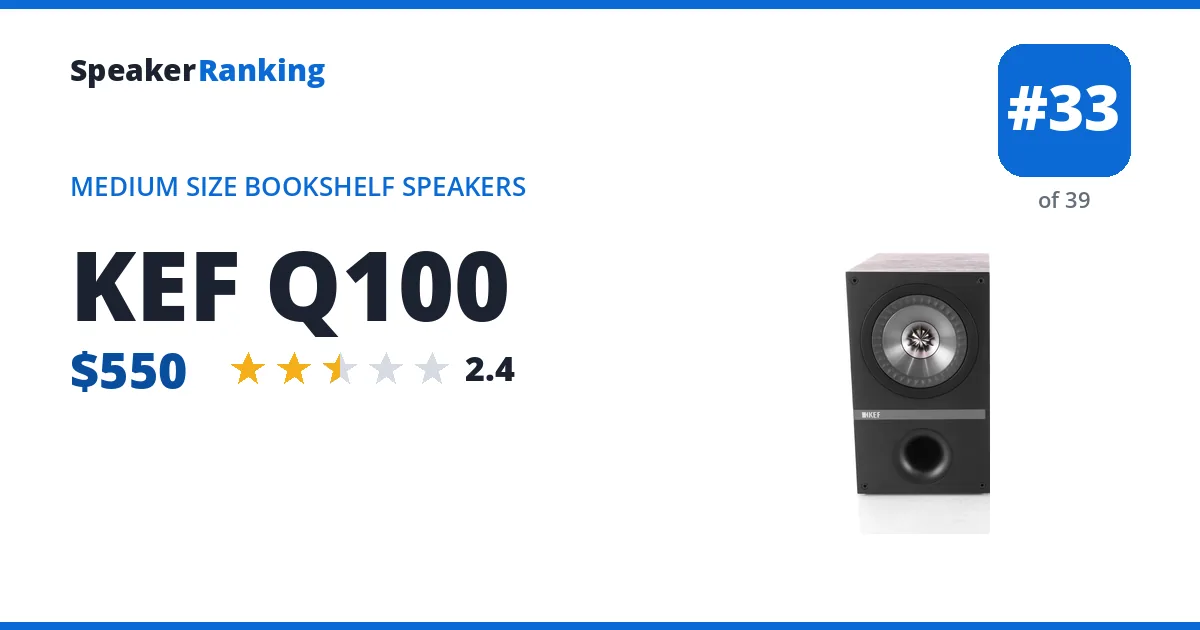
Pros: 5.25” Uni-Q coaxial driver keeps the tweeter and woofer point-source aligned for consistent imaging. 86dB sensitivity is reasonably easy to drive. Measured bass extension of 85Hz (-3dB), with a measured sensitivity of 85dB.
Cons: CEA2034 spinorama shows broad, audible deviations from flat rather than narrow peaks: a lift from 700Hz-1.5kHz and again from 5kHz up, plus a cancellation notch around 1.4kHz from port/cabinet interaction. Bass sensitivity drops to about 80dB and impedance falls below 4 ohms in the bass, demanding a capable amplifier. The reviewer heard boomy, buzzing bass that improved somewhat with the port plugged, and could not recommend it, calling the famous reputation more about looks than sound. Discontinued.
Full KEF Q100 review and specifications →
| Bass Extension (-10dB) | 65Hz (measured, Audio Science Review) |
|---|---|
| Bass Extension (-3dB) | 85Hz (measured, Audio Science Review) |
| Dimensions | 11.8"H x 7.1"W x 10.7"D (300 x 180 x 272 mm) |
| Discontinued | Yes |
| Drivers | 5.25" Uni-Q aluminum coaxial driver, 1" aluminum dome tweeter |
| Frequency Response | 49Hz - 40kHz (+/-3dB) (Manufacturer specified) |
| Impedance | 8 ohms nominal |
| Sensitivity | 85dB (2.83V/1m, measured, Audio Science Review) |
| Spinorama Preference Score | 4.96 (spinorama.org) |
| Spinorama Preference Score with Perfect Sub | 7.24 (spinorama.org) |
| Weight | 13 lbs (5.9 kg) each |
| Woofer Cabinet | ported, rear |
- Reviews, Comparisons and Sound Samples
- Head-to-Head Comparisons
Large Size Bookshelf Speakers
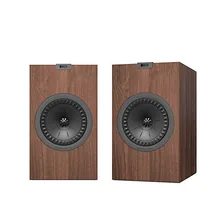 Ranked #105 of 130 in Large Size Bookshelf Speakers - KEF Q350: $699.00 per pair Discontinued Amazon eBay
Pros: CEA2034 spinorama shows a reasonably flat on-axis response with excellent directivity, aided by the coaxial Uni-Q driver. Vertical directivity is better than most non-coaxial two-way speakers, another benefit of the concentric design. Measured bass extension of 70Hz (-3dB), with a measured sensitivity of 86dB.
Cons: Two resonances at 700Hz and 1.2kHz show up on-axis, alongside an upper-bass boost. Predicted in-room response looks a bit boomy as a result. Distortion climbs substantially in the 100Hz-1kHz range at 96dB SPL/1m, with a distinct resonance-driven peak around 900Hz-1kHz at both test levels. Discontinued.
Full KEF Q350 review and specifications →
| Bass Extension (-10dB) | 38Hz (measured, Audio Science Review) |
|---|---|
| Bass Extension (-3dB) | 70Hz (measured, Audio Science Review) |
| Dimensions | 14.1"H x 8.3"W x 12"D (358.0 x 210.0 x 306.0 mm) |
| Discontinued | Yes |
| Drivers | 25mm tweeter + 165mm woofer |
| Impedance | 4 ohms |
| Sensitivity | 86dB (measured, Audio Science Review) |
| Spinorama Preference Score | 5.25 (spinorama.org) |
| Spinorama Preference Score with Perfect Sub | 7.12 (spinorama.org) |
| Weight | 29.5 lbs (13.4 kg) |
| Woofer Cabinet | ported, rear |
- Links
- Reviews, Comparisons and Sound Samples
- Head-to-Head Comparisons
Large Size Floorstanding Speakers
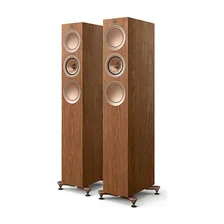 Ranked #9 of 71 in Large Size Floorstanding Speakers - KEF R5 Meta: $3,999.99 per pair Discontinued eBay
Pros: 12th generation 5” Uni-Q coaxial driver array with Metamaterial Absorption Technology (MAT) delivers remarkably smooth, controlled horizontal (±50°) and vertical directivity with near-identical off-axis tracking. Exceptional frequency response linearity through the midrange and treble that takes extremely well to minor parametric EQ adjustments. Constrained Layer Damping cabinet construction and flexible rear ports minimize enclosure resonances and port turbulence. Deliberately tuned low-frequency roll-off profile permits boundary-adjacent room placement near front walls without boomy acoustic buildup. Measured bass extension of 52Hz (-3dB), with a measured sensitivity of 86dB.
Cons: Low-frequency extension (F3 of 52Hz, F10 of 38Hz) requires pairing with a dedicated subwoofer crossed over at 80Hz for high-output home theater or bass-heavy music performance. High-frequency radiation above 7kHz shows a mild on-axis taper (1-2dB downward slope), performing best when listened to 10-20° off-axis. Moderate sensitivity (~86dB SPL average) requires a clean, robust 4-ohm capable amplifier to drive high dynamic peaks without clipping. Discontinued.
Full KEF R5 Meta review and specifications →
| Bass Extension (-10dB) | 38Hz (measured, Erin's Audio Corner) |
|---|---|
| Bass Extension (-3dB) | 52Hz (measured, Erin's Audio Corner) |
| Dimensions | 42.2"H x 10.7"W x 13.6"D (1073 x 273 x 346 mm) |
| Discontinued | Yes |
| Drivers | 1 in. vented aluminum dome tweeter with MAT, 5 in. aluminum cone midrange, two 5.25 in. hybrid aluminum cone woofers |
| Impedance | 4 ohms nominal |
| Sensitivity | 86dB (measured average, Erin's Audio Corner) |
| Spinorama Preference Score | 5.72 |
| Spinorama Preference Score with Perfect Sub | 7.45 |
| Weight | 54 lbs (24.5 kg) each |
| Woofer Cabinet | ported, rear |
- Links
- Reviews, Comparisons and Sound Samples
- Head-to-Head Comparisons
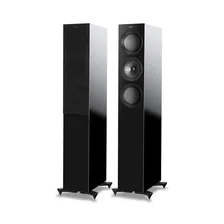 Ranked #10 of 71 in Large Size Floorstanding Speakers - KEF R5: $2,999 per pair Discontinued eBay
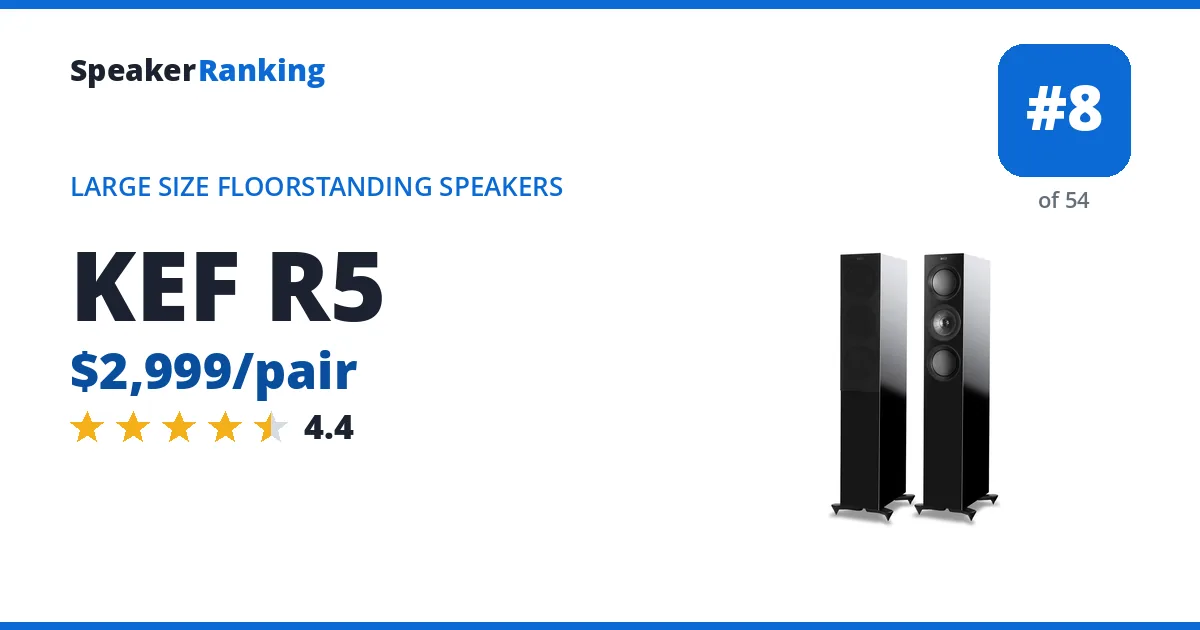
Pros: Slim three-way tower with the acoustic advantages of KEF’s coincident Uni-Q midrange/tweeter: horizontal and vertical off-axis responses track the direct sound smoothly, producing stable imaging and a well-behaved directivity index. Erin measured deep low-frequency reach for the cabinet width (77Hz F3 but 33Hz F10) and less than 1% harmonic distortion at 86dB. At 96dB it remains clean when high-passed, and its mild response deviations are suitable for equalization because the radiation pattern stays orderly. Measured bass extension of 77Hz (-3dB), with a measured sensitivity of 86dB.
Cons: The unusual gap between 77Hz F3 and 33Hz F10 indicates a gradual bass contour rather than flat deep-bass output; a subwoofer and roughly 80Hz high-pass are recommended for high-level playback. Erin measured a minimum near 3.5 ohms around 150Hz, although most of the curve remains above 4 ohms, so amplifier quality still matters. Sensitivity is approximately 86dB/2.83V/1m. At 102dB, compression reaches roughly 1dB around 150Hz, showing the limits of the twin 5.25-inch woofers. This original model lacks the Meta version’s MAT rear-wave absorption. Discontinued.
Full KEF R5 review and specifications →
| Bass Extension (-10dB) | 33Hz (measured, Erin's Audio Corner) |
|---|---|
| Bass Extension (-3dB) | 77Hz (measured, Erin's Audio Corner) |
| Dimensions | 40.4"H x 6.9"W x 13.5"D |
| Discontinued | Yes |
| Drivers | 1" aluminum tweeter coaxial with 5" midrange; dual 5.25" woofers |
| Impedance | Approximately 3.5 ohms minimum near 150Hz (measured, Erin's Audio Corner) |
| Sensitivity | Approximately 86dB/2.83V/1m (measured, Erin's Audio Corner) |
| Spinorama Preference Score | 4.94 |
| Spinorama Preference Score with Perfect Sub | 6.55 |
| Weight | 59.5 lbs (27 kg) each |
| Woofer Cabinet | ported, rear |
- Links
- Reviews, Comparisons and Sound Samples
- Head-to-Head Comparisons
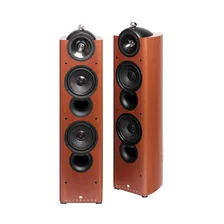 Ranked #13 of 71 in Large Size Floorstanding Speakers - KEF Reference 203: $5000 per pair Discontinued eBay
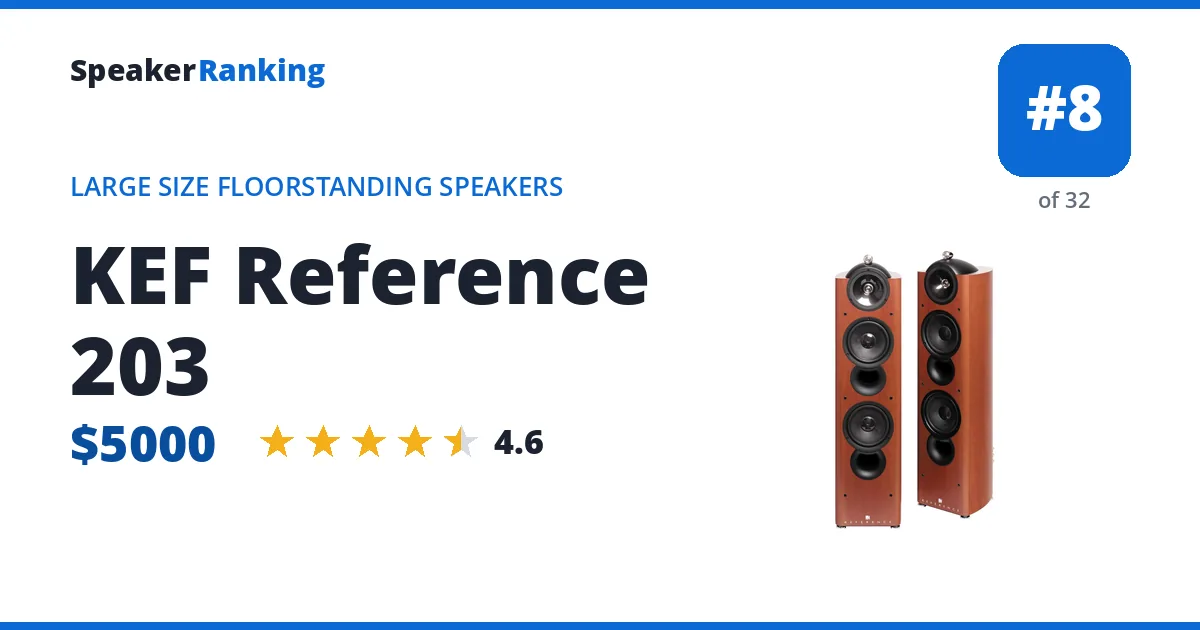
Pros: An unusually accomplished 4-way design for its era: excellent on-axis linearity (within about +/-3dB), genuinely good directivity both horizontally (~55 degrees) and vertically (~40-50 degrees), and an estimated in-room response that closely matches what the reviewer actually heard. Distortion is excellent - under 1% harmonic above 80Hz at both 86dB and 96dB, and multitone stays around 1% even at 96dB. Bass reaches a real F3 of 51Hz (F10 37Hz), with in-room extension into the low-mid-40s. The reviewer’s overall listening notes were essentially “nothing stood out bad or good” - a genuinely neutral, accurate speaker with a distinctive rounded-baffle look that avoids the diffraction issues a flat baffle this wide would normally have. Measured bass extension of 51Hz (-3dB), with a measured sensitivity of 88dB.
Cons: This is a 20+ year old, long-discontinued speaker only findable secondhand (Facebook Marketplace, Craigslist, audio forums) - condition, driver matching, and component aging vary by unit, so audition before buying if at all possible. Demands a robust amplifier: impedance dips to about 3.6 ohms with an EPDR of 2.2 ohms. The small supertweeter shows minor breakup artifacts at the extremes of the vertical polar plot and some compression at very high output in the top octave, though neither was audible in normal listening. Discontinued.
Full KEF Reference 203 review and specifications →
| Bass Extension (-10dB) | 37Hz (measured, Erin's Audio Corner) |
|---|---|
| Bass Extension (-3dB) | 51Hz (measured, Erin's Audio Corner) |
| Crossover Frequency | 400Hz, 2.7kHz, 15kHz |
| Dimensions | 42"H (1067H mm) |
| Discontinued | Yes |
| Drivers | 1x 0.75" supertweeter, coaxial 1" dome tweeter + 6.5" midrange, 2x 6.5" woofers |
| Frequency Response | 55Hz - 55kHz ±3dB (Manufacturer specified) |
| Impedance | 8 ohms nominal (3.6 ohms minimum, measured, Erin's Audio Corner; 3.2 ohms per manufacturer spec) |
| Recommended Power | 50-200W |
| Sensitivity | 88dB (2.83V/1m, measured by Erin's Audio Corner) |
| Spinorama Preference Score | 5.07 |
| Spinorama Preference Score with Perfect Sub | 7.08 |
| Weight | 58 lbs (26.3 kg) |
| Woofer Cabinet | Bass reflex, with switchable flat/cut/lifted bass ports for wall placement |
- Links
- Reviews, Comparisons and Sound Samples
- Head-to-Head Comparisons
In-Wall & In-Ceiling Speakers
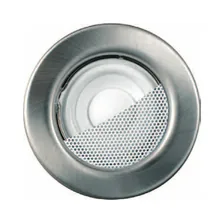 Ranked #5 of 5 in In-Wall & In-Ceiling Speakers - KEF CI50R: Discontinued eBay
Pros: At just 80 x 80mm and 55mm deep, this is by far the smallest speaker in this category, small enough to fit into spaces, tight closets, cabinetry, shallow ceiling cavities, that none of the other in-wall or in-ceiling models here can reach. Measured bass extension of 170Hz (-3dB).
Cons: No longer sold as a current KEF product; dealer listings mark it a legacy item replaced in KEF’s lineup, so buying one now means used or leftover new-old stock rather than a current retail purchase. It measures the shallowest bass extension of any speaker in this category by a wide margin, reaching only about 170Hz at -3dB and roughly 113Hz at -10dB, consistent with a small background or ambient-audio speaker rather than one built for full-range listening. Discontinued.
Full KEF CI50R review and specifications →
| Bass Extension (-10dB) | 113Hz (measured, spinorama.org vendor data) |
|---|---|
| Bass Extension (-3dB) | 170Hz (measured, spinorama.org vendor data) |
| Dimensions | 3.1" x 3.1" x 2.2" (80 x 80 x 55 mm) |
| Discontinued | Yes |
| Drivers | 2" full-range driver |
| Enclosure | Open-backed (optional rear enclosure), in-ceiling |
| Frequency Response | 125Hz-20kHz +/-6dB (manufacturer, open-backed) |
| Impedance | 6 ohms |
| Mounting Cutout | 70mm (2.76 in) with rear enclosure |
| Power Handling | 10-30W recommended amplifier power |
| Sensitivity | 82dB |
| Weight | 2.2 lbs (1.0kg) |
- Reviews, Comparisons and Sound Samples
- Head-to-Head Comparisons
Small Home Subwoofers (Under 30 lbs)
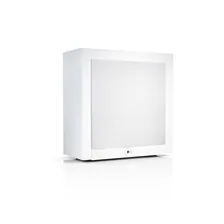 Ranked #12 of 48 in Small Home Subwoofers (Under 30 lbs) - Kef T2: $649.99 Discontinued Amazon eBay
Pros: Independent CEA-2010 testing records 90.6 dB at 20 Hz and 111.7 dB through 40-80 Hz. The sealed enclosure with 10” (254mm) driver is best suited to upper-bass support in a modest room.
Cons: Deep-bass output is limited relative to its midbass result, so it is not the right choice for the lowest movie effects. The 381.0H x 370.8W x 177.8D mm cabinet and 13.0 kg mass still need deliberate placement and calibration. Discontinued.
Notes: low profile (<8in)
Full Kef T2 review and specifications →
| CEA-2010-A Average (40-80Hz) | 111.7 dB |
|---|---|
| Cabinet Color | black, white |
| Country | United Kingdom |
| Dimensions | 15"H x 14.6"W x 7"D (381.0 x 370.8 x 177.8 mm) |
| Discontinued | Yes |
| Drivers | 10" (254mm) driver |
| Enclosure | sealed |
| Measurement Source | Brent Butterworth |
| Output SPL at 16 Hz | 84.3 dB |
| Output SPL at 20 Hz | 90.6 dB |
| Output SPL at 25 Hz | 95.8 dB |
| Output SPL at 31.5 Hz | 102.2 dB |
| Output SPL at 40 Hz | 106.1 dB |
| Output SPL at 50 Hz | 110.4 dB |
| Output SPL at 63 Hz | 114.1 dB |
| Output SPL at 80 Hz | 116.3 dB |
| Warranty | 5/2/5 |
| Weight | 28.7 lbs (13.0 kg) |
- Links
- Reviews, Comparisons and Sound Samples
- Independently measured by Brent Butterworth; the published figures above come from this ASR subwoofer measurement thread.
- Head-to-Head Comparisons
Medium Home Subwoofers (30-75 lbs)
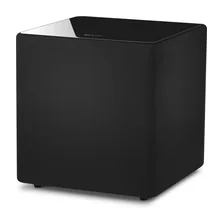 Ranked #74 of 145 in Medium Home Subwoofers (30-75 lbs) - Kef Kube 10B: $800 Discontinued eBay
Pros: Sealed 10-inch with 300W RMS and KEF iBX intelligent bass extension algorithm. Three preset EQ options plus smart compression limiting for dynamic playback. Confidence recommended for small to medium rooms.
Cons: Discontinued.
Full Kef Kube 10B review and specifications →
| Amplifier Power | 300W RMS |
|---|---|
| CEA-2010-A Average (40-80Hz) | 114.0 dB |
| Cabinet Color | black |
| Country | United Kingdom |
| Dimensions | 14.6"H x 13.9"W x 14.6"D (370.8 x 353.1 x 370.8 mm) |
| Discontinued | Yes |
| Drivers | 10" (254mm) driver |
| Enclosure | sealed |
| Frequency Response | 24-140Hz |
| Measurement Source | Brent Butterworth |
| Output SPL at 16 Hz | 92.3 dB |
| Output SPL at 20 Hz | 99.4 dB |
| Output SPL at 25 Hz | 99.5 dB |
| Output SPL at 31.5 Hz | 106.7 dB |
| Output SPL at 40 Hz | 109.9 dB |
| Output SPL at 50 Hz | 113.1 dB |
| Output SPL at 63 Hz | 115.9 dB |
| Output SPL at 80 Hz | 117.1 dB |
| Warranty | 5/2/5 |
| Weight | 38.4 lbs (17.4 kg) |
- Links
- Reviews, Comparisons and Sound Samples
- Independently measured by Brent Butterworth; the published figures above come from this ASR subwoofer measurement thread.
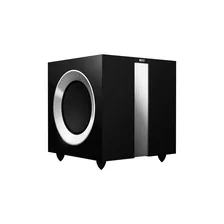 Ranked #100 of 145 in Medium Home Subwoofers (30-75 lbs) - Kef R400: $699 Discontinued eBay
Pros: Dual 9-inch force-canceling sealed drivers with 500W deliver clean tight powerful bass. Superior build quality with elegant compact design. Excellent integration with KEF R-series speakers.
Cons: Discontinued.
Full Kef R400 review and specifications →
| Amplifier Power | 500W RMS |
|---|---|
| CEA-2010-A Average (40-80Hz) | 110.8 dB (avg of 3/4 bands) |
| Country | United Kingdom |
| Dimensions | 14.4"H x 13"W x 13.8"D (365.8 x 330.2 x 350.5 mm) |
| Discontinued | Yes |
| Drivers | 2x 9" (229mm) driver |
| Enclosure | sealed |
| Frequency Response | 26-140Hz |
| Measurement Source | Brent Butterworth |
| Output SPL at 20 Hz | 85.8 dB |
| Output SPL at 25 Hz | 87.3 dB |
| Output SPL at 31.5 Hz | 92.7 dB |
| Output SPL at 40 Hz | 107.4 dB |
| Output SPL at 50 Hz | 111.5 dB |
| Output SPL at 63 Hz | 113.6 dB |
| Warranty | 5/2/5 |
| Weight | 47.4 lbs (21.5 kg) |
- Links
- Reviews, Comparisons and Sound Samples
- Independently measured by Brent Butterworth; the published figures above come from this ASR subwoofer measurement thread.
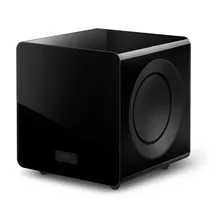 Ranked #138 of 145 in Medium Home Subwoofers (30-75 lbs) - Kef KF92: $2,000 Discontinued eBay
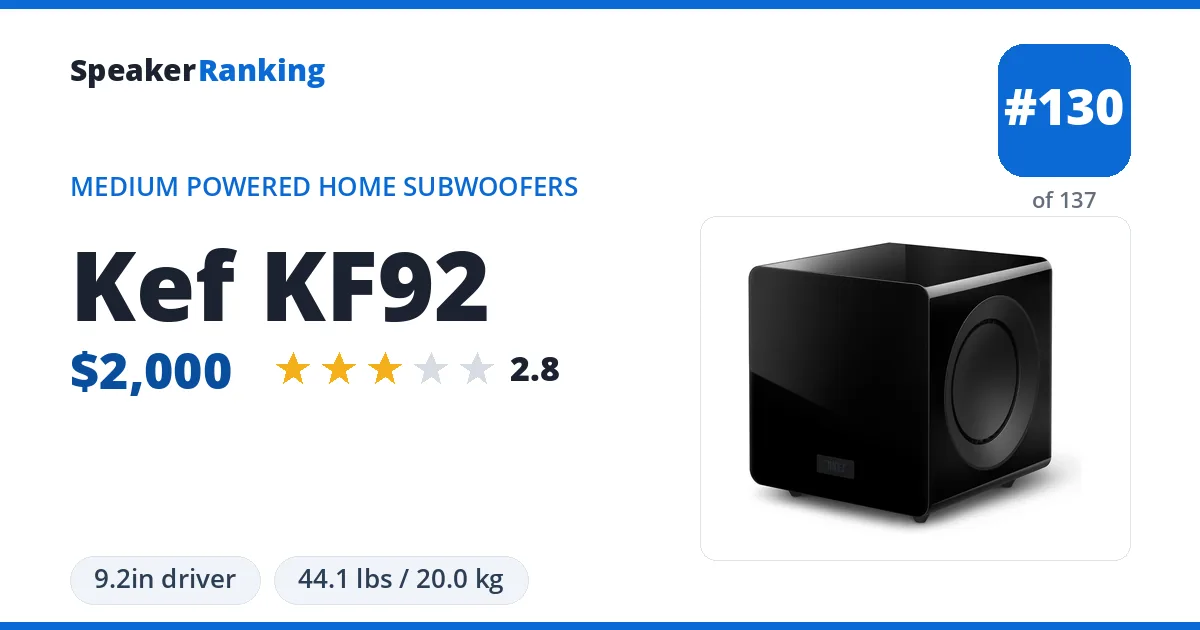
Pros: Dual opposing 9-inch force-canceling sealed drivers with 1000W deliver tight clean deep bass to 11Hz. Music Integrity Engine (iBX) provides intelligent dynamic enhancement. Flexible setup options for various room placements.
Cons: Discontinued.
Full Kef KF92 review and specifications →
| Amplifier Power | 1000W RMS |
|---|---|
| CEA-2010-A Average (40-80Hz) | 103.7 dB |
| Cabinet Color | black |
| Country | United Kingdom |
| Dimensions | 13.9"H x 13"W x 14.2"D (352.3 x 329.9 x 360.4 mm) |
| Discontinued | Yes |
| Drivers | 2x 9.2" (234mm) driver |
| Enclosure | sealed |
| Frequency Response | 11-160Hz |
| Measurement Source | ErinsAudioCorner |
| Output SPL at 20 Hz | 86.0 dB |
| Output SPL at 25 Hz | 91.6 dB |
| Output SPL at 31.5 Hz | 95.4 dB |
| Output SPL at 40 Hz | 101.1 dB |
| Output SPL at 50 Hz | 103.0 dB |
| Output SPL at 63 Hz | 104.4 dB |
| Output SPL at 80 Hz | 106.3 dB |
| Output SPL at 100 Hz | 107.2 dB |
| Warranty | 5/2/5 |
| Weight | 44.1 lbs (20.0 kg) |
- Links
- Reviews, Comparisons and Sound Samples
- Independently measured by ErinsAudioCorner; the published figures above come from this ASR subwoofer measurement thread.