Editor's top picks
Start with these headphones
Our leading recommendations at a glance. Each card links to its primary retailer.
Looking for the best headphones under $200? This is where headphones that rival far pricier models become affordable. The picks below include some of the best-measuring over-ears and in-ears on the site, so spending more beyond this point mostly buys build, comfort and features rather than better tuning.
Prices on this page were last checked October 10, 2026 at 5:37 PM UTC. Product prices and availability are accurate as of that date/time and are subject to change; the price and availability shown on Amazon at the time of purchase will apply to the purchase of this product.
As an eBay Partner, we may be compensated if you make a purchase.
Best Over-Ear Under $200
 The best over-ear headphone under $200, an open-back planar magnetic at $109, is the HIFIMAN HE400se: $109.00 Amazon eBay
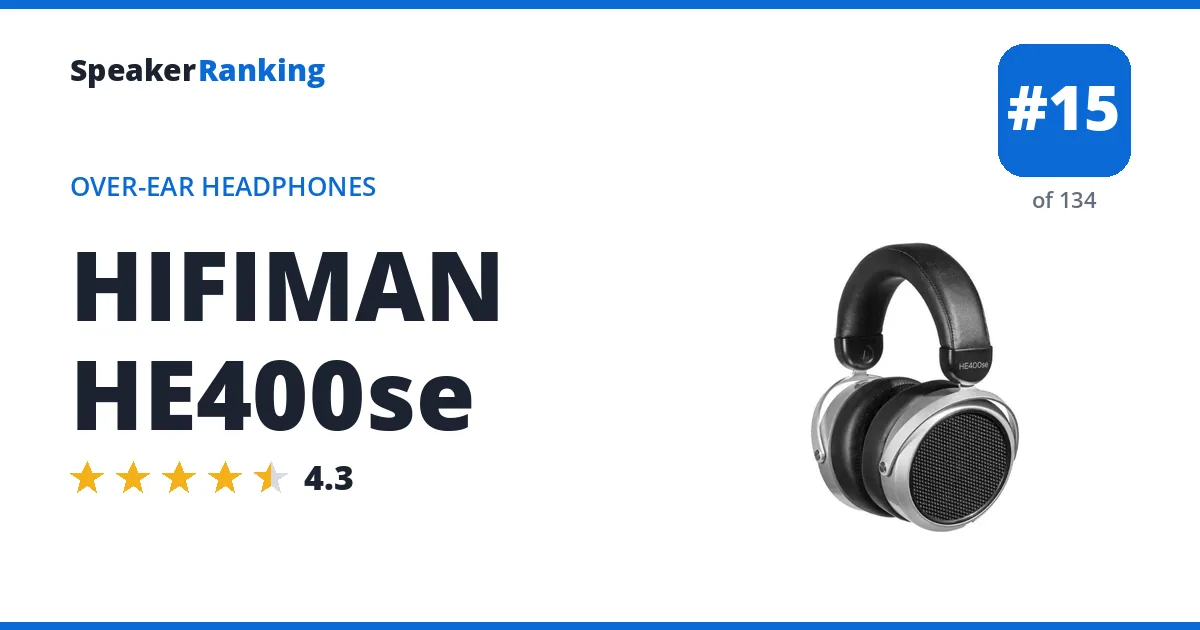
Pros: A preference score of 89 and a neutral tilt make this an accurate sounding planar for the money. Treble is within a fraction of a dB of target and the air band is only 1 dB high, so the top end is smooth and free of sharp peaks, with the largest at about 2.4 dB near 11.9 kHz. It matches the rating of the Beyerdynamic DT 880 at a lower price, with a modest 396 g weight.
Cons: Sub-bass is about 5 dB light and bass from 60 to 200 Hz is about 1 dB under target, so low end impact is limited. The low mids are about 1.6 dB elevated while a 4.8 dB dip near 2 kHz and a 2 dB upper mid shortfall can push vocals slightly back. At 91 dB/mW sensitivity it benefits from a headphone amp, and the open back leaks sound and provides no isolation.
Full HIFIMAN HE400se review and specifications →
| Released | Mar 2021 (5 years ago) |
|---|---|
| Back | Open |
| Connection | Wired |
| Deviation From Target | 1.98 dB standard deviation |
| Driver Type | Planar magnetic |
| Drivers | 1 x planar magnetic |
| Form Factor | Over-ear |
| Frequency Response | 20Hz - 20kHz (Manufacturer specified) |
| Harman Preference Score | 89 (measured by oratory1990, via AutoEQ) |
| Sensitivity | 91 dB/mW |
| Tonal Tilt | +0.05 (negative is warmer, positive brighter) |
| Weight | 0.9 lbs (396 g) |
EQ preset to match the Harman target
Set a preamp of -6.0 dB, then add these filters in any parametric equalizer (Wavelet, Equalizer APO, Peace, or a player with parametric EQ). Calculated by AutoEQ from its measured frequency response.
| Filter | Frequency | Gain | Q |
|---|---|---|---|
| Low shelf | 105 Hz | +6.7 dB | 0.70 |
| Peak | 1,968 Hz | +5.1 dB | 2.37 |
| Peak | 861 Hz | -2.3 dB | 1.86 |
| Peak | 101 Hz | -2.4 dB | 0.32 |
| Peak | 1,619 Hz | +1.1 dB | 3.53 |
| High shelf | 10,000 Hz | -2.6 dB | 0.70 |
| Peak | 138 Hz | +0.7 dB | 1.98 |
| Peak | 64 Hz | -0.7 dB | 1.95 |
| Peak | 251 Hz | -0.4 dB | 2.33 |
| Peak | 29 Hz | +0.5 dB | 2.63 |
- Reviews, Comparisons and Sound Samples
 The best closed-back under $200, a long-running studio standard at $130, is the Sony MDR-7506: $129.99 Amazon eBay
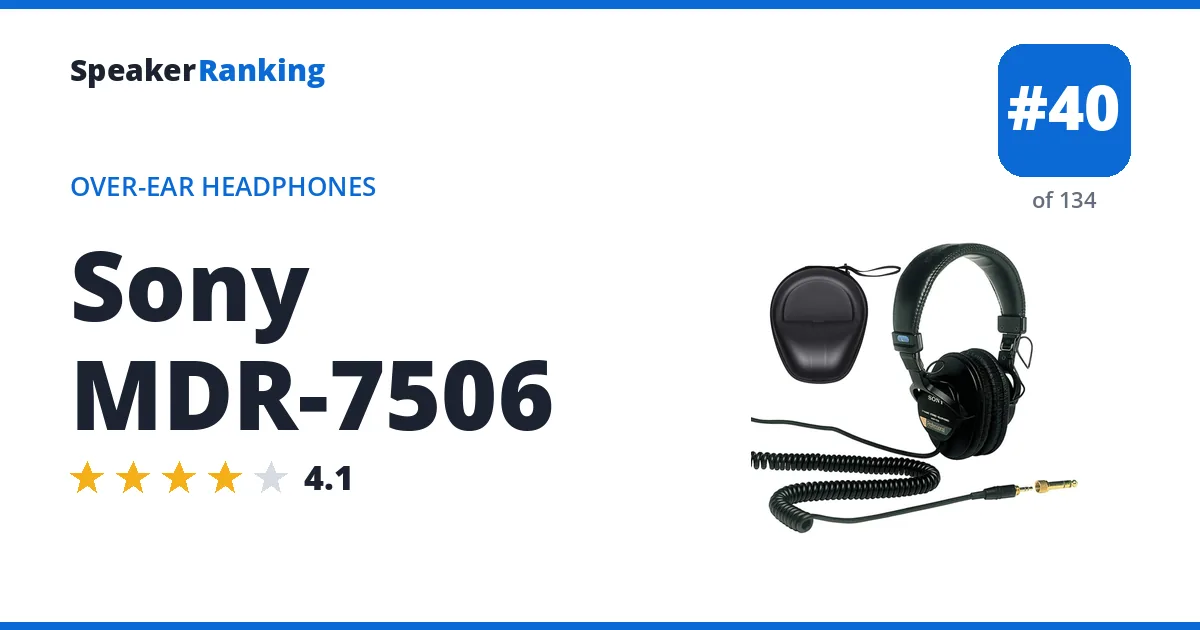
Pros: A preference score of 83 with a deviation of only 1.7 dB from the Harman target in oratory1990’s measurement is excellent for a closed studio headphone. Bass and low mids sit within about 1 dB of target, so vocals and instruments sound natural and uncolored. At 260 g with a 106 dB/mW sensitivity, it plays loud straight from a phone or laptop without an amp.
Cons: Presence and treble run about 3.5 dB hot, with a peak of 6 dB near 4.5 kHz, which makes vocals forward and cymbals or sibilance sharp at higher volumes. Air above 10 kHz is about 2.6 dB low, and the wired-only design has no microphone.
Full Sony MDR-7506 review and specifications →
| Back | Closed |
|---|---|
| Built-in Microphone | No |
| Connection | Wired |
| Deviation From Target | 1.70 dB standard deviation |
| Driver Type | Dynamic |
| Drivers | 1 x 40mm dynamic |
| Form Factor | Over-ear |
| Frequency Response | 10Hz - 20kHz (Manufacturer specified) |
| Harman Preference Score | 83 (measured by oratory1990, via AutoEQ) |
| Sensitivity | 106 dB/mW |
| Tonal Tilt | +0.64 (negative is warmer, positive brighter) |
| Weight | 0.6 lbs (260 g) |
EQ preset to match the Harman target
Set a preamp of -5.8 dB, then add these filters in any parametric equalizer (Wavelet, Equalizer APO, Peace, or a player with parametric EQ). Calculated by AutoEQ from its measured frequency response.
| Filter | Frequency | Gain | Q |
|---|---|---|---|
| Low shelf | 105 Hz | +10.3 dB | 0.70 |
| Peak | 5,435 Hz | -3.8 dB | 0.90 |
| Peak | 847 Hz | +1.9 dB | 0.70 |
| Peak | 230 Hz | +3.7 dB | 2.08 |
| Peak | 48 Hz | -9.5 dB | 0.52 |
| High shelf | 10,000 Hz | +3.8 dB | 0.70 |
| Peak | 7,530 Hz | -1.4 dB | 3.26 |
| Peak | 2,916 Hz | -1.9 dB | 5.57 |
| Peak | 3,748 Hz | +2.6 dB | 5.91 |
| Peak | 4,456 Hz | -1.6 dB | 6.00 |
- Reviews, Comparisons and Sound Samples
 For a semi-open reference headphone, at $160, check out the Beyerdynamic DT 880: $159.95 Amazon eBay
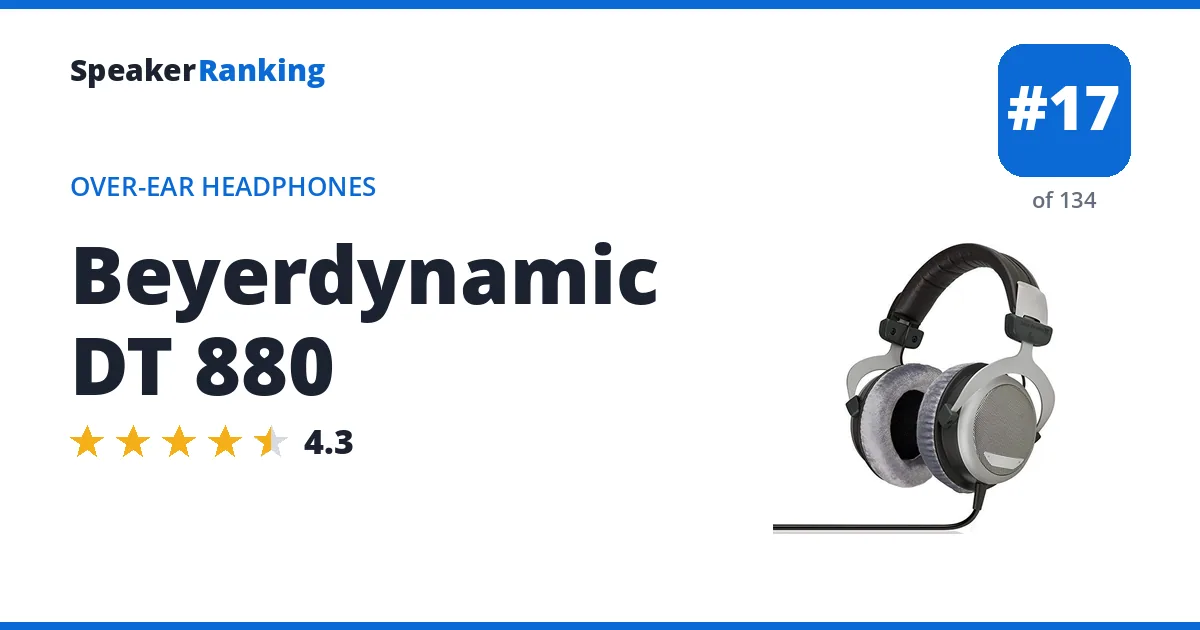
Pros: A preference score of 88 and a neutral tilt show a well balanced tuning, with bass from 60 to 200 Hz within 1 dB of target and upper mids within half a dB. The semi-open design offers a more spacious feel than a closed back. It has the same rating as the HIFIMAN Ananda Stealth and Sennheiser HD 505 while costing less than both.
Cons: A 6 dB peak near 5.8 kHz can make hi-hats, snare and sibilant vocals sound sharp, and the treble from 6 to 10 kHz runs about 2 dB hot. The low mids are lifted by about 2 dB and sub-bass is about 4 dB light under 60 Hz, giving a slightly boxy, bass-shy balance. The semi-open back leaks some sound and gives limited isolation.
Full Beyerdynamic DT 880 review and specifications →
| Back | Semi-open |
|---|---|
| Connection | Wired |
| Deviation From Target | 2.05 dB standard deviation |
| Driver Type | Dynamic |
| Form Factor | Over-ear |
| Frequency Response | 5Hz - 35kHz (Manufacturer specified) |
| Harman Preference Score | 88 (measured by oratory1990, via AutoEQ) |
| Tonal Tilt | +0.02 (negative is warmer, positive brighter) |
EQ preset to match the Harman target
Set a preamp of -6.4 dB, then add these filters in any parametric equalizer (Wavelet, Equalizer APO, Peace, or a player with parametric EQ). Calculated by AutoEQ from its measured frequency response.
| Filter | Frequency | Gain | Q |
|---|---|---|---|
| Low shelf | 105 Hz | +7.4 dB | 0.70 |
| Peak | 112 Hz | -3.4 dB | 0.30 |
| Peak | 1,320 Hz | +2.1 dB | 0.54 |
| Peak | 5,760 Hz | -6.1 dB | 4.97 |
| Peak | 4,480 Hz | +3.9 dB | 4.24 |
| High shelf | 10,000 Hz | -3.1 dB | 0.70 |
| Peak | 480 Hz | +0.5 dB | 2.40 |
| Peak | 234 Hz | -0.4 dB | 2.41 |
| Peak | 940 Hz | -0.6 dB | 4.04 |
| Peak | 2,939 Hz | -0.5 dB | 4.92 |
- Reviews, Comparisons and Sound Samples
Best In-Ear Under $200
 The best in-ear monitor under $200, a hybrid with one dynamic driver and four balanced armatures at $170, is the Truthear Nova: $169.99 Amazon eBay
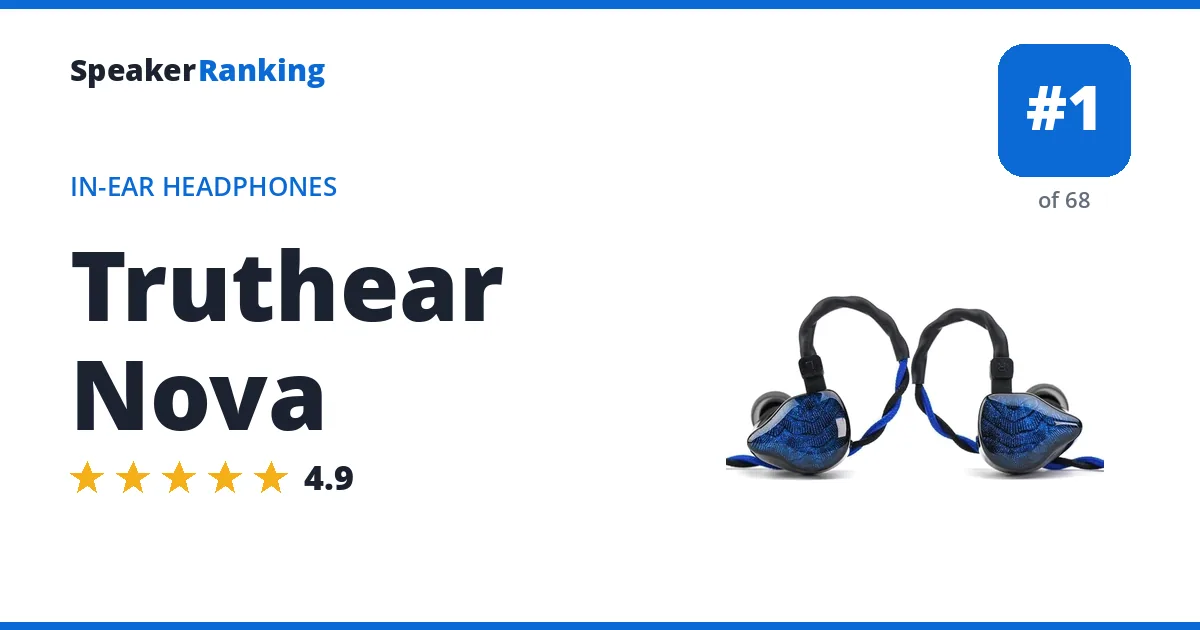
Pros: A Harman score of 90 puts it among the best-tuned in-ears measured, with every band from sub-bass to presence within about 1.5 dB of the target. The deviation of only 0.86 dB means vocals, guitars and drums sound natural and evenly balanced. The hybrid design pairs a dynamic driver with four balanced armatures, and the 14.8 ohm impedance with 123 dB sensitivity lets a phone drive it easily. Sub-bass sits about 1.5 dB above target, adding a touch of rumble without muddying the mids.
Cons: A 2.7 dB peak near 8 kHz can make bright cymbals and sibilant vocals slightly edgy on poorly mastered tracks. Treble and air run about 1.3 to 1.4 dB hot, so listeners sensitive to brightness may find extended sessions a little sharp. It is wired only, with no microphone or wireless features listed.
Full Truthear Nova review and specifications →
| Released | 2023 (3 years ago) |
|---|---|
| Back | Closed |
| Connection | Wired |
| Deviation From Target | 0.86 dB standard deviation |
| Driver Type | Hybrid (1 dynamic + 4 balanced armature) |
| Drivers | 1 x 10mm dynamic + 4 x balanced armature |
| Form Factor | In-ear |
| Frequency Response | 8Hz - 40kHz (Manufacturer specified) |
| Harman Preference Score | 90 (measured by oratory1990, via AutoEQ) |
| Impedance | 14.8 ohms |
| Sensitivity | 123 dB/Vrms @1kHz |
| Tonal Tilt | -0.14 (negative is warmer, positive brighter) |
EQ preset to match the Harman target
Set a preamp of -1.2 dB, then add these filters in any parametric equalizer (Wavelet, Equalizer APO, Peace, or a player with parametric EQ). Calculated by AutoEQ from its measured frequency response.
| Filter | Frequency | Gain | Q |
|---|---|---|---|
| Low shelf | 105 Hz | -4.2 dB | 0.70 |
| Peak | 313 Hz | +0.4 dB | 0.95 |
| Peak | 63 Hz | +3.6 dB | 0.80 |
| Peak | 4,404 Hz | -1.2 dB | 0.51 |
| Peak | 560 Hz | +1.1 dB | 0.85 |
| High shelf | 10,000 Hz | -2.5 dB | 0.70 |
| Peak | 9,390 Hz | +1.0 dB | 2.26 |
| Peak | 2,126 Hz | +1.1 dB | 3.14 |
| Peak | 2,987 Hz | -1.0 dB | 3.83 |
| Peak | 1,281 Hz | -0.5 dB | 2.65 |
- Reviews, Comparisons and Sound Samples
 For a planar in-ear with a different presentation, at $129, consider the Shuoer S12: $129.00 Amazon eBay
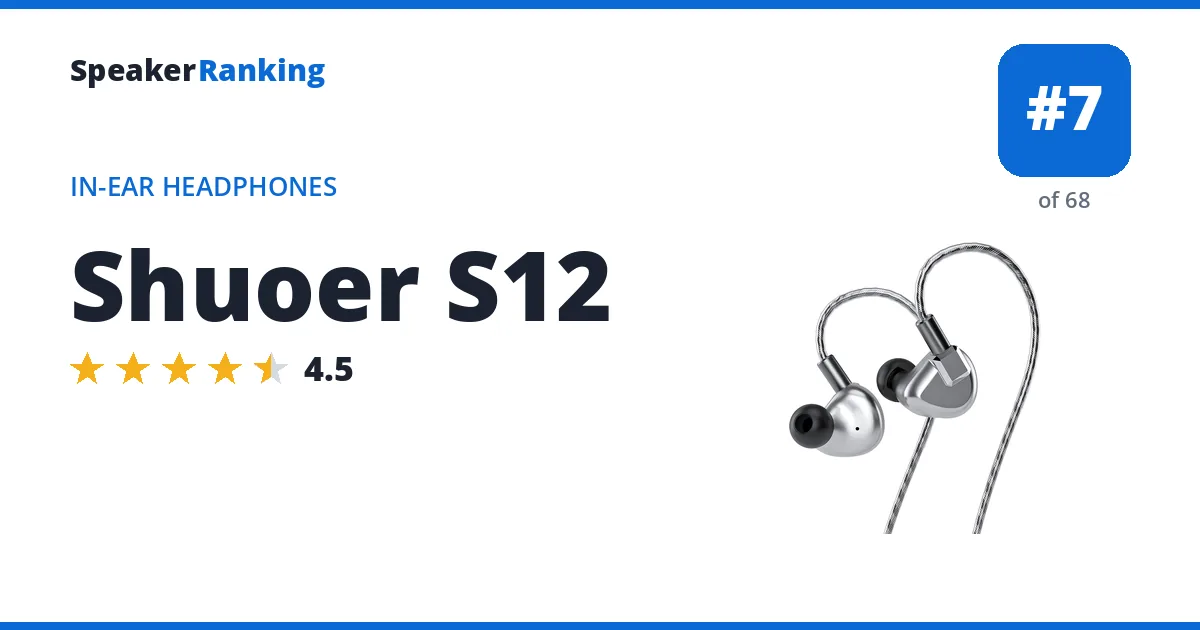
Pros: A planar magnetic driver is unusual in an in-ear and gives a Harman score of 80 with a smooth 1.62 dB deviation. Bass is lifted about 1.9 dB, adding warmth and punch, while the upper mids and treble stay close to target. The 16 ohm impedance is easy to drive from a phone, and it matches the Final Audio A4000 on rating.
Cons: A 4.2 dB peak near 8.2 kHz can make cymbals and sibilants slightly sharp, and treble from 6 to 10 kHz runs about 1.6 dB hot. Presence from 3 to 6 kHz sits 2.4 dB under target with a 3.3 dB dip near 3.75 kHz, so vocals can lose some forwardness. The 102 dB per mW sensitivity asks for a bit more volume than efficient rivals.
Full Shuoer S12 review and specifications →
| Released | 2022 (4 years ago) |
|---|---|
| Back | Closed |
| Connection | Wired |
| Deviation From Target | 1.62 dB standard deviation |
| Driver Type | Planar magnetic |
| Drivers | 1 x 14.8mm planar magnetic |
| Form Factor | In-ear |
| Frequency Response | 10Hz - 30kHz (Manufacturer specified) |
| Harman Preference Score | 80 (measured by oratory1990, via AutoEQ) |
| Impedance | 16 ohms |
| Sensitivity | 102 dB/mW |
| Tonal Tilt | -0.11 (negative is warmer, positive brighter) |
EQ preset to match the Harman target
Set a preamp of -2.5 dB, then add these filters in any parametric equalizer (Wavelet, Equalizer APO, Peace, or a player with parametric EQ). Calculated by AutoEQ from its measured frequency response.
| Filter | Frequency | Gain | Q |
|---|---|---|---|
| Low shelf | 105 Hz | +0.4 dB | 0.70 |
| Peak | 776 Hz | +2.9 dB | 0.76 |
| Peak | 162 Hz | -2.3 dB | 0.89 |
| Peak | 2,097 Hz | -3.4 dB | 0.90 |
| Peak | 3,690 Hz | +3.8 dB | 1.44 |
| High shelf | 10,000 Hz | -3.6 dB | 0.70 |
| Peak | 6,122 Hz | +1.6 dB | 5.71 |
| Peak | 7,230 Hz | -0.7 dB | 6.00 |
| Peak | 37 Hz | -0.3 dB | 2.35 |
| Peak | 65 Hz | +0.2 dB | 2.13 |
- Reviews, Comparisons and Sound Samples
If You Need Wireless
The best-measuring wireless earbuds near this price are Sony’s WF-1000XM5 at $198, with noise cancelling, LDAC and a sound that rates far above most wireless models. See every wireless headphone and noise cancelling headphone ranked.