Editor's top picks
Start with these headphones
Our leading recommendations at a glance. Each card links to its primary retailer.
Looking for the best headphones under $50? This price buys some of the best measured sound on the site, as long as you’re happy with wired in-ear monitors. Several cost a fraction of premium models and still land within a couple of dB of the response most listeners prefer.
Over-ear headphones are a different story at this price: the choices are older open designs and gaming headsets, so if you want full-size cups it’s worth stretching to under $100.
Prices on this page were last checked October 10, 2026 at 5:37 PM UTC. Product prices and availability are accurate as of that date/time and are subject to change; the price and availability shown on Amazon at the time of purchase will apply to the purchase of this product.
As an eBay Partner, we may be compensated if you make a purchase.
Best In-Ear Under $50
 The best in-ear option under $50, at $22, is the Truthear Gate: $21.99 Amazon eBay
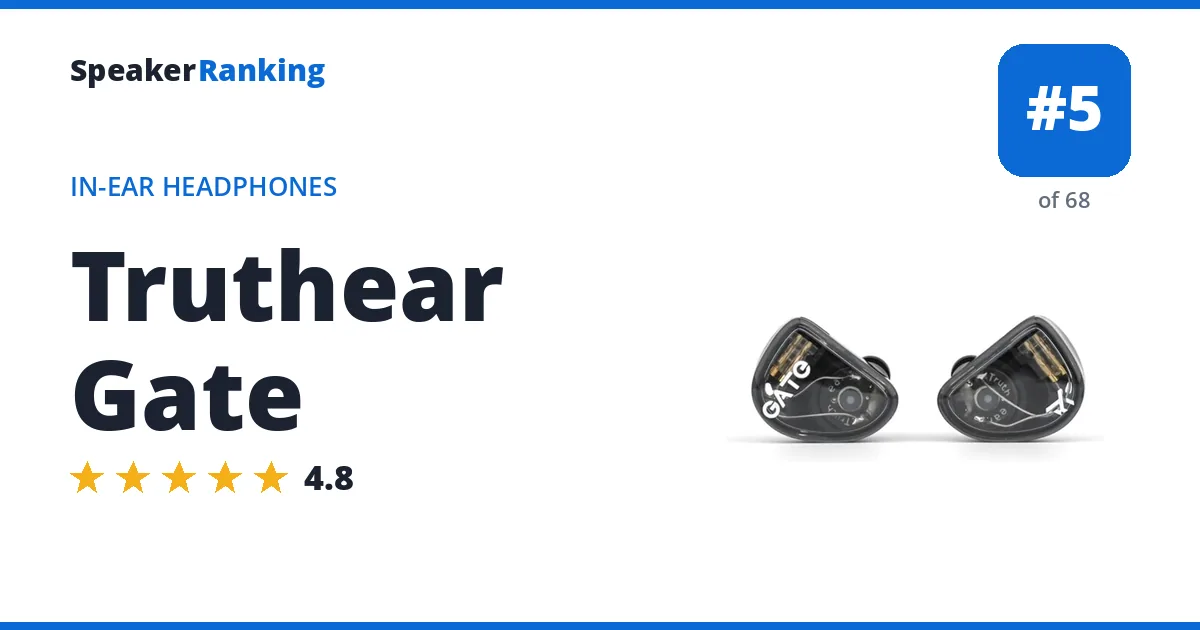
Pros: A Harman score of 83 from a single dynamic driver at a very low price gives accurate bass and mids, with bass and upper mids within about 0.2 dB of target. The 28 ohm impedance with 122 dB per volt sensitivity makes it easy to drive from any phone. The warm tilt suits listeners who want a smooth, non-fatiguing sound. It earns the same rating as the 7Hz Salnotes Zero at a similar cost.
Cons: Treble is the weak point, with a deep 10.8 dB dip near 11 kHz and air about 3 dB under target. Cymbals, hi-hats and the sense of space on recordings sound dulled as a result. Presence from 3 to 6 kHz is also about 1.9 dB down, which takes a little bite off vocals.
Full Truthear Gate review and specifications →
| Back | Closed |
|---|---|
| Connection | Wired |
| Deviation From Target | 1.39 dB standard deviation |
| Driver Type | Dynamic |
| Drivers | 1 x 10mm dynamic |
| Form Factor | In-ear |
| Frequency Response | 10Hz - 45kHz (Manufacturer specified) |
| Harman Preference Score | 83 (measured by oratory1990, via AutoEQ) |
| Impedance | 28 ohms |
| Sensitivity | 122 dB/Vrms |
| Tonal Tilt | -0.23 (negative is warmer, positive brighter) |
EQ preset to match the Harman target
Set a preamp of -4.9 dB, then add these filters in any parametric equalizer (Wavelet, Equalizer APO, Peace, or a player with parametric EQ). Calculated by AutoEQ from its measured frequency response.
| Filter | Frequency | Gain | Q |
|---|---|---|---|
| Low shelf | 105 Hz | +0.1 dB | 0.70 |
| Peak | 9,538 Hz | +4.7 dB | 0.99 |
| Peak | 2,074 Hz | -1.3 dB | 0.65 |
| Peak | 196 Hz | -1.1 dB | 1.34 |
| Peak | 698 Hz | +1.2 dB | 1.31 |
| High shelf | 10,000 Hz | -2.1 dB | 0.70 |
| Peak | 72 Hz | +0.8 dB | 1.77 |
| Peak | 4,992 Hz | +0.3 dB | 2.04 |
| Peak | 126 Hz | -0.4 dB | 2.34 |
| Peak | 8,647 Hz | +1.3 dB | 5.95 |
- Reviews, Comparisons and Sound Samples
- Head-to-Head Comparisons
 For a single dynamic driver with a warmer tilt, at $25, consider the 7Hz x Crinacle Zero 2: $24.99 Amazon eBay
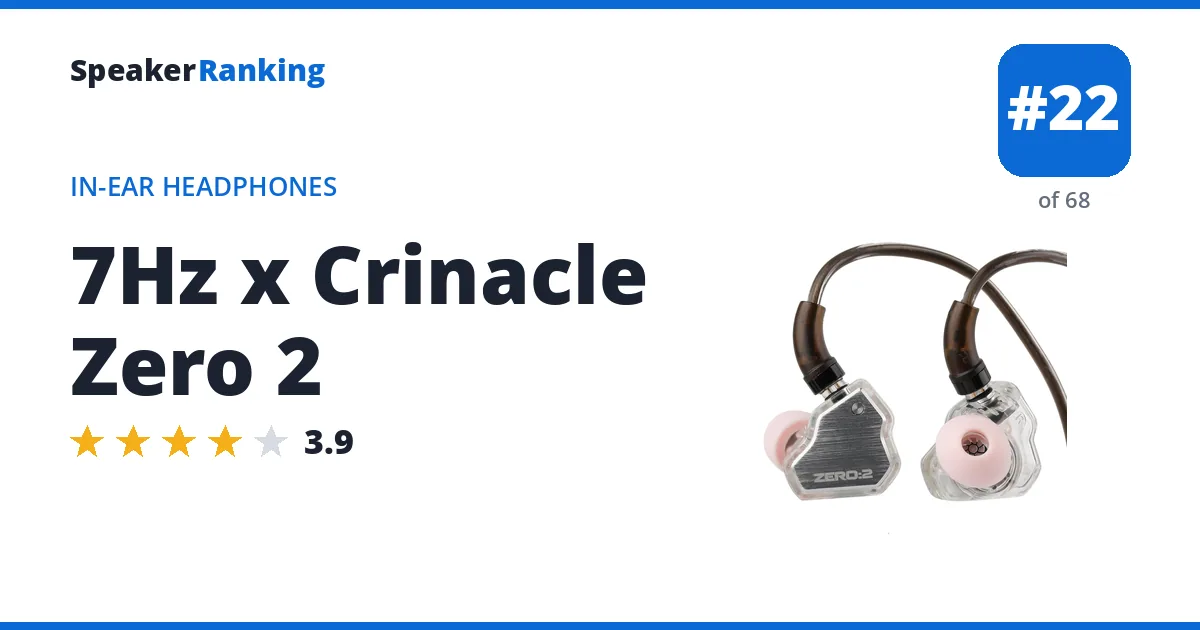
Older model: the 7Hz Salnotes Zero (ranked higher, rated 4.8/5). See every 7Hz Zero generation.
Pros: Crinacle’s measurement gives a preference score of 73 with a response that stays fairly even, a standard deviation of 1.99 dB around target. A 10mm dynamic driver at 32 ohms and 108 dB SPL/V sensitivity runs from a phone with no amp. The low cost makes it an easy entry into wired in-ears.
Cons: The tilt of negative 0.71 is the warmest in this group, so treble detail and air can sound subdued. It has no wireless features, noise cancelling or listed microphone. The KZ ZSN Pro X has a higher rating at a similar price.
Full 7Hz x Crinacle Zero 2 review and specifications →
| Released | Nov 2023 (2 years ago) |
|---|---|
| Back | Closed |
| Connection | Wired |
| Deviation From Target | 1.99 dB standard deviation |
| Driver Type | Dynamic |
| Drivers | 1 x 10mm dynamic |
| Form Factor | In-ear |
| Frequency Response | 10Hz - 20kHz (Manufacturer specified) |
| Harman Preference Score | 73 (measured by crinacle, via AutoEQ) |
| Impedance | 32 ohms |
| Sensitivity | 108 dB SPL/V |
| Tonal Tilt | -0.71 (negative is warmer, positive brighter) |
EQ preset to match the Harman target
Set a preamp of -4.4 dB, then add these filters in any parametric equalizer (Wavelet, Equalizer APO, Peace, or a player with parametric EQ). Calculated by AutoEQ from its measured frequency response.
| Filter | Frequency | Gain | Q |
|---|---|---|---|
| Low shelf | 105 Hz | -1.1 dB | 0.70 |
| Peak | 6,290 Hz | +4.3 dB | 0.72 |
| Peak | 182 Hz | -2.3 dB | 1.03 |
| Peak | 1,916 Hz | -1.7 dB | 0.50 |
| Peak | 855 Hz | +1.8 dB | 1.59 |
| High shelf | 10,000 Hz | +0.9 dB | 0.70 |
| Peak | 67 Hz | +0.4 dB | 2.53 |
| Peak | 7,224 Hz | -1.2 dB | 5.84 |
| Peak | 5,811 Hz | +0.8 dB | 5.07 |
| Peak | 3,871 Hz | -0.3 dB | 2.41 |
- Reviews, Comparisons and Sound Samples
- Head-to-Head Comparisons
 For a dual-driver option with a detachable cable, at $24, check out the KZ ZSN Pro X: $23.99 Amazon eBay
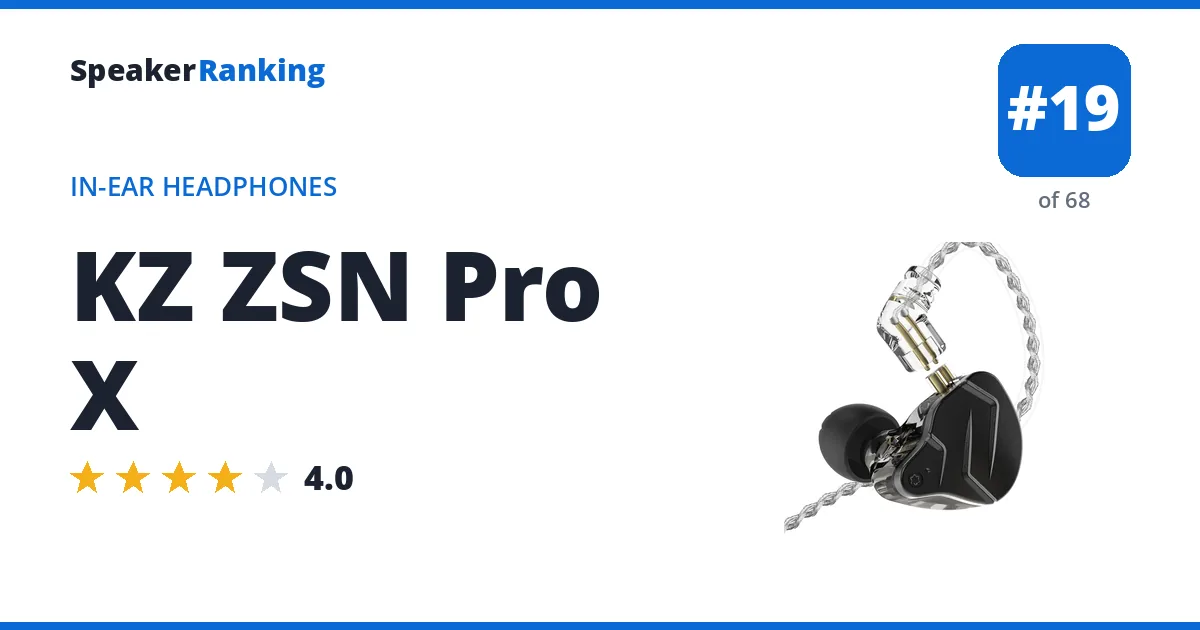
Pros: The hybrid design with a 10mm dynamic driver and a balanced armature gives bass about 3.6 dB above target at 60 to 200 Hz, which adds punch and warmth for pop and hip hop. A preference score of 74 at an inexpensive price is strong, and the 25 ohm impedance with 112 dB/mW sensitivity makes it easy to drive from a phone. It also suits a warm or v-shaped taste.
Cons: A 7.2 dB peak near 8.1 kHz and an air band about 5.8 dB above target can make cymbals and s sounds sharp or hissy at higher volume. The 3 to 4 kHz region dips about 2.9 dB, so vocals can sound a little distant. It has no wireless features or noise cancelling.
Full KZ ZSN Pro X review and specifications →
| Released | Jul 2020 (6 years ago) |
|---|---|
| Back | Closed |
| Connection | Wired |
| Deviation From Target | 2.09 dB standard deviation |
| Driver Type | Hybrid (1 dynamic + 1 balanced armature) |
| Drivers | 1 x 10mm dynamic + 1 x balanced armature |
| Form Factor | In-ear |
| Frequency Response | 7Hz - 40kHz (Manufacturer specified) |
| Harman Preference Score | 74 (measured by oratory1990, via AutoEQ) |
| Impedance | 25 ohms |
| Sensitivity | 112 dB/mW |
| Tonal Tilt | -0.17 (negative is warmer, positive brighter) |
EQ preset to match the Harman target
Set a preamp of -3.8 dB, then add these filters in any parametric equalizer (Wavelet, Equalizer APO, Peace, or a player with parametric EQ). Calculated by AutoEQ from its measured frequency response.
| Filter | Frequency | Gain | Q |
|---|---|---|---|
| Low shelf | 105 Hz | +0.8 dB | 0.70 |
| Peak | 928 Hz | +5.3 dB | 0.66 |
| Peak | 166 Hz | -3.4 dB | 0.67 |
| Peak | 2,193 Hz | -4.4 dB | 0.61 |
| Peak | 3,392 Hz | +6.1 dB | 2.82 |
| High shelf | 10,000 Hz | -4.4 dB | 0.70 |
| Peak | 6,459 Hz | +3.5 dB | 5.25 |
| Peak | 4,968 Hz | -3.5 dB | 5.59 |
| Peak | 4,039 Hz | +1.3 dB | 6.00 |
| Peak | 5,964 Hz | +0.9 dB | 5.91 |
- Reviews, Comparisons and Sound Samples
- Head-to-Head Comparisons
Best Over-Ear Under $50
 The best over-ear pick under $50, a light open-back with a classic warm tuning at $24, is the Koss KPH30i: $23.99 Amazon eBay
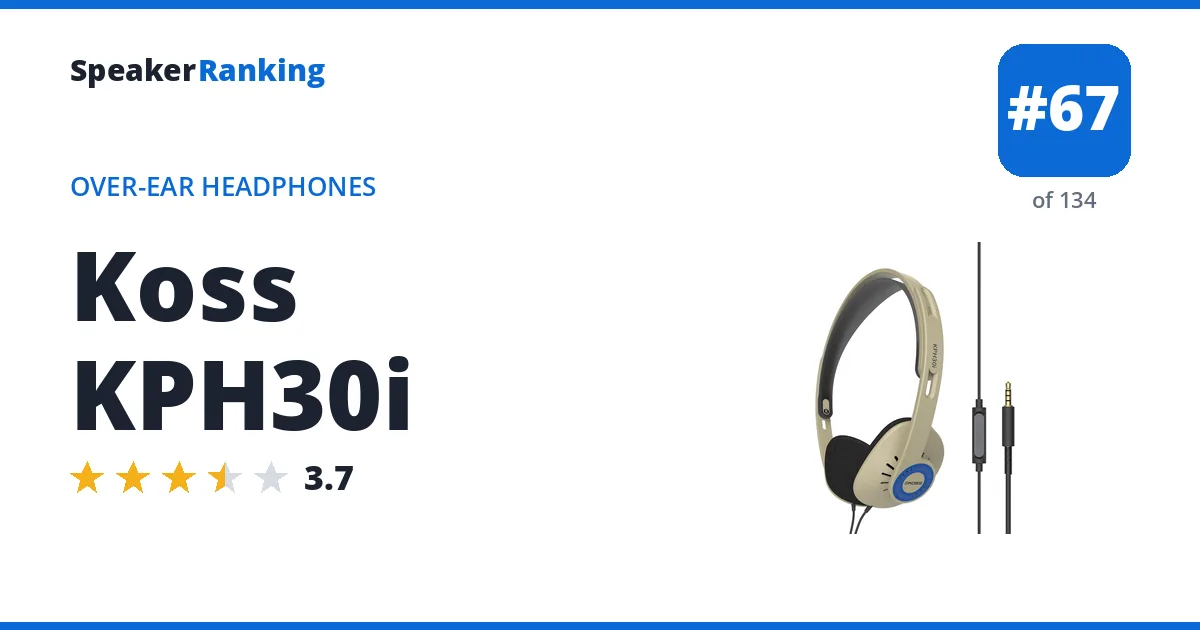
Pros: A very low price makes it an easy disposable or backup pair, and the 60 ohm, 101 dB sensitivity runs from any phone. It has an inline microphone for calls and the open on-ear design is light and airy. Bass from 60 Hz to the upper mids stays within about 0.6 dB of the Harman target, which gives a fairly balanced core.
Cons: Sub-bass is nearly 12 dB under target below 60 Hz, so there is no rumble and deep bass is essentially missing. An 11.8 dB dip near 4.2 kHz makes vocals and detail recede, and treble from 3 to 10 kHz is about 2.8 dB low. The open back leaks sound and offers no isolation, so it suits quiet rooms only.
Full Koss KPH30i review and specifications →
| Back | Open |
|---|---|
| Built-in Microphone | Yes |
| Connection | Wired |
| Deviation From Target | 2.62 dB standard deviation |
| Driver Type | Dynamic |
| Drivers | 1 x 35mm dynamic |
| Form Factor | Over-ear |
| Frequency Response | 15Hz - 25kHz (Manufacturer specified) |
| Harman Preference Score | 76 (measured by oratory1990, via AutoEQ) |
| Impedance | 60 ohms |
| Sensitivity | 101 dB SPL/1mW |
| Tonal Tilt | -0.38 (negative is warmer, positive brighter) |
EQ preset to match the Harman target
Set a preamp of -6.3 dB, then add these filters in any parametric equalizer (Wavelet, Equalizer APO, Peace, or a player with parametric EQ). Calculated by AutoEQ from its measured frequency response.
| Filter | Frequency | Gain | Q |
|---|---|---|---|
| Low shelf | 105 Hz | +6.8 dB | 0.70 |
| Peak | 109 Hz | -4.7 dB | 0.47 |
| Peak | 2,979 Hz | +1.7 dB | 0.18 |
| Peak | 1,956 Hz | -4.1 dB | 2.01 |
| Peak | 49 Hz | +2.5 dB | 2.08 |
| High shelf | 10,000 Hz | +0.1 dB | 0.70 |
| Peak | 5,070 Hz | -5.0 dB | 5.22 |
| Peak | 3,844 Hz | +2.9 dB | 5.95 |
| Peak | 6,348 Hz | +2.6 dB | 5.99 |
| Peak | 502 Hz | +0.3 dB | 1.44 |
- Reviews, Comparisons and Sound Samples
- Head-to-Head Comparisons
 For a closed gaming headset with a boom microphone, at $45, consider the HyperX Cloud Alpha: $44.99 Amazon eBay
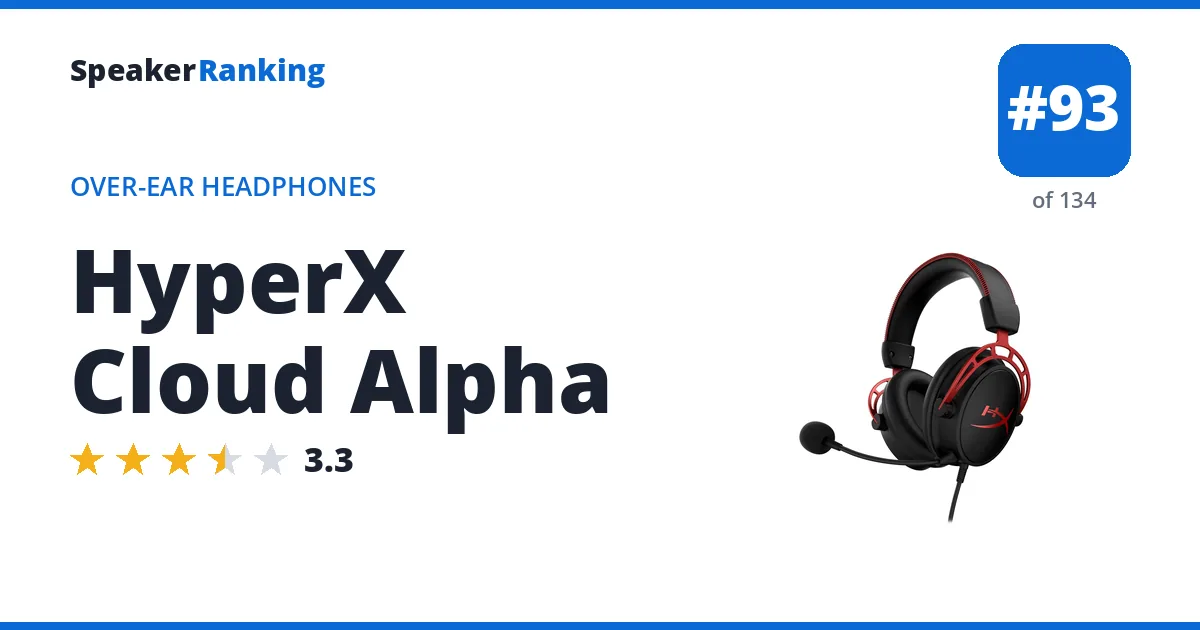
Pros: Bass from 60 to 200 Hz sits about 4 dB above the Harman target in oratory1990’s measurement, which gives kick drums and bass guitar extra weight for games and pop. The closed 50mm driver at 98 dB sensitivity and 65 ohms runs easily from a phone or console controller, and the built-in microphone suits voice chat.
Cons: Treble is uneven, with a 4.6 dB peak near 8 kHz that can make cymbals and sibilants sharp and a 5.8 dB dip near 4 kHz that pulls vocals slightly back. Air above 10 kHz runs about 4 dB hot, adding a hint of fizz on top of the warm tilt.
Full HyperX Cloud Alpha review and specifications →
| Released | Sep 2017 (9 years ago) |
|---|---|
| Back | Closed |
| Built-in Microphone | Yes |
| Connection | Wired |
| Deviation From Target | 2.80 dB standard deviation |
| Driver Type | Dynamic |
| Drivers | 1 x 50mm dynamic |
| Form Factor | Over-ear |
| Frequency Response | 13Hz - 27kHz (Manufacturer specified) |
| Harman Preference Score | 66 (measured by oratory1990, via AutoEQ) |
| Impedance | 65 ohms |
| Sensitivity | 98 dB SPL/mW |
| Tonal Tilt | -0.87 (negative is warmer, positive brighter) |
| Weight | 0.7 lbs (298 g) |
EQ preset to match the Harman target
Set a preamp of -6.3 dB, then add these filters in any parametric equalizer (Wavelet, Equalizer APO, Peace, or a player with parametric EQ). Calculated by AutoEQ from its measured frequency response.
| Filter | Frequency | Gain | Q |
|---|---|---|---|
| Low shelf | 105 Hz | +7.1 dB | 0.70 |
| Peak | 104 Hz | -5.9 dB | 0.23 |
| Peak | 733 Hz | +4.5 dB | 0.92 |
| Peak | 4,324 Hz | +6.7 dB | 2.87 |
| Peak | 6,110 Hz | -3.0 dB | 3.21 |
| High shelf | 10,000 Hz | -5.6 dB | 0.70 |
| Peak | 41 Hz | -0.4 dB | 2.00 |
| Peak | 159 Hz | +0.5 dB | 3.01 |
| Peak | 212 Hz | -0.5 dB | 3.66 |
| Peak | 1,964 Hz | +0.5 dB | 4.33 |
- Reviews, Comparisons and Sound Samples
- Head-to-Head Comparisons
Where $50 Falls Short
Wireless models at this price measure poorly, with heavy bass and recessed vocals, so none make this list. If you need Bluetooth, budget for at least the under $100 tier.