Short answer: the Koss KPH30i. It ranks #67 of 134 over-ear headphones by sound quality, rated 3.7/5, at $23.99; the Koss KSC75 ranks #116, rated 2.8/5, at $19.99. Close enough in price that the sound-quality gap is the deciding factor.
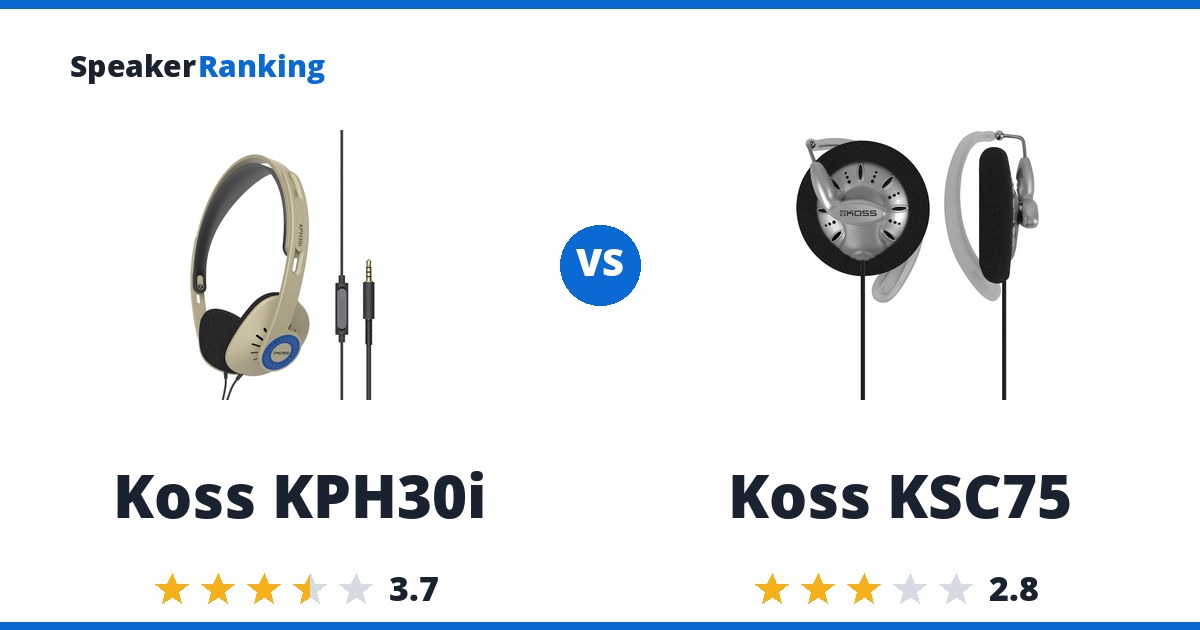
The Koss KPH30i is the better-sounding choice. A very low price makes it an easy disposable or backup pair, and the 60 ohm, 101 dB sensitivity runs from any phone. Watch for: Sub-bass is nearly 12 dB under target below 60 Hz, so there is no rumble and deep bass is essentially missing.
The case for the Koss KSC75: An extremely low cost and a featherweight 0.1 lbs (43 g) clip-on design make it easy to carry and wear for long stretches. The tradeoff: Sub-bass is about 17 dB below target under 60 Hz, so there is almost no rumble and bass-heavy music sounds thin.
Buy the Koss KPH30i. It is rated higher for sound quality, and the $4 saving on the Koss KSC75 is not enough to make up the difference.
Still deciding? The full Headphones rankings cover every ranked option.
Specifications Side By Side
| Koss KPH30i | Koss KSC75 | |
|---|---|---|
| Price | $23.99 | $19.99 |
| Ranked | #67 of 134 in Over-Ear Headphones | #116 of 134 in Over-Ear Headphones |
| Form Factor | Over-ear | Over-ear |
| Harman Preference Score | 76 (measured by oratory1990, via AutoEQ) | 54 (measured by oratory1990, via AutoEQ) |
| Deviation From Target | 2.62 dB standard deviation | 3.33 dB standard deviation |
| Tonal Tilt | -0.38 (negative is warmer, positive brighter) | +1.22 (negative is warmer, positive brighter) |
| Connection | Wired | Wired |
| Back | Open | Open |
| Driver Type | Dynamic | Dynamic |
| Drivers | 1 x 35mm dynamic | 1 x 35mm dynamic |
| Impedance | 60 ohms | 60 ohms |
| Sensitivity | 101 dB SPL/1mW | 101 dB SPL/1mW |
| Frequency Response | 15Hz - 25kHz (Manufacturer specified) | 15Hz - 25kHz (Manufacturer specified) |
| Built-in Microphone | Yes | - |
| Weight | - | 0.1 lbs (43 g) |
Related Headphone Comparisons
More worthwhile head-to-heads for Koss KPH30i:
- Koss KPH30i vs Koss KPH40
- Koss KPH40 vs Koss KSC75
- Koss KSC75 vs Koss Porta Pro
- Koss KPH40 vs Koss Porta Pro
- Koss KPH40 vs Razer BlackShark V2 X
Prices on this page were last checked October 10, 2026 at 5:37 PM UTC. Product prices and availability are accurate as of that date/time and are subject to change; the price and availability shown on Amazon at the time of purchase will apply to the purchase of this product.
As an eBay Partner, we may be compensated if you make a purchase.
The Two Headphones In Full
 Koss KPH30i: $23.99 Amazon eBay
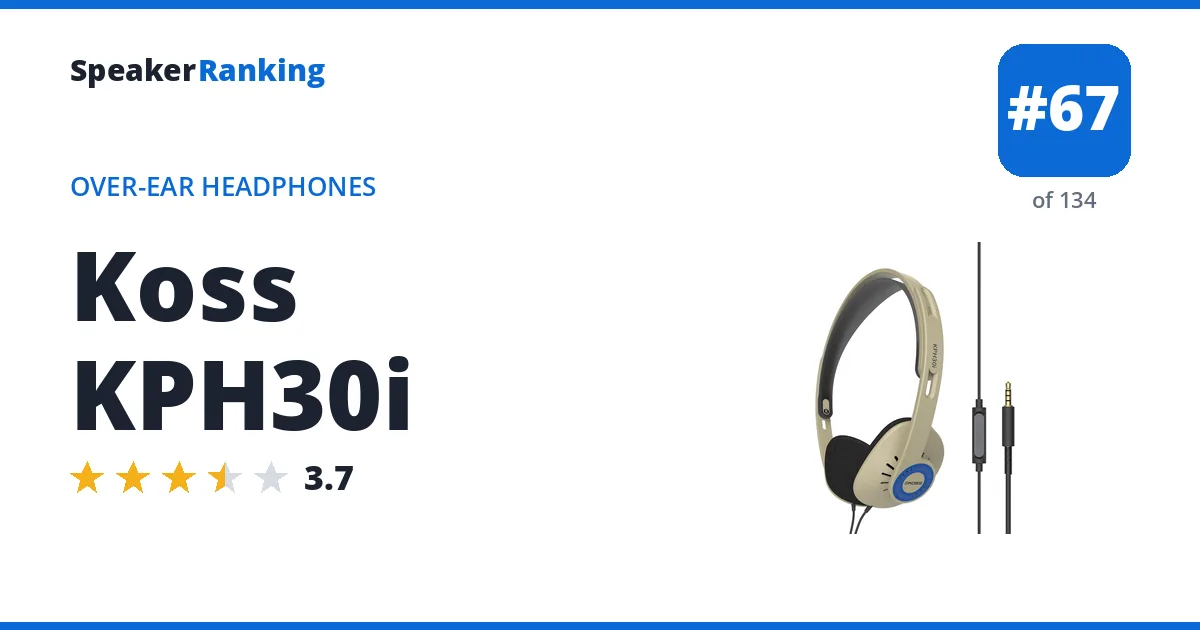
Pros: A very low price makes it an easy disposable or backup pair, and the 60 ohm, 101 dB sensitivity runs from any phone. It has an inline microphone for calls and the open on-ear design is light and airy. Bass from 60 Hz to the upper mids stays within about 0.6 dB of the Harman target, which gives a fairly balanced core.
Cons: Sub-bass is nearly 12 dB under target below 60 Hz, so there is no rumble and deep bass is essentially missing. An 11.8 dB dip near 4.2 kHz makes vocals and detail recede, and treble from 3 to 10 kHz is about 2.8 dB low. The open back leaks sound and offers no isolation, so it suits quiet rooms only.
Full Koss KPH30i review and specifications →
| Back | Open |
|---|---|
| Built-in Microphone | Yes |
| Connection | Wired |
| Deviation From Target | 2.62 dB standard deviation |
| Driver Type | Dynamic |
| Drivers | 1 x 35mm dynamic |
| Form Factor | Over-ear |
| Frequency Response | 15Hz - 25kHz (Manufacturer specified) |
| Harman Preference Score | 76 (measured by oratory1990, via AutoEQ) |
| Impedance | 60 ohms |
| Sensitivity | 101 dB SPL/1mW |
| Tonal Tilt | -0.38 (negative is warmer, positive brighter) |
EQ preset to match the Harman target
Set a preamp of -6.3 dB, then add these filters in any parametric equalizer (Wavelet, Equalizer APO, Peace, or a player with parametric EQ). Calculated by AutoEQ from its measured frequency response.
| Filter | Frequency | Gain | Q |
|---|---|---|---|
| Low shelf | 105 Hz | +6.8 dB | 0.70 |
| Peak | 109 Hz | -4.7 dB | 0.47 |
| Peak | 2,979 Hz | +1.7 dB | 0.18 |
| Peak | 1,956 Hz | -4.1 dB | 2.01 |
| Peak | 49 Hz | +2.5 dB | 2.08 |
| High shelf | 10,000 Hz | +0.1 dB | 0.70 |
| Peak | 5,070 Hz | -5.0 dB | 5.22 |
| Peak | 3,844 Hz | +2.9 dB | 5.95 |
| Peak | 6,348 Hz | +2.6 dB | 5.99 |
| Peak | 502 Hz | +0.3 dB | 1.44 |
- Reviews, Comparisons and Sound Samples
- Head-to-Head Comparisons
 Koss KSC75: $19.99 Amazon eBay
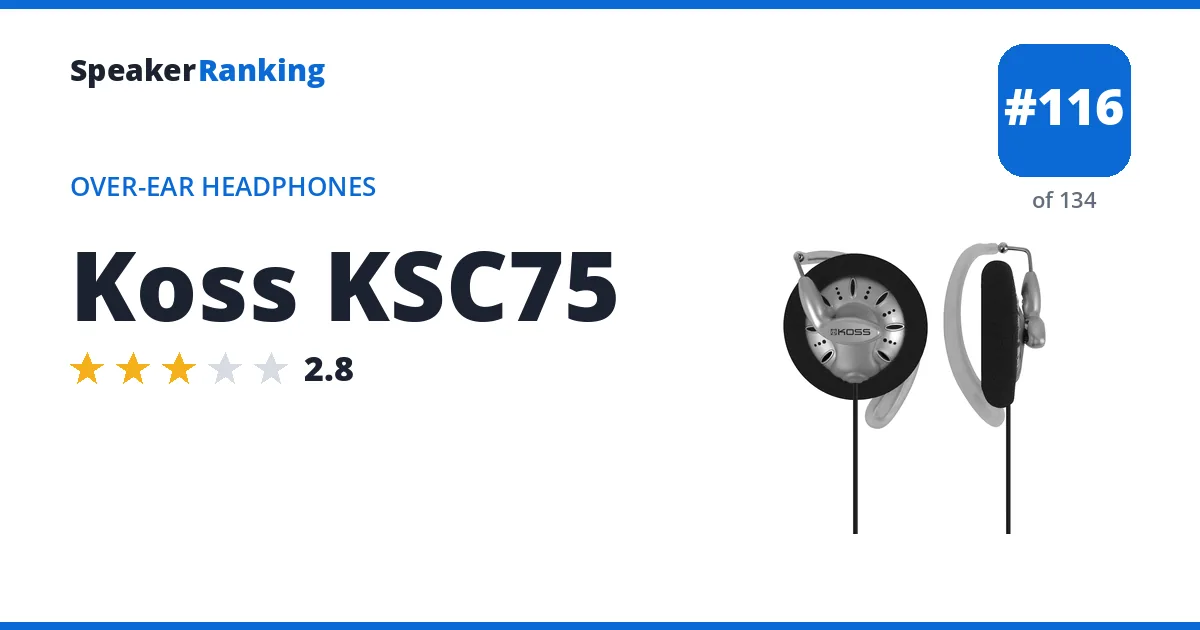
Pros: An extremely low cost and a featherweight 43 g clip-on design make it easy to carry and wear for long stretches. The midrange is close to target, with the low mids within 0.2 dB, so voices sound natural, and the slightly lifted treble of about 2 to 3 dB adds clarity. The open back gives an airy sound, and 101 dB sensitivity at 60 ohms works from a phone.
Cons: Sub-bass is about 17 dB below target under 60 Hz, so there is almost no rumble and bass-heavy music sounds thin. Bass in the 60 to 200 Hz range is also about 2 dB low, and a 4 dB peak near 5.3 kHz can add some edge. The open design leaks sound and gives no noise isolation.
Full Koss KSC75 review and specifications →
| Back | Open |
|---|---|
| Connection | Wired |
| Deviation From Target | 3.33 dB standard deviation |
| Driver Type | Dynamic |
| Drivers | 1 x 35mm dynamic |
| Form Factor | Over-ear |
| Frequency Response | 15Hz - 25kHz (Manufacturer specified) |
| Harman Preference Score | 54 (measured by oratory1990, via AutoEQ) |
| Impedance | 60 ohms |
| Sensitivity | 101 dB SPL/1mW |
| Tonal Tilt | +1.22 (negative is warmer, positive brighter) |
| Weight | 0.1 lbs (43 g) |
EQ preset to match the Harman target
Set a preamp of -6.3 dB, then add these filters in any parametric equalizer (Wavelet, Equalizer APO, Peace, or a player with parametric EQ). Calculated by AutoEQ from its measured frequency response.
| Filter | Frequency | Gain | Q |
|---|---|---|---|
| Low shelf | 105 Hz | +6.2 dB | 0.70 |
| Peak | 610 Hz | +2.2 dB | 0.63 |
| Peak | 2,358 Hz | -3.4 dB | 1.92 |
| Peak | 169 Hz | -2.3 dB | 0.77 |
| Peak | 74 Hz | +2.0 dB | 2.94 |
| High shelf | 10,000 Hz | -3.0 dB | 0.70 |
| Peak | 4,033 Hz | +3.3 dB | 5.88 |
| Peak | 5,191 Hz | -3.4 dB | 5.53 |
| Peak | 7,220 Hz | -1.5 dB | 2.25 |
| Peak | 4,517 Hz | +0.7 dB | 4.34 |
- Reviews, Comparisons and Sound Samples
- Head-to-Head Comparisons