A bright headphone puts detail and air up front: lean, tight bass and lifted treble that make every cymbal, breath and string texture easy to hear. It suits listeners who want to pick apart recordings, and those whose hearing has lost some high-frequency sensitivity.
The ranking measures how closely each model matches a bright target: a neutral response with about 4 dB of extra treble above 4 kHz. Bright headphones can turn harsh on poorly mastered tracks, so check each card’s treble notes. Each class shows its 15 closest matches, out of the models with a full published measurement.
Prices on this page were last checked October 10, 2026 at 5:37 PM UTC. Product prices and availability are accurate as of that date/time and are subject to change; the price and availability shown on Amazon at the time of purchase will apply to the purchase of this product.
As an eBay Partner, we may be compensated if you make a purchase.
Quick Navigation
Over-Ear Headphones
 Ranked #76 of 134 in Over-Ear Headphones - Shure SRH1840: $549.00 Amazon eBay
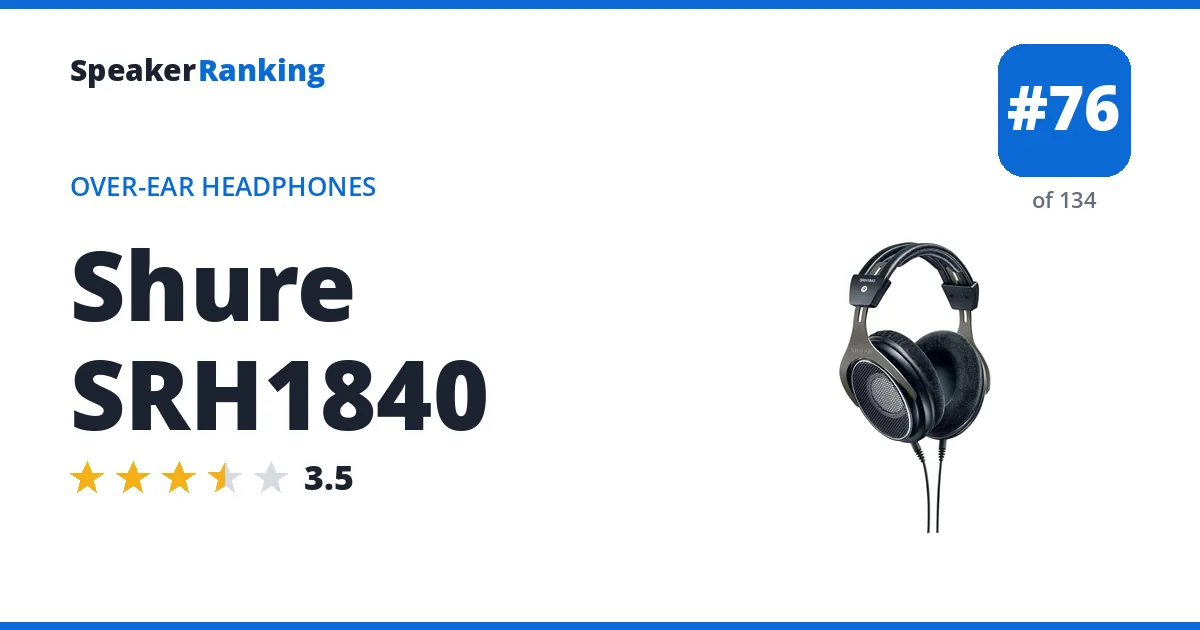
Pros: The response leans neutral to slightly bright, with upper mids about 1.8 dB above target and presence and treble within about 1 dB, which makes vocals and instrument detail clear. The preference score of 71 and 2.29 dB deviation reflect a smooth, even midrange and treble. It is an open back at 268 g.
Cons: Sub-bass is about 7.5 dB under target and bass is about 1.8 dB low, so kick drums and bass guitar are thin and lack rumble. A 4.4 dB peak near 3.1 kHz can make voices and strings sound forward or slightly harsh at higher volumes. At 65 ohms and 96 dB/mW sensitivity it benefits from a proper headphone amplifier, and the open back leaks sound. The Denon AH-D5200 earns a higher rating among its rivals.
Full Shure SRH1840 review and specifications →
| Back | Open |
|---|---|
| Connection | Wired |
| Deviation From Target | 2.29 dB standard deviation |
| Driver Type | Dynamic |
| Drivers | 1 x 40mm dynamic |
| Form Factor | Over-ear |
| Frequency Response | 10Hz - 30kHz (Manufacturer specified) |
| Harman Preference Score | 71 (measured by oratory1990, via AutoEQ) |
| Impedance | 65 ohms |
| Sensitivity | 96 dB/mW |
| Tonal Tilt | +0.91 (negative is warmer, positive brighter) |
| Weight | 0.6 lbs (268 g) |
EQ preset to match the Harman target
Set a preamp of -6.2 dB, then add these filters in any parametric equalizer (Wavelet, Equalizer APO, Peace, or a player with parametric EQ). Calculated by AutoEQ from its measured frequency response.
| Filter | Frequency | Gain | Q |
|---|---|---|---|
| Low shelf | 105 Hz | +6.2 dB | 0.70 |
| Peak | 3,060 Hz | -4.5 dB | 1.40 |
| Peak | 581 Hz | +2.0 dB | 0.95 |
| Peak | 4,732 Hz | +4.2 dB | 3.22 |
| Peak | 180 Hz | -1.2 dB | 0.82 |
| High shelf | 10,000 Hz | -1.1 dB | 0.70 |
| Peak | 59 Hz | +0.5 dB | 2.87 |
| Peak | 89 Hz | -0.2 dB | 2.05 |
| Peak | 6,333 Hz | -1.0 dB | 6.00 |
| Peak | 7,292 Hz | +1.3 dB | 5.96 |
- Reviews, Comparisons and Sound Samples
 Ranked #116 of 134 in Over-Ear Headphones - Koss KSC75: $19.99 Amazon eBay
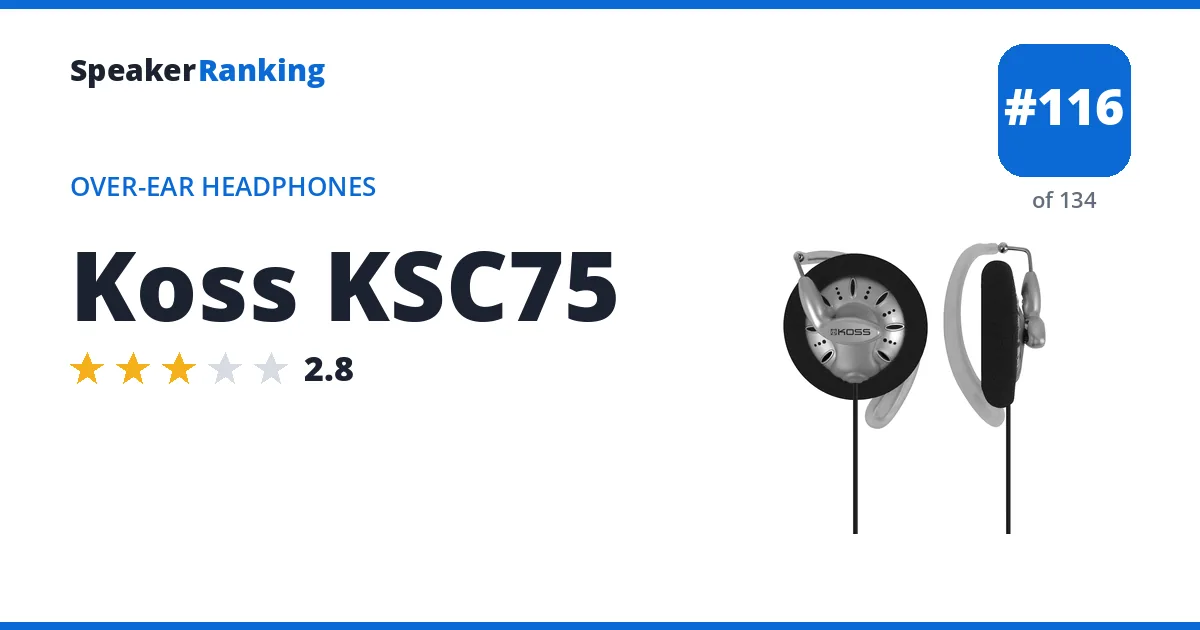
Pros: An extremely low cost and a featherweight 43 g clip-on design make it easy to carry and wear for long stretches. The midrange is close to target, with the low mids within 0.2 dB, so voices sound natural, and the slightly lifted treble of about 2 to 3 dB adds clarity. The open back gives an airy sound, and 101 dB sensitivity at 60 ohms works from a phone.
Cons: Sub-bass is about 17 dB below target under 60 Hz, so there is almost no rumble and bass-heavy music sounds thin. Bass in the 60 to 200 Hz range is also about 2 dB low, and a 4 dB peak near 5.3 kHz can add some edge. The open design leaks sound and gives no noise isolation.
Full Koss KSC75 review and specifications →
| Back | Open |
|---|---|
| Connection | Wired |
| Deviation From Target | 3.33 dB standard deviation |
| Driver Type | Dynamic |
| Drivers | 1 x 35mm dynamic |
| Form Factor | Over-ear |
| Frequency Response | 15Hz - 25kHz (Manufacturer specified) |
| Harman Preference Score | 54 (measured by oratory1990, via AutoEQ) |
| Impedance | 60 ohms |
| Sensitivity | 101 dB SPL/1mW |
| Tonal Tilt | +1.22 (negative is warmer, positive brighter) |
| Weight | 0.1 lbs (43 g) |
EQ preset to match the Harman target
Set a preamp of -6.3 dB, then add these filters in any parametric equalizer (Wavelet, Equalizer APO, Peace, or a player with parametric EQ). Calculated by AutoEQ from its measured frequency response.
| Filter | Frequency | Gain | Q |
|---|---|---|---|
| Low shelf | 105 Hz | +6.2 dB | 0.70 |
| Peak | 610 Hz | +2.2 dB | 0.63 |
| Peak | 2,358 Hz | -3.4 dB | 1.92 |
| Peak | 169 Hz | -2.3 dB | 0.77 |
| Peak | 74 Hz | +2.0 dB | 2.94 |
| High shelf | 10,000 Hz | -3.0 dB | 0.70 |
| Peak | 4,033 Hz | +3.3 dB | 5.88 |
| Peak | 5,191 Hz | -3.4 dB | 5.53 |
| Peak | 7,220 Hz | -1.5 dB | 2.25 |
| Peak | 4,517 Hz | +0.7 dB | 4.34 |
- Reviews, Comparisons and Sound Samples
- Head-to-Head Comparisons
 Ranked #36 of 134 in Over-Ear Headphones - Audio-Technica ATH-R50x: $169.00 Amazon eBay
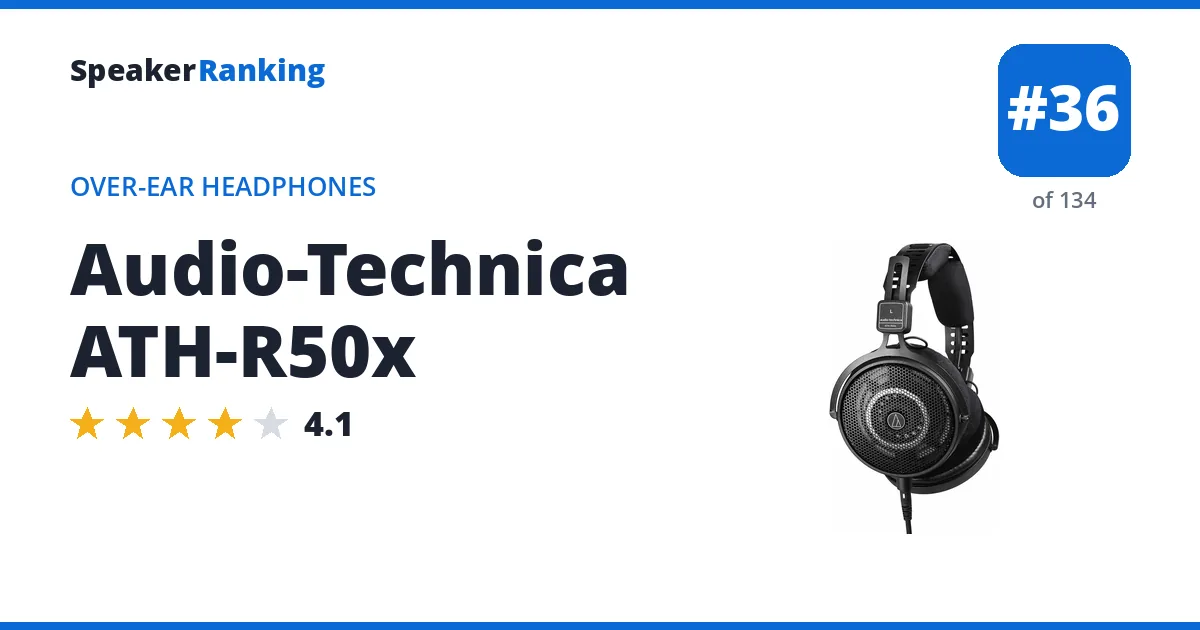
Pros: A preference score of 83 and the smoothest deviation in this group at 1.67 dB make for a very even response, with bass from 60 to 200 Hz and low mids within 0.6 dB of target. At 50 ohms and 93.3 dB/mW sensitivity it can be driven by most portable sources, and at 207 g it is light. It costs less than the AKG K701 and AKG K702 while holding the same rating.
Cons: Sub-bass is about 6 dB low under 60 Hz, so deep rumble is lacking. Treble is slightly forward, with presence about 2 dB high, 6 to 10 kHz about 2.6 dB high and a 4.8 dB peak near 6.3 kHz, which can make vocals and cymbals bright. Its tilt of 0.64 leans bright, and the open back leaks sound.
Full Audio-Technica ATH-R50x review and specifications →
| Released | Jan 2025 (1 year ago) |
|---|---|
| Back | Open |
| Connection | Wired |
| Deviation From Target | 1.67 dB standard deviation |
| Driver Type | Dynamic |
| Drivers | 1 x 45mm dynamic |
| Form Factor | Over-ear |
| Frequency Response | 5Hz - 40kHz (Manufacturer specified) |
| Harman Preference Score | 83 (measured by oratory1990, via AutoEQ) |
| Impedance | 50 ohms |
| Sensitivity | 93.3 dB/mW |
| Tonal Tilt | +0.64 (negative is warmer, positive brighter) |
| Weight | 0.5 lbs (207 g) |
EQ preset to match the Harman target
Set a preamp of -6.2 dB, then add these filters in any parametric equalizer (Wavelet, Equalizer APO, Peace, or a player with parametric EQ). Calculated by AutoEQ from its measured frequency response.
| Filter | Frequency | Gain | Q |
|---|---|---|---|
| Low shelf | 105 Hz | +7.2 dB | 0.70 |
| Peak | 482 Hz | +2.4 dB | 0.92 |
| Peak | 60 Hz | -4.8 dB | 0.60 |
| Peak | 6,204 Hz | -3.3 dB | 1.70 |
| Peak | 38 Hz | +2.3 dB | 1.60 |
| High shelf | 10,000 Hz | -2.1 dB | 0.70 |
| Peak | 1,497 Hz | -1.4 dB | 3.40 |
| Peak | 851 Hz | +0.5 dB | 2.04 |
| Peak | 4,628 Hz | +1.6 dB | 4.12 |
| Peak | 3,874 Hz | -2.5 dB | 6.00 |
- Reviews, Comparisons and Sound Samples
- Head-to-Head Comparisons
 Ranked #40 of 134 in Over-Ear Headphones - Sony MDR-7506: $129.99 Amazon eBay
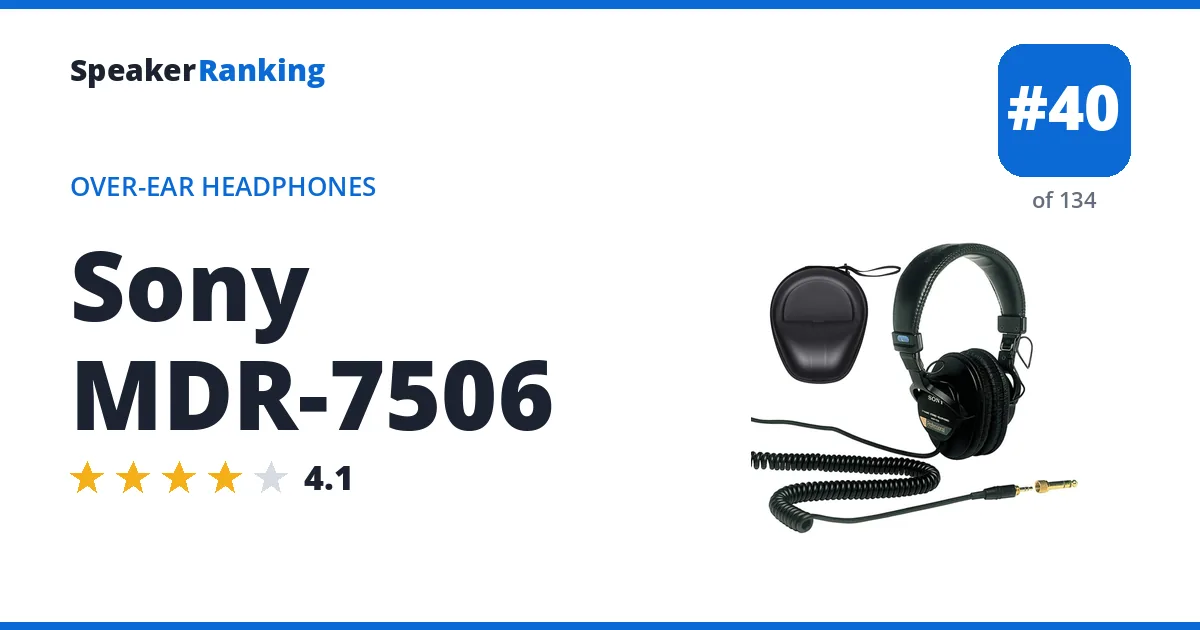
Pros: A preference score of 83 with a deviation of only 1.7 dB from the Harman target in oratory1990’s measurement is excellent for a closed studio headphone. Bass and low mids sit within about 1 dB of target, so vocals and instruments sound natural and uncolored. At 260 g with a 106 dB/mW sensitivity, it plays loud straight from a phone or laptop without an amp.
Cons: Presence and treble run about 3.5 dB hot, with a peak of 6 dB near 4.5 kHz, which makes vocals forward and cymbals or sibilance sharp at higher volumes. Air above 10 kHz is about 2.6 dB low, and the wired-only design has no microphone.
Full Sony MDR-7506 review and specifications →
| Back | Closed |
|---|---|
| Built-in Microphone | No |
| Connection | Wired |
| Deviation From Target | 1.70 dB standard deviation |
| Driver Type | Dynamic |
| Drivers | 1 x 40mm dynamic |
| Form Factor | Over-ear |
| Frequency Response | 10Hz - 20kHz (Manufacturer specified) |
| Harman Preference Score | 83 (measured by oratory1990, via AutoEQ) |
| Sensitivity | 106 dB/mW |
| Tonal Tilt | +0.64 (negative is warmer, positive brighter) |
| Weight | 0.6 lbs (260 g) |
EQ preset to match the Harman target
Set a preamp of -5.8 dB, then add these filters in any parametric equalizer (Wavelet, Equalizer APO, Peace, or a player with parametric EQ). Calculated by AutoEQ from its measured frequency response.
| Filter | Frequency | Gain | Q |
|---|---|---|---|
| Low shelf | 105 Hz | +10.3 dB | 0.70 |
| Peak | 5,435 Hz | -3.8 dB | 0.90 |
| Peak | 847 Hz | +1.9 dB | 0.70 |
| Peak | 230 Hz | +3.7 dB | 2.08 |
| Peak | 48 Hz | -9.5 dB | 0.52 |
| High shelf | 10,000 Hz | +3.8 dB | 0.70 |
| Peak | 7,530 Hz | -1.4 dB | 3.26 |
| Peak | 2,916 Hz | -1.9 dB | 5.57 |
| Peak | 3,748 Hz | +2.6 dB | 5.91 |
| Peak | 4,456 Hz | -1.6 dB | 6.00 |
- Reviews, Comparisons and Sound Samples
 Ranked #21 of 134 in Over-Ear Headphones - Audio-Technica ATH-M70x: $329.00 Amazon eBay
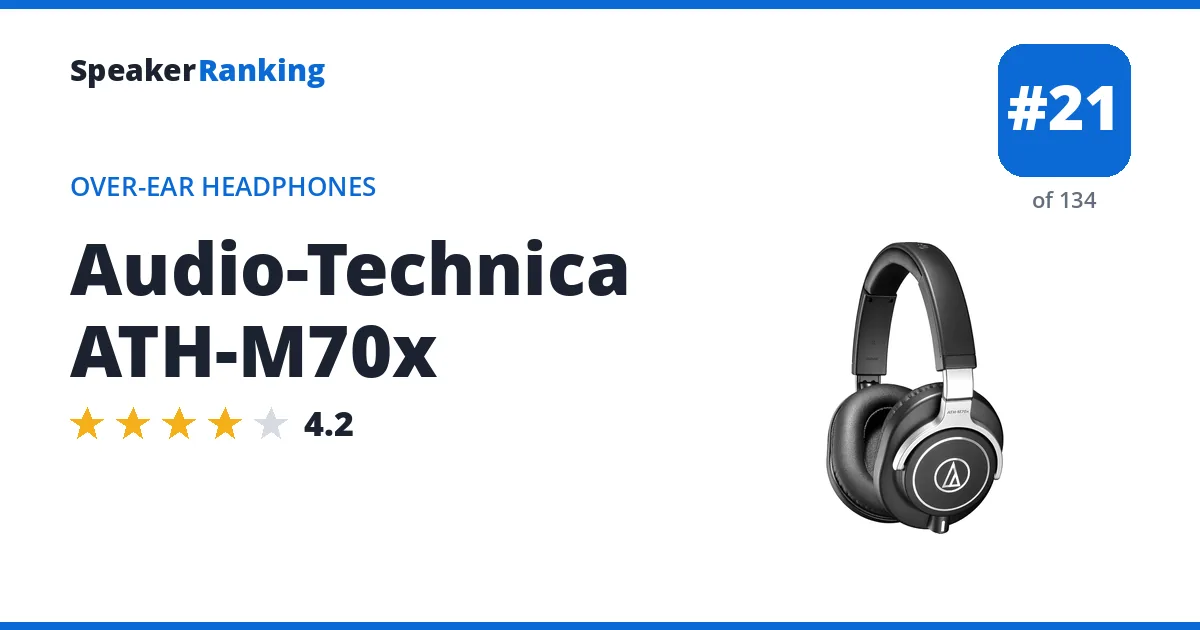
Pros: A preference score of 87 and a fairly smooth 1.6 dB deviation make it one of the closer closed-back models to the Harman target. Bass from 60 to 200 Hz lands within 1 dB of target, and sub-bass is only about 2 dB light, so low end is tidy without being thin. At 35 ohms and 97 dB sensitivity it is easy to drive from a laptop or interface, and the closed design isolates and does not leak into a room.
Cons: Presence is lifted by about 3 dB with a peak of 4.6 dB near 4.5 kHz, which adds bite to vocals, snares and guitars and can become fatiguing at higher volumes. Treble above 6 kHz also runs slightly hot, so bright recordings sound sharper than neutral. At 280 g it is heavier than many open-back rivals in its class.
Full Audio-Technica ATH-M70x review and specifications →
| Back | Closed |
|---|---|
| Connection | Wired |
| Deviation From Target | 1.60 dB standard deviation |
| Driver Type | Dynamic |
| Drivers | 1 x 45mm dynamic |
| Form Factor | Over-ear |
| Frequency Response | 5Hz - 40kHz (Manufacturer specified) |
| Harman Preference Score | 87 (measured by oratory1990, via AutoEQ) |
| Impedance | 35 ohms |
| Sensitivity | 97 dB |
| Tonal Tilt | +0.48 (negative is warmer, positive brighter) |
| Weight | 0.6 lbs (280 g) |
EQ preset to match the Harman target
Set a preamp of -3.6 dB, then add these filters in any parametric equalizer (Wavelet, Equalizer APO, Peace, or a player with parametric EQ). Calculated by AutoEQ from its measured frequency response.
| Filter | Frequency | Gain | Q |
|---|---|---|---|
| Low shelf | 105 Hz | +3.6 dB | 0.70 |
| Peak | 681 Hz | +3.6 dB | 2.12 |
| Peak | 4,327 Hz | -3.0 dB | 2.54 |
| Peak | 110 Hz | -2.1 dB | 0.82 |
| Peak | 69 Hz | +1.3 dB | 1.64 |
| High shelf | 10,000 Hz | -0.4 dB | 0.70 |
| Peak | 6,406 Hz | +2.0 dB | 4.92 |
| Peak | 3,133 Hz | -0.9 dB | 5.06 |
| Peak | 2,230 Hz | -0.9 dB | 3.09 |
| Peak | 1,352 Hz | +0.4 dB | 2.01 |
- Reviews, Comparisons and Sound Samples
 Ranked #53 of 134 in Over-Ear Headphones - Philips SHP9500: $94.99 Amazon eBay
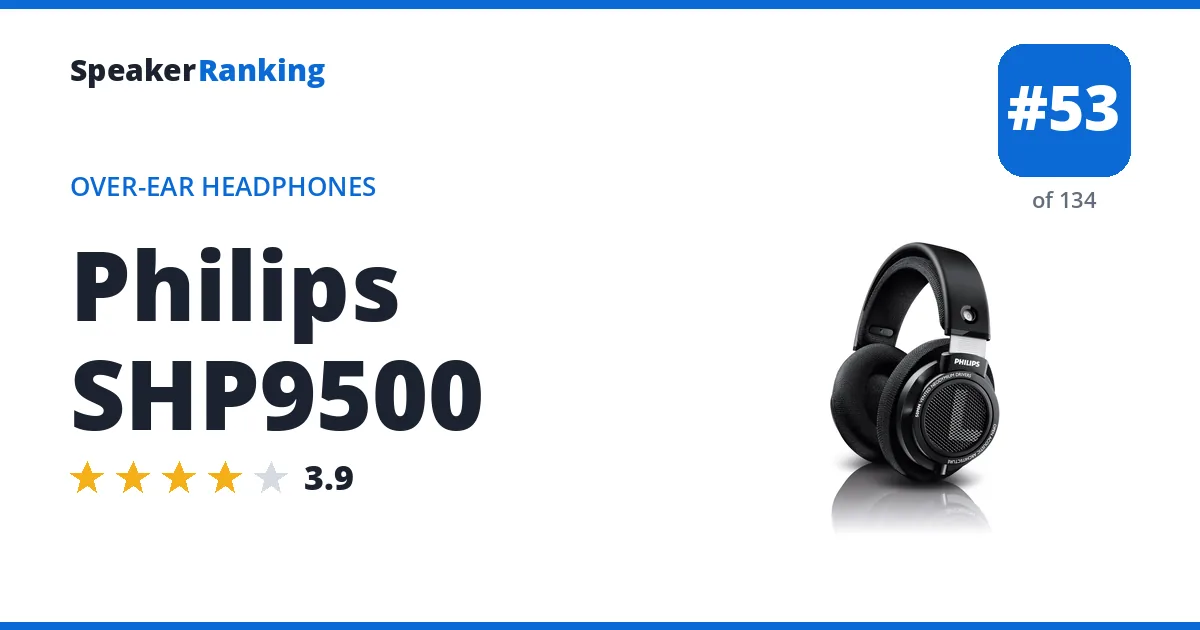
Pros: A preference score of 80 and a deviation of only 2.2 dB make the open back response smooth for the money, with bass from 60 to 200 Hz and the lower mids within half a dB of target. It is very easy to drive at 32 ohms and 101 dB sensitivity, so a phone runs it fine, and it weighs just 320 g. It costs far less than most headphones with a comparable score.
Cons: Sub-bass is about 9 dB below target under 60 Hz, so electronic and cinematic bass lacks rumble and slam. Presence is lifted about 2.3 dB, and a 6.7 dB peak near 6.2 kHz followed by a 4 dB dip near 7.7 kHz adds some edge to vocals and cymbals. The open back leaks sound and gives no isolation.
Full Philips SHP9500 review and specifications →
| Back | Open |
|---|---|
| Connection | Wired |
| Deviation From Target | 2.17 dB standard deviation |
| Driver Type | Dynamic |
| Drivers | 1 x 50mm dynamic |
| Form Factor | Over-ear |
| Frequency Response | 12Hz - 35kHz (Manufacturer specified) |
| Harman Preference Score | 80 (measured by oratory1990, via AutoEQ) |
| Impedance | 32 ohms |
| Sensitivity | 101 dB |
| Tonal Tilt | +0.47 (negative is warmer, positive brighter) |
| Weight | 0.7 lbs (320 g) |
EQ preset to match the Harman target
Set a preamp of -6.4 dB, then add these filters in any parametric equalizer (Wavelet, Equalizer APO, Peace, or a player with parametric EQ). Calculated by AutoEQ from its measured frequency response.
| Filter | Frequency | Gain | Q |
|---|---|---|---|
| Low shelf | 105 Hz | +6.5 dB | 0.70 |
| Peak | 5,734 Hz | -5.7 dB | 2.84 |
| Peak | 110 Hz | -3.0 dB | 0.81 |
| Peak | 2,130 Hz | +3.7 dB | 2.76 |
| Peak | 412 Hz | +1.0 dB | 1.39 |
| High shelf | 10,000 Hz | -2.4 dB | 0.70 |
| Peak | 1,113 Hz | -0.6 dB | 2.07 |
| Peak | 7,370 Hz | +2.1 dB | 5.98 |
| Peak | 4,477 Hz | -1.7 dB | 6.00 |
| Peak | 3,566 Hz | +1.3 dB | 6.00 |
- Reviews, Comparisons and Sound Samples
- Head-to-Head Comparisons
 Ranked #124 of 134 in Over-Ear Headphones - AKG K271 MKII: $214.38 Amazon eBay
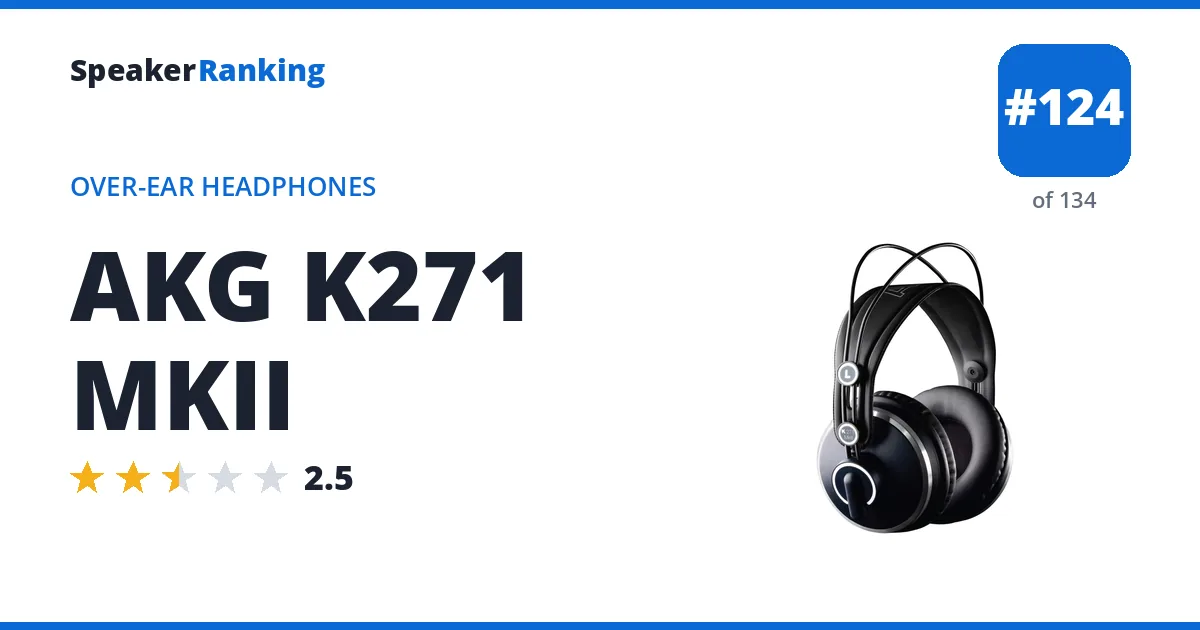
Pros: A closed-back studio design with 104 dB sensitivity at 55 ohms, so it plays loudly from a phone or laptop without an amp. Treble from 6 to 10 kHz and the lower mids land almost exactly on the Harman target in oratory1990’s measurement. A slightly bright tilt suits listeners who prefer a neutral to bright sound.
Cons: Bass is thin, with sub-bass about 15 dB and the 60 to 200 Hz region about 8 dB under target, so music lacks weight and punch. Presence from 3 to 6 kHz is down about 6 dB, with a 7.5 dB dip near 4 kHz that pulls vocals and guitars back. At 240 g with a preference score of 48, the Beats Studio3 Wireless is rated higher.
Full AKG K271 MKII review and specifications →
| Released | May 2008 (18 years ago) |
|---|---|
| Back | Closed |
| Connection | Wired |
| Deviation From Target | 3.85 dB standard deviation |
| Driver Type | Dynamic |
| Drivers | 1 x 30mm dynamic |
| Form Factor | Over-ear |
| Frequency Response | 16Hz - 28kHz (Manufacturer specified) |
| Harman Preference Score | 48 (measured by oratory1990, via AutoEQ) |
| Impedance | 55 ohms |
| Sensitivity | 104 dB SPL/V |
| Tonal Tilt | +1.16 (negative is warmer, positive brighter) |
| Weight | 0.5 lbs (240 g) |
EQ preset to match the Harman target
Set a preamp of -6.5 dB, then add these filters in any parametric equalizer (Wavelet, Equalizer APO, Peace, or a player with parametric EQ). Calculated by AutoEQ from its measured frequency response.
| Filter | Frequency | Gain | Q |
|---|---|---|---|
| Low shelf | 105 Hz | +6.2 dB | 0.70 |
| Peak | 812 Hz | -3.2 dB | 0.18 |
| Peak | 4,439 Hz | +8.0 dB | 1.08 |
| Peak | 145 Hz | +6.6 dB | 1.69 |
| Peak | 8,134 Hz | -4.5 dB | 0.99 |
| High shelf | 10,000 Hz | +2.3 dB | 0.70 |
| Peak | 1,771 Hz | -3.4 dB | 2.92 |
| Peak | 830 Hz | +3.3 dB | 2.86 |
| Peak | 2,453 Hz | +2.0 dB | 2.96 |
| Peak | 650 Hz | -2.9 dB | 5.06 |
- Reviews, Comparisons and Sound Samples
- Head-to-Head Comparisons
 Ranked #44 of 134 in Over-Ear Headphones - Beyerdynamic DT 990 Pro: $149.99 Amazon eBay
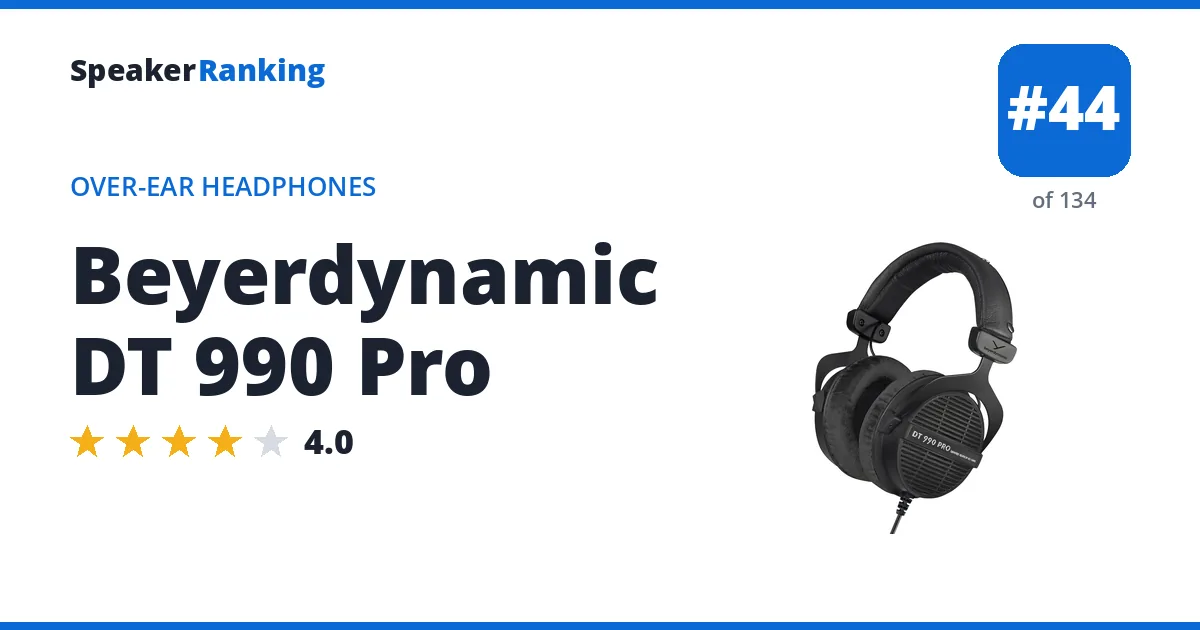
Pros: A preference score of 82 comes from a lively, bass-forward tuning, with bass from 60 to 200 Hz about 2.4 dB above target for punch and drive. The open back gives a spacious, airy soundstage, and the presence and treble lift adds a sense of detail on bright recordings.
Cons: Treble runs about 5 dB above target and air above 10 kHz is nearly 9 dB hot, with a peak near 10.9 dB at 11.9 kHz, so cymbals and sibilance can sound harsh, especially at high volume. Sub-bass is about 2.5 dB low. The 250 ohm impedance needs a headphone amp, and the open back leaks sound.
Full Beyerdynamic DT 990 Pro review and specifications →
| Back | Open |
|---|---|
| Connection | Wired |
| Deviation From Target | 2.08 dB standard deviation |
| Driver Type | Dynamic |
| Form Factor | Over-ear |
| Frequency Response | 5Hz - 35kHz (Manufacturer specified) |
| Harman Preference Score | 82 (measured by oratory1990, via AutoEQ) |
| Impedance | 250 ohms |
| Sensitivity | 96 dB SPL |
| Tonal Tilt | +0.40 (negative is warmer, positive brighter) |
| Weight | 0.6 lbs (250 g) |
EQ preset to match the Harman target
Set a preamp of -6.7 dB, then add these filters in any parametric equalizer (Wavelet, Equalizer APO, Peace, or a player with parametric EQ). Calculated by AutoEQ from its measured frequency response.
| Filter | Frequency | Gain | Q |
|---|---|---|---|
| Low shelf | 105 Hz | +10.1 dB | 0.70 |
| Peak | 541 Hz | +3.1 dB | 0.52 |
| Peak | 64 Hz | -7.4 dB | 0.38 |
| Peak | 7,731 Hz | -4.6 dB | 1.06 |
| Peak | 640 Hz | +0.6 dB | 2.47 |
| High shelf | 10,000 Hz | -9.8 dB | 0.70 |
| Peak | 7,136 Hz | +3.1 dB | 2.08 |
| Peak | 5,897 Hz | -4.8 dB | 5.30 |
| Peak | 4,193 Hz | +1.1 dB | 1.51 |
| Peak | 9,436 Hz | +2.7 dB | 3.53 |
- Reviews, Comparisons and Sound Samples
- Head-to-Head Comparisons
 Ranked #3 of 134 in Over-Ear Headphones - HIFIMAN Ananda Nano: $319.00 Amazon eBay
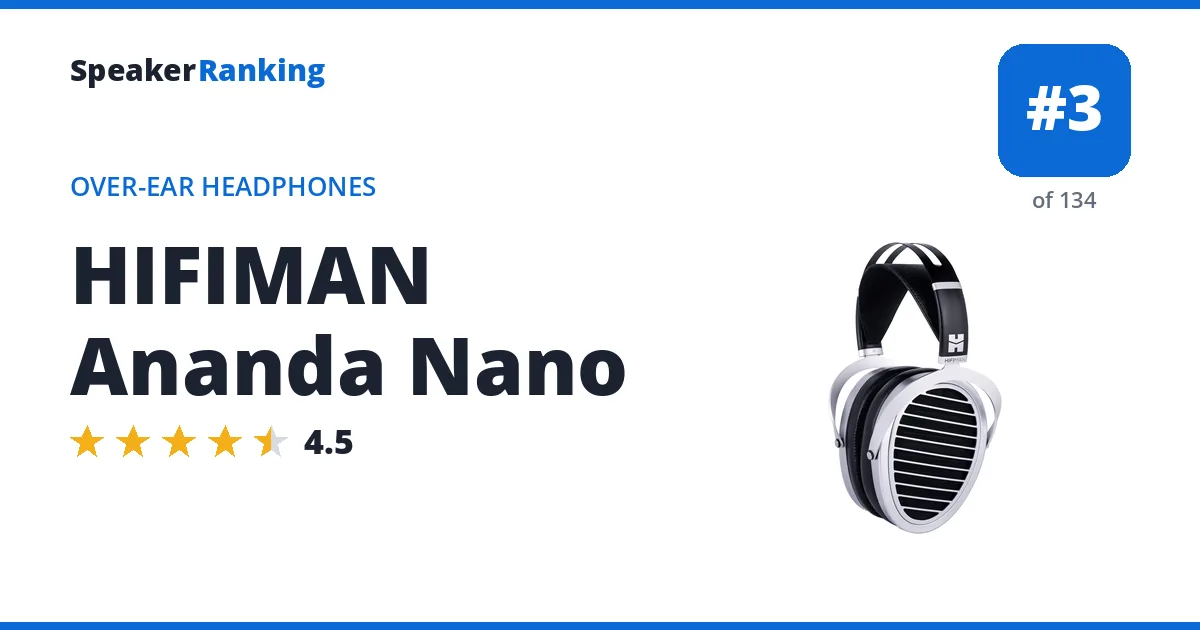
Pros: A preference score of 94 puts it close to the Harman target, with bass from 60 to 200 Hz within 0.1 dB of target and the midrange within about 1 dB. Impedance of just 14 ohms makes it simple to drive from a phone or dongle, and the open planar design gives a spacious presentation. Sub-bass is only moderately light, about 2.8 dB under target.
Cons: The top end is the weak spot, with the air region above 10 kHz running about 4.6 dB hot and a 10.8 dB peak near 11.9 kHz, preceded by a 4.4 dB dip near 9.6 kHz. That can make cymbals and strings sound bright or sharp on some recordings. At 420 g it is heavy, and the open back leaks sound and gives no isolation.
Full HIFIMAN Ananda Nano review and specifications →
| Released | Aug 2023 (3 years ago) |
|---|---|
| Back | Open |
| Connection | Wired |
| Deviation From Target | 1.43 dB standard deviation |
| Driver Type | Planar magnetic |
| Form Factor | Over-ear |
| Frequency Response | 5Hz - 55kHz (Manufacturer specified) |
| Harman Preference Score | 94 (measured by oratory1990, via AutoEQ) |
| Impedance | 14 ohms |
| Sensitivity | 94 dB |
| Tonal Tilt | +0.14 (negative is warmer, positive brighter) |
| Weight | 0.9 lbs (420 g) |
EQ preset to match the Harman target
Set a preamp of -3.9 dB, then add these filters in any parametric equalizer (Wavelet, Equalizer APO, Peace, or a player with parametric EQ). Calculated by AutoEQ from its measured frequency response.
| Filter | Frequency | Gain | Q |
|---|---|---|---|
| Low shelf | 105 Hz | +4.1 dB | 0.70 |
| Peak | 1,884 Hz | +2.9 dB | 2.00 |
| Peak | 84 Hz | -2.2 dB | 1.06 |
| Peak | 343 Hz | -0.7 dB | 1.30 |
| Peak | 2,910 Hz | -1.8 dB | 3.07 |
| High shelf | 10,000 Hz | -6.5 dB | 0.70 |
| Peak | 969 Hz | -1.0 dB | 4.06 |
| Peak | 170 Hz | +1.0 dB | 3.86 |
| Peak | 129 Hz | -0.7 dB | 3.65 |
| Peak | 752 Hz | +0.9 dB | 5.09 |
- Reviews, Comparisons and Sound Samples
- Head-to-Head Comparisons
 Ranked #2 of 134 in Over-Ear Headphones - Shure SRH440: $109.00 Discontinued Amazon eBay
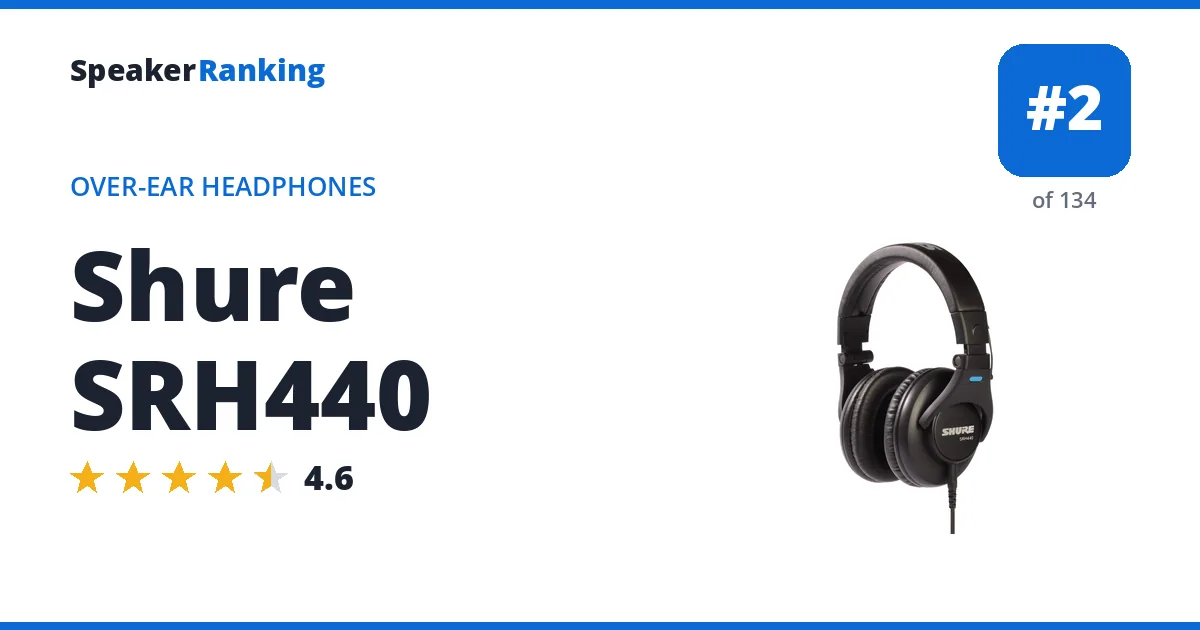
Newer model: the Shure SRH440A, ranked lower, rated 3/5. See every Shure SRH440 generation.
Pros: Its preference score of 96 is among the best in the class, and the response stays within about 1.3 dB of the Harman target overall. Bass from 60 to 200 Hz lands within half a dB of target, and the midrange is nearly dead on, so vocals and guitars sound natural. At 44 ohms and 105 dB/mW it runs loudly from a phone, the closed back isolates, and the 311 g weight is modest.
Cons: Sub-bass below 60 Hz is about 3.4 dB under target, so the deepest synth and organ notes lack rumble. Treble from 6 to 10 kHz runs about 2.2 dB hot with a 4.7 dB peak near 7.8 kHz, which can add a bit of edge to hi-hats and sibilant vocals. There is no built-in microphone or wireless connection listed. Discontinued.
Full Shure SRH440 review and specifications →
| Released | Jul 2009 (17 years ago) |
|---|---|
| Back | Closed |
| Connection | Wired |
| Deviation From Target | 1.31 dB standard deviation |
| Driver Type | Dynamic |
| Drivers | 1 x 40mm dynamic |
| Form Factor | Over-ear |
| Frequency Response | 10Hz - 22kHz (Manufacturer specified) |
| Harman Preference Score | 96 (measured by oratory1990, via AutoEQ) |
| Impedance | 44 ohms |
| Sensitivity | 105 dB/mW |
| Tonal Tilt | +0.11 (negative is warmer, positive brighter) |
| Weight | 0.7 lbs (311 g) |
EQ preset to match the Harman target
Set a preamp of -5.9 dB, then add these filters in any parametric equalizer (Wavelet, Equalizer APO, Peace, or a player with parametric EQ). Calculated by AutoEQ from its measured frequency response.
| Filter | Frequency | Gain | Q |
|---|---|---|---|
| Low shelf | 105 Hz | +8.6 dB | 0.70 |
| Peak | 63 Hz | -6.6 dB | 0.43 |
| Peak | 8,557 Hz | -2.7 dB | 2.72 |
| Peak | 3,464 Hz | +2.5 dB | 1.93 |
| Peak | 219 Hz | +3.2 dB | 1.93 |
| High shelf | 10,000 Hz | -0.9 dB | 0.70 |
| Peak | 678 Hz | +0.8 dB | 1.71 |
| Peak | 1,746 Hz | -1.0 dB | 2.28 |
| Peak | 6,183 Hz | +1.6 dB | 6.00 |
| Peak | 2,398 Hz | +0.7 dB | 4.15 |
- Reviews, Comparisons and Sound Samples
- Head-to-Head Comparisons
 Ranked #50 of 134 in Over-Ear Headphones - HIFIMAN HE1000se: $1,699.00 Amazon eBay
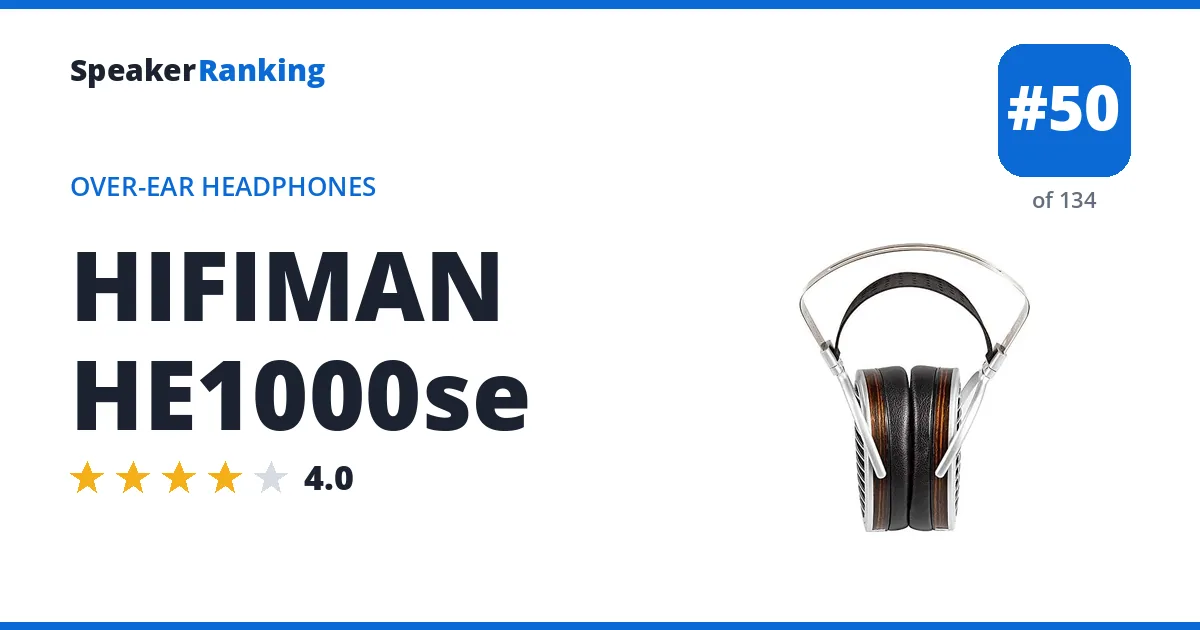
Pros: In oratory1990’s measurement the planar drivers land close to the Harman target, with a preference score of 81 and bass and midrange within about 2 dB of target. That keeps vocals and instruments natural, and the bass from 60 to 200 Hz is essentially on target, so kick and bass guitar have the right weight. At 35 ohms and 96 dB sensitivity it is easier to drive than many flagship planars, though it still benefits from a proper headphone amp. At 440 g it is moderately light for a planar.
Cons: A 9 dB dip near 9.5 kHz sits right beside an 11 dB peak near 11.9 kHz, so cymbals and sibilants can sound uneven and sparkly rather than smooth. The top octave runs about 6 dB hot and the 3 to 6 kHz presence region about 3.6 dB above target, which can sound edgy on bright recordings. Sub-bass is about 3.6 dB light under 60 Hz, and the open back leaks sound and offers no isolation.
Full HIFIMAN HE1000se review and specifications →
| Back | Open |
|---|---|
| Connection | Wired |
| Deviation From Target | 2.31 dB standard deviation |
| Driver Type | Planar magnetic |
| Form Factor | Over-ear |
| Frequency Response | 8Hz - 65kHz (Manufacturer specified) |
| Harman Preference Score | 81 (measured by oratory1990, via AutoEQ) |
| Impedance | 35 ohms |
| Sensitivity | 96 dB |
| Tonal Tilt | +0.29 (negative is warmer, positive brighter) |
| Weight | 1 lbs (440 g) |
EQ preset to match the Harman target
Set a preamp of -6.6 dB, then add these filters in any parametric equalizer (Wavelet, Equalizer APO, Peace, or a player with parametric EQ). Calculated by AutoEQ from its measured frequency response.
| Filter | Frequency | Gain | Q |
|---|---|---|---|
| Low shelf | 105 Hz | +8.5 dB | 0.70 |
| Peak | 1,847 Hz | +6.2 dB | 1.59 |
| Peak | 58 Hz | -4.7 dB | 0.49 |
| Peak | 2,978 Hz | -4.6 dB | 0.69 |
| Peak | 2,077 Hz | +2.3 dB | 2.21 |
| High shelf | 10,000 Hz | -5.8 dB | 0.70 |
| Peak | 4,160 Hz | +1.4 dB | 5.48 |
| Peak | 692 Hz | +1.2 dB | 5.75 |
| Peak | 294 Hz | -0.3 dB | 2.04 |
| Peak | 3,110 Hz | -0.7 dB | 4.39 |
- Reviews, Comparisons and Sound Samples
 Ranked #22 of 134 in Over-Ear Headphones - HIFIMAN Shangri-La Jr: $8,000.00 Amazon eBay
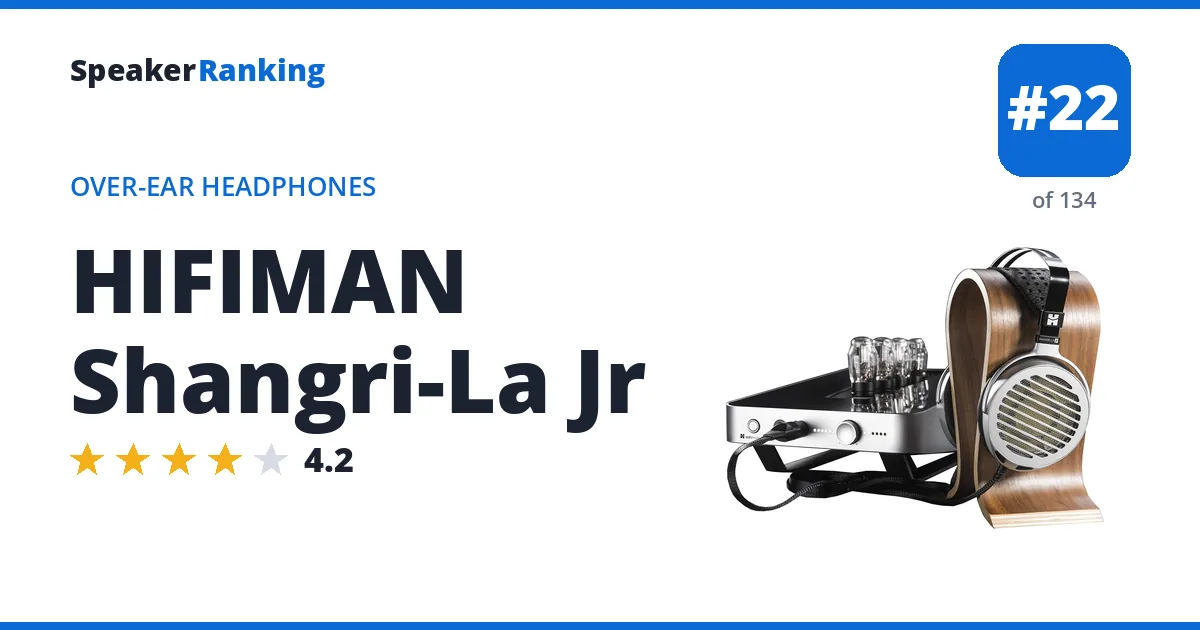
Pros: An electrostatic driver with a preference score of 87 and an unusually even response, with every band from 60 Hz to 10 kHz within about 1.4 dB of the Harman target. The air region above 10 kHz runs about 1 dB above target, giving a sense of space and fine detail. Its rating sits just above the HIFIMAN Susvara and well above the Focal Utopia 2022.
Cons: Sub-bass below 60 Hz is about 5 dB under target, so deep rumble is understated. A 7 dB dip near 9.7 kHz is followed by a 5 dB peak near 11.9 kHz, which reshapes the top end into something slightly uneven. As an electrostatic design it needs a dedicated energizer, and at 374 g it is not a casual portable option.
Full HIFIMAN Shangri-La Jr review and specifications →
| Back | Open |
|---|---|
| Connection | Wired |
| Deviation From Target | 1.99 dB standard deviation |
| Driver Type | Electrostatic |
| Form Factor | Over-ear |
| Frequency Response | 7Hz - 120kHz (Manufacturer specified) |
| Harman Preference Score | 87 (measured by oratory1990, via AutoEQ) |
| Tonal Tilt | +0.14 (negative is warmer, positive brighter) |
| Weight | 0.8 lbs (374 g) |
EQ preset to match the Harman target
Set a preamp of -6.1 dB, then add these filters in any parametric equalizer (Wavelet, Equalizer APO, Peace, or a player with parametric EQ). Calculated by AutoEQ from its measured frequency response.
| Filter | Frequency | Gain | Q |
|---|---|---|---|
| Low shelf | 105 Hz | +6.7 dB | 0.70 |
| Peak | 115 Hz | -2.2 dB | 0.29 |
| Peak | 1,885 Hz | +3.2 dB | 1.89 |
| Peak | 4,399 Hz | -2.3 dB | 4.81 |
| Peak | 3,089 Hz | -2.7 dB | 4.82 |
| High shelf | 10,000 Hz | -3.8 dB | 0.70 |
| Peak | 9,190 Hz | +2.2 dB | 2.17 |
| Peak | 5,753 Hz | +2.3 dB | 6.00 |
| Peak | 76 Hz | -0.7 dB | 3.00 |
| Peak | 139 Hz | +0.5 dB | 2.04 |
- Reviews, Comparisons and Sound Samples
 Ranked #20 of 134 in Over-Ear Headphones - Sennheiser HD 505: $199.95 Amazon eBay
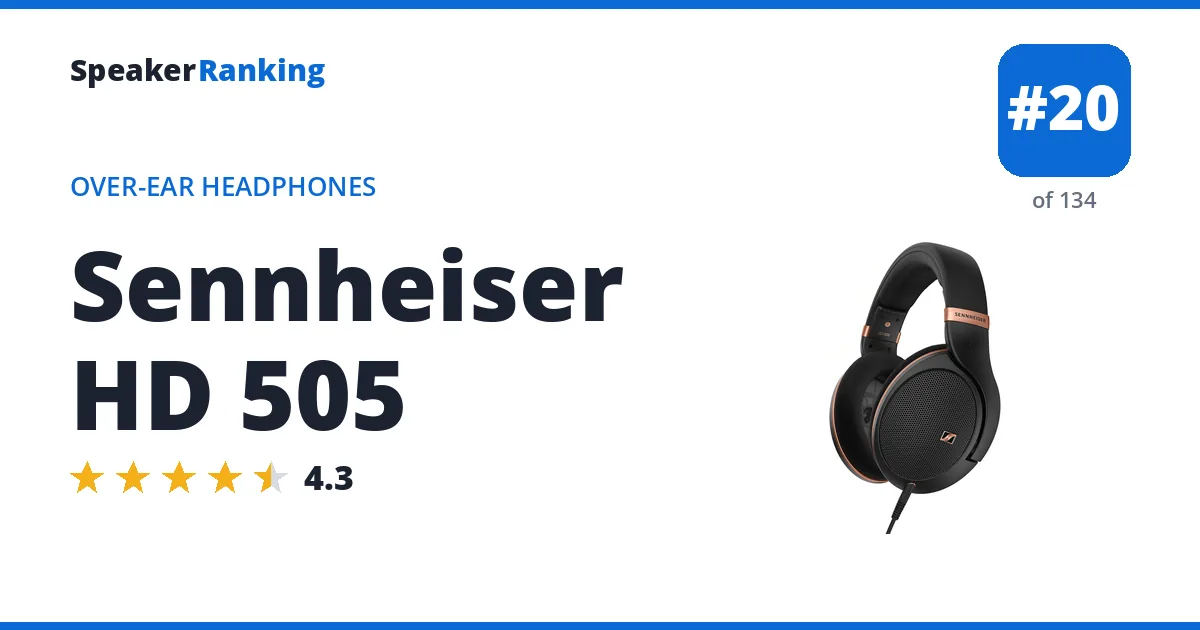
Pros: A preference score of 88 in oratory1990’s measurement puts it among the closest to the Harman target, with the midrange from 200 Hz to 6 kHz within about 0.5 dB of target, so vocals and instruments sound natural and unforced. The 120 ohm impedance and 107.9 dB per volt sensitivity let it run from a decent DAC or portable amp, and at 237 g the open-back design is light.
Cons: Sub-bass under 60 Hz sits about 6 dB below target, so deep synth bass and kick drum weight are thin. A narrow 9 dB dip near 9.9 kHz and treble running about 2.7 dB low soften cymbals and make it a little dark on airy recordings. Being open-back it leaks sound and offers no isolation.
Full Sennheiser HD 505 review and specifications →
| Back | Open |
|---|---|
| Connection | Wired |
| Deviation From Target | 1.85 dB standard deviation |
| Driver Type | Dynamic |
| Form Factor | Over-ear |
| Frequency Response | 12Hz - 38.5kHz (Manufacturer specified) |
| Harman Preference Score | 88 (measured by oratory1990, via AutoEQ) |
| Impedance | 120 ohms |
| Sensitivity | 107.9 dB SPL/V |
| Tonal Tilt | +0.17 (negative is warmer, positive brighter) |
| Weight | 0.5 lbs (237 g) |
EQ preset to match the Harman target
Set a preamp of -6.3 dB, then add these filters in any parametric equalizer (Wavelet, Equalizer APO, Peace, or a player with parametric EQ). Calculated by AutoEQ from its measured frequency response.
| Filter | Frequency | Gain | Q |
|---|---|---|---|
| Low shelf | 105 Hz | +7.0 dB | 0.70 |
| Peak | 9,030 Hz | +3.9 dB | 2.25 |
| Peak | 84 Hz | -2.7 dB | 0.44 |
| Peak | 560 Hz | +1.1 dB | 1.13 |
| Peak | 1,256 Hz | -1.5 dB | 1.71 |
| High shelf | 10,000 Hz | -2.5 dB | 0.70 |
| Peak | 3,218 Hz | -1.8 dB | 2.89 |
| Peak | 5,479 Hz | -2.6 dB | 4.99 |
| Peak | 4,145 Hz | +2.5 dB | 5.93 |
| Peak | 6,870 Hz | +2.4 dB | 5.70 |
- Reviews, Comparisons and Sound Samples
- Head-to-Head Comparisons
 Ranked #33 of 134 in Over-Ear Headphones - HIFIMAN HE6se V2: $792.24 Amazon eBay
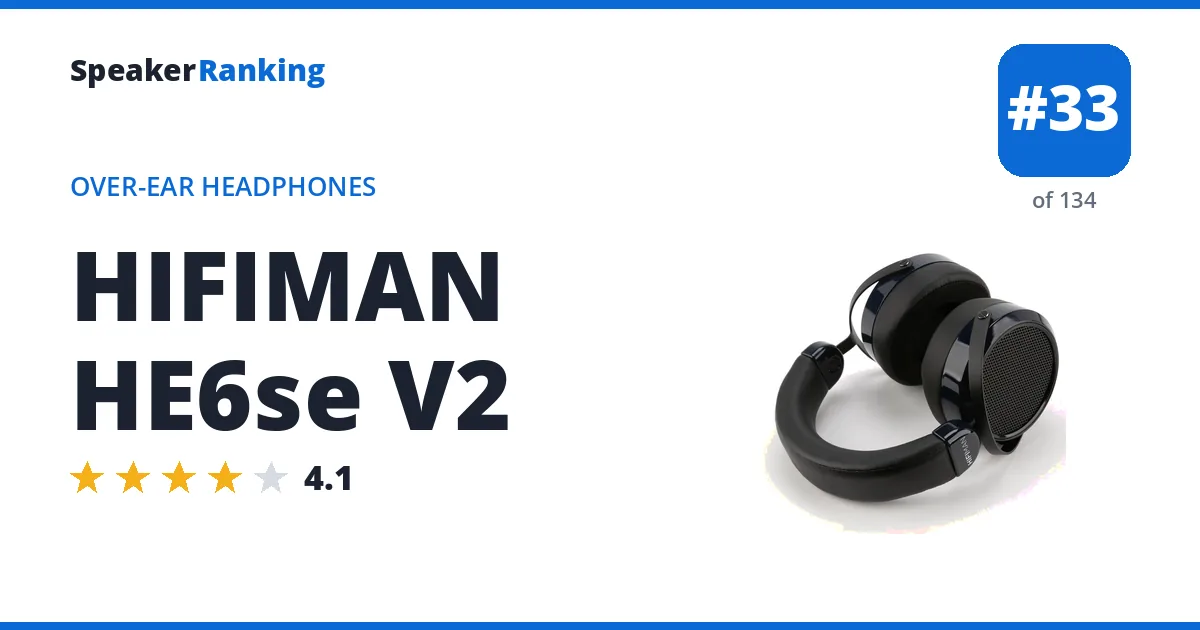
Pros: A preference score of 84 with a deviation of only 2.19 dB shows a smooth, well-controlled response, and low mids sit within 2 dB of target. Bass from 60 to 200 Hz is within 1 dB of target, so bass notes keep their body. It costs noticeably less than the HIFIMAN HE1000 Stealth, though that model carries a higher rating.
Cons: Sub-bass is roughly 4 dB under target below 60 Hz, so the lowest rumble is missing. Presence is about 2.5 dB hot with a 3.7 dB peak near 3.75 kHz, and a 5 dB dip near 9.6 kHz softens cymbals. At 83.5 dB sensitivity it needs a dedicated headphone amp, and the open back leaks sound.
Full HIFIMAN HE6se V2 review and specifications →
| Back | Open |
|---|---|
| Connection | Wired |
| Deviation From Target | 2.19 dB standard deviation |
| Driver Type | Planar magnetic |
| Form Factor | Over-ear |
| Frequency Response | 8Hz - 65kHz (Manufacturer specified) |
| Harman Preference Score | 84 (measured by oratory1990, via AutoEQ) |
| Impedance | 50 ohms |
| Sensitivity | 83.5 dB |
| Tonal Tilt | +0.18 (negative is warmer, positive brighter) |
| Weight | 1 lbs (470 g) |
EQ preset to match the Harman target
Set a preamp of -5.0 dB, then add these filters in any parametric equalizer (Wavelet, Equalizer APO, Peace, or a player with parametric EQ). Calculated by AutoEQ from its measured frequency response.
| Filter | Frequency | Gain | Q |
|---|---|---|---|
| Low shelf | 105 Hz | +5.2 dB | 0.70 |
| Peak | 340 Hz | -1.5 dB | 0.18 |
| Peak | 1,902 Hz | +6.8 dB | 1.60 |
| Peak | 3,470 Hz | -3.7 dB | 1.05 |
| Peak | 9,114 Hz | +3.4 dB | 2.07 |
| High shelf | 10,000 Hz | -3.3 dB | 0.70 |
| Peak | 970 Hz | -1.0 dB | 4.33 |
| Peak | 62 Hz | -0.4 dB | 1.81 |
| Peak | 119 Hz | +0.3 dB | 1.64 |
| Peak | 1,386 Hz | +0.6 dB | 3.74 |
- Reviews, Comparisons and Sound Samples
 Ranked #15 of 134 in Over-Ear Headphones - HIFIMAN HE400se: $109.00 Amazon eBay
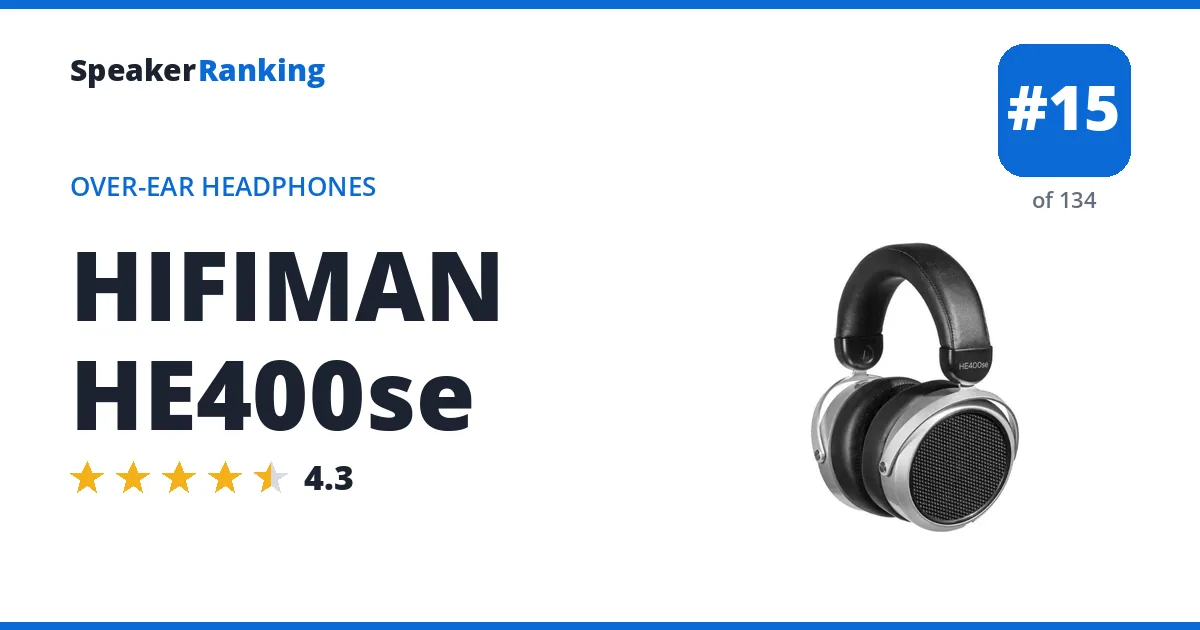
Pros: A preference score of 89 and a neutral tilt make this an accurate sounding planar for the money. Treble is within a fraction of a dB of target and the air band is only 1 dB high, so the top end is smooth and free of sharp peaks, with the largest at about 2.4 dB near 11.9 kHz. It matches the rating of the Beyerdynamic DT 880 at a lower price, with a modest 396 g weight.
Cons: Sub-bass is about 5 dB light and bass from 60 to 200 Hz is about 1 dB under target, so low end impact is limited. The low mids are about 1.6 dB elevated while a 4.8 dB dip near 2 kHz and a 2 dB upper mid shortfall can push vocals slightly back. At 91 dB/mW sensitivity it benefits from a headphone amp, and the open back leaks sound and provides no isolation.
Full HIFIMAN HE400se review and specifications →
| Released | Mar 2021 (5 years ago) |
|---|---|
| Back | Open |
| Connection | Wired |
| Deviation From Target | 1.98 dB standard deviation |
| Driver Type | Planar magnetic |
| Drivers | 1 x planar magnetic |
| Form Factor | Over-ear |
| Frequency Response | 20Hz - 20kHz (Manufacturer specified) |
| Harman Preference Score | 89 (measured by oratory1990, via AutoEQ) |
| Sensitivity | 91 dB/mW |
| Tonal Tilt | +0.05 (negative is warmer, positive brighter) |
| Weight | 0.9 lbs (396 g) |
EQ preset to match the Harman target
Set a preamp of -6.0 dB, then add these filters in any parametric equalizer (Wavelet, Equalizer APO, Peace, or a player with parametric EQ). Calculated by AutoEQ from its measured frequency response.
| Filter | Frequency | Gain | Q |
|---|---|---|---|
| Low shelf | 105 Hz | +6.7 dB | 0.70 |
| Peak | 1,968 Hz | +5.1 dB | 2.37 |
| Peak | 861 Hz | -2.3 dB | 1.86 |
| Peak | 101 Hz | -2.4 dB | 0.32 |
| Peak | 1,619 Hz | +1.1 dB | 3.53 |
| High shelf | 10,000 Hz | -2.6 dB | 0.70 |
| Peak | 138 Hz | +0.7 dB | 1.98 |
| Peak | 64 Hz | -0.7 dB | 1.95 |
| Peak | 251 Hz | -0.4 dB | 2.33 |
| Peak | 29 Hz | +0.5 dB | 2.63 |
- Reviews, Comparisons and Sound Samples
In-Ear Headphones
 Ranked #54 of 68 in In-Ear Headphones - Etymotic ER4XR: $299.00 Amazon eBay
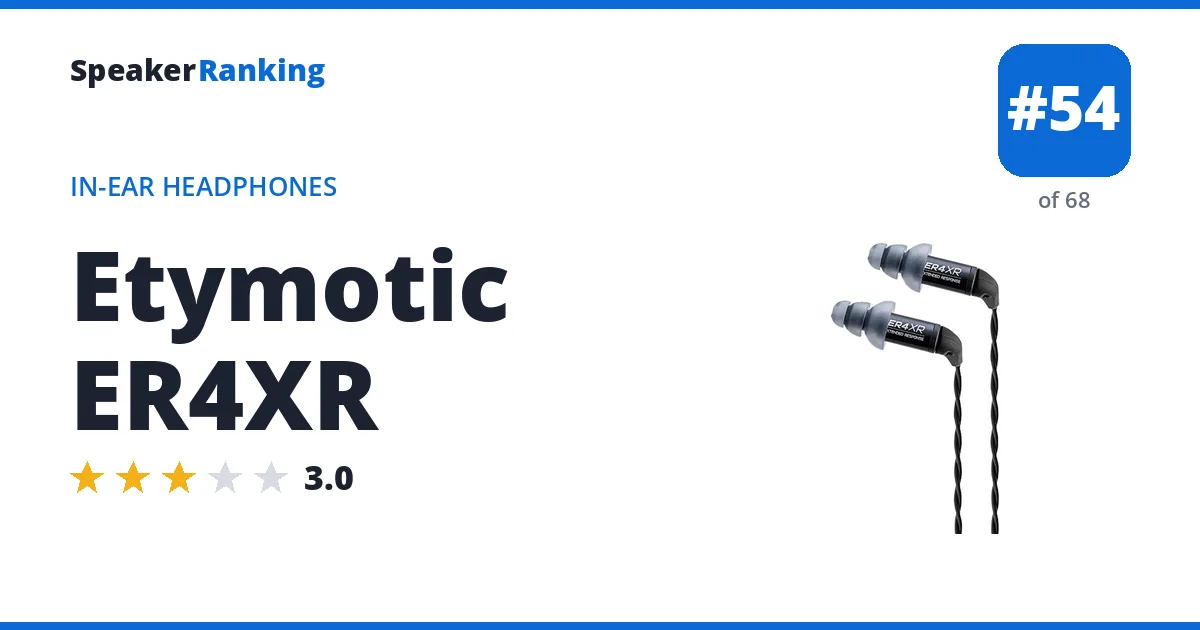
Pros: Upper mids sit within 0.5 dB of the Harman target and low mids within 0.4 dB, so vocals and instruments come through clearly and naturally. Oratory1990’s measurement gives a preference score of 62, and the single balanced armature driver suits listeners who want a neutral, analytical presentation without added bass.
Cons: Sub-bass is about 7.2 dB under target and bass is 2.6 dB low, so kick drums and bass lines lack weight and rumble. Treble from 6 to 10 kHz is 5.4 dB low, with an 8.6 dB dip near 6.7 kHz, which dulls cymbals. A 45 ohm impedance makes it a bit harder to drive than most phone-friendly earphones, and the FiiO FH7S has a higher rating.
Full Etymotic ER4XR review and specifications →
| Back | Closed |
|---|---|
| Connection | Wired |
| Deviation From Target | 3.06 dB standard deviation |
| Driver Type | Balanced armature |
| Drivers | 1 x balanced armature |
| Form Factor | In-ear |
| Frequency Response | 20Hz - 16kHz (Manufacturer specified) |
| Harman Preference Score | 62 (measured by oratory1990, via AutoEQ) |
| Impedance | 45 ohms |
| Tonal Tilt | +0.61 (negative is warmer, positive brighter) |
EQ preset to match the Harman target
Set a preamp of -6.0 dB, then add these filters in any parametric equalizer (Wavelet, Equalizer APO, Peace, or a player with parametric EQ). Calculated by AutoEQ from its measured frequency response.
| Filter | Frequency | Gain | Q |
|---|---|---|---|
| Low shelf | 105 Hz | +5.4 dB | 0.70 |
| Peak | 6,978 Hz | +6.4 dB | 1.06 |
| Peak | 1,623 Hz | -3.6 dB | 0.52 |
| Peak | 164 Hz | -1.4 dB | 0.59 |
| Peak | 806 Hz | +2.6 dB | 1.14 |
| High shelf | 10,000 Hz | +1.3 dB | 0.70 |
| Peak | 7,344 Hz | -1.2 dB | 6.00 |
| Peak | 6,183 Hz | +1.0 dB | 5.99 |
| Peak | 4,894 Hz | -0.6 dB | 4.37 |
| Peak | 1,333 Hz | -0.2 dB | 4.02 |
- Reviews, Comparisons and Sound Samples
- Head-to-Head Comparisons
 Ranked #10 of 68 in In-Ear Headphones - Etymotic EVO: $298.98 Amazon eBay
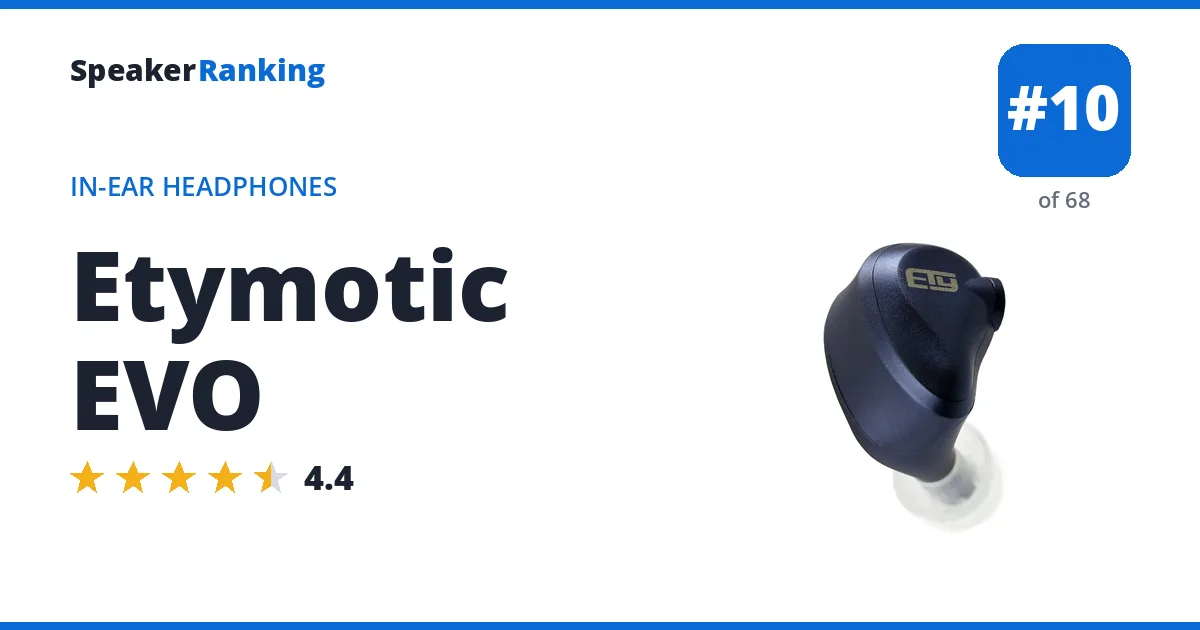
Pros: Three balanced armature drivers deliver a flat, uncolored midrange, with the 1 to 3 kHz region within 0.5 dB of the Harman target and a preference score of 78. Response is smooth, with a standard deviation of 1.89 dB around target. The deep-insertion wired design is passive noise isolating, and the 47 ohm impedance still works from a phone or dongle.
Cons: Bass is lean, with sub-bass about 3.3 dB under target and the 60 to 200 Hz region 1.5 dB under, so kick drums and bass lines have less weight than most listeners prefer. Treble from 6 to 10 kHz is about 3.5 dB low and the response drops 7.4 dB near 11.9 kHz, which makes cymbals and air sound dull. Sensitivity of 99 dB at 0.1V is modest, so volume needs more headroom than the most efficient earphones.
Full Etymotic EVO review and specifications →
| Released | Jun 2021 (5 years ago) |
|---|---|
| Back | Closed |
| Connection | Wired |
| Deviation From Target | 1.89 dB standard deviation |
| Driver Type | Balanced armature |
| Drivers | 3 x balanced armature |
| Form Factor | In-ear |
| Frequency Response | 20Hz - 16kHz (Manufacturer specified) |
| Harman Preference Score | 78 (measured by oratory1990, via AutoEQ) |
| Impedance | 47 ohms |
| Sensitivity | 99 dB SPL at 0.1V, 1kHz |
| Tonal Tilt | +0.08 (negative is warmer, positive brighter) |
EQ preset to match the Harman target
Set a preamp of -4.5 dB, then add these filters in any parametric equalizer (Wavelet, Equalizer APO, Peace, or a player with parametric EQ). Calculated by AutoEQ from its measured frequency response.
| Filter | Frequency | Gain | Q |
|---|---|---|---|
| Low shelf | 105 Hz | +0.7 dB | 0.70 |
| Peak | 1,788 Hz | -3.1 dB | 1.61 |
| Peak | 6,507 Hz | +4.6 dB | 1.49 |
| Peak | 197 Hz | -1.4 dB | 1.38 |
| Peak | 64 Hz | +1.9 dB | 0.98 |
| High shelf | 10,000 Hz | +4.1 dB | 0.70 |
| Peak | 819 Hz | +1.2 dB | 1.66 |
| Peak | 1,255 Hz | -0.9 dB | 3.19 |
| Peak | 4,378 Hz | -0.7 dB | 4.42 |
| Peak | 7,270 Hz | -1.7 dB | 5.95 |
- Reviews, Comparisons and Sound Samples
- Head-to-Head Comparisons
 Ranked #3 of 68 in In-Ear Headphones - Truthear x Crinacle Zero RED: $64.99 Amazon eBay
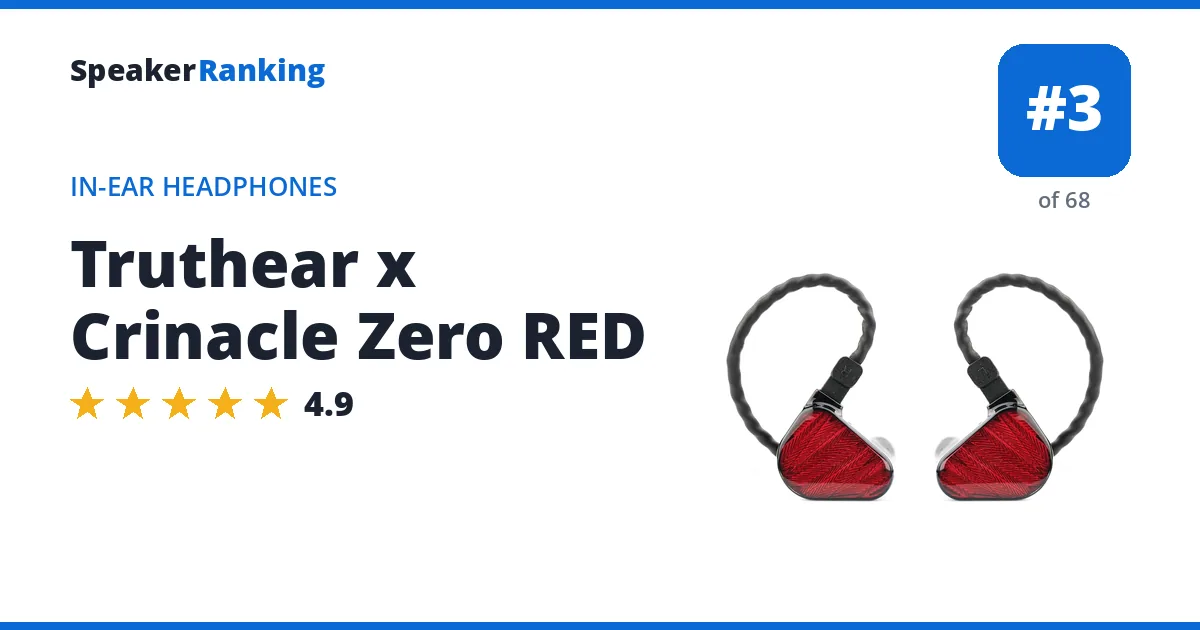
Pros: A Harman score of 86 at an entry-level price delivers a well-balanced response with a smooth 1.1 dB deviation. Bass and mids track the target closely, and the dual dynamic driver design runs easily from a phone at 17.5 ohms and 117.5 dB per volt. It outscores the Tin HiFi T3 Plus by a clear rating margin at a similar cost. It is a good fit for listeners who like a warm, bass-forward sound.
Cons: Presence from 3 to 6 kHz sits about 2.2 dB below target, so vocals and snare attack can sound a little recessed. A 3.9 dB dip near 10.3 kHz and sub-bass about 1.4 dB light mean cymbals lack some shimmer and the deepest bass has less rumble. It is wired only with no mic or remote listed.
Full Truthear x Crinacle Zero RED review and specifications →
| Back | Closed |
|---|---|
| Connection | Wired |
| Deviation From Target | 1.10 dB standard deviation |
| Driver Type | Dynamic |
| Drivers | 1 x 10mm + 1 x 7.8mm dynamic |
| Form Factor | In-ear |
| Frequency Response | 20Hz - 40.5kHz (Manufacturer specified) |
| Harman Preference Score | 86 (measured by oratory1990, via AutoEQ) |
| Impedance | 17.5 ohms |
| Sensitivity | 117.5 dB/Vrms |
| Tonal Tilt | -0.08 (negative is warmer, positive brighter) |
EQ preset to match the Harman target
Set a preamp of -2.1 dB, then add these filters in any parametric equalizer (Wavelet, Equalizer APO, Peace, or a player with parametric EQ). Calculated by AutoEQ from its measured frequency response.
| Filter | Frequency | Gain | Q |
|---|---|---|---|
| Low shelf | 105 Hz | -0.5 dB | 0.70 |
| Peak | 6,163 Hz | +2.2 dB | 2.44 |
| Peak | 341 Hz | -1.0 dB | 1.46 |
| Peak | 70 Hz | +1.0 dB | 0.61 |
| Peak | 1,284 Hz | -0.6 dB | 2.04 |
| High shelf | 10,000 Hz | -1.8 dB | 0.70 |
| Peak | 2,432 Hz | +0.7 dB | 2.98 |
| Peak | 3,588 Hz | -0.6 dB | 3.06 |
| Peak | 8,541 Hz | +1.1 dB | 3.84 |
| Peak | 769 Hz | +0.2 dB | 3.01 |
- Reviews, Comparisons and Sound Samples
- Head-to-Head Comparisons
 Ranked #2 of 68 in In-Ear Headphones - AKG N5005: $399.99 Amazon eBay
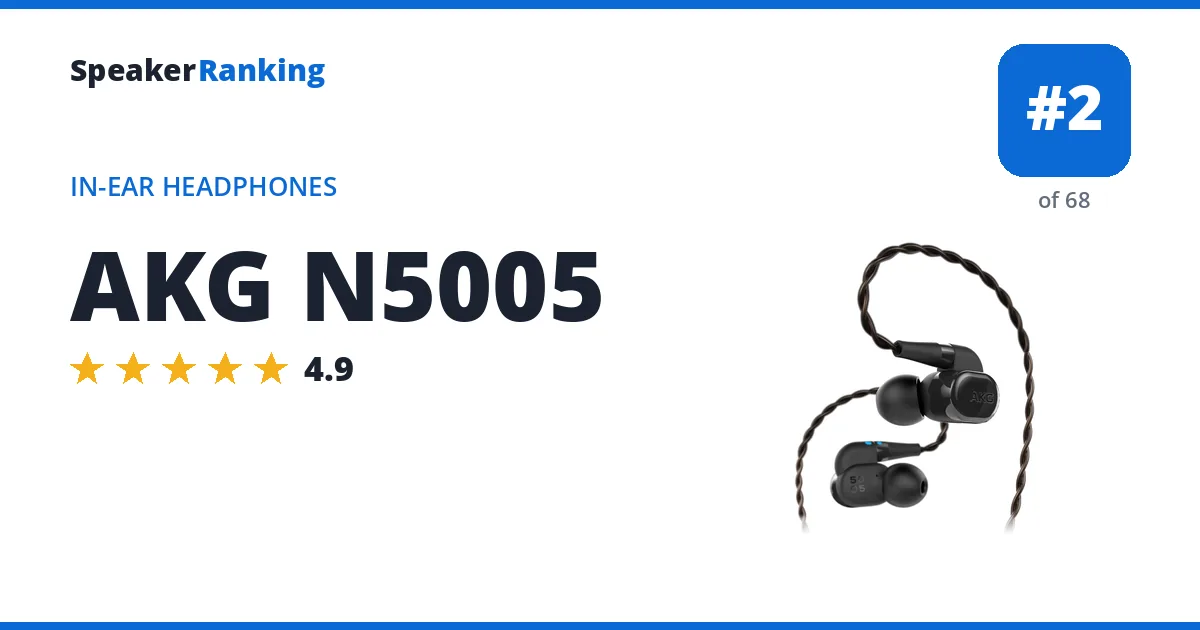
Pros: Bass, mids and presence all land within about 0.6 dB of the Harman target, giving a Harman score of 87 and a very smooth 1.11 dB deviation. Sub-bass is essentially on target at 0.1 dB below, so kick drums and bass lines have natural weight without bloat. The five-driver hybrid layout and 18 ohm impedance with 116 dB per volt sensitivity run fine from a phone. At 11.4 g per earbud it is light in the ear.
Cons: A 5.8 dB dip near 10 kHz and a 3.4 dB peak near 7.8 kHz leave the top end slightly uneven, taking some sparkle off cymbals and air. Treble from 6 to 10 kHz runs about 0.6 dB under target, so it can sound a touch laid back. It costs far more than the Truthear x Crinacle Zero RED, which has the same rating, so the premium buys refinement rather than a better rating.
Full AKG N5005 review and specifications →
| Back | Closed |
|---|---|
| Connection | Wired |
| Deviation From Target | 1.11 dB standard deviation |
| Driver Type | Hybrid (1 dynamic + 4 balanced armature) |
| Drivers | 1 x 9.2mm dynamic + 4 x balanced armature |
| Form Factor | In-ear |
| Frequency Response | 10Hz - 40kHz (Manufacturer specified) |
| Harman Preference Score | 87 (measured by oratory1990, via AutoEQ) |
| Impedance | 18 ohms |
| Sensitivity | 116 dB SPL/V |
| Tonal Tilt | -0.09 (negative is warmer, positive brighter) |
| Weight | 0 lbs (11.4 g) per earbud |
EQ preset to match the Harman target
Set a preamp of -1.8 dB, then add these filters in any parametric equalizer (Wavelet, Equalizer APO, Peace, or a player with parametric EQ). Calculated by AutoEQ from its measured frequency response.
| Filter | Frequency | Gain | Q |
|---|---|---|---|
| Low shelf | 105 Hz | -0.8 dB | 0.70 |
| Peak | 9,406 Hz | +3.0 dB | 1.31 |
| Peak | 892 Hz | +2.7 dB | 1.01 |
| Peak | 1,593 Hz | -1.4 dB | 0.18 |
| Peak | 77 Hz | +1.4 dB | 1.19 |
| High shelf | 10,000 Hz | -3.6 dB | 0.70 |
| Peak | 4,702 Hz | -2.0 dB | 5.51 |
| Peak | 3,571 Hz | +1.3 dB | 2.99 |
| Peak | 6,150 Hz | +2.2 dB | 5.73 |
| Peak | 4,894 Hz | -0.7 dB | 4.27 |
- Reviews, Comparisons and Sound Samples
 Ranked #9 of 68 in In-Ear Headphones - Sennheiser IE 200: $129.95 Amazon eBay
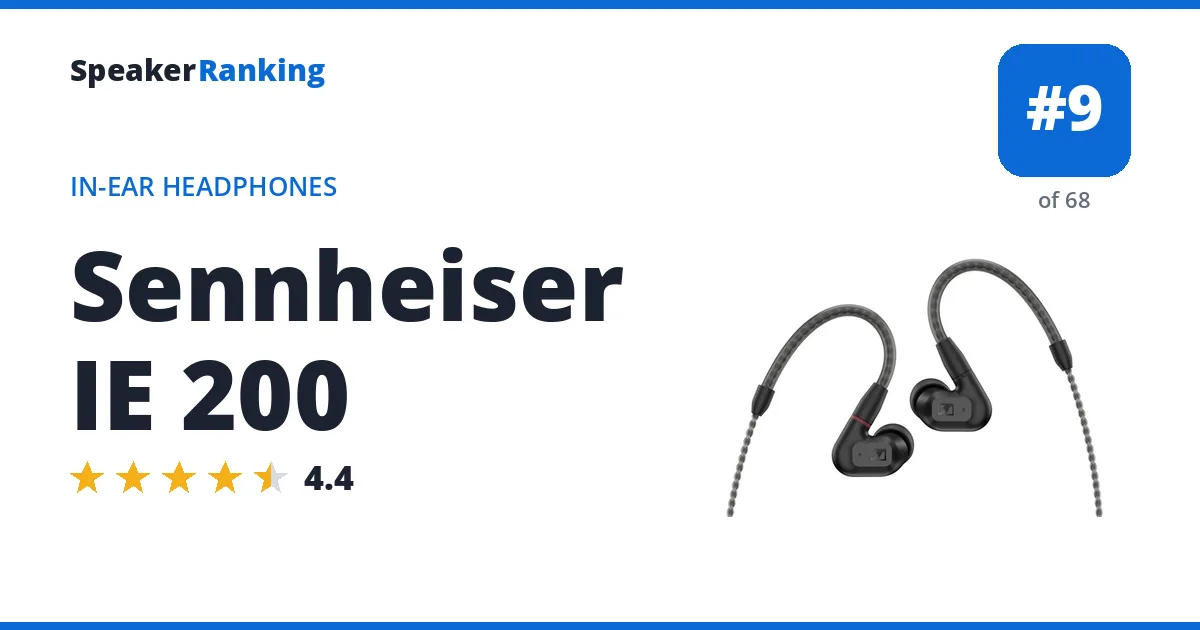
Pros: Bass and midrange land almost exactly on the Harman target in oratory1990’s measurement, within about 0.5 dB from 60 Hz to 3 kHz, which gives a natural tonal balance and a preference score of 79. At 16 ohms and 119 dB SPL/V sensitivity it plays loud straight from a phone with no amp. Each earpiece weighs only 4 g, and the single 7mm dynamic driver is a simple, wired design with no battery to charge.
Cons: The presence region from 3 to 6 kHz sits about 5 dB under target, with a 5.7 dB dip near 4.4 kHz, so vocals and snare attacks sound a little recessed. The top octave runs about 5.8 dB hot, which adds sparkle that can read as thin or bright on some recordings. The Final Audio A4000 and Shuoer S12 carry higher ratings at lower prices.
Full Sennheiser IE 200 review and specifications →
| Back | Closed |
|---|---|
| Connection | Wired |
| Deviation From Target | 1.86 dB standard deviation |
| Driver Type | Dynamic |
| Drivers | 1 x 7mm dynamic |
| Form Factor | In-ear |
| Frequency Response | 6Hz - 20kHz (Manufacturer specified) |
| Harman Preference Score | 79 (measured by oratory1990, via AutoEQ) |
| Impedance | 16 ohms |
| Sensitivity | 119 dB SPL/V |
| Tonal Tilt | -0.02 (negative is warmer, positive brighter) |
| Weight | 0 lbs (4 g) per earphone |
EQ preset to match the Harman target
Set a preamp of -4.3 dB, then add these filters in any parametric equalizer (Wavelet, Equalizer APO, Peace, or a player with parametric EQ). Calculated by AutoEQ from its measured frequency response.
| Filter | Frequency | Gain | Q |
|---|---|---|---|
| Low shelf | 105 Hz | +0.3 dB | 0.70 |
| Peak | 4,135 Hz | +4.3 dB | 1.83 |
| Peak | 1,520 Hz | -1.9 dB | 1.99 |
| Peak | 180 Hz | -1.2 dB | 1.14 |
| Peak | 67 Hz | +1.0 dB | 1.34 |
| High shelf | 10,000 Hz | -6.1 dB | 0.70 |
| Peak | 727 Hz | +0.8 dB | 1.79 |
| Peak | 5,480 Hz | +1.2 dB | 3.96 |
| Peak | 1,154 Hz | -0.6 dB | 3.44 |
| Peak | 2,978 Hz | +0.4 dB | 3.96 |
- Reviews, Comparisons and Sound Samples
- Head-to-Head Comparisons
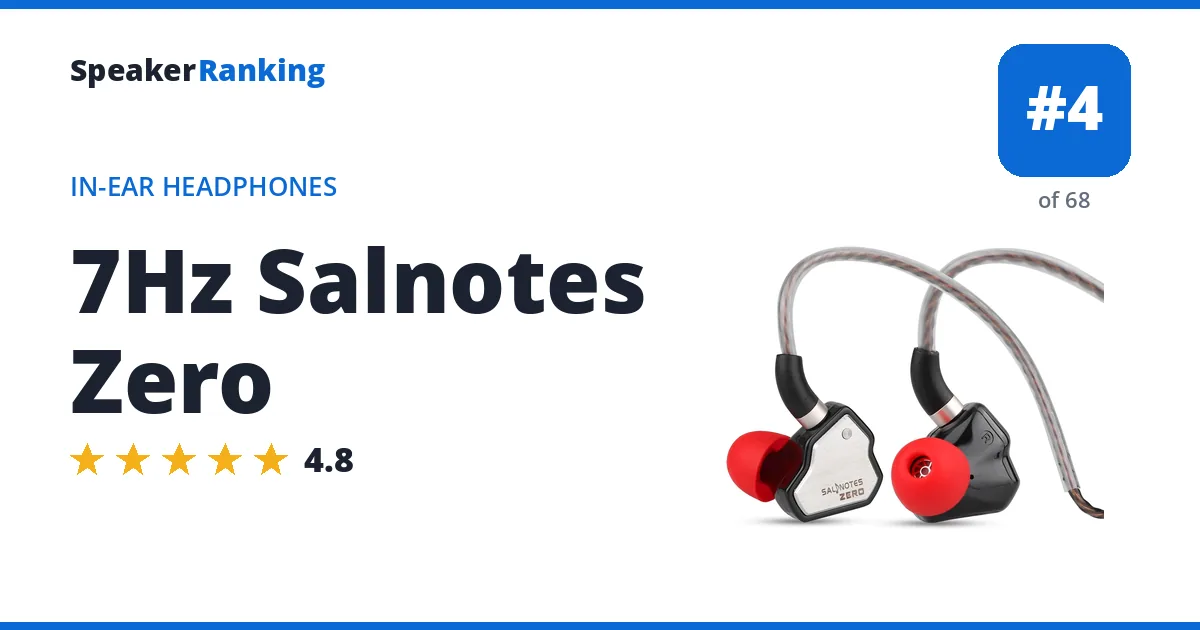
 Ranked #4 of 68 in In-Ear Headphones - 7Hz Salnotes Zero: $22.99 Discontinued Amazon eBay
Newer model: the 7Hz x Crinacle Zero 2, ranked lower, rated 3.9/5, released Nov 2023. See every 7Hz Zero generation.
Pros: A Harman score of 84 from a single 10 mm dynamic driver at a bargain price is remarkable. Bass and mids sit within about 0.3 dB of the target, so vocals and instruments are balanced naturally with a 1.31 dB deviation. It runs from a phone without difficulty at 32 ohms and 108 dB per volt. It beats the 7Hz x Crinacle Zero 2 on rating at a similar cost.
Cons: Presence and treble run about 2.1 to 2.2 dB under target, and a 6.2 dB dip near 10 kHz leaves cymbals and breath detail muted. Sub-bass is about 1.5 dB light, so the deepest rumble in electronic music is understated. The sensitivity is lower than many rivals, so it needs a bit more volume headroom from weak sources. Discontinued.
Full 7Hz Salnotes Zero review and specifications →
| Released | Jul 2022 (4 years ago) |
|---|---|
| Back | Closed |
| Connection | Wired |
| Deviation From Target | 1.31 dB standard deviation |
| Driver Type | Dynamic |
| Drivers | 1 x 10mm dynamic |
| Form Factor | In-ear |
| Frequency Response | 10Hz - 20kHz (Manufacturer specified) |
| Harman Preference Score | 84 (measured by oratory1990, via AutoEQ) |
| Impedance | 32 ohms |
| Sensitivity | 108 dB SPL/V |
| Tonal Tilt | -0.16 (negative is warmer, positive brighter) |
EQ preset to match the Harman target
Set a preamp of -2.5 dB, then add these filters in any parametric equalizer (Wavelet, Equalizer APO, Peace, or a player with parametric EQ). Calculated by AutoEQ from its measured frequency response.
| Filter | Frequency | Gain | Q |
|---|---|---|---|
| Low shelf | 105 Hz | -0.4 dB | 0.70 |
| Peak | 7,148 Hz | +2.5 dB | 1.39 |
| Peak | 186 Hz | -1.3 dB | 1.35 |
| Peak | 65 Hz | +1.7 dB | 1.11 |
| Peak | 1,677 Hz | -1.1 dB | 1.82 |
| High shelf | 10,000 Hz | -1.3 dB | 0.70 |
| Peak | 857 Hz | +0.9 dB | 1.64 |
| Peak | 9,824 Hz | +0.9 dB | 1.98 |
| Peak | 3,316 Hz | -0.6 dB | 2.50 |
| Peak | 1,261 Hz | -0.7 dB | 3.34 |
- Reviews, Comparisons and Sound Samples
- Head-to-Head Comparisons
 Ranked #1 of 68 in In-Ear Headphones - Truthear Nova: $169.99 Amazon eBay
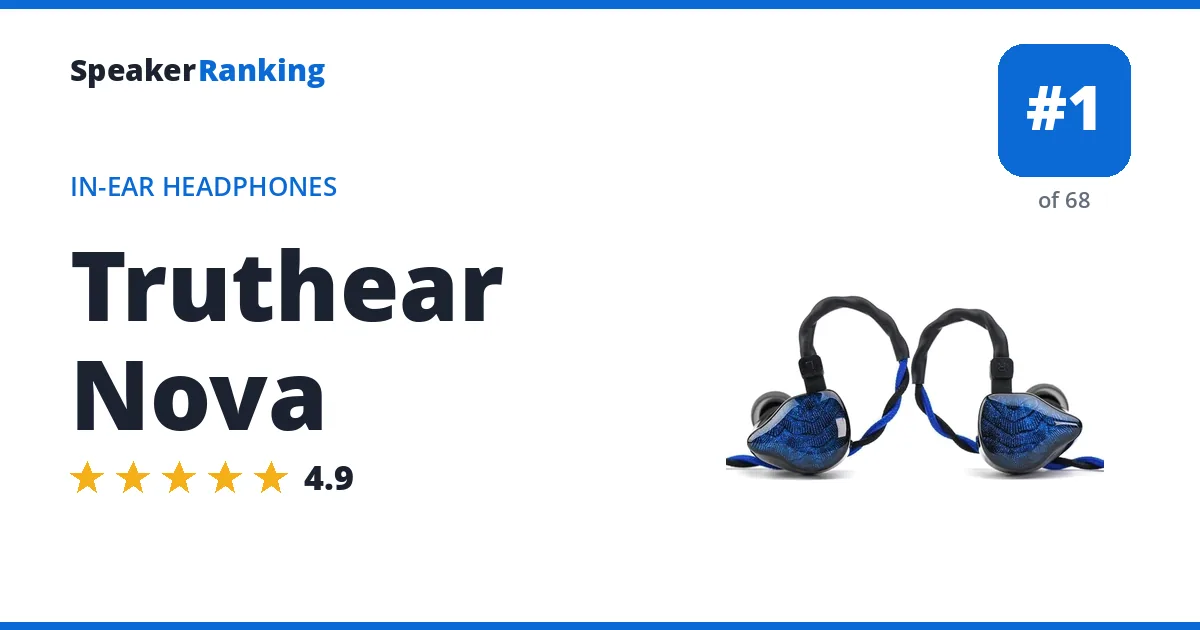
Pros: A Harman score of 90 puts it among the best-tuned in-ears measured, with every band from sub-bass to presence within about 1.5 dB of the target. The deviation of only 0.86 dB means vocals, guitars and drums sound natural and evenly balanced. The hybrid design pairs a dynamic driver with four balanced armatures, and the 14.8 ohm impedance with 123 dB sensitivity lets a phone drive it easily. Sub-bass sits about 1.5 dB above target, adding a touch of rumble without muddying the mids.
Cons: A 2.7 dB peak near 8 kHz can make bright cymbals and sibilant vocals slightly edgy on poorly mastered tracks. Treble and air run about 1.3 to 1.4 dB hot, so listeners sensitive to brightness may find extended sessions a little sharp. It is wired only, with no microphone or wireless features listed.
Full Truthear Nova review and specifications →
| Released | 2023 (3 years ago) |
|---|---|
| Back | Closed |
| Connection | Wired |
| Deviation From Target | 0.86 dB standard deviation |
| Driver Type | Hybrid (1 dynamic + 4 balanced armature) |
| Drivers | 1 x 10mm dynamic + 4 x balanced armature |
| Form Factor | In-ear |
| Frequency Response | 8Hz - 40kHz (Manufacturer specified) |
| Harman Preference Score | 90 (measured by oratory1990, via AutoEQ) |
| Impedance | 14.8 ohms |
| Sensitivity | 123 dB/Vrms @1kHz |
| Tonal Tilt | -0.14 (negative is warmer, positive brighter) |
EQ preset to match the Harman target
Set a preamp of -1.2 dB, then add these filters in any parametric equalizer (Wavelet, Equalizer APO, Peace, or a player with parametric EQ). Calculated by AutoEQ from its measured frequency response.
| Filter | Frequency | Gain | Q |
|---|---|---|---|
| Low shelf | 105 Hz | -4.2 dB | 0.70 |
| Peak | 313 Hz | +0.4 dB | 0.95 |
| Peak | 63 Hz | +3.6 dB | 0.80 |
| Peak | 4,404 Hz | -1.2 dB | 0.51 |
| Peak | 560 Hz | +1.1 dB | 0.85 |
| High shelf | 10,000 Hz | -2.5 dB | 0.70 |
| Peak | 9,390 Hz | +1.0 dB | 2.26 |
| Peak | 2,126 Hz | +1.1 dB | 3.14 |
| Peak | 2,987 Hz | -1.0 dB | 3.83 |
| Peak | 1,281 Hz | -0.5 dB | 2.65 |
- Reviews, Comparisons and Sound Samples
 Ranked #14 of 68 in In-Ear Headphones - Moondrop Quarks: $17.99 Amazon eBay
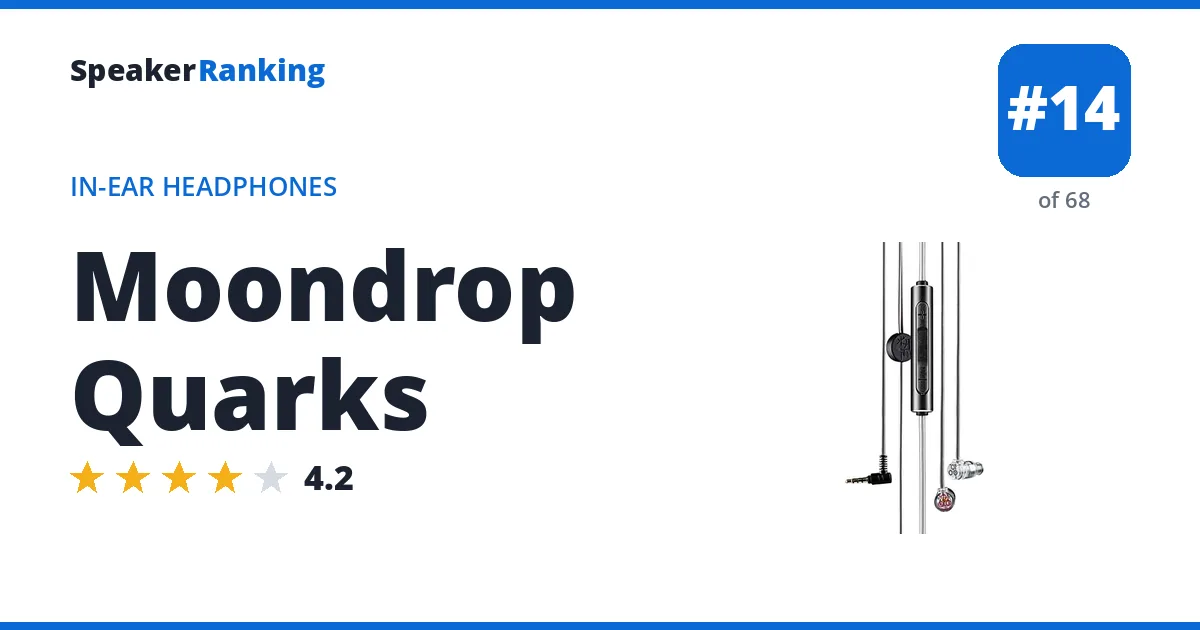
Pros: A preference score of 76 from a very inexpensive wired in-ear is hard to beat, and it is rated above the KZ ZSN Pro X and the CCA CRA. Bass from 60 to 200 Hz is lifted about 2.2 dB over target and the low mids about 1.6 dB, giving a warm, full sound that fits warm and bass leaning tastes. At 16 ohms and 116 dB sensitivity it plays loud straight from a phone.
Cons: A 4 dB peak near 2.9 kHz can make female vocals and snare hits sound forward or slightly shouty at higher volumes. Air above 10 kHz is about 2.5 dB low and there is a 5.4 dB dip near 11.9 kHz, so the top end sounds less open and airy. Sub-bass under 60 Hz is about 1.8 dB below target, so the deepest notes lack a little rumble.
Full Moondrop Quarks review and specifications →
| Released | 2021 (5 years ago) |
|---|---|
| Back | Closed |
| Built-in Microphone | Yes |
| Connection | Wired |
| Deviation From Target | 2.04 dB standard deviation |
| Driver Type | Dynamic |
| Drivers | 1 x 6mm dynamic |
| Form Factor | In-ear |
| Frequency Response | 20Hz - 20kHz (Manufacturer specified) |
| Harman Preference Score | 76 (measured by oratory1990, via AutoEQ) |
| Impedance | 16 ohms |
| Sensitivity | 116 dB/Vrms |
| Tonal Tilt | -0.06 (negative is warmer, positive brighter) |
EQ preset to match the Harman target
Set a preamp of -2.6 dB, then add these filters in any parametric equalizer (Wavelet, Equalizer APO, Peace, or a player with parametric EQ). Calculated by AutoEQ from its measured frequency response.
| Filter | Frequency | Gain | Q |
|---|---|---|---|
| Low shelf | 105 Hz | +2.5 dB | 0.70 |
| Peak | 170 Hz | -3.1 dB | 0.65 |
| Peak | 10,000 Hz | +2.9 dB | 0.24 |
| Peak | 767 Hz | +2.5 dB | 1.26 |
| Peak | 2,855 Hz | -5.9 dB | 3.31 |
| High shelf | 10,000 Hz | -1.9 dB | 0.70 |
| Peak | 4,604 Hz | +0.9 dB | 3.27 |
| Peak | 6,302 Hz | -1.1 dB | 4.61 |
| Peak | 1,492 Hz | -0.2 dB | 2.76 |
| Peak | 60 Hz | +0.1 dB | 1.86 |
- Reviews, Comparisons and Sound Samples
 Ranked #41 of 68 in In-Ear Headphones - Sennheiser IE 40 Pro: $109.00 Amazon eBay
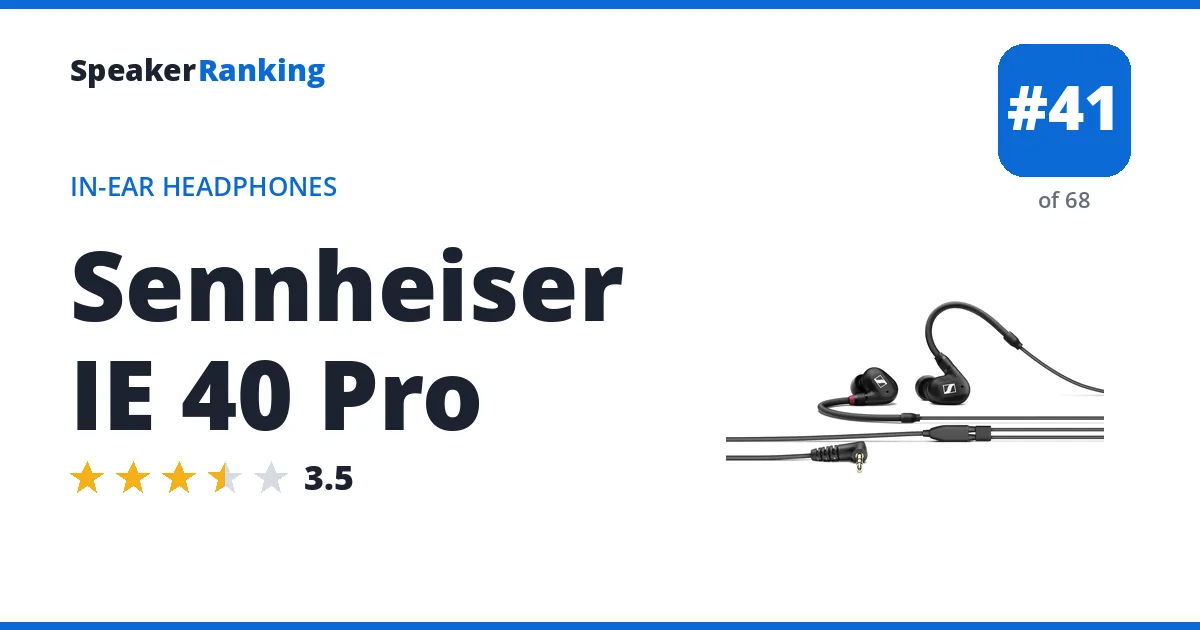
Pros: Oratory1990’s measurement shows bass 1.0 dB and low mids 1.4 dB above target, a gentle warmth that suits relaxed listening, and the preference score of 67 is acceptable. A 20 ohm impedance and 115 dB SPL/V sensitivity mean a phone drives it with ease, which suits monitoring and portable use. The balance leans toward warm and V-shaped tastes.
Cons: Presence is 4.5 dB under target across 3 to 6 kHz, with a 6.4 dB dip near 3.1 kHz, so vocals and guitars sound recessed and detail is dulled. Sub-bass is 3.6 dB light, so deep rumble is absent. Then the top end swings the opposite way, with a peak of 8.3 dB at 11.9 kHz and air 5.7 dB over target, which can add a brittle sheen. Tonal balance is clearly uneven, with a deviation of 2.94 dB.
Full Sennheiser IE 40 Pro review and specifications →
| Back | Closed |
|---|---|
| Connection | Wired |
| Deviation From Target | 2.94 dB standard deviation |
| Driver Type | Dynamic |
| Drivers | 1 x 10mm dynamic |
| Form Factor | In-ear |
| Frequency Response | 20Hz - 18kHz (Manufacturer specified) |
| Harman Preference Score | 67 (measured by oratory1990, via AutoEQ) |
| Impedance | 20 ohms |
| Sensitivity | 115 dB SPL/V |
| Tonal Tilt | +0.03 (negative is warmer, positive brighter) |
EQ preset to match the Harman target
Set a preamp of -5.6 dB, then add these filters in any parametric equalizer (Wavelet, Equalizer APO, Peace, or a player with parametric EQ). Calculated by AutoEQ from its measured frequency response.
| Filter | Frequency | Gain | Q |
|---|---|---|---|
| Low shelf | 105 Hz | +5.6 dB | 0.70 |
| Peak | 2,997 Hz | +5.7 dB | 1.48 |
| Peak | 75 Hz | -4.1 dB | 0.38 |
| Peak | 1,267 Hz | -0.8 dB | 2.09 |
| Peak | 261 Hz | -1.1 dB | 1.70 |
| High shelf | 10,000 Hz | -3.7 dB | 0.70 |
| Peak | 9,787 Hz | -3.3 dB | 1.71 |
| Peak | 4,341 Hz | +1.1 dB | 3.77 |
| Peak | 6,644 Hz | +2.1 dB | 5.97 |
| Peak | 7,958 Hz | -1.2 dB | 5.41 |
- Reviews, Comparisons and Sound Samples
 Ranked #7 of 68 in In-Ear Headphones - Shuoer S12: $129.00 Amazon eBay
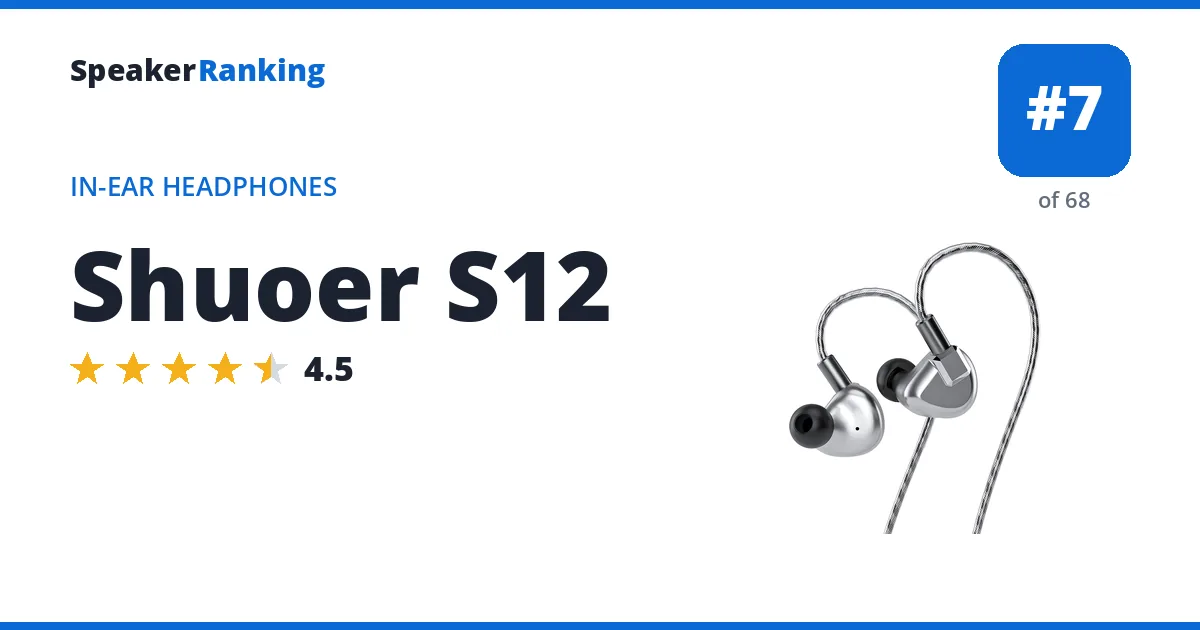
Pros: A planar magnetic driver is unusual in an in-ear and gives a Harman score of 80 with a smooth 1.62 dB deviation. Bass is lifted about 1.9 dB, adding warmth and punch, while the upper mids and treble stay close to target. The 16 ohm impedance is easy to drive from a phone, and it matches the Final Audio A4000 on rating.
Cons: A 4.2 dB peak near 8.2 kHz can make cymbals and sibilants slightly sharp, and treble from 6 to 10 kHz runs about 1.6 dB hot. Presence from 3 to 6 kHz sits 2.4 dB under target with a 3.3 dB dip near 3.75 kHz, so vocals can lose some forwardness. The 102 dB per mW sensitivity asks for a bit more volume than efficient rivals.
Full Shuoer S12 review and specifications →
| Released | 2022 (4 years ago) |
|---|---|
| Back | Closed |
| Connection | Wired |
| Deviation From Target | 1.62 dB standard deviation |
| Driver Type | Planar magnetic |
| Drivers | 1 x 14.8mm planar magnetic |
| Form Factor | In-ear |
| Frequency Response | 10Hz - 30kHz (Manufacturer specified) |
| Harman Preference Score | 80 (measured by oratory1990, via AutoEQ) |
| Impedance | 16 ohms |
| Sensitivity | 102 dB/mW |
| Tonal Tilt | -0.11 (negative is warmer, positive brighter) |
EQ preset to match the Harman target
Set a preamp of -2.5 dB, then add these filters in any parametric equalizer (Wavelet, Equalizer APO, Peace, or a player with parametric EQ). Calculated by AutoEQ from its measured frequency response.
| Filter | Frequency | Gain | Q |
|---|---|---|---|
| Low shelf | 105 Hz | +0.4 dB | 0.70 |
| Peak | 776 Hz | +2.9 dB | 0.76 |
| Peak | 162 Hz | -2.3 dB | 0.89 |
| Peak | 2,097 Hz | -3.4 dB | 0.90 |
| Peak | 3,690 Hz | +3.8 dB | 1.44 |
| High shelf | 10,000 Hz | -3.6 dB | 0.70 |
| Peak | 6,122 Hz | +1.6 dB | 5.71 |
| Peak | 7,230 Hz | -0.7 dB | 6.00 |
| Peak | 37 Hz | -0.3 dB | 2.35 |
| Peak | 65 Hz | +0.2 dB | 2.13 |
- Reviews, Comparisons and Sound Samples
 Ranked #5 of 68 in In-Ear Headphones - Truthear Gate: $21.99 Amazon eBay
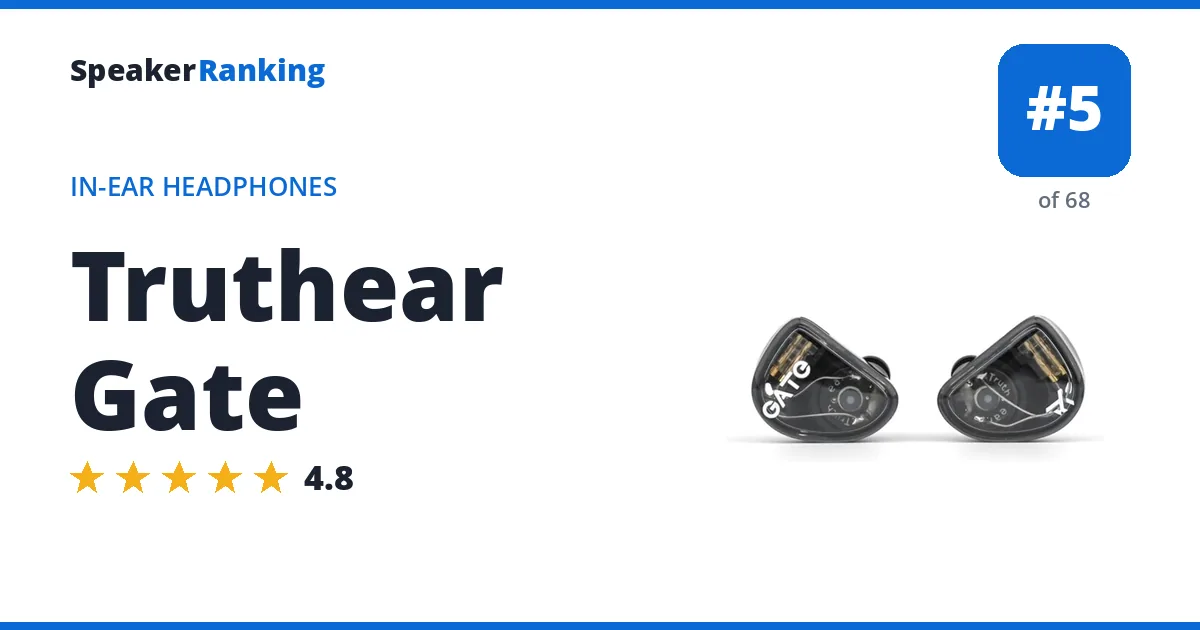
Pros: A Harman score of 83 from a single dynamic driver at a very low price gives accurate bass and mids, with bass and upper mids within about 0.2 dB of target. The 28 ohm impedance with 122 dB per volt sensitivity makes it easy to drive from any phone. The warm tilt suits listeners who want a smooth, non-fatiguing sound. It earns the same rating as the 7Hz Salnotes Zero at a similar cost.
Cons: Treble is the weak point, with a deep 10.8 dB dip near 11 kHz and air about 3 dB under target. Cymbals, hi-hats and the sense of space on recordings sound dulled as a result. Presence from 3 to 6 kHz is also about 1.9 dB down, which takes a little bite off vocals.
Full Truthear Gate review and specifications →
| Back | Closed |
|---|---|
| Connection | Wired |
| Deviation From Target | 1.39 dB standard deviation |
| Driver Type | Dynamic |
| Drivers | 1 x 10mm dynamic |
| Form Factor | In-ear |
| Frequency Response | 10Hz - 45kHz (Manufacturer specified) |
| Harman Preference Score | 83 (measured by oratory1990, via AutoEQ) |
| Impedance | 28 ohms |
| Sensitivity | 122 dB/Vrms |
| Tonal Tilt | -0.23 (negative is warmer, positive brighter) |
EQ preset to match the Harman target
Set a preamp of -4.9 dB, then add these filters in any parametric equalizer (Wavelet, Equalizer APO, Peace, or a player with parametric EQ). Calculated by AutoEQ from its measured frequency response.
| Filter | Frequency | Gain | Q |
|---|---|---|---|
| Low shelf | 105 Hz | +0.1 dB | 0.70 |
| Peak | 9,538 Hz | +4.7 dB | 0.99 |
| Peak | 2,074 Hz | -1.3 dB | 0.65 |
| Peak | 196 Hz | -1.1 dB | 1.34 |
| Peak | 698 Hz | +1.2 dB | 1.31 |
| High shelf | 10,000 Hz | -2.1 dB | 0.70 |
| Peak | 72 Hz | +0.8 dB | 1.77 |
| Peak | 4,992 Hz | +0.3 dB | 2.04 |
| Peak | 126 Hz | -0.4 dB | 2.34 |
| Peak | 8,647 Hz | +1.3 dB | 5.95 |
- Reviews, Comparisons and Sound Samples
- Head-to-Head Comparisons
 Ranked #11 of 68 in In-Ear Headphones - Sony WF-1000XM5: $198.00 Amazon eBay
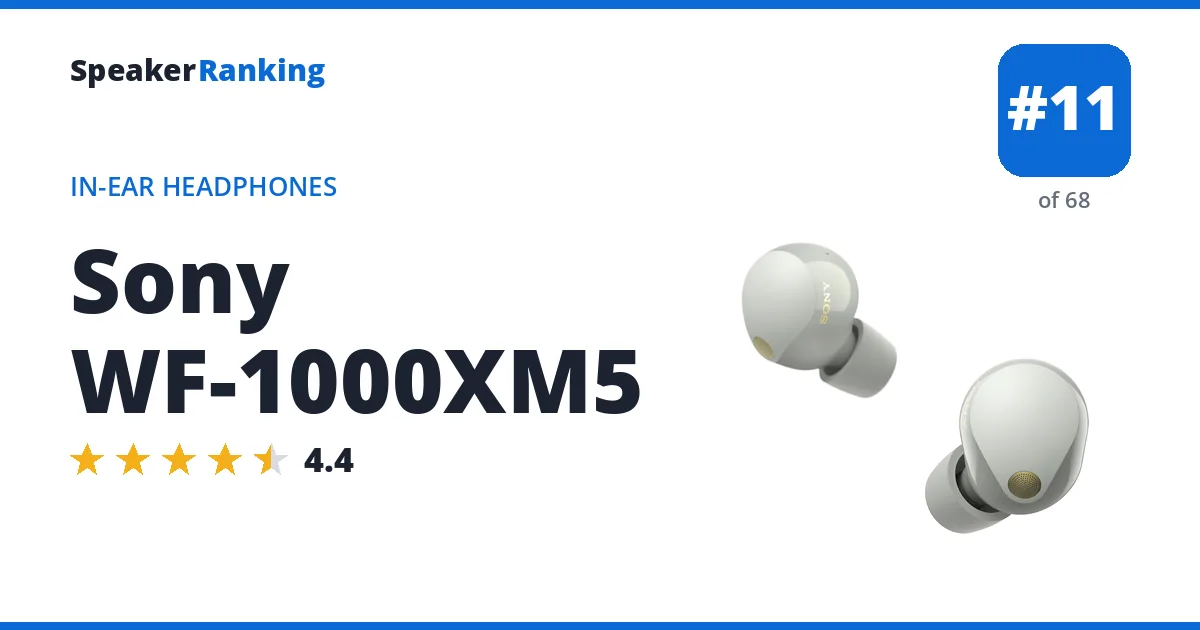
Pros: Mild bass emphasis, about 1.9 dB above target from 60 to 200 Hz, adds warmth without muddying the midrange, which stays within 0.8 dB of the target for a preference score of 78. Active noise cancelling, LDAC, AAC and SBC support, Bluetooth 5.3 and an IPX4 rating make it a full-featured true wireless set. Battery lasts about 8 hours per charge, 24 with the case, and each bud weighs 5.9 g.
Cons: Treble from 6 to 10 kHz runs about 2.2 dB low, with a 4.9 dB dip near 8 kHz, so cymbals and sibilance lose some bite. A 2.9 dB peak near 10.6 kHz can add a touch of artificial shimmer. Sub-bass sits about 1.9 dB below target, so the bass is punchy more than deep. The wired Sennheiser IE 200 matches its rating at a lower price and without charging.
Full Sony WF-1000XM5 review and specifications →
| Released | Jul 2023 (3 years ago) |
|---|---|
| Active Noise Cancelling | Yes |
| Back | Closed |
| Battery Life | 8 hours (24 with case, Manufacturer specified) |
| Bluetooth Codecs | SBC, AAC, LDAC |
| Bluetooth Version | 5.3 |
| Built-in Microphone | Yes |
| Connection | True wireless |
| Deviation From Target | 1.87 dB standard deviation |
| Driver Type | Dynamic |
| Drivers | 1 x 8.4mm dynamic |
| Form Factor | In-ear |
| Frequency Response | 20Hz - 20kHz (Manufacturer specified) |
| Harman Preference Score | 78 (measured by oratory1990, via AutoEQ) |
| IP Rating | IPX4 |
| Tonal Tilt | -0.18 (negative is warmer, positive brighter) |
| Weight | 0 lbs (5.9 g) per earbud |
EQ preset to match the Harman target
Set a preamp of -2.6 dB, then add these filters in any parametric equalizer (Wavelet, Equalizer APO, Peace, or a player with parametric EQ). Calculated by AutoEQ from its measured frequency response.
| Filter | Frequency | Gain | Q |
|---|---|---|---|
| Low shelf | 105 Hz | +5.4 dB | 0.70 |
| Peak | 68 Hz | -4.8 dB | 0.27 |
| Peak | 1,377 Hz | +2.6 dB | 0.31 |
| Peak | 1,806 Hz | -3.5 dB | 1.16 |
| Peak | 6,875 Hz | +1.8 dB | 3.49 |
| High shelf | 10,000 Hz | +2.3 dB | 0.70 |
| Peak | 3,757 Hz | +0.3 dB | 2.56 |
| Peak | 5,057 Hz | -0.7 dB | 5.70 |
| Peak | 449 Hz | +0.3 dB | 4.15 |
| Peak | 677 Hz | -0.2 dB | 2.75 |
- Reviews, Comparisons and Sound Samples
- Head-to-Head Comparisons
 Ranked #13 of 68 in In-Ear Headphones - Kiwi Ears Orchestra Lite: $249.00 Amazon eBay
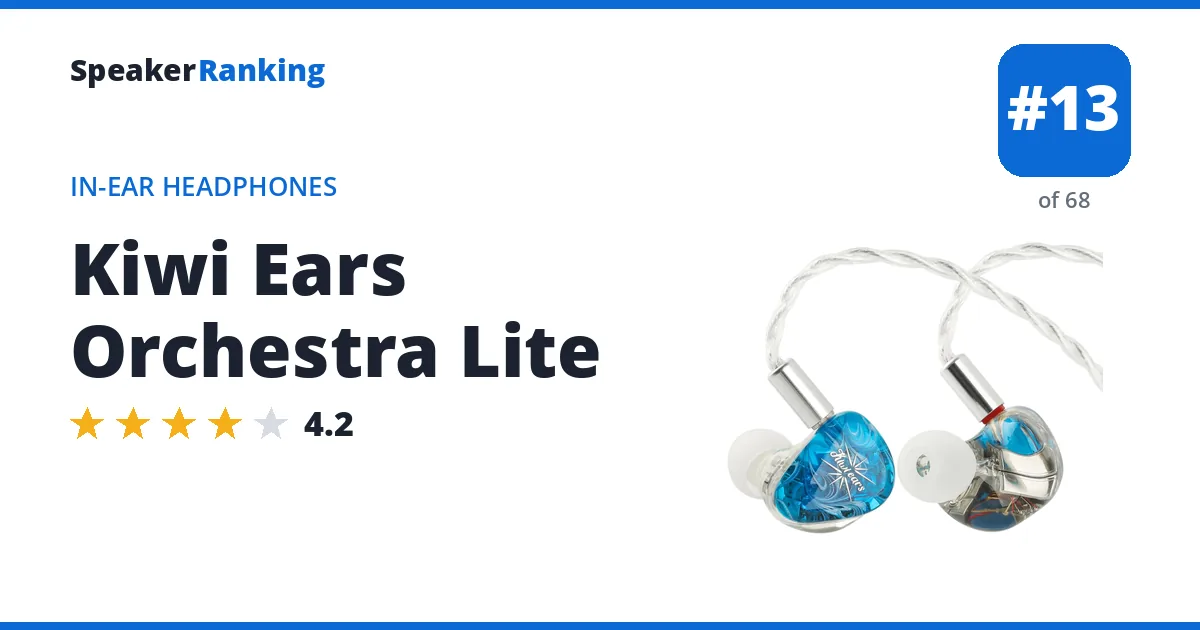
Pros: Bass and lower midrange land within about 0.2 dB of the Harman target from 60 Hz to 1 kHz, so vocals and instruments sound natural and unboosted. The response is smooth, with a deviation of only about 2 dB around the target and a preference score of 76. Eight balanced armature drivers and 112 dB sensitivity make it easy to drive from a phone or portable player, and it suits warm and bass leaning tastes.
Cons: Presence from 3 to 6 kHz runs about 5.6 dB under target, with a 6.7 dB dip near 3.6 kHz, so voices and guitars sound recessed and a little veiled. Treble from 6 to 10 kHz is about 2.8 dB low, which softens cymbals and reduces sparkle. It is rated below the Etymotic EVO, and there is no built in microphone.
Full Kiwi Ears Orchestra Lite review and specifications →
| Released | 2023 (3 years ago) |
|---|---|
| Back | Closed |
| Built-in Microphone | No |
| Connection | Wired |
| Deviation From Target | 2.03 dB standard deviation |
| Driver Type | Balanced armature |
| Drivers | 8 x balanced armature |
| Form Factor | In-ear |
| Frequency Response | 20Hz - 20kHz (Manufacturer specified) |
| Harman Preference Score | 76 (measured by oratory1990, via AutoEQ) |
| Sensitivity | 112 dB SPL/mW |
| Tonal Tilt | -0.26 (negative is warmer, positive brighter) |
EQ preset to match the Harman target
Set a preamp of -4.1 dB, then add these filters in any parametric equalizer (Wavelet, Equalizer APO, Peace, or a player with parametric EQ). Calculated by AutoEQ from its measured frequency response.
| Filter | Frequency | Gain | Q |
|---|---|---|---|
| Low shelf | 105 Hz | +1.1 dB | 0.70 |
| Peak | 128 Hz | -2.0 dB | 0.87 |
| Peak | 5,834 Hz | +3.8 dB | 2.20 |
| Peak | 1,508 Hz | -1.9 dB | 1.09 |
| Peak | 3,467 Hz | +4.0 dB | 2.99 |
| High shelf | 10,000 Hz | -0.7 dB | 0.70 |
| Peak | 8,847 Hz | +0.8 dB | 4.64 |
| Peak | 45 Hz | -0.2 dB | 2.08 |
| Peak | 4,617 Hz | -1.0 dB | 6.00 |
| Peak | 5,106 Hz | +0.8 dB | 6.00 |
- Reviews, Comparisons and Sound Samples
 Ranked #20 of 68 in In-Ear Headphones - Samsung Galaxy Buds2: $199.00 Discontinued Amazon eBay
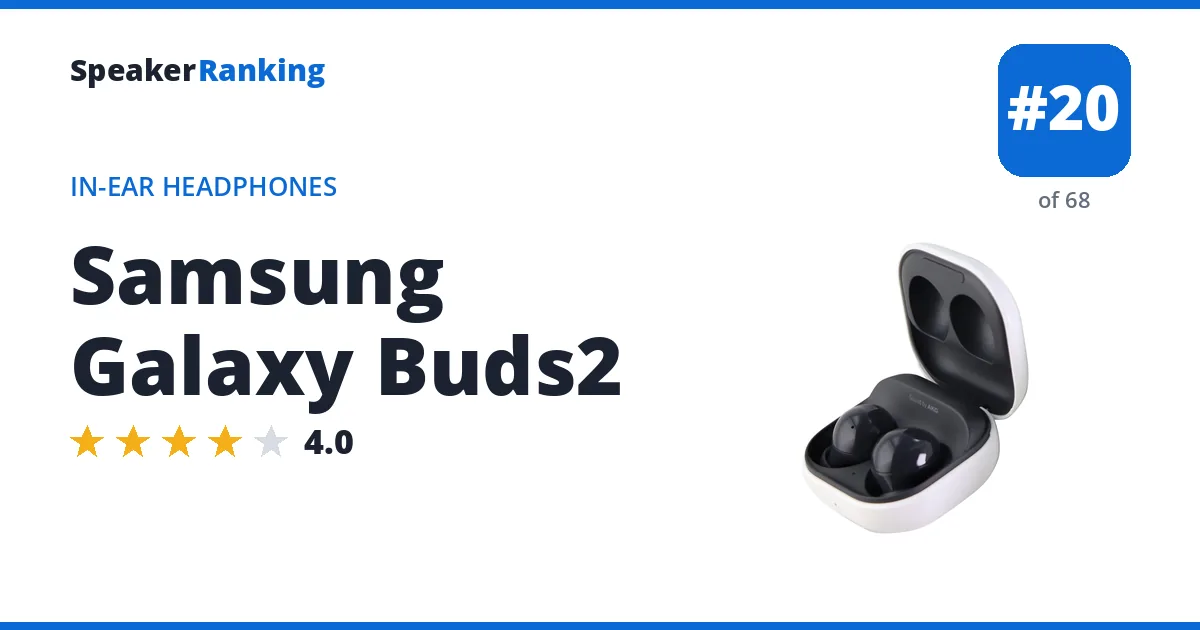
Pros: Bass and low mids sit slightly above target, about 0.9 dB at 60 to 200 Hz, which gives a warm, easy tonal balance for a preference score of 74. The set offers active noise cancelling, Bluetooth 5.2, a microphone, and SBC, AAC and Scalable codec support. Each bud weighs 5 g, and a dual driver layout pairs an 11mm woofer with a 6.3mm tweeter.
Cons: Treble is uneven, with a 5.8 dB peak near 8 kHz, a 4.8 dB dip across 3 to 6 kHz, and the air band 6.5 dB low, which blurs vocal detail and makes cymbals sound splashy and then rolled off. Battery lasts about 5 hours with noise cancelling on. The IPX2 rating gives only basic splash protection, and the AUNE Jasper has a higher rating. Discontinued.
Full Samsung Galaxy Buds2 review and specifications →
| Released | Aug 2021 (5 years ago) |
|---|---|
| Active Noise Cancelling | Yes |
| Back | Closed |
| Battery Life | 5 hours (20 with case, ANC on; 7.5 hours, 29 with case, ANC off, Manufacturer specified) |
| Bluetooth Codecs | SBC, AAC, Scalable |
| Bluetooth Version | 5.2 |
| Built-in Microphone | Yes |
| Connection | True wireless |
| Deviation From Target | 2.18 dB standard deviation |
| Driver Type | Dynamic |
| Drivers | 1 x 11mm dynamic woofer + 1 x 6.3mm dynamic tweeter |
| Form Factor | In-ear |
| Harman Preference Score | 74 (measured by oratory1990, via AutoEQ) |
| IP Rating | IPX2 |
| Tonal Tilt | -0.24 (negative is warmer, positive brighter) |
| Weight | 0 lbs (5 g) per earbud |
EQ preset to match the Harman target
Set a preamp of -4.6 dB, then add these filters in any parametric equalizer (Wavelet, Equalizer APO, Peace, or a player with parametric EQ). Calculated by AutoEQ from its measured frequency response.
| Filter | Frequency | Gain | Q |
|---|---|---|---|
| Low shelf | 105 Hz | +1.7 dB | 0.70 |
| Peak | 4,739 Hz | +4.8 dB | 1.27 |
| Peak | 88 Hz | -1.9 dB | 0.26 |
| Peak | 6,935 Hz | -3.8 dB | 4.18 |
| Peak | 827 Hz | +0.9 dB | 2.57 |
| High shelf | 10,000 Hz | +3.1 dB | 0.70 |
| Peak | 1,484 Hz | -1.0 dB | 2.64 |
| Peak | 7,930 Hz | -1.3 dB | 5.82 |
| Peak | 1,026 Hz | +0.5 dB | 4.03 |
| Peak | 41 Hz | -0.2 dB | 1.94 |
- Reviews, Comparisons and Sound Samples
- Head-to-Head Comparisons
 Ranked #21 of 68 in In-Ear Headphones - Shuoer S12 Pro: $169.00 Amazon eBay
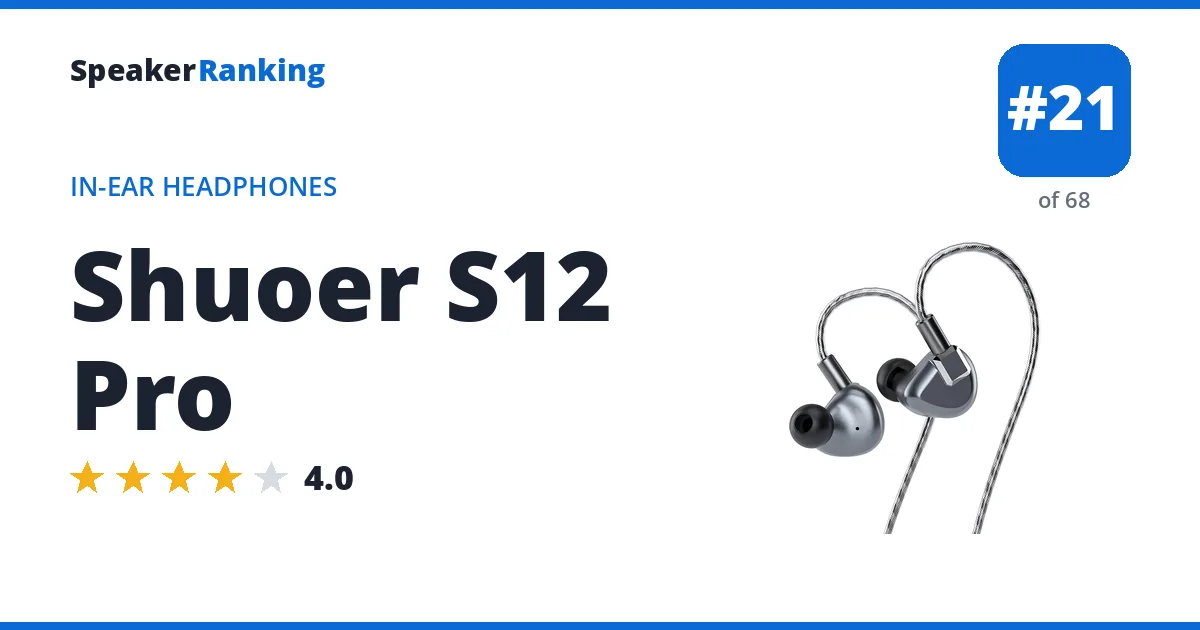
Pros: A 14.8mm planar magnetic driver delivers a gentle bass lift, about 2 dB above target from 60 to 200 Hz, with sub-bass nearly on target, for a preference score of 74. At 16 ohms and 102 dB sensitivity it runs fine from a phone. The wired design suits warm and v-shaped tastes, with extra treble sparkle.
Cons: Treble from 6 to 16 kHz runs 3 dB or more above target, with a 6 dB peak near 8.2 kHz, so cymbals and sibilance can sound bright at volume. A 5.5 dB dip near 3.7 kHz pulls back vocal presence. The Beats Powerbeats Pro and AUNE Jasper carry higher ratings.
Full Shuoer S12 Pro review and specifications →
| Released | 2022 (4 years ago) |
|---|---|
| Back | Closed |
| Connection | Wired |
| Deviation From Target | 2.18 dB standard deviation |
| Driver Type | Planar magnetic |
| Drivers | 1 x 14.8mm planar magnetic |
| Form Factor | In-ear |
| Frequency Response | 20Hz - 20kHz (Manufacturer specified) |
| Harman Preference Score | 74 (measured by oratory1990, via AutoEQ) |
| Impedance | 16 ohms |
| Sensitivity | 102 dB |
| Tonal Tilt | -0.19 (negative is warmer, positive brighter) |
EQ preset to match the Harman target
Set a preamp of -4.6 dB, then add these filters in any parametric equalizer (Wavelet, Equalizer APO, Peace, or a player with parametric EQ). Calculated by AutoEQ from its measured frequency response.
| Filter | Frequency | Gain | Q |
|---|---|---|---|
| Low shelf | 105 Hz | +0.2 dB | 0.70 |
| Peak | 3,538 Hz | +5.0 dB | 2.19 |
| Peak | 163 Hz | -2.5 dB | 0.79 |
| Peak | 679 Hz | +2.1 dB | 0.90 |
| Peak | 1,695 Hz | -2.2 dB | 2.26 |
| High shelf | 10,000 Hz | -7.4 dB | 0.70 |
| Peak | 7,429 Hz | -1.6 dB | 4.48 |
| Peak | 4,686 Hz | +0.9 dB | 3.26 |
| Peak | 3,610 Hz | -0.5 dB | 6.00 |
| Peak | 4,104 Hz | +0.5 dB | 4.93 |
- Reviews, Comparisons and Sound Samples
- Head-to-Head Comparisons