Editor's top picks
Start with these headphones
Our leading recommendations at a glance. Each card links to its primary retailer.
Looking for the best headphones under $100? At this price closed-back studio headphones come into their own, and the best wired in-ear monitors score among the highest on the whole site. Wireless headphones are available too, but they give up a lot of accuracy for the convenience.
Prices on this page were last checked October 10, 2026 at 5:37 PM UTC. Product prices and availability are accurate as of that date/time and are subject to change; the price and availability shown on Amazon at the time of purchase will apply to the purchase of this product.
As an eBay Partner, we may be compensated if you make a purchase.
Best Over-Ear Under $100
 The best over-ear headphone under $100, a closed-back studio monitor at $90, is the Mackie MC-250: $89.99 Amazon eBay
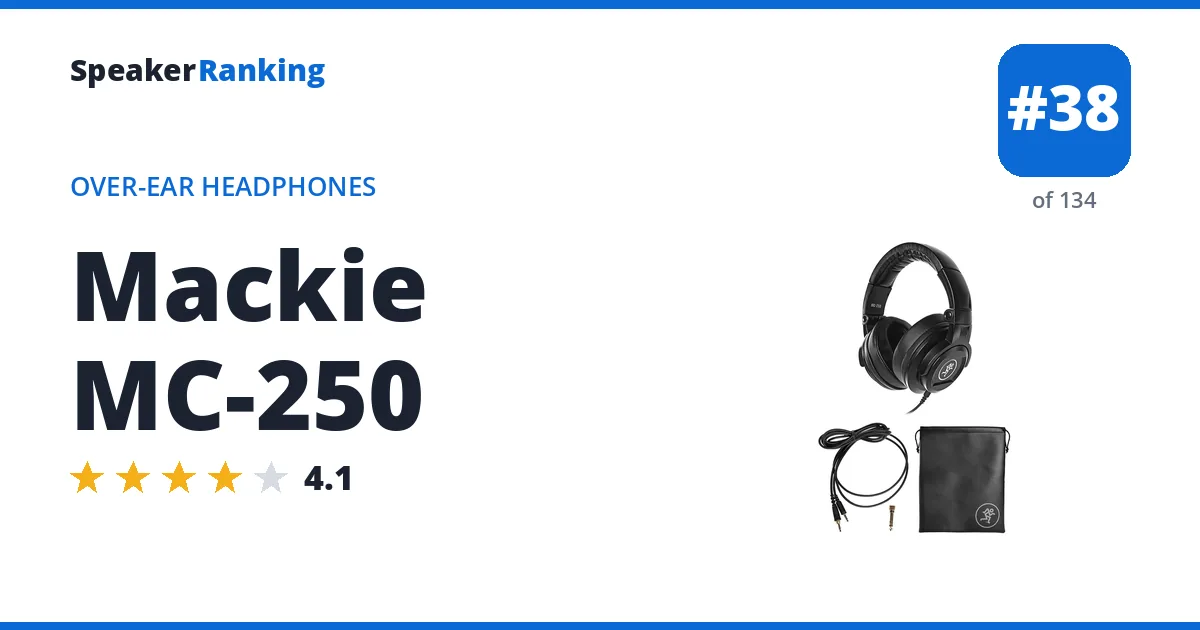
Pros: A preference score of 83 for a closed-back headphone is strong, and bass from 60 to 200 Hz is about 1 dB above target for a slightly warm, full low end. Treble from 6 to 16 kHz is within 0.1 dB of target. At 38 ohms and 100 dB sensitivity it runs fine from a phone, and the closed back keeps leakage down. It is a wired design at 265 g.
Cons: A 5 dB dip near 4.8 kHz and presence about 2.5 dB under target make vocals and snare snap sound a little recessed. Sub-bass is about 4 dB under target under 60 Hz. The warm tilt of minus 0.45 may sound dull for listeners who prefer a brighter sound.
Full Mackie MC-250 review and specifications →
| Back | Closed |
|---|---|
| Connection | Wired |
| Deviation From Target | 1.95 dB standard deviation |
| Driver Type | Dynamic |
| Drivers | 1 x 50mm |
| Form Factor | Over-ear |
| Frequency Response | 10Hz - 20kHz (Manufacturer specified) |
| Harman Preference Score | 83 (measured by oratory1990, via AutoEQ) |
| Impedance | 38 ohms |
| Sensitivity | 100 dB |
| Tonal Tilt | -0.45 (negative is warmer, positive brighter) |
| Weight | 0.6 lbs (265 g) |
EQ preset to match the Harman target
Set a preamp of -7.7 dB, then add these filters in any parametric equalizer (Wavelet, Equalizer APO, Peace, or a player with parametric EQ). Calculated by AutoEQ from its measured frequency response.
| Filter | Frequency | Gain | Q |
|---|---|---|---|
| Low shelf | 105 Hz | +15.9 dB | 0.70 |
| Peak | 50 Hz | -14.8 dB | 0.42 |
| Peak | 419 Hz | +5.7 dB | 1.71 |
| Peak | 905 Hz | -2.0 dB | 1.42 |
| Peak | 4,207 Hz | +4.5 dB | 4.10 |
| High shelf | 10,000 Hz | +0.3 dB | 0.70 |
| Peak | 8,939 Hz | -1.7 dB | 3.53 |
| Peak | 5,862 Hz | -2.6 dB | 6.00 |
| Peak | 1,892 Hz | +1.7 dB | 4.71 |
| Peak | 1,370 Hz | -0.7 dB | 3.02 |
- Reviews, Comparisons and Sound Samples
- Head-to-Head Comparisons
 A close alternative with a slightly warmer tilt, at $78, is the Yamaha RH5Ma: $78.00 Amazon eBay
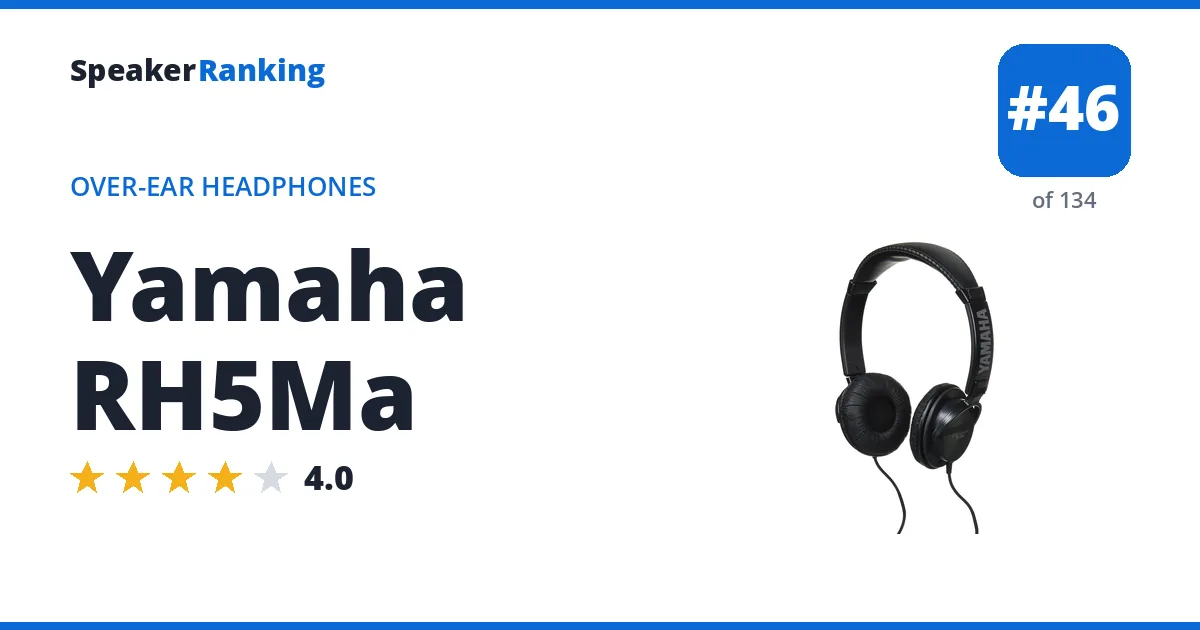
Pros: A preference score of 82 with extra bass, 2.5 dB above target from 60 to 200 Hz, gives a warm, punchy sound with a bit of body in the low mids. At 163 g with 32 ohms and 98 dB/mW, it is light, closed-back and easy to drive from a phone or laptop.
Cons: Treble is about 5.6 dB above target, with a peak near 8.9 dB at 8.4 kHz, so cymbals and sibilance can be sharp. A 7.5 dB dip near 4.3 kHz recesses vocal presence, and sub-bass below 60 Hz is about 4.6 dB low. The deviation of 2.4 dB is among the least even in its group.
Full Yamaha RH5Ma review and specifications →
| Back | Closed |
|---|---|
| Connection | Wired |
| Deviation From Target | 2.44 dB standard deviation |
| Driver Type | Dynamic |
| Drivers | 1 x 40mm dynamic |
| Form Factor | Over-ear |
| Frequency Response | 20Hz - 20kHz (Manufacturer specified) |
| Harman Preference Score | 82 (measured by oratory1990, via AutoEQ) |
| Impedance | 32 ohms |
| Sensitivity | 98 dB/mW |
| Tonal Tilt | +0.12 (negative is warmer, positive brighter) |
| Weight | 0.4 lbs (163 g) |
EQ preset to match the Harman target
Set a preamp of -6.8 dB, then add these filters in any parametric equalizer (Wavelet, Equalizer APO, Peace, or a player with parametric EQ). Calculated by AutoEQ from its measured frequency response.
| Filter | Frequency | Gain | Q |
|---|---|---|---|
| Low shelf | 105 Hz | +7.8 dB | 0.70 |
| Peak | 77 Hz | -5.9 dB | 0.62 |
| Peak | 863 Hz | +4.6 dB | 2.37 |
| Peak | 8,259 Hz | -4.7 dB | 2.01 |
| Peak | 2,447 Hz | +2.1 dB | 2.39 |
| High shelf | 10,000 Hz | +2.4 dB | 0.70 |
| Peak | 4,968 Hz | -3.5 dB | 6.00 |
| Peak | 4,244 Hz | +2.5 dB | 6.00 |
| Peak | 444 Hz | -1.8 dB | 4.31 |
| Peak | 329 Hz | +0.5 dB | 2.10 |
- Reviews, Comparisons and Sound Samples
- Head-to-Head Comparisons
 For an open-back with a wider sense of space, at $95, check out the Philips SHP9500: $94.99 Amazon eBay
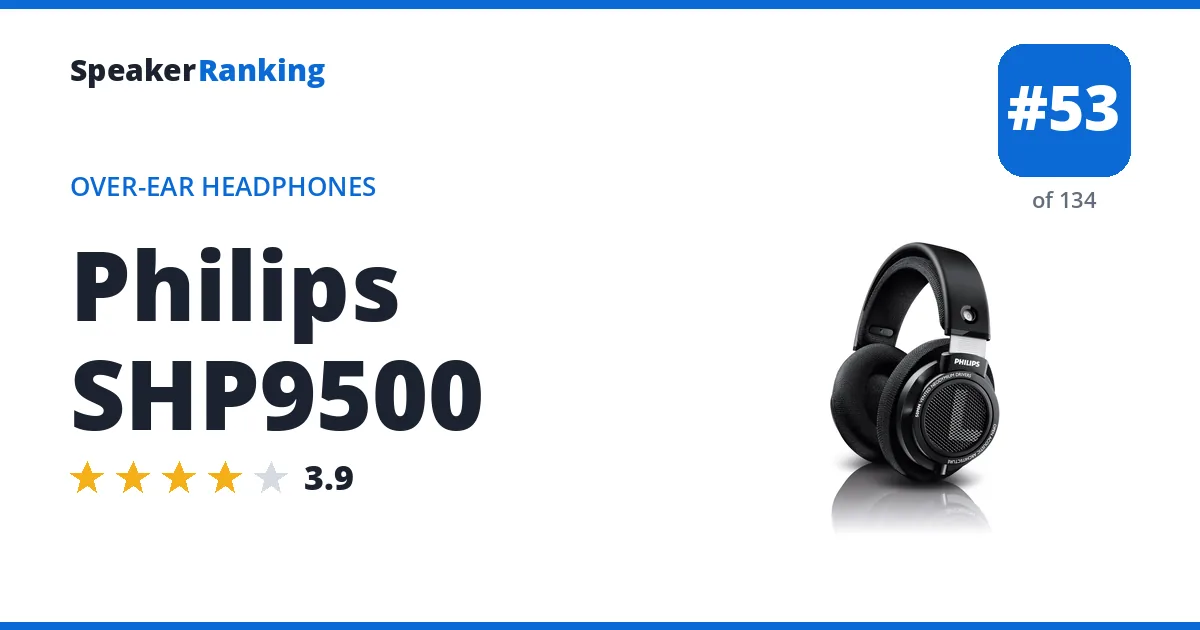
Pros: A preference score of 80 and a deviation of only 2.2 dB make the open back response smooth for the money, with bass from 60 to 200 Hz and the lower mids within half a dB of target. It is very easy to drive at 32 ohms and 101 dB sensitivity, so a phone runs it fine, and it weighs just 320 g. It costs far less than most headphones with a comparable score.
Cons: Sub-bass is about 9 dB below target under 60 Hz, so electronic and cinematic bass lacks rumble and slam. Presence is lifted about 2.3 dB, and a 6.7 dB peak near 6.2 kHz followed by a 4 dB dip near 7.7 kHz adds some edge to vocals and cymbals. The open back leaks sound and gives no isolation.
Full Philips SHP9500 review and specifications →
| Back | Open |
|---|---|
| Connection | Wired |
| Deviation From Target | 2.17 dB standard deviation |
| Driver Type | Dynamic |
| Drivers | 1 x 50mm dynamic |
| Form Factor | Over-ear |
| Frequency Response | 12Hz - 35kHz (Manufacturer specified) |
| Harman Preference Score | 80 (measured by oratory1990, via AutoEQ) |
| Impedance | 32 ohms |
| Sensitivity | 101 dB |
| Tonal Tilt | +0.47 (negative is warmer, positive brighter) |
| Weight | 0.7 lbs (320 g) |
EQ preset to match the Harman target
Set a preamp of -6.4 dB, then add these filters in any parametric equalizer (Wavelet, Equalizer APO, Peace, or a player with parametric EQ). Calculated by AutoEQ from its measured frequency response.
| Filter | Frequency | Gain | Q |
|---|---|---|---|
| Low shelf | 105 Hz | +6.5 dB | 0.70 |
| Peak | 5,734 Hz | -5.7 dB | 2.84 |
| Peak | 110 Hz | -3.0 dB | 0.81 |
| Peak | 2,130 Hz | +3.7 dB | 2.76 |
| Peak | 412 Hz | +1.0 dB | 1.39 |
| High shelf | 10,000 Hz | -2.4 dB | 0.70 |
| Peak | 1,113 Hz | -0.6 dB | 2.07 |
| Peak | 7,370 Hz | +2.1 dB | 5.98 |
| Peak | 4,477 Hz | -1.7 dB | 6.00 |
| Peak | 3,566 Hz | +1.3 dB | 6.00 |
- Reviews, Comparisons and Sound Samples
- Head-to-Head Comparisons
Best In-Ear Under $100
 The best in-ear monitor under $100, at $65, is the Truthear x Crinacle Zero RED: $64.99 Amazon eBay
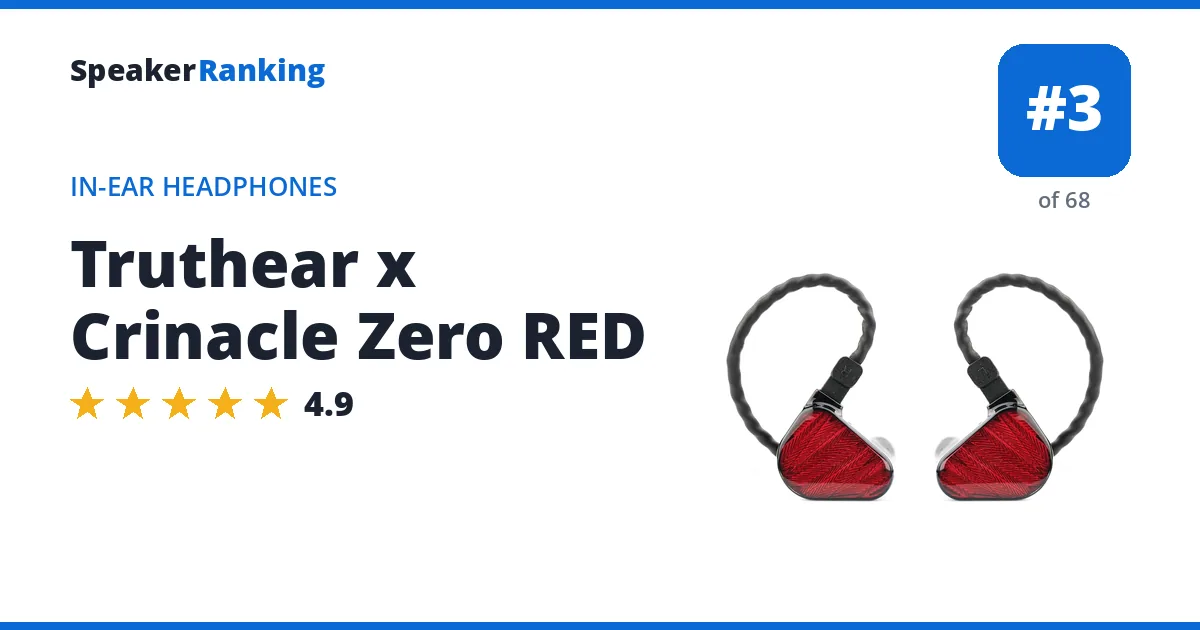
Pros: A Harman score of 86 at an entry-level price delivers a well-balanced response with a smooth 1.1 dB deviation. Bass and mids track the target closely, and the dual dynamic driver design runs easily from a phone at 17.5 ohms and 117.5 dB per volt. It outscores the Tin HiFi T3 Plus by a clear rating margin at a similar cost. It is a good fit for listeners who like a warm, bass-forward sound.
Cons: Presence from 3 to 6 kHz sits about 2.2 dB below target, so vocals and snare attack can sound a little recessed. A 3.9 dB dip near 10.3 kHz and sub-bass about 1.4 dB light mean cymbals lack some shimmer and the deepest bass has less rumble. It is wired only with no mic or remote listed.
Full Truthear x Crinacle Zero RED review and specifications →
| Back | Closed |
|---|---|
| Connection | Wired |
| Deviation From Target | 1.10 dB standard deviation |
| Driver Type | Dynamic |
| Drivers | 1 x 10mm + 1 x 7.8mm dynamic |
| Form Factor | In-ear |
| Frequency Response | 20Hz - 40.5kHz (Manufacturer specified) |
| Harman Preference Score | 86 (measured by oratory1990, via AutoEQ) |
| Impedance | 17.5 ohms |
| Sensitivity | 117.5 dB/Vrms |
| Tonal Tilt | -0.08 (negative is warmer, positive brighter) |
EQ preset to match the Harman target
Set a preamp of -2.1 dB, then add these filters in any parametric equalizer (Wavelet, Equalizer APO, Peace, or a player with parametric EQ). Calculated by AutoEQ from its measured frequency response.
| Filter | Frequency | Gain | Q |
|---|---|---|---|
| Low shelf | 105 Hz | -0.5 dB | 0.70 |
| Peak | 6,163 Hz | +2.2 dB | 2.44 |
| Peak | 341 Hz | -1.0 dB | 1.46 |
| Peak | 70 Hz | +1.0 dB | 0.61 |
| Peak | 1,284 Hz | -0.6 dB | 2.04 |
| High shelf | 10,000 Hz | -1.8 dB | 0.70 |
| Peak | 2,432 Hz | +0.7 dB | 2.98 |
| Peak | 3,588 Hz | -0.6 dB | 3.06 |
| Peak | 8,541 Hz | +1.1 dB | 3.84 |
| Peak | 769 Hz | +0.2 dB | 3.01 |
- Reviews, Comparisons and Sound Samples
- Head-to-Head Comparisons
 For a single-driver set with a smooth, balanced tuning, at $59, consider the Tin HiFi T3 Plus: $59.00 Amazon eBay
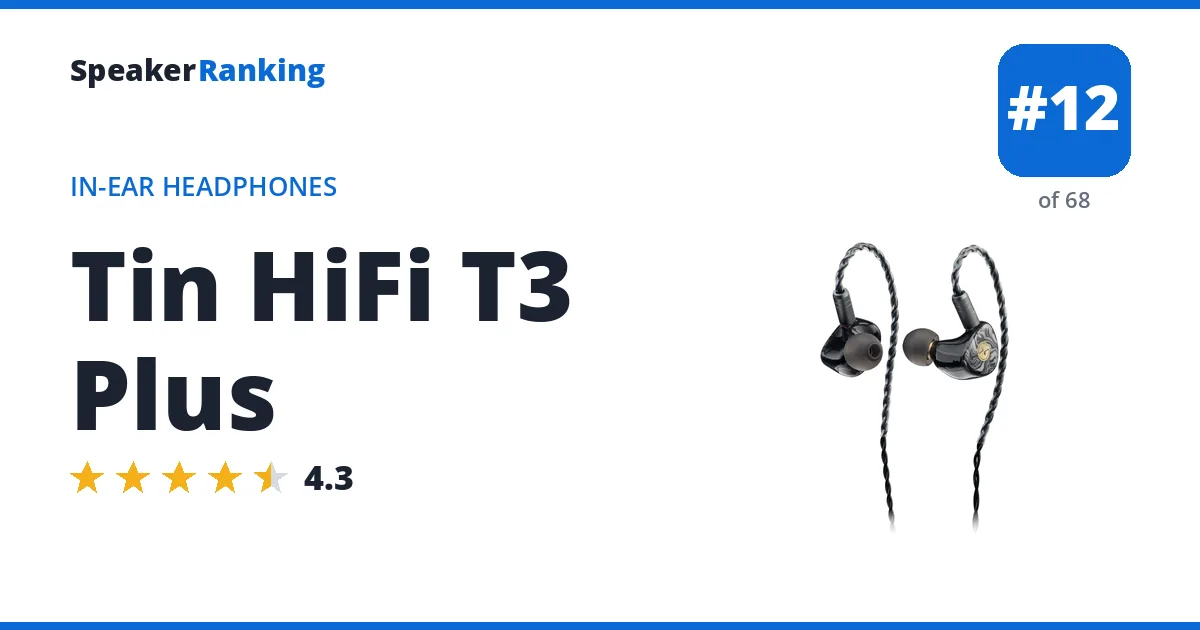
Pros: Crinacle’s measurement gives a preference score of 77 with a smooth response, a standard deviation of only 1.78 dB around the target. A single 10mm dynamic driver at 32 ohms and 105 dB sensitivity runs easily from a phone or dongle. It scores well above the Tin HiFi T4, which has a lower rating at a higher price.
Cons: The tilt of negative 0.41 means a slightly warm balance, so listeners who want a brighter, airier sound may find it relaxed. It has no built-in microphone, so it cannot take calls. It is wired only, with no wireless or noise cancelling features.
Full Tin HiFi T3 Plus review and specifications →
| Back | Closed |
|---|---|
| Built-in Microphone | No |
| Connection | Wired |
| Deviation From Target | 1.78 dB standard deviation |
| Driver Type | Dynamic |
| Drivers | 1 x 10mm dynamic |
| Form Factor | In-ear |
| Frequency Response | 10Hz - 20kHz (Manufacturer specified) |
| Harman Preference Score | 77 (measured by crinacle, via AutoEQ) |
| Impedance | 32 ohms |
| Sensitivity | 105 dB @ 1kHz, 0.179V |
| Tonal Tilt | -0.41 (negative is warmer, positive brighter) |
EQ preset to match the Harman target
Set a preamp of -5.1 dB, then add these filters in any parametric equalizer (Wavelet, Equalizer APO, Peace, or a player with parametric EQ). Calculated by AutoEQ from its measured frequency response.
| Filter | Frequency | Gain | Q |
|---|---|---|---|
| Low shelf | 105 Hz | -0.1 dB | 0.70 |
| Peak | 6,867 Hz | +5.9 dB | 1.01 |
| Peak | 163 Hz | -2.4 dB | 0.78 |
| Peak | 683 Hz | +2.7 dB | 0.84 |
| Peak | 3,057 Hz | -2.6 dB | 0.39 |
| High shelf | 10,000 Hz | -4.1 dB | 0.70 |
| Peak | 6,000 Hz | +2.0 dB | 5.50 |
| Peak | 4,522 Hz | -1.6 dB | 4.73 |
| Peak | 3,143 Hz | +0.9 dB | 3.42 |
| Peak | 1,530 Hz | -0.3 dB | 2.49 |
- Reviews, Comparisons and Sound Samples
- Head-to-Head Comparisons
If You Need Wireless
The best-measuring wireless over-ear under $100 is the Soundcore Space One at $85, which adds noise cancelling. It rates well below the wired picks above, so choose it only if you need Bluetooth or noise cancelling; see every wireless headphone ranked.