Editor's top picks
Start with these speakers
Our leading recommendations at a glance. Each card links to its primary retailer.
Looking for a powered speaker with an XLR input? A balanced XLR connection rejects noise picked up over a cable run, which matters once a cable crosses a desk, runs behind a rack, or shares a path with power cords. It is the standard connector on audio interfaces, mixers and preamps, and on nearly every serious studio monitor. Every pick below has a verified XLR input; the recommendations are ordered by measured sound quality, not by the connector alone.
Want every match, not just the top pick per category? See every powered speaker with an XLR input →
Quick Navigation
- Best Overall
- Best Budget
- Best Reference
- Best XLR-Only Design
- Other Powered Speakers With an XLR Input
- What To Check Before Buying
- Where To Go Next
Prices on this page were last checked September 17, 2026 at 12:43 AM UTC. Product prices and availability are accurate as of that date/time and are subject to change; the price and availability shown on Amazon at the time of purchase will apply to the purchase of this product.
As an eBay Partner, we may be compensated if you make a purchase.
Best Overall
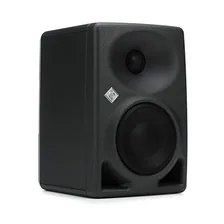 For a compact DSP monitor with accurate tonal balance and an XLR input, the Neumann KH80 DSP: $598.98 per pair Amazon B&H Photo Video eBay
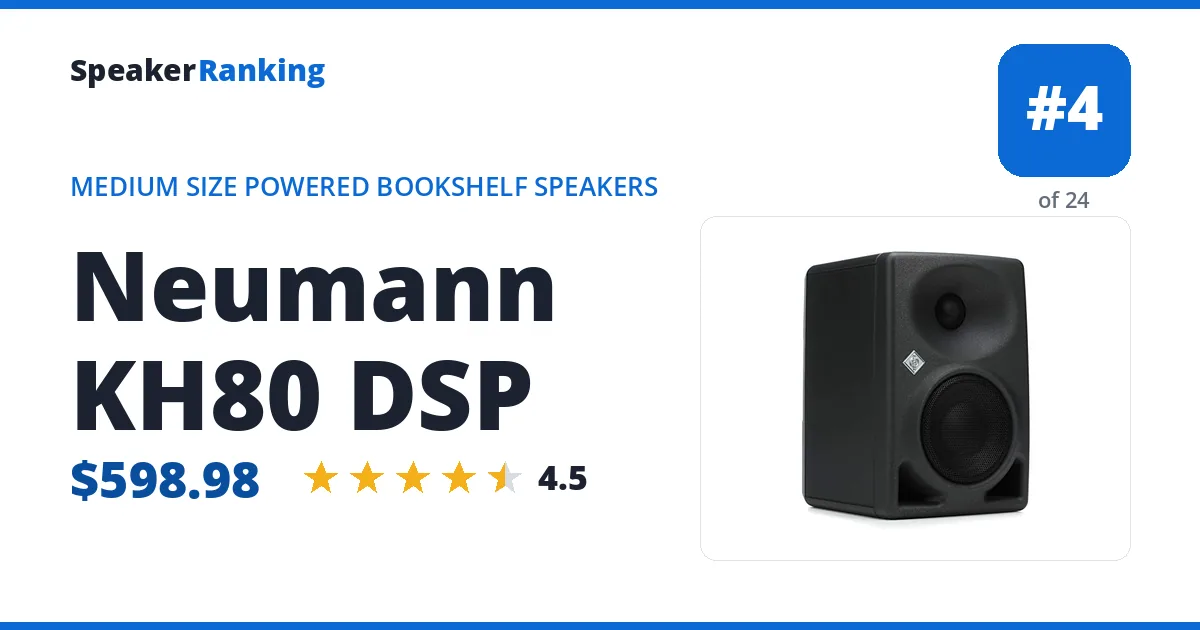
Pros: ASR’s selected Klippel measurement has a 1.4dB midrange response span and virtually no overall on-axis tilt. Scores of 5.03 standalone and 7.39 with an ideal subwoofer indicate excellent tonal accuracy in a compact monitor. The waveguide and steep crossover provide useful control of reflected sound, while placement filters help compensate for a desk or nearby boundaries. Existing multitone testing supports good moderate-level clarity. Measured bass extension of 57Hz (-3dB), with a measured sensitivity of 91.9dB.
Cons: Bass reaches -3dB around 59Hz in this measurement, less deep than the KH120 II. Output protection and increasing multitone distortion limit loud listening, especially in the bass. Room reflections and listening distance can alter perceived treble balance despite its flat direct response. Calibration equipment adds to the cost; the preference score is not a measurement of maximum clean output.
Full Neumann KH80 DSP review and specifications →
| AES Input | No |
|---|---|
| Amplifier Power | 140W (90W woofer + 50W tweeter) |
| App | Yes (MA 1 alignment) |
| Aux Input | No |
| Bass Extension (-10dB) | 51Hz (measured, Erin's Audio Corner) |
| Bass Extension (-3dB) | 57Hz (measured, Erin's Audio Corner) |
| Bluetooth | No |
| Coaxial Input | No |
| DSP | Yes |
| Dimensions | 13.6"H x 10.8"W x 9.6"D (345.4 x 274.3 x 243.8 mm) |
| Drivers | 4.1" woofer, 1" fabric dome tweeter |
| EQ | Yes (via DSP) |
| Frequency Response | 57 Hz - 25 kHz (+-3 dB) (Manufacturer specified) |
| HDMI Input | No |
| Inputs | XLR |
| Maximum SPL | 110.7dB @ 1m (manufacturer specified) |
| Optical Input | No |
| RCA Input | No |
| Sensitivity | 91.9dB (measured at 0.3V/1m, Erin's Audio Corner) |
| Spinorama Preference Score | 5.03 |
| Spinorama Preference Score with Perfect Sub | 7.39 |
| TRS Input | No |
| USB Input | No |
| Weight | 9 lbs (4.1 kg) each |
| XLR Input | Yes |
- Links
- Reviews, Comparisons and Sound Samples
- Erin’s Audio Corner: Neumann KH 80 Studio Monitor Review. Excellent Performance. Small Size. More from Erin’s Audio Corner →
- Erin’s Audio Corner Review Measurements
- Audio Science Review Measurements More from Audio Science Review →
- DSAUDIO.review: Neumann KH80 DSP vs Genelec 8020D Sound & Frequency Response Comparison More from DSAUDIOreview →
- DSAUDIO.review: Neumann KH80 DSP vs Yamaha HS8 Sound & Frequency Response Comparison
- DSAUDIO.review: Neumann KH80 DSP vs Focal Shape 40 Sound & Frequency Response Comparison
- DSAUDIO.review: Neumann KH80 DSP vs IK Multimedia iLoud MTM Sound & Frequency Response Comparison
- DSAUDIO.review: Neumann KH80 DSP vs JBL 305P MKII Sound & Frquency Response Comparison
- DSAUDIO.review: KEF LSX vs Neumann KH80 DSP Sound & Frequency Response Comparison
- DSAUDIO.review: Adam Audio A3X vs Neumann KH80 DSP Sound & Frequency Response Comparison
- DSAUDIO.review: Neumann KH80 DSP vs KRK Rokit 5 G4 RP5G4 Sound & Frequency Response Comparison
- Joy & Oluv’Sone: 🎃🔥 UBoom X - Halloween Rock Special 🎸🤘 More from Oluv’Sone →
- Audio Science Review Measurements (spinorama.org)
- Head-to-Head Comparisons
- Neumann KH80 DSP vs Genelec 8030C
- Neumann KH80 DSP vs Reflector Audio Square Two
- Neumann KH80 DSP vs Neumann KH120 MKII
- Neumann KH80 DSP vs Dynaudio LYD 5
- Neumann KH80 DSP vs Genelec 8331A
- Neumann KH80 DSP vs Genelec 8330A
- Neumann KH80 DSP vs Genelec 8320A
- Neumann KH80 DSP vs Devialet Phantom II 98 dB
- See all 64 comparisons
Erin’s measurements support genuinely accurate tonal balance, and the onboard DSP includes an MA 1 alignment mode for matching a pair. The XLR input handles a preamp or interface over a longer run without picking up hum, and the compact cabinet fits a normal desk.
Bass output is limited by the small woofer, so a subwoofer helps for full-range material. It has no consumer inputs at all, so it assumes a source with a real line-level output rather than a phone or laptop headphone jack.
Best Budget
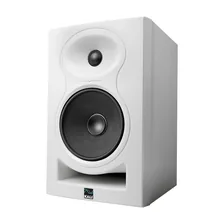 For an affordable pair with a strong measured score for the price, the Kali Audio LP-6 V2: $398 per pair Amazon B&H Photo Video eBay
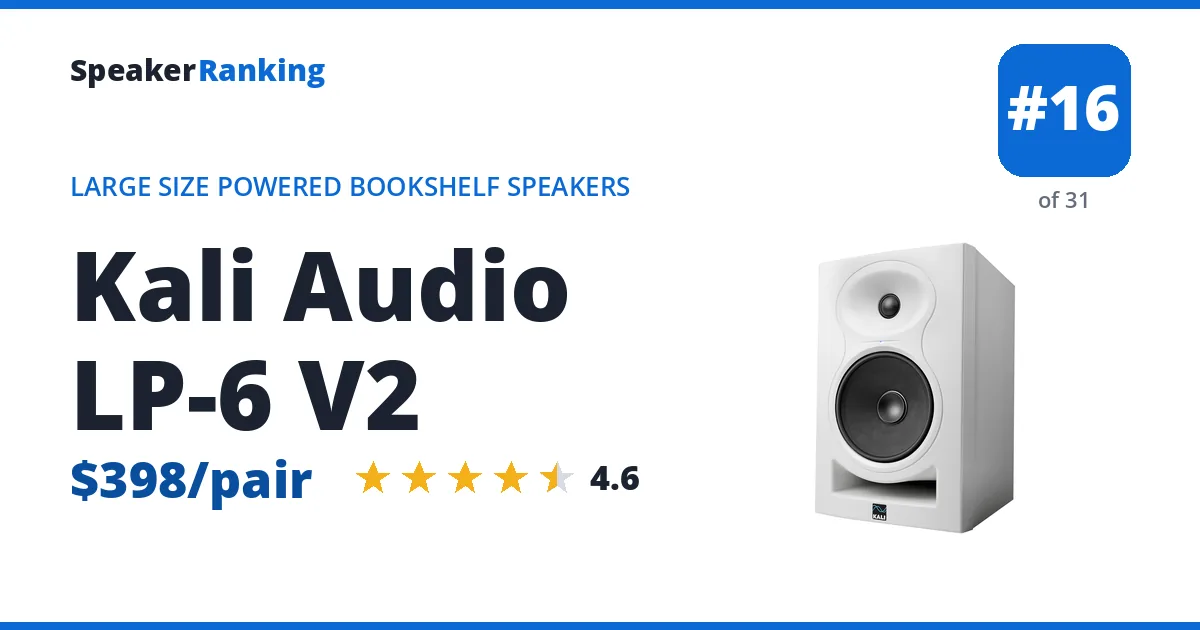
Pros: Erin’s measurements give a 6.62 ideal-subwoofer score and 42.5Hz -3dB bass extension, a strong combination for an affordable nearfield monitor. The waveguide and placement switches help with practical setup, and the second generation improves close-range noise behavior. Measured bass extension of 42Hz (-3dB).
Cons: The 2.5dB response span from 300Hz to 5kHz leaves some tonal unevenness. Vertical crossover behavior makes ear-height placement important, and compression limits loud bass playback. Its good tonal score is not evidence of the output capability of a much larger monitor.
Full Kali Audio LP-6 V2 review and specifications →
| AES Input | No |
|---|---|
| Amplifier Power | 40W LF + 40W HF per speaker; Bi-amplified Class D |
| Aux Input | No |
| Bass Extension (-10dB) | 39.1Hz (measured, Erin's Audio Corner) |
| Bass Extension (-3dB) | 42Hz (measured, Erin's Audio Corner) |
| Coaxial Input | No |
| DSP | Yes; boundary presets and LF/HF trims |
| Dimensions | 14.1"H x 8.8"W x 10.2"D |
| Drivers | 1" soft-dome tweeter; 6.5" woofer |
| HDMI Input | No |
| Inputs | XLR, balanced TRS and RCA |
| Maximum SPL | Approximately 102dB per pair with good measured linearity (Erin's Audio Corner) (manufacturer specified) |
| Optical Input | No |
| RCA Input | Yes |
| Sensitivity | Not applicable (active DSP loudspeaker) |
| Spinorama Preference Score | 4.67 |
| Spinorama Preference Score with Perfect Sub | 6.62 |
| TRS Input | Yes |
| USB Input | No |
| XLR Input | Yes |
- Links
- Reviews, Comparisons and Sound Samples
- Head-to-Head Comparisons
- Kali Audio LP-6 V2 vs Kali Audio IN-8 V2
- Kali Audio LP-6 V2 vs Yamaha HS8
- Kali Audio LP-6 V2 vs Genelec 8050B
- Kali Audio LP-6 V2 vs JBL 4305P
- Kali Audio LP-6 V2 vs JBL 308P MKII
- Kali Audio LP-6 V2 vs SHIVAUDYO Point Zero
- Kali Audio LP-6 V2 vs Focal Solo6 ST6
- Kali Audio LP-6 V2 vs Thomann Swissonic A306
- See all 45 comparisons
The LP-6 V2 combines a 6.62 ideal-subwoofer preference score with 42.5Hz bass extension at -3dB, both strong results well below the price of most XLR-equipped monitors. It also has a TRS input alongside XLR, so it accepts either connector from an interface.
Its 2.5dB response span from 300Hz to 5kHz leaves some tonal unevenness next to pricier reference monitors, and vertical crossover behavior makes ear-height placement important. It remains the strongest value pick with a real balanced input.
Best Reference
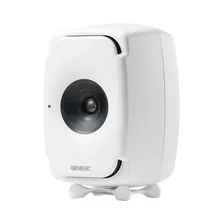 For a compact three-way reference monitor with coaxial imaging and GLM room correction, the Genelec 8331A: $4,500 per pair B&H Photo Video eBay
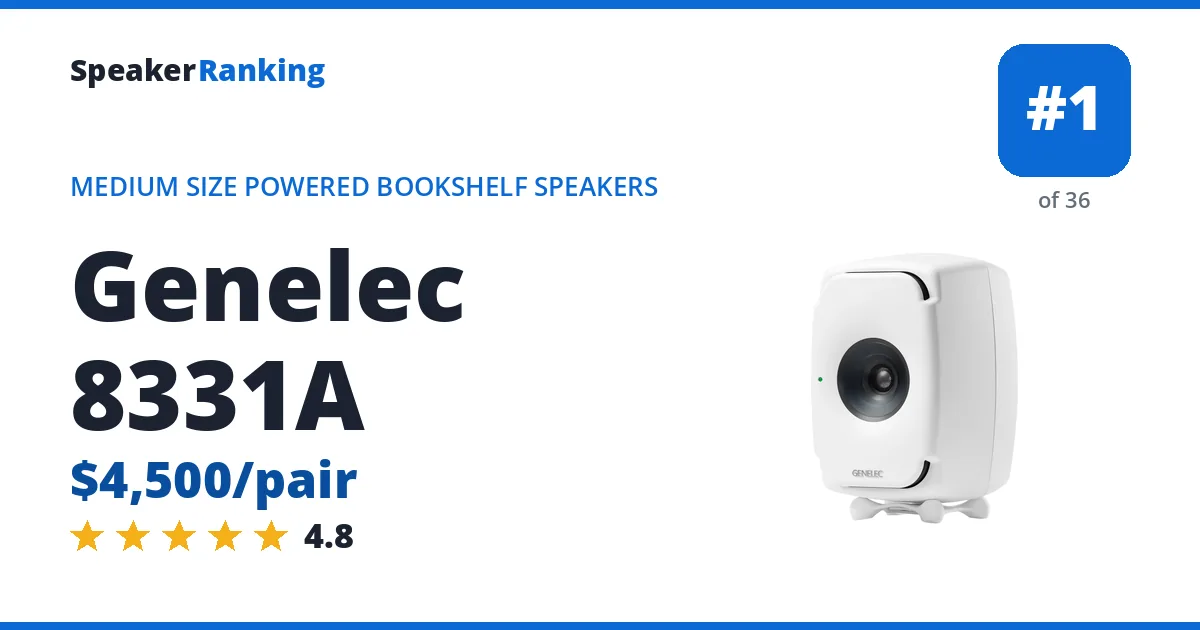
Pros: Erin’s Klippel measurements support its reference-monitor credentials: a 1.4dB response span from 300Hz to 5kHz, low listening-window and predicted-room irregularity, and preference scores of 5.91 standalone and 7.85 with an ideal subwoofer. The coaxial mid/tweeter and concealed woofers maintain coherent radiation as listening position changes. Bass reaches -3dB around 48Hz, and GLM adds level, delay and room-response calibration. Measured bass extension of 49Hz (-3dB).
Cons: Expensive, with studio-oriented XLR connectivity rather than consumer streaming. The compact woofers still limit deep-bass output, and the review reports protection muting when pushed beyond its operating range. GLM calibration hardware is an additional purchase. Its excellent tonal score does not remove the need for a subwoofer or larger monitor at demanding levels.
Full Genelec 8331A review and specifications →
| AES Input | Yes |
|---|---|
| Amplifier Power | 72W LF + 36W MF + 36W HF |
| Aux Input | No |
| Bass Extension (-10dB) | 39Hz (measured, Erin's Audio Corner) |
| Bass Extension (-3dB) | 49Hz (measured, Erin's Audio Corner) |
| Coaxial Input | No |
| Dimensions | 12"H x 7.4"W x 8.3"D (305 x 189 x 212 mm) |
| Drivers | Dual 130x65mm woofers; 90mm coaxial mid; 19mm tweeter |
| HDMI Input | No |
| Inputs | XLR, AES/EBU |
| Maximum SPL | 100dB at 3m before protection (measured, Erin's Audio Corner) |
| Optical Input | No |
| RCA Input | No |
| Sensitivity | Not applicable (active DSP loudspeaker) |
| Spinorama Preference Score | 5.91 |
| Spinorama Preference Score with Perfect Sub | 7.85 |
| TRS Input | No |
| USB Input | No |
| Weight | 14.8 lbs (6.7kg) each |
| XLR Input | Yes |
- Links
- Reviews, Comparisons and Sound Samples
- Head-to-Head Comparisons
Erin’s Klippel measurements show a 1.4dB response span from 300Hz to 5kHz along with low listening-window and predicted-room irregularity, reference-tier results. Genelec’s GLM software adds calibrated room correction over the same XLR connection.
It is studio-oriented rather than a consumer all-in-one: XLR is the only input, so it needs a proper source chain. The compact woofers also limit maximum deep-bass output, and the review reports protection muting when pushed hard.
Best XLR-Only Design
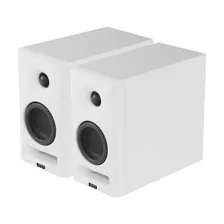 For a system built exclusively around a balanced analog input, the Topping MA4: $400 per pair Audiophonics eBay
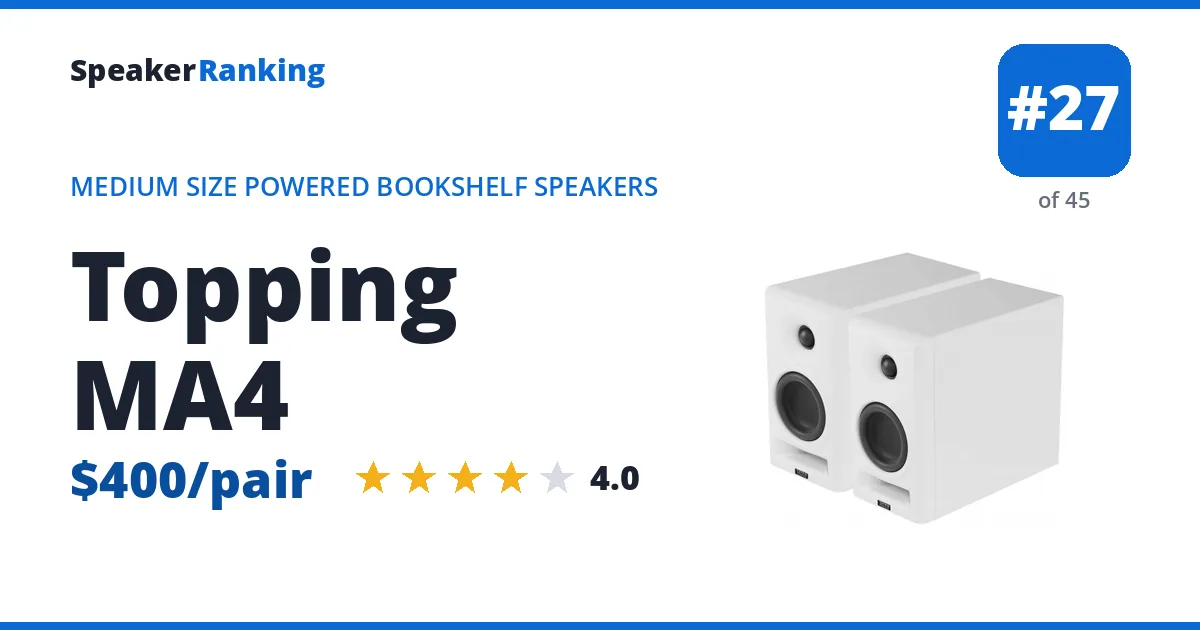
Pros: The selected manufacturer-supplied Klippel data shows a 1.6dB span from 300Hz to 5kHz, bass reaching -3dB around 50Hz, and preference scores of 4.78 standalone and 6.98 with an ideal subwoofer. That is strong measured tonal performance for a compact monitor. Its analog crossover and balanced XLR connection suit an existing audio interface. Measured bass extension of 49.8Hz (-3dB).
Cons: The native listening-window response is not as smooth as the leading Genelec and Neumann measurements. No USB, Bluetooth or built-in room-correction DSP: source control and correction need external equipment. Bass extension alone does not establish clean output capability.
Full Topping MA4 review and specifications →
| AES Input | No |
|---|---|
| Amplifier Power | 75W total (50W woofer, 25W tweeter, Class D) |
| Aux Input | No |
| Bass Extension (-10dB) | 42.9Hz (measured, spinorama.org vendor data) |
| Bass Extension (-3dB) | 49.8Hz (measured, spinorama.org vendor data) |
| Coaxial Input | No |
| Country | China |
| Crossover Frequency | 1.3kHz |
| Dimensions | 10"H x 5.5"W x 11.3"D (255 x 140 x 288 mm) |
| Drivers | 1" soft dome tweeter with waveguide, 4" paper cone woofer |
| Enclosure | ported |
| Frequency Response | 49Hz-20kHz +/-3dB |
| HDMI Input | No |
| Inputs | XLR (balanced analog) |
| Maximum SPL | 105dB @ 1m (manufacturer specified) |
| Optical Input | No |
| RCA Input | No |
| Sensitivity | 92dB |
| Spinorama Preference Score | 4.78 |
| Spinorama Preference Score with Perfect Sub | 6.98 |
| TRS Input | No |
| USB Input | No |
| Warranty | 1-2 years (varies by region) |
| Weight | 8.3 lbs (3.78 kg) each |
| XLR Input | Yes |
- Links
- Reviews, Comparisons and Sound Samples
- Head-to-Head Comparisons
The MA4 has a single XLR input and nothing else, a deliberate simplification for a system already built around a preamp or DAC with balanced outputs. That single-purpose design keeps the signal path short between the input and the amplifier.
The tradeoff is flexibility: there is no way to add a consumer source without an external DAC or preamp that itself outputs XLR. Choose it only when the rest of the chain is already balanced.
Other Powered Speakers With an XLR Input
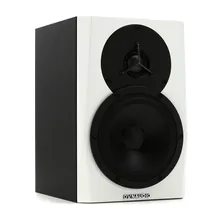 The Dynaudio LYD 5: $1000 per pair B&H Photo Video eBay
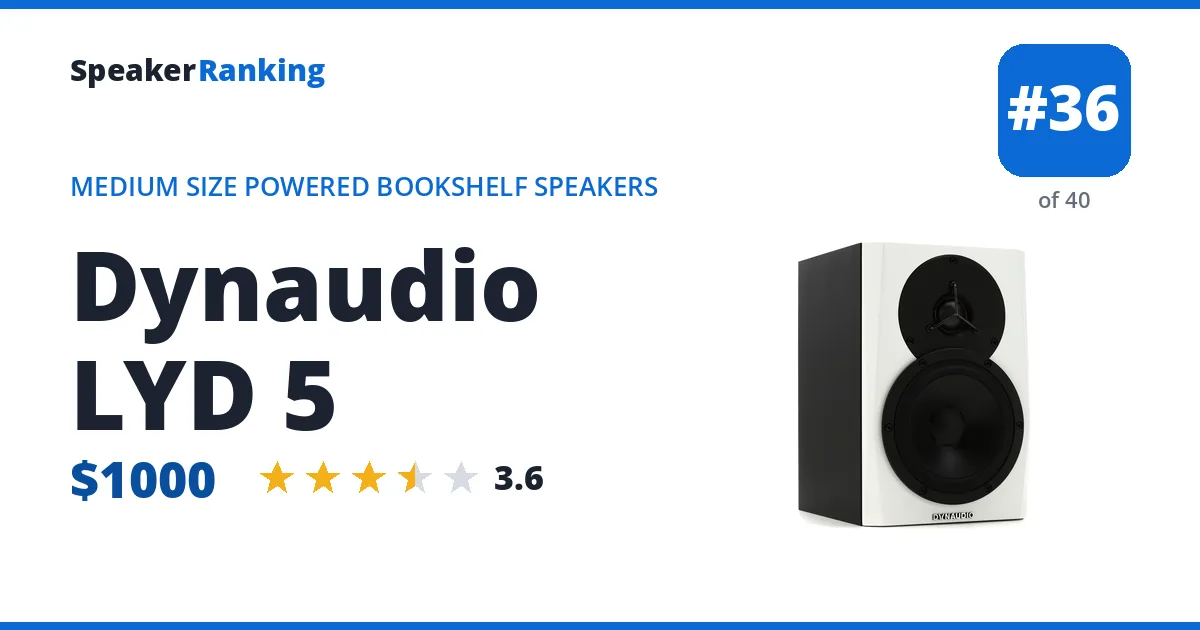
Pros: ASR’s Klippel data is substantially stronger than a low ranking suggests: 4.72 standalone and 7.38 with an ideal subwoofer, with a 1.9dB span from 300Hz to 5kHz. Low listening-window narrow-band deviation of 0.242 supports relatively uncolored midrange reproduction. It is particularly competitive when used with a subwoofer rather than judged only by bass reach. Measured bass extension of 68Hz (-3dB).
Cons: Bass reaches -3dB around 72Hz, so it gives up low-frequency weight to deeper-reaching monitors. The existing review identifies a dip near 1.6kHz, upper-bass emphasis and uneven crossover-region dispersion. These issues and limited deep-bass capability keep it below the leading all-rounders despite its strong bass-normalized score. A subwoofer does not correct upper-frequency directivity errors.
Full Dynaudio LYD 5 review and specifications →
| AES Input | No |
|---|---|
| Amplifier Power | 100W total (50W LF, 50W HF) |
| App | No |
| Aux Input | No |
| Bass Extension (-10dB) | 50Hz (measured, Audio Science Review) |
| Bass Extension (-3dB) | 68Hz (measured, Audio Science Review) |
| Coaxial Input | No |
| DSP | No |
| Dimensions | 10.2"H x 6.7"W x 8.3"D (260 x 170 x 211 mm) |
| Drivers | 5" woofer, 28mm soft dome tweeter |
| EQ | No |
| Frequency Response | 50Hz - 21kHz (Manufacturer specified) |
| HDMI Input | No |
| Inputs | XLR, RCA |
| Optical Input | No |
| RCA Input | Yes |
| TRS Input | No |
| USB Input | No |
| Weight | 11.9 lbs (5.4 kg) each |
| XLR Input | Yes |
- Links
- Reviews, Comparisons and Sound Samples
- Head-to-Head Comparisons
A capable nearfield monitor for a smaller room, though its price sits above several of the picks above without a clearly stronger measured result.
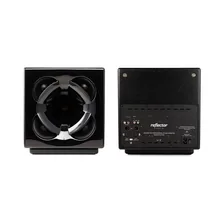 The Reflector Audio Square Two: $6,499 per pair Monheim Microphones eBay
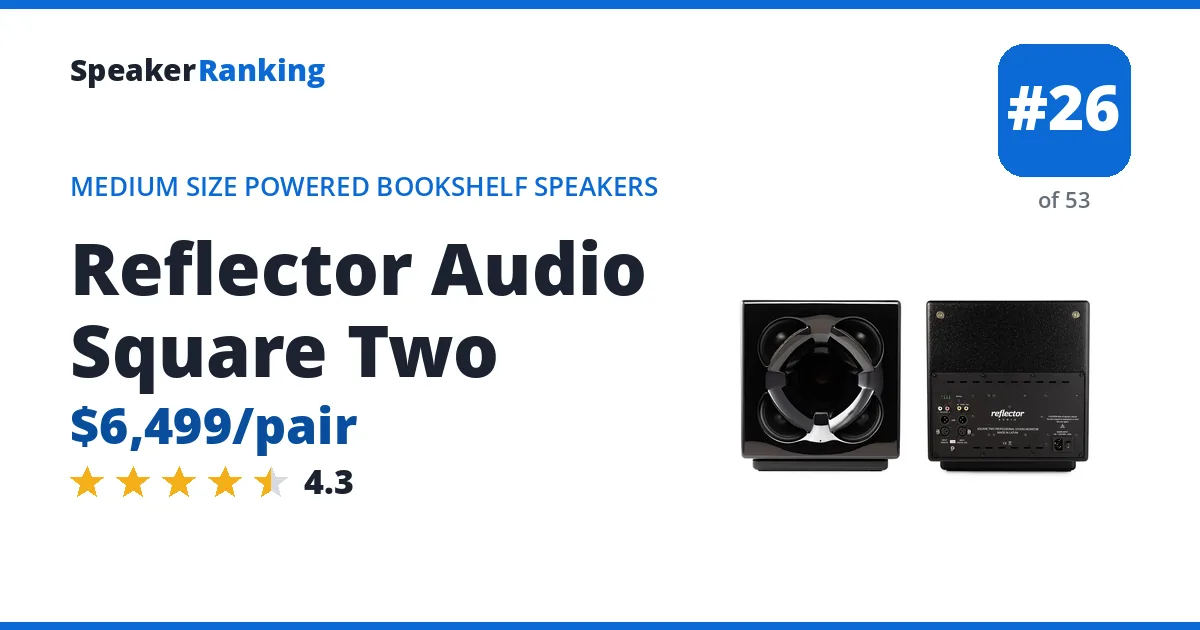
Pros: The manufacturer-supplied data shows a very small 1.1dB span from 300Hz to 5kHz and preference scores of 5.73 standalone and 7.54 with an ideal subwoofer. Its horn-centered layout and four surrounding woofers offer a compact, controlled-radiation monitor, with a measured -3dB point around 49Hz. The linked Sound on Sound review also supports its use for detailed monitoring.
Cons: The nominal 60-by-60-degree pattern calls for careful aiming and gives less freedom to move than wide-dispersion monitors.
Full Reflector Audio Square Two review and specifications →
| AES Input | Yes |
|---|---|
| Amplifier Power | 250W to woofers, 100W to compression driver (Hypex Class-D) |
| Aux Input | No |
| Coaxial Input | Yes |
| Country | Made in Latvia |
| Dimensions | 12.6"W x 13.6"H x 12.8"D (320 x 345 x 325 mm) |
| Drivers | 4x 5" woofers, 1x horn-loaded compression driver (ring diaphragm) |
| Enclosure | 2-way active coaxial horn monitor, bass-reflex (convertible to sealed) |
| Frequency Response | 40Hz-26kHz (-6dB) |
| HDMI Input | No |
| Inputs | Analogue XLR/RCA, AES digital XLR, S/PDIF, TOSLINK optical |
| Maximum SPL | 118dB @ 1m (EIA-426B, single monitor) (manufacturer specified) |
| Optical Input | Yes |
| RCA Input | Yes |
| Spinorama Preference Score | 5.73 |
| Spinorama Preference Score with Perfect Sub | 7.54 |
| TRS Input | No |
| USB Input | No |
| Weight | 42.8 lbs (19.4 kg) each |
| XLR Input | Yes |
- Links
- Reviews, Comparisons and Sound Samples
- Head-to-Head Comparisons
- Reflector Audio Square Two vs Neumann KH80 DSP
- Reflector Audio Square Two vs JBL 305P MKII
- Reflector Audio Square Two vs IK Multimedia iLoud MTM MKII
- Reflector Audio Square Two vs Kali Audio IN-5
- Reflector Audio Square Two vs KEF LSX II LT
- Reflector Audio Square Two vs Adam Audio T5V
- Reflector Audio Square Two vs Kali LP-UNF
- Reflector Audio Square Two vs Yamaha HS5
- See all 11 comparisons
Its measured 1.1dB response span from 300Hz to 5kHz is excellent, but the price and its 60-by-60-degree pattern call for deliberate room placement rather than a drop-in desktop upgrade.
What To Check Before Buying
Combo jacks: many “XLR” inputs are actually combo XLR/TRS jacks that accept either connector, so check whether a speaker needs a dedicated XLR cable or can also take a 1/4” plug from the same port.
Cable length and run: the main benefit of XLR over an unbalanced RCA or 3.5mm connection shows up on longer runs or when a cable shares a path with other cables. On a short direct desktop run, the practical difference is smaller.
Gain staging: a preamp, interface or mixer’s output level needs to be matched to the speaker’s input sensitivity. Check both devices’ specifications rather than assuming line level is standardized identically everywhere.
Where To Go Next
See the best studio monitors for the full set of picks these XLR-equipped monitors are drawn from, or every powered speaker with a TRS input for the other common balanced connector.
Related guides: powered speaker inputs explained, best powered speakers for a computer desk, and the powered speaker buyer’s guide.