Editor's top picks
Start with these headphones
Our leading recommendations at a glance. Each card links to its primary retailer.
Looking for the best-sounding headphones? We rank over-ear headphones and in-ear headphones by how closely their measured response matches the Harman target, the tuning most listeners prefer in blind tests.
Quick Navigation
Best by Feature
Features
- Wireless
- Noise Cancelling
- Open-Back
- Closed-Back
- Planar Magnetic
- With a Microphone
- Warm Sound
- For Bass
- Bright and Detailed
- V-Shaped
- Neutral
- Studio Flat
Prices on this page were last checked October 10, 2026 at 5:37 PM UTC. Product prices and availability are accurate as of that date/time and are subject to change; the price and availability shown on Amazon at the time of purchase will apply to the purchase of this product.
As an eBay Partner, we may be compensated if you make a purchase.
Top Picks
 The top-rated over-ear headphone in our catalog, a closed-back planar at $2179, is the Dan Clark Audio E3: $2,179.00 Amazon eBay
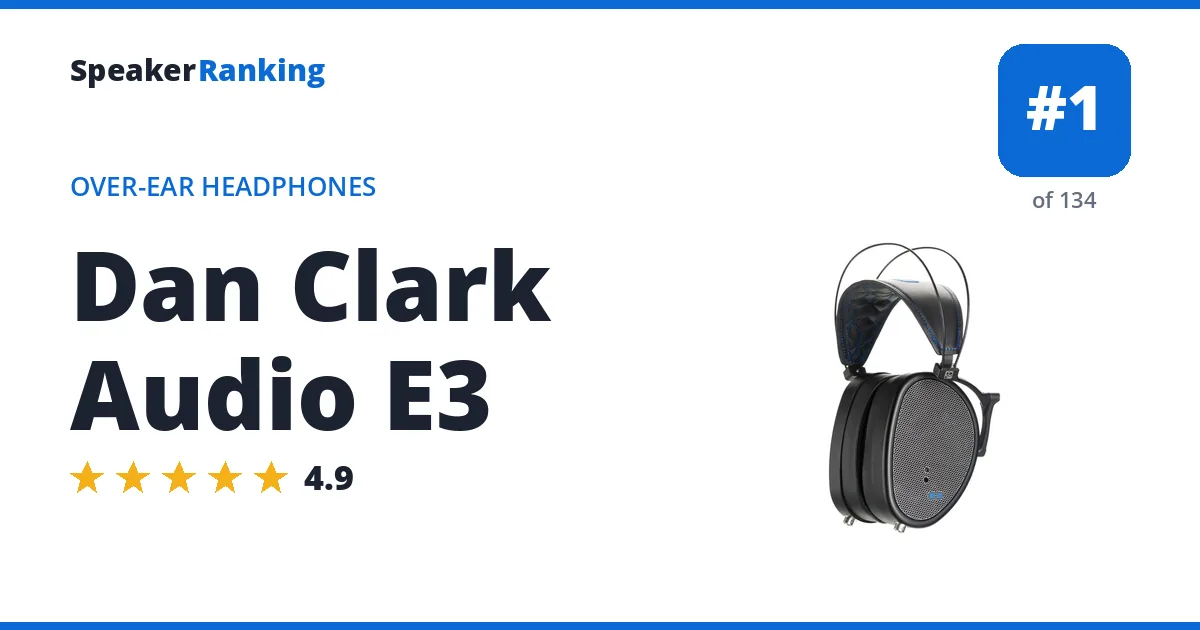
Pros: In oratory1990’s measurement it earns a preference score of 101, with response held within about 1 dB of the Harman target from sub-bass through the upper mids. Bass from 20 to 200 Hz sits less than 1 dB above target, so kick drums and bass guitar have full weight without bloom. A 27 ohm impedance and 90 dB/mW sensitivity are easy enough for a decent headphone amp, and the closed back keeps sound in and outside noise down.
Cons: The upper treble is uneven, with a 5.6 dB dip near 9.9 kHz followed by a 5 dB peak near 11.9 kHz, which can make cymbals and sibilance sound slightly uneven. At 455 g it is heavy for long sessions, and planar drivers at this sensitivity perform best from a proper amp rather than a phone.
Full Dan Clark Audio E3 review and specifications →
| Back | Closed |
|---|---|
| Connection | Wired |
| Deviation From Target | 1.05 dB standard deviation |
| Driver Type | Planar magnetic |
| Form Factor | Over-ear |
| Harman Preference Score | 101 (measured by oratory1990, via AutoEQ) |
| Impedance | 27 ohms |
| Sensitivity | 90 dB/mW |
| Tonal Tilt | -0.04 (negative is warmer, positive brighter) |
| Weight | 1 lbs (455 g) |
EQ preset to match the Harman target
Set a preamp of -1.0 dB, then add these filters in any parametric equalizer (Wavelet, Equalizer APO, Peace, or a player with parametric EQ). Calculated by AutoEQ from its measured frequency response.
| Filter | Frequency | Gain | Q |
|---|---|---|---|
| Low shelf | 105 Hz | -0.2 dB | 0.70 |
| Peak | 1,224 Hz | +1.1 dB | 0.87 |
| Peak | 2,683 Hz | -2.0 dB | 3.34 |
| Peak | 471 Hz | -0.6 dB | 2.01 |
| Peak | 91 Hz | -0.5 dB | 2.36 |
| High shelf | 10,000 Hz | -1.8 dB | 0.70 |
| Peak | 167 Hz | +0.8 dB | 2.72 |
| Peak | 3,979 Hz | -0.6 dB | 4.28 |
| Peak | 5,845 Hz | -1.1 dB | 6.00 |
| Peak | 112 Hz | -0.3 dB | 2.53 |
- Reviews, Comparisons and Sound Samples
 For nearly the same measured accuracy at a fraction of the price, the best value over-ear at $200 is the Sennheiser HD 560S: $199.95 Amazon eBay
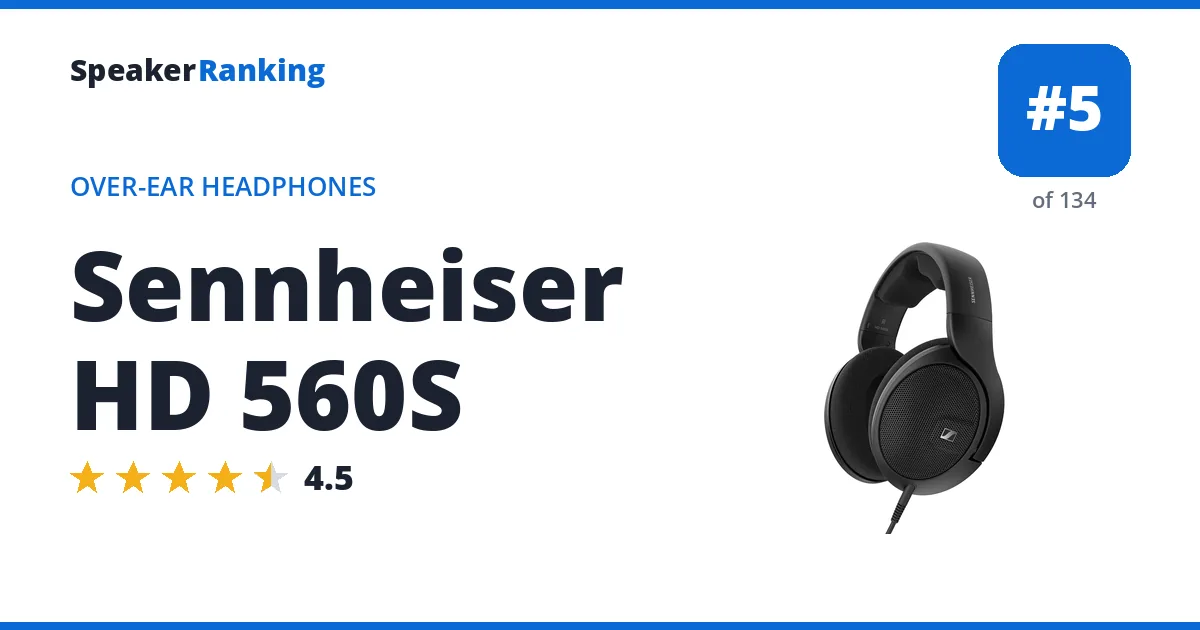
Pros: It scores 93 on the Harman preference model, with the midrange and presence region (200 Hz to 6 kHz) within about 0.2 dB of target, so vocals and instruments sound very natural. At 240 g it is the lightest of the top group, and the open design gives a wide soundstage. Its 120 ohm impedance is still manageable from most modern sources.
Cons: Bass is lean, with sub-bass about 5 dB under target and 60 to 200 Hz about 1.2 dB under, which can sound thin on pop, hip hop and electronic music. Treble is also pulled back, with a deep 8.5 dB dip near 9.8 kHz that softens cymbals and sibilance. The open back leaks sound and provides no isolation.
Full Sennheiser HD 560S review and specifications →
| Released | Sep 2020 (6 years ago) |
|---|---|
| Back | Open |
| Connection | Wired |
| Deviation From Target | 1.58 dB standard deviation |
| Driver Type | Dynamic |
| Form Factor | Over-ear |
| Frequency Response | 6Hz - 38kHz (Manufacturer specified) |
| Harman Preference Score | 93 (measured by oratory1990, via AutoEQ) |
| Impedance | 120 ohms |
| Sensitivity | 110 dB SPL (1 kHz, 1 V) |
| Tonal Tilt | +0.08 (negative is warmer, positive brighter) |
| Weight | 0.5 lbs (240 g) |
EQ preset to match the Harman target
Set a preamp of -6.6 dB, then add these filters in any parametric equalizer (Wavelet, Equalizer APO, Peace, or a player with parametric EQ). Calculated by AutoEQ from its measured frequency response.
| Filter | Frequency | Gain | Q |
|---|---|---|---|
| Low shelf | 105 Hz | +9.0 dB | 0.70 |
| Peak | 8,983 Hz | +4.4 dB | 2.63 |
| Peak | 54 Hz | -5.4 dB | 0.48 |
| Peak | 1,148 Hz | -1.5 dB | 2.38 |
| Peak | 491 Hz | +0.6 dB | 1.23 |
| High shelf | 10,000 Hz | -3.9 dB | 0.70 |
| Peak | 7,451 Hz | +2.0 dB | 3.91 |
| Peak | 4,502 Hz | -1.7 dB | 6.00 |
| Peak | 1,937 Hz | +0.9 dB | 3.93 |
| Peak | 5,639 Hz | -0.9 dB | 6.00 |
- Reviews, Comparisons and Sound Samples
- Head-to-Head Comparisons
 The top-rated in-ear headphone in our catalog is the Truthear Nova: $169.99 Amazon eBay
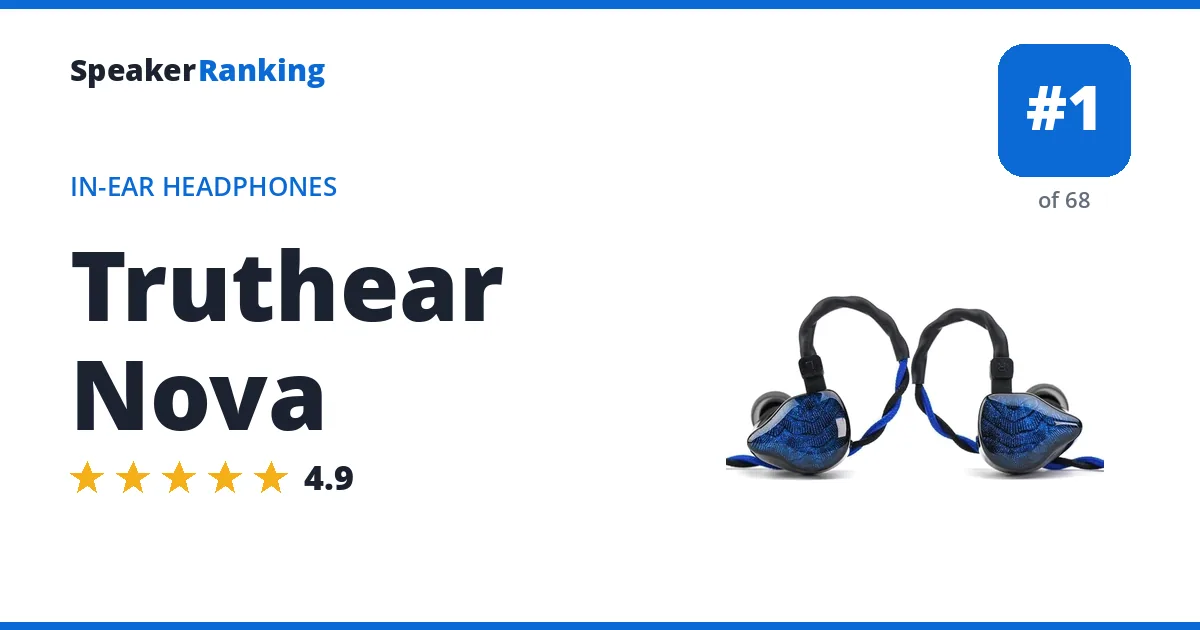
Pros: A Harman score of 90 puts it among the best-tuned in-ears measured, with every band from sub-bass to presence within about 1.5 dB of the target. The deviation of only 0.86 dB means vocals, guitars and drums sound natural and evenly balanced. The hybrid design pairs a dynamic driver with four balanced armatures, and the 14.8 ohm impedance with 123 dB sensitivity lets a phone drive it easily. Sub-bass sits about 1.5 dB above target, adding a touch of rumble without muddying the mids.
Cons: A 2.7 dB peak near 8 kHz can make bright cymbals and sibilant vocals slightly edgy on poorly mastered tracks. Treble and air run about 1.3 to 1.4 dB hot, so listeners sensitive to brightness may find extended sessions a little sharp. It is wired only, with no microphone or wireless features listed.
Full Truthear Nova review and specifications →
| Released | 2023 (3 years ago) |
|---|---|
| Back | Closed |
| Connection | Wired |
| Deviation From Target | 0.86 dB standard deviation |
| Driver Type | Hybrid (1 dynamic + 4 balanced armature) |
| Drivers | 1 x 10mm dynamic + 4 x balanced armature |
| Form Factor | In-ear |
| Frequency Response | 8Hz - 40kHz (Manufacturer specified) |
| Harman Preference Score | 90 (measured by oratory1990, via AutoEQ) |
| Impedance | 14.8 ohms |
| Sensitivity | 123 dB/Vrms @1kHz |
| Tonal Tilt | -0.14 (negative is warmer, positive brighter) |
EQ preset to match the Harman target
Set a preamp of -1.2 dB, then add these filters in any parametric equalizer (Wavelet, Equalizer APO, Peace, or a player with parametric EQ). Calculated by AutoEQ from its measured frequency response.
| Filter | Frequency | Gain | Q |
|---|---|---|---|
| Low shelf | 105 Hz | -4.2 dB | 0.70 |
| Peak | 313 Hz | +0.4 dB | 0.95 |
| Peak | 63 Hz | +3.6 dB | 0.80 |
| Peak | 4,404 Hz | -1.2 dB | 0.51 |
| Peak | 560 Hz | +1.1 dB | 0.85 |
| High shelf | 10,000 Hz | -2.5 dB | 0.70 |
| Peak | 9,390 Hz | +1.0 dB | 2.26 |
| Peak | 2,126 Hz | +1.1 dB | 3.14 |
| Peak | 2,987 Hz | -1.0 dB | 3.83 |
| Peak | 1,281 Hz | -0.5 dB | 2.65 |
- Reviews, Comparisons and Sound Samples
 The best in-ear for very little money, at $22, is the Truthear Gate: $21.99 Amazon eBay
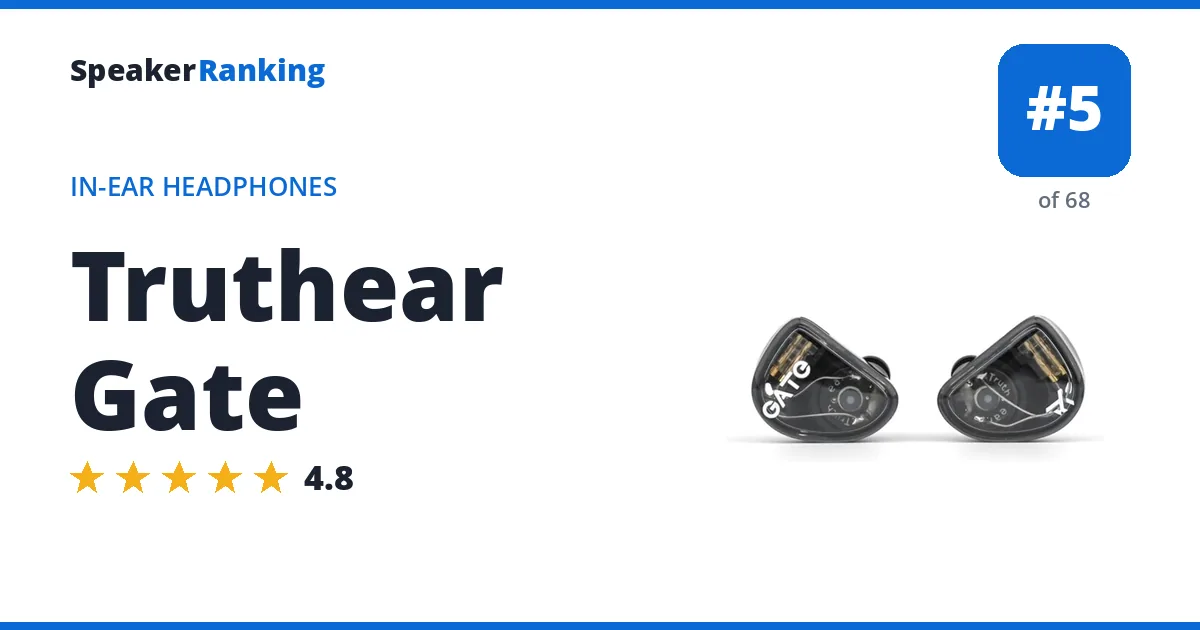
Pros: A Harman score of 83 from a single dynamic driver at a very low price gives accurate bass and mids, with bass and upper mids within about 0.2 dB of target. The 28 ohm impedance with 122 dB per volt sensitivity makes it easy to drive from any phone. The warm tilt suits listeners who want a smooth, non-fatiguing sound. It earns the same rating as the 7Hz Salnotes Zero at a similar cost.
Cons: Treble is the weak point, with a deep 10.8 dB dip near 11 kHz and air about 3 dB under target. Cymbals, hi-hats and the sense of space on recordings sound dulled as a result. Presence from 3 to 6 kHz is also about 1.9 dB down, which takes a little bite off vocals.
Full Truthear Gate review and specifications →
| Back | Closed |
|---|---|
| Connection | Wired |
| Deviation From Target | 1.39 dB standard deviation |
| Driver Type | Dynamic |
| Drivers | 1 x 10mm dynamic |
| Form Factor | In-ear |
| Frequency Response | 10Hz - 45kHz (Manufacturer specified) |
| Harman Preference Score | 83 (measured by oratory1990, via AutoEQ) |
| Impedance | 28 ohms |
| Sensitivity | 122 dB/Vrms |
| Tonal Tilt | -0.23 (negative is warmer, positive brighter) |
EQ preset to match the Harman target
Set a preamp of -4.9 dB, then add these filters in any parametric equalizer (Wavelet, Equalizer APO, Peace, or a player with parametric EQ). Calculated by AutoEQ from its measured frequency response.
| Filter | Frequency | Gain | Q |
|---|---|---|---|
| Low shelf | 105 Hz | +0.1 dB | 0.70 |
| Peak | 9,538 Hz | +4.7 dB | 0.99 |
| Peak | 2,074 Hz | -1.3 dB | 0.65 |
| Peak | 196 Hz | -1.1 dB | 1.34 |
| Peak | 698 Hz | +1.2 dB | 1.31 |
| High shelf | 10,000 Hz | -2.1 dB | 0.70 |
| Peak | 72 Hz | +0.8 dB | 1.77 |
| Peak | 4,992 Hz | +0.3 dB | 2.04 |
| Peak | 126 Hz | -0.4 dB | 2.34 |
| Peak | 8,647 Hz | +1.3 dB | 5.95 |
- Reviews, Comparisons and Sound Samples
- Head-to-Head Comparisons