Short answer: the Sennheiser HD 560S. Both are rated 4.5/5 for sound quality (#5 and #3 of 134 over-ear headphones), and the Sennheiser HD 560S costs $199.95 against $319 for the HIFIMAN Ananda Nano, with sound quality a draw, the lower price decides it.
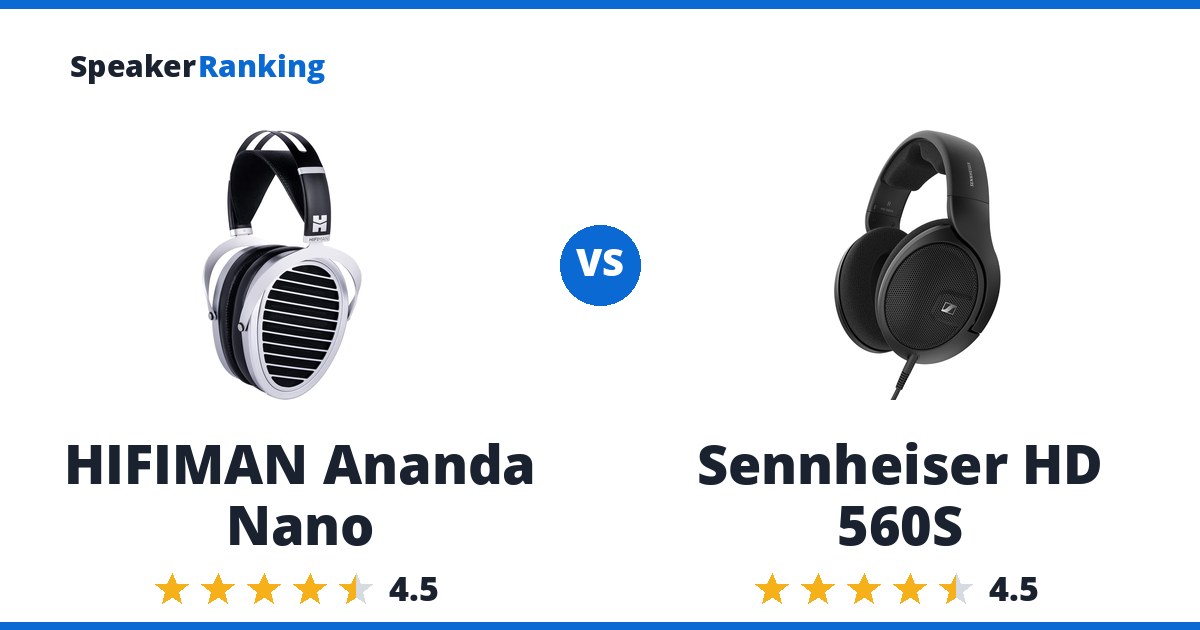
What the HIFIMAN Ananda Nano does well: A preference score of 94 puts it close to the Harman target, with bass from 60 to 200 Hz within 0.1 dB of target and the midrange within about 1 dB. The catch: The top end is the weak spot, with the air region above 10 kHz running about 4.6 dB hot and a 10.8 dB peak near 11.9 kHz, preceded by a 4.4 dB dip near 9.6 kHz.
What the Sennheiser HD 560S does well: It scores 93 on the Harman preference model, with the midrange and presence region (200 Hz to 6 kHz) within about 0.2 dB of target, so vocals and instruments sound very natural. The tradeoff: Bass is lean, with sub-bass about 5 dB under target and 60 to 200 Hz about 1.2 dB under, which can sound thin on pop, hip hop and electronic music.
Buy the Sennheiser HD 560S. Both are rated the same for sound quality, and it costs $119.05 less than the HIFIMAN Ananda Nano.
Looking for alternatives? See the complete Headphones rankings.
Specifications Side By Side
| HIFIMAN Ananda Nano | Sennheiser HD 560S | |
|---|---|---|
| Price | $319.00 | $199.95 |
| Ranked | #3 of 134 in Over-Ear Headphones | #5 of 134 in Over-Ear Headphones |
| Form Factor | Over-ear | Over-ear |
| Harman Preference Score | 94 (measured by oratory1990, via AutoEQ) | 93 (measured by oratory1990, via AutoEQ) |
| Deviation From Target | 1.43 dB standard deviation | 1.58 dB standard deviation |
| Tonal Tilt | +0.14 (negative is warmer, positive brighter) | +0.08 (negative is warmer, positive brighter) |
| Connection | Wired | Wired |
| Back | Open | Open |
| Driver Type | Planar magnetic | Dynamic |
| Impedance | 14 ohms | 120 ohms |
| Sensitivity | 94 dB | 110 dB SPL (1 kHz, 1 V) |
| Weight | 0.9 lbs (420 g) | 0.5 lbs (240 g) |
| Frequency Response | 5Hz - 55kHz (Manufacturer specified) | 6Hz - 38kHz (Manufacturer specified) |
Related Headphone Comparisons
More worthwhile head-to-heads for HIFIMAN Ananda Nano:
- Philips Fidelio X2HR vs Sennheiser HD 560S
- Philips Fidelio X2HR vs HIFIMAN Edition XS
- Shure SRH440 vs Audio-Technica ATH-M50x
- Sennheiser HD 600 vs Sennheiser HD 599
- Sennheiser HD 600 vs Sennheiser HD 505
Prices on this page were last checked October 10, 2026 at 5:37 PM UTC. Product prices and availability are accurate as of that date/time and are subject to change; the price and availability shown on Amazon at the time of purchase will apply to the purchase of this product.
As an eBay Partner, we may be compensated if you make a purchase.
The Two Headphones In Full
 HIFIMAN Ananda Nano: $319.00 Amazon eBay
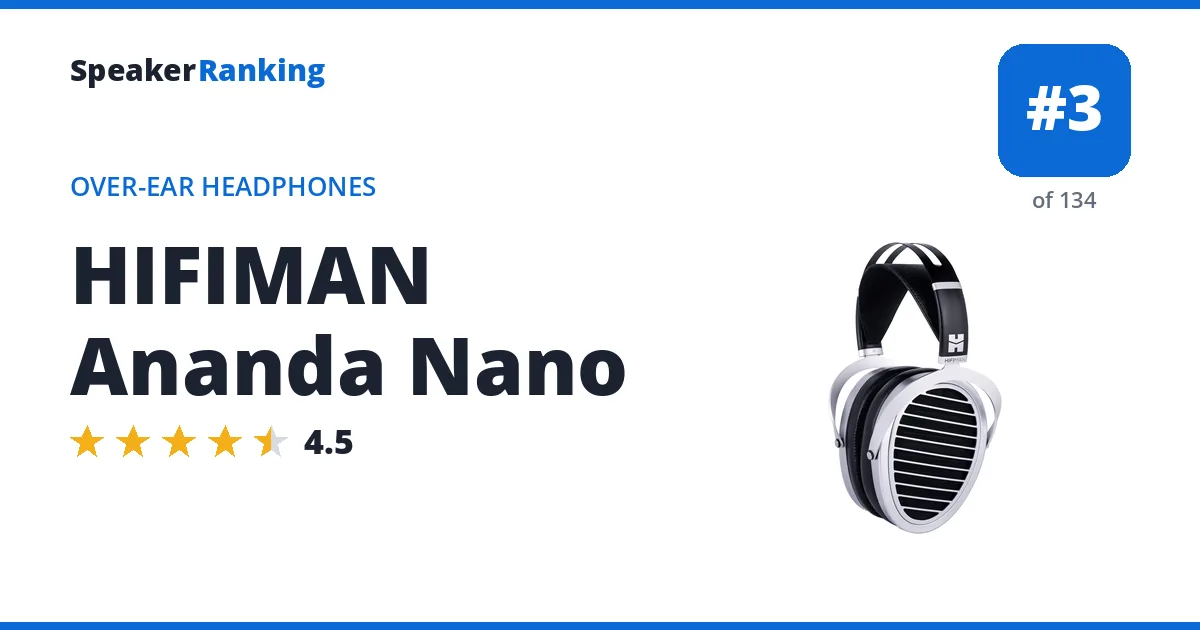
Pros: A preference score of 94 puts it close to the Harman target, with bass from 60 to 200 Hz within 0.1 dB of target and the midrange within about 1 dB. Impedance of just 14 ohms makes it simple to drive from a phone or dongle, and the open planar design gives a spacious presentation. Sub-bass is only moderately light, about 2.8 dB under target.
Cons: The top end is the weak spot, with the air region above 10 kHz running about 4.6 dB hot and a 10.8 dB peak near 11.9 kHz, preceded by a 4.4 dB dip near 9.6 kHz. That can make cymbals and strings sound bright or sharp on some recordings. At 420 g it is heavy, and the open back leaks sound and gives no isolation.
Full HIFIMAN Ananda Nano review and specifications →
| Released | Aug 2023 (3 years ago) |
|---|---|
| Back | Open |
| Connection | Wired |
| Deviation From Target | 1.43 dB standard deviation |
| Driver Type | Planar magnetic |
| Form Factor | Over-ear |
| Frequency Response | 5Hz - 55kHz (Manufacturer specified) |
| Harman Preference Score | 94 (measured by oratory1990, via AutoEQ) |
| Impedance | 14 ohms |
| Sensitivity | 94 dB |
| Tonal Tilt | +0.14 (negative is warmer, positive brighter) |
| Weight | 0.9 lbs (420 g) |
EQ preset to match the Harman target
Set a preamp of -3.9 dB, then add these filters in any parametric equalizer (Wavelet, Equalizer APO, Peace, or a player with parametric EQ). Calculated by AutoEQ from its measured frequency response.
| Filter | Frequency | Gain | Q |
|---|---|---|---|
| Low shelf | 105 Hz | +4.1 dB | 0.70 |
| Peak | 1,884 Hz | +2.9 dB | 2.00 |
| Peak | 84 Hz | -2.2 dB | 1.06 |
| Peak | 343 Hz | -0.7 dB | 1.30 |
| Peak | 2,910 Hz | -1.8 dB | 3.07 |
| High shelf | 10,000 Hz | -6.5 dB | 0.70 |
| Peak | 969 Hz | -1.0 dB | 4.06 |
| Peak | 170 Hz | +1.0 dB | 3.86 |
| Peak | 129 Hz | -0.7 dB | 3.65 |
| Peak | 752 Hz | +0.9 dB | 5.09 |
- Reviews, Comparisons and Sound Samples
 Sennheiser HD 560S: $199.95 Amazon eBay
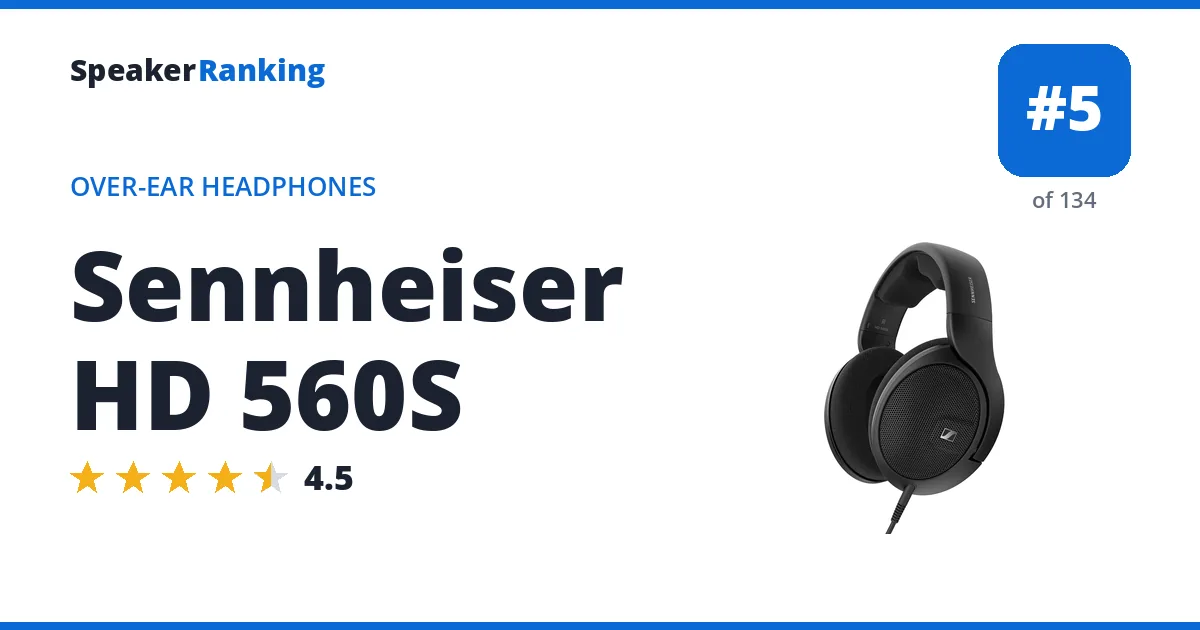
Pros: It scores 93 on the Harman preference model, with the midrange and presence region (200 Hz to 6 kHz) within about 0.2 dB of target, so vocals and instruments sound very natural. At 240 g it is the lightest of the top group, and the open design gives a wide soundstage. Its 120 ohm impedance is still manageable from most modern sources.
Cons: Bass is lean, with sub-bass about 5 dB under target and 60 to 200 Hz about 1.2 dB under, which can sound thin on pop, hip hop and electronic music. Treble is also pulled back, with a deep 8.5 dB dip near 9.8 kHz that softens cymbals and sibilance. The open back leaks sound and provides no isolation.
Full Sennheiser HD 560S review and specifications →
| Released | Sep 2020 (6 years ago) |
|---|---|
| Back | Open |
| Connection | Wired |
| Deviation From Target | 1.58 dB standard deviation |
| Driver Type | Dynamic |
| Form Factor | Over-ear |
| Frequency Response | 6Hz - 38kHz (Manufacturer specified) |
| Harman Preference Score | 93 (measured by oratory1990, via AutoEQ) |
| Impedance | 120 ohms |
| Sensitivity | 110 dB SPL (1 kHz, 1 V) |
| Tonal Tilt | +0.08 (negative is warmer, positive brighter) |
| Weight | 0.5 lbs (240 g) |
EQ preset to match the Harman target
Set a preamp of -6.6 dB, then add these filters in any parametric equalizer (Wavelet, Equalizer APO, Peace, or a player with parametric EQ). Calculated by AutoEQ from its measured frequency response.
| Filter | Frequency | Gain | Q |
|---|---|---|---|
| Low shelf | 105 Hz | +9.0 dB | 0.70 |
| Peak | 8,983 Hz | +4.4 dB | 2.63 |
| Peak | 54 Hz | -5.4 dB | 0.48 |
| Peak | 1,148 Hz | -1.5 dB | 2.38 |
| Peak | 491 Hz | +0.6 dB | 1.23 |
| High shelf | 10,000 Hz | -3.9 dB | 0.70 |
| Peak | 7,451 Hz | +2.0 dB | 3.91 |
| Peak | 4,502 Hz | -1.7 dB | 6.00 |
| Peak | 1,937 Hz | +0.9 dB | 3.93 |
| Peak | 5,639 Hz | -0.9 dB | 6.00 |
- Reviews, Comparisons and Sound Samples
- Head-to-Head Comparisons