Short answer: the HIFIMAN Edition XS, if you are buying new. The Philips Fidelio X2HR ranks higher than it (#4 vs #12 of 134 over-ear headphones, 4.5/5 vs 4.4/5) but is discontinued, so only consider it used; the HIFIMAN Edition XS is still sold new at $209.
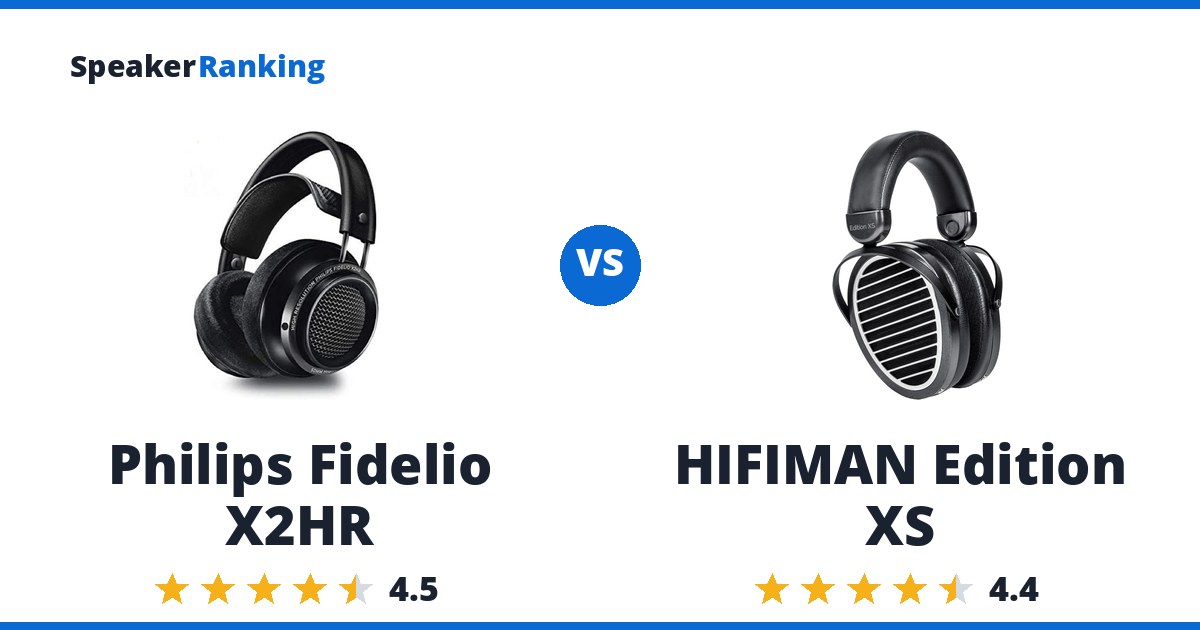
Why pick the Philips Fidelio X2HR: Its preference score of 94 comes from a smooth response within about 1.3 dB of the Harman target, with bass from 60 to 200 Hz and the midrange all within a dB of target. Watch for: Sub-bass is about 4.6 dB below target, so the lowest notes in electronic and hip hop tracks lack impact.
Why pick the HIFIMAN Edition XS: A preference score of 90 with a nearly flat tilt shows a well balanced tuning, and bass from 60 to 200 Hz is only about 1 dB above target. The tradeoff: A 6 dB dip near 9.4 kHz sits next to a roughly 9 dB peak at 11.9 kHz, and the air band runs about 5.5 dB above target, so the top end can sound uneven and sharp on bright recordings.
Buy the HIFIMAN Edition XS, since the Philips Fidelio X2HR is discontinued and only worth hunting down used.
Still deciding? The full Headphones rankings cover every ranked option.
Specifications Side By Side
| Philips Fidelio X2HR | HIFIMAN Edition XS | |
|---|---|---|
| Price | $159.95 Discontinued | $209.00 |
| Ranked | #4 of 134 in Over-Ear Headphones | #12 of 134 in Over-Ear Headphones |
| Form Factor | Over-ear | Over-ear |
| Harman Preference Score | 94 (measured by oratory1990, via AutoEQ) | 90 (measured by oratory1990, via AutoEQ) |
| Deviation From Target | 1.27 dB standard deviation | 1.83 dB standard deviation |
| Tonal Tilt | -0.29 (negative is warmer, positive brighter) | -0.07 (negative is warmer, positive brighter) |
| Connection | Wired | Wired |
| Back | Open | Open |
| Driver Type | Dynamic | Planar magnetic |
| Drivers | 1 x 50mm dynamic | - |
| Impedance | 30 ohms | 18 ohms |
| Sensitivity | 100 dB/mW | 92 dB |
| Weight | 0.8 lbs (380 g) | 0.9 lbs (405 g) |
| Frequency Response | 5Hz - 40kHz (Manufacturer specified) | 8Hz - 50kHz (Manufacturer specified) |
Related Headphone Comparisons
How Philips Fidelio X2HR compares with other leading options:
- Philips Fidelio X2HR vs Sennheiser HD 560S
- HIFIMAN Ananda Nano vs Sennheiser HD 560S
- Beyerdynamic MMX 300 vs Dyson Zone
- Shure SRH440 vs Audio-Technica ATH-M50x
- Sennheiser HD 600 vs Sennheiser HD 569
Prices on this page were last checked October 10, 2026 at 5:37 PM UTC. Product prices and availability are accurate as of that date/time and are subject to change; the price and availability shown on Amazon at the time of purchase will apply to the purchase of this product.
As an eBay Partner, we may be compensated if you make a purchase.
The Two Headphones In Full
 Philips Fidelio X2HR: $159.95 Discontinued Amazon eBay
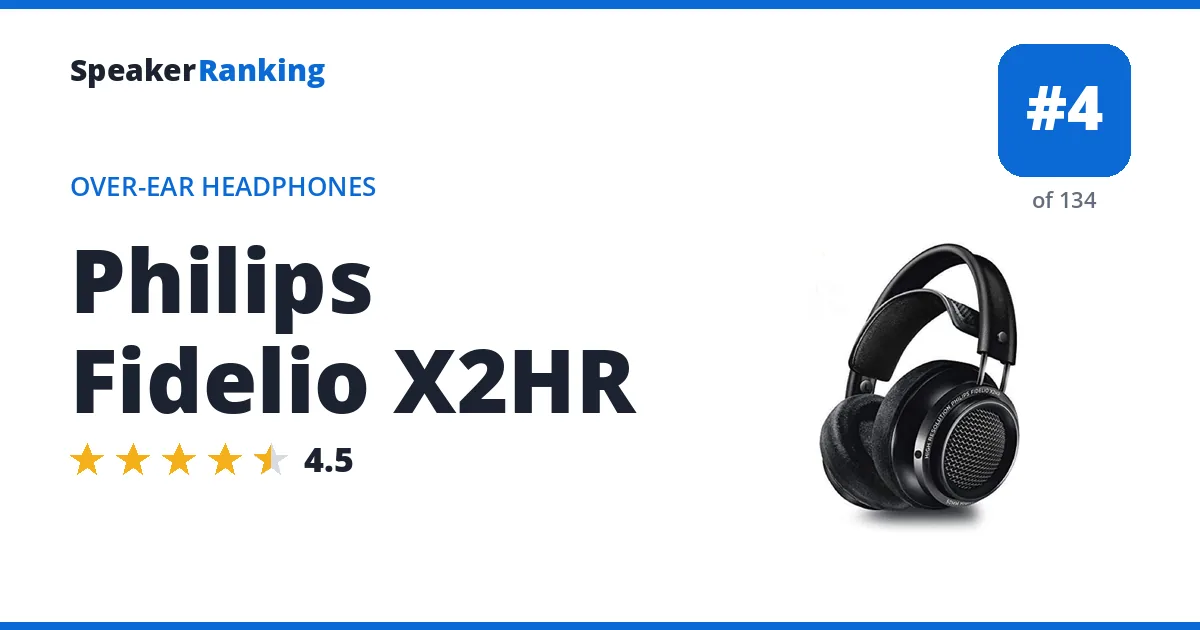
Pros: Its preference score of 94 comes from a smooth response within about 1.3 dB of the Harman target, with bass from 60 to 200 Hz and the midrange all within a dB of target. The slightly warm tilt suits listeners who find bright headphones fatiguing. At 30 ohms and 100 dB/mW it runs from a phone without a separate amp, and the 50 mm dynamic driver delivers it at a modest price compared with the Sennheiser HD 560S.
Cons: Sub-bass is about 4.6 dB below target, so the lowest notes in electronic and hip hop tracks lack impact. Treble from 6 kHz up is slightly recessed, with a 5 dB dip near 11.9 kHz, which takes some sparkle off cymbals. The open back leaks sound and offers no isolation, and at 380 g it is on the heavier side. Discontinued.
Full Philips Fidelio X2HR review and specifications →
| Back | Open |
|---|---|
| Connection | Wired |
| Deviation From Target | 1.27 dB standard deviation |
| Driver Type | Dynamic |
| Drivers | 1 x 50mm dynamic |
| Form Factor | Over-ear |
| Frequency Response | 5Hz - 40kHz (Manufacturer specified) |
| Harman Preference Score | 94 (measured by oratory1990, via AutoEQ) |
| Impedance | 30 ohms |
| Sensitivity | 100 dB/mW |
| Tonal Tilt | -0.29 (negative is warmer, positive brighter) |
| Weight | 0.8 lbs (380 g) |
EQ preset to match the Harman target
Set a preamp of -6.4 dB, then add these filters in any parametric equalizer (Wavelet, Equalizer APO, Peace, or a player with parametric EQ). Calculated by AutoEQ from its measured frequency response.
| Filter | Frequency | Gain | Q |
|---|---|---|---|
| Low shelf | 105 Hz | +7.8 dB | 0.70 |
| Peak | 64 Hz | -7.1 dB | 0.68 |
| Peak | 4,982 Hz | +4.2 dB | 0.79 |
| Peak | 5,096 Hz | -8.2 dB | 2.97 |
| Peak | 29 Hz | +1.2 dB | 4.24 |
| High shelf | 10,000 Hz | -1.2 dB | 0.70 |
| Peak | 1,660 Hz | -2.7 dB | 4.61 |
| Peak | 261 Hz | -1.0 dB | 5.02 |
| Peak | 2,026 Hz | +0.9 dB | 4.49 |
| Peak | 2,996 Hz | +1.2 dB | 6.00 |
- Reviews, Comparisons and Sound Samples
- Head-to-Head Comparisons
 HIFIMAN Edition XS: $209.00 Amazon eBay
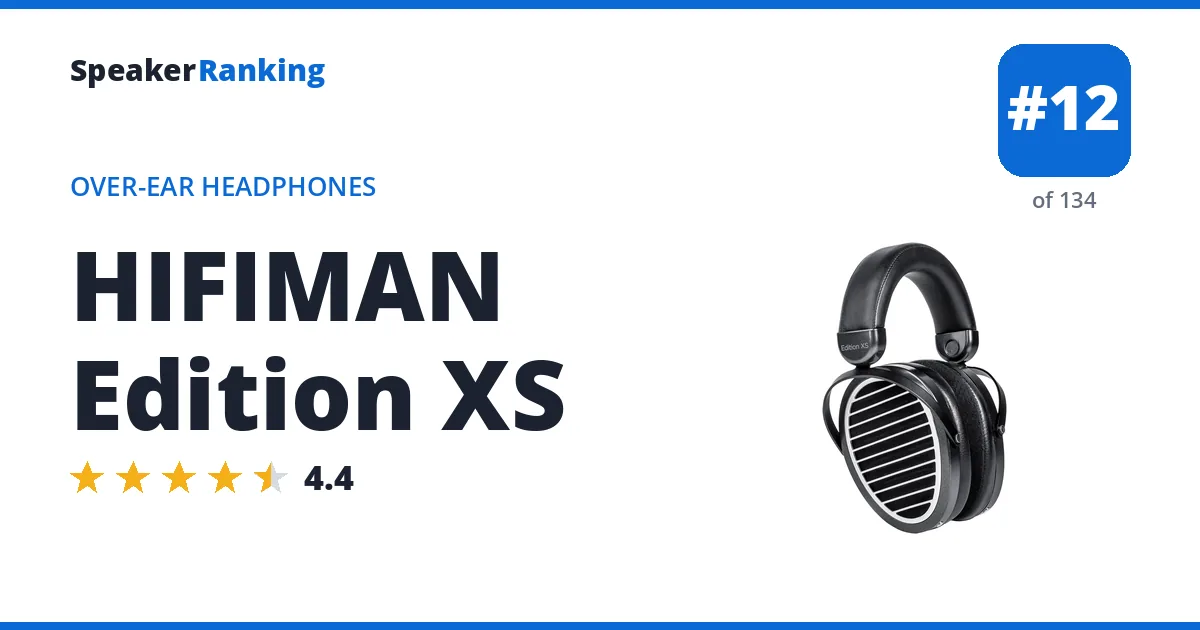
Pros: A preference score of 90 with a nearly flat tilt shows a well balanced tuning, and bass from 60 to 200 Hz is only about 1 dB above target. Presence and treble stay within about 1 dB of target, which keeps vocals and guitars clear. The planar drivers are 18 ohms and 92 dB, so it works with most amplifiers, and its rating matches the Sennheiser HD 600 and Austrian Audio Hi-X60.
Cons: A 6 dB dip near 9.4 kHz sits next to a roughly 9 dB peak at 11.9 kHz, and the air band runs about 5.5 dB above target, so the top end can sound uneven and sharp on bright recordings. Sub-bass is about 3 dB light under 60 Hz, which trims deep rumble. The open back leaks sound and gives no isolation, and at 405 g it is not especially light.
Full HIFIMAN Edition XS review and specifications →
| Released | Oct 2021 (5 years ago) |
|---|---|
| Back | Open |
| Connection | Wired |
| Deviation From Target | 1.83 dB standard deviation |
| Driver Type | Planar magnetic |
| Form Factor | Over-ear |
| Frequency Response | 8Hz - 50kHz (Manufacturer specified) |
| Harman Preference Score | 90 (measured by oratory1990, via AutoEQ) |
| Impedance | 18 ohms |
| Sensitivity | 92 dB |
| Tonal Tilt | -0.07 (negative is warmer, positive brighter) |
| Weight | 0.9 lbs (405 g) |
EQ preset to match the Harman target
Set a preamp of -4.8 dB, then add these filters in any parametric equalizer (Wavelet, Equalizer APO, Peace, or a player with parametric EQ). Calculated by AutoEQ from its measured frequency response.
| Filter | Frequency | Gain | Q |
|---|---|---|---|
| Low shelf | 105 Hz | +5.8 dB | 0.70 |
| Peak | 87 Hz | -2.8 dB | 0.33 |
| Peak | 1,896 Hz | +4.0 dB | 1.92 |
| Peak | 2,896 Hz | -3.7 dB | 3.11 |
| Peak | 1,420 Hz | +1.3 dB | 3.89 |
| High shelf | 10,000 Hz | -5.8 dB | 0.70 |
| Peak | 5,585 Hz | +1.7 dB | 6.00 |
| Peak | 70 Hz | -0.4 dB | 2.12 |
| Peak | 111 Hz | +0.4 dB | 1.64 |
| Peak | 927 Hz | -0.9 dB | 6.00 |
- Reviews, Comparisons and Sound Samples