Editor's top picks
Start with these speakers
Our leading recommendations at a glance. Each card links to its primary retailer.
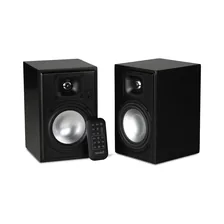 Other Powered Speakers With a USB Digital Input
Vanatoo Transparent One Encore Plus
$699.99 per pair
See the full review →
Other Powered Speakers With a USB Digital Input
Vanatoo Transparent One Encore Plus
$699.99 per pair
See the full review →
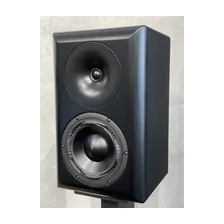 Other Powered Speakers With a USB Digital Input
Aalto Speakers Aalto 3 Active Pro
$5,930 per pair
See the full review →
Other Powered Speakers With a USB Digital Input
Aalto Speakers Aalto 3 Active Pro
$5,930 per pair
See the full review →
Looking for a powered speaker with a USB digital input? A USB audio input lets the speaker act as its own DAC and amplifier for a computer, taking the digital signal directly and skipping the computer’s built-in sound card entirely. It is a common way to get a real desktop audio upgrade without buying a separate DAC or audio interface. Every pick below has a verified USB digital audio input; the recommendations are ordered by measured sound quality, not by the connector alone.
Want every match, not just the top pick per category? See every powered speaker with a USB digital input →
Quick Navigation
- Best Overall
- Best For Streaming and TV
- Best Value
- Other Powered Speakers With a USB Digital Input
- What To Check Before Buying
- Where To Go Next
Prices on this page were last checked September 17, 2026 at 12:43 AM UTC. Product prices and availability are accurate as of that date/time and are subject to change; the price and availability shown on Amazon at the time of purchase will apply to the purchase of this product.
As an eBay Partner, we may be compensated if you make a purchase.
Best Overall
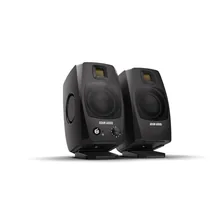 For excellent midrange linearity with a direct USB-C DAC input, the Adam Audio D3v: $344.99 per pair Amazon eBay
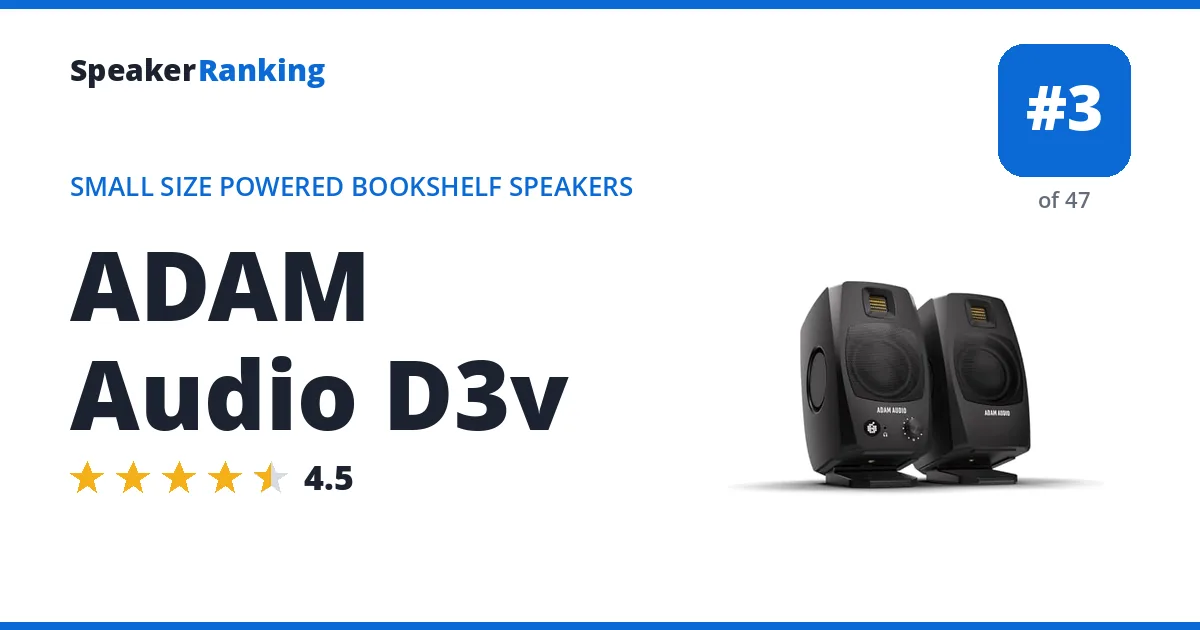
Pros: Excellent midrange linearity for a tiny desktop speaker: Erin’s Klippel data spans just 1.7dB from 300Hz to 5kHz. Side passive radiators help bass reach -3dB at about 51Hz, substantially deeper than the Genelec 8010A or Audio Smile LBM. Predicted preference scores of 4.47 standalone and 6.70 with an ideal subwoofer support it as a particularly useful compact system without a sub. USB-C, analog inputs and placement filters simplify desk setup. Measured bass extension of 50Hz (-3dB), with a measured sensitivity of 86.5dB.
Cons: A rising upper-frequency balance and vertical crossover interference keep it from being uniformly neutral at every angle; aim the tweeters toward ear height. The limiter reduces bass and midrange output as volume rises, with the existing review’s compression tests putting usable maximum output around 89-90dB at 1m. Deep bass at moderate volume should not be confused with high output capability.
Full Adam Audio D3v review and specifications →
| AES Input | No |
|---|---|
| Amplifier Power | 50W (30W woofer + 20W tweeter) |
| App | No |
| Aux Input | No |
| Bass Extension (-10dB) | 45Hz (measured, Erin's Audio Corner) |
| Bass Extension (-3dB) | 50Hz (measured, Erin's Audio Corner) |
| Bluetooth | No |
| Coaxial Input | No |
| Dimensions | 6.7"H x 4.3"W x 5.9"D (170.2 x 109.2 x 149.9 mm) |
| Drivers | 3.5" woofer, U-ART accelerated ribbon tweeter |
| EQ | Yes (Room adjustment filters) |
| Frequency Response | 50Hz - 50kHz (Manufacturer specified) |
| HDMI Input | No |
| Inputs | USB-C, balanced 1/4-inch TRS |
| Maximum SPL | 102dB @ 1m (manufacturer specified) |
| Optical Input | No |
| RCA Input | No |
| Sensitivity | 86.5dB (measured at 0.3V/1m, Erin's Audio Corner) |
| Spinorama Preference Score | 4.47 |
| Spinorama Preference Score with Perfect Sub | 6.70 |
| TRS Input | Yes |
| USB Input | Yes |
| Weight | 3.7 lbs (1.7 kg) |
| XLR Input | No |
- Links
- Reviews, Comparisons and Sound Samples
- Erin’s Audio Corner: ADAM Audio D3V: Mighty Small But Mighty Awesome Desktop Speaker More from Erin’s Audio Corner →
- Erin’s Audio Review Adam Audio D3v
- Erin’s Audio Corner Measurements (spinorama.org)
- Jasper Tech: Best Desktop Computer Speakers for Every Budget – 2026 More from Jasper Tech →
- Jasper Tech: Are the D3V The Best Studio Monitors For The Money?
- Erin’s Audio Corner: The Best Budget Desktop Speakers, Tested & Rated
- Head-to-Head Comparisons
- Adam Audio D3v vs Genelec 8010A
- Adam Audio D3v vs Cambridge Audio L/R S
- Adam Audio D3v vs IK Multimedia iLoud Micro Monitor
- Adam Audio D3v vs Audio Smile Little British Monitor
- Adam Audio D3v vs Edifier M60
- Adam Audio D3v vs HiVi Swan X3
- Adam Audio D3v vs Edifier MR3
- Adam Audio D3v vs Audioengine A2+
- See all 15 comparisons
Erin’s Klippel data spans just 1.7dB from 300Hz to 5kHz, unusually even for a small desktop speaker, and side passive radiators help bass reach about 51Hz at -3dB. The USB-C input plugs straight into a laptop or desktop as its own DAC, no separate audio interface needed.
A rising upper-frequency balance and vertical crossover interference keep it from being uniformly neutral at every angle, so aim the tweeters toward ear height. The onboard limiter also reduces bass and midrange output at higher volumes.
Best For Streaming and TV
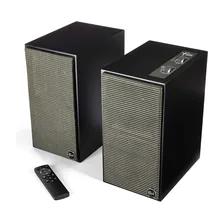 For a system that pairs a USB input with HDMI ARC and optical for a full desk-or-TV setup, the Klipsch The Fives: $699 per pair Amazon eBay
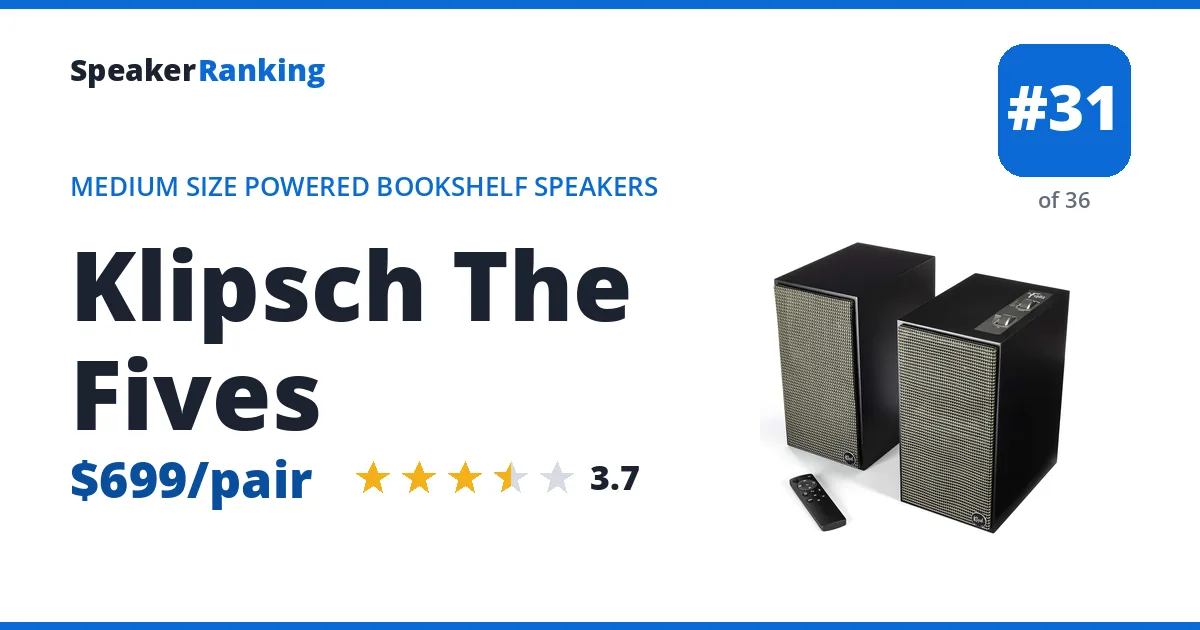
Pros: In the tested Bass Cut mode, Erin’s Klippel data gives preference scores of 4.62 standalone and 6.98 with an ideal subwoofer, with a 2.7dB midrange response span. That mode offers considerably better tonal balance than the bass-heavy default behavior. HDMI ARC, phono/line input, digital inputs and subwoofer output make it a versatile stereo alternative to a soundbar. Measured bass extension of 57Hz (-3dB).
Cons: The favorable score specifically requires Bass Cut mode; it does not describe every firmware or bass setting. Bass reaches -3dB around 59Hz in that configuration. The review reports increasing compression around 200Hz and below 80Hz as volume rises, reducing bass dynamics. Careful placement and a subwoofer remain useful, and the horn/woofer transition is not perfectly uniform off-axis.
Full Klipsch The Fives review and specifications →
| AES Input | No |
|---|---|
| Aux Input | No |
| Bass Extension (-10dB) | 47.3Hz (measured, Erin's Audio Corner) |
| Bass Extension (-3dB) | 57Hz (measured, Erin's Audio Corner) |
| Bluetooth Codecs | SBC, AAC, aptX, aptX HD |
| Coaxial Input | No |
| DSP | Dynamic Bass, Flat and Bass Cut profiles |
| Drivers | 1" horn-loaded tweeter; 4.5" woofer |
| HDMI Input | Yes |
| Inputs | HDMI ARC, USB, optical, Bluetooth, phono/line RCA |
| Optical Input | Yes |
| Outputs | Subwoofer |
| RCA Input | Yes |
| Sensitivity | Not applicable (active DSP loudspeaker) |
| Spinorama Preference Score | 4.62 |
| Spinorama Preference Score with Perfect Sub | 6.98 |
| Subwoofer Output | Yes |
| TRS Input | No |
| USB Input | Yes |
| XLR Input | No |
- Links
- Reviews, Comparisons and Sound Samples
- Erin’s Audio Corner: Klipsch The Fives Review More from Erin’s Audio Corner →
- Erin’s Audio Corner Website: Klipsch The Fives
- Erin’s Audio Corner Measurements (spinorama.org)
- Jasper Tech: Best Bookshelf Speakers For TV & Gaming - 2025 More from Jasper Tech →
- Jasper Tech: Best Powered Bookshelf Speakers for Every Budget - 2025
- Head-to-Head Comparisons
- Klipsch The Fives vs JBL 305P MKII
- Klipsch The Fives vs Genelec 8020D
- Klipsch The Fives vs Topping MA4
- Klipsch The Fives vs KEF LS50 Wireless II
- Klipsch The Fives vs Vanatoo Transparent One Encore Plus
- Klipsch The Fives vs Devialet Phantom II 98 dB
- Klipsch The Fives vs IK Multimedia iLoud MTM MKII
- Klipsch The Fives vs Genelec 8320A
- See all 51 comparisons
In its tested Bass Cut mode, Erin’s Klippel data gives preference scores of 4.62 standalone and 6.98 with an ideal subwoofer, considerably better tonal balance than its default setting. The USB input handles a computer directly, while HDMI ARC and optical cover a TV.
The favorable score depends on using Bass Cut mode; other settings measure worse. Bass reaches -3dB around 59Hz in that configuration, and the review reports increasing compression around 200Hz at higher output.
Best Value
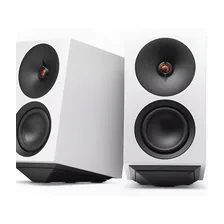 For an affordable near-field pair with a USB-C digital input, the Cambridge Audio L/R S: $549.00 per pair Amazon eBay
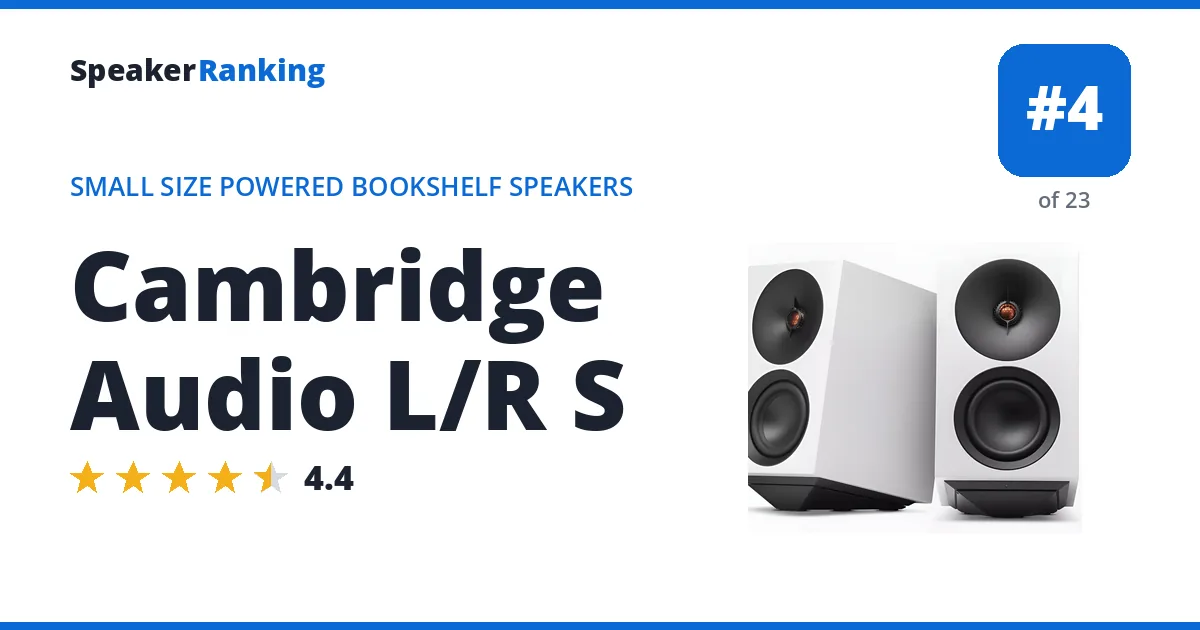
Pros: A 2-way active bookshelf pair built for near-field desktop use, with a 21mm aluminum tweeter and a 3-inch long-throw woofer on each speaker. Erin’s Audio Corner measured a very neutral on-axis response with good directivity control up through the 2-3kHz handoff to the tweeter, an F3 of about 57Hz and F10 of about 50Hz, and output held within roughly plus or minus 2.5dB from 80Hz to 20kHz. Horizontal dispersion of about plus or minus 60 degrees and a vertical window of about plus 30 to minus 20 degrees make it forgiving of off-center desktop seating. Two rear switches (a desktop-placement compensation switch and a near-wall/free-space switch) plus in-app DSP for room size, wall distance, and reflective surface type let you tune the in-room response rather than just hoping placement works out, and the reviewer noted an audible tightening of the bass moving between room-size settings. Rear connectivity includes RCA, optical digital, USB-C, and a dedicated subwoofer output. Measured bass extension of 57Hz (-3dB).
Cons: Maximum clean output is limited: Erin’s Audio Corner measured about 86dB before the onboard limiter engages around 96dB to protect the drivers, so this is a near-field or small-room speaker rather than one built to fill a living room. Each speaker’s Class D amplifier splits only 50W to the woofer and 50W to the tweeter, modest for the class. The DSP room-correction options are preset-based rather than a true microphone-measured calibration at the listening position, so results depend on picking settings that match your actual room.
Full Cambridge Audio L/R S review and specifications →
| AES Input | No |
|---|---|
| Amplifier Power | 100W total (50W to woofer, 50W to tweeter, per speaker) |
| App | Yes |
| Aux Input | No |
| Bass Extension (-10dB) | 50Hz (measured, Erin's Audio Corner) |
| Bass Extension (-3dB) | 57Hz (measured, Erin's Audio Corner) |
| Bluetooth Codecs | SBC, AAC, aptX, aptX HD |
| Coaxial Input | No |
| DSP | Yes, room size, wall distance, and reflective surface correction; desktop-placement and near-wall/free-space switches |
| Dimensions | 5.3" (134 mm) W x 226mm H x 180mm D (each) |
| Drivers | 21mm aluminum dome tweeter, 3" long-throw woofer |
| Frequency Response | 55Hz - 24kHz (±3dB, manufacturer specified) |
| HDMI Input | No |
| Inputs | RCA, optical digital, USB-C |
| Optical Input | Yes |
| Outputs | Subwoofer, wired speaker-to-speaker link |
| RCA Input | Yes |
| Subwoofer Output | Yes |
| TRS Input | No |
| USB Input | Yes |
| Weight | 6.6 lbs (3.0kg) primary speaker, 5.7 lbs (2.6kg) secondary speaker |
| XLR Input | No |
- Links
- Reviews, Comparisons and Sound Samples
- Head-to-Head Comparisons
- Cambridge Audio L/R S vs Adam Audio D3v
- Cambridge Audio L/R S vs IK Multimedia iLoud Micro Monitor
- Cambridge Audio L/R S vs Edifier M60
- Cambridge Audio L/R S vs Genelec 8010A
- Cambridge Audio L/R S vs HiVi Swan X3
- Cambridge Audio L/R S vs Edifier MR3
- Cambridge Audio L/R S vs Klipsch ProMedia Lumina
- Cambridge Audio L/R S vs Mackie CR3-X
- See all 10 comparisons
Erin’s Audio Corner measured a very neutral on-axis response with good directivity on this compact pair, and the USB-C input connects directly to a computer alongside RCA and optical digital.
Maximum clean output is limited: about 86dB before the onboard limiter engages, so this is a near-field or small-room speaker rather than one built to fill a living room at party volume.
Other Powered Speakers With a USB Digital Input
The Vanatoo Transparent One Encore Plus: $699.99 per pair Amazon eBay
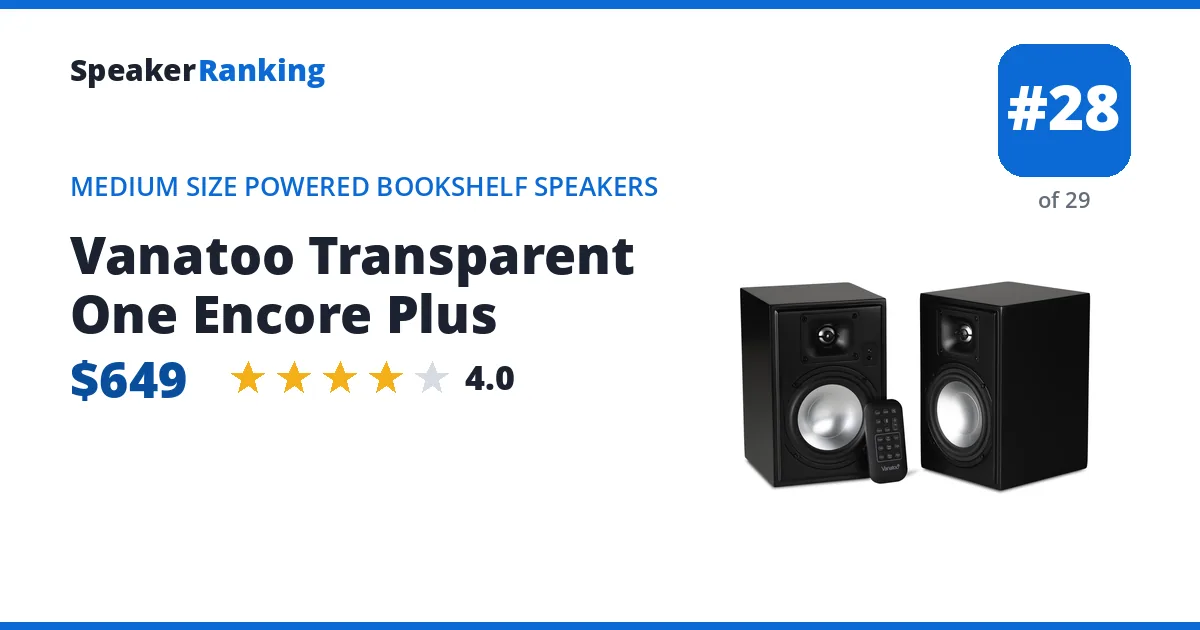
Pros: Erin’s Klippel data combines a small 1.7dB midrange response span with a -3dB point around 44Hz. Scores of 4.68 standalone and 6.49 with an ideal subwoofer make it an attractive standalone system as well as a subwoofer partner. Remote tone controls, multiple digital and analog inputs, and automatic subwoofer crossover engagement simplify setup. Measured bass extension of 42Hz (-3dB).
Cons: A mild 4-6kHz edge and a smaller 1-2kHz recession were audible in the review, so its smooth midrange summary does not mean there is nothing to improve with EQ. No HDMI ARC. Deep bass and louder playback still benefit from a subwoofer; amplifier wattage alone does not establish clean room-filling output.
Full Vanatoo Transparent One Encore Plus review and specifications →
| AES Input | No |
|---|---|
| Amplifier Power | 240W total (100W + 20W Class D amplifiers per enclosure) |
| Aux Input | No |
| Bass Extension (-10dB) | 34Hz (measured, Erin's Audio Corner) |
| Bass Extension (-3dB) | 42Hz (measured, Erin's Audio Corner) |
| Bluetooth Codecs | SBC, AAC, aptX, aptX HD |
| Coaxial Input | Yes |
| Dimensions | 10" x 6.5" x 8" (254 x 165 x 203 mm) |
| Drivers | 5.25" aluminum-cone woofer with XBL motor, 5.25" passive radiator (rear), 1" aluminum dome tweeter with waveguide and phase plug |
| Frequency Response | 48Hz - 20kHz ±3dB (manufacturer specified, Flat mode) |
| HDMI Input | No |
| Inputs | USB, Optical, Coax, Analog, Bluetooth |
| Optical Input | Yes |
| Outputs | RCA subwoofer |
| RCA Input | No |
| Spinorama Preference Score | 4.68 |
| Spinorama Preference Score with Perfect Sub | 6.49 |
| Subwoofer Output | Yes |
| TRS Input | No |
| USB Input | Yes |
| Weight | 10.8 lbs (4.9 kg) (passive unit), 12.1 lbs (5.5 kg) (active unit) |
| XLR Input | No |
- Links
- Reviews, Comparisons and Sound Samples
- Head-to-Head Comparisons
- Vanatoo Transparent One Encore Plus vs IK Multimedia iLoud MTM MKII
- Vanatoo Transparent One Encore Plus vs KEF LS50 Wireless II
- Vanatoo Transparent One Encore Plus vs JBL 305P MKII
- Vanatoo Transparent One Encore Plus vs Klipsch The Fives
- Vanatoo Transparent One Encore Plus vs Genelec 8020D
- Vanatoo Transparent One Encore Plus vs Kali Audio SM-5
- Vanatoo Transparent One Encore Plus vs Kali Audio IN-5
- Vanatoo Transparent One Encore Plus vs Topping MA4
- See all 51 comparisons
Erin’s Klippel data combines a small 1.7dB midrange response span with a -3dB point around 44Hz, making it a credible standalone system with multiple digital input options in one box.
The Aalto Speakers Aalto 3 Active Pro: $5,930 per pair Aalto Speakers eBay
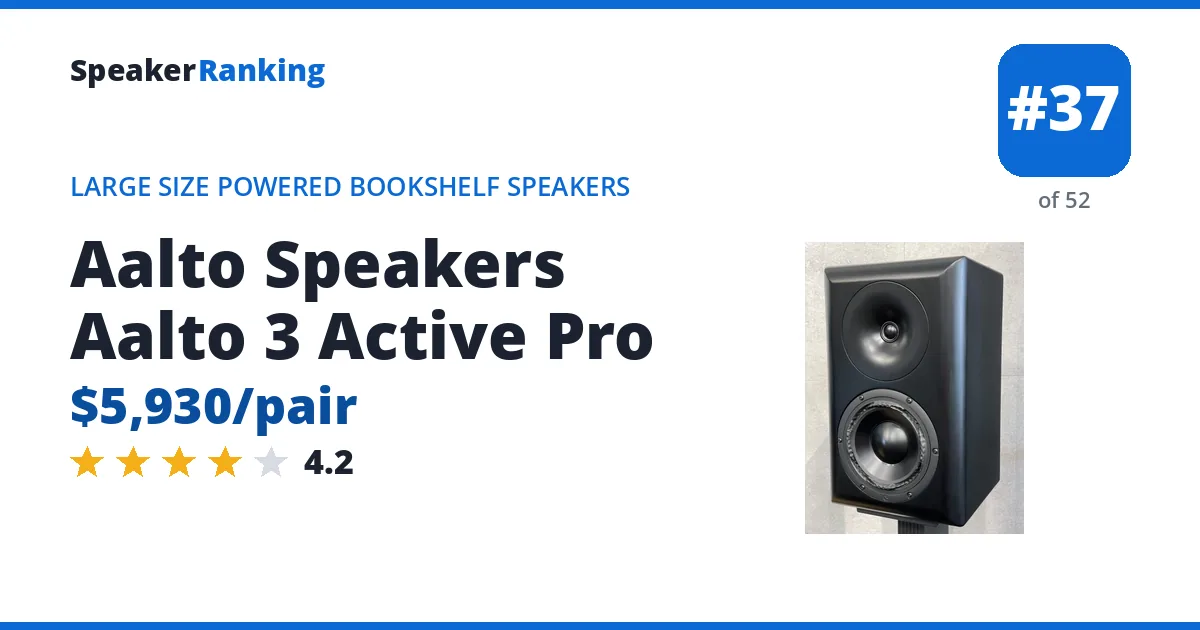
Pros: The manufacturer dataset reports a remarkably even 0.7dB response span from 300Hz to 5kHz, 34.6Hz -3dB extension and an 8.55 ideal-subwoofer preference score. If representative of the delivered system, this promises exceptionally neutral balance with useful bass reach.
Cons: External amplification and system setup make this less straightforward than a self-contained desktop pair.
Full Aalto Speakers Aalto 3 Active Pro review and specifications →
| AES Input | Yes |
|---|---|
| Amplifier Power | 4x 245W (external amplifier module, Speakon connection) |
| Aux Input | No |
| Coaxial Input | No |
| Country | Finland |
| DSP | FourAudio System Software (Windows/macOS) |
| Dimensions | 9.4"W x 15.7"H x 9.8"D (240 x 400 x 250 mm) |
| Drivers | 26mm aluminum dome tweeter, 6.5" long-stroke bass-midrange, 8" passive radiator |
| Enclosure | 2-way active, passive-radiator loaded, MDF |
| Frequency Response | 31-23,500Hz (-6dB) |
| HDMI Input | No |
| Inputs | Analogue XLR, AES/EBU XLR, USB Type B |
| Optical Input | No |
| RCA Input | No |
| Spinorama Preference Score | 7.14 |
| Spinorama Preference Score with Perfect Sub | 8.55 |
| TRS Input | No |
| USB Input | Yes |
| Weight | 19.8 lbs (9 kg) each |
| XLR Input | Yes |
- Links
- Reviews, Comparisons and Sound Samples
- Head-to-Head Comparisons
The manufacturer dataset reports a remarkably even 0.7dB response span from 300Hz to 5kHz and an 8.55 ideal-subwoofer preference score, though external amplification and system setup make this less plug-and-play than a self-contained desktop pair.
 The Edifier M60: $199.99 per pair Amazon eBay
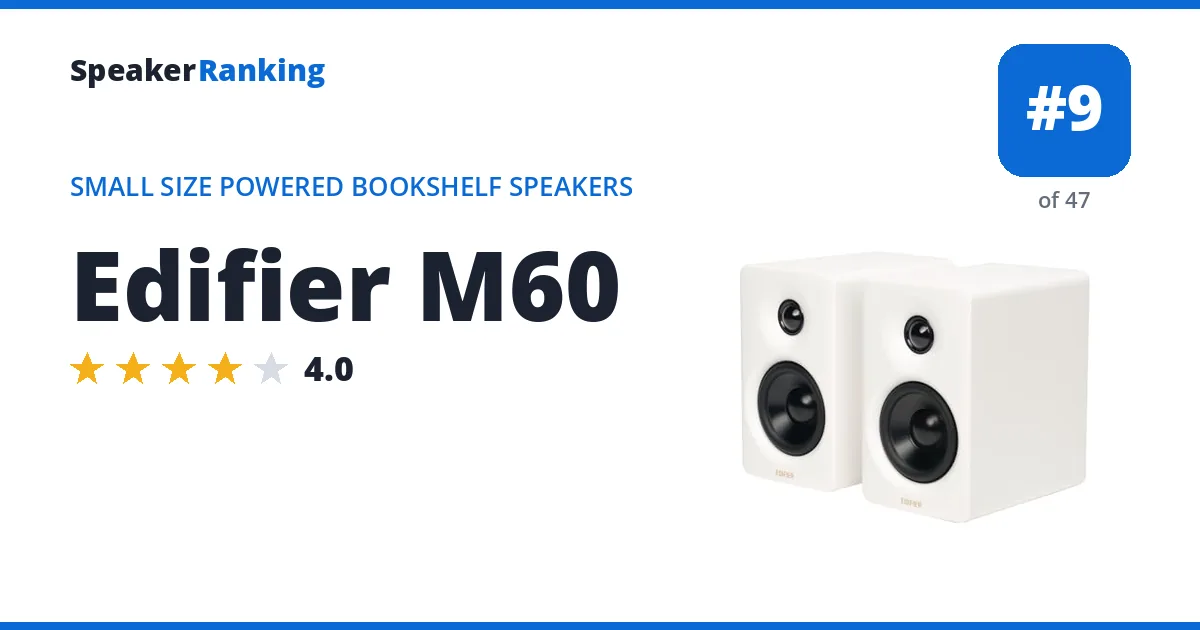
Pros: Erin’s Klippel data shows a reasonably even midrange, spanning 2.8dB from 300Hz to 5kHz, with broad horizontal coverage for desktop listening. Predicted preference scores are 3.69 standalone and 6.42 with an ideal subwoofer, a comparatively strong result in this compact category. USB-C, auxiliary input, Bluetooth and included angled stands make it easy to integrate into a small desk setup. Measured bass extension of 67Hz (-3dB), with a measured sensitivity of 87.5dB.
Cons: The on-axis response rises by about 0.57dB per octave, so the tonal balance becomes brighter toward the treble. Measured -3dB bass extension is about 70Hz; it cannot reproduce deep bass at full level. Sitting below the tweeter axis worsens the crossover-region response. Limiting and compression constrain louder playback, so use it nearfield rather than expecting room-filling output.
Full Edifier M60 review and specifications →
| AES Input | No |
|---|---|
| Amplifier Power | 66W total (33W per speaker) |
| App | Yes |
| Aux Input | Yes |
| Bass Extension (-10dB) | 57Hz (measured, Erin's Audio Corner) |
| Bass Extension (-3dB) | 67Hz (measured, Erin's Audio Corner) |
| Bluetooth | Yes |
| Bluetooth Codecs | SBC, LDAC |
| Bluetooth Version | 5.3 |
| Coaxial Input | No |
| Dimensions | 6.6"H x 3.9"W x 5.8"D (167.6 x 99.1 x 147.3 mm) |
| Drivers | 3" woofer, 1" silk dome tweeter |
| EQ | Yes |
| Frequency Response | 55Hz - 40kHz (Manufacturer specified) |
| HDMI Input | No |
| Inputs | Bluetooth, Aux, USB-C |
| Maximum SPL | 96dB @ 1m (manufacturer specified) |
| Optical Input | No |
| RCA Input | No |
| Sensitivity | 87.5dB (measured at 0.3V/1m, Erin's Audio Corner) |
| Spinorama Preference Score | 3.69 |
| Spinorama Preference Score with Perfect Sub | 6.42 |
| TRS Input | No |
| USB Input | Yes |
| Weight | 6.6 lbs (3 kg) |
| XLR Input | No |
- Links
- Reviews, Comparisons and Sound Samples
- Erin’s Audio Corner: Edifier M60 Desktop Speaker Delivers Big Fun! More from Erin’s Audio Corner →
- Erin’s Audio Corner: The Best Budget Desktop Speakers, Tested & Rated
- Erin’s Audio Corner Website: Edifier M60
- Erin’s Audio Corner Measurements (spinorama.org)
- Jasper Tech: Best Desktop Computer Speakers for Every Budget – 2026 More from Jasper Tech →
- Head-to-Head Comparisons
Erin’s Klippel data shows a reasonably even midrange for the price, though the on-axis response rises toward the treble and measured -3dB bass extension is about 70Hz, limiting deep bass at full level.
What To Check Before Buying
Driver and OS support: most USB audio speakers work as a plug-and-play USB audio class device on modern operating systems, but check for any required driver, especially for higher sample rates.
Sample rate limits: confirm the speaker’s supported USB audio format (commonly up to 24-bit/96kHz or 24-bit/192kHz) matches what your source actually outputs, since an unsupported rate can silently fall back or fail.
One cable, one source: a USB input generally serves one computer at a time. If you need to switch between a computer and a phone or TV, check whether the speaker offers Bluetooth or another wired input alongside USB.
Where To Go Next
See the best powered speakers with an optical input or best powered speakers with a coaxial digital input for the other common digital connectors, or every powered speaker with a USB digital input for the complete list.
Related guides: powered speaker inputs explained, best powered speakers for a computer desk, and the powered speaker buyer’s guide.