Editor's top picks
Start with these speakers
Our leading recommendations at a glance. Each card links to its primary retailer.
Looking for the best PA speaker under $500? At this price you can buy a real powered PA speaker with a compression driver, XLR inputs and onboard DSP, or a battery-powered PA for gigs without an outlet. What you give up is measured accuracy: the best-measuring PA speakers ranked here start at $750. Prices are per speaker, so a stereo pair costs twice as much.
Prices on this page were last checked September 26, 2026 at 12:12 AM UTC. Product prices and availability are accurate as of that date/time and are subject to change; the price and availability shown on Amazon at the time of purchase will apply to the purchase of this product.
As an eBay Partner, we may be compensated if you make a purchase.
What You Give Up Under $500
Even coverage. Budget PA speakers have weaker vendor Spinorama results than the top models, which means the tonal balance changes more as listeners move off to the sides.
Bass extension. Most picks here roll off between 57 and 69Hz (-3dB). That is fine for speech, acoustic music and background playback; for DJ sets and full bands, plan on a subwoofer.
Controls and connectivity. App control, Bluetooth audio and detailed DSP menus are rare. Expect a couple of inputs, a few presets and a volume knob.
Not reliability. Yamaha, RCF and Mackie have long track records, and the powered mains here are built for the same gigging life as their pricier siblings.
Best Powered PA Under $500
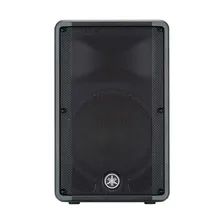 For a 12-inch PA with the deepest bass here, reaching about 58Hz (-3dB), the Yamaha DBR12: $379.00 Amazon B&H Photo Video Guitar Center eBay
Pros: A lightweight, widely supported entry point with a useful two-channel mixer, FIR-X crossover processing and straightforward main/monitor presets. The 58Hz measured extension is adequate for speech and modest music playback without a subwoofer. Measured bass extension of 58Hz (-3dB).
Cons: Medium-quality vendor data produces a below-average 4.92 ideal-subwoofer preference score, indicating substantial tonal/directivity compromises. Its 131dB output claim and controls also sit below Yamaha’s DXR and DZR tiers.
Full Yamaha DBR12 review and specifications →
| AES Input | No |
|---|---|
| Amplifier Power | 1000W dynamic / 465W continuous (800W LF + 200W HF dynamic) |
| Aux Input | No |
| Bass Extension (-3dB) | 58Hz (measured, vendor Spinorama data) |
| Bluetooth | No |
| Cabinet Material | Plastic |
| Coaxial Input | No |
| Configuration | Active 2-way bass-reflex PA speaker |
| Coverage | 90° x 60° |
| DSP | Yes |
| Dimensions | 23.7”H x 14.8”W x 13.7”D (601 x 376 x 348 mm) |
| Drivers | 12” woofer, 1.4” compression driver |
| Frequency Response | 52Hz - 20kHz (manufacturer specified) |
| Guitar Input | No |
| HDMI Input | No |
| Inputs | 2 x XLR/TRS combo, stereo RCA |
| Maximum SPL | 131dB peak (manufacturer specified) |
| Microphone Input | No |
| Optical Input | No |
| RCA Input | Yes |
| Rigging | 3 x M8 points; 35mm pole mount |
| Spinorama Preference Score | 2.32 |
| Spinorama Preference Score with Perfect Sub | 4.92 |
| TRS Input | Yes |
| USB Input | No |
| Weight | 34.8 lbs (15.8 kg) |
| XLR Input | Yes |
- Links
- Reviews, Comparisons and Sound Samples
- Head-to-Head Comparisons
It adds a two-channel mixer with XLR/TRS combo and RCA inputs, FIR-X crossover processing, and main and monitor presets, at 15.8kg. Its 4.92 preference score with a subwoofer is below average, so expect the sound to change more off-axis than on pricier models.
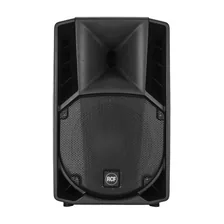 For a 10-inch box with a larger 1.75-inch compression driver, the RCF ART 710-A MK5: $479.00 Amazon B&H Photo Video Guitar Center eBay
Pros: A compact, affordable RCF with a 1.75-inch compression driver, 129dB claimed output and FiRPHASE processing, well suited to buyers who plan to cross to a subwoofer and do not need app control. At 14.2kg it is easy to carry. Measured bass extension of 69Hz (-3dB).
Cons: The local low-quality manufacturer data has no computed preference score, making its measured tonal position uncertain.
Full RCF ART 710-A MK5 review and specifications →
| AES Input | No |
|---|---|
| Amplifier Power | 1400W peak (1000W LF + 400W HF) |
| Aux Input | No |
| Bass Extension (-3dB) | 69Hz (measured, vendor Spinorama data) |
| Bluetooth | No |
| Cabinet Material | PP composite |
| Coaxial Input | No |
| Configuration | Active 2-way bass-reflex PA speaker |
| Coverage | 90° x 70° |
| Crossover Frequency | 1600Hz |
| DSP | Yes, FiRPHASE, EQ, limiting and protection |
| Dimensions | 21.6”H x 13.4”W x 12”D (548 x 340 x 305 mm) |
| Drivers | 10” woofer, 1.75” compression driver |
| Frequency Response | 50Hz - 20kHz (manufacturer specified) |
| Guitar Input | No |
| HDMI Input | No |
| Inputs | XLR and 1/4-inch jack input; XLR output |
| Maximum SPL | 129dB peak (manufacturer specified) |
| Microphone Input | No |
| Optical Input | No |
| RCA Input | No |
| Rigging | 2 x M10 inserts; 35mm pole mount |
| TRS Input | Yes |
| USB Input | No |
| Weight | 31.3 lbs (14.2 kg) |
| XLR Input | Yes |
- Links
- Reviews, Comparisons and Sound Samples
- Head-to-Head Comparisons
- RCF ART 710-A MK5 vs KV2 Audio EX10
- RCF ART 710-A MK5 vs Vue Audiotechnik A-10
- RCF ART 710-A MK5 vs RCF NX 910-A
- RCF ART 710-A MK5 vs Yamaha DXR10mkII
- RCF ART 710-A MK5 vs Yamaha DBR10
- RCF ART 710-A MK5 vs Yamaha DXR10mkIII
- RCF ART 710-A MK5 vs Yamaha DZR10
- RCF ART 710-A MK5 vs RCF HD 10-A MK5
- See all 12 comparisons
It claims 129dB of output from 1,400W peak amplification, and at 14.2kg it is easy to carry. Bass stops around 69Hz (-3dB), so it suits buyers who plan to add a subwoofer. There is no app control.
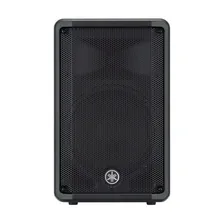 For the lightest and cheapest powered main, the Yamaha DBR10: $348.49 Amazon B&H Photo Video Guitar Center eBay
Pros: Yamaha’s most portable 10-inch powered speaker carries the same DSP and amplification platform as the DXR and DZR series, with a built-in 2-channel mixer accepting XLR, 1/4-inch and RCA sources. Measured bass extension of 69Hz (-3dB).
Cons: Medium-quality vendor data shows a 4.75 ideal-subwoofer preference score, mid-pack for this ranking, so a subwoofer partner matters for full-range material.
Full Yamaha DBR10 review and specifications →
| AES Input | No |
|---|---|
| Amplifier Power | 700W dynamic / 325W continuous (500W LF + 200W HF dynamic) |
| Aux Input | No |
| Bass Extension (-3dB) | 69Hz (measured, vendor Spinorama data) |
| Bluetooth | No |
| Cabinet Material | Plastic |
| Coaxial Input | No |
| Configuration | Active 2-way bass-reflex PA speaker |
| Coverage | 90° x 60° |
| DSP | Yes |
| Dimensions | 19.4”H x 12.1”W x 11.4”D (493 x 308 x 289 mm) |
| Drivers | 10” woofer, 1” compression driver |
| Frequency Response | 55Hz - 20kHz (-10dB, manufacturer specified) |
| Guitar Input | No |
| HDMI Input | No |
| Inputs | 2 x XLR/TRS combo and stereo RCA; XLR output |
| Maximum SPL | 129dB peak (manufacturer specified) |
| Microphone Input | No |
| Optical Input | No |
| RCA Input | Yes |
| Rigging | 2 x M8 points; 35mm pole mount |
| Spinorama Preference Score | 2.00 |
| Spinorama Preference Score with Perfect Sub | 4.75 |
| TRS Input | Yes |
| USB Input | No |
| Weight | 23.1 lbs (10.5 kg) |
| XLR Input | Yes |
- Links
- Reviews, Comparisons and Sound Samples
- Head-to-Head Comparisons
At 10.5kg it is the most portable powered PA here, with the same two-channel mixer as the DBR12. Its 4.75 preference score with a subwoofer is mid-pack, and bass stops around 69Hz (-3dB).
Best Battery PA Under $500
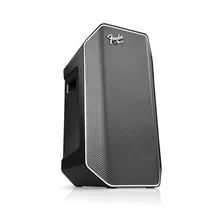 For the longest runtime, with 58 hours claimed and a 10-inch woofer, the Teufel Rockster Air 2: $499.99 Amazon eBay
Pros: More consistent off-axis sound than the JBL Partybox 130, thanks to its single horn-loaded compression driver. Projects sound more evenly to the sides, unlike the JBL’s narrower front-firing dispersion. Cleaner instrument separation at high volume than the JBL Partybox 130, which turns anemic and loses bass at max volume despite its bass boost.
Cons: Bass isn’t as deep as the JBL Partybox 130’s boosted bass, though the JBL’s is boomy rather than truly deep. Bass and treble aren’t perfectly controlled at maximum volume - can sound hollow or too bright unless turned down from default. Not meaningfully louder than its 3-year-old predecessor, and the reviewer found the overall tuning a bit worse.
Full Teufel Rockster Air 2 review and specifications →
| Amplifier Power | 80W RMS |
|---|---|
| App | No |
| Aux Input | Yes |
| Battery Life | 58 hours (Manufacturer specified) |
| Bluetooth | Yes |
| Bluetooth Codecs | SBC, AAC, aptX, aptX HD |
| Bluetooth Version | 5.0 |
| Cabinet Material | Plastic and MDF |
| Configuration | Battery-powered 2-way active PA |
| Coverage | 80° H x 40° V |
| DSP | No |
| Digital Aux Input | No |
| Dimensions | 12.7” x 23.2” x 13.5” (323 x 589 x 343 mm) |
| Discontinued | No |
| Drivers | 2-way: 1x 10” paper woofer, 1x 1” polypropylene tweeter |
| EQ | No |
| Frequency Response | 47Hz - 22kHz (Manufacturer specified) |
| Guitar Input | Yes |
| IP Rating | None |
| Inputs | XLR microphone, 6.3mm instrument, 3.5mm stereo, Bluetooth |
| Maximum SPL | 103dB RMS / 115dB peak @ 1m (Manufacturer specified) |
| Microphone Input | Yes (XLR) |
| Omnidirectional | No |
| Party Mode | Yes (Party Link Stereo, 2 speakers; XLR chaining up to 10) |
| Power Bank | Yes (USB-C) |
| Power Input | AC Power cord |
| Rigging | 35mm pole mount |
| Stereo | Yes |
| TWS | Yes |
| USB Playback | No |
| Weight | 31.2 lbs (14.15 kg) |
| XLR Input | Yes |
- Links
- Reviews, Comparisons and Sound Samples
- Head-to-Head Comparisons
- Teufel Rockster Air 2 vs Teufel Rockster Neo
- Teufel Rockster Air 2 vs Bose S1 Pro+
- Teufel Rockster Air 2 vs Electro-Voice Everse 8
- Teufel Rockster Air 2 vs Mackie Thump Go
- Teufel Rockster Air 2 vs Electrotec Stage One
- Teufel Rockster Air 2 vs Soundboks 4
- Teufel Rockster Air 2 vs Electro-Voice Everse 12
- Teufel Rockster Air 2 vs Teufel Rockster Air
- See all 31 comparisons
It has XLR microphone and 6.3mm instrument inputs alongside Bluetooth, and its horn-loaded tweeter spreads sound more evenly to the sides than a typical party speaker. Bass and treble lose control at maximum volume, so leave some headroom.
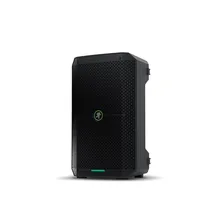 For a removable battery and a two-input mixer in an 8kg box, the Mackie Thump Go: $449.99 Amazon eBay
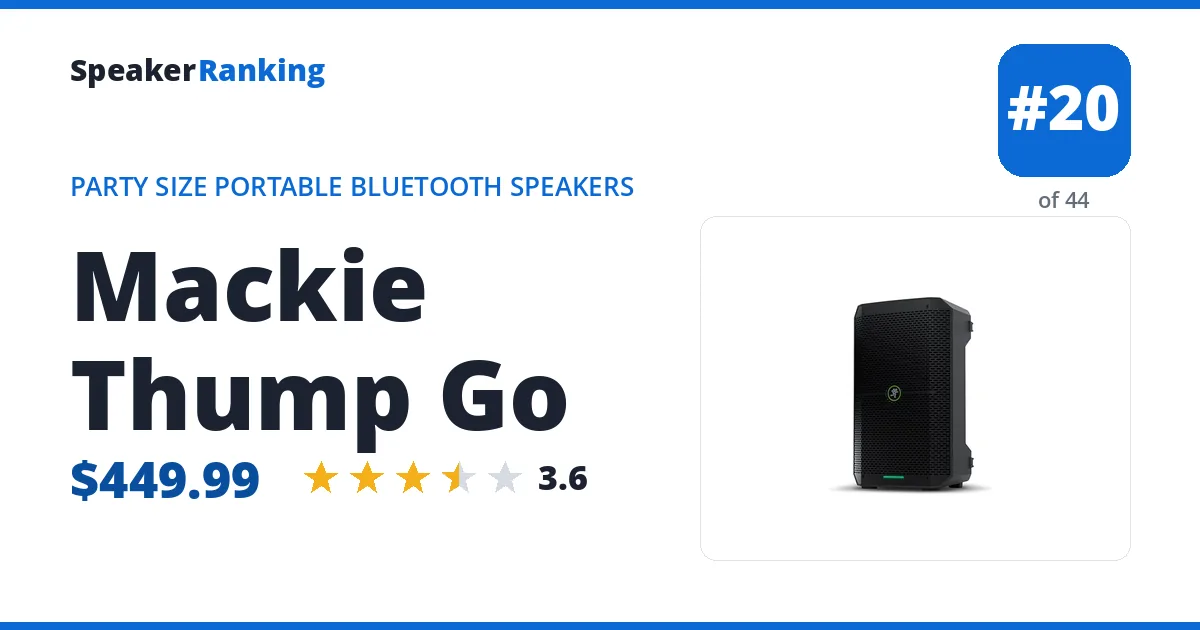
Pros: 8-inch custom high-output woofer + 1-inch compression driver delivers powerful audio with incredible dynamic range. Built-in mini live mixer with two XLR/TRS combo inputs + 3.5mm aux. Up to 12 hours battery (5 hours comfortable gig time), removable for swapping spares. Lightweight 17.6 lbs. Balanced sound with crisp highs, tight lows, natural vocals. Pair two Mackie Thump Gos for stereo via app. High efficiency drivers reach 2-3x the volume of typical speakers for the same wattage. Measured bass extension of 57Hz (-3dB).
Cons: Not quite as good sounding as a Everse 8 or S1 Pro. Bluetooth pairing doesn’t auto connect every time. Designed for more loudness than deeper bass. Battery latch breaks easily. Handle on top also can break off. Not very deep bass
Full Mackie Thump Go review and specifications →
| Amplifier Power | 200W |
|---|---|
| App | Yes |
| Aux Input | Yes |
| Bass Extension (-10dB) | 50Hz |
| Bass Extension (-3dB) | 57Hz |
| Battery Life | 12 hours (Manufacturer specified) |
| Bluetooth | Yes |
| Bluetooth Codecs | SBC |
| Cabinet Material | Polypropylene |
| Configuration | Battery-powered 2-way active PA |
| Coverage | 90° H x 60° V |
| DSP | Feedback eliminator, Music Duck and voicing modes |
| Digital Aux Input | No |
| Dimensions | 18” x 9.1” x 11.2” (457 x 230 x 285 mm) |
| Drivers | 8” woofer, 1” compression driver |
| EQ | Yes |
| Frequency Response | 57Hz - 20kHz (-3dB, Manufacturer specified) |
| Guitar Input | Yes |
| IP Rating | None |
| Inputs | 2x XLR/TRS combo (mic/line), 3.5mm stereo, Bluetooth |
| Maximum SPL | 115dB |
| Microphone Input | Yes |
| Omnidirectional | No |
| Party Mode | No |
| Power Bank | No |
| Rigging | 35mm pole mount; monitor wedge |
| Stereo | No |
| TWS | No |
| USB Playback | No |
| Weight | 17.6 lbs (8 kg) |
| XLR Input | Yes |
- Links
- Reviews, Comparisons and Sound Samples
- W. Weiss: Part 3 Sound Demonstration The New EV Everse 8 compared to The Mackie Thump Go
- W. Weiss: Part 3 Shootout MACKIE THUMP GO vs BOSE S1 PRO vs JBL EON ONE COMPACT Max Volume Demo A New Winner!
- W. Weiss: Part 2 NEW MACKIE THUMP GO review/sound demo VS JBL Compact & Bose S1Pro Most Popular portable PAs
- W. Weiss: The $400 Club - Budget Portable PA’s Mackie Thump Go, JBL Partybox 110, Yamaha DBR10
- Head-to-Head Comparisons
- Mackie Thump Go vs Bose S1 Pro+
- Mackie Thump Go vs Soundboks 4
- Mackie Thump Go vs Teufel Rockster Air
- Mackie Thump Go vs Teufel Rockster Air 2
- Mackie Thump Go vs Teufel Rockster Neo
- Mackie Thump Go vs Electro-Voice Everse 8
- Mackie Thump Go vs Electrotec Stage One
- Mackie Thump Go vs JBL Eon One Compact
- See all 36 comparisons
It claims up to 12 hours of runtime, reaches about 57Hz (-3dB), and has two XLR/TRS combo inputs plus a 3.5mm input. Spare batteries swap in for all-day events. The battery latch and top handle are weak points.
Worth Stretching For
The best PA speakers under $1,000 include the top-ranked models on the site. The QSC K8.2, the top-ranked 8-inch PA speaker, costs $750 and scores 7.74 with a subwoofer, compared with 4.92 for the best-scoring pick on this page.
Where To Go Next
Full rankings with specs and measurements: 8-inch, 10-inch, 12-inch, 15-inch and battery-powered PA speakers. Related picks: best battery-powered PA speakers, party speaker vs. battery-powered PA, and the PA buyer’s guide.