Editor's top picks
Start with these speakers
Our leading recommendations at a glance. Each card links to its primary retailer.
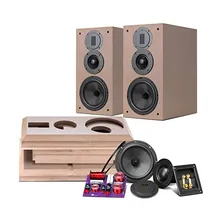 Best Overall Under $600
HiVi Swans 3.1A Sehlin Sound Solutions mod
$364.99 per pair for the kit (assembly required)
See the full review →
Best Overall Under $600
HiVi Swans 3.1A Sehlin Sound Solutions mod
$364.99 per pair for the kit (assembly required)
See the full review →
Looking for the best budget passive speakers? Passive speakers reward a small budget better than almost anything else in audio, because the money goes entirely into drivers, crossover and cabinet with no amplifier to pay for. These picks come from the 294 passive speakers ranked here, all verified against independent measurements from Erin’s Audio Corner and Audio Science Review.
Prices on this page were last checked September 22, 2026 at 5:11 AM UTC. Product prices and availability are accurate as of that date/time and are subject to change; the price and availability shown on Amazon at the time of purchase will apply to the purchase of this product.
As an eBay Partner, we may be compensated if you make a purchase.
Check The Sensitivity Before You Buy
Budget passive speakers tend to be less sensitive than expensive ones, because the cheapest way to get bass out of a small cabinet is to trade efficiency for it. Several picks below sit around 82-83 dB, which means they need roughly twice the amplifier power of an 86 dB speaker to reach the same volume, and four times an 89 dB one.
That’s fine if you own a reasonably powerful amplifier and a problem if you’re pairing them with a small tube amp or an old receiver. Each pick’s sensitivity and impedance is in its spec table. If your amplifier is the constraint, see best passive speakers for tube and low-power amplifiers.
Budget the amplifier as part of the purchase. A $280 pair on a $150 amp is a complete system; a $280 pair alone is a box of drivers.
What You Give Up Under $600
Bass extension. The most consistent compromise. Small woofers in small cabinets roll off early, which is why a subwoofer is such a strong addition at this price, see the subwoofer buyer’s guide.
Cabinet and finish. Thinner panels, more resonance, vinyl instead of veneer.
Off-axis consistency. Budget crossovers are simpler, so the response you hear off to the side is less well-controlled. This matters more in a live room than a treated one.
Not on-axis accuracy. Several picks below measure genuinely well straight ahead, which is why they’re here.
Best Overall Under $600
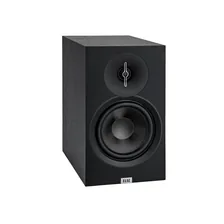 The highest-rated budget bookshelf speaker on this site, the ELAC Debut 3.0 DB63: $499.00 per pair Amazon Crutchfield eBay
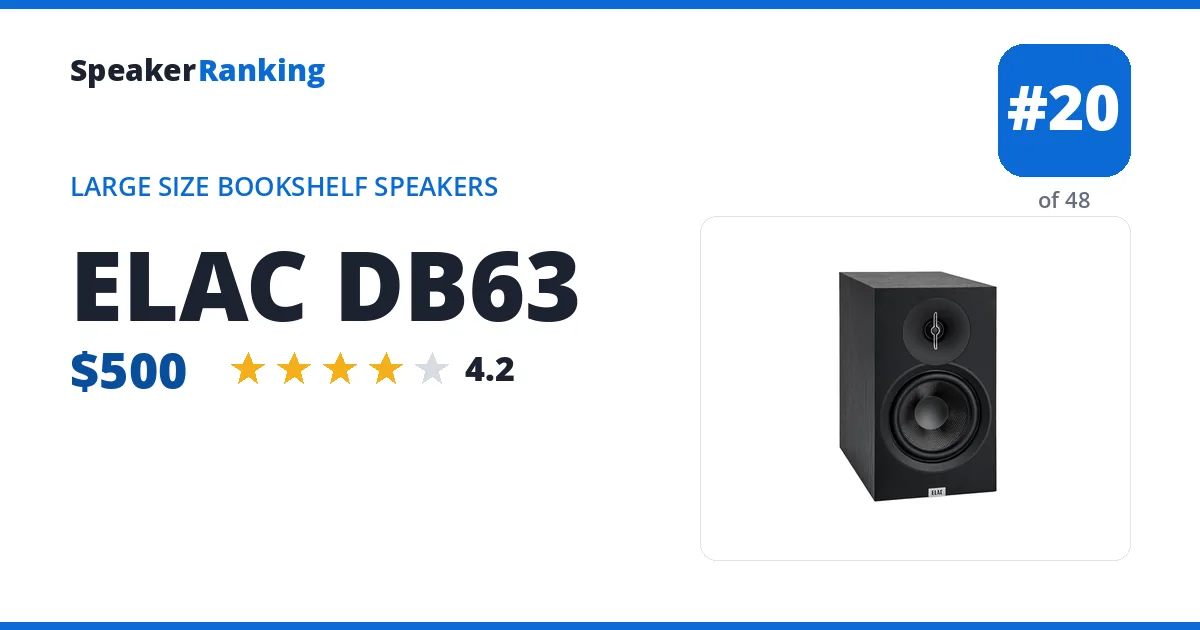
Pros: 1” aluminum dome tweeter with a distinctive partial-lens waveguide design paired with a 6.5” third-generation aramid fiber cone woofer, in a robustly built cabinet for the price. Shallow bass rolloff (F3 76Hz, F10 40Hz) allows placement close to a wall without excessive boominess, useful for smaller living rooms. Solid measured performance for the price: on-axis linearity within about 2.5dB, impedance dipping only to about 4.4 ohms (easily AVR-driven), and roughly 20-26dB of usable dynamic range. A clear improvement over its sibling ELAC DB62, which has a sibilance issue tied to the crossover that can’t be fixed with EQ. Wide horizontal radiation of about ±60°, giving a spacious soundstage. Distortion looks good at a moderate 86dB and still reasonable at 96dB. Takes well to EQ correction - the reviewer provides a specific filter set (a low-shelf boost at 650Hz plus peaking cuts/boosts at 550Hz, 660Hz, and 3kHz) that meaningfully smooths out its known deviations. Measured bass extension of 76Hz (-3dB), with a measured sensitivity of 86.2dB.
Cons: A dip in the lower midrange (300-600Hz, about 1.5dB) reduces vocal warmth and can make voices sound slightly hollow. A high-Q resonance around 650-750Hz shows up clearly in measurements, though the reviewer couldn’t reliably hear it in his own A/B testing. A dip around 2-3kHz (roughly 1-2dB) slightly reduces speech intelligibility and attack in the upper midrange. Directivity droops above about 2kHz as the midwoofer narrows toward its beaming frequency while the tweeter’s pattern behaves differently - an inherent trade-off of physically separated drivers that can’t be fully corrected without introducing other issues. Multitone distortion crosses the reviewer’s 3% threshold in the 200Hz-1kHz range, and adding a subwoofer at an 80Hz crossover only modestly reduces it. Toeing the speaker away from the listener loses noticeable top-end air and cymbal energy, giving a softer upper register. Practical loudness ceiling is around 90dB at typical listening distance before midrange distortion and bass attack begin to degrade. Still needs a subwoofer for extension below about 40Hz.
Full ELAC Debut 3.0 DB63 review and specifications →
| Bass Extension (-10dB) | 40Hz (measured, Erin's Audio Corner) |
|---|---|
| Bass Extension (-3dB) | 76Hz (measured, Erin's Audio Corner) |
| Dimensions | 13.3"H x 7.7"W x 11.7"D (337.8 x 195.6 x 297.2 mm) |
| Drivers | 6.5" Aramid Fiber woofer, 1" soft dome tweeter |
| Impedance | 6 ohms nominal (4.4 ohms minimum, measured, Erin's Audio Corner) |
| Sensitivity | 86.2dB (measured, Erin's Audio Corner) |
| Weight | 17.2 lbs (7.8 kg) each |
| Woofer Cabinet | ported, rear |
- Links
- Reviews, Comparisons and Sound Samples
- Head-to-Head Comparisons
- ELAC Debut 3.0 DB63 vs Emotiva Airmotiv XB2
- ELAC Debut 3.0 DB63 vs Arendal 1723 Bookshelf S THX
- ELAC Debut 3.0 DB63 vs Perlisten R5m
- ELAC Debut 3.0 DB63 vs Perlisten A3m
- ELAC Debut 3.0 DB63 vs JBL HDI-1600
- ELAC Debut 3.0 DB63 vs Ascend Acoustics Sierra-2EX V2
- ELAC Debut 3.0 DB63 vs Selah Audio Integrity
- ELAC Debut 3.0 DB63 vs Aalto Speakers Aalto 3 Passive
- See all 129 comparisons
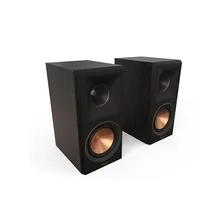 For a more efficient, livelier alternative, the Klipsch RP-500M II: $389.99 per pair Amazon eBay
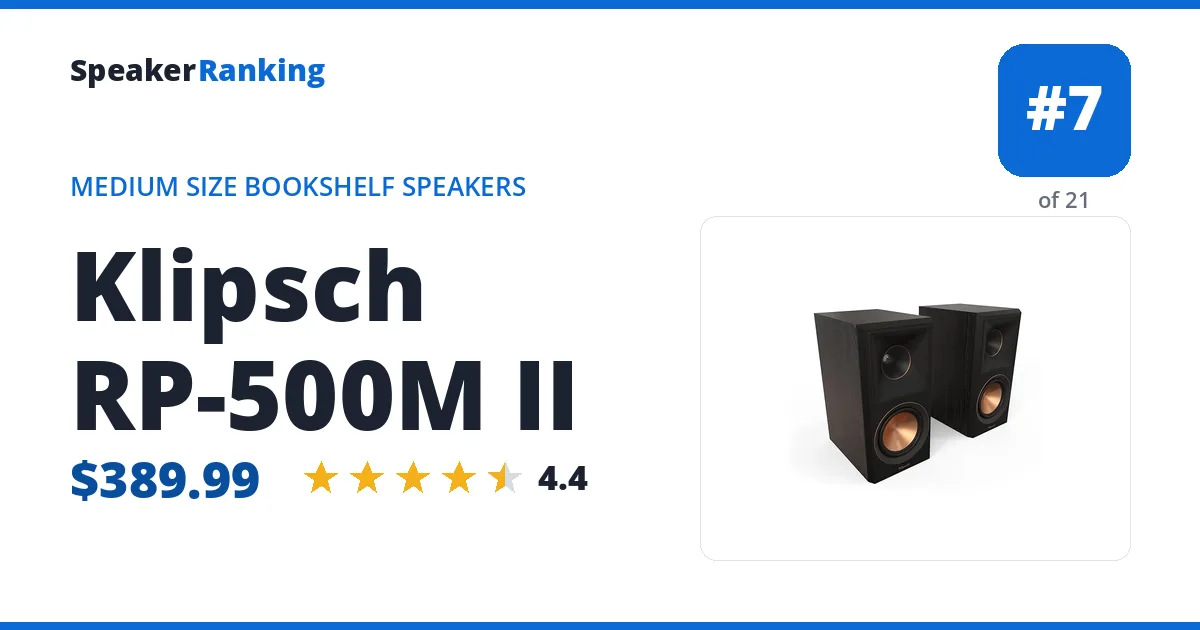
Pros: Major mid-range clarity improvement over the original RP-500M: about a 5dB fill-in between 1-3kHz in the estimated in-room response, giving a noticeably more resolved, detailed midrange. More neutral and linear overall than its sibling RP-600M II, which carries about 2-3dB more high-frequency energy and a touch more bass but less overall balance. Very precise soundstage imaging and instrument placement. Distortion through the midrange is cleaner than the previous generation. Measured bass extension of 67Hz (-3dB), with a measured sensitivity of 85dB.
Cons: Klipsch’s quoted sensitivity (around 92-93dB) uses an unconventional in-room-based rating rather than the standard anechoic measurement; on an anechoic basis it measures closer to about 85dB, in line with typical bookshelf speakers this size, so it isn’t the outlier in efficiency the spec sheet implies. Horizontal dispersion of about ±40-50° is narrower and more directive than the reviewer’s preference for a wider, more enveloping soundstage. Toeing the speaker out to widen the soundstage or soften on-axis brightness comes at some cost to imaging precision. Slightly less clean in the tweeter region than the midrange, likely tied to crossover placement, though not considered a dealbreaker. Low-frequency output is limited - measured around 95dB at 4 meters for the pair before the woofers started to unload, so a subwoofer is recommended for anyone wanting real bass rather than stepping up to a larger model.
Full Klipsch RP-500M II review and specifications →
| Bass Extension (-10dB) | 53Hz (measured, Erin's Audio Corner) |
|---|---|
| Bass Extension (-3dB) | 67Hz (measured, Erin's Audio Corner) |
| Crossover Frequency | 1530Hz |
| Dimensions | 13.6"H x 6.8"W x 10.6"D (344.4 x 173 x 270.5 mm) |
| Drivers | 5.25" Cerametallic™ cone woofer with Faraday rings, 1" LTS Titanium diaphragm tweeter with Hybrid Cross-Section Expanded Tractrix® horn |
| Impedance | 8 ohms nominal, 3.3 ohms minimum (measured, Erin's Audio Corner) |
| Sensitivity | 85dB (measured, Erin's Audio Corner) |
| Spinorama Preference Score | 4.35 |
| Spinorama Preference Score with Perfect Sub | 6.96 |
| Weight | 13 lbs (5.9 kg) each |
| Woofer Cabinet | ported, rear |
- Links
- Reviews, Comparisons and Sound Samples
- Head-to-Head Comparisons
- Klipsch RP-500M II vs Wharfedale Super Denton
- Klipsch RP-500M II vs Wharfedale Diamond 12.1
- Klipsch RP-500M II vs Monitor Audio Silver 50 7G
- Klipsch RP-500M II vs Radiant Acoustics Clarity 4.2
- Klipsch RP-500M II vs Revel M105
- Klipsch RP-500M II vs Moondrop M4P MTM
- Klipsch RP-500M II vs KEF Q150
- Klipsch RP-500M II vs Arendal 1961 Monitor
- See all 39 comparisons
For a modified design that punches far above its price, the HiVi Swans 3.1A Sehlin Sound Solutions mod: $364.99 per pair for the kit (assembly required) Amazon eBay
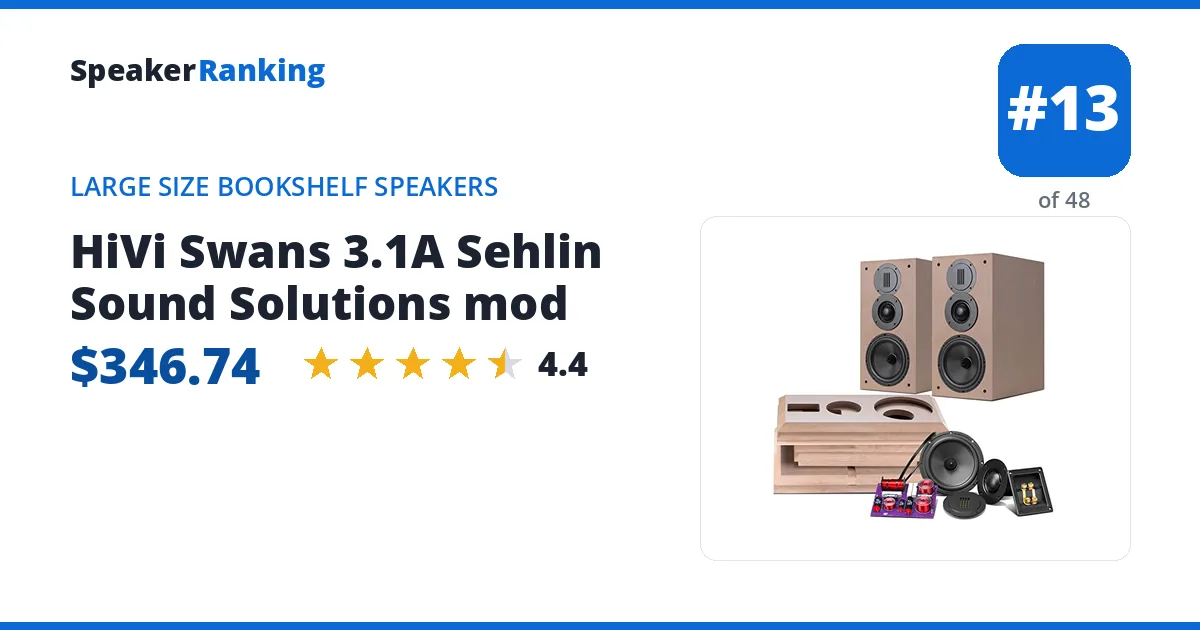
Pros: CEA2034 spinorama shows a mostly smooth on-axis response for a DIY three-way kit. Horizontal beamwidth of about ±70 degrees is wide and consistent. Distortion stays under control down to 40Hz at 96dB SPL/1m, a strong result for a 6.5” woofer in this class. Measured bass extension of 60Hz (-3dB), with a measured sensitivity of 86.5dB.
Cons: Some directivity error appears around 2.1kHz on-axis. Predicted in-room response needs about 1-2dB of correction to fit an ideal target curve. Vertical directivity is just okay, so listening height matters more than with a coincident design. Minimum impedance dips to 3.8 ohms with several peaks, a moderately demanding load. Requires DIY assembly (kit only), with additional Sehlin-mod parts and labor beyond the base kit price.
Full HiVi Swans 3.1A Sehlin Sound Solutions mod review and specifications →
| Bass Extension (-10dB) | 38Hz (measured, Audio Science Review) |
|---|---|
| Bass Extension (-3dB) | 60Hz (measured, Audio Science Review) |
| Dimensions | 16.5"H x 8.5"W x 13"D (420.0 x 215.0 x 330.0 mm) |
| Drivers | 6.5" Kevlar woofer, 2" Dome midrange, 1" Soft Dome tweeter |
| Impedance | 4 ohms nominal, 3.8 ohms minimum (measured, Audio Science Review) |
| Sensitivity | 86.5dB (measured, Audio Science Review) |
| Spinorama Preference Score | 5.8 (derived from ASR thread measurement data) |
| Spinorama Preference Score with Perfect Sub | 7.6 (derived from ASR thread measurement data) |
| Weight | 13.7 lbs (6.2 kg) |
| Woofer Cabinet | ported, rear |
- Links
- Reviews, Comparisons and Sound Samples
- Head-to-Head Comparisons
- HiVi Swans 3.1A Sehlin Sound Solutions mod vs Klipsch RP-600M II
- HiVi Swans 3.1A Sehlin Sound Solutions mod vs ELAC Debut 3.0 DB63
- HiVi Swans 3.1A Sehlin Sound Solutions mod vs GR-Research X-LS Encore
- HiVi Swans 3.1A Sehlin Sound Solutions mod vs ELAC Debut 2.0 B6.2
- HiVi Swans 3.1A Sehlin Sound Solutions mod vs Polk Monitor XT20
- HiVi Swans 3.1A Sehlin Sound Solutions mod vs MoFi SourcePoint 10
- HiVi Swans 3.1A Sehlin Sound Solutions mod vs KEF Q Concerto Meta
- HiVi Swans 3.1A Sehlin Sound Solutions mod vs KEF R3 Meta
- See all 11 comparisons
 The best passive bookshelf speakers for measured neutrality at a lower price are the ELAC Debut 2.0 B6.2: $329.00 per pair Amazon Crutchfield eBay
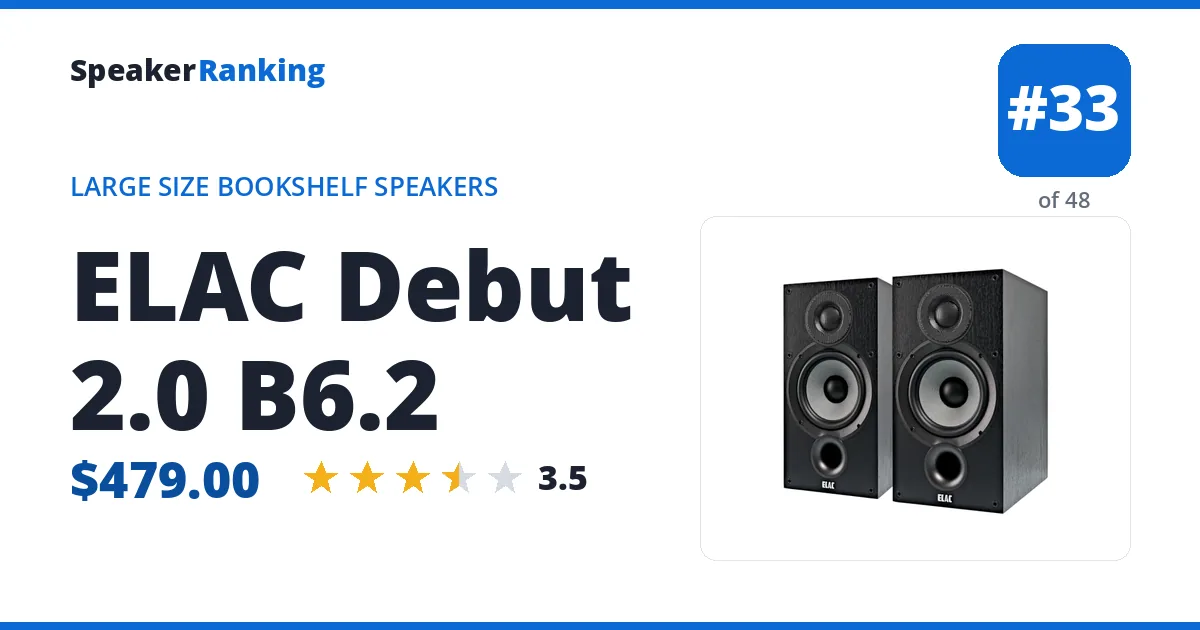
Pros: Reasonably flat on-axis and listening-window response with reasonably even horizontal directivity, holding about ±60° up to roughly 8kHz for consistent stereo width whether aimed directly at the listener or toed out. Its larger-than-typical woofer lets it play very loud with minimal distortion, staying under about 1% THD down to 50Hz at 86dB, and minimum impedance stays a comfortable 5-6 ohms. In-room bass extension reaches about 50Hz without much trouble, enough for a solid kick-drum sound. Takes equalization very well - correcting the on-axis response doesn’t cost sensitivity through the midrange, and the underlying directivity behavior (diffraction, vertical mismatch) is mild enough that EQ alone gets most of the way to a well-balanced sound. Vertical tolerance is asymmetric and fairly forgiving: about 10° above the tweeter axis and 20° below it before tonal balance meaningfully shifts. One reviewer called it “a good speaker” with “a good price” rather than just good-for-the-price, and found it fairly neutral overall in-room. Measured bass extension of 64Hz (-3dB), with a measured sensitivity of 86.5dB.
Cons: A good size resonant peak around 700Hz stands out from an otherwise smooth response and lingers in cumulative spectral decay (waterfall) measurements - in one reviewer’s sighted A/B test, reducing it by about 5dB via EQ made a noticeable but not dramatic difference. Directivity error shows up around 3.3kHz, and the upper-midrange around 4-6kHz stood out as edgy and sharp, almost sibilant at times, in casual listening - the predicted in-room response shows a lack of energy between 1-2kHz and a bit too much above that, which one reviewer thought would sound bright. Distortion at 96dB SPL/1m shows two harmonic peaks the reviewer says “should not be there,” one from woofer breakup around 400Hz and another around 7-8kHz from the tweeter, and multitone distortion approaches 10% in the 500-800Hz range at that output level. Real compression shows up even at moderate volume and worsens at 96dB and above, with the woofer clearly giving up around 60-70Hz - a subwoofer is recommended for anyone wanting to listen loud, since running it full-range at high output costs real dynamic range in the midbass and bass. Don’t place it close to a wall - boundary reinforcement adds a midbass bump that undoes the otherwise smooth, linear response. Getting the best out of it takes EQ (taming the 700Hz peak, filling in the 1-2kHz dip, and trimming the highs).
Full ELAC Debut 2.0 B6.2 review and specifications →
| Bass Extension (-10dB) | 40Hz (measured, Erin's Audio Corner) |
|---|---|
| Bass Extension (-3dB) | 64Hz (measured, Erin's Audio Corner) |
| Dimensions | 14.8"H x 7.7"W x 10.6"D (375.0 x 195.0 x 268.0 mm) |
| Drivers | 25mm tweeter + 165mm woofer |
| Impedance | 6 ohms nominal, 5.2 ohms minimum (measured, Erin's Audio Corner) |
| Sensitivity | 86.5dB (measured, Audio Science Review) |
| Spinorama Preference Score | 4.75 (spinorama.org) |
| Spinorama Preference Score with Perfect Sub | 7.0 (spinorama.org) |
| Weight | 29.1 lbs (13.2 kg) |
| Woofer Cabinet | ported, front |
- Links
- Reviews, Comparisons and Sound Samples
- Head-to-Head Comparisons
- ELAC Debut 2.0 B6.2 vs SVS Prime Bookshelf
- ELAC Debut 2.0 B6.2 vs Dynaudio Special Forty
- ELAC Debut 2.0 B6.2 vs KEF Q3 Meta
- ELAC Debut 2.0 B6.2 vs Polk Monitor XT20
- ELAC Debut 2.0 B6.2 vs Infinity IL10
- ELAC Debut 2.0 B6.2 vs GR-Research X-LS Encore
- ELAC Debut 2.0 B6.2 vs Sonus Faber Lumina II
- ELAC Debut 2.0 B6.2 vs XTZ Spirit 4
- See all 60 comparisons
Best Under $300
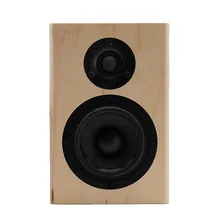 The best value pick under $300 that is still sold new, the Carmody S2000: $250 per pair eBay
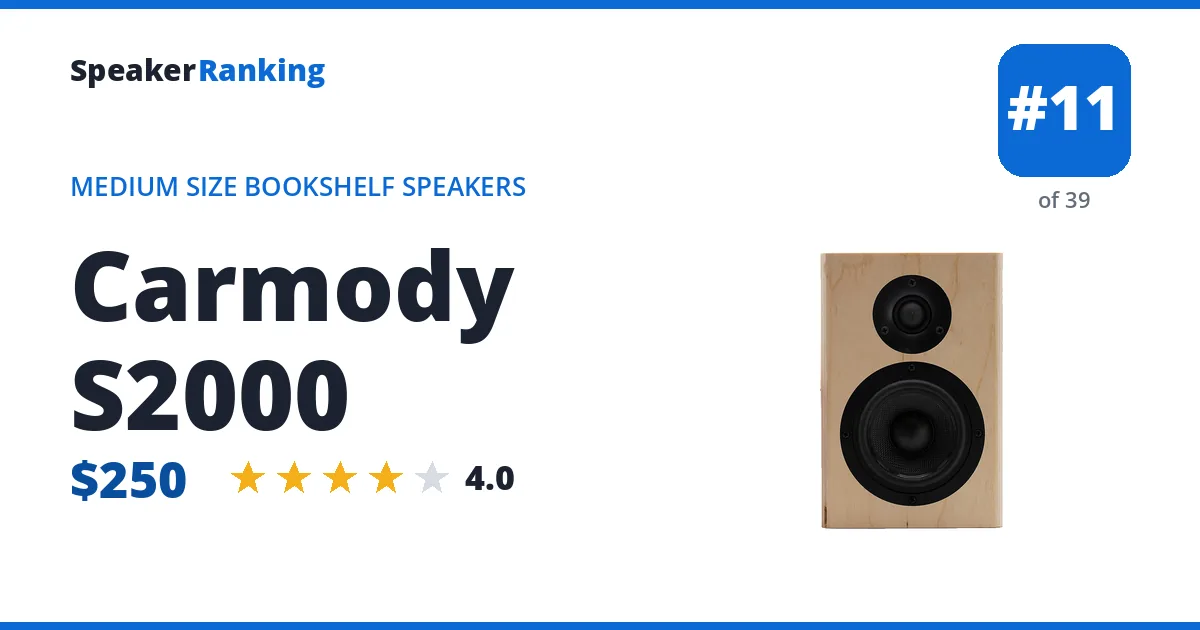
Pros: CEA2034 spinorama shows good response between 100Hz and 3kHz with low room dependency thanks to smooth early-window reflections, plus reasonably wide horizontal beamwidth and directivity. A DIY kit built around a small woofer and tweeter with a 3kHz crossover, priced around $250 per pair before assembly labor. Measured bass extension of 85Hz (-3dB), with a measured sensitivity of 84dB.
Cons: Energy falls off above 3kHz with a resonance around 11kHz, and directivity errors show up around the 4-5kHz crossover region. Low 84dB efficiency and an impedance that dips below 4 ohms both call for a capable amplifier. Vertical listening angle is sensitive - move off axis and you fall into a response “ditch” that loses energy.
Full Carmody S2000 review and specifications →
| Bass Extension (-10dB) | 62Hz (measured, Audio Science Review) |
|---|---|
| Bass Extension (-3dB) | 85Hz (measured, Audio Science Review) |
| Dimensions | 6" x 15" x 9" (152 x 381 x 229 mm) |
| Drivers | small woofer + tweeter, 3kHz crossover (DIY kit) |
| Frequency Response | 50Hz - 20kHz (+/-5.9dB); 80Hz - 20kHz (+/-4.1dB) (measured, Audio Science Review) |
| Impedance | below 4 ohms minimum |
| Sensitivity | 84dB (measured, Audio Science Review) |
| Spinorama Preference Score | 4.42 (spinorama.org) |
| Spinorama Preference Score with Perfect Sub | 6.89 (spinorama.org) |
| Weight | 11 lbs (5.0 kg) |
| Woofer Cabinet | Baltic Birch plywood |
- Reviews, Comparisons and Sound Samples
- Head-to-Head Comparisons
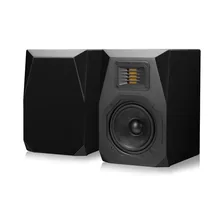 The Emotiva B1+: $250 per pair Discontinued eBay
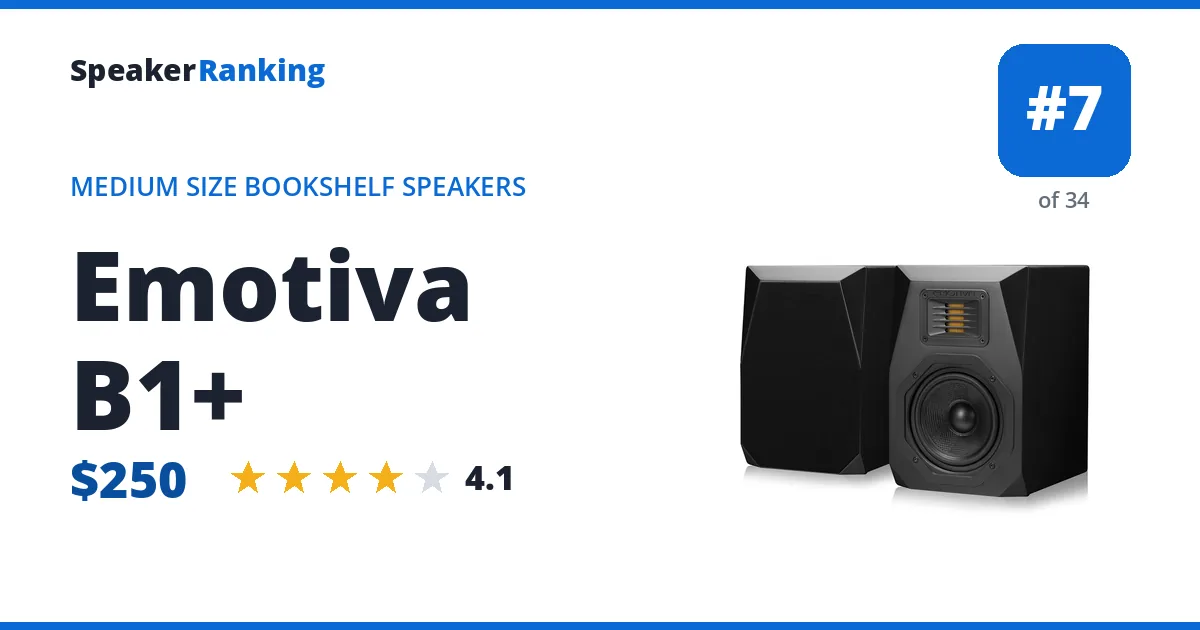
Pros: Emotiva B1+ uses 5.25” woven fiber cone with SBR surround woofer, 25x32 mm Airmotiv folded ribbon tweeter in a conventional wired-speaker design. Its form factor and driver layout make it a sensible match for a properly chosen amplifier and room. Measured bass extension of 70Hz (-3dB), with a measured sensitivity of 85dB.
Cons: It needs an external amplifier and thoughtful placement. Speaker performance will depend heavily on the partnering electronics and room acoustics. Discontinued.
Full Emotiva B1+ review and specifications →
| Bass Extension (-10dB) | 49Hz (measured, Erin's Audio Corner) |
|---|---|
| Bass Extension (-3dB) | 70Hz (measured, Erin's Audio Corner) |
| Dimensions | 10.8"H x 7.1"W x 8.3"D (274 x 181 x 210 mm) |
| Discontinued | Yes |
| Drivers | 5.25" woven fiber cone with SBR surround woofer, 25x32 mm Airmotiv folded ribbon tweeter |
| Impedance | 8 ohms |
| Sensitivity | 85dB (measured, Erin's Audio Corner) |
| Spinorama Preference Score | 5.34 (spinorama.org) |
| Spinorama Preference Score with Perfect Sub | 7.86 (spinorama.org) |
| Weight | 8.8 lbs (4.0 kg) each |
| Woofer Cabinet | ported, rear |
- Reviews, Comparisons and Sound Samples
- Head-to-Head Comparisons
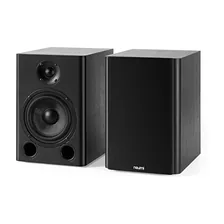 The best ultra-budget passive speaker, with a larger woofer and stronger measured score than most sub-$200 rivals, is the Neumi BS5: $110 per pair Amazon eBay
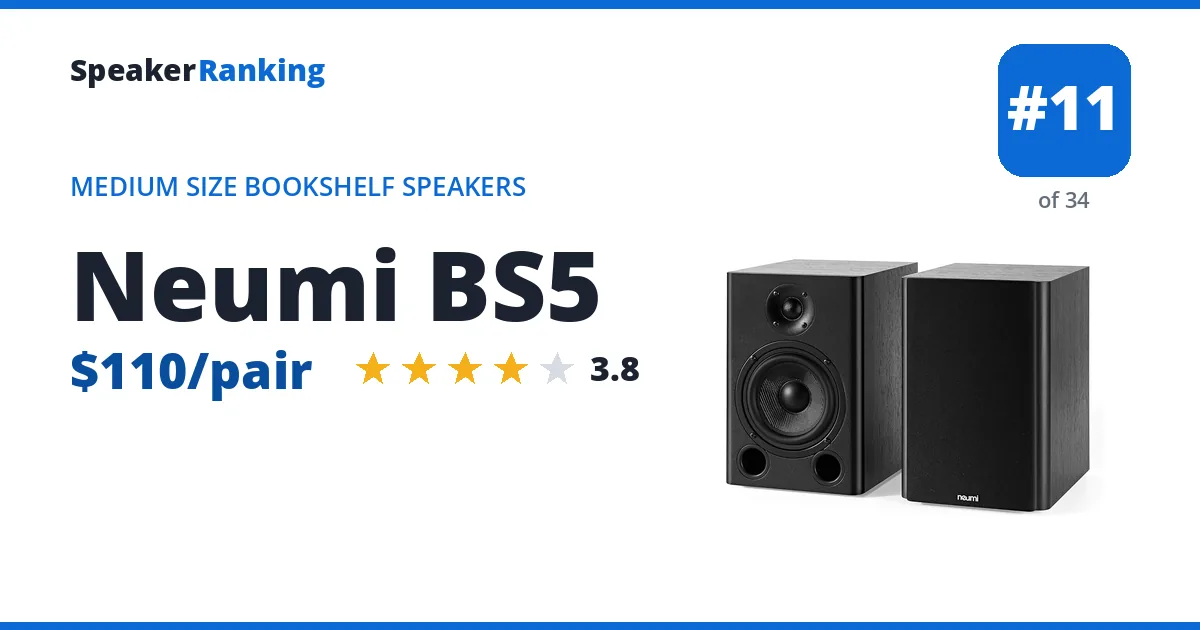
Pros: Exceptional budget value: Erin measured approximately +/-1.5dB on-axis linearity through most of the mid/treble, 84dB/2.83V/1m sensitivity and a manageable 4.6-ohm minimum. The 5-inch fiberglass woofer and 1-inch silk dome provide good horizontal directivity for the price; a mild upper-bass rise adds punch, and ordinary modern AVRs can generally drive the mostly six-ohm load at sensible levels. Measured bass extension of 64Hz (-3dB), with a measured sensitivity of 84dB.
Cons: Erin measured F3 at 64Hz, so kick-drum punch should not be mistaken for deep-bass extension. Output around 90dB began to reveal distortion and compression, limiting farfield/high-volume use. A narrow dip near 800Hz, port/cabinet resonances and imperfect crossover directivity remain visible; the tweeter itself is approximately four ohms even though the system is sold as nominal six ohms. A subwoofer is strongly preferred.
Full Neumi BS5 review and specifications →
| Bass Extension (-10dB) | 41.0Hz (measured, Erin's Audio Corner) |
|---|---|
| Bass Extension (-3dB) | 64Hz (measured, Erin's Audio Corner) |
| Dimensions | 10.6"H x 7.2"W x 8.5"D (269.2 x 182.9 x 215.9 mm) |
| Drivers | 1" silk-dome tweeter; 5" fiberglass woofer |
| Impedance | 4.6 ohms minimum; approximately 6 ohms nominal (measured, Erin's Audio Corner) |
| Sensitivity | Approximately 84dB/2.83V/1m (measured, Erin's Audio Corner) |
| Spinorama Preference Score | 2.70 |
| Spinorama Preference Score with Perfect Sub | 5.22 |
| Weight | 7.1 lbs (3.2 kg) each |
| Woofer Cabinet | ported, front |
- Links
- Reviews, Comparisons and Sound Samples
- Head-to-Head Comparisons
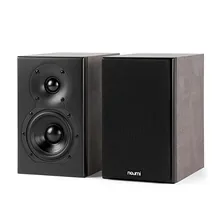 For a smaller cabinet and an easier electrical load, the Neumi Silk 4: $199.99 per pair Amazon eBay
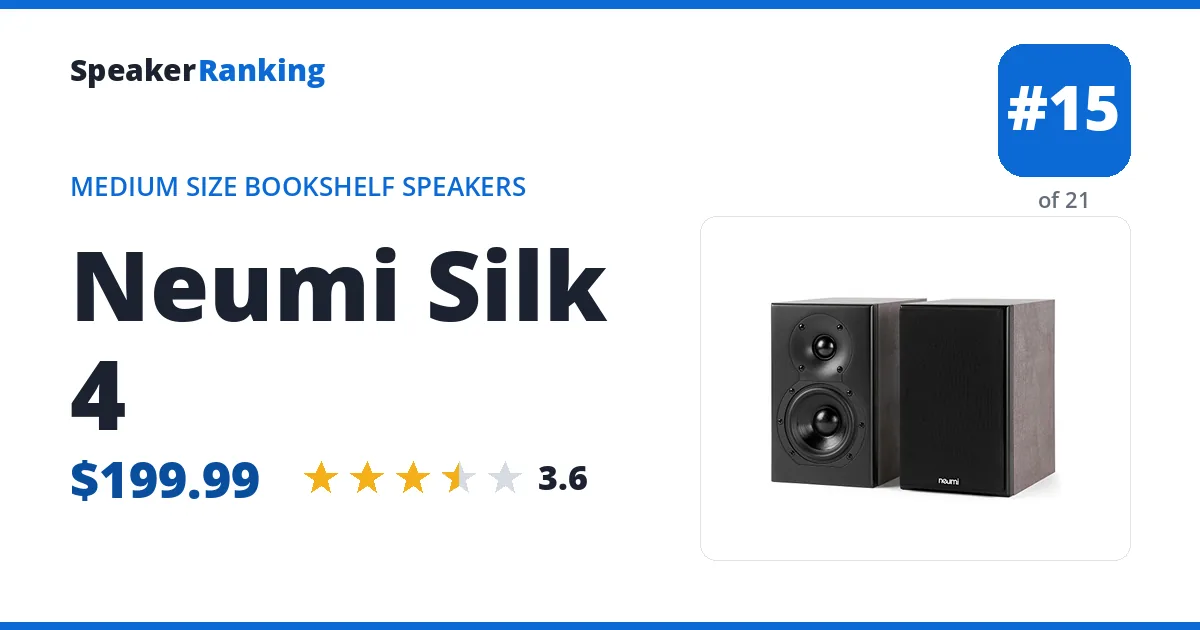
Pros: A 4” midwoofer paired with a 1” dome tweeter and waveguide, with a second-order crossover, achieving an impressively high preference score of 4.4 for the price. Distortion stays below 1% up to about 120Hz and below 3% above roughly 50-60Hz at 86dB. High-frequency compression is surprisingly good - better than some speakers costing 2-3x as much - and at 96dB/1m for a pair, output still reaches about 93dB at 3 meters, plenty loud for most listeners. F3 of 83Hz and F10 of 55Hz with in-room extension to about 70Hz. Takes very well to EQ correction, and the reviewer provides a specific fix (a notch around 650Hz, Q of about 6) that cleans up its main resonance. Measured bass extension of 83Hz (-3dB), with a measured sensitivity of 82.6dB.
Cons: Very low sensitivity (measured 82.6dB), meaning it isn’t suited for large rooms, far-field listening, or high volume. A resonance around 650Hz (likely port- or cabinet-related) creates an audible 1-2dB midrange thickness/boxiness on certain tracks, tied to a probable baffle-step compensation shortfall - about 1dB more energy in the midrange from the factory would likely have resolved it. Multitone distortion becomes audible around the same 600Hz-1kHz region at 96dB. Horizontal radiation narrows to about ±50° with the waveguide, on the narrower side of what the reviewer prefers. A diffraction-related dip around 5kHz at 5° below the tweeter axis creates a small hole in the response if placed on a desk below ear level. Nominal impedance of about 6 ohms with a low sensitivity means it benefits from a subwoofer pairing (the reviewer suggests an 80Hz crossover) for a complete small-room or surround setup.
Full Neumi Silk 4 review and specifications →
| Bass Extension (-10dB) | 55Hz (measured, Erin's Audio Corner) |
|---|---|
| Bass Extension (-3dB) | 83Hz (measured, Erin's Audio Corner) |
| Dimensions | 8.9"H x 5.5"W x 8.2"D (226.1 x 139.7 x 208.3 mm) |
| Drivers | 4" treated paper cone, rubber surround, cast aluminum basket, vented pole woofer, 1" silk dome, dispersion-optimized waveguide, neodymium magnet tweeter |
| Impedance | 6 ohms nominal, 5.7 ohms minimum (measured, Erin's Audio Corner) |
| Sensitivity | 82.6dB (measured, Erin's Audio Corner) |
| Spinorama Preference Score | 3.55 |
| Spinorama Preference Score with Perfect Sub | 6.21 |
| Weight | 6.2 lbs (2.8 kg) each |
| Woofer Cabinet | ported, rear |
- Links
- Reviews, Comparisons and Sound Samples
- Head-to-Head Comparisons
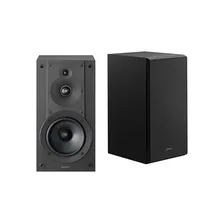 For a well-regarded budget option with a bigger woofer, the Sony SS-CS5 M2: $278.00 per pair Amazon eBay
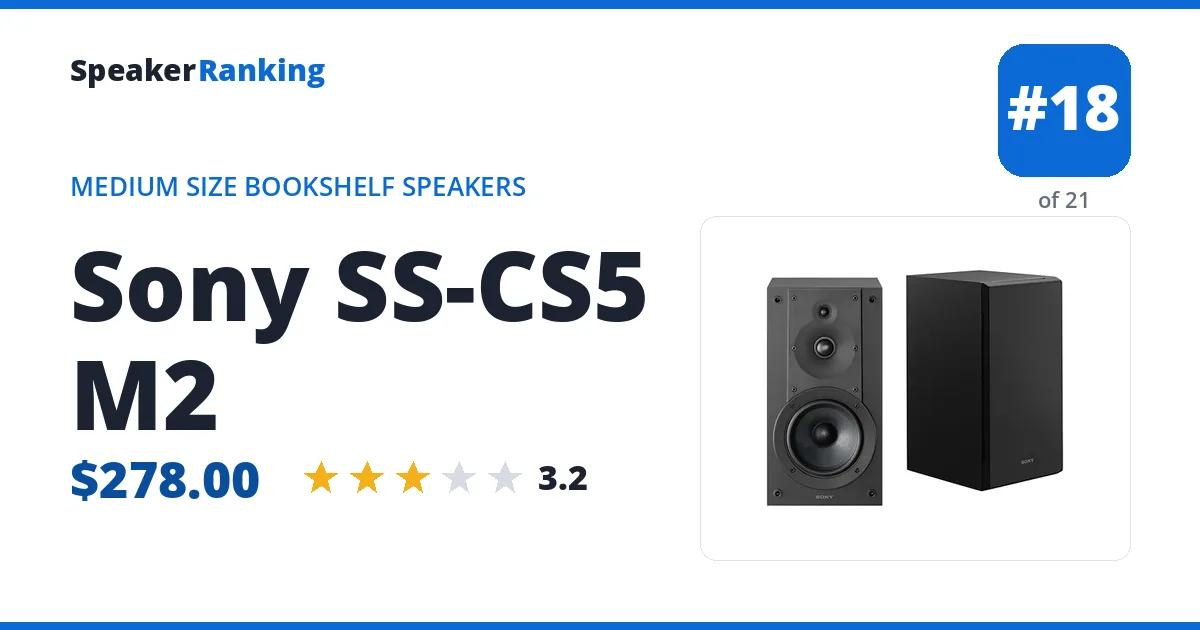
Pros: Added internal bracing (corners, sides, front baffle) plus an updated crossover meaningfully reduce the resonance issues that plagued the original SS-CS5, giving a smoother, more neutral character overall. A modest mid-range dip (about 1-2dB) is present but tolerable, and the reviewer would rather have this dip than a peak in that region. Slightly deeper bass than the previous version, measuring about 2dB more output around 60Hz. Distortion drops noticeably when crossed to a subwoofer around 80-120Hz, meaningfully improving midrange clarity and detail versus running full-range. Easy to drive on a standard AVR - no need for a dedicated high-power amplifier. More modern, understated waveguide look compared to the previous version’s glossy trim. Measured bass extension of 80Hz (-3dB).
Cons: Mild sibilance in the 3-5kHz range stands out on S and T sounds in vocals. Some forwardness in the midrange noticeable on certain vocal recordings. Soundstage and sense of envelopment are comparatively flat and two-dimensional, especially next to reference-quality speakers with strong 3D imaging. Marketed as a “three-way” design mainly due to an added super-tweeter that the reviewer considers largely superfluous - it engages only at very high frequencies and adds complexity without a clearly audible benefit, when that cost might have been better spent on the main crossover. Output-limited: realistic ceiling is around the mid-90s dB SPL at a few meters, with comfortable listening closer to 75-85dB at 3-4 meters before distortion and compression become audible. Bass noticeably compresses/shelves below about 120Hz as volume increases, softening kick-drum impact at higher output. Smaller drivers and a lighter motor structure than rivals like the Polk XT20, which the reviewer generally prefers for its better directivity and higher SPL capability. Still needs a subwoofer for any real bass extension.
Full Sony SS-CS5 M2 review and specifications →
| Bass Extension (-10dB) | 54Hz (measured, Erin's Audio Corner) |
|---|---|
| Bass Extension (-3dB) | 80Hz (measured, Erin's Audio Corner) |
| Dimensions | 13.2"H x 7"W x 8.7"D (335 x 178 x 220 mm) |
| Drivers | 5.12" woofer, 0.98 in tweeter; 0.75-inch supertweeter; 0.75-inch supertweeter; 0.75-inch supertweeter; 0.75-inch supertweeter |
| Impedance | 6 ohms |
| Sensitivity | 82.5dB |
| Weight | 9.5 lbs (4.3 kg) each |
| Woofer Cabinet | ported, rear |
- Links
- Reviews, Comparisons and Sound Samples
- Head-to-Head Comparisons
Where To Go Next
Full rankings with specs and measurements: passive bookshelf medium and large, plus large floorstanding.
Related picks: best passive speakers for tube and low-power amps, the general top recommended passive speakers, and the passive speaker buyer’s guide. Don’t want to buy an amplifier? See best budget powered speakers.