Editor's top picks
Start with these speakers
Our leading recommendations at a glance. Each card links to its primary retailer.
 Other Powered Speakers With a Coaxial Digital Input
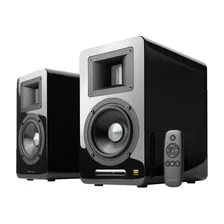
Airpulse A100
$999.99 per pair
See the full review →
Other Powered Speakers With a Coaxial Digital Input
Airpulse A100
$999.99 per pair
See the full review →
 Other Powered Speakers With a Coaxial Digital Input
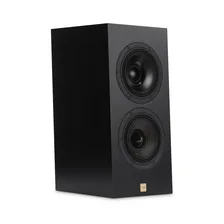
Sigberg Audio SBS Gen 2
$18,043.20 for the full system (2 speakers + 2 dedicated subwoofers, built to order)
See the full review →
Other Powered Speakers With a Coaxial Digital Input
Sigberg Audio SBS Gen 2
$18,043.20 for the full system (2 speakers + 2 dedicated subwoofers, built to order)
See the full review →
Looking for a powered speaker with a coaxial digital input? A coaxial input carries the same S/PDIF digital signal as an optical connection, over an RCA-style copper cable instead of fiber. Some equipment offers only one of the two, so it is worth confirming which output your TV, disc player or DAC actually has before buying. Every pick below has a verified coaxial digital input; the recommendations are ordered by measured sound quality, not by the connector alone.
Want every match, not just the top pick per category? See every powered speaker with a coaxial digital input →
Quick Navigation
- Best Overall
- Best All-In-One
- Best Value
- Other Powered Speakers With a Coaxial Digital Input
- What To Check Before Buying
- Where To Go Next
Prices on this page were last checked September 17, 2026 at 12:43 AM UTC. Product prices and availability are accurate as of that date/time and are subject to change; the price and availability shown on Amazon at the time of purchase will apply to the purchase of this product.
As an eBay Partner, we may be compensated if you make a purchase.
Best Overall
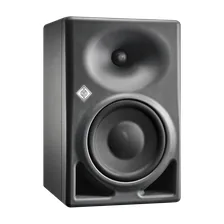 For a two-way reference monitor with a coaxial digital input and deep bass, the Neumann KH 150: $3,398 per pair B&H Photo Video eBay
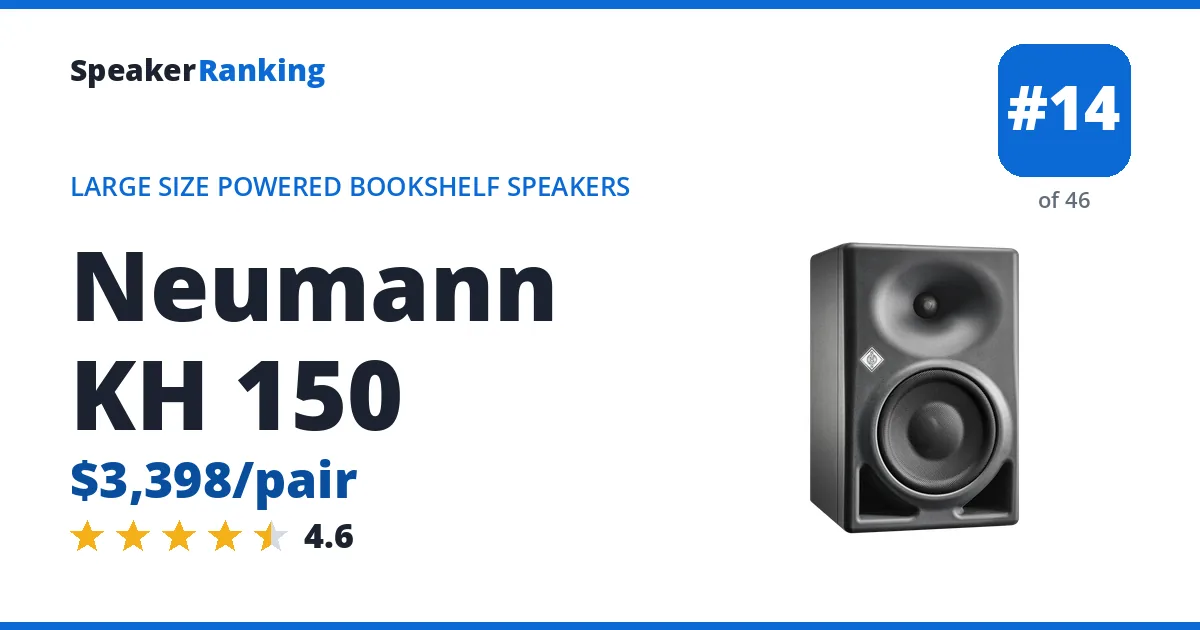
Pros: An exceptionally tight 1.0dB response span from 300Hz to 5kHz supports neutral vocals and instruments. The measured ideal-subwoofer score is 7.58, with -3dB bass extension to 39.6Hz. DSP and optional MA 1 alignment offer useful control over room-related response errors. Measured bass extension of 39.6Hz (-3dB).
Cons: A two-way nearfield monitor cannot match the largest three-way systems for deep-bass output at distance. Keep the tweeter near ear height to avoid crossover-related changes off the vertical axis. MA 1 calibration requires additional equipment, and studio connections are less convenient than a consumer streaming system.
Full Neumann KH 150 review and specifications →
| AES Input | No |
|---|---|
| Amplifier Power | 245W total (145W woofer, 100W tweeter, 10% THD+N) |
| Aux Input | No |
| Bass Extension (-10dB) | 34.2Hz (measured, Audio Science Review) |
| Bass Extension (-3dB) | 39.6Hz (measured, Audio Science Review) |
| Coaxial Input | Yes |
| Country | Germany |
| Crossover Frequency | 1.7kHz |
| Dimensions | 13.6"H x 8.9"W x 10.7"D (345 x 225 x 273 mm) |
| Drivers | 1" tweeter, 6.5" woofer |
| Enclosure | ported |
| Frequency Response | 39Hz-20.4kHz +/-3dB |
| HDMI Input | No |
| Inputs | XLR (balanced analog), RCA S/PDIF (digital) |
| Maximum SPL | 118.7dB @ 1m half space (manufacturer specified) |
| Optical Input | No |
| RCA Input | Yes |
| Spinorama Preference Score | 5.84 |
| Spinorama Preference Score with Perfect Sub | 7.58 |
| TRS Input | No |
| USB Input | No |
| Warranty | 2 years |
| Weight | 17.6 lbs (8.0 kg) each |
| XLR Input | Yes |
- Links
- Reviews, Comparisons and Sound Samples
- Head-to-Head Comparisons
An exceptionally tight 1.0dB response span from 300Hz to 5kHz supports neutral vocals and instruments, with an ideal-subwoofer preference score of 7.58 and -3dB bass extension to 39.6Hz. The RCA S/PDIF input accepts a coaxial digital source directly, alongside DSP and optional MA 1 alignment for matching a pair.
A two-way nearfield monitor cannot match the largest three-way systems for deep-bass output at distance, and keeping the tweeter near ear height matters for off-axis accuracy.
Best All-In-One
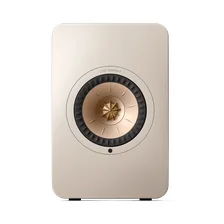 For a wireless all-in-one system with a coaxial digital input for a TV or DAC, the KEF LS50 Wireless II: $2,999.00 per pair Amazon KEF Crutchfield eBay
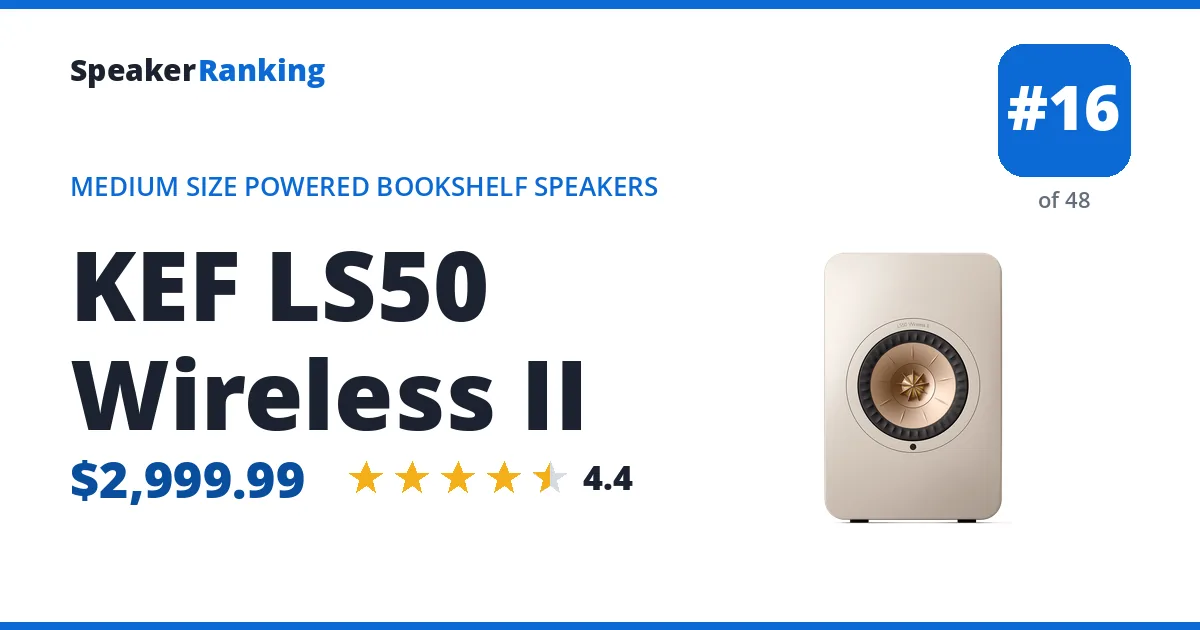
Pros: Erin’s measurements give preference scores of 4.52 standalone and 6.59 with an ideal subwoofer, with a -3dB point around 51Hz. The coincident Uni-Q layout helps preserve tonal consistency across horizontal and vertical listening positions. Low listening-window narrow-band deviation of 0.308 supports relatively clean midrange reproduction. HDMI eARC and streaming functions make it a capable all-in-one stereo system. Measured bass extension of 51.3Hz (-3dB).
Cons: The 3.0dB response span is good but not reference-leading, and dispersion still varies with frequency. Compact bass drivers limit deep-bass output. App placement adjustments are not the same as microphone-based automatic room correction. The price and primary/secondary architecture are practical trade-offs; neither driver geometry nor a single directivity statistic guarantees the best sound in every room.
Full KEF LS50 Wireless II review and specifications →
| AES Input | No |
|---|---|
| Amplifier Power | 280W (LF) + 100W (HF) per speaker, bi-amped |
| App | KEF Connect (placement EQ presets, source selection, firmware updates) |
| Aux Input | Yes |
| Bass Extension (-10dB) | 41.5Hz (measured, spinorama.org) |
| Bass Extension (-3dB) | 51.3Hz (measured, spinorama.org) |
| Bluetooth | Yes, 4.2 |
| Coaxial Input | Yes |
| Dimensions | 12" x 7.9" x 12.2" (305 x 200 x 311 mm) each |
| Drivers | Uni-Q coincident array: 130mm aluminum woofer + 25mm MAT aluminum dome tweeter |
| EQ | Yes, fixed placement presets (desk/bookshelf/wall-mount) - no automatic room correction |
| Frequency Response | 45Hz - 28kHz ±3dB |
| HDMI Input | Yes |
| Inputs | HDMI eARC, optical, digital coaxial, 3.5mm analog, USB-A (service), Ethernet |
| Maximum SPL | 108dB at 1m (manufacturer specified) |
| Optical Input | Yes |
| Outputs | RCA subwoofer |
| RCA Input | No |
| Spinorama Preference Score | 4.52 |
| Spinorama Preference Score with Perfect Sub | 6.59 |
| Subwoofer Output | Yes |
| TRS Input | No |
| USB Input | No |
| Weight | 44.3 lbs (20.1 kg) for the pair |
| XLR Input | No |
- Links
- Reviews, Comparisons and Sound Samples
- Head-to-Head Comparisons
- KEF LS50 Wireless II vs JBL 305P MKII
- KEF LS50 Wireless II vs Vanatoo Transparent One Encore Plus
- KEF LS50 Wireless II vs IK Multimedia iLoud MTM MKII
- KEF LS50 Wireless II vs Klipsch The Fives
- KEF LS50 Wireless II vs Genelec 8020D
- KEF LS50 Wireless II vs Kali Audio SM-5
- KEF LS50 Wireless II vs Devialet Phantom II 98 dB
- KEF LS50 Wireless II vs Kali Audio IN-5
- See all 44 comparisons
Erin’s measurements give preference scores of 4.52 standalone and 6.59 with an ideal subwoofer, and the coincident Uni-Q driver layout helps preserve tonal consistency across listening positions, useful in a living room where seats aren’t all on axis. The coaxial input covers a TV or outboard DAC without a separate amplifier.
The 3.0dB response span is good but not reference-leading, and the compact bass drivers limit deep-bass output; app-based placement adjustments are not the same as a full microphone-based room correction system.
Best Value
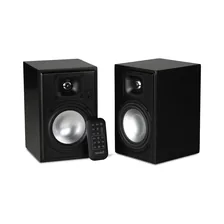 For an affordable standalone system with a coaxial digital input, the Vanatoo Transparent One Encore Plus: $699.99 per pair Amazon eBay
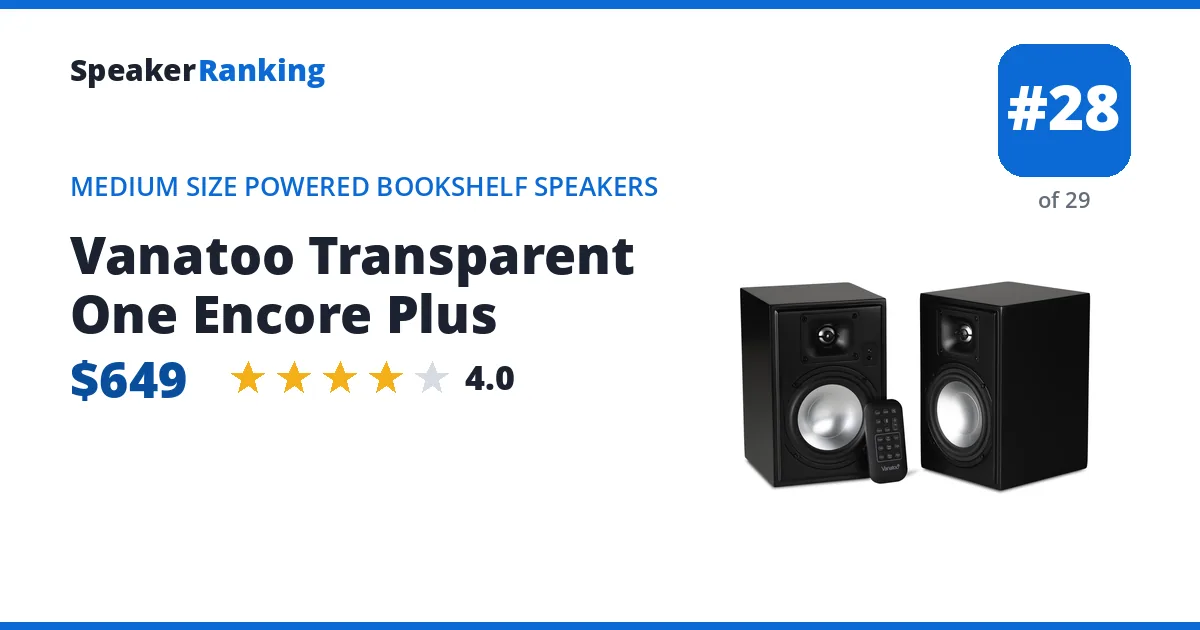
Pros: Erin’s Klippel data combines a small 1.7dB midrange response span with a -3dB point around 44Hz. Scores of 4.68 standalone and 6.49 with an ideal subwoofer make it an attractive standalone system as well as a subwoofer partner. Remote tone controls, multiple digital and analog inputs, and automatic subwoofer crossover engagement simplify setup. Measured bass extension of 42Hz (-3dB).
Cons: A mild 4-6kHz edge and a smaller 1-2kHz recession were audible in the review, so its smooth midrange summary does not mean there is nothing to improve with EQ. No HDMI ARC. Deep bass and louder playback still benefit from a subwoofer; amplifier wattage alone does not establish clean room-filling output.
Full Vanatoo Transparent One Encore Plus review and specifications →
| AES Input | No |
|---|---|
| Amplifier Power | 240W total (100W + 20W Class D amplifiers per enclosure) |
| Aux Input | No |
| Bass Extension (-10dB) | 34Hz (measured, Erin's Audio Corner) |
| Bass Extension (-3dB) | 42Hz (measured, Erin's Audio Corner) |
| Bluetooth Codecs | SBC, AAC, aptX, aptX HD |
| Coaxial Input | Yes |
| Dimensions | 10" x 6.5" x 8" (254 x 165 x 203 mm) |
| Drivers | 5.25" aluminum-cone woofer with XBL motor, 5.25" passive radiator (rear), 1" aluminum dome tweeter with waveguide and phase plug |
| Frequency Response | 48Hz - 20kHz ±3dB (manufacturer specified, Flat mode) |
| HDMI Input | No |
| Inputs | USB, Optical, Coax, Analog, Bluetooth |
| Optical Input | Yes |
| Outputs | RCA subwoofer |
| RCA Input | No |
| Spinorama Preference Score | 4.68 |
| Spinorama Preference Score with Perfect Sub | 6.49 |
| Subwoofer Output | Yes |
| TRS Input | No |
| USB Input | Yes |
| Weight | 10.8 lbs (4.9 kg) (passive unit), 12.1 lbs (5.5 kg) (active unit) |
| XLR Input | No |
- Links
- Reviews, Comparisons and Sound Samples
- Head-to-Head Comparisons
- Vanatoo Transparent One Encore Plus vs IK Multimedia iLoud MTM MKII
- Vanatoo Transparent One Encore Plus vs KEF LS50 Wireless II
- Vanatoo Transparent One Encore Plus vs JBL 305P MKII
- Vanatoo Transparent One Encore Plus vs Klipsch The Fives
- Vanatoo Transparent One Encore Plus vs Genelec 8020D
- Vanatoo Transparent One Encore Plus vs Kali Audio SM-5
- Vanatoo Transparent One Encore Plus vs Kali Audio IN-5
- Vanatoo Transparent One Encore Plus vs Topping MA4
- See all 51 comparisons
Erin’s Klippel data combines a small 1.7dB midrange response span with a -3dB point around 44Hz, and scores of 4.68 standalone and 6.49 with an ideal subwoofer make it a credible standalone system rather than just a computer-speaker upgrade.
A mild 4-6kHz edge and a smaller 1-2kHz recession were audible in the review, so the smooth midrange summary doesn’t mean there’s nothing left to improve with EQ. It has no HDMI ARC, only the coaxial and other analog/digital inputs.
Other Powered Speakers With a Coaxial Digital Input
The Airpulse A100: $999.99 per pair Amazon B&H Photo Video eBay
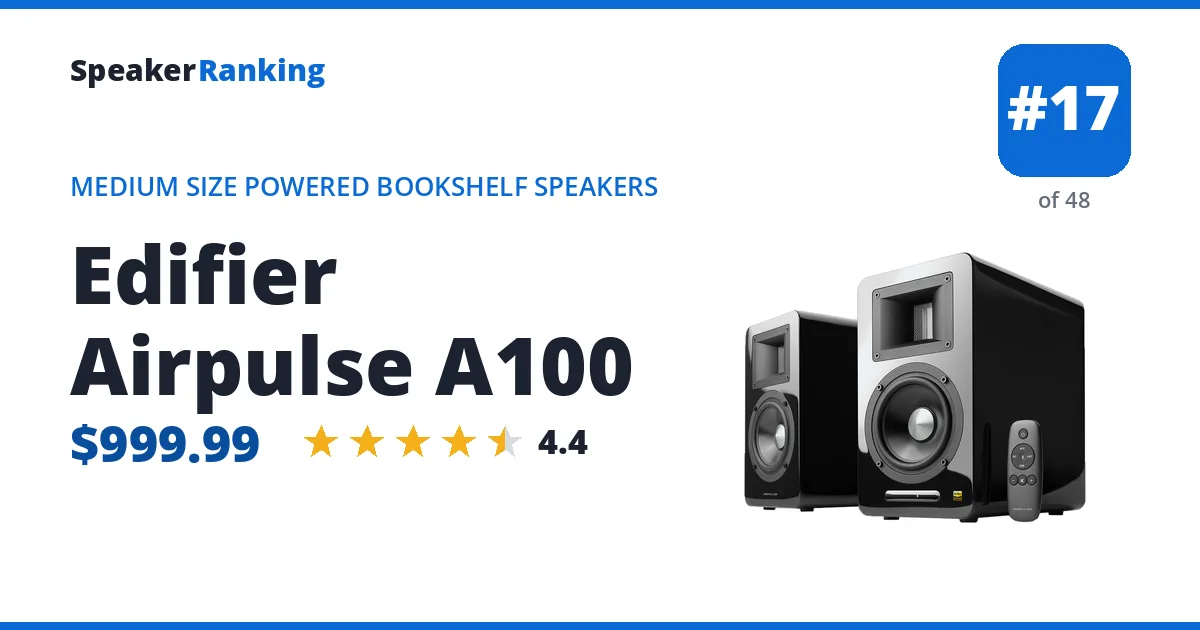
Pros: ASR’s Klippel data gives a 2.9dB midrange span and scores of 3.66 standalone and 6.18 with an ideal subwoofer. The ribbon tweeter and five-inch woofer provide a distinctive compact powered system, with remote control and a subwoofer output simplifying everyday use. Measured bass extension of 63.0Hz (-3dB).
Cons: Bass reaches -3dB around 63Hz, so lower notes need a subwoofer for full weight. Listening-window narrow-band deviation of 0.419 shows more local tonal variation than the leading monitors. Rear tone controls are less flexible than parametric EQ or room correction. Neither the ribbon tweeter nor a directivity-index summary establishes uniquely wide or perfectly controlled dispersion.
Full Airpulse A100 review and specifications →
| AES Input | No |
|---|---|
| Amplifier Power | 100W total (40W+40W woofer, 10W+10W tweeter) |
| App | None (physical bass/treble knobs, IR remote) |
| Aux Input | Yes |
| Bass Extension (-10dB) | 53.2Hz (measured, spinorama.org) |
| Bass Extension (-3dB) | 63.0Hz (measured, spinorama.org) |
| Bluetooth | Yes (SBC, aptX) |
| Bluetooth Codecs | SBC, aptX |
| Coaxial Input | Yes |
| Dimensions | 6.3" x 11.1" x 10" (160 x 283 x 255 mm) each |
| Drivers | Horn-loaded ribbon tweeter, 5" hard-anodized aluminum cone woofer |
| EQ | Yes, rear-panel bass/treble trim knobs |
| Frequency Response | 52Hz - 40kHz |
| HDMI Input | No |
| Inputs | RCA (aux), USB, optical, coaxial, Bluetooth aptX |
| Optical Input | Yes |
| RCA Input | Yes |
| Spinorama Preference Score | 3.66 |
| Spinorama Preference Score with Perfect Sub | 6.18 |
| TRS Input | No |
| USB Input | Yes |
| Weight | 24.3 lbs (11 kg) each |
| XLR Input | No |
- Links
- Reviews, Comparisons and Sound Samples
- Head-to-Head Comparisons
A ribbon tweeter and five-inch woofer give it a distinctive character with remote control convenience, though its bass reaches -3dB around 63Hz, so a subwoofer is needed for full low-end weight.
The Sigberg Audio SBS Gen 2: $18,043.20 for the full system (2 speakers + 2 dedicated subwoofers, built to order) Sigberg Audio eBay
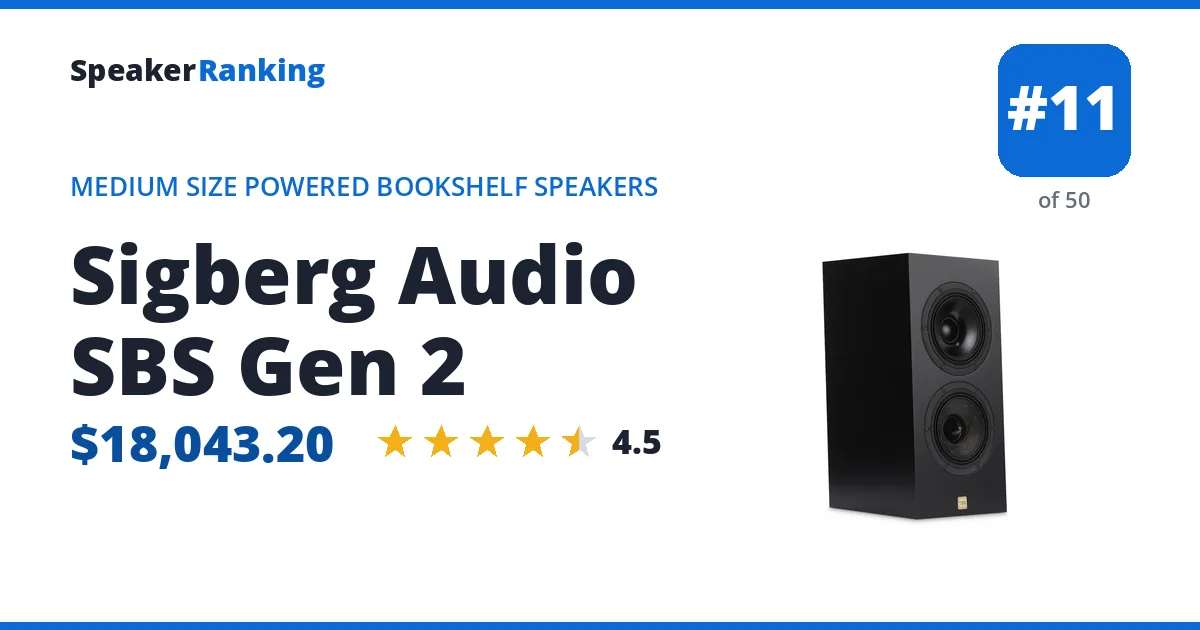
Pros: The measured speaker-and-subwoofer system has a 1.7dB midrange response span and a 6.74 ideal-subwoofer preference score, supporting useful tonal accuracy above the bass region. The measured system reaches -3dB around 34Hz. Onboard parametric EQ and dedicated amplification provide flexible integration for a complete high-performance setup. Measured bass extension of 24Hz (-3dB).
Cons: The measured system explicitly includes a subwoofer: its 5.78 full-system score and bass extension must not be attributed to the bookshelf speaker alone. It is not directly equivalent to the standalone-monitor tests around it. The complete system is expensive and occupies more space than the main speakers suggest; the score alone does not prove superior output or room performance.
Full Sigberg Audio SBS Gen 2 review and specifications →
| AES Input | Yes |
|---|---|
| Amplifier Power | 350W per speaker |
| App | No |
| Aux Input | No |
| Bass Extension (-3dB) | 24Hz (measured, spinorama.org, with companion subwoofer) |
| Bluetooth | No |
| Coaxial Input | Yes |
| Country | Norway |
| DSP | Yes |
| Dimensions | 16.1"H x 7.5"W x 9.1"D (410 x 190 x 230 mm) |
| Drivers | 5.5" midbass, 5.5" coaxial mid/tweeter with 1" silk dome |
| EQ | Yes (9-band parametric, factory presets) |
| Enclosure | sealed |
| HDMI Input | No |
| Inputs | XLR, RCA, Optical, Coaxial/SPDIF, AES |
| Maximum SPL | 116dB (manufacturer specified) |
| Measurement Source | Manufacturer |
| Optical Input | Yes |
| RCA Input | Yes |
| Spinorama Preference Score | 5.78 |
| Spinorama Preference Score with Perfect Sub | 6.74 |
| TRS Input | No |
| USB Input | No |
| Weight | 20.9 lbs (9.5 kg) each |
| XLR Input | Yes |
- Links
- Reviews, Comparisons and Sound Samples
- Head-to-Head Comparisons
- Sigberg Audio SBS Gen 2 vs IK Multimedia iLoud MTM MKII
- Sigberg Audio SBS Gen 2 vs Kali Audio IN-5
- Sigberg Audio SBS Gen 2 vs JBL 305P MKII
- Sigberg Audio SBS Gen 2 vs KEF LSX II LT
- Sigberg Audio SBS Gen 2 vs Adam Audio T5V
- Sigberg Audio SBS Gen 2 vs Neumann KH80 DSP
- Sigberg Audio SBS Gen 2 vs Kali LP-UNF
- Sigberg Audio SBS Gen 2 vs Yamaha HS5
- See all 11 comparisons
Its strong measured results describe the complete speaker-and-subwoofer system rather than the bookshelf speaker alone, and the price reflects that full system rather than a standalone monitor.
 The AsciLab C8C: $6,200 per pair Audiophonics eBay
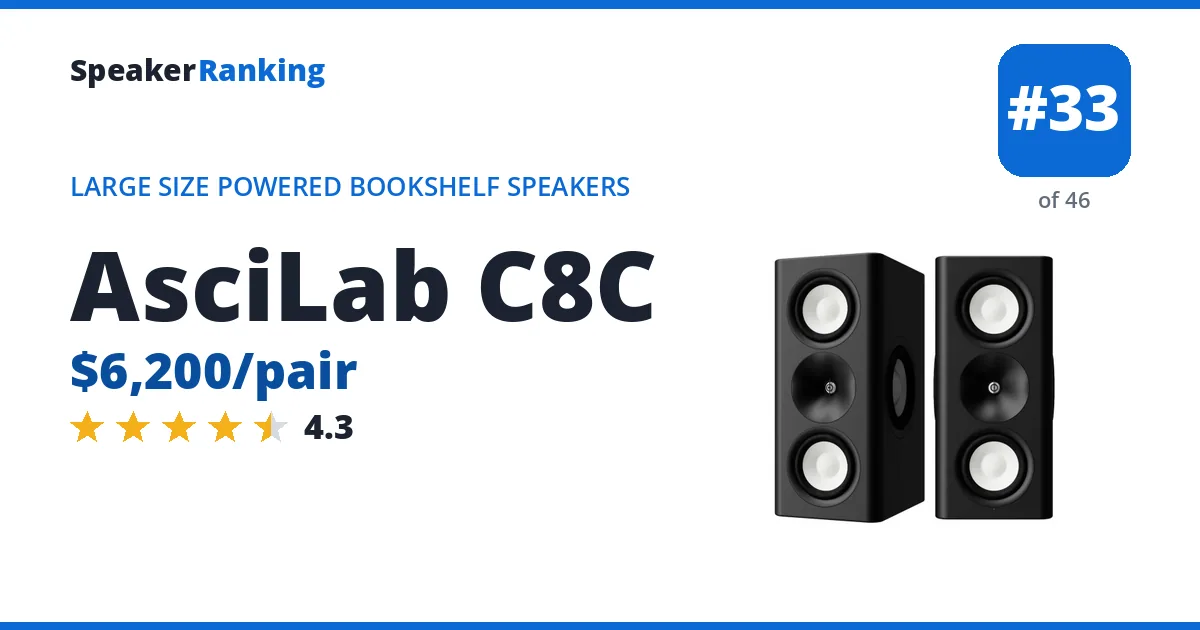
Pros: ASR’s revised measurement combines an 8.02 ideal-subwoofer preference score with a 1.7dB response span from 300Hz to 5kHz, supporting highly even vocal and instrumental balance. Bass reaches 30.8Hz at -3dB and 23.4Hz at -6dB, giving substantial low-end reach without an added subwoofer. Measured bass extension of 30.8Hz (-3dB).
Cons: The result applies to the revised measured configuration; confirm that the speaker’s tuning matches it. Each cabinet weighs about 27.5kg and needs a substantial stand. Deep extension and excellent tonality do not guarantee unlimited bass output or eliminate the need to adjust placement.
Full AsciLab C8C review and specifications →
| AES Input | Yes |
|---|---|
| Amplifier Power | 600W total (100W tweeter, 250W midrange, 250W subwoofer) |
| Aux Input | No |
| Bass Extension (-10dB) | 20.5Hz (measured, Audio Science Review) |
| Bass Extension (-3dB) | 30.8Hz (measured, Audio Science Review) |
| Bass Extension (-6dB) | 23.4Hz (measured, Audio Science Review) |
| Coaxial Input | Yes |
| Country | South Korea |
| Crossover Frequency | 150Hz, 1.2kHz |
| Dimensions | 22"H x 10"W x 13.8"D (560 x 254 x 350 mm) |
| Drivers | 1" alumina ceramic dome tweeter with waveguide, 2x 6" alumina ceramic midrange/woofers, 2x 8" side mounted opposed cardioid subwoofers |
| Enclosure | sealed |
| HDMI Input | No |
| Inputs | XLR, RCA, AES/EBU, Coaxial, Optical |
| Optical Input | Yes |
| RCA Input | Yes |
| Spinorama Preference Score | 7.25 |
| Spinorama Preference Score with Perfect Sub | 8.02 |
| TRS Input | No |
| USB Input | No |
| Warranty | 2 years |
| Weight | 60.6 lbs (27.5 kg) each |
| XLR Input | Yes |
- Links
- Reviews, Comparisons and Sound Samples
- Head-to-Head Comparisons
See the best XLR-input picks for the full case for this speaker; the coaxial input is an additional connection option alongside its primary balanced inputs.
What To Check Before Buying
Coaxial vs. optical: confirm which digital output your source actually has. See every powered speaker with an optical input if your source uses TOSLINK instead.
Cable quality matters less than you’d think: unlike an analog interconnect, a digital S/PDIF signal is either received correctly or it isn’t. A basic 75-ohm coaxial cable is normally sufficient; you don’t need an expensive cable to get a bit-accurate signal.
Sample rate and format limits: check both the source’s output format and the speaker’s supported input formats, especially for surround or high-resolution PCM streams.
Where To Go Next
See the best powered speakers with an optical input for the other common digital connector, or every powered speaker with a coaxial digital input for the complete list.
Related guides: powered speaker inputs explained, best powered speakers for TVs, and the powered speaker buyer’s guide.