Editor's top picks
Start with these speakers
Our leading recommendations at a glance. Each card links to its primary retailer.
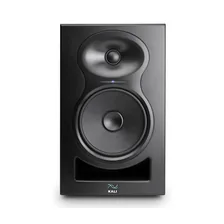 Other Powered Speakers With a TRS Input
Kali Audio LP-6
$298 per pair Discontinued
See the full review →
Other Powered Speakers With a TRS Input
Kali Audio LP-6
$298 per pair Discontinued
See the full review →
Looking for a powered speaker with a TRS input? A balanced 1/4” TRS connection carries the same noise-rejection benefit as XLR in a more compact plug, and it is the connector most audio interfaces, mixers and some preamps actually ship with. Many studio monitors offer a combo jack that accepts either XLR or TRS from the same port. Every pick below has a verified TRS input; the recommendations are ordered by measured sound quality, not by the connector alone.
Want every match, not just the top pick per category? See every powered speaker with a TRS input →
Quick Navigation
- Best Overall
- Best Value
- Best Upgrade
- Other Powered Speakers With a TRS Input
- What To Check Before Buying
- Where To Go Next
Prices on this page were last checked September 17, 2026 at 12:43 AM UTC. Product prices and availability are accurate as of that date/time and are subject to change; the price and availability shown on Amazon at the time of purchase will apply to the purchase of this product.
As an eBay Partner, we may be compensated if you make a purchase.
Best Overall
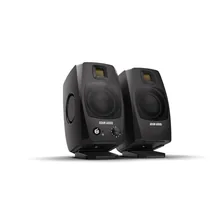 For excellent midrange linearity in a compact desktop pair with a TRS input, the Adam Audio D3v: $344.99 per pair Amazon eBay
Pros: Excellent midrange linearity for a tiny desktop speaker: Erin’s Klippel data spans just 1.7dB from 300Hz to 5kHz. Side passive radiators help bass reach -3dB at about 51Hz, substantially deeper than the Genelec 8010A or Audio Smile LBM. Predicted preference scores of 4.47 standalone and 6.70 with an ideal subwoofer support it as a particularly useful compact system without a sub. USB-C, analog inputs and placement filters simplify desk setup. Measured bass extension of 50Hz (-3dB), with a measured sensitivity of 86.5dB.
Cons: A rising upper-frequency balance and vertical crossover interference keep it from being uniformly neutral at every angle; aim the tweeters toward ear height. The limiter reduces bass and midrange output as volume rises, with the existing review’s compression tests putting usable maximum output around 89-90dB at 1m. Deep bass at moderate volume should not be confused with high output capability.
Full Adam Audio D3v review and specifications →
| AES Input | No |
|---|---|
| Amplifier Power | 50W (30W woofer + 20W tweeter) |
| App | No |
| Aux Input | No |
| Bass Extension (-10dB) | 45Hz (measured, Erin's Audio Corner) |
| Bass Extension (-3dB) | 50Hz (measured, Erin's Audio Corner) |
| Bluetooth | No |
| Coaxial Input | No |
| Dimensions | 6.7"H x 4.3"W x 5.9"D (170.2 x 109.2 x 149.9 mm) |
| Drivers | 3.5" woofer, U-ART accelerated ribbon tweeter |
| EQ | Yes (Room adjustment filters) |
| Frequency Response | 50Hz - 50kHz (Manufacturer specified) |
| HDMI Input | No |
| Inputs | USB-C, balanced 1/4-inch TRS |
| Maximum SPL | 102dB @ 1m (manufacturer specified) |
| Optical Input | No |
| RCA Input | No |
| Sensitivity | 86.5dB (measured at 0.3V/1m, Erin's Audio Corner) |
| Spinorama Preference Score | 4.47 |
| Spinorama Preference Score with Perfect Sub | 6.70 |
| TRS Input | Yes |
| USB Input | Yes |
| Weight | 3.7 lbs (1.7 kg) |
| XLR Input | No |
- Links
- Reviews, Comparisons and Sound Samples
- Erin’s Audio Corner: ADAM Audio D3V: Mighty Small But Mighty Awesome Desktop Speaker More from Erin’s Audio Corner →
- Erin’s Audio Review Adam Audio D3v
- Erin’s Audio Corner Measurements (spinorama.org)
- Jasper Tech: Best Desktop Computer Speakers for Every Budget – 2026 More from Jasper Tech →
- Jasper Tech: Are the D3V The Best Studio Monitors For The Money?
- Erin’s Audio Corner: The Best Budget Desktop Speakers, Tested & Rated
- Head-to-Head Comparisons
- Adam Audio D3v vs Genelec 8010A
- Adam Audio D3v vs Cambridge Audio L/R S
- Adam Audio D3v vs IK Multimedia iLoud Micro Monitor
- Adam Audio D3v vs Audio Smile Little British Monitor
- Adam Audio D3v vs Edifier M60
- Adam Audio D3v vs HiVi Swan X3
- Adam Audio D3v vs Edifier MR3
- Adam Audio D3v vs Audioengine A2+
- See all 15 comparisons
Erin’s Klippel data spans just 1.7dB from 300Hz to 5kHz, unusually even for a small desktop speaker, and side passive radiators help bass reach about 51Hz at -3dB. The balanced TRS input pairs cleanly with an audio interface on a desk shared with recording or mixing gear.
A rising upper-frequency balance and vertical crossover interference keep it from being uniformly neutral at every angle, so aim the tweeters toward ear height. The onboard limiter also reduces bass and midrange output at higher volumes.
Best Value
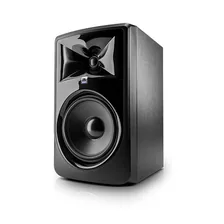 For an accessible studio monitor with a TRS input and strong measured balance, the JBL 308P MKII: $498 per pair B&H Photo Video eBay
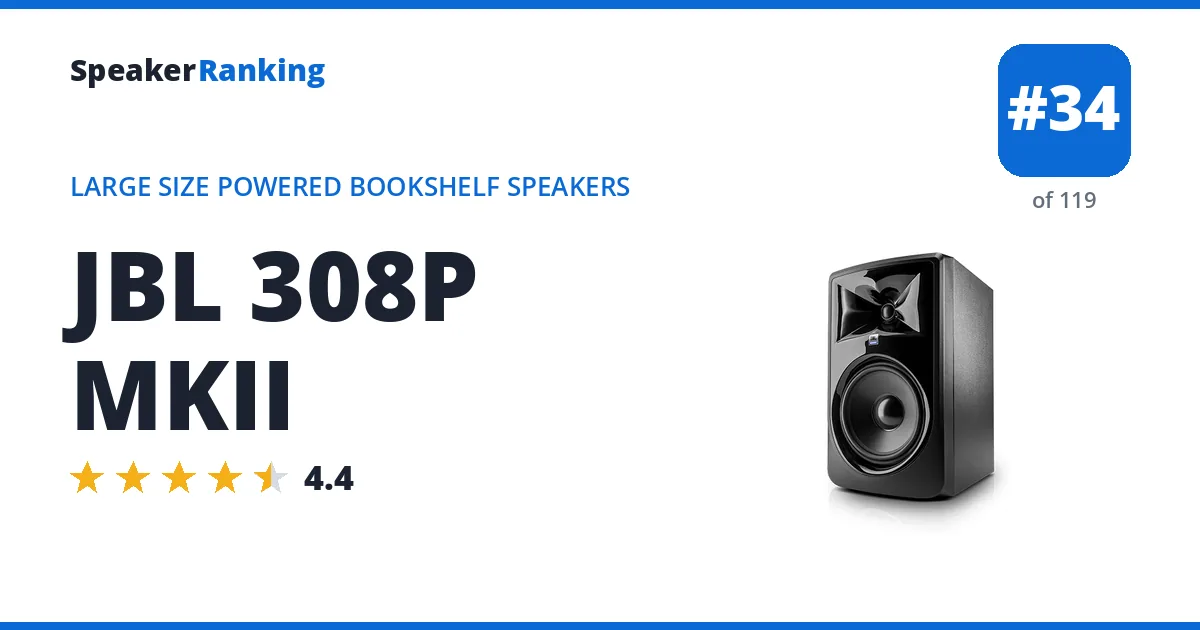
Pros: A 1.8dB response span from 300Hz to 5kHz and 6.89 ideal-subwoofer score support unusually good tonal balance for an accessible studio monitor. Measured -3dB extension of 42.5Hz supplies useful musical bass, and the waveguide helps maintain consistent horizontal coverage. Measured bass extension of 82Hz (-3dB).
Cons: Amplifier hiss may be noticeable in quiet, close-range use. Bass distortion and output limits matter when playing loudly, despite the 8-inch woofer. Keep the tweeter near ear height; vertical crossover behavior is less forgiving than the best coaxial designs.
Full JBL 308P MKII review and specifications →
| AES Input | No |
|---|---|
| Amplifier Power | 112W total |
| App | No |
| Aux Input | No |
| Bass Extension (-10dB) | 60Hz (measured, Audio Science Review) |
| Bass Extension (-3dB) | 82Hz (measured, Audio Science Review) |
| Coaxial Input | No |
| DSP | No |
| Dimensions | 16.5"H x 10"W x 12.1"D (419.1 x 254 x 307.3 mm) |
| Drivers | 8" woofer, 1" neodymium tweeter |
| EQ | No |
| Frequency Response | 45Hz - 20kHz (+/-3dB) (Manufacturer specified) |
| HDMI Input | No |
| Inputs | XLR, 1/4" TRS |
| Optical Input | No |
| RCA Input | No |
| Spinorama Preference Score | 5.08 |
| Spinorama Preference Score with Perfect Sub | 6.89 |
| TRS Input | Yes |
| USB Input | No |
| Weight | not published by manufacturer |
| XLR Input | Yes |
- Links
- Reviews, Comparisons and Sound Samples
- Head-to-Head Comparisons
A 1.8dB response span from 300Hz to 5kHz and 6.89 ideal-subwoofer preference score support unusually good tonal balance for the price, with measured -3dB bass extension of 42.5Hz supplying real musical weight from an 8-inch woofer.
Amplifier hiss may be noticeable in quiet, close-range use, and bass distortion and output limits show up when playing loudly. Keep the tweeter near ear height, since vertical crossover interference affects off-axis response.
Best Upgrade
 For a larger three-way system with a TRS input and integrated consumer connectivity, the JBL 4305P: $2,200 per pair Amazon JBL eBay
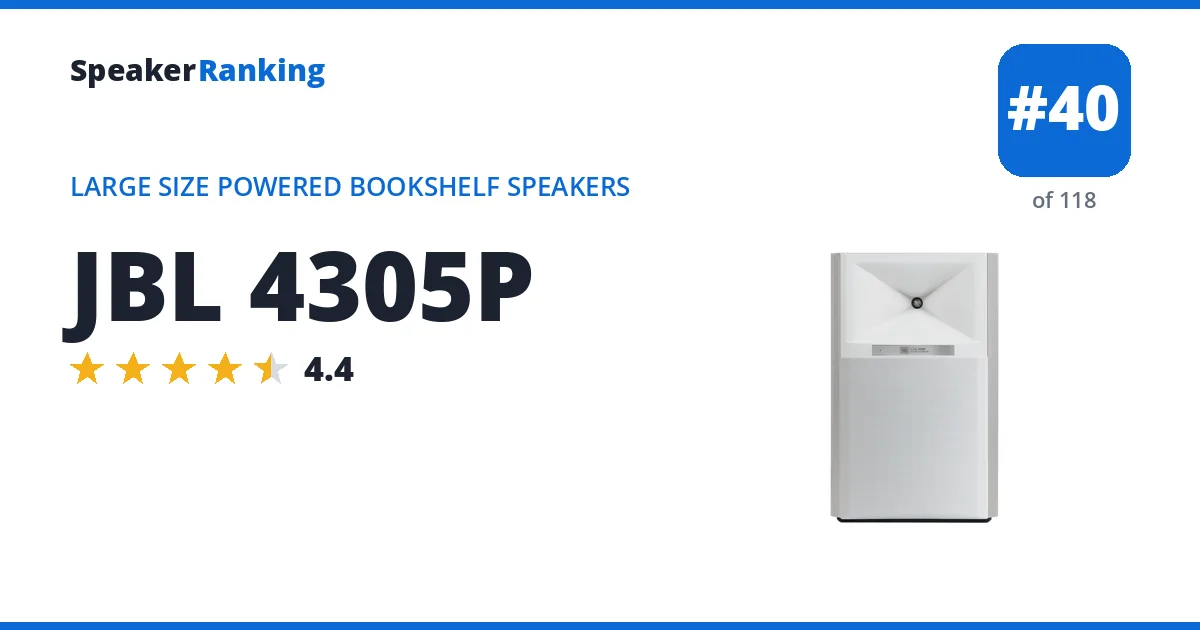
Pros: The measured 1.5dB response span from 300Hz to 5kHz supports even mids, with a 6.54 ideal-subwoofer score and 45.4Hz -3dB bass extension. Integrated consumer connectivity makes this a more convenient living-room system than many studio monitors. Measured bass extension of 45Hz (-3dB).
Cons: Crossover-region directivity changes mean the narrow on-axis span does not describe every listening angle. Limiting becomes relevant at high output, particularly with bass-heavy music. It suits near- to midfield listening better than the largest high-output systems here.
Full JBL 4305P review and specifications →
| AES Input | No |
|---|---|
| Amplifier Power | 300W system: 125W LF + 25W HF per speaker |
| Aux Input | Yes |
| Bass Extension (-10dB) | 40.5Hz (measured, Erin's Audio Corner) |
| Bass Extension (-3dB) | 45Hz (measured, Erin's Audio Corner) |
| Coaxial Input | No |
| Dimensions | 13.2H x 8.3W x 8.8D inches |
| Drivers | 5.25-inch pulp woofer; 1-inch annular compression driver |
| HDMI Input | No |
| Inputs | XLR/TRS combo, 3.5mm Aux, Optical, USB-B, Ethernet |
| Maximum SPL | ~93dB at 2m in-room before limiting (measured, Erin's Audio Corner) |
| Optical Input | Yes |
| RCA Input | No |
| Sensitivity | Not applicable (active DSP loudspeaker) |
| Spinorama Preference Score | 4.53 |
| Spinorama Preference Score with Perfect Sub | 6.54 |
| TRS Input | Yes |
| USB Input | Yes |
| XLR Input | Yes |
- Links
- Reviews, Comparisons and Sound Samples
- Head-to-Head Comparisons
The measured 1.5dB response span from 300Hz to 5kHz supports even mids, backed by a 6.54 ideal-subwoofer score and 45.4Hz -3dB bass extension. Beyond the balanced TRS/XLR combo input, it adds optical, USB-B and a front 3.5mm jack, useful if the same pair needs to serve both a studio desk and a turntable or TV.
Crossover-region directivity changes mean the narrow on-axis span does not describe every listening angle, and limiting becomes relevant at high output, particularly with bass-heavy material.
Other Powered Speakers With a TRS Input
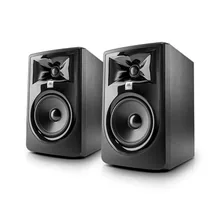 The JBL 305P MKII: $319.00 per pair Amazon eBay
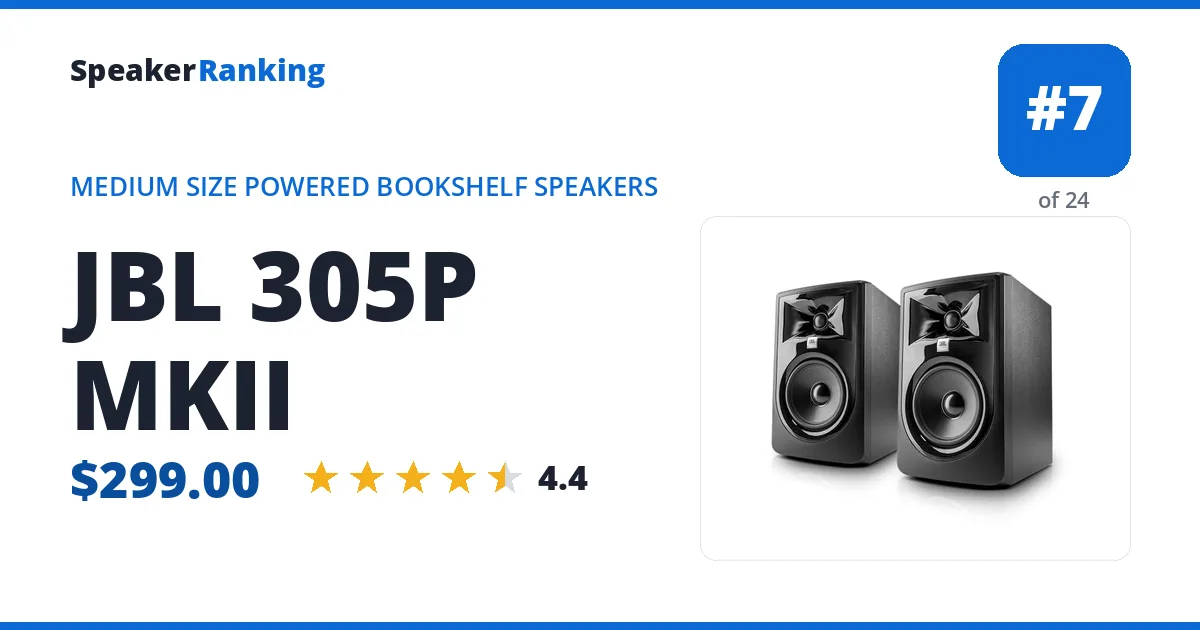
Pros: Erin’s Klippel data gives 4.47 standalone and 6.61 with an ideal subwoofer, with bass reaching -3dB around 51Hz. Broad horizontal coverage and reasonably smooth reflected sound support stable imaging across a desk. The existing review reports effective limiting and little sustained thermal compression, making it a strong budget-monitor option rather than just a speaker with a promising frequency curve. Measured bass extension of 50Hz (-3dB), with a measured sensitivity of 91.1dB.
Cons: The 3.3dB midrange span and rising response show it is not perfectly neutral. A port-related feature around 1.6kHz and some excess treble can be audible; the review recommends the treble-trim switch. Vertical crossover interference makes ear height important. Amplifier hiss may matter in very quiet nearfield use, and rear-port placement needs room-boundary adjustment.
Full JBL 305P MKII review and specifications →
| AES Input | No |
|---|---|
| Amplifier Power | 81w Per Speaker |
| App | No |
| Aux Input | No |
| Bass Extension (-10dB) | 43Hz (measured, Erin's Audio Corner) |
| Bass Extension (-3dB) | 50Hz (measured, Erin's Audio Corner) |
| Bluetooth | No |
| Coaxial Input | No |
| Dimensions | 11.7"H x 7.3"W x 9.1"D (297.2 x 185.4 x 231.1 mm) |
| Drivers | 5" (127mm) woofer |
| EQ | Yes (Room adjustment) |
| Frequency Response | 49 Hz - 20 kHz (+-3 dB) (Manufacturer specified) |
| HDMI Input | No |
| Inputs | XLR, TRS |
| Optical Input | No |
| RCA Input | No |
| Sensitivity | 91.1dB (measured at 0.3V/1m, Erin's Audio Corner) |
| Spinorama Preference Score | 4.47 |
| Spinorama Preference Score with Perfect Sub | 6.61 |
| TRS Input | Yes |
| USB Input | No |
| Weight | 10.4 lbs (4.7 kg) each |
| XLR Input | Yes |
- Links
- Reviews, Comparisons and Sound Samples
- Erin’s Audio Corner Review Measurements More from Erin’s Audio Corner →
- Audio Science Review Measurements More from Audio Science Review →
- Erin’s Audio Corner: LIVE! JBL 305P MkII Powered Studio Monitor Review
- DSAUDIO.review: DSAUDIO.review Focal Alpha 50 EVO vs JBL 305P MKII sound.DEMO More from DSAUDIOreview →
- DSAUDIO.review: JBL 305P MKII vs Yamaha HS5 6-Track Comparison
- DSAUDIO.review: DSAUDIO.review JBL 305P MKII vs KRK Classic 5 CL5G3 sound.DEMO
- DSAUDIO.review: JBL 305P MKII vs Adam Audio T5V 6-Track Comparison
- DSAUDIO.review: DSAUDIO.review Adam Audio A5X vs JBL 305P MKII sound.DEMO
- DSAUDIO.review: DSAUDIO.review Kali Audio LP-6 V2 (2nd Wave) vs JBL 305P MKII sound.DEMO
- DSAUDIO.review: DSAUDIO.review Edifier MR4 vs JBL 305P MKII sound.DEMO
- DSAUDIO.review: Kali Audio IN-5 vs JBL 305P MKII Sound & Frequency Response Comparison
- DSAUDIO.review: JBL 308P MKII vs JBL 305P MKII Sound & Frequency Response Comparison
- DSAUDIO.review: Neumann KH80 DSP vs JBL 305P MKII Sound & Frquency Response Comparison
- DSAUDIO.review: JBL 305P MKII vs PreSonus Eris E5 6-Track Comparison
- Erin’s Audio Corner Measurements (spinorama.org)
- Jasper Tech: Best Desktop Computer Speakers for Every Budget – 2026 More from Jasper Tech →
- Jasper Tech: Best Powered Bookshelf Speakers for Every Budget - 2025
- Jasper Tech: Are the iLoud Micro Monitor Pro the Best Studio Monitor Speakers for your Home Studio?
- Head-to-Head Comparisons
- JBL 305P MKII vs KEF LS50 Wireless II
- JBL 305P MKII vs Klipsch The Fives
- JBL 305P MKII vs Genelec 8020D
- JBL 305P MKII vs Vanatoo Transparent One Encore Plus
- JBL 305P MKII vs IK Multimedia iLoud MTM MKII
- JBL 305P MKII vs Topping MA4
- JBL 305P MKII vs Devialet Phantom II 98 dB
- JBL 305P MKII vs Sigberg Audio SBS Gen 2
- See all 65 comparisons
A strong acoustic ranking for its price, though the 3.3dB midrange span and rising response mean it is not perfectly neutral; the treble-trim switch is worth using.
The original Kali Audio LP-6: $298 per pair Discontinued B&H Photo Video eBay
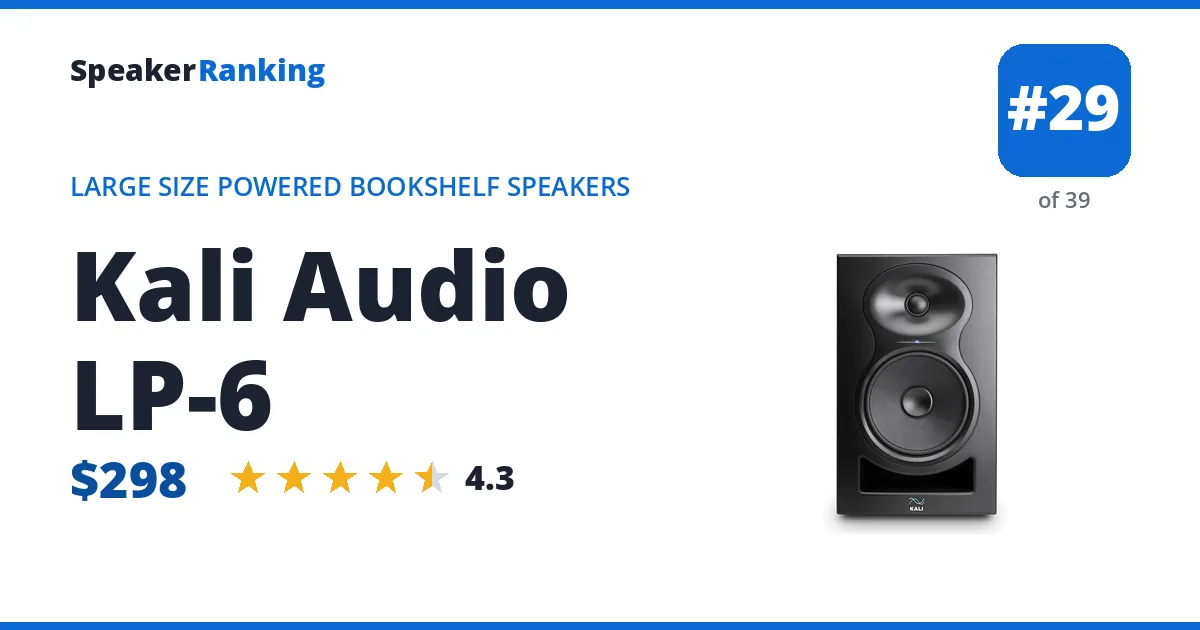
Pros: The original LP-6 measures 43.9Hz at -3dB and scores 6.33 with an ideal subwoofer. Its waveguide and placement controls make it a credible budget studio monitor, with useful bass for ordinary music listening. Measured bass extension of 55Hz (-3dB).
Cons: The measured 2.9dB response span from 300Hz to 5kHz is less even than the newer LP-6 V2. First-generation amplifier hiss can be distracting at short distances. Do not assume the V2’s noise improvements or measurements apply to this model. Discontinued.
Full Kali Audio LP-6 review and specifications →
| AES Input | No |
|---|---|
| Amplifier Power | 80W total (40W LF, 40W HF) |
| App | No |
| Aux Input | No |
| Bass Extension (-10dB) | 42Hz (measured, Audio Science Review) |
| Bass Extension (-3dB) | 55Hz (measured, Audio Science Review) |
| Coaxial Input | No |
| DSP | No |
| Dimensions | 14.1"H x 8.8"W x 10.3"D (358.8 x 222.3 x 260.4 mm) |
| Discontinued | Yes |
| Drivers | 6.5" woofer, 1" textile dome tweeter |
| EQ | No |
| Frequency Response | 47Hz - 21kHz (-3dB) (Manufacturer specified) |
| HDMI Input | No |
| Inputs | XLR, TRS, RCA |
| Optical Input | No |
| RCA Input | Yes |
| TRS Input | Yes |
| USB Input | No |
| Weight | 16.1 lbs (7.3 kg) each |
| XLR Input | Yes |
- Links
- Reviews, Comparisons and Sound Samples
- Head-to-Head Comparisons
Its 2.9dB response span from 300Hz to 5kHz is less even than the newer LP-6 V2, and first-generation amplifier hiss can be distracting at short listening distances.
 The Kali Audio LP-6 V2: $398 per pair Amazon B&H Photo Video eBay
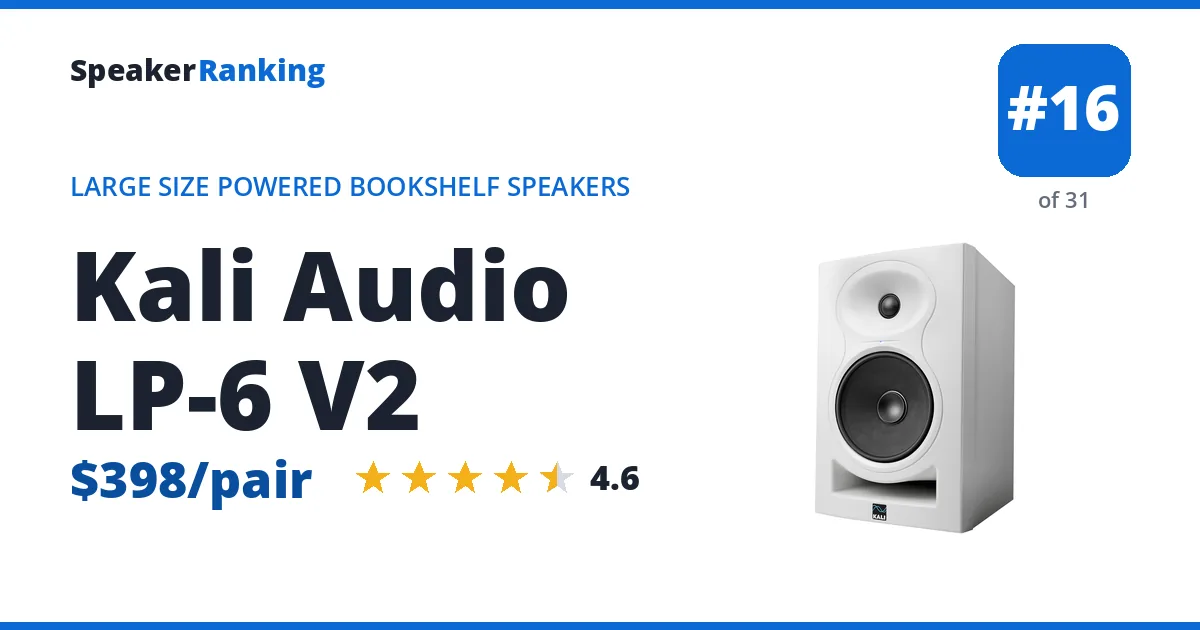
Pros: Erin’s measurements give a 6.62 ideal-subwoofer score and 42.5Hz -3dB bass extension, a strong combination for an affordable nearfield monitor. The waveguide and placement switches help with practical setup, and the second generation improves close-range noise behavior. Measured bass extension of 42Hz (-3dB).
Cons: The 2.5dB response span from 300Hz to 5kHz leaves some tonal unevenness. Vertical crossover behavior makes ear-height placement important, and compression limits loud bass playback. Its good tonal score is not evidence of the output capability of a much larger monitor.
Full Kali Audio LP-6 V2 review and specifications →
| AES Input | No |
|---|---|
| Amplifier Power | 40W LF + 40W HF per speaker; Bi-amplified Class D |
| Aux Input | No |
| Bass Extension (-10dB) | 39.1Hz (measured, Erin's Audio Corner) |
| Bass Extension (-3dB) | 42Hz (measured, Erin's Audio Corner) |
| Coaxial Input | No |
| DSP | Yes; boundary presets and LF/HF trims |
| Dimensions | 14.1"H x 8.8"W x 10.2"D |
| Drivers | 1" soft-dome tweeter; 6.5" woofer |
| HDMI Input | No |
| Inputs | XLR, balanced TRS and RCA |
| Maximum SPL | Approximately 102dB per pair with good measured linearity (Erin's Audio Corner) (manufacturer specified) |
| Optical Input | No |
| RCA Input | Yes |
| Sensitivity | Not applicable (active DSP loudspeaker) |
| Spinorama Preference Score | 4.67 |
| Spinorama Preference Score with Perfect Sub | 6.62 |
| TRS Input | Yes |
| USB Input | No |
| XLR Input | Yes |
- Links
- Reviews, Comparisons and Sound Samples
- Head-to-Head Comparisons
- Kali Audio LP-6 V2 vs Kali Audio IN-8 V2
- Kali Audio LP-6 V2 vs Yamaha HS8
- Kali Audio LP-6 V2 vs Genelec 8050B
- Kali Audio LP-6 V2 vs JBL 4305P
- Kali Audio LP-6 V2 vs JBL 308P MKII
- Kali Audio LP-6 V2 vs SHIVAUDYO Point Zero
- Kali Audio LP-6 V2 vs Focal Solo6 ST6
- Kali Audio LP-6 V2 vs Thomann Swissonic A306
- See all 45 comparisons
See the best XLR-input picks for the full case for this speaker; the same combo jack accepts a TRS plug from an interface just as readily.
What To Check Before Buying
Combo jacks: most TRS inputs on studio monitors are combo XLR/TRS jacks, so confirm a speaker actually needs a TRS cable rather than treating “has TRS” and “has XLR” as separate ports on the spec sheet.
Balanced vs. unbalanced TRS: a 1/4” TRS plug can also carry a stereo unbalanced signal (like a headphone output) on some gear. Confirm the source is actually outputting a balanced mono signal per channel before assuming full noise rejection.
Gain staging: match the source’s output level to the speaker’s input sensitivity; check both devices’ specifications rather than assuming they agree by default.
Where To Go Next
See the best powered speakers with an XLR input for the other common balanced connector, or every powered speaker with a TRS input for the complete list.
Related guides: powered speaker inputs explained, best studio monitors, and the powered speaker buyer’s guide.