Editor's top picks
Start with these speakers
Our leading recommendations at a glance. Each card links to its primary retailer.
Looking for a subwoofer with an XLR input? Most consumer home-theater subwoofers only offer unbalanced RCA, which is fine for a short run from a receiver’s LFE output. A balanced XLR input matters more once the cable run gets longer, or the sub sits in a system already built around balanced gear: a preamp, a professional install, or a pair of XLR-equipped studio monitors. Every pick below has a verified XLR input; the recommendations are ordered by measured output, not by the connector alone.
Want every match, not just the top pick per size? See every subwoofer with an XLR input →
Prices on this page were last checked September 17, 2026 at 12:43 AM UTC. Product prices and availability are accurate as of that date/time and are subject to change; the price and availability shown on Amazon at the time of purchase will apply to the purchase of this product.
As an eBay Partner, we may be compensated if you make a purchase.
Best Overall
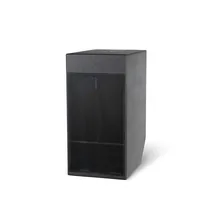 For class-leading measured output with an XLR input, the JTR Speakers Orbit Shifter PRO: $4,200 JTR Speakers eBay
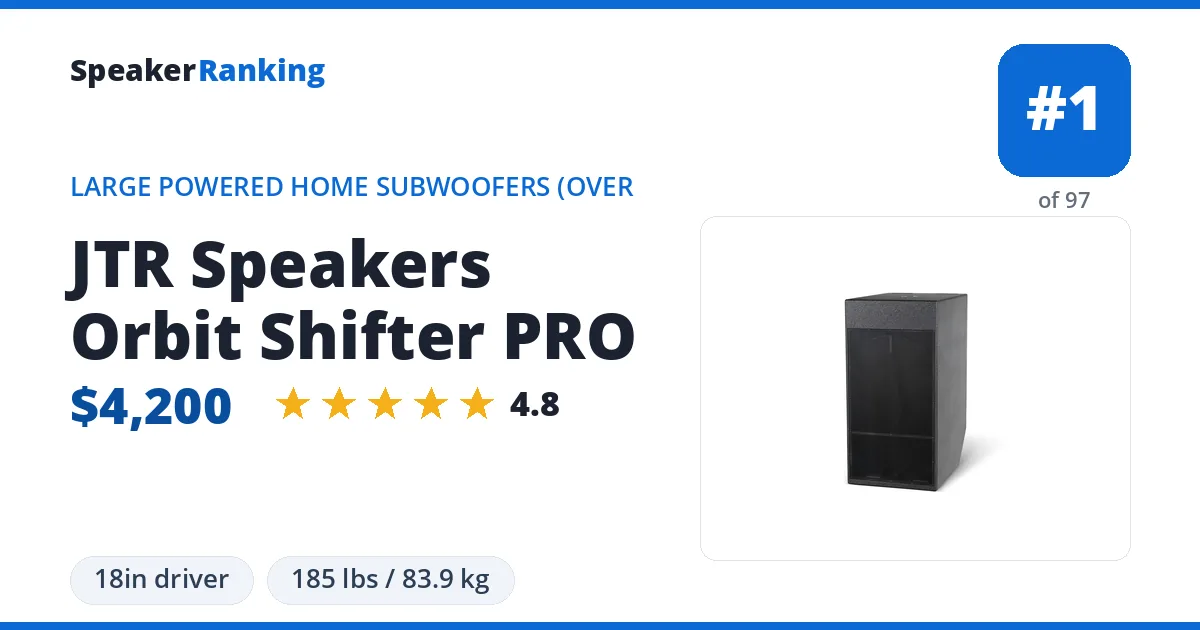
Pros: Dual 18-inch horn-loaded drivers deliver a class-leading 141.3dB CEA-2010-A average, well beyond any other subwoofer tested. Built for dedicated home theaters chasing reference-level output rather than living-room duty.
Cons: Extremely high price ($4499) and weighs 84 kg - requires dedicated placement and amplifier.
Notes: Looks like “PA sub”
Full JTR Speakers Orbit Shifter PRO review and specifications →
| AES Input | No |
|---|---|
| Aux Input | No |
| CEA-2010-A Average (40-80Hz) | 141.3 dB |
| Cabinet Color | black |
| Coaxial Input | No |
| Country | United States |
| Dimensions | 45"H x 22.5"W x 32"D (1143.0 x 571.5 x 812.8 mm) |
| Drivers | 18" (457mm) driver |
| Enclosure | horn |
| HDMI Input | No |
| Inputs | XLR, RCA |
| Measurement Source | Data-bass |
| Optical Input | No |
| Output SPL at 15 Hz | 95.7 dB |
| Output SPL at 20 Hz | 101.9 dB |
| Output SPL at 25 Hz | 114.9 dB |
| Output SPL at 31.5 Hz | 128.2 dB |
| Output SPL at 40 Hz | 136.0 dB |
| Output SPL at 50 Hz | 141.0 dB |
| Output SPL at 63 Hz | 144.0 dB |
| Output SPL at 80 Hz | 144.2 dB |
| Output SPL at 100 Hz | 143.4 dB |
| Output SPL at 125 Hz | 140.1 dB |
| RCA Input | Yes |
| TRS Input | No |
| USB Input | No |
| Warranty | 5 |
| Weight | 185 lbs (83.9 kg) |
| XLR Input | Yes |
- Links
- Reviews, Comparisons and Sound Samples
- Independently measured by Data-bass; the published figures above come from this ASR subwoofer measurement thread.
- Head-to-Head Comparisons
- JTR Speakers Orbit Shifter PRO vs JTR Speakers Orbit Shifter LFU
- JTR Speakers Orbit Shifter PRO vs Power Sound Audio (PSA) TRIAX
- JTR Speakers Orbit Shifter PRO vs JTR Speakers Captivator 4000ULF
- JTR Speakers Orbit Shifter PRO vs JTR Speakers Captivator S2
- JTR Speakers Orbit Shifter PRO vs Monoprice Monolith 16 THX Ultra
- JTR Speakers Orbit Shifter PRO vs Reaction Audio PV-15X
- JTR Speakers Orbit Shifter PRO vs Monoprice Monolith M-215
- JTR Speakers Orbit Shifter PRO vs Rythmik FV15HP
- See all 14 comparisons
Dual 18-inch horn-loaded drivers deliver a class-leading 141.3dB CEA-2010-A average, well beyond any other subwoofer in our rankings, XLR-equipped or not. It is built for a dedicated home theater chasing reference-level output.
The price and 84kg weight require dedicated placement and a real installation plan; this is not a living-room add-on.
Best Value
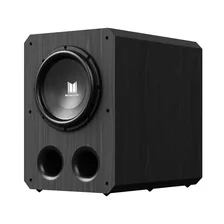 For strong measured output with an XLR input at a fraction of the reference price, the Monoprice Monolith 16 THX Ultra: $2,300 eBay
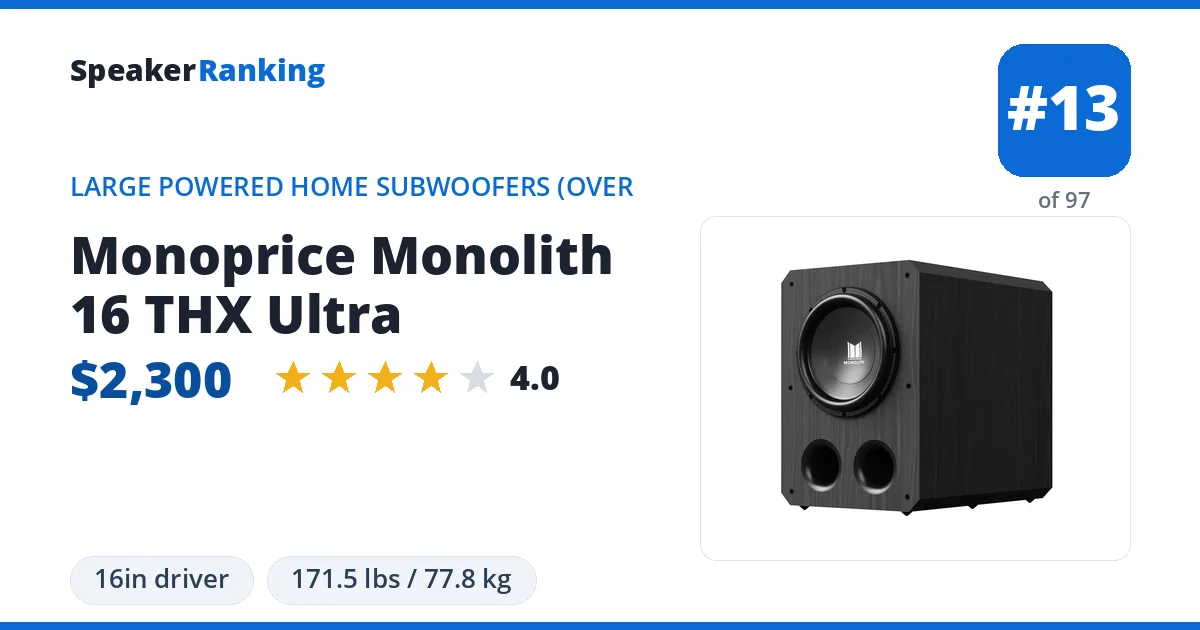
Pros: 16-inch ported driver and THX Ultra certification deliver 126.5dB CEA-2010-A average at a fraction of the price of the subwoofers ranked above it.
Cons: Heavy at 78 kg and ported design can interact with room acoustics.
Notes: Product # 42031
Full Monoprice Monolith 16 THX Ultra review and specifications →
| AES Input | No |
|---|---|
| Aux Input | No |
| CEA-2010-A Average (40-80Hz) | 126.5 dB |
| Cabinet Color | black |
| Coaxial Input | No |
| Country | United States |
| Dimensions | 25.6"H x 22"W x 28.1"D (650.2 x 558.8 x 713.7 mm) |
| Drivers | 16" (406mm) driver |
| Enclosure | ported, front |
| HDMI Input | No |
| Inputs | XLR, RCA, XLR out |
| Measurement Source | Audioholics |
| Optical Input | No |
| Output SPL at 15 Hz | 107.3 dB |
| Output SPL at 20 Hz | 118.4 dB |
| Output SPL at 25 Hz | 123.3 dB |
| Output SPL at 31.5 Hz | 125.1 dB |
| Output SPL at 40 Hz | 126.3 dB |
| Output SPL at 50 Hz | 126.5 dB |
| Output SPL at 63 Hz | 126.6 dB |
| Output SPL at 80 Hz | 126.8 dB |
| Output SPL at 100 Hz | 127.2 dB |
| Output SPL at 125 Hz | 127.6 dB |
| RCA Input | Yes |
| TRS Input | No |
| USB Input | No |
| Warranty | 5 |
| Weight | 171.5 lbs (77.8 kg) |
| XLR Input | Yes |
- Links
- Reviews, Comparisons and Sound Samples
- Independently measured by Audioholics; the published figures above come from this ASR subwoofer measurement thread.
- Head-to-Head Comparisons
- Monoprice Monolith 16 THX Ultra vs Harbottle Audio C24 L2
- Monoprice Monolith 16 THX Ultra vs Funk Audio Ultra 21.0LX
- Monoprice Monolith 16 THX Ultra vs Funk Audio Classic 18.0
- Monoprice Monolith 16 THX Ultra vs JTR Speakers Captivator 2400
- Monoprice Monolith 16 THX Ultra vs Reaction Audio PV-15X
- Monoprice Monolith 16 THX Ultra vs Harbinger V2218S
- Monoprice Monolith 16 THX Ultra vs Danley Sound Labs DTS10
- Monoprice Monolith 16 THX Ultra vs Rythmik FV25HP
- See all 89 comparisons
A 16-inch ported driver and THX Ultra certification deliver 126.5dB CEA-2010-A average, competitive with subs costing several times more, and the balanced XLR input covers a longer run without the premium price of the boutique options above it.
At 78kg, it is still heavy to place, and the ported design interacts with room acoustics more than a sealed cabinet does; budget for real calibration.
Best Budget
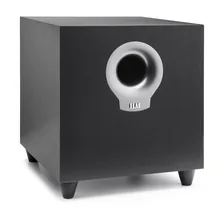 For an affordable sealed subwoofer with a balanced XLR input, the ELAC SUB3070: $999 eBay
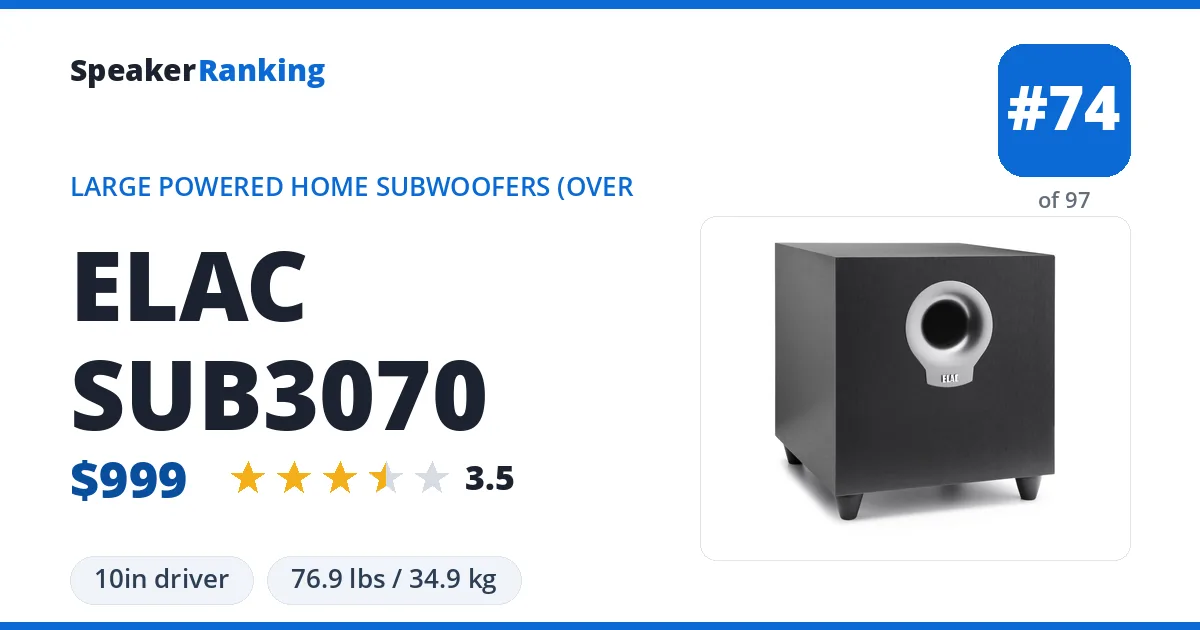
Pros: Independent CEA-2010 testing records 101.8 dB at 20 Hz and 123.9 dB through 40-80 Hz. The sealed enclosure with 2x 12” (305mm) driver delivers substantial upper-bass output for movie effects and music.
Cons: Deep-bass output is more limited than the strong 40-80 Hz result suggests, so it is not the right choice when the lowest movie effects are the priority. The 435.1H x 517.9W x 476.2D mm cabinet and 34.9 kg mass still require deliberate placement and calibration.
Full ELAC SUB3070 review and specifications →
| AES Input | No |
|---|---|
| Aux Input | No |
| CEA-2010-A Average (40-80Hz) | 123.9 dB |
| Cabinet Color | black, white, wood |
| Coaxial Input | No |
| Country | Germany |
| Dimensions | 17.1"H x 20.4"W x 18.7"D (435.1 x 517.9 x 476.2 mm) |
| Drivers | 2x 12" (305mm) driver |
| Enclosure | sealed |
| HDMI Input | No |
| Inputs | XLR (balanced stereo, right channel can be dedicated LFE), RCA (stereo), speaker-level |
| Measurement Source | Brent Butterworth |
| Optical Input | No |
| Output SPL at 16 Hz | 98.9 dB |
| Output SPL at 20 Hz | 101.8 dB |
| Output SPL at 25 Hz | 105.2 dB |
| Output SPL at 31.5 Hz | 110.7 dB |
| Output SPL at 40 Hz | 118.0 dB |
| Output SPL at 50 Hz | 123.7 dB |
| Output SPL at 63 Hz | 127.3 dB |
| Output SPL at 80 Hz | 126.5 dB |
| RCA Input | Yes |
| TRS Input | No |
| USB Input | No |
| Warranty | 3/1 |
| Weight | 76.9 lbs (34.9 kg) |
| XLR Input | Yes |
- Links
- Reviews, Comparisons and Sound Samples
- Independently measured by Brent Butterworth; the published figures above come from this ASR subwoofer measurement thread.
- Head-to-Head Comparisons
Independent CEA-2010 testing records 101.8dB at 20Hz and 123.9dB through 40-80Hz from its sealed, dual 12-inch driver design, substantial upper-bass output for the price. The XLR input is a genuine balanced connection, not a spec-sheet afterthought at this price point.
Deep-bass output is more limited than the strong 40-80Hz result suggests, so it is not the right choice when the lowest movie effects are the priority.
Best For a Large Room
 For headroom in a large room with a balanced XLR input, the Power Sound Audio (PSA) TRIAX: $7995 eBay
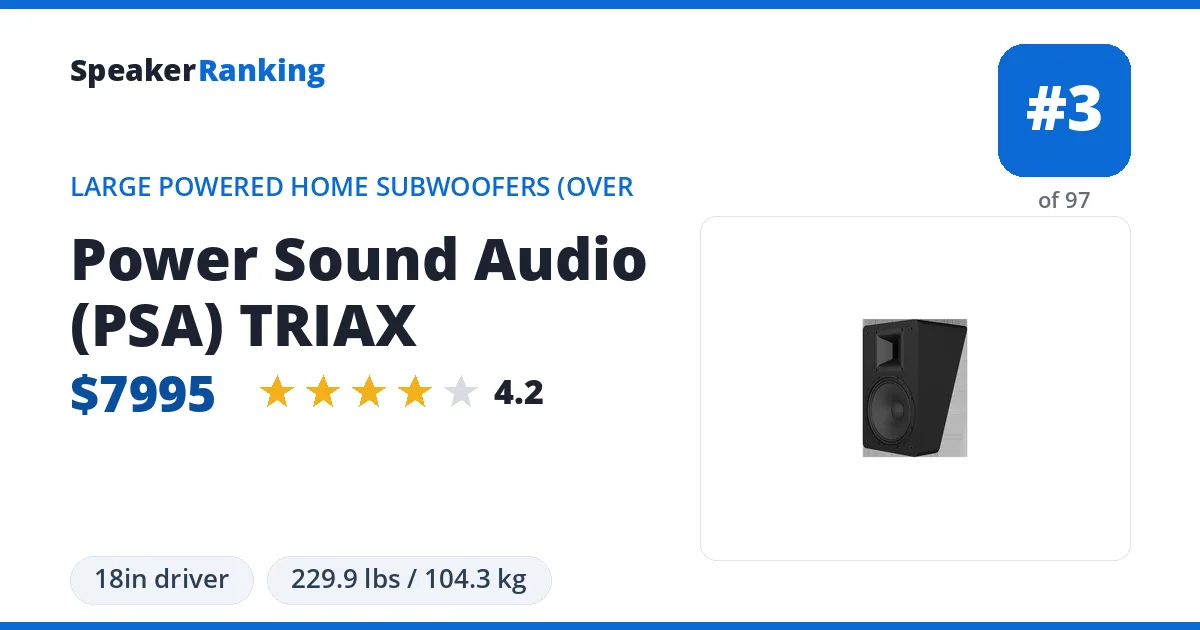
Pros: Published CEA-2010 specifications list 119.8 dB at 20 Hz and 130.9 dB (avg of 3/4 bands) through 40-80 Hz. The sealed enclosure with 3x 15” (381mm) driver has the headroom for demanding film bass in a large room.
Cons: The 596.9H x 787.4W x 698.5D mm cabinet and 104.3 kg mass make this a serious placement and moving commitment. A sealed cabinet still needs careful placement and calibration to avoid room-mode peaks.
Full Power Sound Audio (PSA) TRIAX review and specifications →
| AES Input | No |
|---|---|
| Aux Input | No |
| CEA-2010-A Average (40-80Hz) | 130.9 dB (avg of 3/4 bands) |
| Coaxial Input | No |
| Country | United States |
| Dimensions | 23.5"H x 31"W x 27.5"D (596.9 x 787.4 x 698.5 mm) |
| Drivers | 3x 15" (381mm) driver |
| Enclosure | sealed |
| HDMI Input | No |
| Inputs | XLR (balanced, with loop output) |
| Measurement Source | Manufacturer |
| Optical Input | No |
| Output SPL at 20 Hz | 119.8 dB |
| Output SPL at 25 Hz | 119.8 dB |
| Output SPL at 31.5 Hz | 119.8 dB |
| Output SPL at 40 Hz | 130.9 dB |
| Output SPL at 50 Hz | 130.9 dB |
| Output SPL at 63 Hz | 130.9 dB |
| RCA Input | No |
| TRS Input | No |
| USB Input | No |
| Warranty | 5 |
| Weight | 229.9 lbs (104.3 kg) |
| XLR Input | Yes |
- Links
- Reviews, Comparisons and Sound Samples
- These figures are manufacturer-specified rather than independently measured.
- Head-to-Head Comparisons
- Power Sound Audio (PSA) TRIAX vs JTR Speakers Captivator 4000ULF
- Power Sound Audio (PSA) TRIAX vs JTR Speakers Captivator 215PRO
- Power Sound Audio (PSA) TRIAX vs JTR Speakers Orbit Shifter LFU
- Power Sound Audio (PSA) TRIAX vs JTR Speakers Orbit Shifter PRO
- Power Sound Audio (PSA) TRIAX vs JTR Speakers Captivator S2
- Power Sound Audio (PSA) TRIAX vs Monoprice Monolith 16 THX Ultra
- Power Sound Audio (PSA) TRIAX vs Reaction Audio PV-15X
- Power Sound Audio (PSA) TRIAX vs Monoprice Monolith M-215
- See all 15 comparisons
Published CEA-2010 specifications list 119.8dB at 20Hz and 130.9dB averaged through 40-80Hz from its sealed triple-15-inch design, genuine reserve for demanding film bass in a large space.
The cabinet and 104.3kg mass make this a serious placement and moving commitment, and a sealed cabinet at this output level still needs careful placement and calibration to avoid room-mode peaks.
Other Subwoofers With an XLR Input
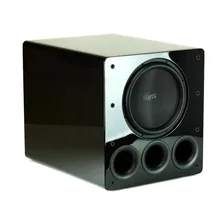 The SVS PC13-Ultra: $1699 Discontinued eBay
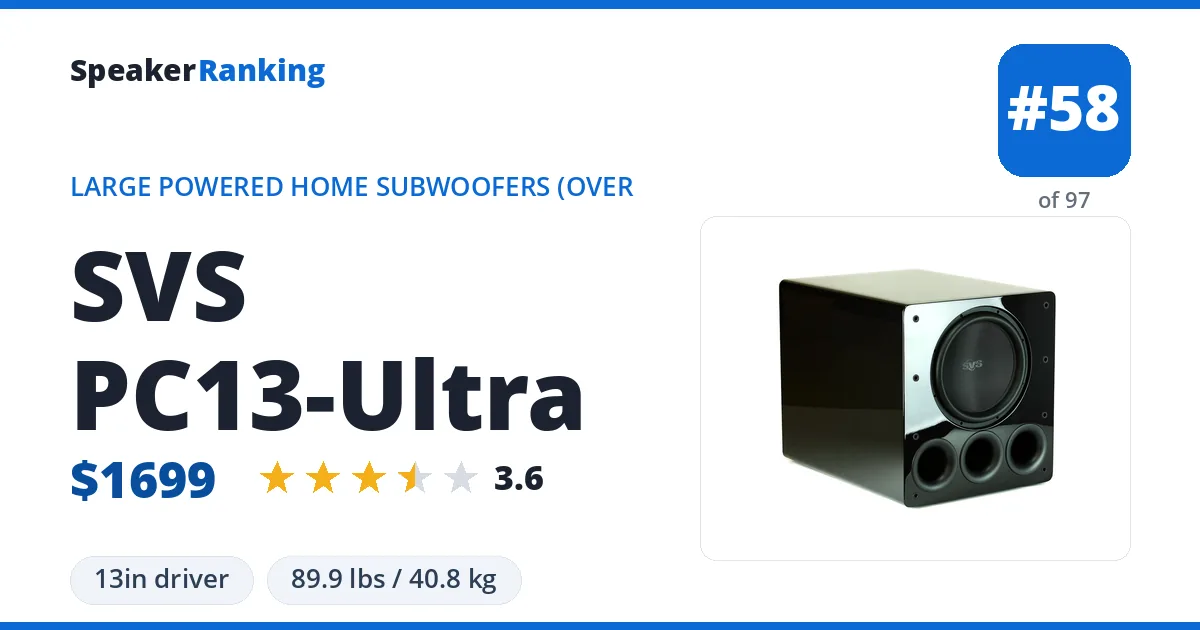
Pros: Independent CEA-2010 testing records 114.6 dB at 20 Hz and 125.8 dB (avg of 3/4 bands) through 40-80 Hz. The ported, bottom enclosure with 13.5” (343mm) driver has the headroom for demanding film bass in a large room.
Cons: The 1168.4H x 421.6W x 421.6D mm cabinet and 40.8 kg mass make this a serious placement and moving commitment. Ported output does not solve room modes, so careful placement and calibration remain essential. Discontinued.
Notes: “Cylinder” shape
Full SVS PC13-Ultra review and specifications →
| AES Input | No |
|---|---|
| Aux Input | No |
| CEA-2010-A Average (40-80Hz) | 125.8 dB (avg of 3/4 bands) |
| Coaxial Input | No |
| Country | United States |
| Dimensions | 46"H x 16.6"W x 16.6"D (1168.4 x 421.6 x 421.6 mm) |
| Discontinued | Yes |
| Drivers | 13.5" (343mm) driver |
| Enclosure | ported, bottom |
| HDMI Input | No |
| Inputs | XLR (balanced), RCA (stereo) |
| Measurement Source | Brent Butterworth |
| Optical Input | No |
| Output SPL at 20 Hz | 114.6 dB |
| Output SPL at 25 Hz | 117.5 dB |
| Output SPL at 31.5 Hz | 118.3 dB |
| Output SPL at 40 Hz | 126.2 dB |
| Output SPL at 50 Hz | 125.2 dB |
| Output SPL at 63 Hz | 125.9 dB |
| RCA Input | Yes |
| TRS Input | No |
| USB Input | No |
| Warranty | 5 |
| Weight | 89.9 lbs (40.8 kg) |
| XLR Input | Yes |
- Links
- Reviews, Comparisons and Sound Samples
- Independently measured by Brent Butterworth; the published figures above come from this ASR subwoofer measurement thread.
Independent CEA-2010 testing records 114.6dB at 20Hz and 125.8dB through 40-80Hz, real headroom in a ported, bottom-firing cabinet designed to tuck into a corner rather than dominate a room.
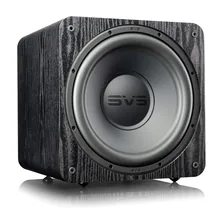 The SVS SB-4000: $1,800 eBay
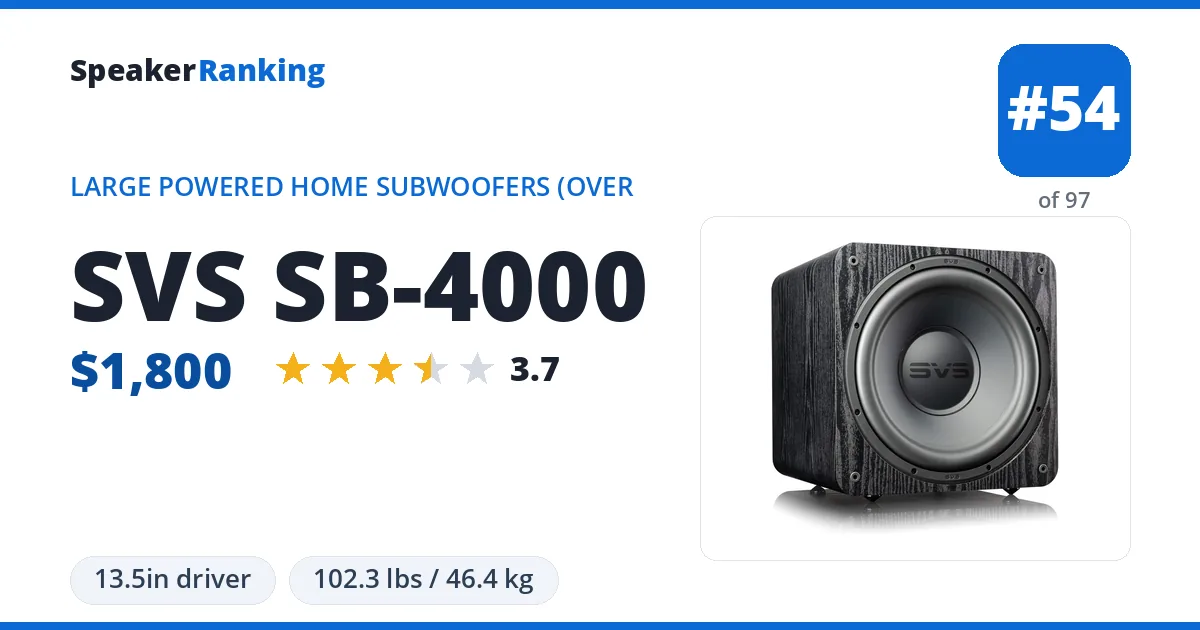
Pros: Independent CEA-2010 testing records 98.5 dB at 20 Hz and 120.1 dB (avg of 3/4 bands) through 40-80 Hz. The sealed enclosure with 13.5” (343mm) driver delivers formidable upper-bass output for movie effects and music.
Cons: Deep-bass output is more limited than the strong 40-80 Hz result suggests, so it is not the right choice when the lowest movie effects are the priority. The 464.8H x 452.1W x 472.4D mm cabinet and 46.4 kg mass still require deliberate placement and calibration.
Full SVS SB-4000 review and specifications →
| AES Input | No |
|---|---|
| Aux Input | No |
| CEA-2010-A Average (40-80Hz) | 120.1 dB (avg of 3/4 bands) |
| Cabinet Color | black |
| Coaxial Input | No |
| Country | United States |
| Dimensions | 18.3"H x 17.8"W x 18.6"D (464.8 x 452.1 x 472.4 mm) |
| Drivers | 13.5" (343mm) driver |
| Enclosure | sealed |
| HDMI Input | No |
| Inputs | XLR (balanced, LFE/stereo), RCA (LFE/stereo) |
| Measurement Source | Brian Kahn |
| Optical Input | No |
| Output SPL at 20 Hz | 98.5 dB |
| Output SPL at 25 Hz | 101.3 dB |
| Output SPL at 31.5 Hz | 108.1 dB |
| Output SPL at 40 Hz | 116.1 dB |
| Output SPL at 50 Hz | 121.1 dB |
| Output SPL at 63 Hz | 123.0 dB |
| RCA Input | Yes |
| TRS Input | No |
| USB Input | No |
| Warranty | 5 |
| Weight | 102.3 lbs (46.4 kg) |
| XLR Input | Yes |
- Links
- Reviews, Comparisons and Sound Samples
- Independently measured by Brian Kahn; the published figures above come from this ASR subwoofer measurement thread.
- Head-to-Head Comparisons
98.5dB at 20Hz and 120.1dB through 40-80Hz make it a strong upper-bass performer; deep-bass output is more limited than that 40-80Hz result suggests, so it suits music and most movie material better than the deepest effects.
What To Check Before Buying
Combo jacks: confirm whether the XLR input is a dedicated port or a combo XLR/TRS jack shared with another connector.
Where the balance actually helps: the noise-rejection benefit of XLR mostly shows up on a longer run or when a cable shares a path with power cords. On a short run straight from a receiver’s LFE output, RCA is usually fine.
Gain staging: match your preamp or receiver’s output level to the subwoofer’s input sensitivity; the two don’t always agree by default.
Where To Go Next
See every subwoofer with an XLR input for the complete list, or the best sealed subwoofers and best subwoofers for a small room for picks without the connector requirement.
Related guides: powered speaker inputs explained and the subwoofer buyer’s guide.