Short answer: the Mackie MC-250. It ranks #38 of 134 over-ear headphones by sound quality, rated 4.1/5, at $89.99. The Sony MDR-ZX310 ranks #45, rated 4.0/5, at $77.09, $12.90 cheaper, which does not close the gap in sound quality.
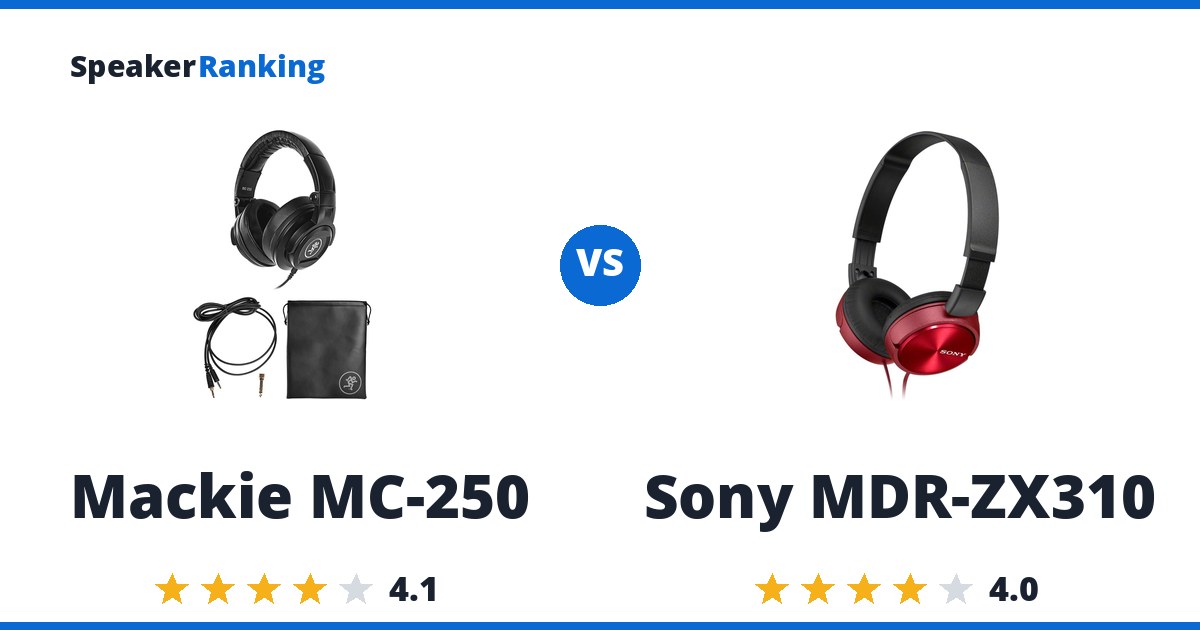
What the Mackie MC-250 does well: A preference score of 83 for a closed-back headphone is strong, and bass from 60 to 200 Hz is about 1 dB above target for a slightly warm, full low end. The tradeoff: A 5 dB dip near 4.8 kHz and presence about 2.5 dB under target make vocals and snare snap sound a little recessed.
Why pick the Sony MDR-ZX310: A preference score of 82 is strong for a budget headphone, and the response stays within 2.4 dB of the Harman target in oratory1990’s measurement. The catch: Sub-bass below 60 Hz is about 17.5 dB under target, so deep bass is effectively missing, and bass from 60 to 200 Hz is also 2.2 dB low.
Buy the Mackie MC-250. It is rated higher for sound quality, and the $12.90 you would save on the Sony MDR-ZX310 does not close the gap.
Want more options? Browse the full Headphones rankings.
Specifications Side By Side
| Mackie MC-250 | Sony MDR-ZX310 | |
|---|---|---|
| Price | $89.99 | $77.09 |
| Ranked | #38 of 134 in Over-Ear Headphones | #45 of 134 in Over-Ear Headphones |
| Form Factor | Over-ear | Over-ear |
| Harman Preference Score | 83 (measured by oratory1990, via AutoEQ) | 82 (measured by oratory1990, via AutoEQ) |
| Deviation From Target | 1.95 dB standard deviation | 2.35 dB standard deviation |
| Tonal Tilt | -0.45 (negative is warmer, positive brighter) | +0.20 (negative is warmer, positive brighter) |
| Connection | Wired | Wired |
| Back | Closed | Closed |
| Driver Type | Dynamic | Dynamic |
| Drivers | 1 x 50mm | 1 x 30mm dynamic |
| Impedance | 38 ohms | 24 ohms |
| Sensitivity | 100 dB | 98 dB/mW |
| Weight | 0.6 lbs (265 g) | 0.3 lbs (125 g) |
| Frequency Response | 10Hz - 20kHz (Manufacturer specified) | 10Hz - 24kHz (Manufacturer specified) |
Related Headphone Comparisons
More worthwhile head-to-heads for Mackie MC-250:
- Sony MDR-ZX310 vs Yamaha RH5Ma
- Beyerdynamic DT 770 Pro vs Beyerdynamic DT 990 Pro
- AKG K612 Pro vs Beyerdynamic DT 990 Pro
- AKG K612 Pro vs Beyerdynamic DT 770 Pro
- AKG K702 vs Audio-Technica ATH-R50x
Prices on this page were last checked October 10, 2026 at 5:37 PM UTC. Product prices and availability are accurate as of that date/time and are subject to change; the price and availability shown on Amazon at the time of purchase will apply to the purchase of this product.
As an eBay Partner, we may be compensated if you make a purchase.
The Two Headphones In Full
 Mackie MC-250: $89.99 Amazon eBay
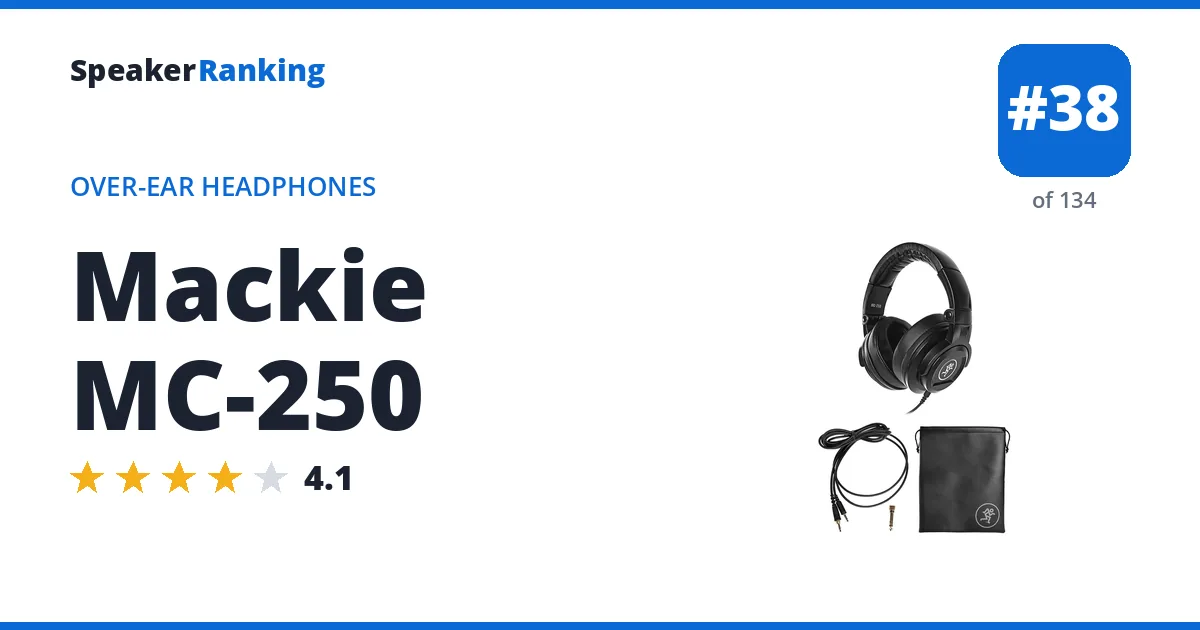
Pros: A preference score of 83 for a closed-back headphone is strong, and bass from 60 to 200 Hz is about 1 dB above target for a slightly warm, full low end. Treble from 6 to 16 kHz is within 0.1 dB of target. At 38 ohms and 100 dB sensitivity it runs fine from a phone, and the closed back keeps leakage down. It is a wired design at 265 g.
Cons: A 5 dB dip near 4.8 kHz and presence about 2.5 dB under target make vocals and snare snap sound a little recessed. Sub-bass is about 4 dB under target under 60 Hz. The warm tilt of minus 0.45 may sound dull for listeners who prefer a brighter sound.
Full Mackie MC-250 review and specifications →
| Back | Closed |
|---|---|
| Connection | Wired |
| Deviation From Target | 1.95 dB standard deviation |
| Driver Type | Dynamic |
| Drivers | 1 x 50mm |
| Form Factor | Over-ear |
| Frequency Response | 10Hz - 20kHz (Manufacturer specified) |
| Harman Preference Score | 83 (measured by oratory1990, via AutoEQ) |
| Impedance | 38 ohms |
| Sensitivity | 100 dB |
| Tonal Tilt | -0.45 (negative is warmer, positive brighter) |
| Weight | 0.6 lbs (265 g) |
EQ preset to match the Harman target
Set a preamp of -7.7 dB, then add these filters in any parametric equalizer (Wavelet, Equalizer APO, Peace, or a player with parametric EQ). Calculated by AutoEQ from its measured frequency response.
| Filter | Frequency | Gain | Q |
|---|---|---|---|
| Low shelf | 105 Hz | +15.9 dB | 0.70 |
| Peak | 50 Hz | -14.8 dB | 0.42 |
| Peak | 419 Hz | +5.7 dB | 1.71 |
| Peak | 905 Hz | -2.0 dB | 1.42 |
| Peak | 4,207 Hz | +4.5 dB | 4.10 |
| High shelf | 10,000 Hz | +0.3 dB | 0.70 |
| Peak | 8,939 Hz | -1.7 dB | 3.53 |
| Peak | 5,862 Hz | -2.6 dB | 6.00 |
| Peak | 1,892 Hz | +1.7 dB | 4.71 |
| Peak | 1,370 Hz | -0.7 dB | 3.02 |
- Reviews, Comparisons and Sound Samples
 Sony MDR-ZX310: $77.09 Amazon eBay
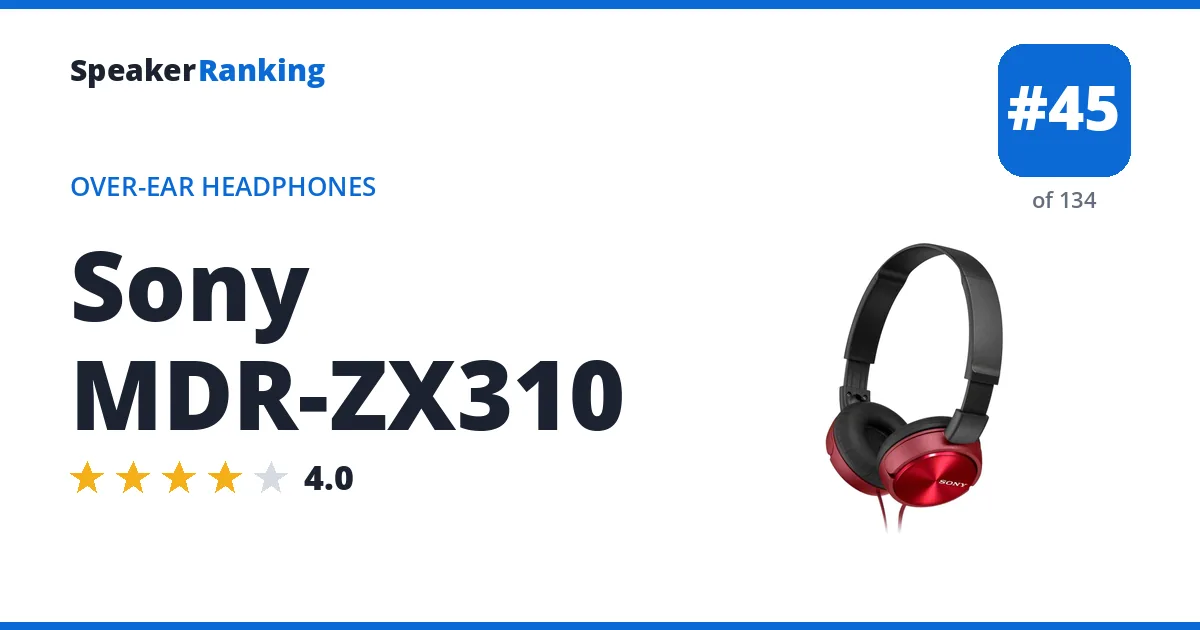
Pros: A preference score of 82 is strong for a budget headphone, and the response stays within 2.4 dB of the Harman target in oratory1990’s measurement. Midrange tracks target closely, within about 1 dB, for natural vocals. At 125 g with 24 ohm impedance and 98 dB/mW sensitivity, it is light and runs loud from any phone, and the closed back blocks some noise.
Cons: Sub-bass below 60 Hz is about 17.5 dB under target, so deep bass is effectively missing, and bass from 60 to 200 Hz is also 2.2 dB low. A dip of nearly 11 dB near 11 kHz and weak treble make music sound dull and closed in. Choose the Sony MDR-7506 for a similar rating with a brighter, more detailed sound.
Full Sony MDR-ZX310 review and specifications →
| Released | Feb 2014 (12 years ago) |
|---|---|
| Back | Closed |
| Connection | Wired |
| Deviation From Target | 2.35 dB standard deviation |
| Driver Type | Dynamic |
| Drivers | 1 x 30mm dynamic |
| Form Factor | Over-ear |
| Frequency Response | 10Hz - 24kHz (Manufacturer specified) |
| Harman Preference Score | 82 (measured by oratory1990, via AutoEQ) |
| Impedance | 24 ohms |
| Sensitivity | 98 dB/mW |
| Tonal Tilt | +0.20 (negative is warmer, positive brighter) |
| Weight | 0.3 lbs (125 g) |
EQ preset to match the Harman target
Set a preamp of -6.3 dB, then add these filters in any parametric equalizer (Wavelet, Equalizer APO, Peace, or a player with parametric EQ). Calculated by AutoEQ from its measured frequency response.
| Filter | Frequency | Gain | Q |
|---|---|---|---|
| Low shelf | 105 Hz | +6.4 dB | 0.70 |
| Peak | 724 Hz | -2.8 dB | 1.72 |
| Peak | 96 Hz | -3.6 dB | 1.74 |
| Peak | 6,049 Hz | +3.8 dB | 4.85 |
| Peak | 8,517 Hz | +3.2 dB | 1.24 |
| High shelf | 10,000 Hz | +1.5 dB | 0.70 |
| Peak | 1,404 Hz | +2.7 dB | 4.42 |
| Peak | 1,831 Hz | -2.5 dB | 4.16 |
| Peak | 3,462 Hz | -1.9 dB | 4.76 |
| Peak | 4,584 Hz | +1.8 dB | 5.09 |
- Reviews, Comparisons and Sound Samples
- Head-to-Head Comparisons