Short answer: the Sennheiser HD 505. It ranks #20 of 134 over-ear headphones by sound quality, rated 4.3/5, at $199.95; the Sennheiser HD 599 ranks #71, rated 3.6/5, and costs $239.95, which makes this an easy call rather than a real tradeoff.
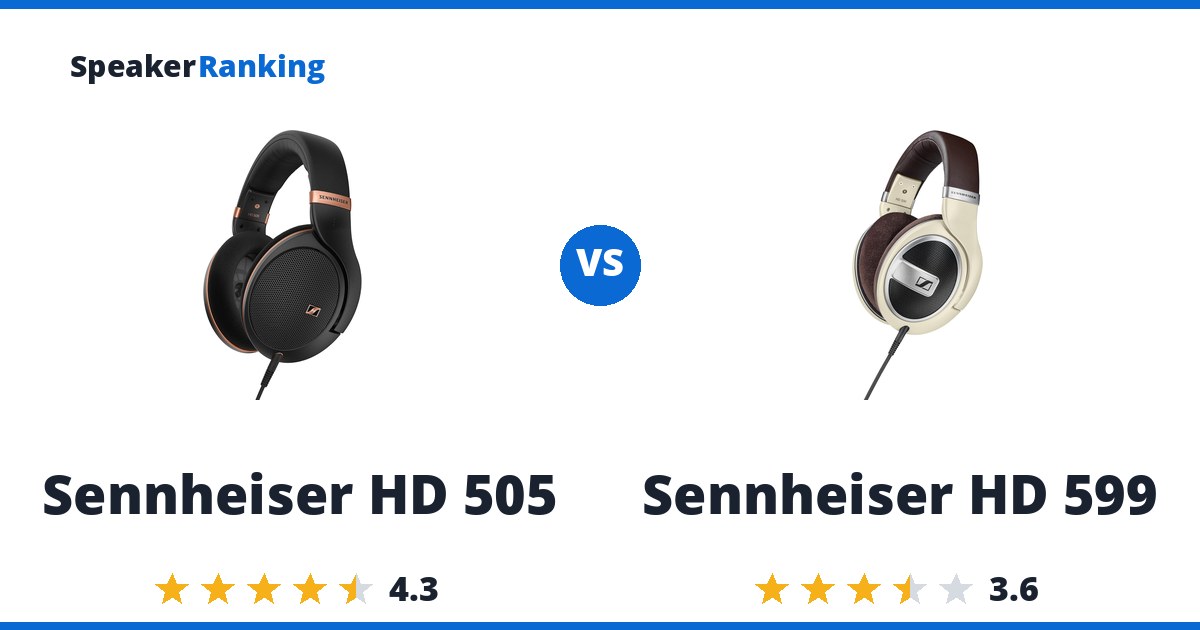
The Sennheiser HD 505 is the better-sounding option. A preference score of 88 in oratory1990’s measurement puts it among the closest to the Harman target, with the midrange from 200 Hz to 6 kHz within about 0.5 dB of target, so vocals and instruments sound natural and unforced. The tradeoff: Sub-bass under 60 Hz sits about 6 dB below target, so deep synth bass and kick drum weight are thin.
Why pick the Sennheiser HD 599: A preference score of 73 and a modest 2.74 dB deviation from the Harman target in oratory1990’s measurement make this a fairly smooth open back. The tradeoff: Sub-bass falls about 6 dB under target below 60 Hz, so the extra warmth sits higher up and the deepest rumble is missing.
Buy the Sennheiser HD 505. It is rated higher for sound quality than the Sennheiser HD 599 and costs less, so it is the default pick unless a specific strength of the other one matters more to you.
Still deciding? The full Headphones rankings cover every ranked option.
Specifications Side By Side
| Sennheiser HD 505 | Sennheiser HD 599 | |
|---|---|---|
| Price | $199.95 | $239.95 |
| Ranked | #20 of 134 in Over-Ear Headphones | #71 of 134 in Over-Ear Headphones |
| Form Factor | Over-ear | Over-ear |
| Harman Preference Score | 88 (measured by oratory1990, via AutoEQ) | 73 (measured by oratory1990, via AutoEQ) |
| Deviation From Target | 1.85 dB standard deviation | 2.74 dB standard deviation |
| Tonal Tilt | +0.17 (negative is warmer, positive brighter) | -0.42 (negative is warmer, positive brighter) |
| Connection | Wired | Wired |
| Back | Open | Open |
| Driver Type | Dynamic | Dynamic |
| Impedance | 120 ohms | 50 ohms |
| Sensitivity | 107.9 dB SPL/V | 106 dB SPL (1 kHz, 1 Vrms) |
| Weight | 0.5 lbs (237 g) | 0.6 lbs (250 g) |
| Frequency Response | 12Hz - 38.5kHz (Manufacturer specified) | 12Hz - 38.5kHz (Manufacturer specified) |
Related Headphone Comparisons
How Sennheiser HD 505 compares with other leading options:
- Sennheiser HD 600 vs Sennheiser HD 505
- Sennheiser HD 505 vs Sennheiser HD 650
- Sennheiser HD 505 vs Sennheiser HD 569
- Sennheiser HD 599 vs Cooler Master MH752
- Audio-Technica ATH-M60x vs Sennheiser HD 599
Prices on this page were last checked October 10, 2026 at 5:37 PM UTC. Product prices and availability are accurate as of that date/time and are subject to change; the price and availability shown on Amazon at the time of purchase will apply to the purchase of this product.
As an eBay Partner, we may be compensated if you make a purchase.
The Two Headphones In Full
 Sennheiser HD 505: $199.95 Amazon eBay
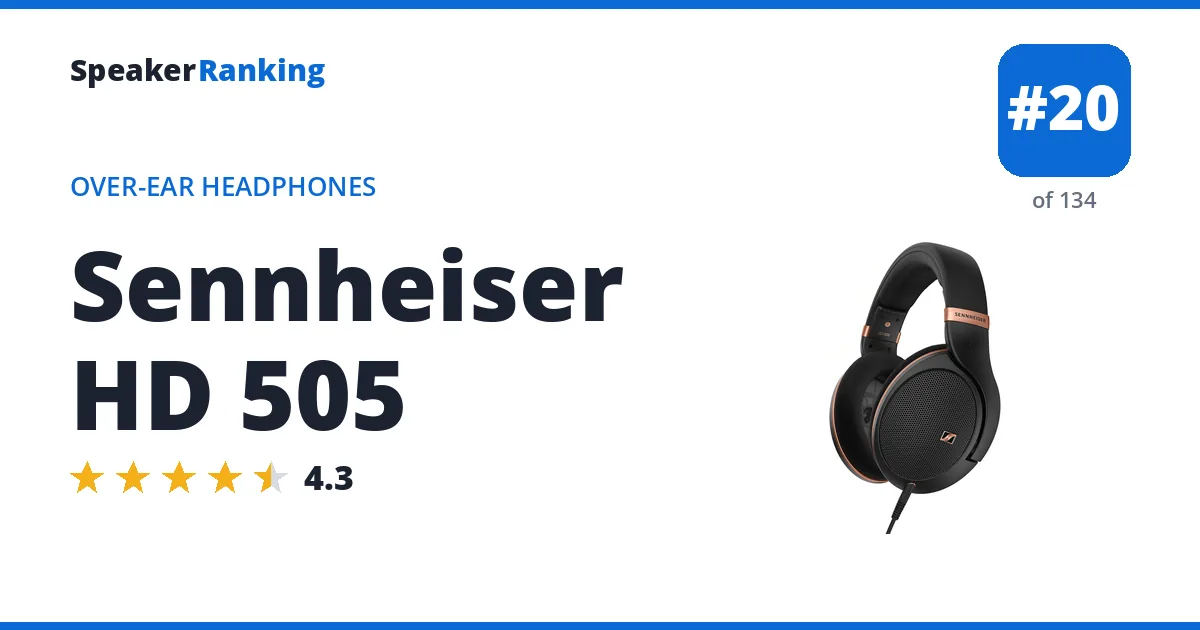
Pros: A preference score of 88 in oratory1990’s measurement puts it among the closest to the Harman target, with the midrange from 200 Hz to 6 kHz within about 0.5 dB of target, so vocals and instruments sound natural and unforced. The 120 ohm impedance and 107.9 dB per volt sensitivity let it run from a decent DAC or portable amp, and at 237 g the open-back design is light.
Cons: Sub-bass under 60 Hz sits about 6 dB below target, so deep synth bass and kick drum weight are thin. A narrow 9 dB dip near 9.9 kHz and treble running about 2.7 dB low soften cymbals and make it a little dark on airy recordings. Being open-back it leaks sound and offers no isolation.
Full Sennheiser HD 505 review and specifications →
| Back | Open |
|---|---|
| Connection | Wired |
| Deviation From Target | 1.85 dB standard deviation |
| Driver Type | Dynamic |
| Form Factor | Over-ear |
| Frequency Response | 12Hz - 38.5kHz (Manufacturer specified) |
| Harman Preference Score | 88 (measured by oratory1990, via AutoEQ) |
| Impedance | 120 ohms |
| Sensitivity | 107.9 dB SPL/V |
| Tonal Tilt | +0.17 (negative is warmer, positive brighter) |
| Weight | 0.5 lbs (237 g) |
EQ preset to match the Harman target
Set a preamp of -6.3 dB, then add these filters in any parametric equalizer (Wavelet, Equalizer APO, Peace, or a player with parametric EQ). Calculated by AutoEQ from its measured frequency response.
| Filter | Frequency | Gain | Q |
|---|---|---|---|
| Low shelf | 105 Hz | +7.0 dB | 0.70 |
| Peak | 9,030 Hz | +3.9 dB | 2.25 |
| Peak | 84 Hz | -2.7 dB | 0.44 |
| Peak | 560 Hz | +1.1 dB | 1.13 |
| Peak | 1,256 Hz | -1.5 dB | 1.71 |
| High shelf | 10,000 Hz | -2.5 dB | 0.70 |
| Peak | 3,218 Hz | -1.8 dB | 2.89 |
| Peak | 5,479 Hz | -2.6 dB | 4.99 |
| Peak | 4,145 Hz | +2.5 dB | 5.93 |
| Peak | 6,870 Hz | +2.4 dB | 5.70 |
- Reviews, Comparisons and Sound Samples
- Head-to-Head Comparisons
 Sennheiser HD 599: $239.95 Amazon eBay
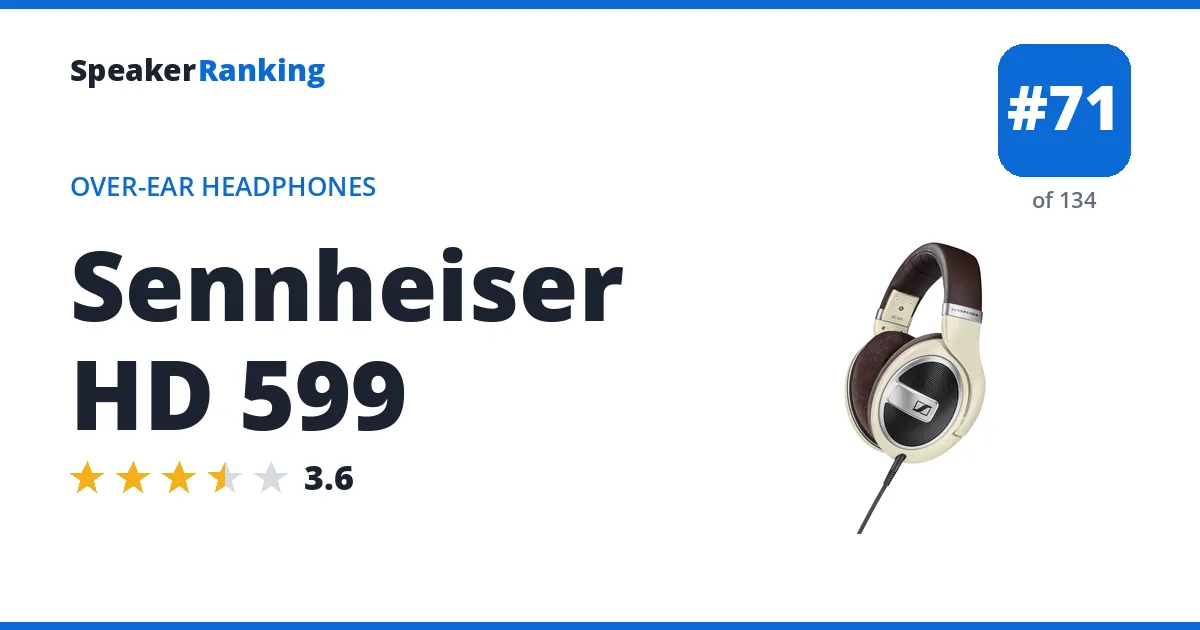
Pros: A preference score of 73 and a modest 2.74 dB deviation from the Harman target in oratory1990’s measurement make this a fairly smooth open back. Bass runs about 2 dB above target and the lows through the low mids are about 2.7 dB up, which gives vocals and guitars a full, warm body. At 50 ohms and 106 dB sensitivity it is easy to drive, and at 250 g it is light.
Cons: Sub-bass falls about 6 dB under target below 60 Hz, so the extra warmth sits higher up and the deepest rumble is missing. A 9.6 dB dip near 9.8 kHz and about 3.5 dB less air above 10 kHz take the sparkle off cymbals, while a 3.7 dB peak near 5.7 kHz can add some edge to vocals. The open back leaks sound and offers no isolation.
Full Sennheiser HD 599 review and specifications →
| Released | Sep 2016 (10 years ago) |
|---|---|
| Back | Open |
| Connection | Wired |
| Deviation From Target | 2.74 dB standard deviation |
| Driver Type | Dynamic |
| Form Factor | Over-ear |
| Frequency Response | 12Hz - 38.5kHz (Manufacturer specified) |
| Harman Preference Score | 73 (measured by oratory1990, via AutoEQ) |
| Impedance | 50 ohms |
| Sensitivity | 106 dB SPL (1 kHz, 1 Vrms) |
| Tonal Tilt | -0.42 (negative is warmer, positive brighter) |
| Weight | 0.6 lbs (250 g) |
EQ preset to match the Harman target
Set a preamp of -6.2 dB, then add these filters in any parametric equalizer (Wavelet, Equalizer APO, Peace, or a player with parametric EQ). Calculated by AutoEQ from its measured frequency response.
| Filter | Frequency | Gain | Q |
|---|---|---|---|
| Low shelf | 105 Hz | +6.1 dB | 0.70 |
| Peak | 152 Hz | -4.3 dB | 0.59 |
| Peak | 1,751 Hz | +4.4 dB | 1.45 |
| Peak | 4,485 Hz | -1.9 dB | 2.72 |
| Peak | 40 Hz | +1.0 dB | 3.06 |
| High shelf | 10,000 Hz | -0.7 dB | 0.70 |
| Peak | 9,629 Hz | +6.0 dB | 1.71 |
| Peak | 5,771 Hz | -2.8 dB | 5.56 |
| Peak | 3,175 Hz | -2.0 dB | 4.70 |
| Peak | 3,690 Hz | +0.7 dB | 4.38 |
- Reviews, Comparisons and Sound Samples
- Head-to-Head Comparisons