Short answer: the KZ ZSN Pro X, if you are buying new. The 7Hz Salnotes Zero ranks higher than it (#4 vs #19 of 68 in-ear headphones, 4.8/5 vs 4.0/5) but is discontinued, so only consider it used; the KZ ZSN Pro X is still sold new at $23.99. The 7Hz Salnotes Zero’s replacement, the 7Hz x Crinacle Zero 2, is rated 3.9/5 at $24.99.
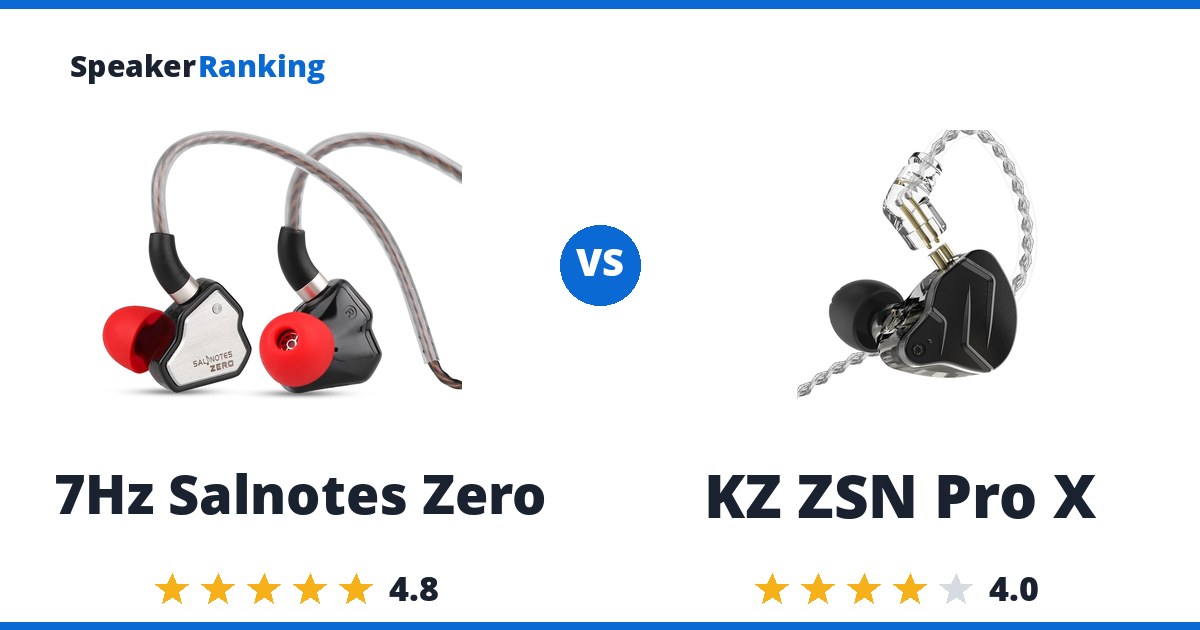
The 7Hz Salnotes Zero is the better-sounding pick. A Harman score of 84 from a single 10 mm dynamic driver at a bargain price is remarkable. The tradeoff: Presence and treble run about 2.1 to 2.2 dB under target, and a 6.2 dB dip near 10 kHz leaves cymbals and breath detail muted.
What the KZ ZSN Pro X does well: The hybrid design with a 10mm dynamic driver and a balanced armature gives bass about 3.6 dB above target at 60 to 200 Hz, which adds punch and warmth for pop and hip hop. Watch for: A 7.2 dB peak near 8.1 kHz and an air band about 5.8 dB above target can make cymbals and s sounds sharp or hissy at higher volume.
Buy the KZ ZSN Pro X new; the 7Hz Salnotes Zero is no longer sold new, so it only makes sense as a used find.
Want more options? Browse the full Headphones rankings.
Specifications Side By Side
| 7Hz Salnotes Zero | KZ ZSN Pro X | |
|---|---|---|
| Price | $22.99 Discontinued | $23.99 |
| Ranked | #4 of 68 in In-Ear Headphones | #19 of 68 in In-Ear Headphones |
| Form Factor | In-ear | In-ear |
| Harman Preference Score | 84 (measured by oratory1990, via AutoEQ) | 74 (measured by oratory1990, via AutoEQ) |
| Deviation From Target | 1.31 dB standard deviation | 2.09 dB standard deviation |
| Tonal Tilt | -0.16 (negative is warmer, positive brighter) | -0.17 (negative is warmer, positive brighter) |
| Connection | Wired | Wired |
| Driver Type | Dynamic | Hybrid (1 dynamic + 1 balanced armature) |
| Drivers | 1 x 10mm dynamic | 1 x 10mm dynamic + 1 x balanced armature |
| Impedance | 32 ohms | 25 ohms |
| Sensitivity | 108 dB SPL/V | 112 dB/mW |
| Frequency Response | 10Hz - 20kHz (Manufacturer specified) | 7Hz - 40kHz (Manufacturer specified) |
| Back | Closed | Closed |
Related Headphone Comparisons
How 7Hz Salnotes Zero compares with other leading options:
- Truthear x Crinacle Zero RED vs 7Hz Salnotes Zero
- 7Hz Salnotes Zero vs Truthear Gate
- KZ ZSN Pro X vs KZ ZSN Pro
- Truthear x Crinacle Zero RED vs Tin HiFi T3 Plus
- Truthear x Crinacle Zero RED vs Tin HiFi T4
Prices on this page were last checked October 10, 2026 at 5:37 PM UTC. Product prices and availability are accurate as of that date/time and are subject to change; the price and availability shown on Amazon at the time of purchase will apply to the purchase of this product.
As an eBay Partner, we may be compensated if you make a purchase.
The Two Headphones In Full
 7Hz Salnotes Zero: $22.99 Discontinued Amazon eBay
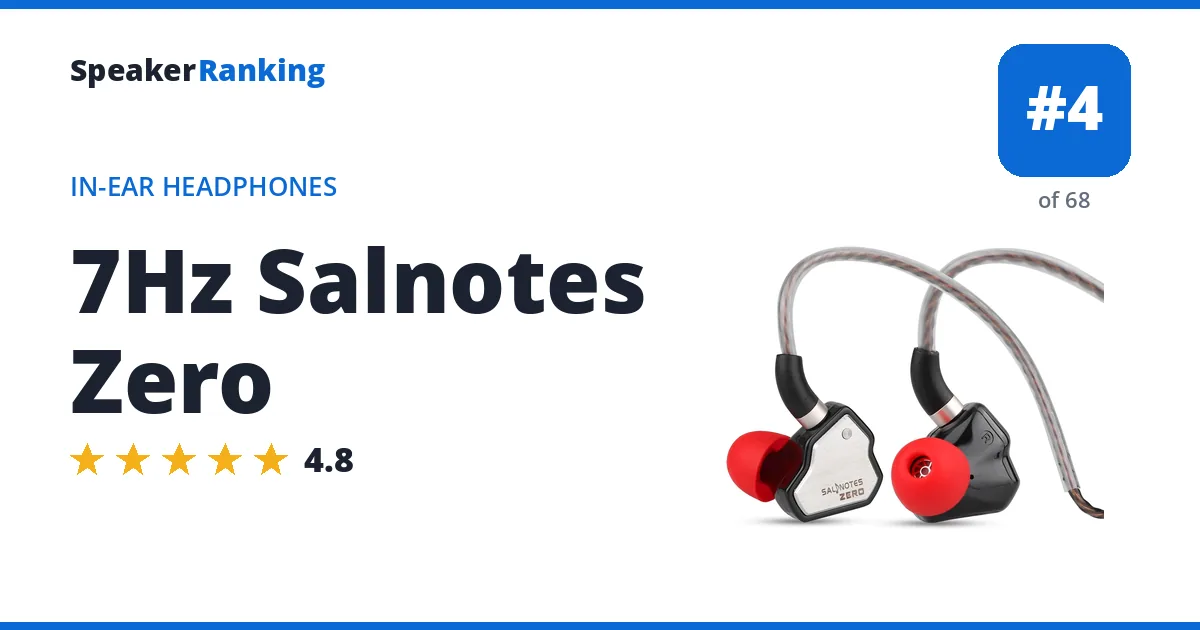
Newer model: the 7Hz x Crinacle Zero 2, ranked lower, rated 3.9/5, released Nov 2023. See every 7Hz Zero generation.
Pros: A Harman score of 84 from a single 10 mm dynamic driver at a bargain price is remarkable. Bass and mids sit within about 0.3 dB of the target, so vocals and instruments are balanced naturally with a 1.31 dB deviation. It runs from a phone without difficulty at 32 ohms and 108 dB per volt. It beats the 7Hz x Crinacle Zero 2 on rating at a similar cost.
Cons: Presence and treble run about 2.1 to 2.2 dB under target, and a 6.2 dB dip near 10 kHz leaves cymbals and breath detail muted. Sub-bass is about 1.5 dB light, so the deepest rumble in electronic music is understated. The sensitivity is lower than many rivals, so it needs a bit more volume headroom from weak sources. Discontinued.
Full 7Hz Salnotes Zero review and specifications →
| Released | Jul 2022 (4 years ago) |
|---|---|
| Back | Closed |
| Connection | Wired |
| Deviation From Target | 1.31 dB standard deviation |
| Driver Type | Dynamic |
| Drivers | 1 x 10mm dynamic |
| Form Factor | In-ear |
| Frequency Response | 10Hz - 20kHz (Manufacturer specified) |
| Harman Preference Score | 84 (measured by oratory1990, via AutoEQ) |
| Impedance | 32 ohms |
| Sensitivity | 108 dB SPL/V |
| Tonal Tilt | -0.16 (negative is warmer, positive brighter) |
EQ preset to match the Harman target
Set a preamp of -2.5 dB, then add these filters in any parametric equalizer (Wavelet, Equalizer APO, Peace, or a player with parametric EQ). Calculated by AutoEQ from its measured frequency response.
| Filter | Frequency | Gain | Q |
|---|---|---|---|
| Low shelf | 105 Hz | -0.4 dB | 0.70 |
| Peak | 7,148 Hz | +2.5 dB | 1.39 |
| Peak | 186 Hz | -1.3 dB | 1.35 |
| Peak | 65 Hz | +1.7 dB | 1.11 |
| Peak | 1,677 Hz | -1.1 dB | 1.82 |
| High shelf | 10,000 Hz | -1.3 dB | 0.70 |
| Peak | 857 Hz | +0.9 dB | 1.64 |
| Peak | 9,824 Hz | +0.9 dB | 1.98 |
| Peak | 3,316 Hz | -0.6 dB | 2.50 |
| Peak | 1,261 Hz | -0.7 dB | 3.34 |
- Reviews, Comparisons and Sound Samples
- Head-to-Head Comparisons
 KZ ZSN Pro X: $23.99 Amazon eBay
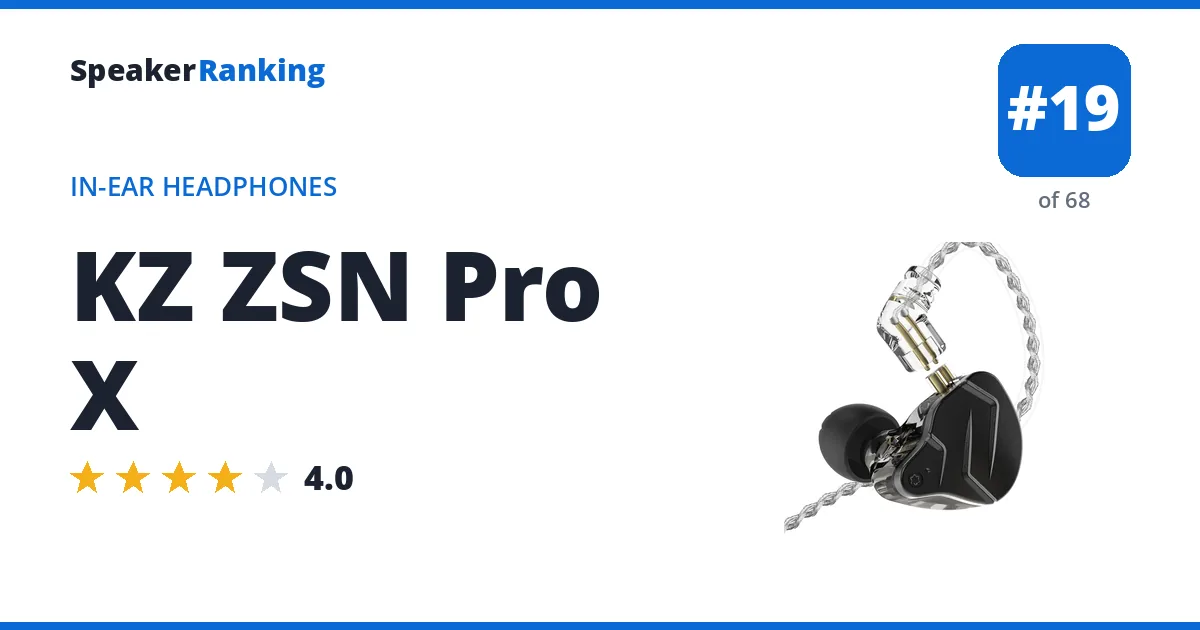
Pros: The hybrid design with a 10mm dynamic driver and a balanced armature gives bass about 3.6 dB above target at 60 to 200 Hz, which adds punch and warmth for pop and hip hop. A preference score of 74 at an inexpensive price is strong, and the 25 ohm impedance with 112 dB/mW sensitivity makes it easy to drive from a phone. It also suits a warm or v-shaped taste.
Cons: A 7.2 dB peak near 8.1 kHz and an air band about 5.8 dB above target can make cymbals and s sounds sharp or hissy at higher volume. The 3 to 4 kHz region dips about 2.9 dB, so vocals can sound a little distant. It has no wireless features or noise cancelling.
Full KZ ZSN Pro X review and specifications →
| Released | Jul 2020 (6 years ago) |
|---|---|
| Back | Closed |
| Connection | Wired |
| Deviation From Target | 2.09 dB standard deviation |
| Driver Type | Hybrid (1 dynamic + 1 balanced armature) |
| Drivers | 1 x 10mm dynamic + 1 x balanced armature |
| Form Factor | In-ear |
| Frequency Response | 7Hz - 40kHz (Manufacturer specified) |
| Harman Preference Score | 74 (measured by oratory1990, via AutoEQ) |
| Impedance | 25 ohms |
| Sensitivity | 112 dB/mW |
| Tonal Tilt | -0.17 (negative is warmer, positive brighter) |
EQ preset to match the Harman target
Set a preamp of -3.8 dB, then add these filters in any parametric equalizer (Wavelet, Equalizer APO, Peace, or a player with parametric EQ). Calculated by AutoEQ from its measured frequency response.
| Filter | Frequency | Gain | Q |
|---|---|---|---|
| Low shelf | 105 Hz | +0.8 dB | 0.70 |
| Peak | 928 Hz | +5.3 dB | 0.66 |
| Peak | 166 Hz | -3.4 dB | 0.67 |
| Peak | 2,193 Hz | -4.4 dB | 0.61 |
| Peak | 3,392 Hz | +6.1 dB | 2.82 |
| High shelf | 10,000 Hz | -4.4 dB | 0.70 |
| Peak | 6,459 Hz | +3.5 dB | 5.25 |
| Peak | 4,968 Hz | -3.5 dB | 5.59 |
| Peak | 4,039 Hz | +1.3 dB | 6.00 |
| Peak | 5,964 Hz | +0.9 dB | 5.91 |
- Reviews, Comparisons and Sound Samples
- Head-to-Head Comparisons