Short answer: both are discontinued, so this only matters if you are buying used. Used, the Beats Powerbeats Pro is the better pick: it ranks #17 of 68 in-ear headphones by sound quality (rated 4.1/5), against #20 (rated 4.0/5) for the Samsung Galaxy Buds2. If you want one new, the Truthear Nova ranks #1 at $169.99.
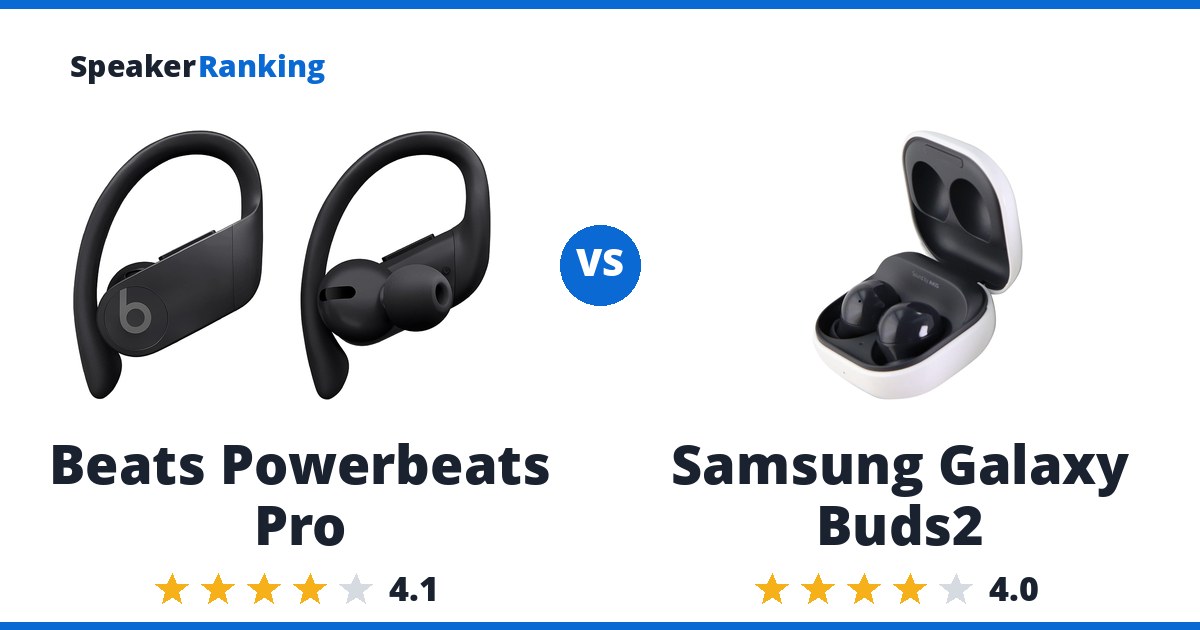
The Beats Powerbeats Pro is the longer-running, tougher choice. Bass and midrange follow the Harman target closely, with 60 to 200 Hz within 0.2 dB and upper mids 0.7 dB above, so voices and bass lines sound natural and warm for a preference score of 75. It is rated for 9 hours of battery against 5 for the Samsung Galaxy Buds2. It is rated IPX4 against IPX2 for the Samsung Galaxy Buds2. The tradeoff: Treble is well under target, about 5.2 dB low from 6 to 10 kHz, with an 8.5 dB dip near 6.8 kHz, so cymbals, hi-hats and sibilance sound muted.
The case for the Samsung Galaxy Buds2: Bass and low mids sit slightly above target, about 0.9 dB at 60 to 200 Hz, which gives a warm, easy tonal balance for a preference score of 74. Watch for: Treble is uneven, with a 5.8 dB peak near 8 kHz, a 4.8 dB dip across 3 to 6 kHz, and the air band 6.5 dB low, which blurs vocal detail and makes cymbals sound splashy and then rolled off.
Buy the Beats Powerbeats Pro only if you find one used in good condition; both are discontinued, and it is the better rated of the two. For a new speaker, start with the Truthear Nova instead.
Looking for alternatives? See the complete Headphones rankings.
Specifications Side By Side
| Beats Powerbeats Pro | Samsung Galaxy Buds2 | |
|---|---|---|
| Price | $189.99 Discontinued | $199.00 Discontinued |
| Ranked | #17 of 68 in In-Ear Headphones | #20 of 68 in In-Ear Headphones |
| Form Factor | In-ear | In-ear |
| Harman Preference Score | 75 (measured by oratory1990, via AutoEQ) | 74 (measured by oratory1990, via AutoEQ) |
| Deviation From Target | 2.09 dB standard deviation | 2.18 dB standard deviation |
| Tonal Tilt | -0.37 (negative is warmer, positive brighter) | -0.24 (negative is warmer, positive brighter) |
| Connection | True wireless | True wireless |
| Active Noise Cancelling | No | Yes |
| Battery Life | 9 hours (24 with case, Manufacturer specified) | 5 hours (20 with case, ANC on; 7.5 hours, 29 with case, ANC off, Manufacturer specified) |
| Bluetooth Version | 5.0 | 5.2 |
| Bluetooth Codecs | SBC, AAC | SBC, AAC, Scalable |
| Built-in Microphone | Yes | Yes |
| IP Rating | IPX4 | IPX2 |
| Back | Closed | Closed |
| Driver Type | - | Dynamic |
| Drivers | - | 1 x 11mm dynamic woofer + 1 x 6.3mm dynamic tweeter |
| Weight | - | 0 lbs (5 g) per earbud |
Related Headphone Comparisons
How Beats Powerbeats Pro compares with other leading options:
- AUNE Jasper vs Beats Powerbeats Pro
- Samsung Galaxy Buds2 vs Shuoer S12 Pro
- AUNE Jasper vs Samsung Galaxy Buds2
- KZ ZSN Pro X vs KZ ZSN Pro
- 7Hz Salnotes Zero vs KZ ZSN Pro X
Prices on this page were last checked October 10, 2026 at 5:37 PM UTC. Product prices and availability are accurate as of that date/time and are subject to change; the price and availability shown on Amazon at the time of purchase will apply to the purchase of this product.
As an eBay Partner, we may be compensated if you make a purchase.
The Two Headphones In Full
 Beats Powerbeats Pro: $189.99 Discontinued Amazon eBay
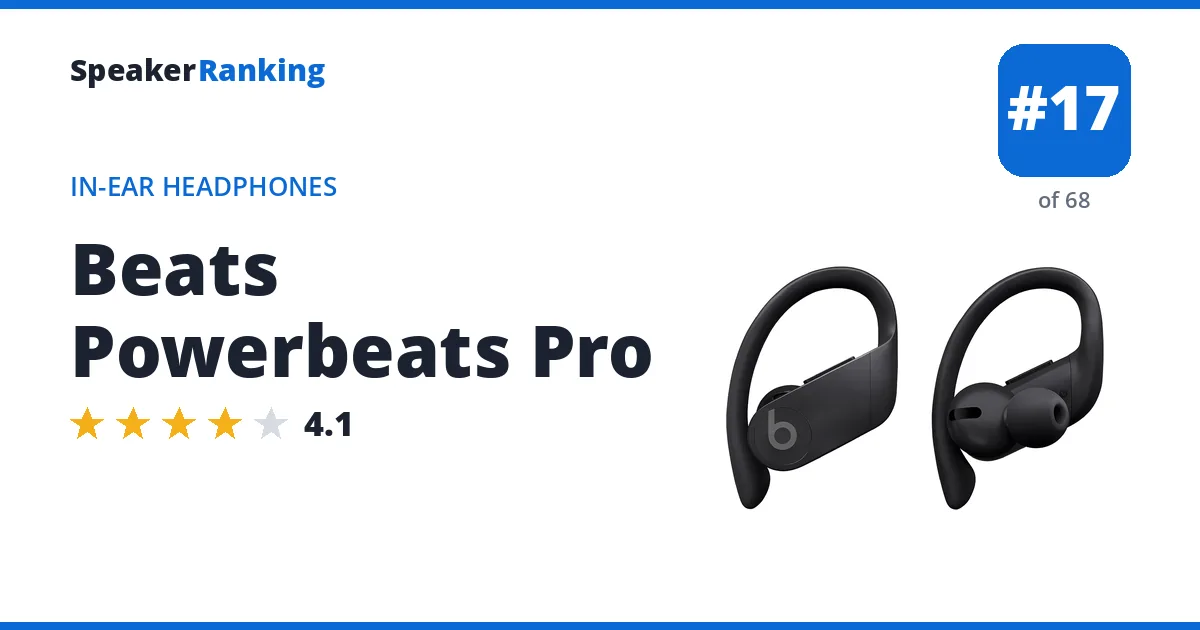
Pros: Bass and midrange follow the Harman target closely, with 60 to 200 Hz within 0.2 dB and upper mids 0.7 dB above, so voices and bass lines sound natural and warm for a preference score of 75. The true wireless design adds Bluetooth 5.0 with SBC and AAC, a built-in microphone and an IPX4 rating. Battery lasts about 9 hours per charge, 24 with the case.
Cons: Treble is well under target, about 5.2 dB low from 6 to 10 kHz, with an 8.5 dB dip near 6.8 kHz, so cymbals, hi-hats and sibilance sound muted. The air band above 10 kHz is another 4.4 dB low, which adds to a dark, closed-in sound. It has no active noise cancelling, and the Etymotic EVO has a higher rating. Discontinued.
Full Beats Powerbeats Pro review and specifications →
| Released | May 2019 (7 years ago) |
|---|---|
| Active Noise Cancelling | No |
| Back | Closed |
| Battery Life | 9 hours (24 with case, Manufacturer specified) |
| Bluetooth Codecs | SBC, AAC |
| Bluetooth Version | 5.0 |
| Built-in Microphone | Yes |
| Connection | True wireless |
| Deviation From Target | 2.09 dB standard deviation |
| Form Factor | In-ear |
| Harman Preference Score | 75 (measured by oratory1990, via AutoEQ) |
| IP Rating | IPX4 |
| Tonal Tilt | -0.37 (negative is warmer, positive brighter) |
EQ preset to match the Harman target
Set a preamp of -6.4 dB, then add these filters in any parametric equalizer (Wavelet, Equalizer APO, Peace, or a player with parametric EQ). Calculated by AutoEQ from its measured frequency response.
| Filter | Frequency | Gain | Q |
|---|---|---|---|
| Low shelf | 105 Hz | -0.8 dB | 0.70 |
| Peak | 6,596 Hz | +6.1 dB | 2.51 |
| Peak | 2,703 Hz | -4.4 dB | 2.80 |
| Peak | 1,362 Hz | -2.1 dB | 1.94 |
| Peak | 3,607 Hz | +3.7 dB | 4.72 |
| High shelf | 10,000 Hz | +3.7 dB | 0.70 |
| Peak | 143 Hz | -1.2 dB | 1.56 |
| Peak | 374 Hz | +0.7 dB | 1.21 |
| Peak | 4,688 Hz | -2.2 dB | 6.00 |
| Peak | 60 Hz | +0.4 dB | 1.34 |
- Reviews, Comparisons and Sound Samples
- Head-to-Head Comparisons
 Samsung Galaxy Buds2: $199.00 Discontinued Amazon eBay
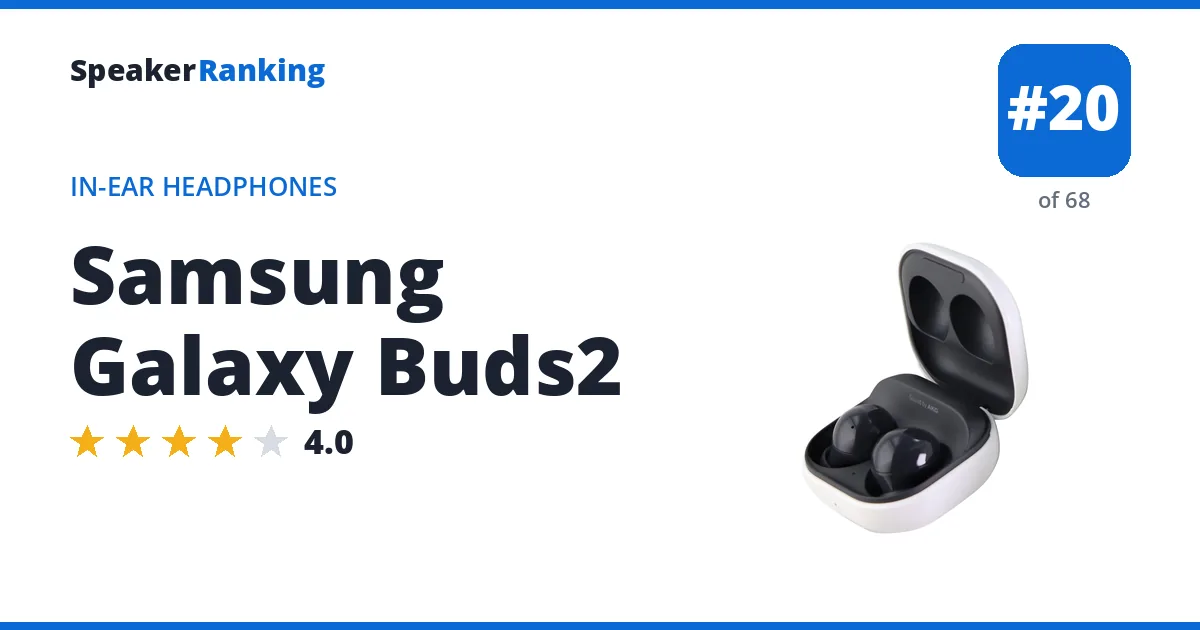
Pros: Bass and low mids sit slightly above target, about 0.9 dB at 60 to 200 Hz, which gives a warm, easy tonal balance for a preference score of 74. The set offers active noise cancelling, Bluetooth 5.2, a microphone, and SBC, AAC and Scalable codec support. Each bud weighs 5 g, and a dual driver layout pairs an 11mm woofer with a 6.3mm tweeter.
Cons: Treble is uneven, with a 5.8 dB peak near 8 kHz, a 4.8 dB dip across 3 to 6 kHz, and the air band 6.5 dB low, which blurs vocal detail and makes cymbals sound splashy and then rolled off. Battery lasts about 5 hours with noise cancelling on. The IPX2 rating gives only basic splash protection, and the AUNE Jasper has a higher rating. Discontinued.
Full Samsung Galaxy Buds2 review and specifications →
| Released | Aug 2021 (5 years ago) |
|---|---|
| Active Noise Cancelling | Yes |
| Back | Closed |
| Battery Life | 5 hours (20 with case, ANC on; 7.5 hours, 29 with case, ANC off, Manufacturer specified) |
| Bluetooth Codecs | SBC, AAC, Scalable |
| Bluetooth Version | 5.2 |
| Built-in Microphone | Yes |
| Connection | True wireless |
| Deviation From Target | 2.18 dB standard deviation |
| Driver Type | Dynamic |
| Drivers | 1 x 11mm dynamic woofer + 1 x 6.3mm dynamic tweeter |
| Form Factor | In-ear |
| Harman Preference Score | 74 (measured by oratory1990, via AutoEQ) |
| IP Rating | IPX2 |
| Tonal Tilt | -0.24 (negative is warmer, positive brighter) |
| Weight | 0 lbs (5 g) per earbud |
EQ preset to match the Harman target
Set a preamp of -4.6 dB, then add these filters in any parametric equalizer (Wavelet, Equalizer APO, Peace, or a player with parametric EQ). Calculated by AutoEQ from its measured frequency response.
| Filter | Frequency | Gain | Q |
|---|---|---|---|
| Low shelf | 105 Hz | +1.7 dB | 0.70 |
| Peak | 4,739 Hz | +4.8 dB | 1.27 |
| Peak | 88 Hz | -1.9 dB | 0.26 |
| Peak | 6,935 Hz | -3.8 dB | 4.18 |
| Peak | 827 Hz | +0.9 dB | 2.57 |
| High shelf | 10,000 Hz | +3.1 dB | 0.70 |
| Peak | 1,484 Hz | -1.0 dB | 2.64 |
| Peak | 7,930 Hz | -1.3 dB | 5.82 |
| Peak | 1,026 Hz | +0.5 dB | 4.03 |
| Peak | 41 Hz | -0.2 dB | 1.94 |
- Reviews, Comparisons and Sound Samples
- Head-to-Head Comparisons