Short answer: the Kiwi Ears Orchestra Lite. It ranks #182 of 450 in-ear headphones by sound quality, rated 4.2/5, at $249; the FiiO FH5s ranks #215, rated 4.1/5, and costs $254.99, which makes this an easy call rather than a real tradeoff.
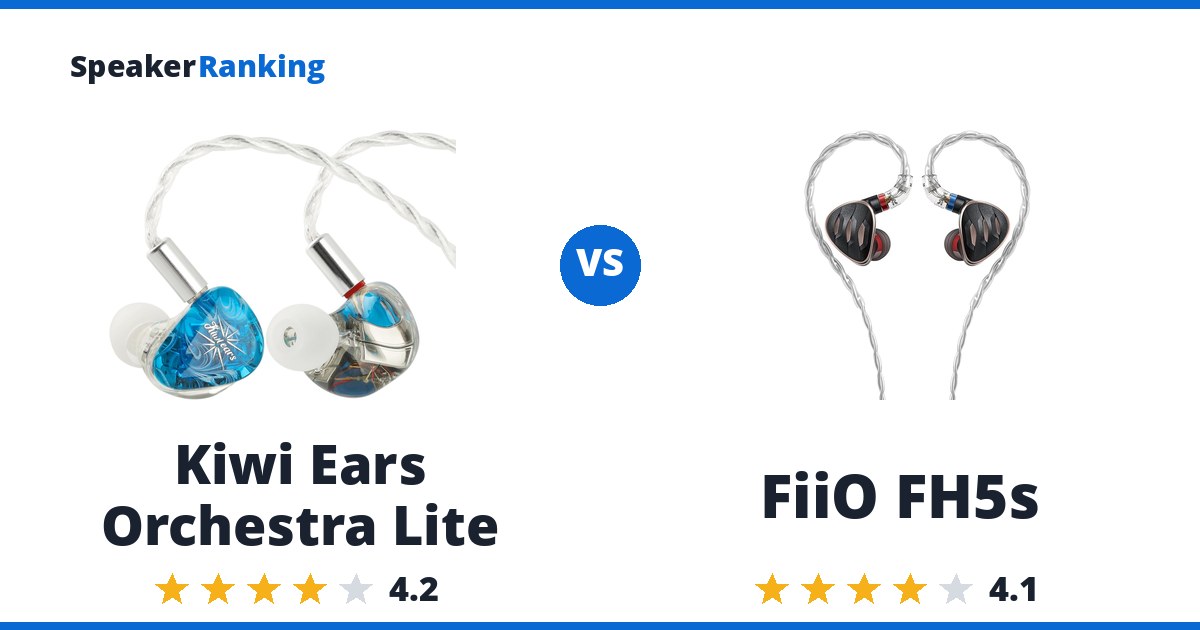
What the Kiwi Ears Orchestra Lite does well: Bass and lower midrange land within about 0.2 dB of the Harman target from 60 Hz to 1 kHz, so vocals and instruments sound natural and unboosted. Watch for: Presence from 3 to 6 kHz runs about 5.6 dB under target, with a 6.7 dB dip near 3.6 kHz, so voices and guitars sound recessed and a little veiled.
What the FiiO FH5s does well: Crinacle’s measurement gives it a preference score of 75, and across seven hobbyist measurements on squig.link every band from 20 Hz to 16 kHz lands within 2 dB of the Harman target. Watch for: A 6.6 dB peak near 8 kHz in the squig.link measurements can make cymbals and sibilant vocals sharp, followed by a 4.3 dB dip near 11.9 kHz that trims some air.
Buy the Kiwi Ears Orchestra Lite. It is rated higher for sound quality than the FiiO FH5s and costs less, which makes it the one to get unless you need something the other one does better.
Want more options? Browse the full Headphones rankings.
Specifications Side By Side
| Kiwi Ears Orchestra Lite | FiiO FH5s | |
|---|---|---|
| Price | $249.00 | $254.99 |
| Ranked | #182 of 450 in In-Ear Headphones | #215 of 450 in In-Ear Headphones |
| Form Factor | In-ear | In-ear |
| Harman Preference Score | 76 (measured by oratory1990, via AutoEQ) | 75 (measured by crinacle, via AutoEQ) |
| Deviation From Target | 2.03 dB standard deviation | 2.01 dB standard deviation |
| Tonal Tilt | -0.26 (negative is warmer, positive brighter) | +0.34 (negative is warmer, positive brighter) |
| Sub-bass Extension | Within 6 dB of target down to 20 Hz (-2.9 dB at 30 Hz) | Within 6 dB of target down to 20 Hz (-0.4 dB at 30 Hz) |
| Connection | Wired | Wired |
| Driver Type | Balanced armature | Hybrid (2 dynamic + 2 balanced armature) |
| Drivers | 8 x balanced armature | 2 x dynamic (12mm + 6mm) + 2 x balanced armature |
| Sensitivity | 112 dB SPL/mW | 106 dB/mW |
| Frequency Response | 20Hz - 20kHz (Manufacturer specified) | 10Hz - 40kHz (Manufacturer specified) |
| Built-in Microphone | No | No |
| Back | Closed | Closed |
| Impedance | - | 40 ohms |
| Weight | - | 0 lbs (8.8 g) per earbud |
Related Headphone Comparisons
How Kiwi Ears Orchestra Lite compares with other leading options:
- DUNU PRS6 vs Kiwi Ears Orchestra Lite
- Kiwi Ears Orchestra Lite vs Xenns Mangird Top
- Kiwi Ears Orchestra Lite vs Kiwi Ears Septet
- Kiwi Ears Orchestra Lite vs Tanchjim x Effect Audio Force
- Kiwi Ears Orchestra Lite vs AUNE Jasper
Prices on this page were last checked October 11, 2026 at 4:59 PM UTC. Product prices and availability are accurate as of that date/time and are subject to change; the price and availability shown on Amazon at the time of purchase will apply to the purchase of this product.
As an eBay Partner, we may be compensated if you make a purchase.
The Two Headphones In Full
 Kiwi Ears Orchestra Lite: $249.00 Amazon AliExpress eBay
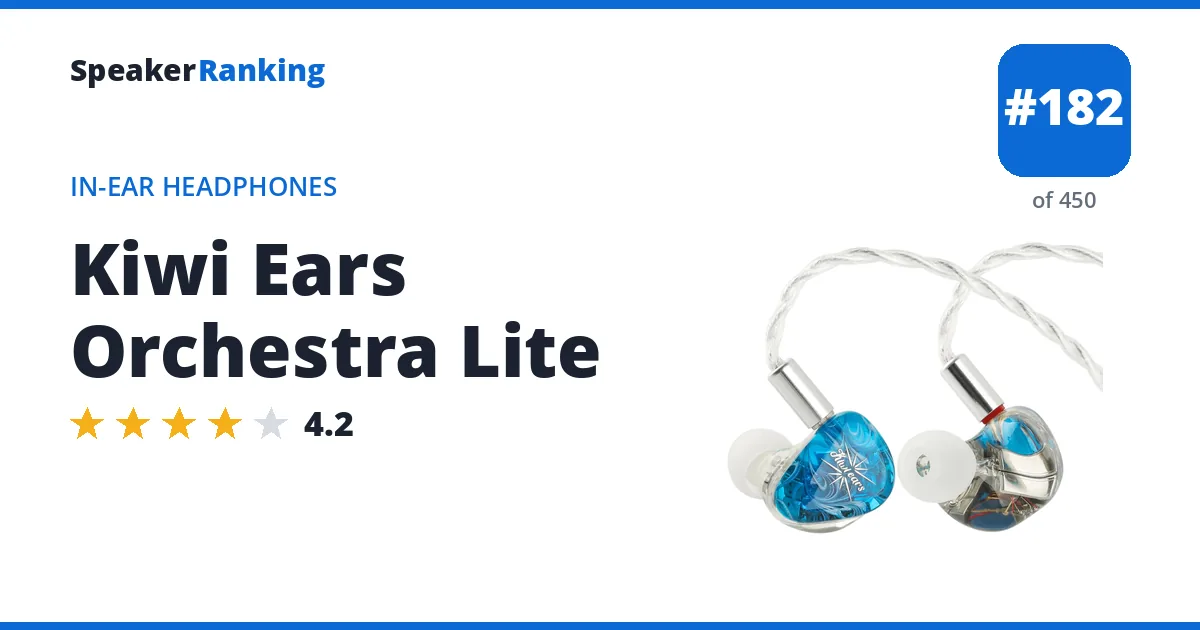
Pros: Bass and lower midrange land within about 0.2 dB of the Harman target from 60 Hz to 1 kHz, so vocals and instruments sound natural and unboosted. The response is smooth, with a deviation of only about 2 dB around the target and a preference score of 76. Eight balanced armature drivers and 112 dB sensitivity make it easy to drive from a phone or portable player, and it suits warm and bass leaning tastes.
Cons: Presence from 3 to 6 kHz runs about 5.6 dB under target, with a 6.7 dB dip near 3.6 kHz, so voices and guitars sound recessed and a little veiled. Treble from 6 to 10 kHz is about 2.8 dB low, which softens cymbals and reduces sparkle. It is rated below the Etymotic EVO, and there is no built in microphone.
Full Kiwi Ears Orchestra Lite review and specifications →
| Released | 2023 (3 years ago) |
|---|---|
| Back | Closed |
| Built-in Microphone | No |
| Connection | Wired |
| Deviation From Target | 2.03 dB standard deviation |
| Driver Type | Balanced armature |
| Drivers | 8 x balanced armature |
| Form Factor | In-ear |
| Frequency Response | 20Hz - 20kHz (Manufacturer specified) |
| Harman Preference Score | 76 (measured by oratory1990, via AutoEQ) |
| Sensitivity | 112 dB SPL/mW |
| Sub-bass Extension | Within 6 dB of target down to 20 Hz (-2.9 dB at 30 Hz) |
| Tonal Tilt | -0.26 (negative is warmer, positive brighter) |
EQ preset to match the Harman target
Set a preamp of -4.1 dB, then add these filters in any parametric equalizer (Wavelet, Equalizer APO, Peace, or a player with parametric EQ). Calculated by AutoEQ from its measured frequency response.
| Filter | Frequency | Gain | Q |
|---|---|---|---|
| Low shelf | 105 Hz | +1.1 dB | 0.70 |
| Peak | 128 Hz | -2.0 dB | 0.87 |
| Peak | 5,834 Hz | +3.8 dB | 2.20 |
| Peak | 1,508 Hz | -1.9 dB | 1.09 |
| Peak | 3,467 Hz | +4.0 dB | 2.99 |
| High shelf | 10,000 Hz | -0.7 dB | 0.70 |
| Peak | 8,847 Hz | +0.8 dB | 4.64 |
| Peak | 45 Hz | -0.2 dB | 2.08 |
| Peak | 4,617 Hz | -1.0 dB | 6.00 |
| Peak | 5,106 Hz | +0.8 dB | 6.00 |
- Reviews, Comparisons and Sound Samples
- Head-to-Head Comparisons
 FiiO FH5s: $254.99 Amazon AliExpress eBay
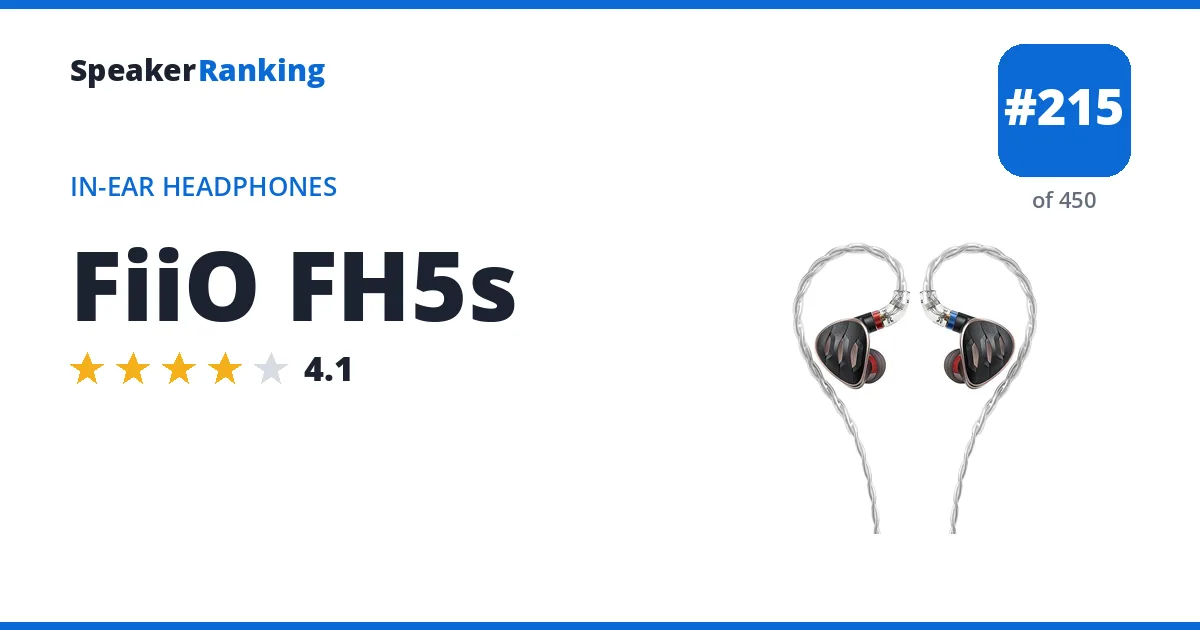
Pros: Crinacle’s measurement gives it a preference score of 75, and across seven hobbyist measurements on squig.link every band from 20 Hz to 16 kHz lands within 2 dB of the Harman target. Sub-bass stays within half a decibel of target at 30 Hz, so kick drums and synth bass hit with full weight. At 40 ohms and 106 dB/mW it runs well from a phone, and it rates above the Samsung Galaxy Buds2 and the Shuoer S12 Pro.
Cons: A 6.6 dB peak near 8 kHz in the squig.link measurements can make cymbals and sibilant vocals sharp, followed by a 4.3 dB dip near 11.9 kHz that trims some air. The AUNE Jasper matches its rating for slightly less money.
Full FiiO FH5s review and specifications →
| Released | Apr 2021 (5 years ago) |
|---|---|
| Back | Closed |
| Built-in Microphone | No |
| Connection | Wired |
| Deviation From Target | 2.01 dB standard deviation |
| Driver Type | Hybrid (2 dynamic + 2 balanced armature) |
| Drivers | 2 x dynamic (12mm + 6mm) + 2 x balanced armature |
| Form Factor | In-ear |
| Frequency Response | 10Hz - 40kHz (Manufacturer specified) |
| Harman Preference Score | 75 (measured by crinacle, via AutoEQ) |
| Impedance | 40 ohms |
| Sensitivity | 106 dB/mW |
| Sub-bass Extension | Within 6 dB of target down to 20 Hz (-0.4 dB at 30 Hz) |
| Tonal Tilt | +0.34 (negative is warmer, positive brighter) |
| Weight | 0 lbs (8.8 g) per earbud |
EQ preset to match the Harman target
Set a preamp of -3.2 dB, then add these filters in any parametric equalizer (Wavelet, Equalizer APO, Peace, or a player with parametric EQ). Calculated by AutoEQ from its measured frequency response.
| Filter | Frequency | Gain | Q |
|---|---|---|---|
| Low shelf | 105 Hz | +2.3 dB | 0.70 |
| Peak | 883 Hz | +3.4 dB | 0.35 |
| Peak | 1,614 Hz | -7.4 dB | 1.64 |
| Peak | 196 Hz | -2.0 dB | 0.64 |
| Peak | 10,000 Hz | +1.7 dB | 0.65 |
| High shelf | 10,000 Hz | -2.6 dB | 0.70 |
| Peak | 6,307 Hz | +2.5 dB | 5.92 |
| Peak | 4,444 Hz | -1.6 dB | 5.97 |
| Peak | 3,652 Hz | +1.2 dB | 6.00 |
| Peak | 7,146 Hz | -1.1 dB | 6.00 |
- Reviews, Comparisons and Sound Samples
- Head-to-Head Comparisons