Short answer: the Xenns Mangird Top. Both are rated 4.2/5 for sound quality (#179 and #182 of 450 in-ear headphones), and the Xenns Mangird Top costs $229 against $249 for the Kiwi Ears Orchestra Lite, with sound quality a draw, the lower price decides it.
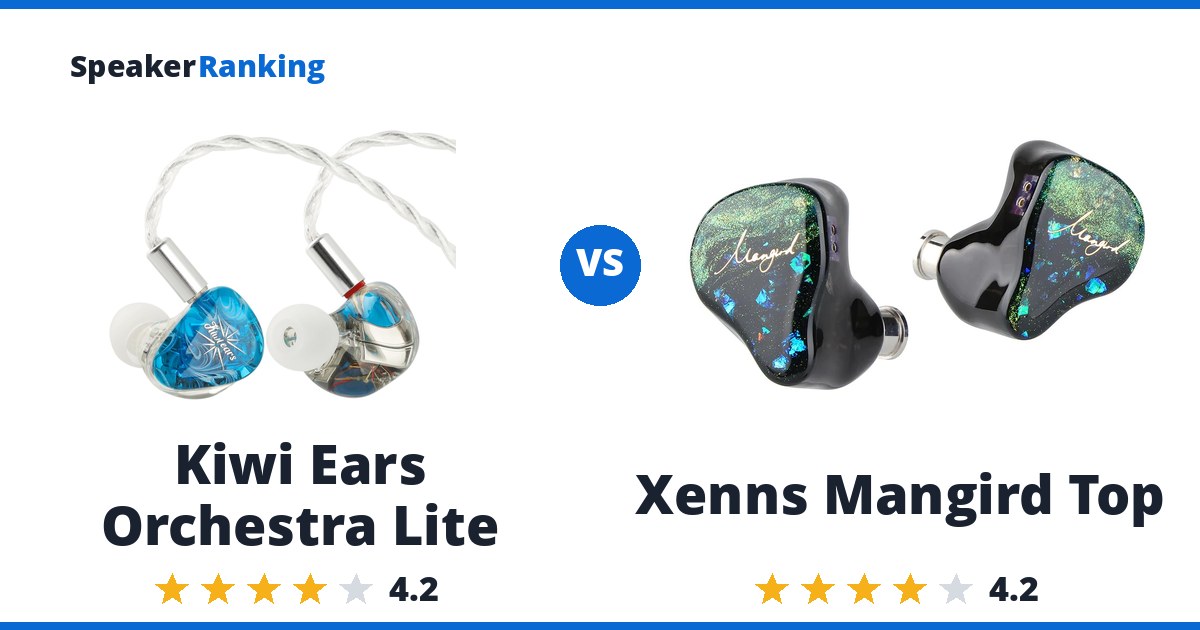
The case for the Kiwi Ears Orchestra Lite: Bass and lower midrange land within about 0.2 dB of the Harman target from 60 Hz to 1 kHz, so vocals and instruments sound natural and unboosted. The catch: Presence from 3 to 6 kHz runs about 5.6 dB under target, with a 6.7 dB dip near 3.6 kHz, so voices and guitars sound recessed and a little veiled.
Buy the Xenns Mangird Top. Both are rated the same for sound quality, and it costs $20 less than the Kiwi Ears Orchestra Lite.
Looking for alternatives? See the complete Headphones rankings.
Specifications Side By Side
| Kiwi Ears Orchestra Lite | Xenns Mangird Top | |
|---|---|---|
| Price | $249.00 | $229.00 |
| Ranked | #182 of 450 in In-Ear Headphones | #179 of 450 in In-Ear Headphones |
| Form Factor | In-ear | In-ear |
| Harman Preference Score | 76 (measured by oratory1990, via AutoEQ) | 77 (median of 13 squig.link measurements, calibrated to AutoEQ) |
| Deviation From Target | 2.03 dB standard deviation | 1.52 dB standard deviation |
| Tonal Tilt | -0.26 (negative is warmer, positive brighter) | -0.63 (negative is warmer, positive brighter) |
| Sub-bass Extension | Within 6 dB of target down to 20 Hz (-2.9 dB at 30 Hz) | Within 6 dB of target down to 20 Hz (+0.3 dB at 30 Hz) |
| Connection | Wired | Wired |
| Driver Type | Balanced armature | Hybrid (1 dynamic + 8 balanced armature) |
| Drivers | 8 x balanced armature | 1 x 10mm dynamic + 8 x balanced armature |
| Sensitivity | 112 dB SPL/mW | 107 dB |
| Frequency Response | 20Hz - 20kHz (Manufacturer specified) | 20Hz - 44kHz (Manufacturer specified) |
| Built-in Microphone | No | - |
| Back | Closed | Closed |
| Impedance | - | 25 ohms |
Related Headphone Comparisons
How Xenns Mangird Top compares with other leading options:
- BQEYZ Wind vs Xenns Mangird Top
- Kiwi Ears Septet vs Xenns Mangird Top
- Xenns Mangird Top vs AUNE Jasper
- Kiwi Ears Orchestra Lite vs Kiwi Ears Septet
- Kiwi Ears Orchestra Lite vs AUNE Jasper
Prices on this page were last checked October 11, 2026 at 4:59 PM UTC. Product prices and availability are accurate as of that date/time and are subject to change; the price and availability shown on Amazon at the time of purchase will apply to the purchase of this product.
As an eBay Partner, we may be compensated if you make a purchase.
The Two Headphones In Full
 Kiwi Ears Orchestra Lite: $249.00 Amazon AliExpress eBay
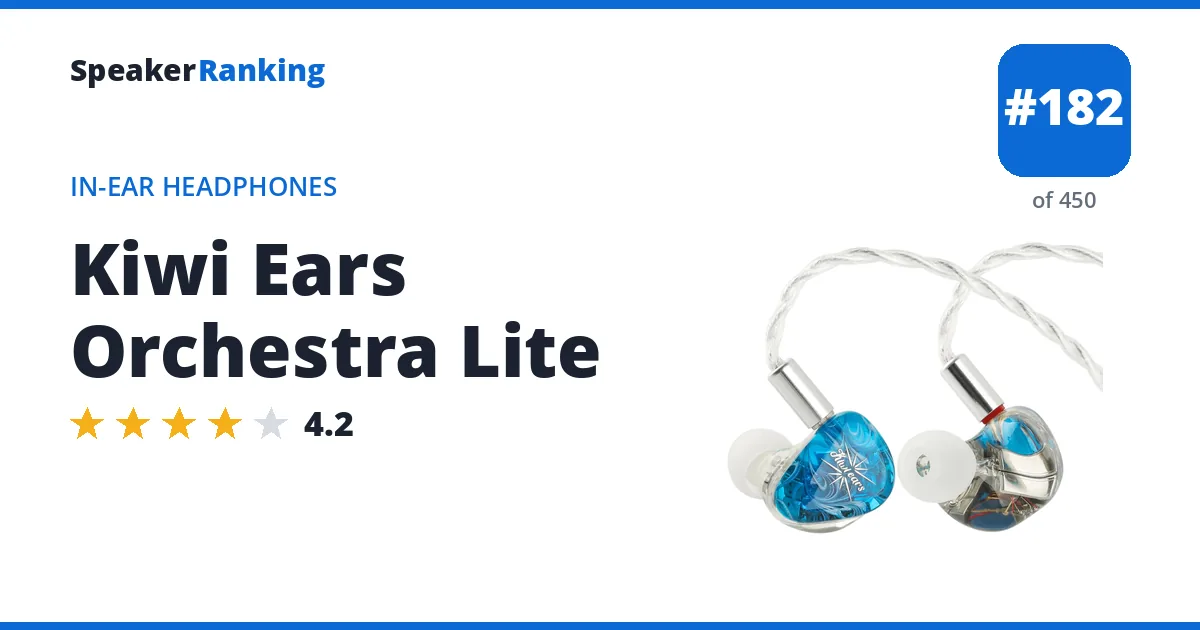
Pros: Bass and lower midrange land within about 0.2 dB of the Harman target from 60 Hz to 1 kHz, so vocals and instruments sound natural and unboosted. The response is smooth, with a deviation of only about 2 dB around the target and a preference score of 76. Eight balanced armature drivers and 112 dB sensitivity make it easy to drive from a phone or portable player, and it suits warm and bass leaning tastes.
Cons: Presence from 3 to 6 kHz runs about 5.6 dB under target, with a 6.7 dB dip near 3.6 kHz, so voices and guitars sound recessed and a little veiled. Treble from 6 to 10 kHz is about 2.8 dB low, which softens cymbals and reduces sparkle. It is rated below the Etymotic EVO, and there is no built in microphone.
Full Kiwi Ears Orchestra Lite review and specifications →
| Released | 2023 (3 years ago) |
|---|---|
| Back | Closed |
| Built-in Microphone | No |
| Connection | Wired |
| Deviation From Target | 2.03 dB standard deviation |
| Driver Type | Balanced armature |
| Drivers | 8 x balanced armature |
| Form Factor | In-ear |
| Frequency Response | 20Hz - 20kHz (Manufacturer specified) |
| Harman Preference Score | 76 (measured by oratory1990, via AutoEQ) |
| Sensitivity | 112 dB SPL/mW |
| Sub-bass Extension | Within 6 dB of target down to 20 Hz (-2.9 dB at 30 Hz) |
| Tonal Tilt | -0.26 (negative is warmer, positive brighter) |
EQ preset to match the Harman target
Set a preamp of -4.1 dB, then add these filters in any parametric equalizer (Wavelet, Equalizer APO, Peace, or a player with parametric EQ). Calculated by AutoEQ from its measured frequency response.
| Filter | Frequency | Gain | Q |
|---|---|---|---|
| Low shelf | 105 Hz | +1.1 dB | 0.70 |
| Peak | 128 Hz | -2.0 dB | 0.87 |
| Peak | 5,834 Hz | +3.8 dB | 2.20 |
| Peak | 1,508 Hz | -1.9 dB | 1.09 |
| Peak | 3,467 Hz | +4.0 dB | 2.99 |
| High shelf | 10,000 Hz | -0.7 dB | 0.70 |
| Peak | 8,847 Hz | +0.8 dB | 4.64 |
| Peak | 45 Hz | -0.2 dB | 2.08 |
| Peak | 4,617 Hz | -1.0 dB | 6.00 |
| Peak | 5,106 Hz | +0.8 dB | 6.00 |
- Reviews, Comparisons and Sound Samples
- Head-to-Head Comparisons
 Xenns Mangird Top: $229.00 Amazon eBay
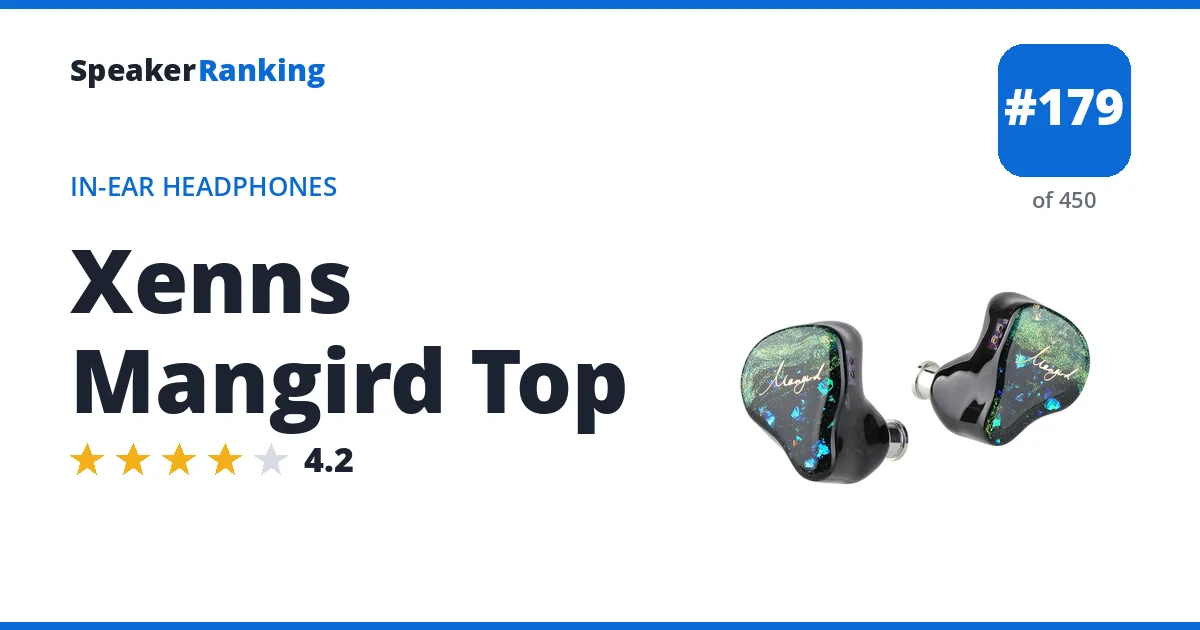
Full Xenns Mangird Top review and specifications →
| Back | Closed |
|---|---|
| Connection | Wired |
| Deviation From Target | 1.52 dB standard deviation |
| Driver Type | Hybrid (1 dynamic + 8 balanced armature) |
| Drivers | 1 x 10mm dynamic + 8 x balanced armature |
| Form Factor | In-ear |
| Frequency Response | 20Hz - 44kHz (Manufacturer specified) |
| Harman Preference Score | 77 (median of 13 squig.link measurements, calibrated to AutoEQ) |
| Impedance | 25 ohms |
| Sensitivity | 107 dB |
| Sub-bass Extension | Within 6 dB of target down to 20 Hz (+0.3 dB at 30 Hz) |
| Tonal Tilt | -0.63 (negative is warmer, positive brighter) |
- Reviews, Comparisons and Sound Samples
- Head-to-Head Comparisons