Short answer: the Koss KPH40, though neither ranks well in its class. It ranks #115 of 134 over-ear headphones by sound quality, rated 2.8/5, at $32.99; the Razer BlackShark V2 X ranks #134, rated 1.0/5, and costs $34.99, which makes this an easy call rather than a real tradeoff. Both are rated below 3.0/5 among the 134 over-ear headphones, and the Koss KPH30i, ranked #67 at $23.99, is a better place to start if sound quality matters.
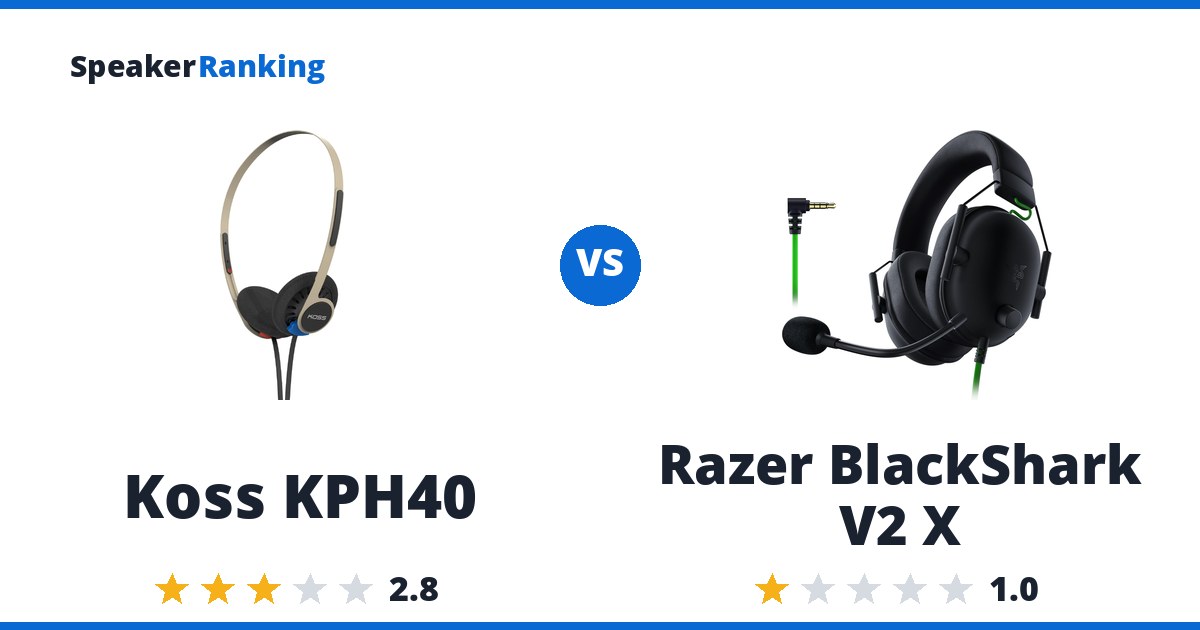
The Koss KPH40 is the better-sounding option. It is one of the cheapest options in its class, and the open-back design gives a more airy, spacious feel than most closed budget headsets. Watch for: Sub-bass rolls off about 7 dB below target under 60 Hz, so kick drums and synth bass lack rumble.
The case for the Razer BlackShark V2 X: A built-in microphone makes it usable for voice chat without a separate headset. The catch: Crinacle’s measurement gives a Harman score of just 1, so the tonal balance is a long way from what most listeners prefer.
Buy the Koss KPH40. It is rated higher for sound quality than the Razer BlackShark V2 X and costs less, which makes it the one to get unless you need something the other one does better.
Still deciding? The full Headphones rankings cover every ranked option.
Specifications Side By Side
| Koss KPH40 | Razer BlackShark V2 X | |
|---|---|---|
| Price | $32.99 | $34.99 |
| Ranked | #115 of 134 in Over-Ear Headphones | #134 of 134 in Over-Ear Headphones |
| Form Factor | Over-ear | Over-ear |
| Harman Preference Score | 54 (measured by oratory1990, via AutoEQ) | 1 (measured by crinacle, via AutoEQ) |
| Deviation From Target | 3.35 dB standard deviation | 5.39 dB standard deviation |
| Tonal Tilt | -1.21 (negative is warmer, positive brighter) | -2.96 (negative is warmer, positive brighter) |
| Connection | Wired | Wired |
| Back | Open | Closed |
| Driver Type | Dynamic | Dynamic |
| Impedance | 60 ohms | 32 ohms |
| Sensitivity | 101 dB SPL/1mW | 100 dB SPL/mW |
| Frequency Response | 15Hz - 25kHz (Manufacturer specified) | 12Hz - 28kHz (Manufacturer specified) |
| Drivers | - | 1 x 50mm dynamic |
| Weight | - | 0.5 lbs (240 g) |
| Built-in Microphone | - | Yes |
Related Headphone Comparisons
More top alternatives to Koss KPH40:
- Koss KPH30i vs Koss KPH40
- HyperX Cloud II vs Koss KPH40
- Koss KPH40 vs Koss KSC75
- Koss KPH40 vs Koss Porta Pro
- Koss Porta Pro vs Razer BlackShark V2 X
Prices on this page were last checked October 10, 2026 at 5:37 PM UTC. Product prices and availability are accurate as of that date/time and are subject to change; the price and availability shown on Amazon at the time of purchase will apply to the purchase of this product.
As an eBay Partner, we may be compensated if you make a purchase.
The Two Headphones In Full
 Koss KPH40: $32.99 Amazon eBay
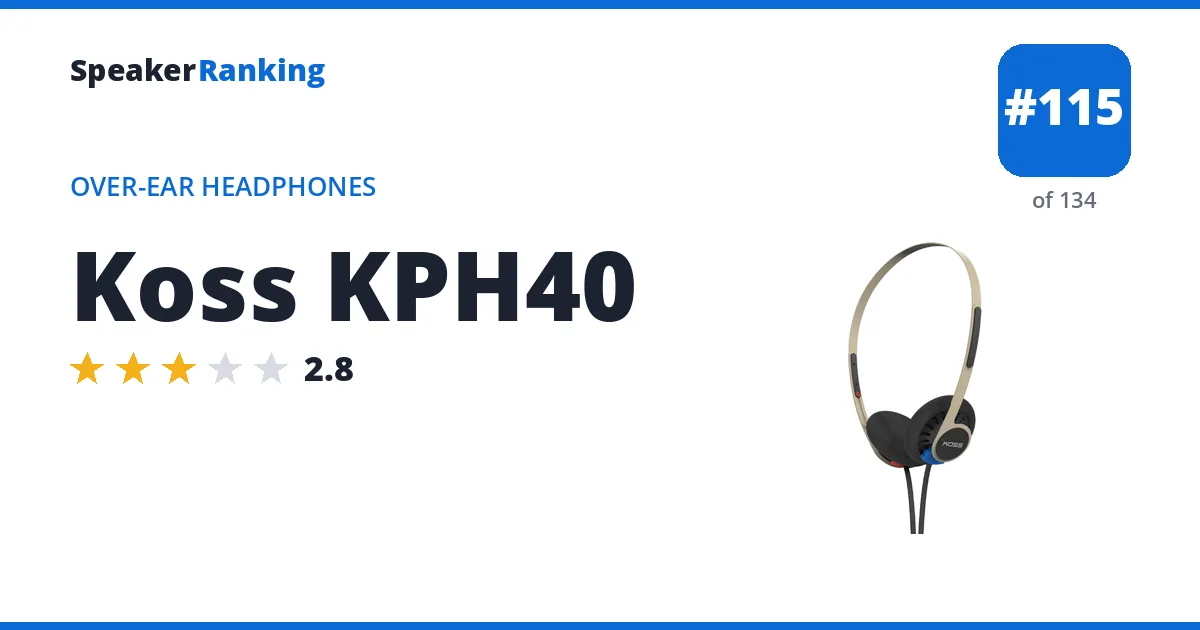
Pros: It is one of the cheapest options in its class, and the open-back design gives a more airy, spacious feel than most closed budget headsets. Bass between 60 and 200 Hz sits about 2 dB above target and the lower mids are slightly full, which suits a warm, relaxed listener. Sensitivity of 101 dB at 60 ohms means a phone can drive it.
Cons: Sub-bass rolls off about 7 dB below target under 60 Hz, so kick drums and synth bass lack rumble. A 14.5 dB dip near 4.4 kHz makes vocals and instrument detail sound distant, and treble is about 4 dB low overall, so the sound is dark and muffled. Open backs also leak sound and offer no isolation.
Full Koss KPH40 review and specifications →
| Back | Open |
|---|---|
| Connection | Wired |
| Deviation From Target | 3.35 dB standard deviation |
| Driver Type | Dynamic |
| Form Factor | Over-ear |
| Frequency Response | 15Hz - 25kHz (Manufacturer specified) |
| Harman Preference Score | 54 (measured by oratory1990, via AutoEQ) |
| Impedance | 60 ohms |
| Sensitivity | 101 dB SPL/1mW |
| Tonal Tilt | -1.21 (negative is warmer, positive brighter) |
EQ preset to match the Harman target
Set a preamp of -6.1 dB, then add these filters in any parametric equalizer (Wavelet, Equalizer APO, Peace, or a player with parametric EQ). Calculated by AutoEQ from its measured frequency response.
| Filter | Frequency | Gain | Q |
|---|---|---|---|
| Low shelf | 105 Hz | +7.5 dB | 0.70 |
| Peak | 79 Hz | -7.6 dB | 0.37 |
| Peak | 3,725 Hz | +4.9 dB | 3.94 |
| Peak | 614 Hz | +1.5 dB | 2.05 |
| Peak | 37 Hz | +3.9 dB | 1.16 |
| High shelf | 10,000 Hz | +1.9 dB | 0.70 |
| Peak | 7,429 Hz | +4.0 dB | 0.78 |
| Peak | 5,445 Hz | -7.7 dB | 4.24 |
| Peak | 1,941 Hz | -2.0 dB | 2.35 |
| Peak | 1,012 Hz | +0.3 dB | 1.84 |
- Reviews, Comparisons and Sound Samples
- Head-to-Head Comparisons
 Razer BlackShark V2 X: $34.99 Amazon eBay
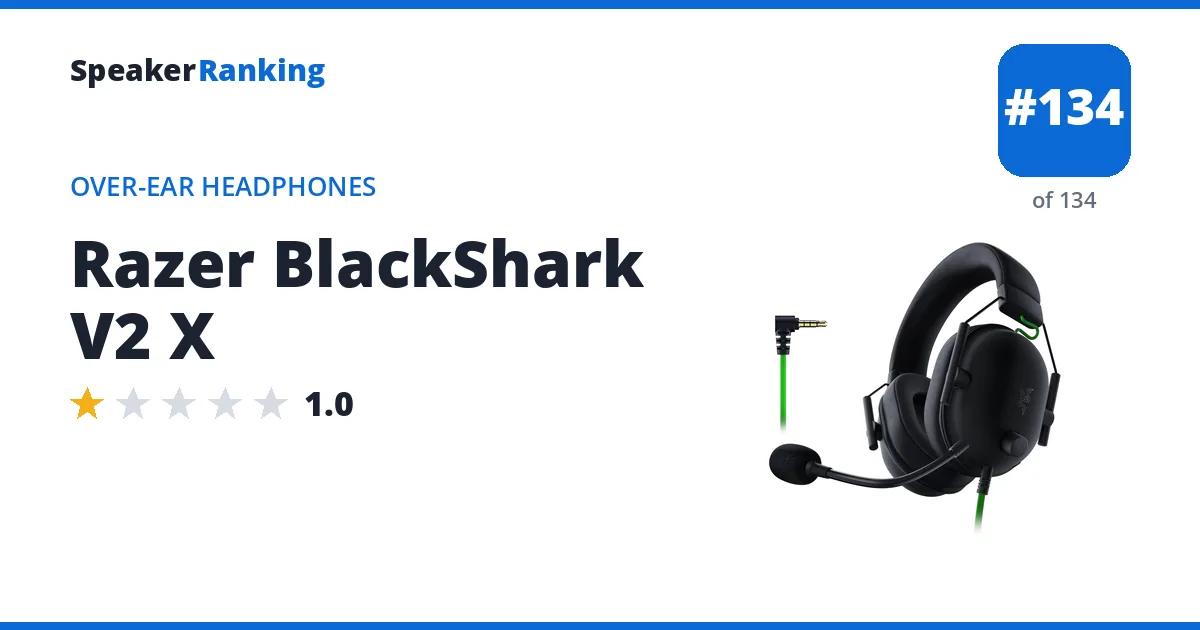
Pros: A built-in microphone makes it usable for voice chat without a separate headset. The 32 ohm impedance suits PC, console and phone outputs with no amp needed, and the closed back keeps game audio from leaking into the room. At 240 g with 50 mm drivers it is a straightforward wired gaming option at a low price.
Cons: Crinacle’s measurement gives a Harman score of just 1, so the tonal balance is a long way from what most listeners prefer. The response is uneven, with a deviation of about 5.4 dB and a warm tilt, which tends to cloud vocals and detail in music. It is better suited to casual gaming and chat than to critical listening.
Full Razer BlackShark V2 X review and specifications →
| Released | Aug 2020 (6 years ago) |
|---|---|
| Back | Closed |
| Built-in Microphone | Yes |
| Connection | Wired |
| Deviation From Target | 5.39 dB standard deviation |
| Driver Type | Dynamic |
| Drivers | 1 x 50mm dynamic |
| Form Factor | Over-ear |
| Frequency Response | 12Hz - 28kHz (Manufacturer specified) |
| Harman Preference Score | 1 (measured by crinacle, via AutoEQ) |
| Impedance | 32 ohms |
| Sensitivity | 100 dB SPL/mW |
| Tonal Tilt | -2.96 (negative is warmer, positive brighter) |
| Weight | 0.5 lbs (240 g) |
EQ preset to match the Harman target
Set a preamp of -5.6 dB, then add these filters in any parametric equalizer (Wavelet, Equalizer APO, Peace, or a player with parametric EQ). Calculated by AutoEQ from its measured frequency response.
| Filter | Frequency | Gain | Q |
|---|---|---|---|
| Low shelf | 105 Hz | -3.9 dB | 0.70 |
| Peak | 158 Hz | -13.0 dB | 0.91 |
| Peak | 825 Hz | +8.9 dB | 0.18 |
| Peak | 7,600 Hz | +3.5 dB | 3.10 |
| Peak | 808 Hz | -10.8 dB | 0.68 |
| High shelf | 10,000 Hz | +0.5 dB | 0.70 |
| Peak | 312 Hz | +3.1 dB | 3.28 |
| Peak | 477 Hz | -1.6 dB | 2.83 |
| Peak | 4,275 Hz | +1.7 dB | 4.98 |
| Peak | 216 Hz | -1.8 dB | 3.70 |
- Reviews, Comparisons and Sound Samples
- Head-to-Head Comparisons