Short answer: the Tribit Stormbox Micro 2. It ranks #1 of 62 small speakers by sound quality, rated 4.5/5, at $39.99; the JBL Go 4 ranks #30, rated 3.2/5, and costs $49.95, which makes this an easy call rather than a real tradeoff.
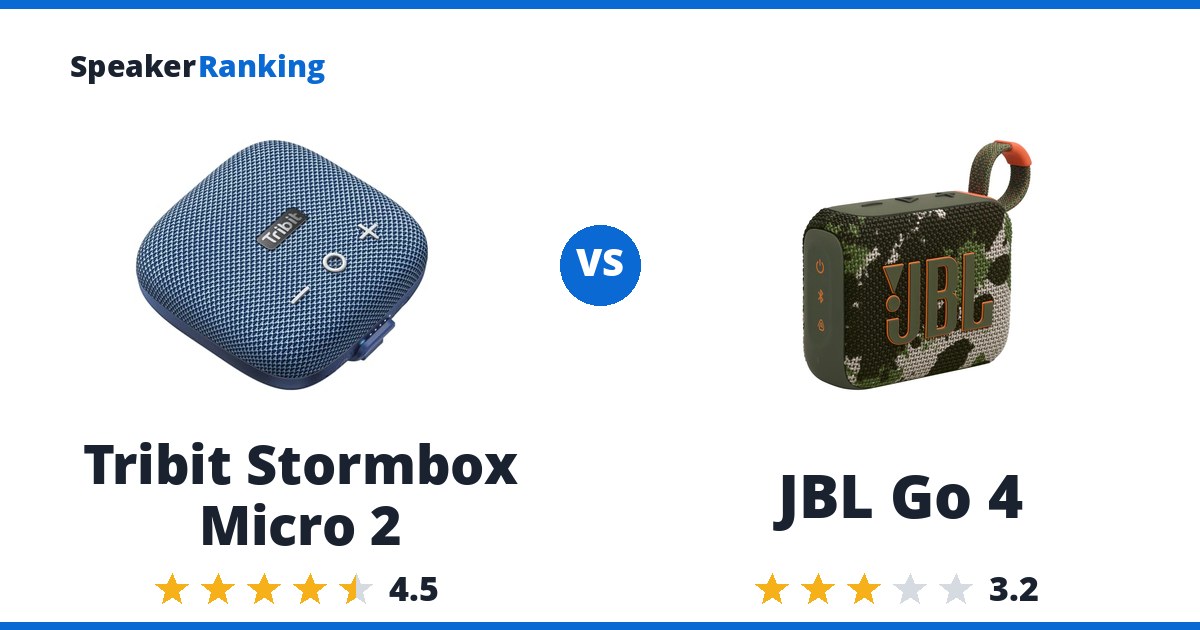
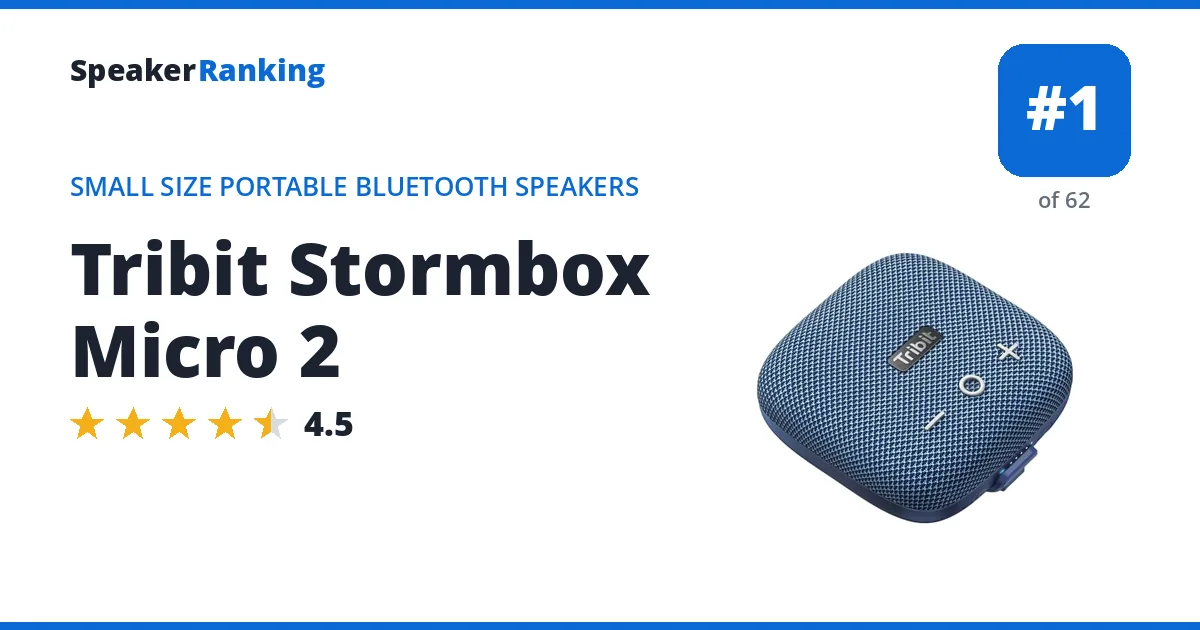
The Stormbox Micro 2 is the best-sounding speaker in its size class. It is very neutral, its 48mm driver reaches much deeper than most rivals, about 65Hz before falling 10dB, and it gets louder, to 94dB in Alan Ross’s test. Its built-in strap attaches to bags and bike bars, it claims 12 hours of battery, and it has a 9-band app EQ. Its phone charging output is unreliable.
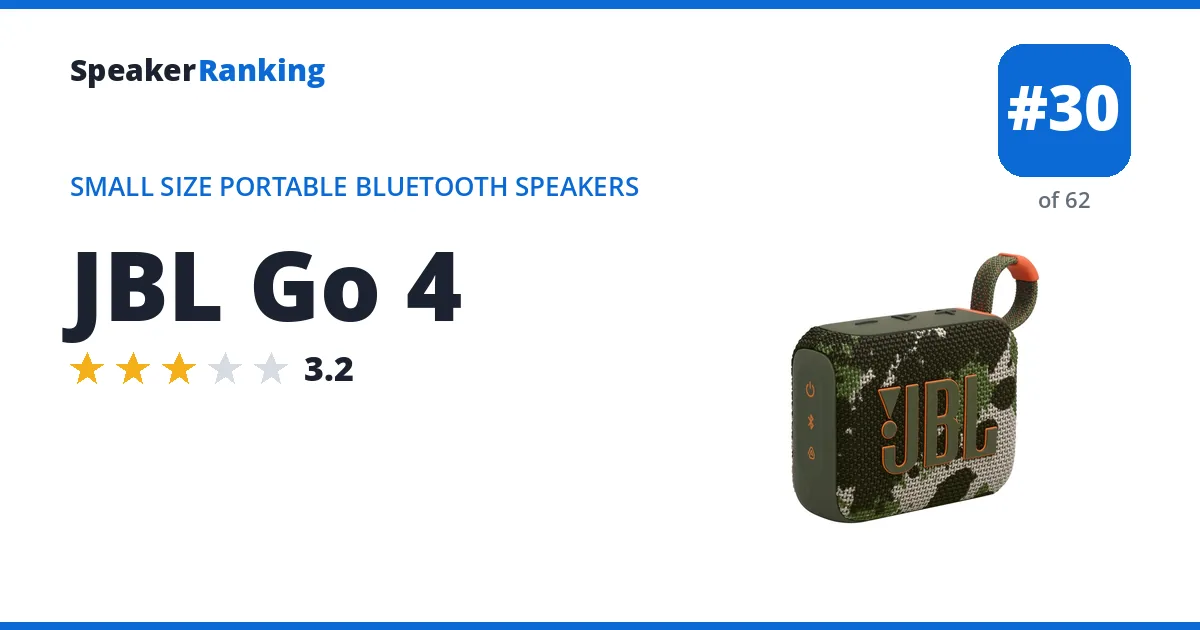
The Go 4 is the smaller, lighter JBL. At 0.4 lbs (190 g) it weighs much less than the Micro 2’s 0.7 lbs (317 g), and it adds Auracast linking. It has a little more bass than the Go 3 and fixes that model’s midrange peak, but bass is still thin, falling 10dB around 82Hz, and its battery is rated for only 7 hours. The midrange gets grainy and the treble sizzly at high volume.
Buy the Tribit Stormbox Micro 2. It is rated higher for sound quality than the JBL Go 4 and costs less, which makes it the one to get unless you need something the other one does better.
Looking for alternatives? See the complete Portable Bluetooth rankings.
Specifications Side By Side
| Tribit Stormbox Micro 2 | JBL Go 4 | |
|---|---|---|
| Price | $39.99 | $49.95 |
| Ranked | #1 of 62 in Small Size Portable Bluetooth Speakers | #30 of 62 in Small Size Portable Bluetooth Speakers |
| App | Yes | Yes |
| Aux Input | No | No |
| Bass Extension (-10dB) | 65Hz | ~82Hz |
| Battery Life | 12 hours (Manufacturer specified) | 7 hours (Manufacturer specified) |
| Bluetooth | Yes | Yes |
| Bluetooth Codecs | SBC | SBC |
| Built-in Microphone | Yes | Yes |
| EQ | Yes (9 Band) | Yes |
| IP Rating | IP67 | IP67 |
| Bluetooth Latency | 265ms | - |
| Maximum SPL | 94dB (measured by Alan Ross Reviews) | - |
| Party Mode | No | Yes (Auracast) |
| Power Bank | Yes (but it doesn’t usually work; USB-C, 10W) | No |
| Power Input | USB-C | USB-C |
| Stereo | No | No |
| Omnidirectional | Pointing up | Pointing up |
| TWS | Yes | Yes |
| Weight | 0.7 lbs (317 g) | 0.4 lbs (190 g) |
| Bluetooth Version | 5.3 | 5.3 |
| Amplifier Power | 10W | 4.2W |
| Dimensions | 3.9” x 3.9” x 1.7” (99.1 x 99.1 x 42.7 mm) | 3.7” x 3” x 1.7” (94.3 x 75.7 x 42.2 mm) |
| Drivers | 48mm NdFeB driver | 45mm |
| Digital Aux Input | No | No |
| Strap | Yes (built-in strap) | Yes (built-in loop) |
| Frequency Response | - | 90Hz - 20kHz (Manufacturer specified) |
| Charging Time | - | 3 hours |
Watch Them Compared
Videos and reviews that test both speakers side by side.
Related Speaker Comparisons
More worthwhile head-to-heads for Tribit Stormbox Micro 2:
- Soundcore Boom Go 3i vs Tribit Stormbox Micro 2
- Minirig Mini 2 vs Tribit Stormbox Micro 2
- Minirig Mini vs Tribit Stormbox Micro 2
- Tribit Stormbox Micro vs Tribit Stormbox Micro 2
- Tribit Stormbox Micro 2 vs Tribit Stormbox Micro 3
Prices on this page were last checked October 12, 2026 at 4:13 PM UTC. Product prices and availability are accurate as of that date/time and are subject to change; the price and availability shown on Amazon at the time of purchase will apply to the purchase of this product.
As an eBay Partner, we may be compensated if you make a purchase.
The Two Speakers In Full
 Tribit Stormbox Micro 2: $39.99 Amazon $39.99 AliExpress $34.19 eBay
Newer model: the Tribit Stormbox Micro 3, ranked lower, rated 4.2/5, released Apr 2026. It adds AAC. Battery life goes from 12 to 24 hours. Water resistance goes from IP67 to IP68.
Older model: the Tribit Stormbox Micro (ranked lower, rated 4.3/5). See every Tribit Stormbox generation.
Same family: the Tribit Stormbox Flow (larger model, rated 3.5/5), the Tribit Stormbox Pro (larger model, rated 3.7/5) and the Tribit Stormbox Blast (larger model, rated 4.5/5).
Pros: Best in class sound. Much deeper bass than most other speakers in the size. Built in strap is super useful for attaching it to things. Very neutral. To have it aimed directly at you unclip the strap and the speaker will sit upright with a slight lean back. Measured bass extension of 65Hz (-10dB).
Cons: Finicky phone charging, which doesn’t usually work.
Setup: Use in Music EQ mode, when you switch to custom it’s not able to boost the bass properly as it is missing an EQ band that Music EQ mode uses
Full Tribit Stormbox Micro 2 review and specifications →
| Released | Feb 2022 (4 years ago) |
|---|---|
| Amplifier Power | 10W |
| App | Yes |
| Aux Input | No |
| Bass Extension (-10dB) | 65Hz |
| Battery Life | 12 hours (Manufacturer specified) |
| Bluetooth | Yes |
| Bluetooth Codecs | SBC |
| Bluetooth Latency | 265ms |
| Bluetooth Version | 5.3 |
| Built-in Microphone | Yes |
| Digital Aux Input | No |
| Dimensions | 3.9” x 3.9” x 1.7” (99.1 x 99.1 x 42.7 mm) |
| Drivers | 48mm NdFeB driver |
| EQ | Yes (9 Band) |
| IP Rating | IP67 |
| Maximum SPL | 94dB (measured by Alan Ross Reviews) |
| Omnidirectional | Pointing up |
| Party Mode | No |
| Power Bank | Yes (but it doesn’t usually work; USB-C, 10W) |
| Power Input | USB-C |
| Stereo | No |
| Strap | Yes (built-in strap) |
| TWS | Yes |
| Weight | 0.7 lbs (317 g) |
- Links
- Reviews, Comparisons and Sound Samples
- Joy & Oluv’Sone: Best portable speakers 2025 - get the best bang for your buck $$$ More from Oluv’Sone →
- Alan Ross Reviews: TRIBIT StormBox Micro 3, fully tested vs Micro 2, not clickbait More from alanrossreviews →
- Alan Ross Reviews: Tribit Stormbox Micro 2 ultimate review 🤭 vs Micro 1 - small and mighty!
- Alan Ross Reviews: Tribit Stormbox Micro 2 vs Bose Soundlink Micro for best small speaker! 👌
- Dominik Reviews: Tribit Stormbox Mini - 30$ hit or miss? vs Tribit Micro 2 More from Dominik Reviews →
- Danny Pops: I WAS BLOWN AWAY - Tribit Stormbox Micro 2 VS Marshall Willen More from DannyPops →
- Storytripper HD: Marshall Willen vs Tribit Stormbox Micro 2 More from storytripperhd →
- Storytripper HD: Tribit Pocket Go vs Tribit StormBox Micro 2
- Storytripper HD: Bose Micro 2 vs Soundcore Boom Go 3i vs Tribit Micro 2
- Storytripper HD: Marshall Willen vs Tribit StormBox Micro 2 vs Klipsch Austin
- Storytripper HD: Tribit Micro 2 vs Tribit STormBox 2 vs Tribit StormBox Mini
- Storytripper HD: JBL GO 4 vs TRIBIT MICRO 2 vs KLIPSCH AUSTIN vs SONY SRS-XB100
- Sound Quality Joss: Tribit Stormbox Micro 2 VS Anker Soundcore Mini 3 Pro
- Alkar Audio: Speaker Bluetooth Marshall Willen Review VS Tribit Stormbox Micro 2
- MyTechAudio: MARSHALL WILLEN Detail Review Indonesia Vs TRIBIT Micro 1 & Micro 2
- Gi Rides: Tribit Stormbox Micro 2 vs JBL Clip 4 - sound battle
- The Tech Files: Escolha EXTREMAMENTE difícil! - Tronsmart Mirtune H1 vs Tribit Stormbox Micro 2
- Gi Rides: Soundcore Boom Go 3i vs Tribit Stormbox Micro 2 Binaural Audio
- DIY Subwoofers - Stormbox Micro 2 Measurements and Review
- Head-to-Head Comparisons
- Tribit Stormbox Micro 2 vs Soundcore Boom Go 3i
- Tribit Stormbox Micro 2 vs Minirig Mini 2
- Tribit Stormbox Micro 2 vs Minirig Mini
- Tribit Stormbox Micro 2 vs Tribit Stormbox Micro
- Tribit Stormbox Micro 2 vs Tribit Stormbox Micro 3
- Tribit Stormbox Micro 2 vs Teufel Boomster Go
- Tribit Stormbox Micro 2 vs Soundcore Mini 3 Pro
- Tribit Stormbox Micro 2 vs Soundcore Mini 3
- See all 65 comparisons
 JBL Go 4: $49.95 Amazon $49.95 eBay
Newer model: the JBL Go 5, ranked higher, rated 3.2/5, released Mar 2026. It adds USB audio input, AAC and LC3, but drops the built-in mic. Water resistance goes from IP67 to IP68.
Older model: the JBL Go 3 (ranked lower, rated 3.2/5). See every JBL Go generation.
Pros: A little more bass than the JBL Go 3 and they fixed the strange mids peak. Measured bass extension of ~82Hz (-10dB).
Cons: Not much bass at all, especially with electronic/bass-heavy tracks pushed past ~50% volume. Midrange can sound grainy and treble a bit sizzly; loses clarity at higher volumes.
Full JBL Go 4 review and specifications →
| Released | Mar 2024 (2 years ago) |
|---|---|
| Amplifier Power | 4.2W |
| App | Yes |
| Aux Input | No |
| Bass Extension (-10dB) | ~82Hz |
| Battery Life | 7 hours (Manufacturer specified) |
| Bluetooth | Yes |
| Bluetooth Codecs | SBC |
| Bluetooth Version | 5.3 |
| Built-in Microphone | Yes |
| Charging Time | 3 hours |
| Digital Aux Input | No |
| Dimensions | 3.7” x 3” x 1.7” (94.3 x 75.7 x 42.2 mm) |
| Drivers | 45mm |
| EQ | Yes |
| Frequency Response | 90Hz - 20kHz (Manufacturer specified) |
| IP Rating | IP67 |
| Omnidirectional | Pointing up |
| Party Mode | Yes (Auracast) |
| Power Bank | No |
| Power Input | USB-C |
| Stereo | No |
| Strap | Yes (built-in loop) |
| TWS | Yes |
| Weight | 0.4 lbs (190 g) |
- Links
- Reviews, Comparisons and Sound Samples
- Oluv Patreon: JBL Go 4 - first impressions (how to waste your money) More from Oluv’Sone →
- M1MTechChannel: Welche JBL Partybox ist die BESTE ? Alle Partyboxen im Vergleich | 2026 More from M1MTechChannel →
- Storytripper HD: Tronsmart Mirtune H1 vs JBL GO 4 More from storytripperhd →
- Storytripper HD: JBL GO 4 vs TRIBIT MICRO 2 vs KLIPSCH AUSTIN vs SONY SRS-XB100
- GYMCADDY: Soundcore Select 4 Go Vs JBL Clip 5 And JBL Go 4 More from GYMCADDY →
- Stereo Specs: JBL GO 4 vs JBL GO 3 : Is there more bass or not?Unboxing,Features,Specs,Sound Test & Comparison !
- StereoSpecs: JBL GO 4 vs JBL GO 3 : Worth the upgrade?
- Importados Neto Rocha: Tronsmart Trip 2 vs JBL go4 | NÃO escolha errado!!!
- Beautiful Zar DJ: Tronsmart Trip 2 Vs Jbl Go 4 (50-100%Volume Audio Test)
- YouTube: Tronsmart T8 Mini VS JBL Go 4
- Head-to-Head Comparisons