This page ranks 17 audio interfaces, the USB or Thunderbolt boxes that record microphones and instruments and play back to studio monitors and headphones. Each rating combines the SINAD of its playback output as measured by Audio Science Review with the power of its headphone output and a small credit for features. Recording quality (mic preamp noise and gain) is not part of the rating. Past about 115 dB of SINAD the unit’s own noise and distortion are inaudible, so the top of the list is decided mostly by headphone power. The best are at the top.
| Select to compare | |||||||
|---|---|---|---|---|---|---|---|
| 1 | Topping M62 | $249.00 | 113 dB | 500 mW | No | Audio interface | |
| 2 | Topping E2x2 | $159.00 | 110 dB | 580 mW | Yes | Audio interface | |
| 3 | Lynx Hilo 2 USB | $3,599.00 | 117 dB | - | Yes | Audio interface | |
| 4 | MOTU UltraLite-mk5 | $699.95 | 113 dB | - | - | Audio interface | |
| 5 | MOTU M6 | $449.95 | 112 dB | - | Yes | Audio interface | |
| 6 | MOTU M2 | $199.95 | 111 dB | - | Yes | Audio interface | |
| 7 | MOTU M4 | $279.95 | 111 dB | - | Yes | Audio interface | |
| 8 | MOTU 624 | $795 | 112 dB | - | - | Audio interface | |
| 9 | RME Fireface UFX III | $3,199.00 | 110 dB | - | - | Audio interface | |
| 10 | RME Babyface Pro FS | $849.00 | 108 dB | - | Yes | Audio interface | |
| 11 | Arturia MiniFuse 2 | $199.00 | 101 dB | 137 mW into 33 ohms | Yes | Audio interface | |
| 12 | Tascam Series 102i | $149.00 | 103 dB | 18 mW | Yes | Audio interface | |
| 13 | Behringer U-Phoria UMC204HD | $97.98 | 96 dB | - | - | Audio interface | |
| 14 | Solid State Logic SSL 2 MKII | $199.99 | 94 dB | - | Yes | Audio interface | |
| 15 | Focusrite Scarlett 2i2 4th Gen | $224.99 | 94 dB | 32 mW into 33 ohms | - | Audio interface | |
| 16 | ESI Maya22 USB | $59.99 | 80 dB | - | Yes | Audio interface | |
| 17 | Behringer Studio XL | $239.00 | 55 dB | - | Yes | Audio interface |
Prices on this page were last checked October 13, 2026 at 3:17 PM UTC. Product prices and availability are accurate as of that date/time and are subject to change; the price and availability shown on Amazon at the time of purchase will apply to the purchase of this product.
As an eBay Partner, we may be compensated if you make a purchase.
 #1 Topping M62: $249.00 Amazon $249.00 eBay
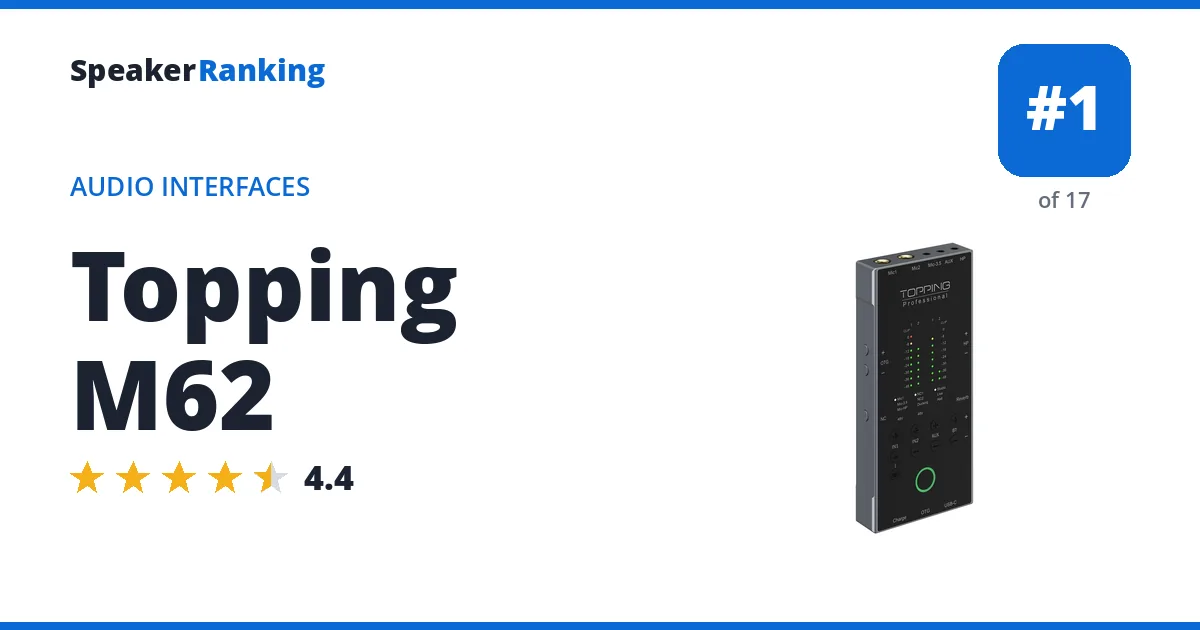
Pros: Audio Science Review measured 113 dB SINAD, so playback is clean for nearly all listening, and the maker rates the headphone output at 500 mW into 32 ohms, enough for most headphones including many planar magnetic models. It runs on a battery and takes USB-C, Bluetooth, two 6.35 mm inputs, a 3.5 mm mic and an AUX input, with parametric EQ on each input and a 10-band output EQ. It rates higher than the MOTU M4 while costing less.
Cons: There are no balanced monitor outputs, and the only headphone jack is a 3.5 mm socket, so studio monitors and 6.35 mm plugs need adapters. The Topping E2x2 offers XLR outputs and similar measured cleanliness for less.
Full Topping M62 review and specifications →
| Released | 2025 (1 year ago) |
|---|---|
| Balanced Output | No |
| Device Type | Audio interface |
| Dimensions | 2.8” x 5.9” x 0.8” (72 x 150 x 20 mm) |
| Equalizer | Yes (4-band parametric per input, 10-band on output in Pro Audio mode) |
| Headphone Outputs | 1 x 3.5 mm |
| Inputs | 2 x 6.35 mm TRS, 3.5 mm mic, 3.5 mm AUX, Bluetooth, USB-C |
| Output Power (300 ohms) | 80 mW (manufacturer rated) |
| Output Power (32 ohms) | 500 mW (manufacturer rated) |
| Outputs | 1 x 3.5 mm headphone |
| SINAD | 113 dB (measured by Audio Science Review) |
| Weight | 0.7 lbs (300 g) |
- Reviews, Comparisons and Sound Samples
- Head-to-Head Comparisons
 #2 Topping E2x2: $159.00 Amazon $159.00 eBay
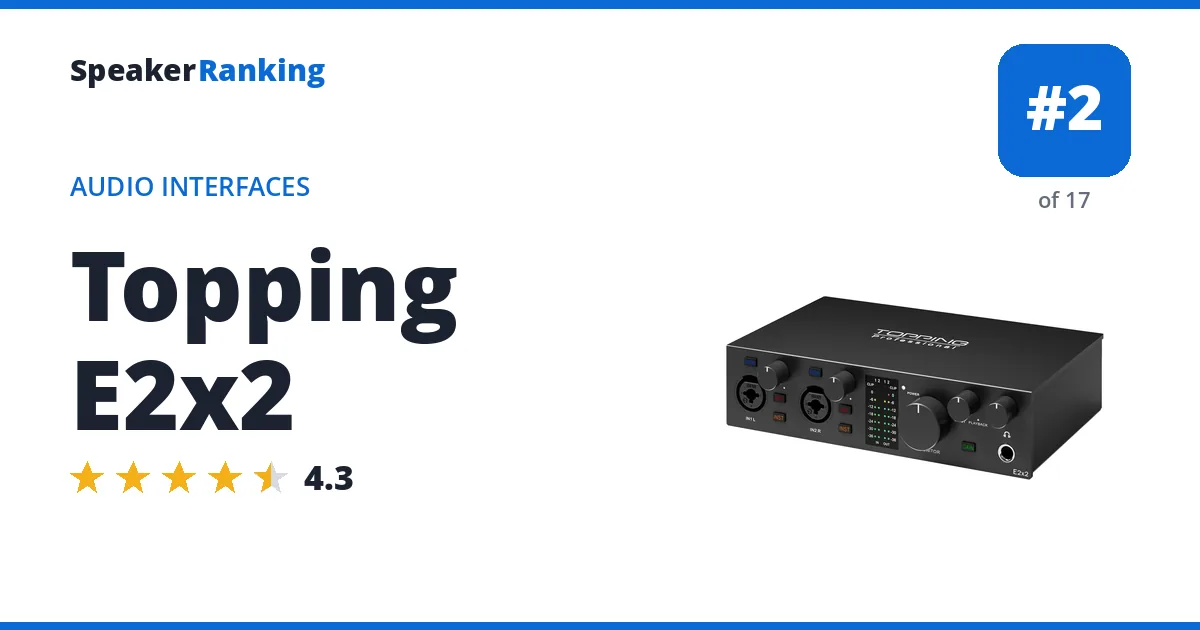
Pros: Audio Science Review measured 110 dB SINAD, clean for nearly all listening, and the maker rates the headphone output at 580 mW into 32 ohms, enough for most planar magnetic headphones. Audio Science Review also found its recording converter and headphone amplifier performed very well, and it has XLR combo mic inputs with phantom power, balanced XLR outputs and analog volume knobs. It rates higher than the MOTU M2 for less.
Cons: Its playback converter measures a little behind the Topping M62 and the MOTU M series, and Audio Science Review judged the DAC good rather than exceptional. There is no battery or Bluetooth input, so it stays tethered to a computer.
Full Topping E2x2 review and specifications →
| Balanced Output | Yes (XLR outs) |
|---|---|
| Device Type | Audio interface |
| Output Power (32 ohms) | 580 mW (manufacturer rated) |
| SINAD | 110 dB (measured by Audio Science Review) |
| Volume Control | Analog potentiometer knobs |
- Reviews, Comparisons and Sound Samples
- Head-to-Head Comparisons
 #3 Lynx Hilo 2 USB: $3,599.00 B&H Photo Video $3,599.00 eBay
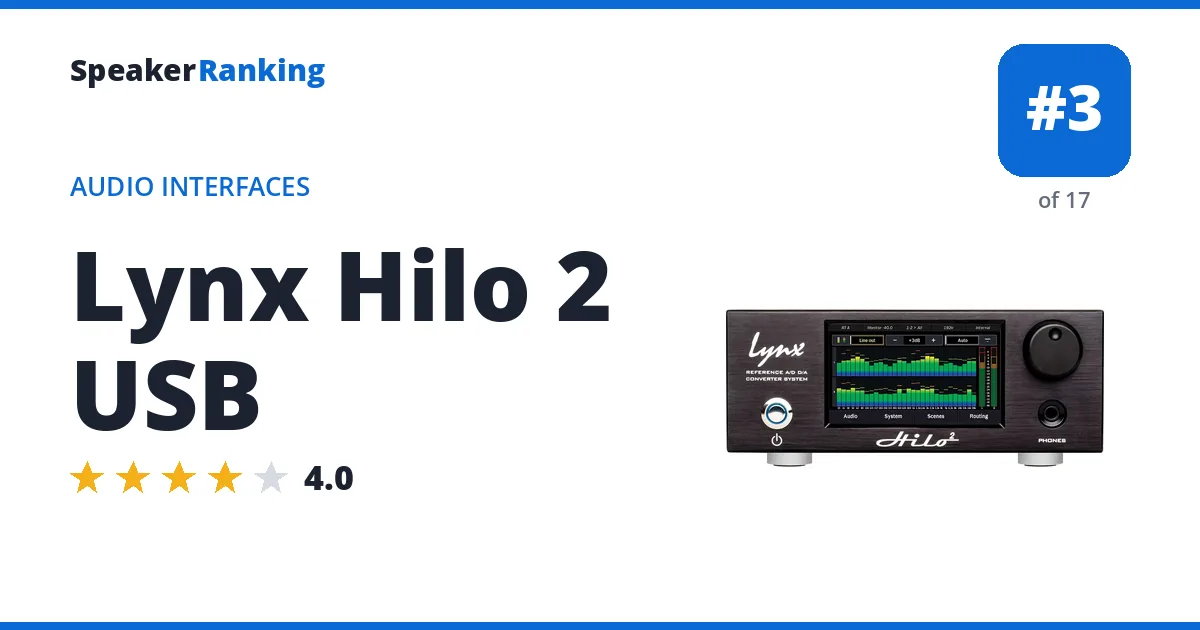
Pros: Audio Science Review measured 117 dB SINAD, so its noise and distortion are inaudible, and the reviewer counted its results among the best yet seen in an audio interface. Connectivity is extensive, with balanced XLR line inputs and outputs, 6.35 mm monitor outputs, AES/EBU, coaxial and optical S/PDIF and switchable ADAT.
Cons: Lynx doesn’t publish a 32 ohm headphone power figure, so its suitability for harder to drive headphones is unknown. Audio Science Review found it still trails good consumer DACs on noise and considered its interface and driver support due for an update. It costs far more than the Topping M62, which rates higher.
Full Lynx Hilo 2 USB review and specifications →
| Released | 2024 (2 years ago) |
|---|---|
| Balanced Output | Yes (XLR line outs) |
| Device Type | Audio interface |
| Headphone Outputs | 1 x 6.35 mm |
| Inputs | 2 XLR balanced line, AES/EBU, S/PDIF coaxial and optical (ADAT switchable) |
| Outputs | 2 XLR line, 2 x 6.35 mm monitor, AES/EBU, S/PDIF, ADAT |
| SINAD | 117 dB (measured by Audio Science Review) |
- Reviews, Comparisons and Sound Samples
- Head-to-Head Comparisons
 #4 MOTU UltraLite-mk5: $699.95 Amazon $699.95 eBay
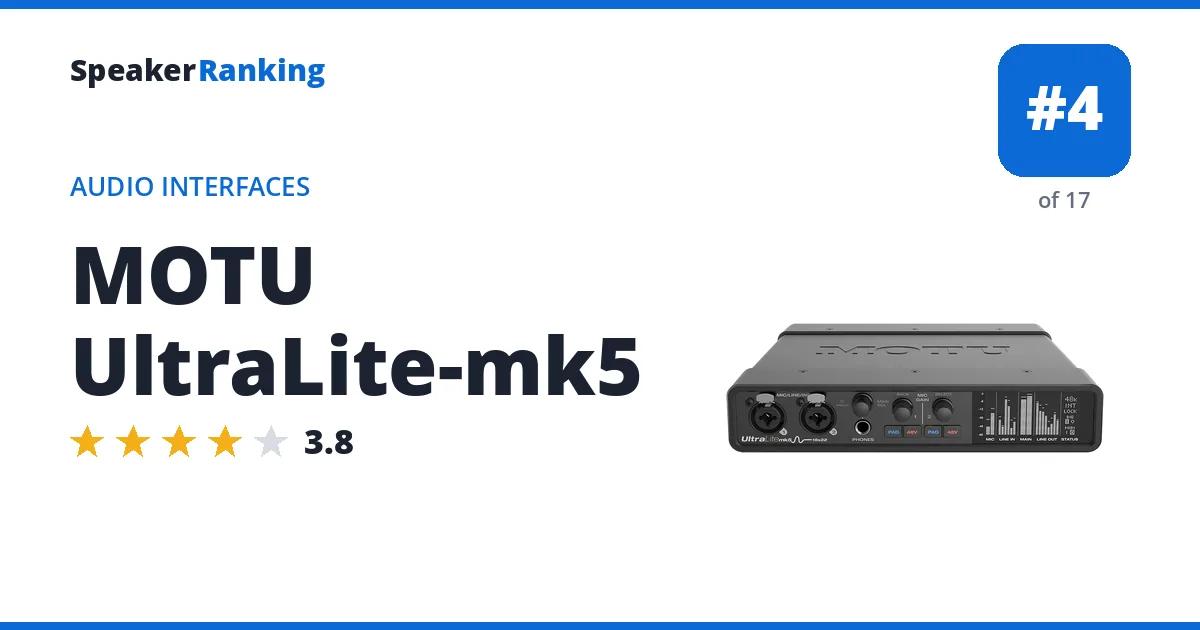
Pros: Audio Science Review measured 113 dB SINAD on its ESS based output, clean for nearly all listening. A firmware update fixed the high distortion Audio Science Review first found at 192 kHz sampling, after which the reviewer recommended it. It has a 6.35 mm headphone output in a box 220 mm wide.
Cons: MOTU doesn’t publish a 32 ohm headphone power figure, so its ability to drive demanding headphones is unknown. Audio Science Review also measured intermodulation distortion rising at mid levels, a flaw desktop DACs have largely solved. The MOTU M6 rates the same and measures nearly as clean for less.
Full MOTU UltraLite-mk5 review and specifications →
| Released | 2021 (5 years ago) |
|---|---|
| DAC Chip | ESS |
| Device Type | Audio interface |
| Dimensions | 8.7” x 1.8” x 6.9” (220 x 45 x 175 mm) |
| Headphone Outputs | 1 x 6.35 mm |
| SINAD | 113 dB (measured by Audio Science Review) |
| Weight | 2.9 lbs (1.31 kg) |
- Reviews, Comparisons and Sound Samples
- Head-to-Head Comparisons
 #5 MOTU M6: $449.95 Amazon $449.95 eBay
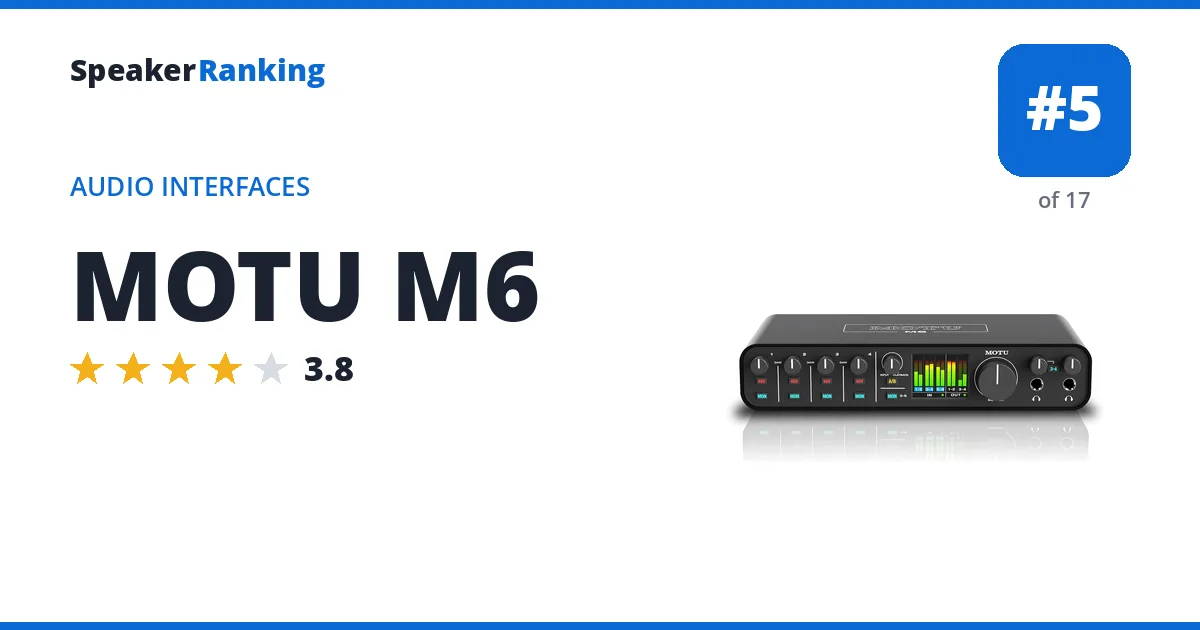
Pros: Audio Science Review measured 112 dB SINAD from its ESS Sabre32 Ultra DAC, clean for nearly all listening. It offers four XLR/TRS combo inputs for mic, line or instrument, two more balanced line inputs, four balanced TRS outputs, two headphone outputs, MIDI in and out and a hardware volume knob.
Cons: MOTU doesn’t publish a 32 ohm headphone power figure, and Audio Science Review found the headphone output poor into low impedance loads and its recording converter weaker than its DAC. The Topping E2x2 rates higher for much less if you only need two inputs.
Full MOTU M6 review and specifications →
| Released | 2022 (4 years ago) |
|---|---|
| Balanced Output | Yes (TRS monitor outs) |
| DAC Chip | ESS Sabre32 Ultra |
| Device Type | Audio interface |
| Dimensions | 9.2” x 4.7” x 1.8” (234 x 120 x 46 mm) |
| Headphone Outputs | 2 x 6.35 mm |
| Inputs | 4 XLR/TRS combo (mic/line/Hi-Z), 2 balanced 6.35 mm line, USB-C, MIDI in |
| Outputs | 4 balanced TRS line outs, 2 headphone, MIDI out |
| SINAD | 112 dB (measured by Audio Science Review) |
| Volume Control | Hardware knob |
| Weight | 2.1 lbs (975 g) |
- Reviews, Comparisons and Sound Samples
- Head-to-Head Comparisons
 #6 MOTU M2: $199.95 Amazon $199.95 eBay
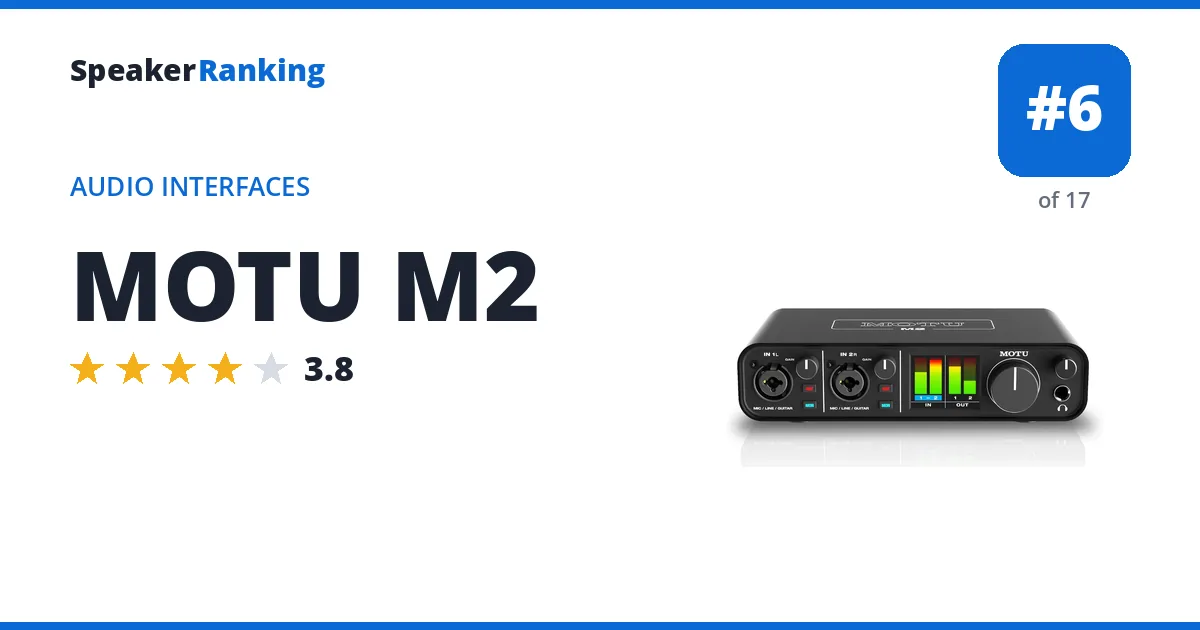
Pros: Audio Science Review measured 111 dB SINAD from its ESS Sabre32 Ultra DAC, clean for nearly all listening. It has two XLR/TRS combo inputs for mic, line or instrument, balanced TRS monitor outputs with mirrored RCA outputs, MIDI in, level meters and a hardware volume knob, all powered over USB-C.
Cons: MOTU doesn’t publish a 32 ohm headphone power figure, and Audio Science Review judged the headphone amplifier barely adequate on power and the recording converter only adequate. The Topping E2x2 rates higher for less.
Full MOTU M2 review and specifications →
| Released | 2020 (6 years ago) |
|---|---|
| Balanced Output | Yes (TRS monitor outs) |
| DAC Chip | ESS Sabre32 Ultra |
| Device Type | Audio interface |
| Headphone Outputs | 1 x 6.35 mm |
| Inputs | 2 XLR/TRS combo (mic/line/Hi-Z), MIDI in, USB-C |
| Outputs | 2 balanced 6.35 mm TRS, 2 RCA (mirrored), headphone |
| SINAD | 111 dB (measured by Audio Science Review) |
| Volume Control | Hardware knob |
- Reviews, Comparisons and Sound Samples
- Head-to-Head Comparisons
 #7 MOTU M4: $279.95 Amazon $279.95 eBay
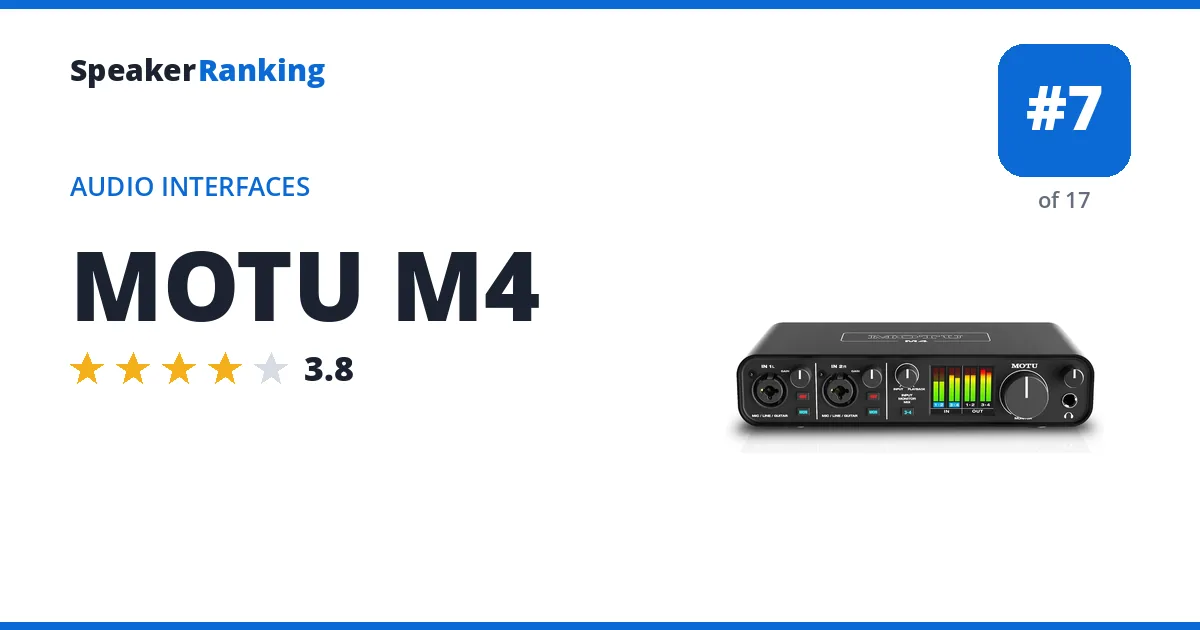
Pros: Audio Science Review measured 111 dB SINAD from its ESS Sabre32 Ultra DAC, clean for nearly all listening and competitive with good budget DACs. It adds two balanced line inputs to the two XLR/TRS combo inputs, has four balanced TRS outputs with mirrored RCA outputs, MIDI in and a hardware volume knob, and Audio Science Review found its recording converter better than many computer interfaces.
Cons: MOTU doesn’t publish a 32 ohm headphone power figure, and Audio Science Review measured just 18 mW into 300 ohms, calling the headphone amplifier its weakest part, so demanding headphones may run out of volume. The Topping M62 rates higher for less.
Full MOTU M4 review and specifications →
| Released | 2020 (6 years ago) |
|---|---|
| Balanced Output | Yes (TRS monitor outs) |
| DAC Chip | ESS Sabre32 Ultra |
| Device Type | Audio interface |
| Dimensions | 8.3” x 1.8” x 4.3” (210 x 45 x 108 mm) |
| Headphone Outputs | 1 x 6.35 mm |
| Inputs | 2 XLR/TRS combo (mic/line/Hi-Z), 2 balanced 6.35 mm line, MIDI in, USB-C |
| Output Power (300 ohms) | 18 mW (measured by Audio Science Review) |
| Outputs | 4 balanced 6.35 mm TRS, 4 RCA (mirrored), headphone |
| SINAD | 111 dB (measured by Audio Science Review) |
| Volume Control | Hardware knob |
| Weight | 2 lbs (920 g) |
- Reviews, Comparisons and Sound Samples
- Head-to-Head Comparisons
 #8 MOTU 624: $795 Discontinued eBay
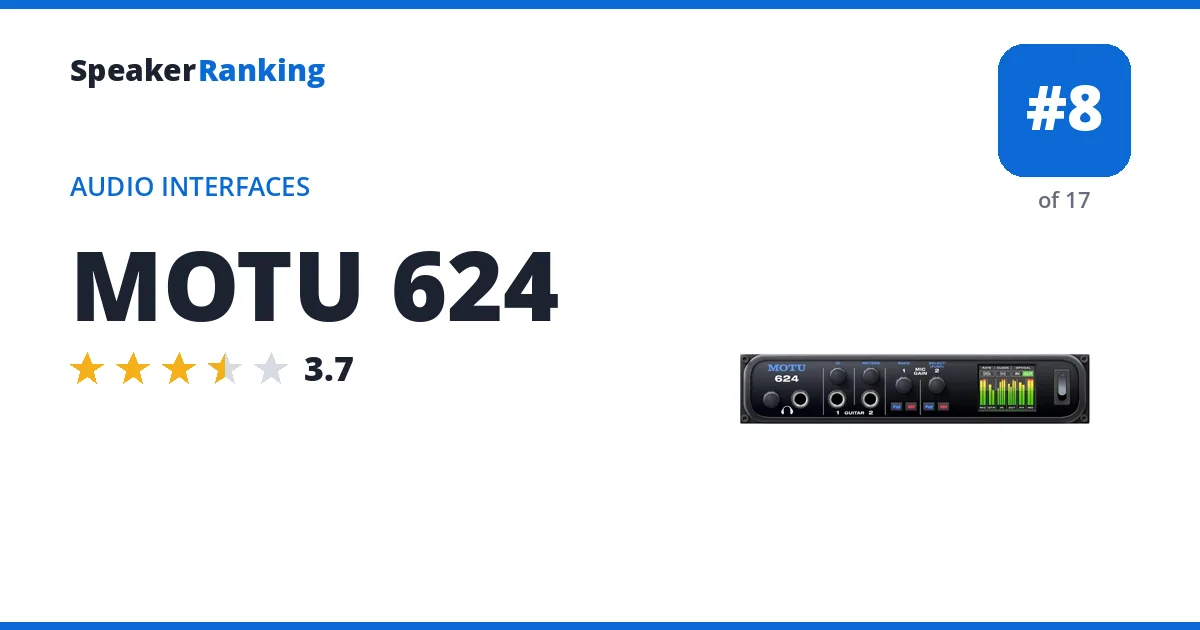
Pros: Audio Science Review measured 112 dB SINAD from its outputs, clean enough for nearly all listening. Alongside two XLR mic inputs and two front panel guitar inputs it has eight channels of ADAT optical in and out for expanding the setup, and the reviewer found its browser based control software rich and flexible.
Cons: It is discontinued and no longer sold new. Audio Science Review found its ADC a weak link next to other interfaces it had tested and its DAC short of the best consumer DACs, and MOTU doesn’t publish a 32 ohm headphone power figure. The MOTU UltraLite-mk5 measures similarly and is still sold.
Full MOTU 624 review and specifications →
| DAC Chip | ESS Sabre32 |
|---|---|
| Device Type | Audio interface |
| Dimensions | 8.6” x 1.7” x 7” (218 x 44 x 178 mm) |
| Headphone Outputs | 1 x 6.35 mm |
| Inputs | 2 XLR mic, 2 front-panel Hi-Z guitar, 8 ADAT optical |
| Outputs | dedicated main outs, 8 ADAT optical |
| SINAD | 112 dB (measured by Audio Science Review) |
| Weight | 2.2 lbs (1.0 kg) |
- Reviews, Comparisons and Sound Samples
- Head-to-Head Comparisons
 #9 RME Fireface UFX III: $3,199.00 Amazon $3,199.00 eBay
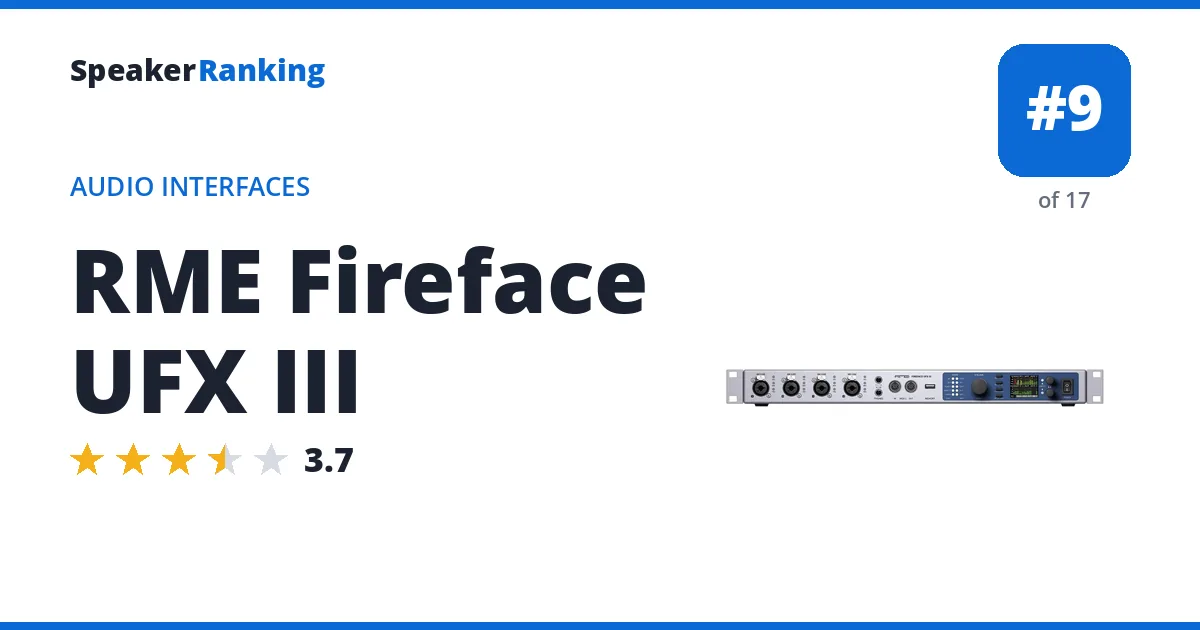
Pros: Audio Science Review measured 110 dB SINAD, clean for nearly all listening. It has two 6.35 mm headphone outputs and TotalMix FX DSP with built in EQ, in a full rack width chassis.
Cons: RME doesn’t publish a 32 ohm headphone power figure, so its ability to drive demanding headphones is unknown. It is large and heavy at 2.8 kg, and for playback it rates below the MOTU M6, which measures slightly cleaner for a small fraction of the cost.
Full RME Fireface UFX III review and specifications →
| Device Type | Audio interface |
|---|---|
| Dimensions | 17.3” x 1.7” x 8.3” (440 x 44 x 210 mm) (without rack ears) |
| Equalizer | Yes (TotalMix FX DSP) |
| Headphone Outputs | 2 x 6.35 mm |
| SINAD | 110 dB (measured by Audio Science Review) |
| Weight | 6.2 lbs (2.8 kg) |
- Reviews, Comparisons and Sound Samples
- Head-to-Head Comparisons
 #10 RME Babyface Pro FS: $849.00 Amazon $849.00 eBay
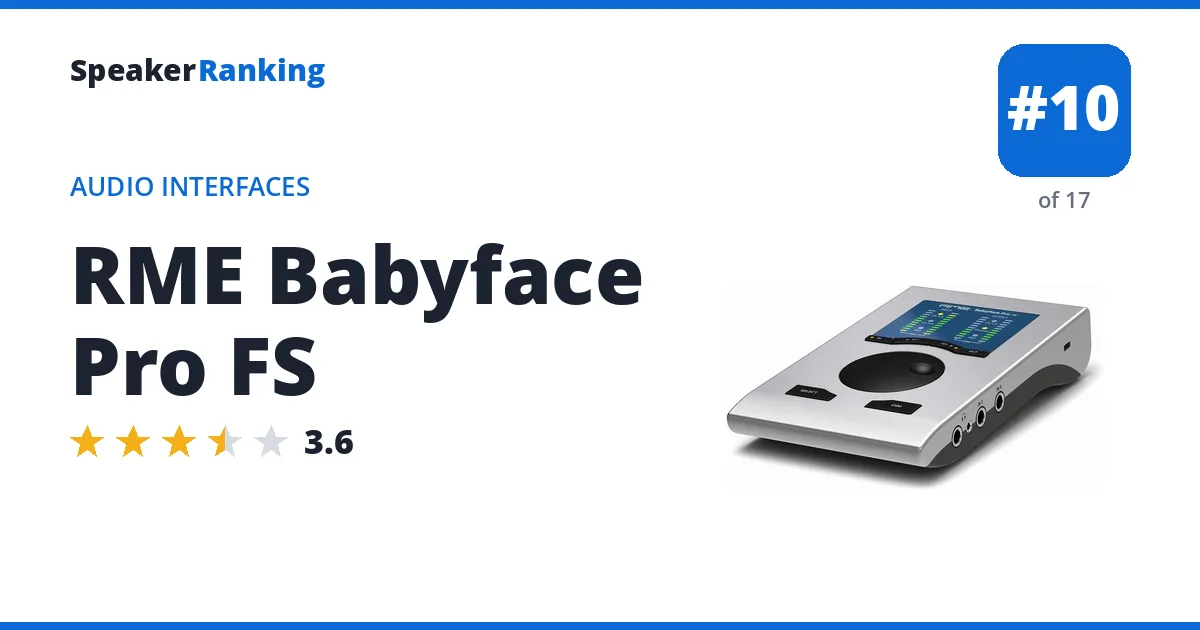
Pros: Audio Science Review measured 108 dB SINAD from its outputs, clean enough for nearly all listening. It is well equipped, with two XLR mic inputs, two instrument inputs, optical ADAT or S/PDIF input, balanced XLR monitor outputs and two headphone jacks (6.35 mm and 3.5 mm). Audio Science Review praised its compact hardware and noted it runs without an external power supply.
Cons: It costs far more than the MOTU M2, which measured a higher SINAD and rates higher. RME doesn’t publish a 32 ohm power figure, and Audio Science Review found the headphone output fine for casual monitoring but short on power for difficult or low impedance headphones.
Full RME Babyface Pro FS review and specifications →
| Released | 2019 (7 years ago) |
|---|---|
| Balanced Output | Yes (XLR outs) |
| Device Type | Audio interface |
| Dimensions | 4.3” x 1.4” x 7.1” (108 x 35 x 181 mm) |
| Headphone Outputs | 2 (6.35 mm and 3.5 mm) |
| Inputs | 2 XLR mic/line, 2 6.35 mm line/instrument, optical ADAT/S/PDIF, USB |
| Outputs | 2 XLR line, 2 headphone |
| SINAD | 108 dB (measured by Audio Science Review) |
| Volume Control | Hardware knob |
| Weight | 1.5 lbs (680 g) |
- Reviews, Comparisons and Sound Samples
- Head-to-Head Comparisons
 #11 Arturia MiniFuse 2: $199.00 Amazon $199.00 eBay
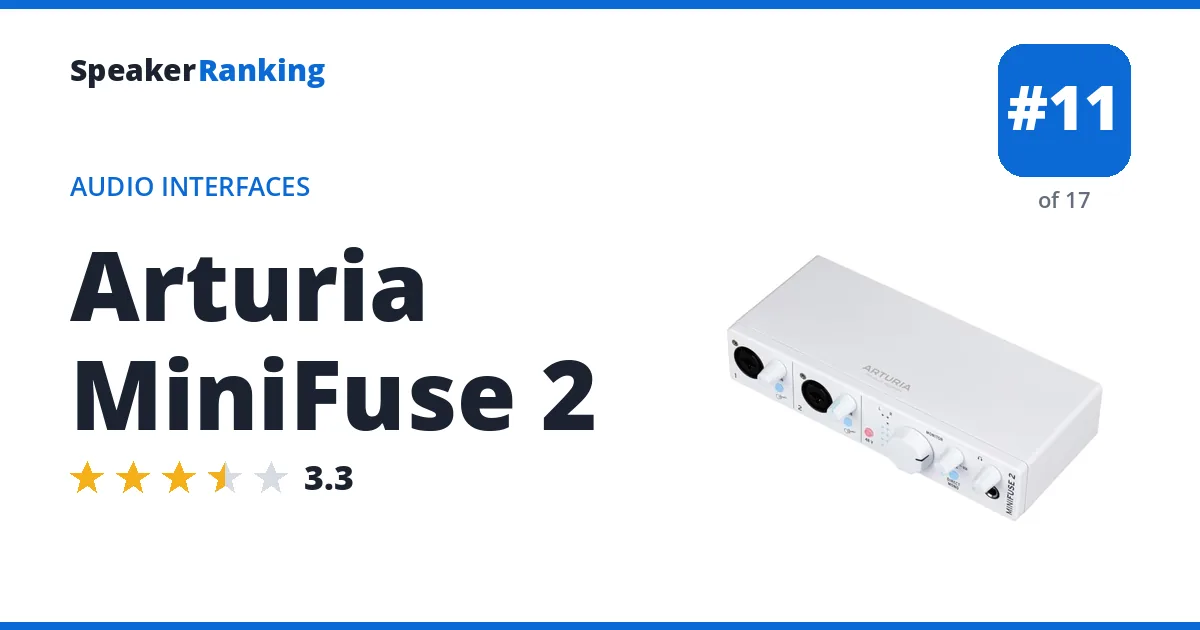
Pros: Audio Science Review measured 101 dB SINAD, clean for nearly all listening. Its rated 137 mW into 33 ohms drives most headphones, and it adds two combo mic and instrument inputs, balanced TRS monitor outputs, MIDI in and a USB hub port. It rates higher than the Solid State Logic SSL 2 MKII for a similar price.
Cons: Audio Science Review found it performs a little behind a well known rival at the same price and only marginally recommended it on cost. The MOTU M2 costs about the same yet measured a higher SINAD and rates higher. There is only one headphone output.
Full Arturia MiniFuse 2 review and specifications →
| Released | 2022 (4 years ago) |
|---|---|
| Balanced Output | Yes (TRS outs) |
| Device Type | Audio interface |
| Dimensions | 7.9” x 1.7” x 3.9” (200 x 43 x 100 mm) |
| Headphone Outputs | 1 x 6.35 mm |
| Inputs | 2 combo XLR/TRS mic/inst/line, MIDI in, USB-A hub port |
| Output Power (32 ohms) | 137 mW into 33 ohms (manufacturer rated) |
| Outputs | 2 x 1/4 in TRS balanced |
| SINAD | 101 dB (measured by Audio Science Review) |
| Volume Control | Hardware knob |
| Weight | 1 lbs (431 g) |
- Reviews, Comparisons and Sound Samples
- Head-to-Head Comparisons
- Arturia MiniFuse 2 vs Tascam Series 102i
- Arturia MiniFuse 2 vs Behringer U-Phoria UMC204HD
- Arturia MiniFuse 2 vs Solid State Logic SSL 2 MKII
- Arturia MiniFuse 2 vs MOTU 624
- Arturia MiniFuse 2 vs Focusrite Scarlett 2i2 4th Gen
- Arturia MiniFuse 2 vs MOTU M4
- Arturia MiniFuse 2 vs MOTU M2
- Arturia MiniFuse 2 vs Behringer Studio XL
- See all 11 comparisons
 #12 Tascam Series 102i: $149.00 Amazon $149.00 eBay
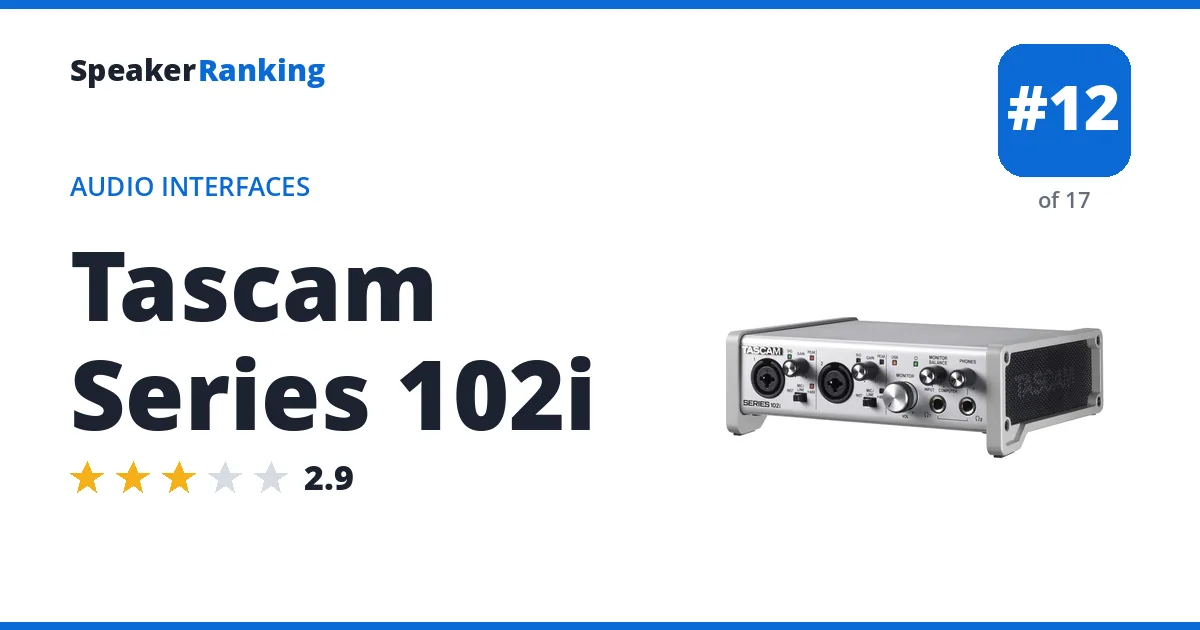
Pros: Audio Science Review measured 103 dB SINAD from its line outputs, clean for nearly all listening. It offers two combo mic and instrument inputs, optical input, MIDI in and out, balanced TRS monitor outputs, two headphone jacks and a built in DSP mixer with EQ, compressor and reverb. It measured cleaner than the Behringer U-Phoria UMC204HD.
Cons: Its headphone output is rated at only 18 mW, enough for in ear monitors and easy headphones only, and Audio Science Review judged it poor with a high output impedance. The same review found the ADC weak and did not recommend it. The Arturia MiniFuse 2 rates higher with far more headphone power.
Full Tascam Series 102i review and specifications →
| Released | 2019 (7 years ago) |
|---|---|
| Balanced Output | Yes (TRS line outs) |
| Device Type | Audio interface |
| Dimensions | 7.3” x 2.6” x 6.3” (186 x 65 x 160 mm) |
| Equalizer | Yes (DSP mixer with reverb, compressor, 4-band EQ) |
| Headphone Outputs | 2 x 6.35 mm |
| Inputs | 2 XLR/TRS combo (mic/line/instrument), optical S/MUX, USB, MIDI in |
| Output Power (32 ohms) | 18 mW (manufacturer rated) |
| Outputs | 2 balanced TRS line outs, 2 headphone, MIDI out |
| SINAD | 103 dB (measured by Audio Science Review) |
| Volume Control | Hardware knob |
| Weight | 2.4 lbs (1.1 kg) |
- Reviews, Comparisons and Sound Samples
- Head-to-Head Comparisons
 #13 Behringer U-Phoria UMC204HD: $97.98 Amazon $97.98 eBay
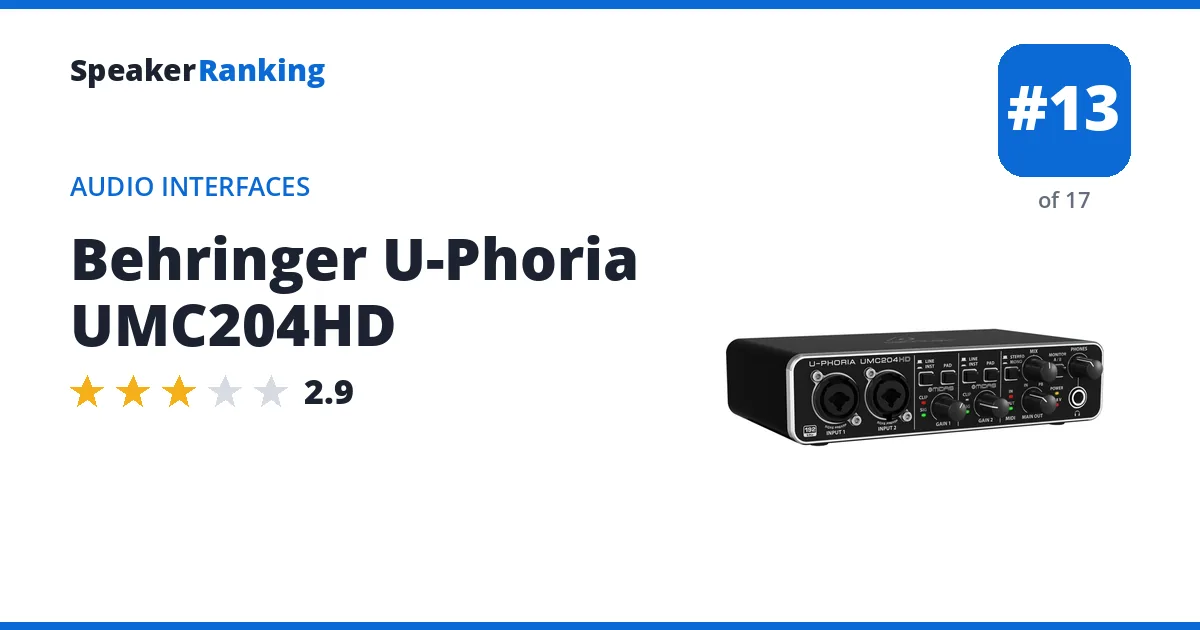
Pros: It is one of the least expensive interfaces here, with two combo mic and instrument inputs, MIDI in and out, four RCA outputs and a headphone jack. Audio Science Review measured 96 dB SINAD, fine for most headphones, and found it a decent all in one interface when kept below its input and output limits. It rates the same as the Solid State Logic SSL 2 MKII for much less.
Cons: Sensitive in ear monitors may reveal some hiss or noise at 96 dB SINAD, and Audio Science Review found both the DAC and ADC degrade quickly when driven hard. Behringer doesn’t publish a 32 ohm power figure, and its outputs are unbalanced RCA rather than balanced TRS. The Arturia MiniFuse 2 rates higher.
Full Behringer U-Phoria UMC204HD review and specifications →
| Device Type | Audio interface |
|---|---|
| Dimensions | 7.3” x 2” x 5.1” (185 x 50 x 130 mm) |
| Headphone Outputs | 1 x 6.35 mm |
| Inputs | 2 XLR/6.35 mm combo (mic/line/instrument), MIDI in, USB |
| Outputs | 4 RCA, headphone, MIDI out |
| SINAD | 96 dB (measured by Audio Science Review) |
| Weight | 1.4 lbs (621 g) |
- Reviews, Comparisons and Sound Samples
- Head-to-Head Comparisons
 #14 Solid State Logic SSL 2 MKII: $199.99 Amazon $199.99 eBay
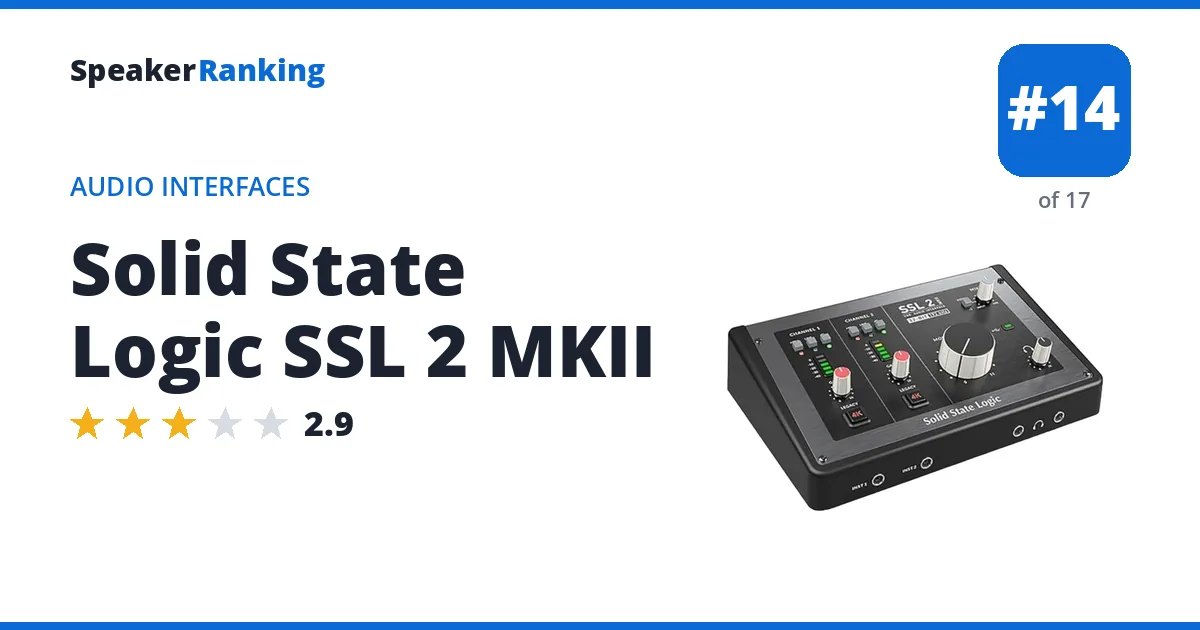
Pros: It runs entirely on USB C bus power while providing two mic, line and instrument inputs, balanced monitor outputs and two headphone jacks. Audio Science Review measured 94 dB SINAD, fine for most headphones, and liked its appearance and ergonomics.
Cons: At 94 dB SINAD, sensitive in ear monitors may reveal hiss or noise, and Audio Science Review found distortion in both the DAC and ADC rising with level and frequency, so it did not recommend it. SSL doesn’t publish a 32 ohm power figure. The Arturia MiniFuse 2 rates higher for a similar price.
Full Solid State Logic SSL 2 MKII review and specifications →
| Released | 2024 (2 years ago) |
|---|---|
| Balanced Output | Yes (balanced monitor outs) |
| Device Type | Audio interface |
| Dimensions | 9.2” x 2.8” x 6.2” (234 x 70 x 157 mm) |
| Headphone Outputs | 2 (same mix) |
| Inputs | 2 mic/line/instrument, USB-C |
| Outputs | 2 balanced monitor outs, headphone |
| SINAD | 94 dB (measured by Audio Science Review) |
| Volume Control | Hardware knob |
| Weight | 1.9 lbs (880 g) |
- Reviews, Comparisons and Sound Samples
- Head-to-Head Comparisons
- Solid State Logic SSL 2 MKII vs Behringer U-Phoria UMC204HD
- Solid State Logic SSL 2 MKII vs Focusrite Scarlett 2i2 4th Gen
- Solid State Logic SSL 2 MKII vs Tascam Series 102i
- Solid State Logic SSL 2 MKII vs Arturia MiniFuse 2
- Solid State Logic SSL 2 MKII vs Behringer Studio XL
- Solid State Logic SSL 2 MKII vs MOTU M4
- Solid State Logic SSL 2 MKII vs MOTU M2
- Solid State Logic SSL 2 MKII vs Topping E2x2
- See all 9 comparisons
 #15 Focusrite Scarlett 2i2 4th Gen: $224.99 Amazon $224.99 eBay
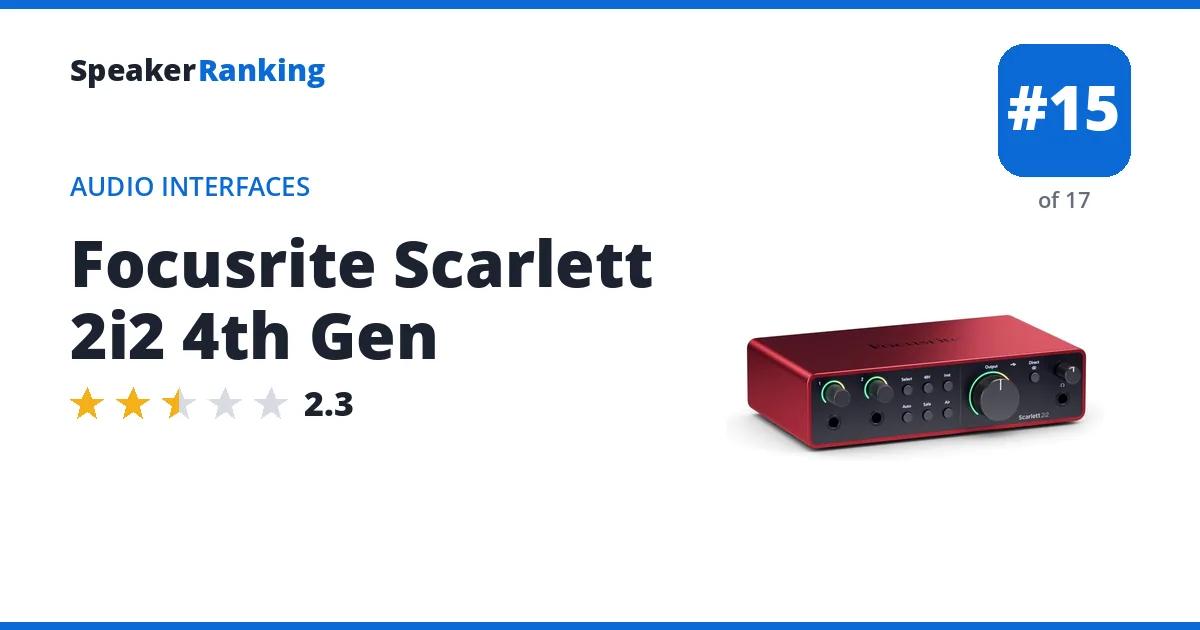
Pros: It offers two combo XLR and TRS mic, line and instrument inputs in a compact box. Audio Science Review measured 94 dB SINAD, fine for most headphones, and judged its ADC good enough for consumer use.
Cons: Its headphone output is rated at only 32 mW into 33 ohms, enough for in ear monitors and easy headphones only, and Audio Science Review found it outperformed by some cheap dongles and did not recommend the unit. Sensitive in ear monitors may reveal hiss at 94 dB SINAD. The Tascam Series 102i rates higher and costs less.
Full Focusrite Scarlett 2i2 4th Gen review and specifications →
| Released | Sep 2023 (3 years ago) |
|---|---|
| Device Type | Audio interface |
| Dimensions | 7.1” x 1.8” x 3.9” (180 x 45.4 x 99 mm) |
| Inputs | 2 XLR/TRS combo mic/line/instrument |
| Output Power (300 ohms) | 22 mW (manufacturer rated) |
| Output Power (32 ohms) | 32 mW into 33 ohms (manufacturer rated) |
| SINAD | 94 dB (measured by Audio Science Review) |
| Weight | 1.3 lbs (571.5 g) |
- Reviews, Comparisons and Sound Samples
- Head-to-Head Comparisons
- Focusrite Scarlett 2i2 4th Gen vs ESI Maya22 USB
- Focusrite Scarlett 2i2 4th Gen vs Solid State Logic SSL 2 MKII
- Focusrite Scarlett 2i2 4th Gen vs Behringer Studio XL
- Focusrite Scarlett 2i2 4th Gen vs Arturia MiniFuse 2
- Focusrite Scarlett 2i2 4th Gen vs MOTU M4
- Focusrite Scarlett 2i2 4th Gen vs MOTU M2
- Focusrite Scarlett 2i2 4th Gen vs Topping M62
 #16 ESI Maya22 USB: $59.99 Amazon $59.99 eBay
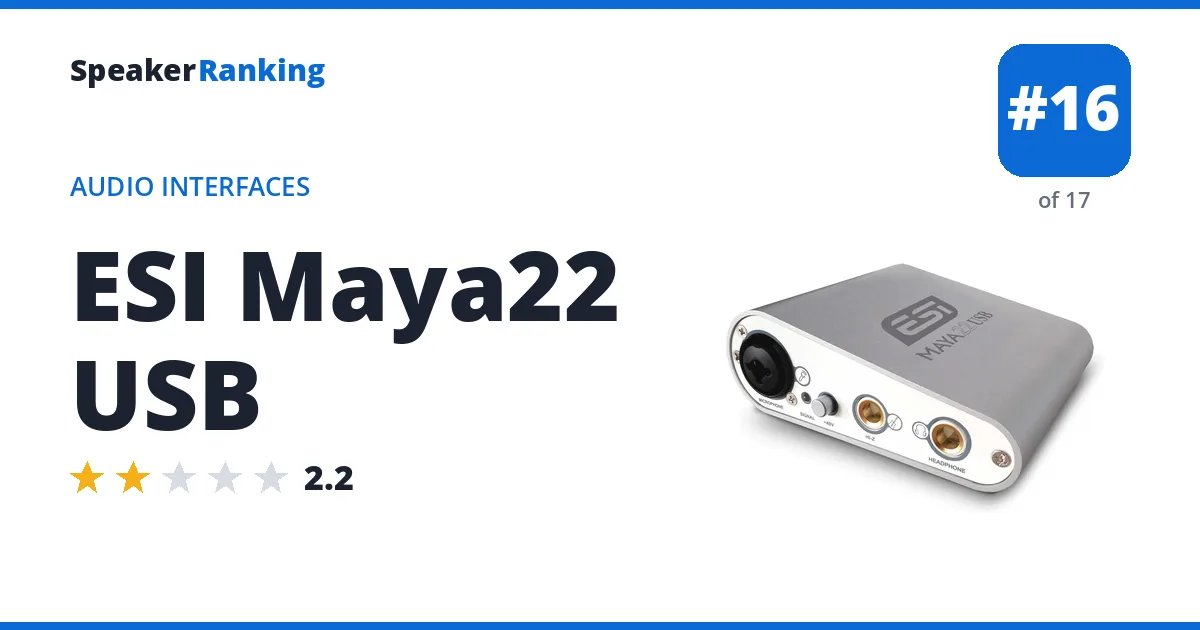
Pros: It is very inexpensive and compact, with an XLR mic input with phantom power, a Hi Z instrument input, an RCA line input, balanced TRS outputs and a headphone jack with a hardware volume knob.
Cons: Audio Science Review measured only 80 dB SINAD, low enough that noise and distortion are a real audible weakness. ESI doesn’t publish a 32 ohm power figure. The Behringer U-Phoria UMC204HD rates higher and measured far cleaner for not much more.
Full ESI Maya22 USB review and specifications →
| Balanced Output | Yes (TRS outs) |
|---|---|
| Device Type | Audio interface |
| Dimensions | 3.9” x 1.5” x 4.1” (100 x 37 x 105 mm) |
| Headphone Outputs | 1 x 6.35 mm |
| Inputs | XLR mic (48V), 6.35 mm Hi-Z instrument, RCA line |
| Outputs | 2 balanced 6.35 mm TRS, 6.35 mm headphone |
| SINAD | 80 dB (measured by Audio Science Review) |
| Volume Control | Hardware knob |
- Reviews, Comparisons and Sound Samples
- Head-to-Head Comparisons
 #17 Behringer Studio XL: $239.00 Amazon $239.00 eBay
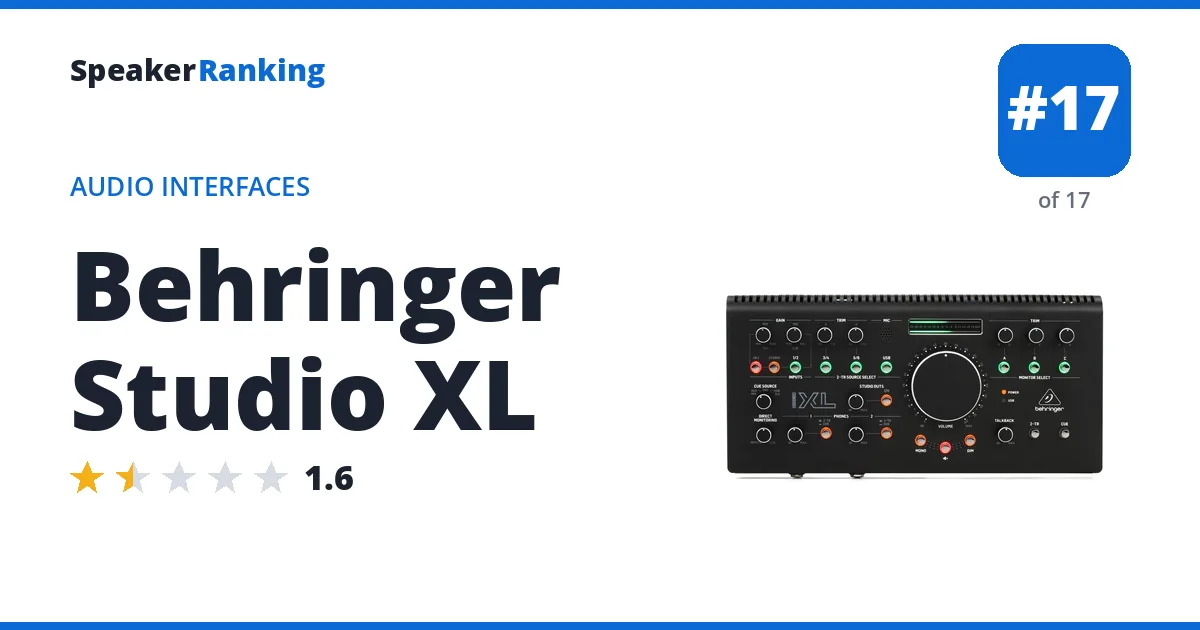
Pros: It packs a lot of connectivity into one box: two combo mic and line inputs, ten balanced TRS line outputs, two headphone jacks and a hardware volume control.
Cons: Audio Science Review measured just 55 dB SINAD, a serious audible weakness, and found it clips easily in ways that are hard to diagnose, so it gave no recommendation. Behringer doesn’t publish a 32 ohm power figure. The Behringer U-Phoria UMC204HD rates far higher for much less.
Full Behringer Studio XL review and specifications →
| Released | 2022 (4 years ago) |
|---|---|
| Balanced Output | Yes (TRS outs) |
| Device Type | Audio interface |
| Dimensions | 12.9” x 3.1” x 6.4” (328 x 80 x 163 mm) |
| Headphone Outputs | 2 x 6.35 mm |
| Inputs | 2 XLR/TRS combo (mic/line), USB-B (6 inputs total) |
| Outputs | 10 x 6.35 mm TRS line outs, 2 headphone |
| SINAD | 55 dB (measured by Audio Science Review) |
| Volume Control | Hardware knob (VCA) |
| Weight | 4 lbs (1.8 kg) |
- Reviews, Comparisons and Sound Samples
- Head-to-Head Comparisons