Short answer: a tie on sound quality. Both are rated 3.9/5 (#278 and #277 of 450 in-ear headphones), so choose on features and fit.
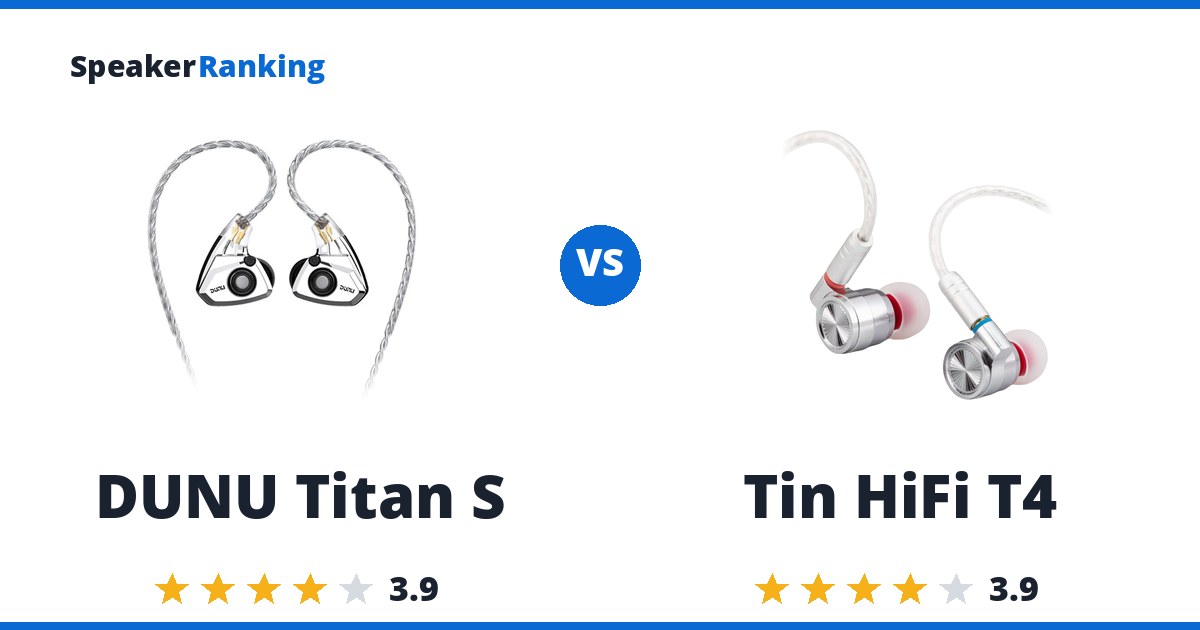
Why pick the DUNU Titan S: Crinacle’s measurement gives it a preference score of 73, and across 34 hobbyist measurements on squig.link the bass, low mids and upper mids all land within half a decibel of the Harman target. The tradeoff: Hobbyist measurements put sub-bass about 3.2 dB below target, so the deepest synth and cinematic bass hits carry less rumble than the Harman curve calls for.
The case for the Tin HiFi T4: It earns a preference score of 73 in crinacle’s measurement, and across squig.link measurements bass and mids stay within about 1.3 dB of target from 20 Hz to 3 kHz, giving natural voices and well judged bass. The catch: In squig.link measurements a 6.7 dB dip near 10 kHz and about 3 dB less presence from 3 to 6 kHz take some sparkle and edge off cymbals and guitars.
Buy the DUNU Titan S or the Tin HiFi T4 on features: they are rated the same for sound quality at close to the same price.
Still deciding? The full Headphones rankings cover every ranked option.
Specifications Side By Side
| DUNU Titan S | Tin HiFi T4 | |
|---|---|---|
| Price | - | $89.00 |
| Ranked | #278 of 450 in In-Ear Headphones | #277 of 450 in In-Ear Headphones |
| Form Factor | In-ear | In-ear |
| Back | Closed | Closed |
| Harman Preference Score | 73 (measured by crinacle, via AutoEQ) | 73 (measured by crinacle, via AutoEQ) |
| Deviation From Target | 2.29 dB standard deviation | 2.44 dB standard deviation |
| Tonal Tilt | +0.29 (negative is warmer, positive brighter) | +0.10 (negative is warmer, positive brighter) |
| Connection | Wired | Wired |
| Driver Type | Dynamic | Dynamic |
| Drivers | 1 x 11mm dynamic | 1 x 10mm dynamic |
| Impedance | 32 ohms | 32 ohms |
| Sensitivity | 110 dB | 102 dB |
| Frequency Response | 5Hz - 40kHz (Manufacturer specified) | 10Hz - 20kHz (Manufacturer specified) |
| Sub-bass Extension | Within 6 dB of target down to 20 Hz (-3.4 dB at 30 Hz) | Within 6 dB of target down to 20 Hz (-1.1 dB at 30 Hz) |
Related Headphone Comparisons
More top alternatives to Tin HiFi T4:
- Truthear x Crinacle Zero RED vs Tin HiFi T4
- NF Audio RA15 vs Tin HiFi T4
- Kiwi Ears Canta vs Tin HiFi T4
- Moondrop Golden Ages vs Tin HiFi T4
- Kiwi Ears Orchestra vs Tin HiFi T4
Prices on this page were last checked October 11, 2026 at 4:59 PM UTC. Product prices and availability are accurate as of that date/time and are subject to change; the price and availability shown on Amazon at the time of purchase will apply to the purchase of this product.
As an eBay Partner, we may be compensated if you make a purchase.
The Two Headphones In Full
 DUNU Titan S AliExpress eBay
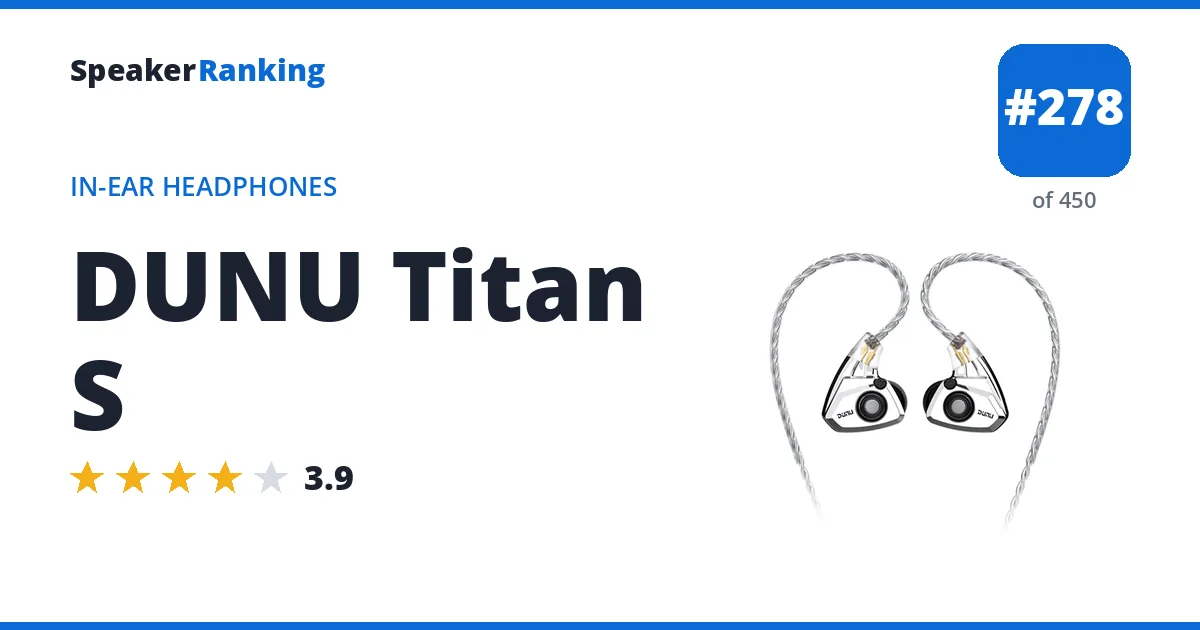
Pros: Crinacle’s measurement gives it a preference score of 73, and across 34 hobbyist measurements on squig.link the bass, low mids and upper mids all land within half a decibel of the Harman target. That keeps vocals, piano and guitars sounding natural rather than pushed forward or recessed. With a 32 ohm load and a 110 dB sensitivity rating, it plays at comfortable volume straight from a phone.
Cons: Hobbyist measurements put sub-bass about 3.2 dB below target, so the deepest synth and cinematic bass hits carry less rumble than the Harman curve calls for. A 4.9 dB dip near 6.1 kHz followed by a 4.1 dB peak near 11.9 kHz gives the treble an uneven texture, softening some detail while adding a touch of glare up top.
Full DUNU Titan S review and specifications →
| Released | Dec 2021 (4 years ago) |
|---|---|
| Back | Closed |
| Connection | Wired |
| Deviation From Target | 2.29 dB standard deviation |
| Driver Type | Dynamic |
| Drivers | 1 x 11mm dynamic |
| Form Factor | In-ear |
| Frequency Response | 5Hz - 40kHz (Manufacturer specified) |
| Harman Preference Score | 73 (measured by crinacle, via AutoEQ) |
| Impedance | 32 ohms |
| Sensitivity | 110 dB |
| Sub-bass Extension | Within 6 dB of target down to 20 Hz (-3.4 dB at 30 Hz) |
| Tonal Tilt | +0.29 (negative is warmer, positive brighter) |
EQ preset to match the Harman target
Set a preamp of -5.2 dB, then add these filters in any parametric equalizer (Wavelet, Equalizer APO, Peace, or a player with parametric EQ). Calculated by AutoEQ from its measured frequency response.
| Filter | Frequency | Gain | Q |
|---|---|---|---|
| Low shelf | 105 Hz | +10.1 dB | 0.70 |
| Peak | 5,993 Hz | +13.5 dB | 0.87 |
| Peak | 4,479 Hz | -9.3 dB | 0.51 |
| Peak | 40 Hz | -7.2 dB | 0.34 |
| Peak | 762 Hz | +2.2 dB | 1.04 |
| High shelf | 10,000 Hz | -5.4 dB | 0.70 |
| Peak | 9,592 Hz | +2.8 dB | 2.45 |
| Peak | 1,411 Hz | -0.8 dB | 2.84 |
| Peak | 2,335 Hz | +0.3 dB | 1.89 |
| Peak | 1,030 Hz | +0.5 dB | 3.30 |
- Reviews, Comparisons and Sound Samples
- Head-to-Head Comparisons
 Tin HiFi T4: $89.00 Amazon eBay
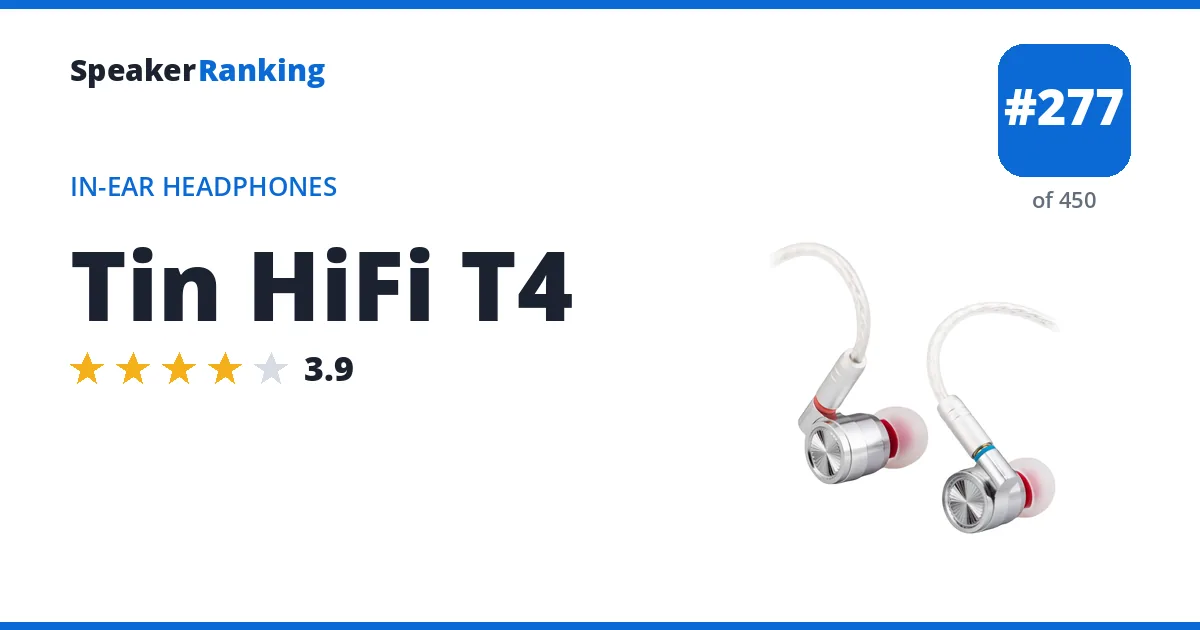
Pros: It earns a preference score of 73 in crinacle’s measurement, and across squig.link measurements bass and mids stay within about 1.3 dB of target from 20 Hz to 3 kHz, giving natural voices and well judged bass. Sub-bass is only about 1 dB down at 30 Hz, so kick drums keep their weight. At 32 ohms and 102 dB it runs from a phone, and it rates level with the Etymotic ER2XR for less money and above the KZ PR1 at a similar price.
Cons: In squig.link measurements a 6.7 dB dip near 10 kHz and about 3 dB less presence from 3 to 6 kHz take some sparkle and edge off cymbals and guitars. Listeners who want a brighter, more vivid top end may find it slightly polite.
Full Tin HiFi T4 review and specifications →
| Released | Nov 2019 (6 years ago) |
|---|---|
| Back | Closed |
| Connection | Wired |
| Deviation From Target | 2.44 dB standard deviation |
| Driver Type | Dynamic |
| Drivers | 1 x 10mm dynamic |
| Form Factor | In-ear |
| Frequency Response | 10Hz - 20kHz (Manufacturer specified) |
| Harman Preference Score | 73 (measured by crinacle, via AutoEQ) |
| Impedance | 32 ohms |
| Sensitivity | 102 dB |
| Sub-bass Extension | Within 6 dB of target down to 20 Hz (-1.1 dB at 30 Hz) |
| Tonal Tilt | +0.10 (negative is warmer, positive brighter) |
EQ preset to match the Harman target
Set a preamp of -4.2 dB, then add these filters in any parametric equalizer (Wavelet, Equalizer APO, Peace, or a player with parametric EQ). Calculated by AutoEQ from its measured frequency response.
| Filter | Frequency | Gain | Q |
|---|---|---|---|
| Low shelf | 105 Hz | +2.8 dB | 0.70 |
| Peak | 9,358 Hz | +4.2 dB | 2.59 |
| Peak | 149 Hz | -2.1 dB | 0.84 |
| Peak | 1,877 Hz | -3.4 dB | 2.54 |
| Peak | 3,450 Hz | +4.1 dB | 3.07 |
| High shelf | 10,000 Hz | -0.1 dB | 0.70 |
| Peak | 853 Hz | +1.7 dB | 1.24 |
| Peak | 5,343 Hz | -3.7 dB | 5.41 |
| Peak | 1,332 Hz | -1.5 dB | 2.76 |
| Peak | 6,775 Hz | +1.3 dB | 3.54 |
- Reviews, Comparisons and Sound Samples
- Head-to-Head Comparisons