Short answer: the Shure SE215. Both are rated 3.1/5 for sound quality (#395 and #398 of 467 in-ear headphones), and the Shure SE215 costs $109 against $149.99 for the Sony INZONE Buds, so with nothing between them on sound quality, price settles it.
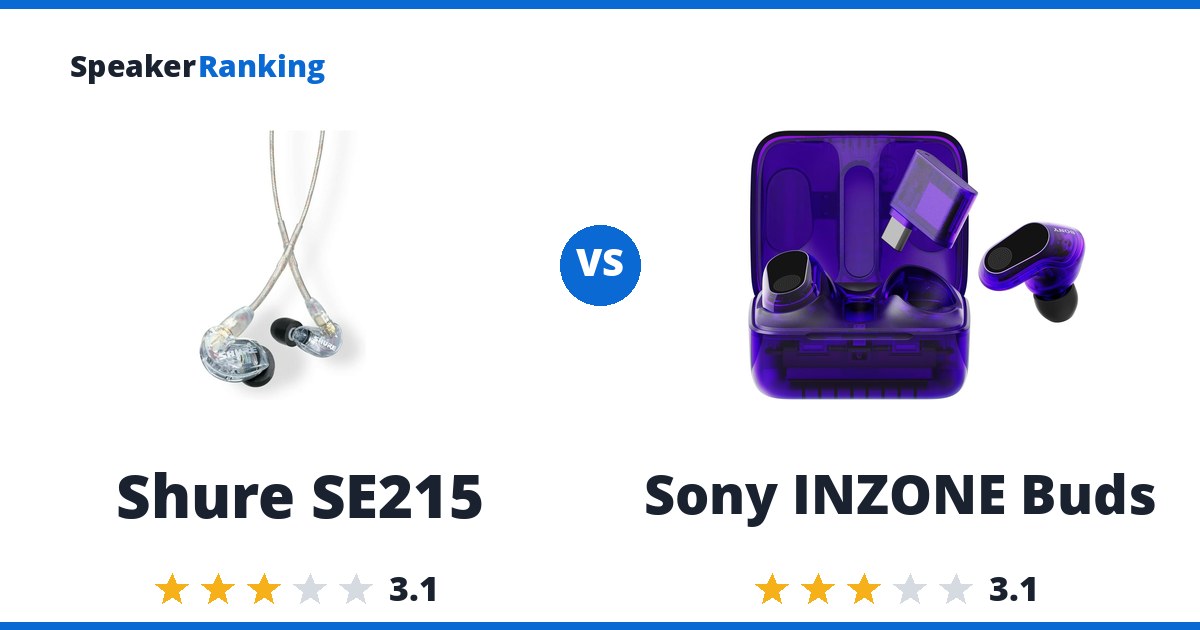
What the Shure SE215 does well: Bass from 60 to 200 Hz is lifted by about 4.2 dB with low mids up 2.2 dB, giving a warm, full sound that suits rock, pop and hip hop. The catch: Treble from 6 to 10 kHz is about 3 dB low with a 5.9 dB dip near 6.7 kHz, and the top octave is down 2.7 dB, so cymbals and air sound dull.
The case for the Sony INZONE Buds: Active noise cancelling, an IPX4 rating and a USB transceiver connection with up to 11 hours of battery (longer over Bluetooth LE Audio) make it a convenient gaming earbud. The tradeoff: Bluetooth is LE Audio only with the LC3 codec, so many older phones and laptops cannot use it without the dongle.
Buy the Shure SE215. Both are rated the same for sound quality, and it costs $40.99 less than the Sony INZONE Buds.
Still deciding? The full Headphones rankings cover every ranked option.
Specifications Side By Side
| Shure SE215 | Sony INZONE Buds | |
|---|---|---|
| Price | $109.00 | $149.99 |
| Ranked | #395 of 467 in In-Ear Headphones | #398 of 467 in In-Ear Headphones |
| Form Factor | In-ear | In-ear |
| Harman Preference Score | 63 (measured by oratory1990, via AutoEQ) | 63 (median of 3 squig.link measurements, calibrated to AutoEQ) |
| Deviation From Target | 2.78 dB standard deviation | 2.99 dB standard deviation |
| Tonal Tilt | -0.78 (negative is warmer, positive brighter) | +0.15 (negative is warmer, positive brighter) |
| Sub-bass Extension | Within 6 dB of target down to 20 Hz (-1.0 dB at 30 Hz) | Falls 6 dB below target at 28 Hz (-6.0 dB at 30 Hz) |
| Connection | Wired | True wireless |
| Driver Type | Dynamic | Dynamic |
| Drivers | 1 x dynamic | 1 x 8.4mm dynamic |
| Impedance | 17 ohms | - |
| Sensitivity | 107 dB SPL/mW | - |
| Frequency Response | 22Hz - 17.5kHz (Manufacturer specified) | - |
| Back | Closed | Closed |
| Weight | - | 0 lbs (6.5 g) per earbud |
| Active Noise Cancelling | - | Yes |
| Battery Life | - | 11 hours (12 with ANC off via USB transceiver; 18 / 24 via Bluetooth LE Audio, Manufacturer specified) |
| Bluetooth Version | - | 5.3 |
| Bluetooth Codecs | - | LC3 (LE Audio only) |
| Built-in Microphone | - | Yes |
| IP Rating | - | IPX4 |
Related Headphone Comparisons
More top alternatives to Shure SE215:
- Sennheiser IE 40 Pro vs Shure SE215
- iBasso IT01S vs Shure SE215
- FiiO FH3 vs Shure SE215
- BGVP DN3 vs Shure SE215
- Shure SE215 vs Etymotic ER3XR
Prices on this page were last checked October 11, 2026 at 4:59 PM UTC. Product prices and availability are accurate as of that date/time and are subject to change; the price and availability shown on Amazon at the time of purchase will apply to the purchase of this product.
As an eBay Partner, we may be compensated if you make a purchase.
The Two Headphones In Full
 Shure SE215: $109.00 Amazon $109.00 eBay
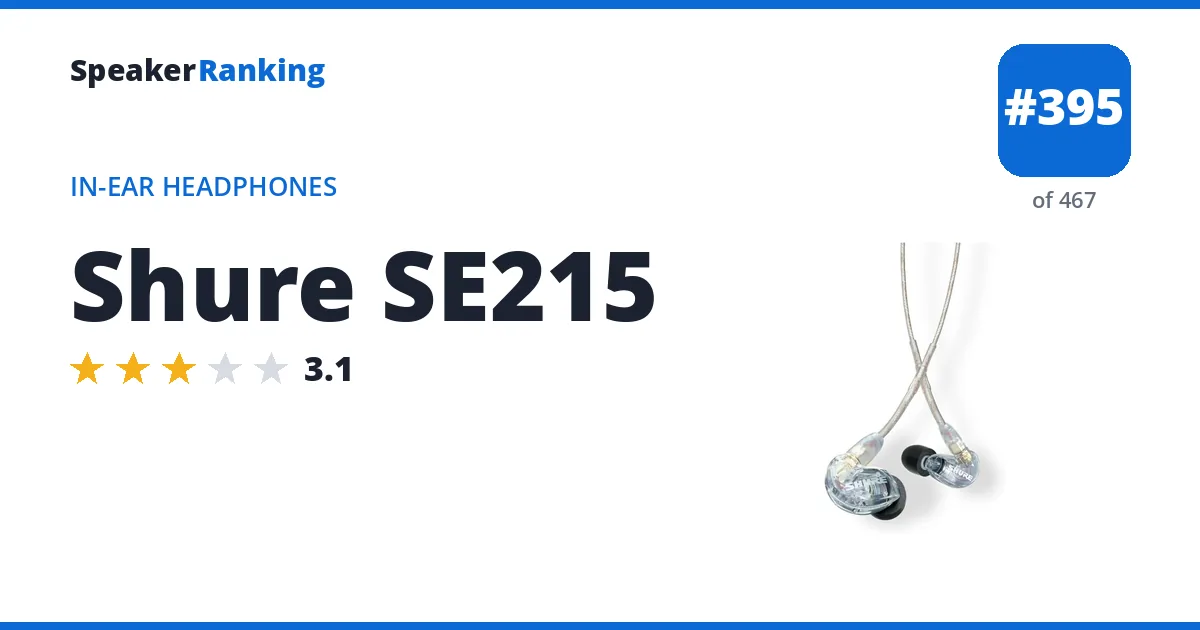
Pros: Bass from 60 to 200 Hz is lifted by about 4.2 dB with low mids up 2.2 dB, giving a warm, full sound that suits rock, pop and hip hop. A 17 ohm impedance and 107 dB SPL/mW sensitivity make it easy to drive from a phone, and the single dynamic driver keeps the design simple. Upper mids sit right on target, so vocals are not pushed back.
Cons: Treble from 6 to 10 kHz is about 3 dB low with a 5.9 dB dip near 6.7 kHz, and the top octave is down 2.7 dB, so cymbals and air sound dull. The warm balance can make the mix feel thick. The iBasso IT01S and the FiiO FH3 both have higher ratings.
Full Shure SE215 review and specifications →
| Released | Jan 2011 (15 years ago) |
|---|---|
| Back | Closed |
| Connection | Wired |
| Deviation From Target | 2.78 dB standard deviation |
| Driver Type | Dynamic |
| Drivers | 1 x dynamic |
| Form Factor | In-ear |
| Frequency Response | 22Hz - 17.5kHz (Manufacturer specified) |
| Harman Preference Score | 63 (measured by oratory1990, via AutoEQ) |
| Impedance | 17 ohms |
| Sensitivity | 107 dB SPL/mW |
| Sub-bass Extension | Within 6 dB of target down to 20 Hz (-1.0 dB at 30 Hz) |
| Tonal Tilt | -0.78 (negative is warmer, positive brighter) |
EQ preset to match the Harman target
Set a preamp of -5.7 dB, then add these filters in any parametric equalizer (Wavelet, Equalizer APO, Peace, or a player with parametric EQ). Calculated by AutoEQ from its measured frequency response.
| Filter | Frequency | Gain | Q |
|---|---|---|---|
| Low shelf | 105 Hz | +0.3 dB | 0.70 |
| Peak | 174 Hz | -4.6 dB | 0.68 |
| Peak | 811 Hz | +3.1 dB | 1.42 |
| Peak | 3,430 Hz | +3.8 dB | 4.37 |
| Peak | 6,943 Hz | +5.4 dB | 2.76 |
| High shelf | 10,000 Hz | +3.8 dB | 0.70 |
| Peak | 5,725 Hz | +8.1 dB | 1.13 |
| Peak | 5,056 Hz | -10.9 dB | 2.93 |
| Peak | 7,269 Hz | -6.3 dB | 3.47 |
| Peak | 2,278 Hz | -2.1 dB | 2.94 |
- Reviews, Comparisons and Sound Samples
- Head-to-Head Comparisons
 Sony INZONE Buds: $149.99 TWS Amazon $149.99 eBay
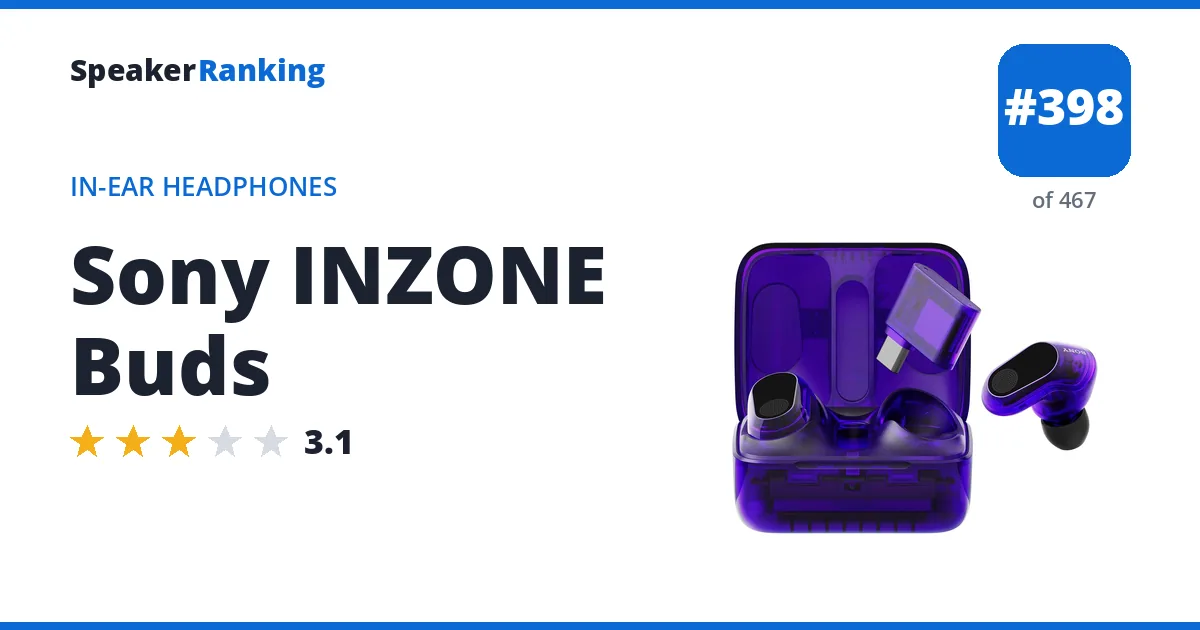
Pros: Active noise cancelling, an IPX4 rating and a USB transceiver connection with up to 11 hours of battery (longer over Bluetooth LE Audio) make it a convenient gaming earbud. In hobbyist measurements on squig.link the overall tilt is nearly flat and the deviation is a moderate 3 dB, so it suits listeners who want a warm to neutral balance.
Cons: Bluetooth is LE Audio only with the LC3 codec, so many older phones and laptops cannot use it without the dongle. A 5.5 dB dip near 4 kHz recesses vocals, a 6.6 dB peak near 8 kHz adds some sibilance, and sub-bass falls 6 dB below target by about 28 Hz. The FiiO FH3 rates higher for less money. See headphone amps and DACs with enough power to drive it.
Full Sony INZONE Buds review and specifications →
| Released | Oct 2023 (3 years ago) |
|---|---|
| Active Noise Cancelling | Yes |
| Back | Closed |
| Battery Life | 11 hours (12 with ANC off via USB transceiver; 18 / 24 via Bluetooth LE Audio, Manufacturer specified) |
| Bluetooth Codecs | LC3 (LE Audio only) |
| Bluetooth Version | 5.3 |
| Built-in Microphone | Yes |
| Connection | True wireless |
| Deviation From Target | 2.99 dB standard deviation |
| Driver Type | Dynamic |
| Drivers | 1 x 8.4mm dynamic |
| Form Factor | In-ear |
| Harman Preference Score | 63 (median of 3 squig.link measurements, calibrated to AutoEQ) |
| IP Rating | IPX4 |
| Sub-bass Extension | Falls 6 dB below target at 28 Hz (-6.0 dB at 30 Hz) |
| Tonal Tilt | +0.15 (negative is warmer, positive brighter) |
| Weight | 0 lbs (6.5 g) per earbud |
- Reviews, Comparisons and Sound Samples
- Head-to-Head Comparisons