Short answer: the Shure SE215. It ranks #53 of 68 in-ear headphones by sound quality (rated 3.1/5) at $109 and is still sold new; the Jabra Elite Active 65t ranks #60 (rated 2.7/5) and is discontinued, so it is only an option used.
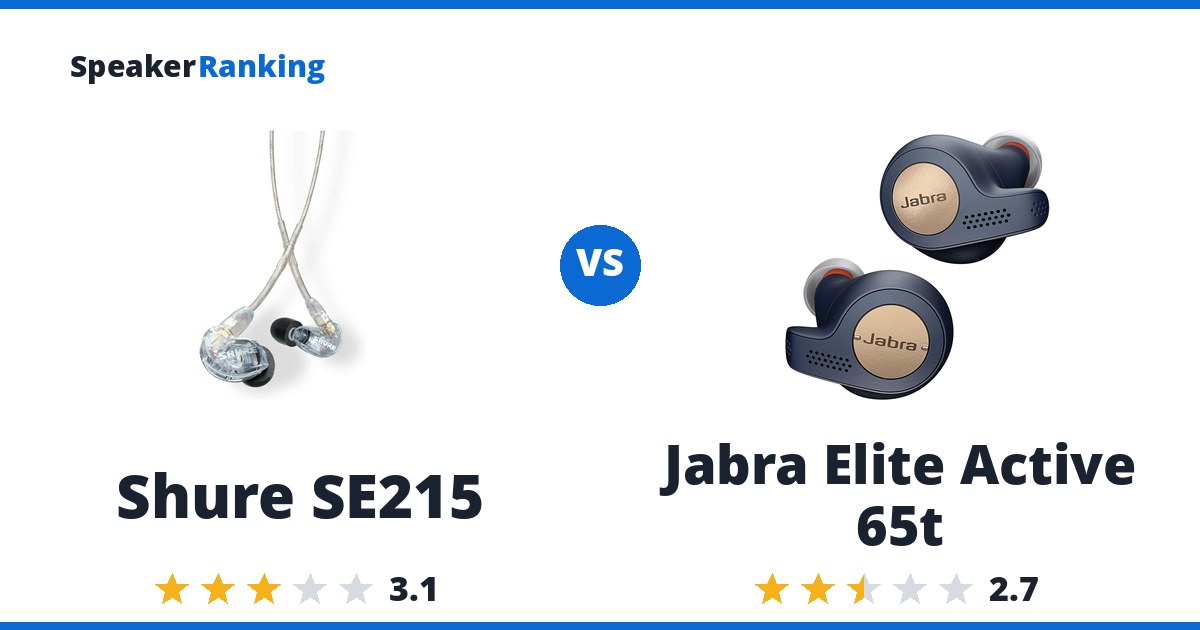
The Shure SE215 is the better-sounding pick. Bass from 60 to 200 Hz is lifted by about 4.2 dB with low mids up 2.2 dB, giving a warm, full sound that suits rock, pop and hip hop. Watch for: Treble from 6 to 10 kHz is about 3 dB low with a 5.9 dB dip near 6.7 kHz, and the top octave is down 2.7 dB, so cymbals and air sound dull.
The case for the Jabra Elite Active 65t: A true wireless design with an IP56 rating gives dust and sweat resistance suited to workouts. Watch for: Only the SBC codec is supported, so there is no higher quality Bluetooth option.
Buy the Shure SE215. It is rated higher for sound quality; the Jabra Elite Active 65t is no longer sold new.
Want more options? Browse the full Headphones rankings.
Specifications Side By Side
| Shure SE215 | Jabra Elite Active 65t | |
|---|---|---|
| Price | $109.00 | $156.45 Discontinued |
| Ranked | #53 of 68 in In-Ear Headphones | #60 of 68 in In-Ear Headphones |
| Form Factor | In-ear | In-ear |
| Harman Preference Score | 63 (measured by oratory1990, via AutoEQ) | 58 (measured by crinacle, via AutoEQ) |
| Deviation From Target | 2.78 dB standard deviation | 3.41 dB standard deviation |
| Tonal Tilt | -0.78 (negative is warmer, positive brighter) | -0.49 (negative is warmer, positive brighter) |
| Connection | Wired | True wireless |
| Driver Type | Dynamic | - |
| Drivers | 1 x dynamic | 1 x 6mm |
| Impedance | 17 ohms | - |
| Sensitivity | 107 dB SPL/mW | - |
| Frequency Response | 22Hz - 17.5kHz (Manufacturer specified) | - |
| Back | Closed | Closed |
| Weight | - | 0 lbs (6.5 g) per earbud |
| Active Noise Cancelling | - | No |
| Battery Life | - | 5 hours (15 with case, Manufacturer specified) |
| Bluetooth Version | - | 5.0 |
| Bluetooth Codecs | - | SBC |
| Built-in Microphone | - | Yes |
| IP Rating | - | IP56 |
Related Headphone Comparisons
How Shure SE215 compares with other leading options:
- Jabra Elite Active 65t vs 1MORE Quad Driver
- FiiO FH3 vs Jabra Elite Active 65t
- Jabra Elite Active 65t vs Sennheiser Momentum True Wireless 2
- Etymotic ER4XR vs Sennheiser Momentum True Wireless 2
- Sennheiser MOMENTUM True Wireless 4 vs Etymotic ER4XR
Prices on this page were last checked October 10, 2026 at 5:37 PM UTC. Product prices and availability are accurate as of that date/time and are subject to change; the price and availability shown on Amazon at the time of purchase will apply to the purchase of this product.
As an eBay Partner, we may be compensated if you make a purchase.
The Two Headphones In Full
 Shure SE215: $109.00 Amazon eBay
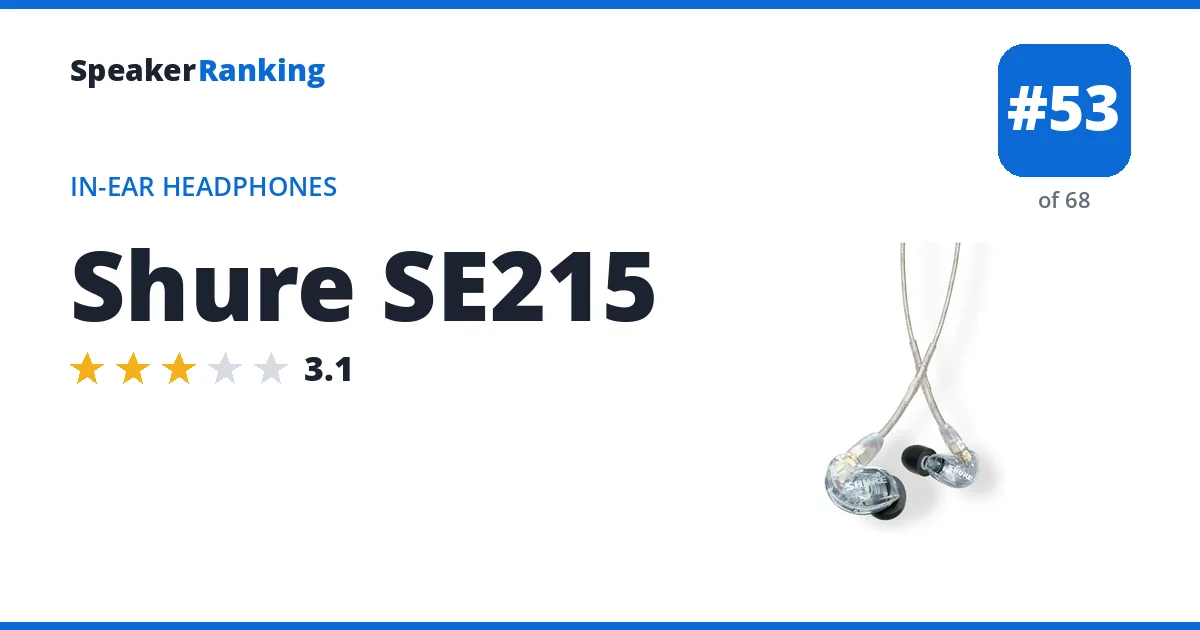
Pros: Bass from 60 to 200 Hz is lifted by about 4.2 dB with low mids up 2.2 dB, giving a warm, full sound that suits rock, pop and hip hop. A 17 ohm impedance and 107 dB SPL/mW sensitivity make it easy to drive from a phone, and the single dynamic driver keeps the design simple. Upper mids sit right on target, so vocals are not pushed back.
Cons: Treble from 6 to 10 kHz is about 3 dB low with a 5.9 dB dip near 6.7 kHz, and the top octave is down 2.7 dB, so cymbals and air sound dull. The warm balance can make the mix feel thick. The iBasso IT01S and the FiiO FH3 both have higher ratings.
Full Shure SE215 review and specifications →
| Released | Jan 2011 (15 years ago) |
|---|---|
| Back | Closed |
| Connection | Wired |
| Deviation From Target | 2.78 dB standard deviation |
| Driver Type | Dynamic |
| Drivers | 1 x dynamic |
| Form Factor | In-ear |
| Frequency Response | 22Hz - 17.5kHz (Manufacturer specified) |
| Harman Preference Score | 63 (measured by oratory1990, via AutoEQ) |
| Impedance | 17 ohms |
| Sensitivity | 107 dB SPL/mW |
| Tonal Tilt | -0.78 (negative is warmer, positive brighter) |
EQ preset to match the Harman target
Set a preamp of -5.7 dB, then add these filters in any parametric equalizer (Wavelet, Equalizer APO, Peace, or a player with parametric EQ). Calculated by AutoEQ from its measured frequency response.
| Filter | Frequency | Gain | Q |
|---|---|---|---|
| Low shelf | 105 Hz | +0.3 dB | 0.70 |
| Peak | 174 Hz | -4.6 dB | 0.68 |
| Peak | 811 Hz | +3.1 dB | 1.42 |
| Peak | 3,430 Hz | +3.8 dB | 4.37 |
| Peak | 6,943 Hz | +5.4 dB | 2.76 |
| High shelf | 10,000 Hz | +3.8 dB | 0.70 |
| Peak | 5,725 Hz | +8.1 dB | 1.13 |
| Peak | 5,056 Hz | -10.9 dB | 2.93 |
| Peak | 7,269 Hz | -6.3 dB | 3.47 |
| Peak | 2,278 Hz | -2.1 dB | 2.94 |
- Reviews, Comparisons and Sound Samples
 Jabra Elite Active 65t: $156.45 Discontinued Amazon eBay
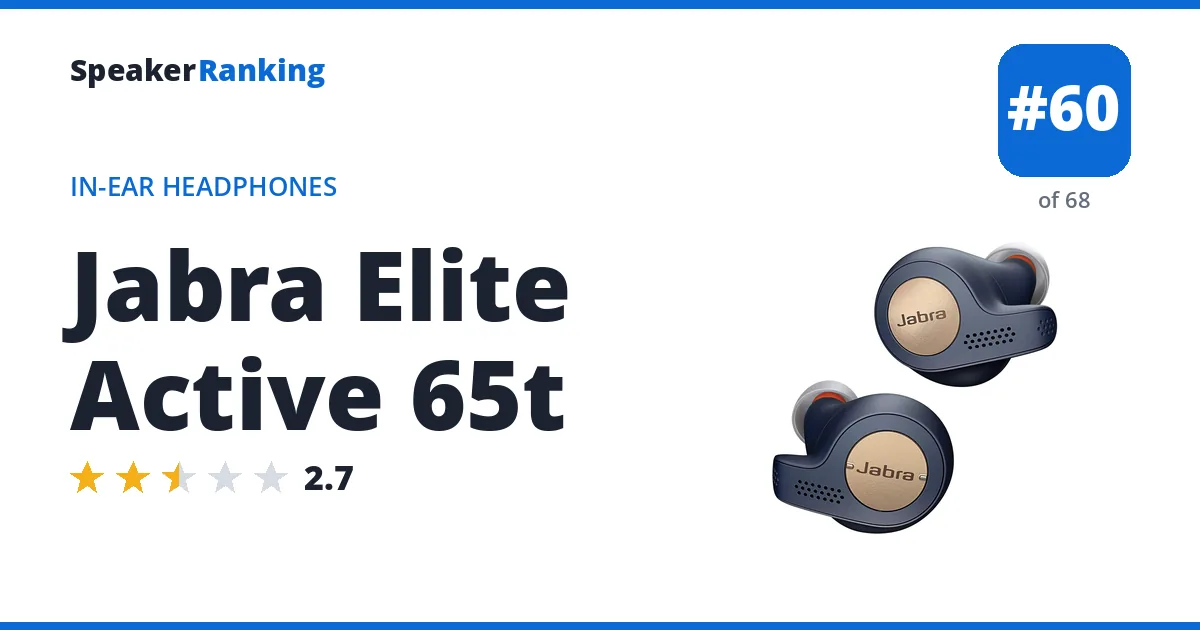
Pros: A true wireless design with an IP56 rating gives dust and sweat resistance suited to workouts. Battery life is 5 hours per charge and 15 hours with the case, and the earbuds weigh only 6.5 g each. Bluetooth 5.0 and a built-in microphone cover calls and everyday listening.
Cons: Only the SBC codec is supported, so there is no higher quality Bluetooth option. There is no active noise cancelling, and Crinacle’s measurement gives a preference score of 58 with a 3.41 dB deviation from target, so the tuning is uneven. The Shure SE215 and FiiO FH3 are rated higher and cheaper, though both are wired. Discontinued.
Full Jabra Elite Active 65t review and specifications →
| Released | Jul 2018 (8 years ago) |
|---|---|
| Active Noise Cancelling | No |
| Back | Closed |
| Battery Life | 5 hours (15 with case, Manufacturer specified) |
| Bluetooth Codecs | SBC |
| Bluetooth Version | 5.0 |
| Built-in Microphone | Yes |
| Connection | True wireless |
| Deviation From Target | 3.41 dB standard deviation |
| Drivers | 1 x 6mm |
| Form Factor | In-ear |
| Harman Preference Score | 58 (measured by crinacle, via AutoEQ) |
| IP Rating | IP56 |
| Tonal Tilt | -0.49 (negative is warmer, positive brighter) |
| Weight | 0 lbs (6.5 g) per earbud |
EQ preset to match the Harman target
Set a preamp of -6.9 dB, then add these filters in any parametric equalizer (Wavelet, Equalizer APO, Peace, or a player with parametric EQ). Calculated by AutoEQ from its measured frequency response.
| Filter | Frequency | Gain | Q |
|---|---|---|---|
| Low shelf | 105 Hz | +16.6 dB | 0.70 |
| Peak | 49 Hz | -16.0 dB | 0.34 |
| Peak | 5,403 Hz | +4.1 dB | 0.56 |
| Peak | 839 Hz | +2.4 dB | 1.86 |
| Peak | 8,608 Hz | -3.4 dB | 3.08 |
| High shelf | 10,000 Hz | +6.9 dB | 0.70 |
| Peak | 10,000 Hz | -3.1 dB | 1.06 |
| Peak | 5,115 Hz | -1.1 dB | 5.14 |
| Peak | 3,623 Hz | +1.0 dB | 3.53 |
| Peak | 6,391 Hz | +2.1 dB | 6.00 |
- Reviews, Comparisons and Sound Samples
- Head-to-Head Comparisons