Short answer: the BGVP DN3. It ranks #380 of 450 in-ear headphones by sound quality, rated 3.2/5, at $74.99; the Shure SE215 ranks #384, rated 3.1/5, and costs $109, so there is not much of a tradeoff to weigh.
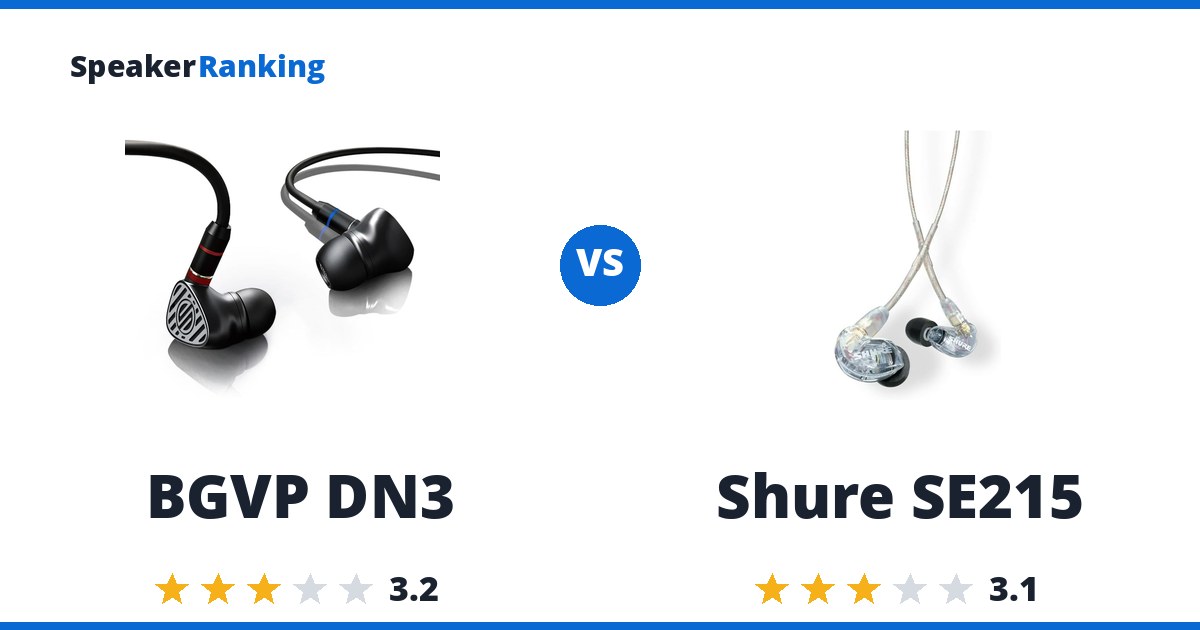
What the BGVP DN3 does well: A dynamic driver and balanced armature hybrid that adds about 3.6 dB of bass between 60 and 200 Hz in squig.link measurements, giving rock and pop extra punch and body. Watch for: Treble swings from a 4.3 dB peak near 8.1 kHz to a 6.3 dB dip near 9.9 kHz, so cymbals can sound splashy one moment and muted the next.
What the Shure SE215 does well: Bass from 60 to 200 Hz is lifted by about 4.2 dB with low mids up 2.2 dB, giving a warm, full sound that suits rock, pop and hip hop. Watch for: Treble from 6 to 10 kHz is about 3 dB low with a 5.9 dB dip near 6.7 kHz, and the top octave is down 2.7 dB, so cymbals and air sound dull.
Buy the BGVP DN3. It is rated higher for sound quality than the Shure SE215 and costs less, so it is the default pick unless a specific strength of the other one matters more to you.
Want more options? Browse the full Headphones rankings.
Specifications Side By Side
| BGVP DN3 | Shure SE215 | |
|---|---|---|
| Price | $74.99 | $109.00 |
| Ranked | #380 of 450 in In-Ear Headphones | #384 of 450 in In-Ear Headphones |
| Form Factor | In-ear | In-ear |
| Back | Closed | Closed |
| Harman Preference Score | 64 (measured by crinacle, via AutoEQ) | 63 (measured by oratory1990, via AutoEQ) |
| Deviation From Target | 3.13 dB standard deviation | 2.78 dB standard deviation |
| Tonal Tilt | -0.20 (negative is warmer, positive brighter) | -0.78 (negative is warmer, positive brighter) |
| Connection | Wired | Wired |
| Driver Type | Hybrid (1 dynamic + 1 balanced armature) | Dynamic |
| Drivers | 1 x 10mm dynamic + 1 x balanced armature | 1 x dynamic |
| Impedance | 19 ohms | 17 ohms |
| Sensitivity | 109 dB/mW | 107 dB SPL/mW |
| Weight | 0 lbs (5 g) | - |
| Frequency Response | 10Hz - 40kHz (Manufacturer specified) | 22Hz - 17.5kHz (Manufacturer specified) |
| Built-in Microphone | No | - |
| Sub-bass Extension | Within 6 dB of target down to 20 Hz (-2.7 dB at 30 Hz) | Within 6 dB of target down to 20 Hz (-1.0 dB at 30 Hz) |
Related Headphone Comparisons
How BGVP DN3 compares with other leading options:
- KZ PR1 vs BGVP DN3
- iBasso IT01S vs BGVP DN3
- Shure SE215 vs Jabra Elite Active 65t
- iBasso IT01S vs Shure SE215
- Sennheiser IE 40 Pro vs Shure SE215
Prices on this page were last checked October 11, 2026 at 4:59 PM UTC. Product prices and availability are accurate as of that date/time and are subject to change; the price and availability shown on Amazon at the time of purchase will apply to the purchase of this product.
As an eBay Partner, we may be compensated if you make a purchase.
The Two Headphones In Full
 BGVP DN3: $74.99 HiFiGo eBay

Pros: A dynamic driver and balanced armature hybrid that adds about 3.6 dB of bass between 60 and 200 Hz in squig.link measurements, giving rock and pop extra punch and body. Sub-bass holds within 6 dB of target down to 20 Hz. At 19 ohms and 109 dB/mW it plays loud from any phone, and each earpiece weighs just 5 g. It rates higher than the Shure SE215 while costing less.
Cons: Treble swings from a 4.3 dB peak near 8.1 kHz to a 6.3 dB dip near 9.9 kHz, so cymbals can sound splashy one moment and muted the next. A 2.1 dB lift in the low mids thickens vocals slightly. The KZ ZSX rates higher for less money, and the iBasso IT01S rates higher still for a small step up.
Full BGVP DN3 review and specifications →
| Released | Aug 2021 (5 years ago) |
|---|---|
| Back | Closed |
| Built-in Microphone | No |
| Connection | Wired |
| Deviation From Target | 3.13 dB standard deviation |
| Driver Type | Hybrid (1 dynamic + 1 balanced armature) |
| Drivers | 1 x 10mm dynamic + 1 x balanced armature |
| Form Factor | In-ear |
| Frequency Response | 10Hz - 40kHz (Manufacturer specified) |
| Harman Preference Score | 64 (measured by crinacle, via AutoEQ) |
| Impedance | 19 ohms |
| Sensitivity | 109 dB/mW |
| Sub-bass Extension | Within 6 dB of target down to 20 Hz (-2.7 dB at 30 Hz) |
| Tonal Tilt | -0.20 (negative is warmer, positive brighter) |
| Weight | 0 lbs (5 g) |
EQ preset to match the Harman target
Set a preamp of -6.2 dB, then add these filters in any parametric equalizer (Wavelet, Equalizer APO, Peace, or a player with parametric EQ). Calculated by AutoEQ from its measured frequency response.
| Filter | Frequency | Gain | Q |
|---|---|---|---|
| Low shelf | 105 Hz | +5.8 dB | 0.70 |
| Peak | 87 Hz | -4.9 dB | 0.29 |
| Peak | 7,222 Hz | +6.8 dB | 2.12 |
| Peak | 767 Hz | +3.5 dB | 0.82 |
| Peak | 2,101 Hz | -5.8 dB | 2.36 |
| High shelf | 10,000 Hz | +3.1 dB | 0.70 |
| Peak | 4,481 Hz | -6.5 dB | 5.34 |
| Peak | 3,346 Hz | +2.4 dB | 3.76 |
| Peak | 5,859 Hz | +2.6 dB | 4.87 |
| Peak | 7,355 Hz | -2.0 dB | 5.99 |
- Reviews, Comparisons and Sound Samples
- Head-to-Head Comparisons
 Shure SE215: $109.00 Amazon eBay
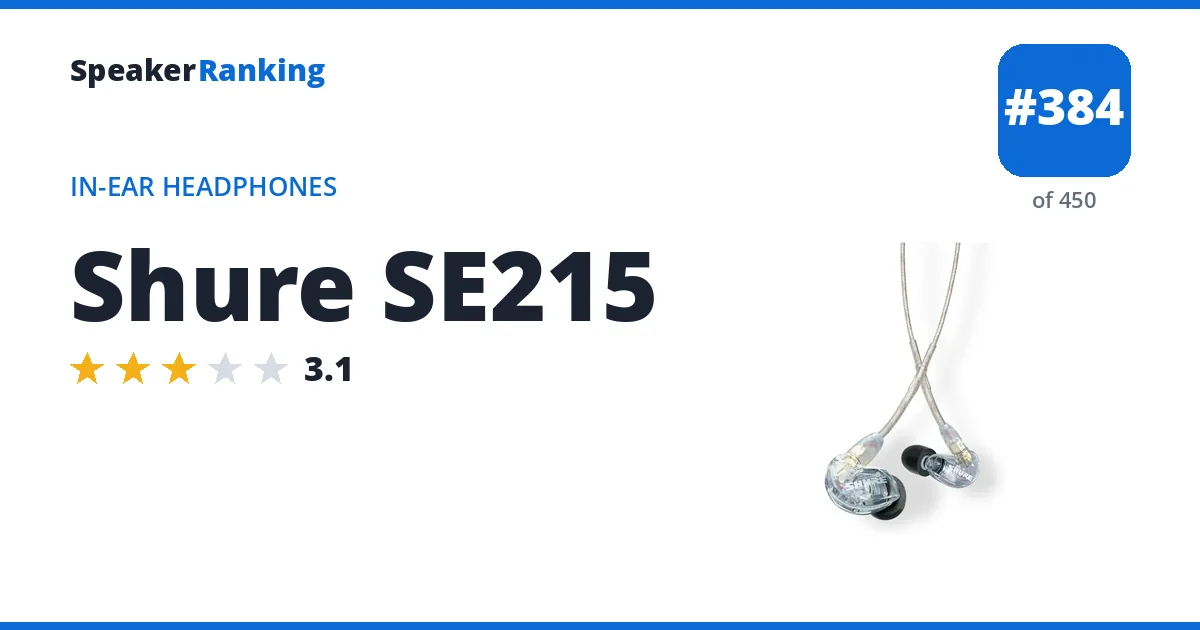
Pros: Bass from 60 to 200 Hz is lifted by about 4.2 dB with low mids up 2.2 dB, giving a warm, full sound that suits rock, pop and hip hop. A 17 ohm impedance and 107 dB SPL/mW sensitivity make it easy to drive from a phone, and the single dynamic driver keeps the design simple. Upper mids sit right on target, so vocals are not pushed back.
Cons: Treble from 6 to 10 kHz is about 3 dB low with a 5.9 dB dip near 6.7 kHz, and the top octave is down 2.7 dB, so cymbals and air sound dull. The warm balance can make the mix feel thick. The iBasso IT01S and the FiiO FH3 both have higher ratings.
Full Shure SE215 review and specifications →
| Released | Jan 2011 (15 years ago) |
|---|---|
| Back | Closed |
| Connection | Wired |
| Deviation From Target | 2.78 dB standard deviation |
| Driver Type | Dynamic |
| Drivers | 1 x dynamic |
| Form Factor | In-ear |
| Frequency Response | 22Hz - 17.5kHz (Manufacturer specified) |
| Harman Preference Score | 63 (measured by oratory1990, via AutoEQ) |
| Impedance | 17 ohms |
| Sensitivity | 107 dB SPL/mW |
| Sub-bass Extension | Within 6 dB of target down to 20 Hz (-1.0 dB at 30 Hz) |
| Tonal Tilt | -0.78 (negative is warmer, positive brighter) |
EQ preset to match the Harman target
Set a preamp of -5.7 dB, then add these filters in any parametric equalizer (Wavelet, Equalizer APO, Peace, or a player with parametric EQ). Calculated by AutoEQ from its measured frequency response.
| Filter | Frequency | Gain | Q |
|---|---|---|---|
| Low shelf | 105 Hz | +0.3 dB | 0.70 |
| Peak | 174 Hz | -4.6 dB | 0.68 |
| Peak | 811 Hz | +3.1 dB | 1.42 |
| Peak | 3,430 Hz | +3.8 dB | 4.37 |
| Peak | 6,943 Hz | +5.4 dB | 2.76 |
| High shelf | 10,000 Hz | +3.8 dB | 0.70 |
| Peak | 5,725 Hz | +8.1 dB | 1.13 |
| Peak | 5,056 Hz | -10.9 dB | 2.93 |
| Peak | 7,269 Hz | -6.3 dB | 3.47 |
| Peak | 2,278 Hz | -2.1 dB | 2.94 |
- Reviews, Comparisons and Sound Samples
- Head-to-Head Comparisons