Short answer: the Aoshida E20. It ranks #26 of 450 in-ear headphones by sound quality, rated 4.7/5, at $22.99; the DUNU Kima Classic ranks #39, rated 4.6/5, at $22.99. The price gap is small enough that the sound-quality ranking should decide it.
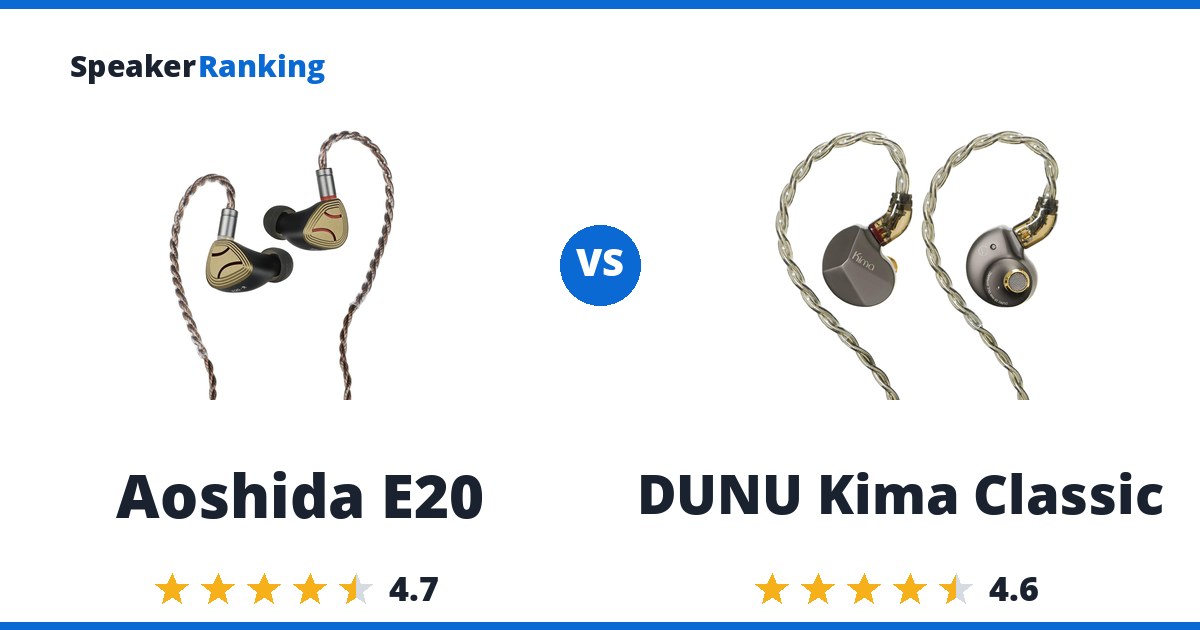
What the Aoshida E20 does well: Across six hobbyist measurements on squig.link, the E20 reaches a preference score of 82.6 with a smooth 1.13 dB deviation from target. The catch: A 6 dB peak near 8.4 kHz and treble about 2.1 dB above target from 6 to 10 kHz can make sibilance and hi hats sound sharp on bright recordings.
What the DUNU Kima Classic does well: Across 10 hobbyist measurements on squig.link it earns a preference score of 81.6 with only 1.22 dB of deviation, so the tuning stays close to what most listeners prefer from deep bass through the upper mids. The catch: A 6.6 dB dip near 10.9 kHz takes some sparkle and shimmer off cymbals.
Buy the Aoshida E20. It is rated higher for sound quality than the DUNU Kima Classic at the same price, which makes it the one to get unless you need something the other one does better.
Still deciding? The full Headphones rankings cover every ranked option.
Specifications Side By Side
| Aoshida E20 | DUNU Kima Classic | |
|---|---|---|
| Price | $22.99 | $22.99 |
| Ranked | #26 of 450 in In-Ear Headphones | #39 of 450 in In-Ear Headphones |
| Form Factor | In-ear | In-ear |
| Back | Closed | Closed |
| Harman Preference Score | 83 (median of 6 squig.link measurements, calibrated to AutoEQ) | 82 (median of 10 squig.link measurements, calibrated to AutoEQ) |
| Deviation From Target | 1.13 dB standard deviation | 1.22 dB standard deviation |
| Tonal Tilt | +0.26 (negative is warmer, positive brighter) | -0.26 (negative is warmer, positive brighter) |
| Sub-bass Extension | Within 6 dB of target down to 20 Hz (-0.8 dB at 30 Hz) | Within 6 dB of target down to 20 Hz (+0.8 dB at 30 Hz) |
| Connection | Wired | Wired |
| Driver Type | Dynamic | Dynamic |
| Drivers | 1 x 10mm dynamic + 1 x 8mm dynamic | 1 x 10mm dynamic |
| Impedance | 12 ohms | 32 ohms |
| Sensitivity | 98 dB | 108 dB |
| Frequency Response | 20Hz - 40kHz (Manufacturer specified) | 5Hz - 40kHz (Manufacturer specified) |
| Built-in Microphone | - | No |
Related Headphone Comparisons
More top alternatives to Aoshida E20:
- EPZ G10 vs Aoshida E20
- CCA Trio vs Aoshida E20
- Aoshida E20 vs Truthear Hexa
- Aoshida E20 vs Simgot EW200
- Aoshida E20 vs KZ Gale
Prices on this page were last checked October 11, 2026 at 4:59 PM UTC. Product prices and availability are accurate as of that date/time and are subject to change; the price and availability shown on Amazon at the time of purchase will apply to the purchase of this product.
As an eBay Partner, we may be compensated if you make a purchase.
The Two Headphones In Full
 Aoshida E20: $22.99 Amazon eBay
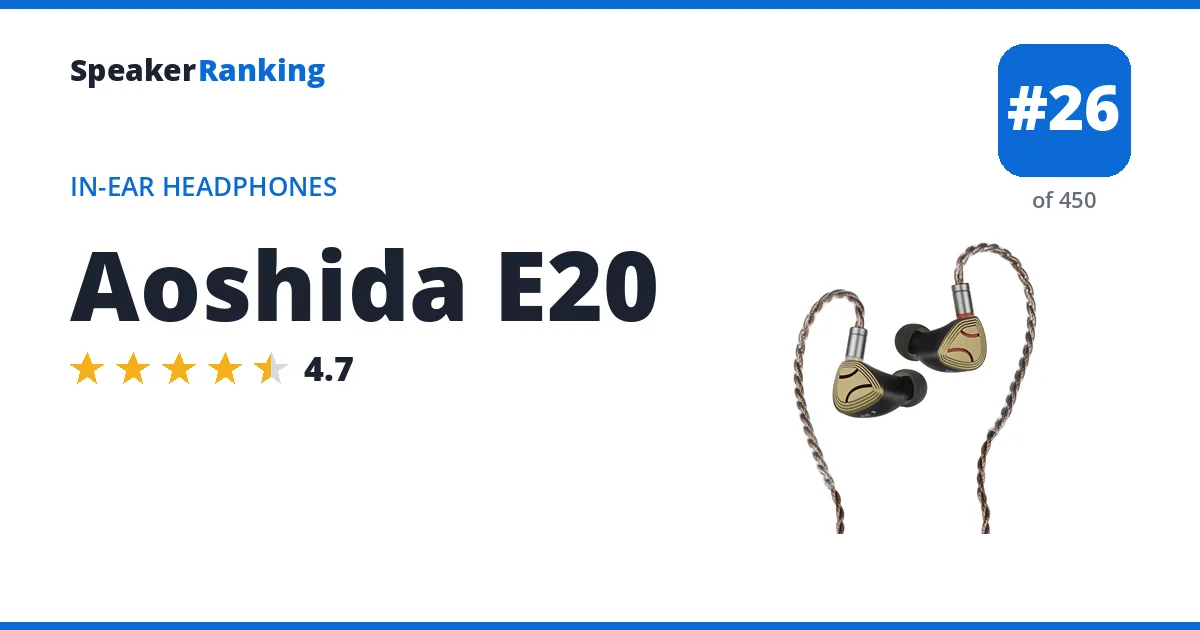
Pros: Across six hobbyist measurements on squig.link, the E20 reaches a preference score of 82.6 with a smooth 1.13 dB deviation from target. Sub-bass sits within a decibel of target down to 30 Hz, and the mids stay within about 1 dB, so vocals sound natural with solid bass underneath. Its dual dynamic driver design and budget price make it a sensible pick for warm or mildly V shaped tastes.
Cons: A 6 dB peak near 8.4 kHz and treble about 2.1 dB above target from 6 to 10 kHz can make sibilance and hi hats sound sharp on bright recordings. Bass from 60 to 200 Hz runs about 1 dB lean, so it has less punch than bass focused alternatives. It is rated level with similarly priced rivals such as the KZ EDZ and DDHiFi Janus 3 rather than above them.
Full Aoshida E20 review and specifications →
| Back | Closed |
|---|---|
| Connection | Wired |
| Deviation From Target | 1.13 dB standard deviation |
| Driver Type | Dynamic |
| Drivers | 1 x 10mm dynamic + 1 x 8mm dynamic |
| Form Factor | In-ear |
| Frequency Response | 20Hz - 40kHz (Manufacturer specified) |
| Harman Preference Score | 83 (median of 6 squig.link measurements, calibrated to AutoEQ) |
| Impedance | 12 ohms |
| Sensitivity | 98 dB |
| Sub-bass Extension | Within 6 dB of target down to 20 Hz (-0.8 dB at 30 Hz) |
| Tonal Tilt | +0.26 (negative is warmer, positive brighter) |
- Reviews, Comparisons and Sound Samples
- Head-to-Head Comparisons
 DUNU Kima Classic: $22.99 Amazon eBay
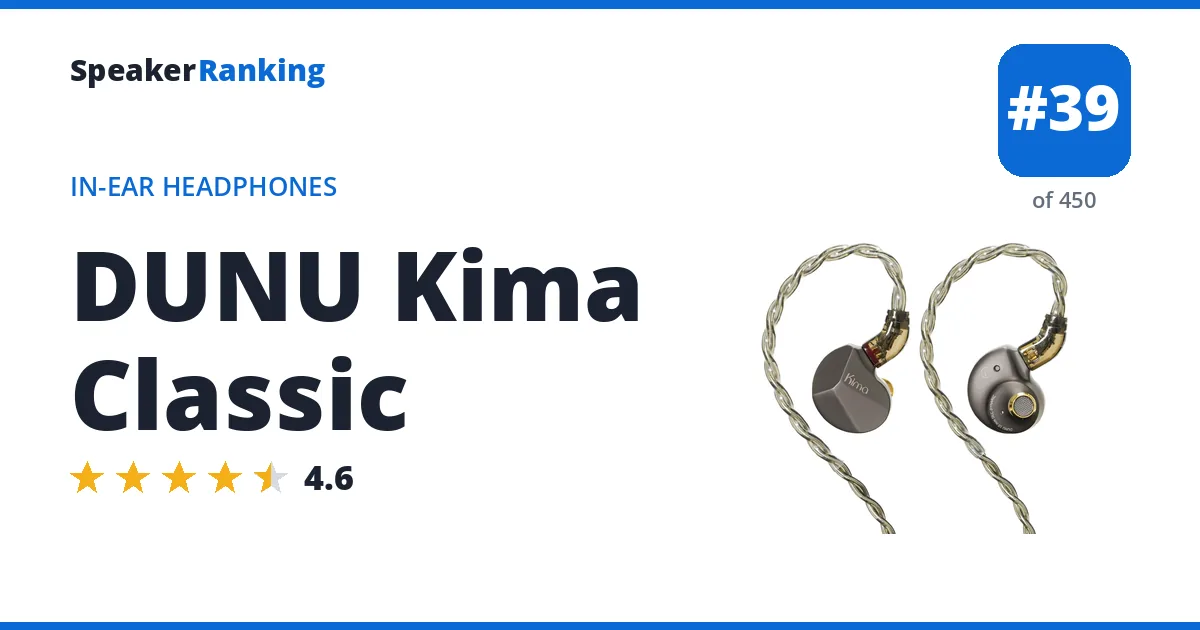
Pros: Across 10 hobbyist measurements on squig.link it earns a preference score of 81.6 with only 1.22 dB of deviation, so the tuning stays close to what most listeners prefer from deep bass through the upper mids. Bass sits about 1.2 dB above target and sub-bass reaches 20 Hz without rolling off, giving kick drums real weight without muddying vocals. The single 10mm dynamic driver at 32 ohms and 108 dB plays loudly from a phone dongle, and it carries a higher rating than the pricier KBEAR KB01.
Cons: A 6.6 dB dip near 10.9 kHz takes some sparkle and shimmer off cymbals. There is no inline microphone, so it cannot double as a calling headset.
Full DUNU Kima Classic review and specifications →
| Released | Apr 2023 (3 years ago) |
|---|---|
| Back | Closed |
| Built-in Microphone | No |
| Connection | Wired |
| Deviation From Target | 1.22 dB standard deviation |
| Driver Type | Dynamic |
| Drivers | 1 x 10mm dynamic |
| Form Factor | In-ear |
| Frequency Response | 5Hz - 40kHz (Manufacturer specified) |
| Harman Preference Score | 82 (median of 10 squig.link measurements, calibrated to AutoEQ) |
| Impedance | 32 ohms |
| Sensitivity | 108 dB |
| Sub-bass Extension | Within 6 dB of target down to 20 Hz (+0.8 dB at 30 Hz) |
| Tonal Tilt | -0.26 (negative is warmer, positive brighter) |
- Reviews, Comparisons and Sound Samples
- Head-to-Head Comparisons