Short answer: a tie on sound quality. Both are rated 4.7/5 (#26 and #35 of 450 in-ear headphones) at nearly the same price ($22.99 vs $22.99), so choose on features and fit.

Why pick the Aoshida E20: Across six hobbyist measurements on squig.link, the E20 reaches a preference score of 82.6 with a smooth 1.13 dB deviation from target. Watch for: A 6 dB peak near 8.4 kHz and treble about 2.1 dB above target from 6 to 10 kHz can make sibilance and hi hats sound sharp on bright recordings.
What the DDHiFi Janus 3 does well: For a very low cost single dynamic in-ear, it measures a preference score of 82 in the median of four hobbyist measurements on squig.link. The catch: A 3.3 dB dip near 10.9 kHz dulls some cymbal shimmer, and the downward tilt toward bass makes it less suited to listeners who like a crisp, detailed top end.
Buy the Aoshida E20 or the DDHiFi Janus 3 on features: they are rated the same for sound quality at close to the same price.
Want more options? Browse the full Headphones rankings.
Specifications Side By Side
| Aoshida E20 | DDHiFi Janus 3 | |
|---|---|---|
| Price | $22.99 | $22.99 |
| Ranked | #26 of 450 in In-Ear Headphones | #35 of 450 in In-Ear Headphones |
| Form Factor | In-ear | In-ear |
| Back | Closed | Closed |
| Harman Preference Score | 83 (median of 6 squig.link measurements, calibrated to AutoEQ) | 82 (median of 4 squig.link measurements, calibrated to AutoEQ) |
| Deviation From Target | 1.13 dB standard deviation | 1.10 dB standard deviation |
| Tonal Tilt | +0.26 (negative is warmer, positive brighter) | -0.47 (negative is warmer, positive brighter) |
| Sub-bass Extension | Within 6 dB of target down to 20 Hz (-0.8 dB at 30 Hz) | Within 6 dB of target down to 20 Hz (+2.0 dB at 30 Hz) |
| Connection | Wired | Wired |
| Driver Type | Dynamic | Dynamic |
| Drivers | 1 x 10mm dynamic + 1 x 8mm dynamic | 1 x 10mm dynamic |
| Impedance | 12 ohms | 14 ohms |
| Sensitivity | 98 dB | 122 dB/Vrms |
| Frequency Response | 20Hz - 40kHz (Manufacturer specified) | 5Hz - 58kHz (Manufacturer specified) |
| Weight | - | 0 lbs (5.5 g) per earbud |
Related Headphone Comparisons
More worthwhile head-to-heads for Aoshida E20:
- EPZ G10 vs Aoshida E20
- CCA Trio vs Aoshida E20
- Aoshida E20 vs Truthear Hexa
- Aoshida E20 vs Simgot EW200
- Aoshida E20 vs KZ Gale
Prices on this page were last checked October 11, 2026 at 4:59 PM UTC. Product prices and availability are accurate as of that date/time and are subject to change; the price and availability shown on Amazon at the time of purchase will apply to the purchase of this product.
As an eBay Partner, we may be compensated if you make a purchase.
The Two Headphones In Full
 Aoshida E20: $22.99 Amazon eBay
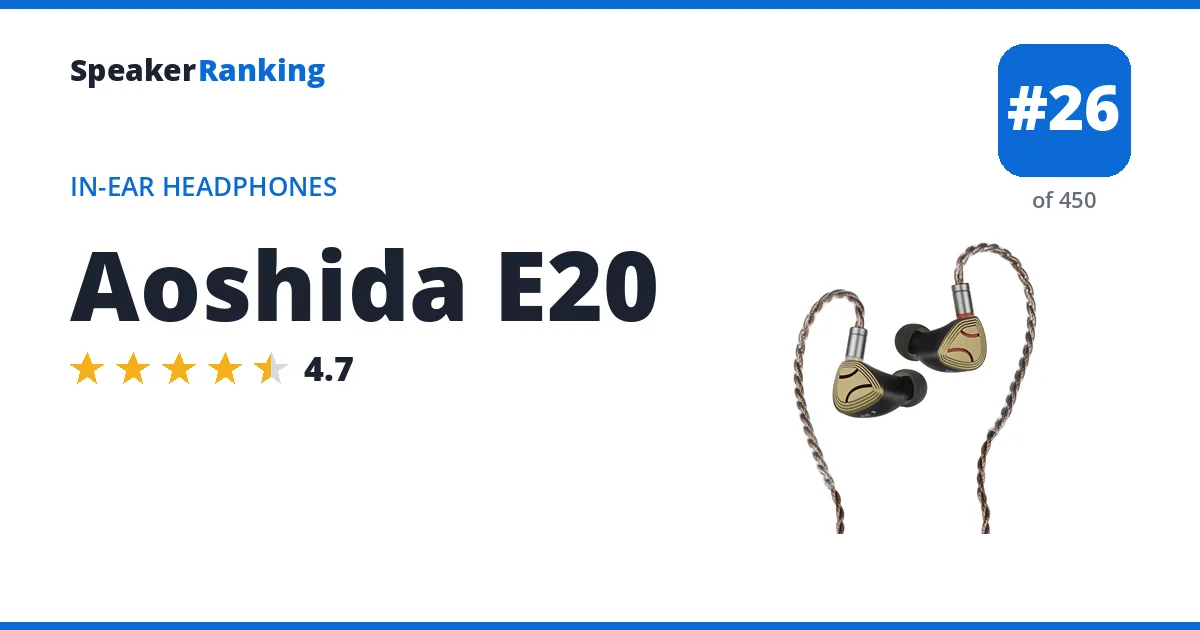
Pros: Across six hobbyist measurements on squig.link, the E20 reaches a preference score of 82.6 with a smooth 1.13 dB deviation from target. Sub-bass sits within a decibel of target down to 30 Hz, and the mids stay within about 1 dB, so vocals sound natural with solid bass underneath. Its dual dynamic driver design and budget price make it a sensible pick for warm or mildly V shaped tastes.
Cons: A 6 dB peak near 8.4 kHz and treble about 2.1 dB above target from 6 to 10 kHz can make sibilance and hi hats sound sharp on bright recordings. Bass from 60 to 200 Hz runs about 1 dB lean, so it has less punch than bass focused alternatives. It is rated level with similarly priced rivals such as the KZ EDZ and DDHiFi Janus 3 rather than above them.
Full Aoshida E20 review and specifications →
| Back | Closed |
|---|---|
| Connection | Wired |
| Deviation From Target | 1.13 dB standard deviation |
| Driver Type | Dynamic |
| Drivers | 1 x 10mm dynamic + 1 x 8mm dynamic |
| Form Factor | In-ear |
| Frequency Response | 20Hz - 40kHz (Manufacturer specified) |
| Harman Preference Score | 83 (median of 6 squig.link measurements, calibrated to AutoEQ) |
| Impedance | 12 ohms |
| Sensitivity | 98 dB |
| Sub-bass Extension | Within 6 dB of target down to 20 Hz (-0.8 dB at 30 Hz) |
| Tonal Tilt | +0.26 (negative is warmer, positive brighter) |
- Reviews, Comparisons and Sound Samples
- Head-to-Head Comparisons
 DDHiFi Janus 3: $22.99 Amazon eBay

Pros: For a very low cost single dynamic in-ear, it measures a preference score of 82 in the median of four hobbyist measurements on squig.link. Sub-bass and bass sit about 1.5 to 2 dB above target, so it delivers a warm, bass rich sound that bass lovers will enjoy. At 14 ohms and 122 dB/Vrms it plays loudly from a phone, and each earbud weighs just 5.5 g.
Cons: A 3.3 dB dip near 10.9 kHz dulls some cymbal shimmer, and the downward tilt toward bass makes it less suited to listeners who like a crisp, detailed top end. Only four samples were measured, so the figures carry more uncertainty than for widely measured models.
Full DDHiFi Janus 3 review and specifications →
| Back | Closed |
|---|---|
| Connection | Wired |
| Deviation From Target | 1.10 dB standard deviation |
| Driver Type | Dynamic |
| Drivers | 1 x 10mm dynamic |
| Form Factor | In-ear |
| Frequency Response | 5Hz - 58kHz (Manufacturer specified) |
| Harman Preference Score | 82 (median of 4 squig.link measurements, calibrated to AutoEQ) |
| Impedance | 14 ohms |
| Sensitivity | 122 dB/Vrms |
| Sub-bass Extension | Within 6 dB of target down to 20 Hz (+2.0 dB at 30 Hz) |
| Tonal Tilt | -0.47 (negative is warmer, positive brighter) |
| Weight | 0 lbs (5.5 g) per earbud |
- Reviews, Comparisons and Sound Samples
- Head-to-Head Comparisons