Short answer: the TANGZU Wan’er S.G. It ranks #328 of 450 in-ear headphones by sound quality, rated 3.8/5, at $18; the TRN MT1 ranks #341, rated 3.6/5, at $13.95. The price gap is small enough that the sound-quality ranking should decide it.
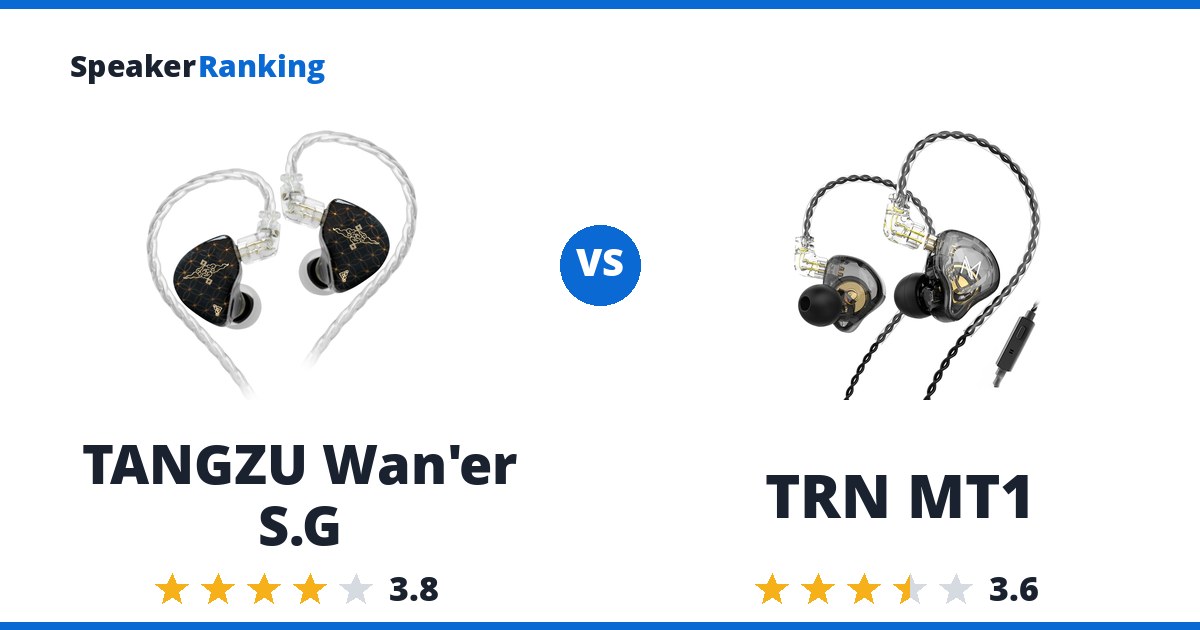
Why pick the TANGZU Wan’er S.G: Crinacle’s measurement gives it a preference score of 71, and squig.link measurements show bass and midrange within about 1 dB of target from 20 Hz to 3 kHz, so voices and instruments sound natural at a very low price. The tradeoff: Across 25 hobbyist measurements presence and treble sit about 3.5 to 4 dB below target from 3 to 10 kHz, with a 7 dB dip near 6.3 kHz, so cymbals and fine detail sound a bit softened.
What the TRN MT1 does well: A preference score of 69 in crinacle’s measurement is a strong result for one of the cheapest in-ears around. Watch for: A 10.4 dB peak near 11.9 kHz in hobbyist measurements on squig.link can make cymbals sound tizzy and fatiguing at volume, with a 6 dB dip at 6.5 kHz just below it.
Buy the TANGZU Wan’er S.G. It is rated higher for sound quality, and saving $4.05 with the TRN MT1 does not make up for the sound-quality gap.
Want more options? Browse the full Headphones rankings.
Specifications Side By Side
| TANGZU Wan’er S.G | TRN MT1 | |
|---|---|---|
| Price | $18.00 | $13.95 |
| Ranked | #328 of 450 in In-Ear Headphones | #341 of 450 in In-Ear Headphones |
| Form Factor | In-ear | In-ear |
| Harman Preference Score | 71 (measured by crinacle, via AutoEQ) | 69 (measured by crinacle, via AutoEQ) |
| Deviation From Target | 2.48 dB standard deviation | 2.46 dB standard deviation |
| Tonal Tilt | -0.32 (negative is warmer, positive brighter) | -0.34 (negative is warmer, positive brighter) |
| Connection | Wired | Wired |
| Driver Type | Dynamic | Dynamic |
| Drivers | 1 x 10mm dynamic | 1 x 10mm dynamic |
| Weight | 0 lbs (4.2 g) per earbud | - |
| Frequency Response | 20Hz - 20kHz (Manufacturer specified) | 20Hz - 20kHz (Manufacturer specified) |
| Built-in Microphone | Yes | Yes |
| Back | Closed | Closed |
| Sub-bass Extension | Within 6 dB of target down to 20 Hz (-0.8 dB at 30 Hz) | Within 6 dB of target down to 20 Hz (-0.2 dB at 30 Hz) |
| Impedance | - | 22 ohms |
| Sensitivity | - | 106 dB |
Related Headphone Comparisons
More top alternatives to TANGZU Wan’er S.G:
- TANGZU Wan’er S.G vs TANGZU Wan’er S.G 2
- KZ Castor vs TANGZU Wan’er S.G
- Tin HiFi C1 vs TANGZU Wan’er S.G
- KZ EDX vs TANGZU Wan’er S.G
- TANGZU Wan’er S.G vs KZ ZST
Prices on this page were last checked October 11, 2026 at 4:59 PM UTC. Product prices and availability are accurate as of that date/time and are subject to change; the price and availability shown on Amazon at the time of purchase will apply to the purchase of this product.
As an eBay Partner, we may be compensated if you make a purchase.
The Two Headphones In Full
 TANGZU Wan’er S.G: $18.00 Amazon AliExpress eBay
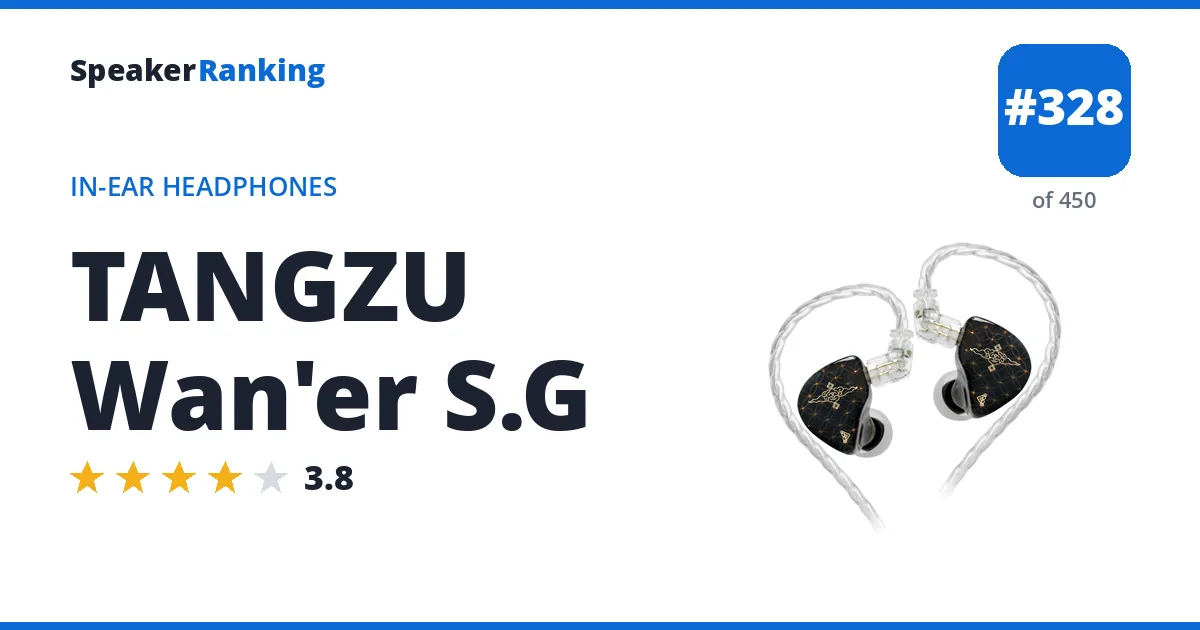
Pros: Crinacle’s measurement gives it a preference score of 71, and squig.link measurements show bass and midrange within about 1 dB of target from 20 Hz to 3 kHz, so voices and instruments sound natural at a very low price. Each earbud weighs 4.2 g, and a built-in microphone handles calls. It rates above the KZ ZST and costs less.
Cons: Across 25 hobbyist measurements presence and treble sit about 3.5 to 4 dB below target from 3 to 10 kHz, with a 7 dB dip near 6.3 kHz, so cymbals and fine detail sound a bit softened. The CCA CRA and 7Hz x Crinacle Zero 2 rate a little higher for only slightly more money.
Full TANGZU Wan’er S.G review and specifications →
| Released | 2023 (3 years ago) |
|---|---|
| Back | Closed |
| Built-in Microphone | Yes |
| Connection | Wired |
| Deviation From Target | 2.48 dB standard deviation |
| Driver Type | Dynamic |
| Drivers | 1 x 10mm dynamic |
| Form Factor | In-ear |
| Frequency Response | 20Hz - 20kHz (Manufacturer specified) |
| Harman Preference Score | 71 (measured by crinacle, via AutoEQ) |
| Sub-bass Extension | Within 6 dB of target down to 20 Hz (-0.8 dB at 30 Hz) |
| Tonal Tilt | -0.32 (negative is warmer, positive brighter) |
| Weight | 0 lbs (4.2 g) per earbud |
EQ preset to match the Harman target
Set a preamp of -5.4 dB, then add these filters in any parametric equalizer (Wavelet, Equalizer APO, Peace, or a player with parametric EQ). Calculated by AutoEQ from its measured frequency response.
| Filter | Frequency | Gain | Q |
|---|---|---|---|
| Low shelf | 105 Hz | +1.8 dB | 0.70 |
| Peak | 6,638 Hz | +5.1 dB | 1.36 |
| Peak | 145 Hz | -2.6 dB | 0.76 |
| Peak | 1,930 Hz | -2.9 dB | 1.79 |
| Peak | 9,431 Hz | +3.0 dB | 2.56 |
| High shelf | 10,000 Hz | -1.1 dB | 0.70 |
| Peak | 894 Hz | +1.2 dB | 1.34 |
| Peak | 1,321 Hz | -1.2 dB | 2.81 |
| Peak | 275 Hz | -0.4 dB | 1.71 |
| Peak | 570 Hz | +0.5 dB | 2.18 |
- Reviews, Comparisons and Sound Samples
- Head-to-Head Comparisons
 TRN MT1: $13.95 Amazon AliExpress eBay

Pros: A preference score of 69 in crinacle’s measurement is a strong result for one of the cheapest in-ears around. Sub-bass is on target down to 30 Hz with bass 2.5 dB above, so it has satisfying punch, and the single 10 mm dynamic driver runs loud from any phone at 22 ohms and 106 dB. An inline microphone handles calls.
Cons: A 10.4 dB peak near 11.9 kHz in hobbyist measurements on squig.link can make cymbals sound tizzy and fatiguing at volume, with a 6 dB dip at 6.5 kHz just below it. The CCA CRA and TANGZU Wan’er S.G are rated higher for only a few dollars more.
Full TRN MT1 review and specifications →
| Back | Closed |
|---|---|
| Built-in Microphone | Yes |
| Connection | Wired |
| Deviation From Target | 2.46 dB standard deviation |
| Driver Type | Dynamic |
| Drivers | 1 x 10mm dynamic |
| Form Factor | In-ear |
| Frequency Response | 20Hz - 20kHz (Manufacturer specified) |
| Harman Preference Score | 69 (measured by crinacle, via AutoEQ) |
| Impedance | 22 ohms |
| Sensitivity | 106 dB |
| Sub-bass Extension | Within 6 dB of target down to 20 Hz (-0.2 dB at 30 Hz) |
| Tonal Tilt | -0.34 (negative is warmer, positive brighter) |
EQ preset to match the Harman target
Set a preamp of -4.6 dB, then add these filters in any parametric equalizer (Wavelet, Equalizer APO, Peace, or a player with parametric EQ). Calculated by AutoEQ from its measured frequency response.
| Filter | Frequency | Gain | Q |
|---|---|---|---|
| Low shelf | 105 Hz | +0.1 dB | 0.70 |
| Peak | 838 Hz | +4.1 dB | 0.67 |
| Peak | 9,762 Hz | +6.7 dB | 0.47 |
| Peak | 156 Hz | -2.7 dB | 0.78 |
| Peak | 3,174 Hz | -6.2 dB | 0.55 |
| High shelf | 10,000 Hz | -7.6 dB | 0.70 |
| Peak | 3,444 Hz | +3.5 dB | 3.06 |
| Peak | 4,523 Hz | -6.4 dB | 2.49 |
| Peak | 6,251 Hz | +3.6 dB | 0.84 |
| Peak | 2,461 Hz | -2.8 dB | 4.84 |
- Reviews, Comparisons and Sound Samples
- Head-to-Head Comparisons