Short answer: the Superlux HD 681. It ranks #292 of 417 over-ear headphones by sound quality (rated 3.1/5); the Superlux HD 651 ranks #355 (rated 2.6/5).
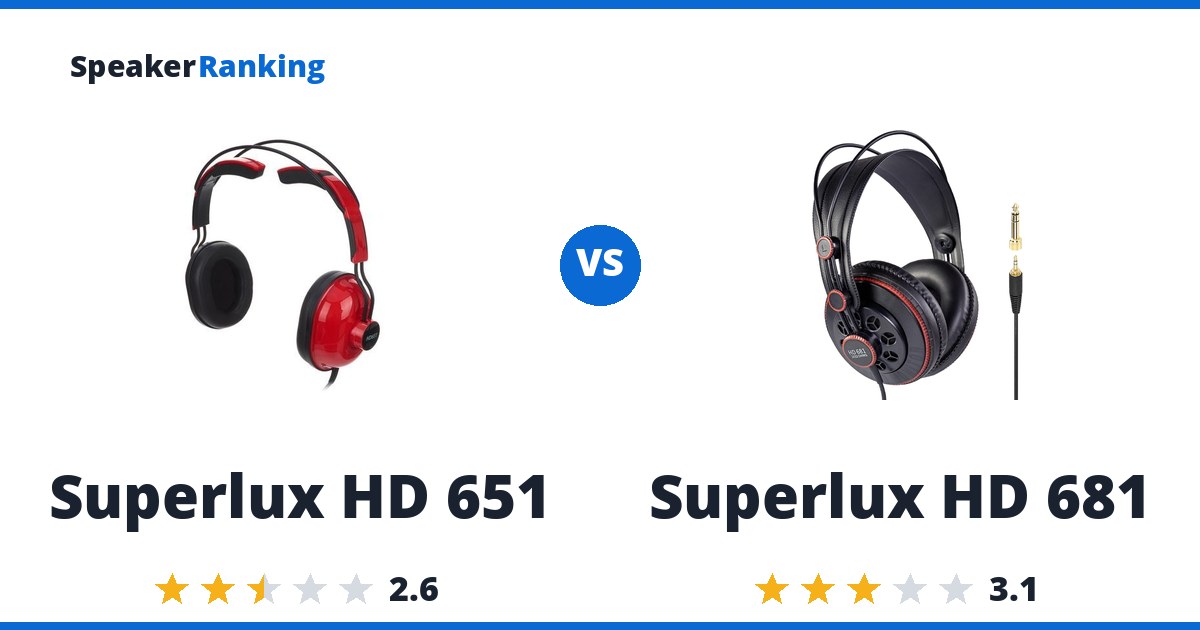
The case for the Superlux HD 651: Lower mids sit within about 0.5 dB of target, keeping voices and guitars natural. Watch for: Presence sits about 3.4 dB low with a 17.4 dB dip near 9.7 kHz, so vocals and instruments lose some bite.
The Superlux HD 681 is the better-sounding option. A very low price and a 32 ohm, 98 dB/mW load make it an easy pick for use straight from a phone or laptop. The tradeoff: Sub-bass sits 9.7 dB below target in oratory1990’s measurement and falls 6 dB short by 42 Hz, so bass sounds thin and lacks impact.
Buy the Superlux HD 681. It is rated higher for sound quality than the Superlux HD 651.
Still deciding? The full Headphones rankings cover every ranked option.
Specifications Side By Side
| Superlux HD 651 | Superlux HD 681 | |
|---|---|---|
| Price | - | $33.29 |
| Ranked | #355 of 417 in Over-Ear Headphones | #292 of 417 in Over-Ear Headphones |
| Form Factor | Over-ear | Over-ear |
| Back | Closed | Semi-open |
| Connection | Wired | Wired |
| Driver Type | Dynamic | Dynamic |
| Drivers | 1 x 40mm dynamic | 1 x 50mm dynamic |
| Impedance | 32 ohms | 32 ohms |
| Frequency Response | 20Hz - 20kHz | 10Hz - 30kHz (Manufacturer specified) |
| Weight | 0.3 lbs (149 g) | 0.5 lbs (230 g) |
| Harman Preference Score | 51 (measured by oratory1990, via AutoEQ) | 61 (measured by oratory1990, via AutoEQ) |
| Deviation From Target | 4.52 dB standard deviation | 2.58 dB standard deviation |
| Tonal Tilt | +0.41 (negative is warmer, positive brighter) | +1.34 (negative is warmer, positive brighter) |
| Sub-bass Extension | Falls 6 dB below target at 126 Hz (-20.1 dB at 30 Hz) | Falls 6 dB below target at 42 Hz (-9.8 dB at 30 Hz) |
| Sensitivity | - | 98 dB/mW |
| Built-in Microphone | - | No |
Related Headphone Comparisons
More top alternatives to Superlux HD 681:
- Superlux HD 660 Pro 150 Ohm vs Superlux HD 681
- FiiO EH11 vs Superlux HD 681
- Koss KPH30i vs Superlux HD 681
- Superlux HD 681 vs HyperX Cloud II
- Superlux HD 681 vs Koss KPH40
Prices on this page were last checked October 13, 2026 at 3:17 PM UTC. Product prices and availability are accurate as of that date/time and are subject to change; the price and availability shown on Amazon at the time of purchase will apply to the purchase of this product.
As an eBay Partner, we may be compensated if you make a purchase.
The Two Headphones In Full
 Superlux HD 651 eBay
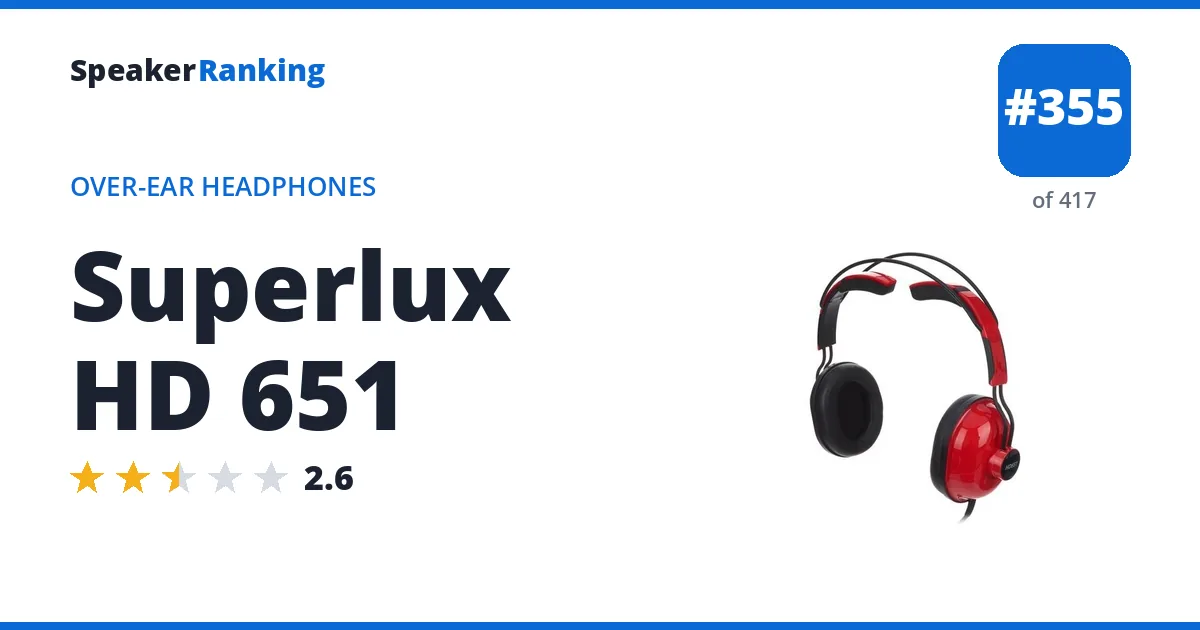
Pros: Lower mids sit within about 0.5 dB of target, keeping voices and guitars natural. It uses 1 x 40mm dynamic with an easy 32 ohm load.
Cons: Presence sits about 3.4 dB low with a 17.4 dB dip near 9.7 kHz, so vocals and instruments lose some bite. Sub-bass is 20.1 dB short at 30 Hz, so deep bass lacks rumble. A Harman score of 51 places it in the lower part of the over-ear rankings.
Full Superlux HD 651 review and specifications →
| Released | 2010 (16 years ago) |
|---|---|
| Back | Closed |
| Connection | Wired |
| Deviation From Target | 4.52 dB standard deviation |
| Driver Type | Dynamic |
| Drivers | 1 x 40mm dynamic |
| Form Factor | Over-ear |
| Frequency Response | 20Hz - 20kHz |
| Harman Preference Score | 51 (measured by oratory1990, via AutoEQ) |
| Impedance | 32 ohms |
| Sub-bass Extension | Falls 6 dB below target at 126 Hz (-20.1 dB at 30 Hz) |
| Tonal Tilt | +0.41 (negative is warmer, positive brighter) |
| Weight | 0.3 lbs (149 g) |
EQ preset to match the Harman target
Set a preamp of -6.7 dB, then add these filters in any parametric equalizer (Wavelet, Equalizer APO, Peace, or a player with parametric EQ). Calculated by AutoEQ from its measured frequency response.
| Filter | Frequency | Gain | Q |
|---|---|---|---|
| Low shelf | 105 Hz | +5.9 dB | 0.70 |
| Peak | 328 Hz | -4.3 dB | 1.25 |
| Peak | 108 Hz | +2.8 dB | 1.38 |
| Peak | 908 Hz | -1.3 dB | 2.44 |
| Peak | 467 Hz | -1.1 dB | 2.11 |
| High shelf | 10,000 Hz | +4.8 dB | 0.70 |
| Peak | 9,733 Hz | +3.8 dB | 0.71 |
| Peak | 4,762 Hz | -6.3 dB | 6.00 |
| Peak | 1,595 Hz | -1.3 dB | 4.05 |
| Peak | 2,993 Hz | -2.8 dB | 6.00 |
- Reviews, Comparisons and Sound Samples
 Superlux HD 681: $33.29 B&H Photo Video $33.29 eBay
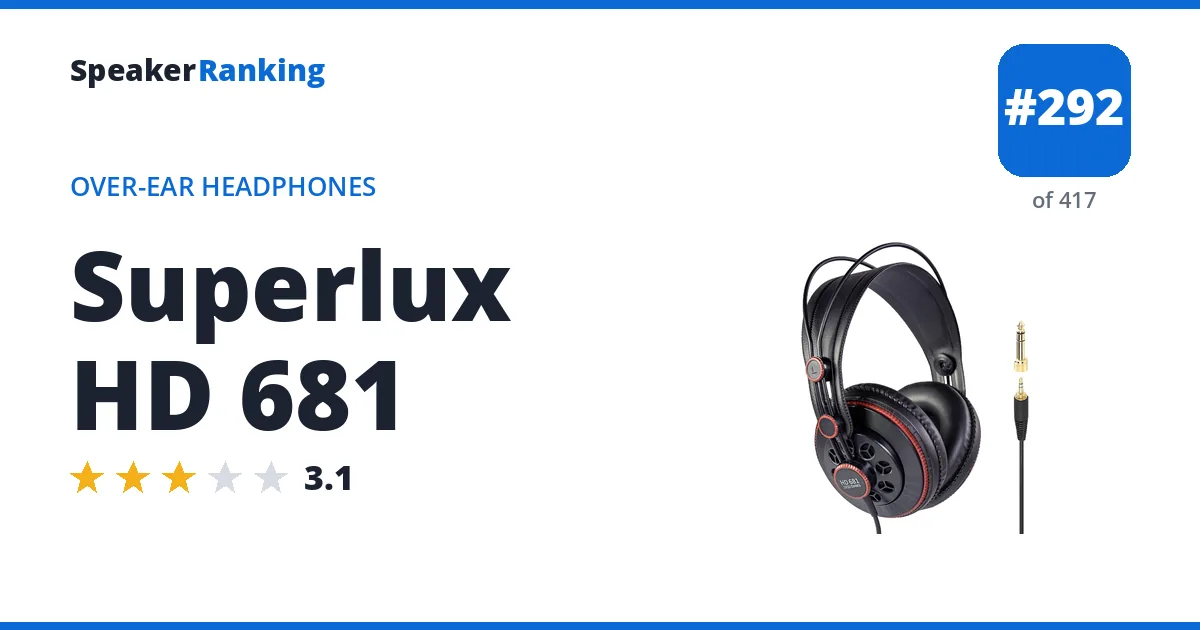
Pros: A very low price and a 32 ohm, 98 dB/mW load make it an easy pick for use straight from a phone or laptop. From the upper midrange through the air band its response stays within 2 dB of target on average, which suits listeners who like a bright or studio-flat balance. It rates higher than the Koss KPH40 at a similar price.
Cons: Sub-bass sits 9.7 dB below target in oratory1990’s measurement and falls 6 dB short by 42 Hz, so bass sounds thin and lacks impact. A 5.7 dB peak at 4.8 kHz right next to a 5.1 dB dip at 4.1 kHz can make vocals and guitars edgy, and the semi-open back lets some sound escape. The AKG K240 Studio and HyperX Cloud Alpha rate higher for a little more money.
Full Superlux HD 681 review and specifications →
| Back | Semi-open |
|---|---|
| Built-in Microphone | No |
| Connection | Wired |
| Deviation From Target | 2.58 dB standard deviation |
| Driver Type | Dynamic |
| Drivers | 1 x 50mm dynamic |
| Form Factor | Over-ear |
| Frequency Response | 10Hz - 30kHz (Manufacturer specified) |
| Harman Preference Score | 61 (measured by oratory1990, via AutoEQ) |
| Impedance | 32 ohms |
| Sensitivity | 98 dB/mW |
| Sub-bass Extension | Falls 6 dB below target at 42 Hz (-9.8 dB at 30 Hz) |
| Tonal Tilt | +1.34 (negative is warmer, positive brighter) |
| Weight | 0.5 lbs (230 g) |
EQ preset to match the Harman target
Set a preamp of -5.8 dB, then add these filters in any parametric equalizer (Wavelet, Equalizer APO, Peace, or a player with parametric EQ). Calculated by AutoEQ from its measured frequency response.
| Filter | Frequency | Gain | Q |
|---|---|---|---|
| Low shelf | 105 Hz | +5.8 dB | 0.70 |
| Peak | 496 Hz | +2.4 dB | 1.05 |
| Peak | 1,105 Hz | -1.8 dB | 0.57 |
| Peak | 5,194 Hz | -6.1 dB | 4.12 |
| Peak | 174 Hz | +1.0 dB | 1.11 |
| High shelf | 10,000 Hz | -3.2 dB | 0.70 |
| Peak | 7,758 Hz | -2.3 dB | 3.68 |
| Peak | 3,826 Hz | +3.2 dB | 5.94 |
| Peak | 2,458 Hz | -1.4 dB | 3.46 |
| Peak | 65 Hz | -0.5 dB | 2.20 |
- Reviews, Comparisons and Sound Samples
- Head-to-Head Comparisons