Short answer: the Shanling ME200. It ranks #364 of 450 in-ear headphones by sound quality, rated 3.4/5, at $179; the Tipsy Dunmer Pro ranks #400, rated 2.9/5, and costs $189, so there is little reason to consider the other one.
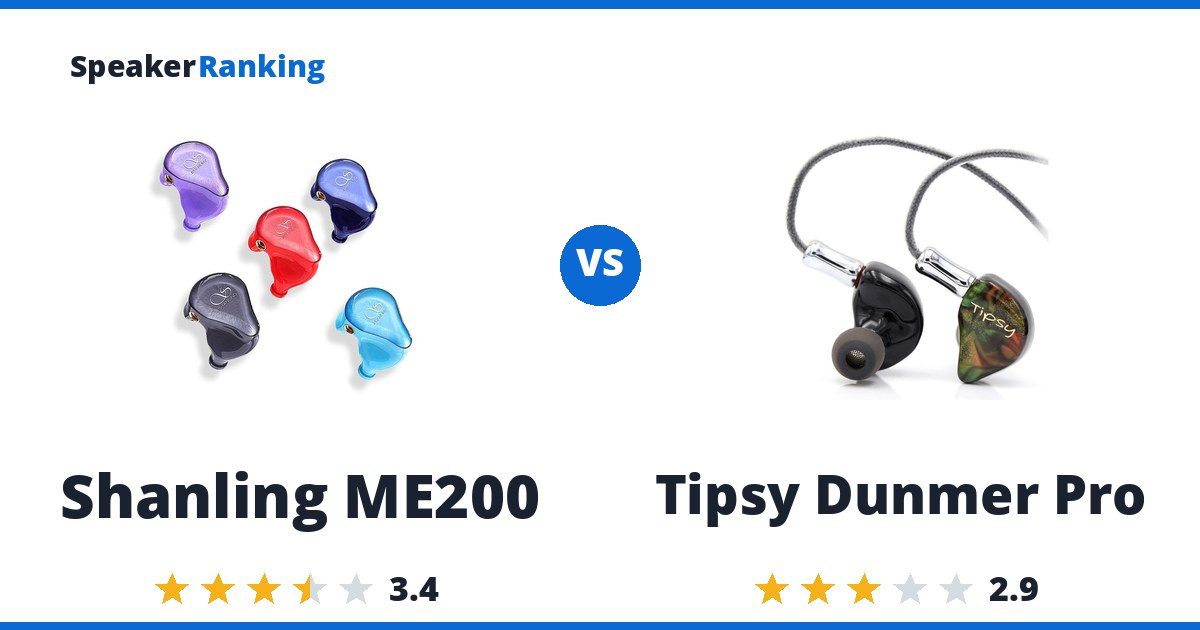
The Shanling ME200 is the better-sounding choice. A one dynamic plus one balanced armature hybrid with a preference score of 66 in crinacle’s measurement and a gently warm balance. Watch for: Its response deviates about 2.7 dB from target on average, so it is not especially even.
The case for the Tipsy Dunmer Pro: It packs a hybrid design with one 9.2mm dynamic driver and two balanced armatures, and at 16 ohms and 105 dB it plays from a phone without an amp. The tradeoff: In crinacle’s measurement it scores only 60.0 for preference, with a 3.26 dB deviation from target, so its response wanders far from what most listeners favor.
Buy the Shanling ME200. It is rated higher for sound quality than the Tipsy Dunmer Pro and costs less, so only choose the other one for a particular feature it does better.
Want more options? Browse the full Headphones rankings.
Specifications Side By Side
| Shanling ME200 | Tipsy Dunmer Pro | |
|---|---|---|
| Price | $179.00 | $189.00 |
| Ranked | #364 of 450 in In-Ear Headphones | #400 of 450 in In-Ear Headphones |
| Form Factor | In-ear | In-ear |
| Back | Closed | Closed |
| Harman Preference Score | 66 (measured by crinacle, via AutoEQ) | 60 (measured by crinacle, via AutoEQ) |
| Deviation From Target | 2.71 dB standard deviation | 3.26 dB standard deviation |
| Tonal Tilt | -0.57 (negative is warmer, positive brighter) | +0.42 (negative is warmer, positive brighter) |
| Connection | Wired | Wired |
| Driver Type | Hybrid (1 dynamic + 1 balanced armature) | Hybrid (1 dynamic + 2 balanced armature) |
| Drivers | 1 x dynamic + 1 x balanced armature | 1 x 9.2mm dynamic + 2 x balanced armature |
| Impedance | 16 ohms | 16 ohms |
| Sensitivity | 111 dB | 105 dB |
| Weight | 0 lbs (6.3 g) | - |
| Frequency Response | 20Hz - 40kHz (Manufacturer specified) | 20Hz - 20kHz (Manufacturer specified) |
| Built-in Microphone | No | No |
Related Headphone Comparisons
More top alternatives to Shanling ME200:
- Melody Wings Uranus vs Shanling ME200
- Tin HiFi P1 Max vs Shanling ME200
- Shanling ME200 vs Muse HiFi Power
- Muse HiFi Power vs Tipsy Dunmer Pro
- Tipsy Dunmer Pro vs Etymotic ER3XR
Prices on this page were last checked October 11, 2026 at 4:59 PM UTC. Product prices and availability are accurate as of that date/time and are subject to change; the price and availability shown on Amazon at the time of purchase will apply to the purchase of this product.
As an eBay Partner, we may be compensated if you make a purchase.
The Two Headphones In Full
 Shanling ME200: $179.00 Apos Audio eBay

Pros: A one dynamic plus one balanced armature hybrid with a preference score of 66 in crinacle’s measurement and a gently warm balance. It weighs only 6.3 g per earpiece, and at 16 ohms and 111 dB sensitivity it plays loud from any phone.
Cons: Its response deviates about 2.7 dB from target on average, so it is not especially even. The wired Sennheiser IE 40 Pro rates higher for less money.
Full Shanling ME200 review and specifications →
| Back | Closed |
|---|---|
| Built-in Microphone | No |
| Connection | Wired |
| Deviation From Target | 2.71 dB standard deviation |
| Driver Type | Hybrid (1 dynamic + 1 balanced armature) |
| Drivers | 1 x dynamic + 1 x balanced armature |
| Form Factor | In-ear |
| Frequency Response | 20Hz - 40kHz (Manufacturer specified) |
| Harman Preference Score | 66 (measured by crinacle, via AutoEQ) |
| Impedance | 16 ohms |
| Sensitivity | 111 dB |
| Tonal Tilt | -0.57 (negative is warmer, positive brighter) |
| Weight | 0 lbs (6.3 g) |
EQ preset to match the Harman target
Set a preamp of -6.5 dB, then add these filters in any parametric equalizer (Wavelet, Equalizer APO, Peace, or a player with parametric EQ). Calculated by AutoEQ from its measured frequency response.
| Filter | Frequency | Gain | Q |
|---|---|---|---|
| Low shelf | 105 Hz | +1.7 dB | 0.70 |
| Peak | 10,000 Hz | +5.8 dB | 0.69 |
| Peak | 153 Hz | -4.3 dB | 0.49 |
| Peak | 996 Hz | +5.5 dB | 0.82 |
| Peak | 1,532 Hz | -4.4 dB | 0.99 |
| High shelf | 10,000 Hz | +1.5 dB | 0.70 |
| Peak | 4,590 Hz | -1.9 dB | 3.66 |
| Peak | 6,043 Hz | +2.8 dB | 5.81 |
| Peak | 7,382 Hz | -2.0 dB | 5.56 |
| Peak | 3,395 Hz | +1.1 dB | 4.13 |
- Reviews, Comparisons and Sound Samples
- Head-to-Head Comparisons
 Tipsy Dunmer Pro: $189.00 ShenzhenAudio eBay

Pros: It packs a hybrid design with one 9.2mm dynamic driver and two balanced armatures, and at 16 ohms and 105 dB it plays from a phone without an amp. It carries a higher rating than the Etymotic ER3XR, which sits at a similar price.
Cons: In crinacle’s measurement it scores only 60.0 for preference, with a 3.26 dB deviation from target, so its response wanders far from what most listeners favor. The FiiO FH7S earns a higher rating for not much more money.
Full Tipsy Dunmer Pro review and specifications →
| Released | Dec 2019 (6 years ago) |
|---|---|
| Back | Closed |
| Built-in Microphone | No |
| Connection | Wired |
| Deviation From Target | 3.26 dB standard deviation |
| Driver Type | Hybrid (1 dynamic + 2 balanced armature) |
| Drivers | 1 x 9.2mm dynamic + 2 x balanced armature |
| Form Factor | In-ear |
| Frequency Response | 20Hz - 20kHz (Manufacturer specified) |
| Harman Preference Score | 60 (measured by crinacle, via AutoEQ) |
| Impedance | 16 ohms |
| Sensitivity | 105 dB |
| Tonal Tilt | +0.42 (negative is warmer, positive brighter) |
EQ preset to match the Harman target
Set a preamp of -5.5 dB, then add these filters in any parametric equalizer (Wavelet, Equalizer APO, Peace, or a player with parametric EQ). Calculated by AutoEQ from its measured frequency response.
| Filter | Frequency | Gain | Q |
|---|---|---|---|
| Low shelf | 105 Hz | +8.2 dB | 0.70 |
| Peak | 931 Hz | +4.2 dB | 0.90 |
| Peak | 85 Hz | -5.4 dB | 0.24 |
| Peak | 2,613 Hz | +4.7 dB | 0.93 |
| Peak | 6,877 Hz | -4.0 dB | 0.44 |
| High shelf | 10,000 Hz | -5.3 dB | 0.70 |
| Peak | 9,730 Hz | +2.5 dB | 3.06 |
| Peak | 4,915 Hz | -2.7 dB | 4.63 |
| Peak | 6,318 Hz | +2.9 dB | 6.00 |
| Peak | 3,958 Hz | +1.7 dB | 4.57 |
- Reviews, Comparisons and Sound Samples
- Head-to-Head Comparisons