Short answer: the Sennheiser HD 600. It ranks #7 of 134 over-ear headphones by sound quality, rated 4.4/5, at $272.36; the Sennheiser HD 650 ranks #34, rated 4.1/5, and costs $329.80, so there is not much of a tradeoff to weigh.
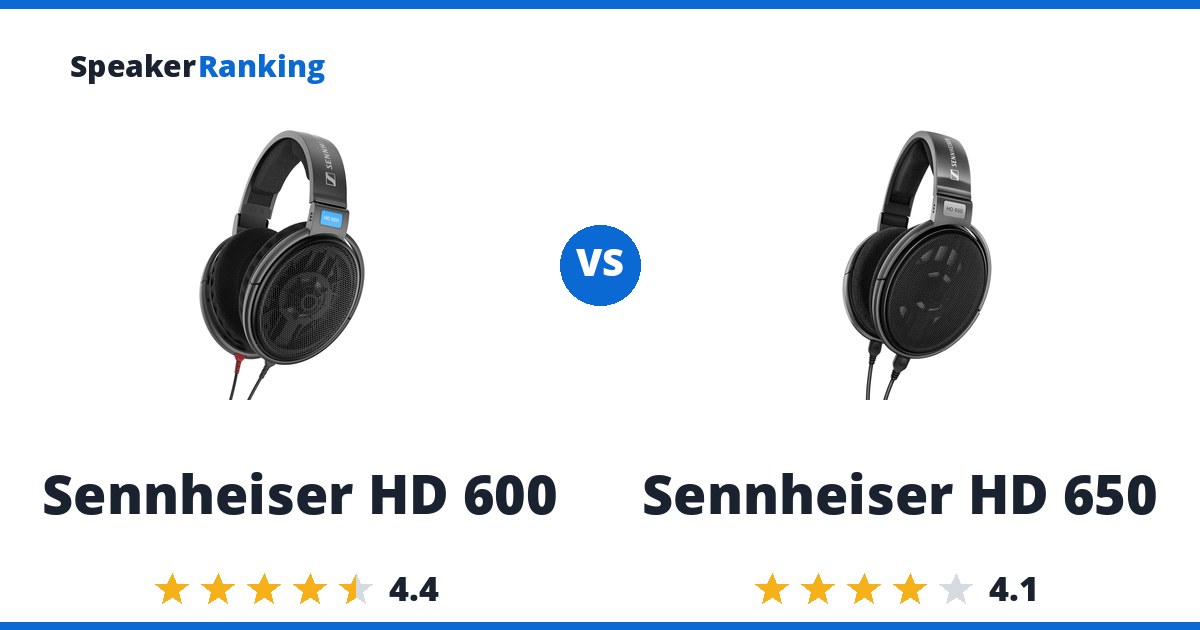
The Sennheiser HD 600 is the better-sounding option. It earns a preference score of 91, with the midrange from 200 Hz to 6 kHz within about 0.1 dB of target, giving vocals and acoustic instruments a very natural tone. The catch: Sub-bass is about 7.9 dB below target, so bass lacks rumble and weight on electronic and hip hop tracks.
Why pick the Sennheiser HD 650: A preference score of 84 and a warm tilt of minus 0.27 give a relaxed, smooth sound, with bass from 60 to 200 Hz, mids and presence all within about 0.6 dB of target. The catch: Sub-bass is about 7 dB under target and the 6 to 10 kHz treble is nearly 5 dB low, with a 9 dB dip near 9.3 kHz, so cymbals and air sound dull and rumble is missing.
Buy the Sennheiser HD 600. It is rated higher for sound quality than the Sennheiser HD 650 and costs less, so only choose the other one for a particular feature it does better.
Looking for alternatives? See the complete Headphones rankings.
Specifications Side By Side
| Sennheiser HD 600 | Sennheiser HD 650 | |
|---|---|---|
| Price | $272.36 | $329.80 |
| Ranked | #7 of 134 in Over-Ear Headphones | #34 of 134 in Over-Ear Headphones |
| Form Factor | Over-ear | Over-ear |
| Back | Open | Open |
| Connection | Wired | Wired |
| Harman Preference Score | 91 (measured by oratory1990, via AutoEQ) | 84 (measured by oratory1990, via AutoEQ) |
| Deviation From Target | 1.88 dB standard deviation | 2.10 dB standard deviation |
| Tonal Tilt | +0.02 (negative is warmer, positive brighter) | -0.27 (negative is warmer, positive brighter) |
| Driver Type | Dynamic | Dynamic |
| Drivers | 1 x 42mm dynamic | 1 x 42mm dynamic |
| Impedance | 300 ohms | 300 ohms |
| Sensitivity | 97 dB SPL/V | 103 dB SPL/V |
| Weight | 0.6 lbs (260 g) | 0.6 lbs (260 g) |
| Frequency Response | 12Hz - 40.5kHz (Manufacturer specified) | 10Hz - 41kHz (Manufacturer specified) |
Related Headphone Comparisons
How Sennheiser HD 600 compares with other leading options:
- Austrian Audio Hi-X60 vs Sennheiser HD 600
- Beyerdynamic MMX 300 vs Sennheiser HD 600
- Sennheiser HD 600 vs Sennheiser HD 505
- Sennheiser HD 600 vs Sennheiser HD 599
- Sennheiser HD 600 vs Sennheiser HD 569
Prices on this page were last checked October 10, 2026 at 5:37 PM UTC. Product prices and availability are accurate as of that date/time and are subject to change; the price and availability shown on Amazon at the time of purchase will apply to the purchase of this product.
As an eBay Partner, we may be compensated if you make a purchase.
The Two Headphones In Full
 Sennheiser HD 600: $272.36 Amazon eBay
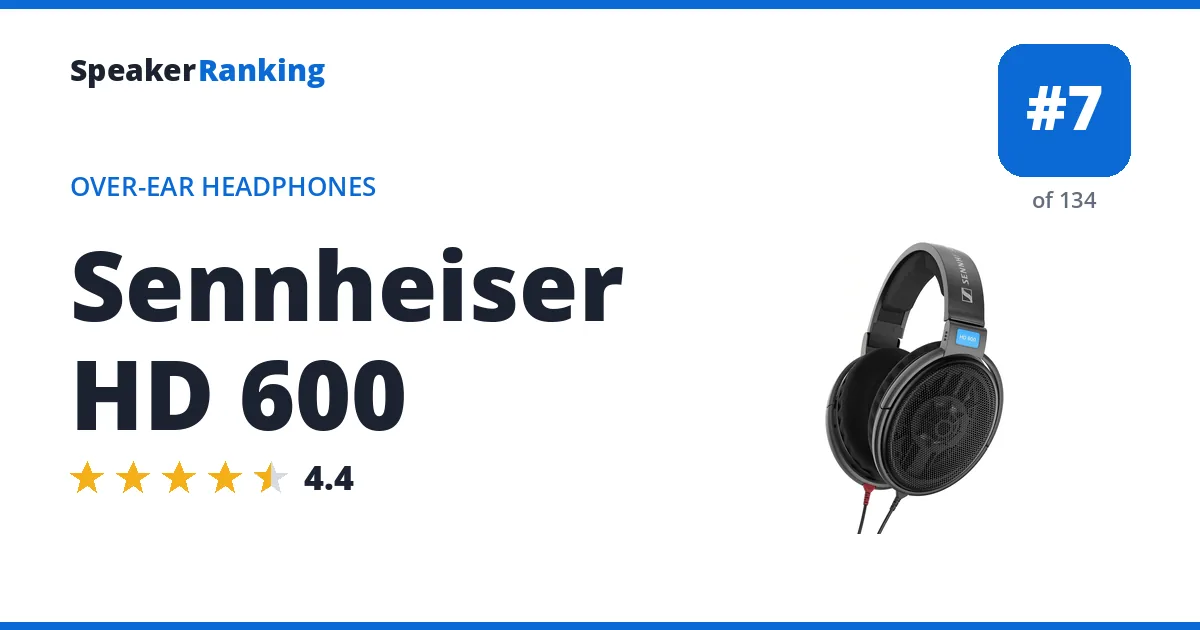
Pros: It earns a preference score of 91, with the midrange from 200 Hz to 6 kHz within about 0.1 dB of target, giving vocals and acoustic instruments a very natural tone. At 260 g it is light, and the long-running design from 1997 remains a reference for neutral midrange tuning. The warm and neutral tilt suits listeners who dislike bright treble.
Cons: Sub-bass is about 7.9 dB below target, so bass lacks rumble and weight on electronic and hip hop tracks. Treble from 6 to 10 kHz is about 3.6 dB low, with a 7.5 dB dip near 9.6 kHz that softens cymbals. At 300 ohms and 97 dB SPL/V it needs a dedicated headphone amp for proper volume, and the open back leaks sound.
Full Sennheiser HD 600 review and specifications →
| Released | 1997 (29 years ago) |
|---|---|
| Back | Open |
| Connection | Wired |
| Deviation From Target | 1.88 dB standard deviation |
| Driver Type | Dynamic |
| Drivers | 1 x 42mm dynamic |
| Form Factor | Over-ear |
| Frequency Response | 12Hz - 40.5kHz (Manufacturer specified) |
| Harman Preference Score | 91 (measured by oratory1990, via AutoEQ) |
| Impedance | 300 ohms |
| Sensitivity | 97 dB SPL/V |
| Tonal Tilt | +0.02 (negative is warmer, positive brighter) |
| Weight | 0.6 lbs (260 g) |
EQ preset to match the Harman target
Set a preamp of -6.3 dB, then add these filters in any parametric equalizer (Wavelet, Equalizer APO, Peace, or a player with parametric EQ). Calculated by AutoEQ from its measured frequency response.
| Filter | Frequency | Gain | Q |
|---|---|---|---|
| Low shelf | 105 Hz | +6.5 dB | 0.70 |
| Peak | 125 Hz | -2.7 dB | 0.55 |
| Peak | 8,445 Hz | +3.3 dB | 1.61 |
| Peak | 522 Hz | +0.7 dB | 1.02 |
| Peak | 1,298 Hz | -1.2 dB | 2.14 |
| High shelf | 10,000 Hz | -3.1 dB | 0.70 |
| Peak | 3,158 Hz | -1.8 dB | 3.67 |
| Peak | 2,166 Hz | +0.9 dB | 3.32 |
| Peak | 6,639 Hz | +2.2 dB | 5.82 |
| Peak | 5,433 Hz | -1.2 dB | 5.70 |
- Reviews, Comparisons and Sound Samples
- Head-to-Head Comparisons
 Sennheiser HD 650: $329.80 Amazon eBay
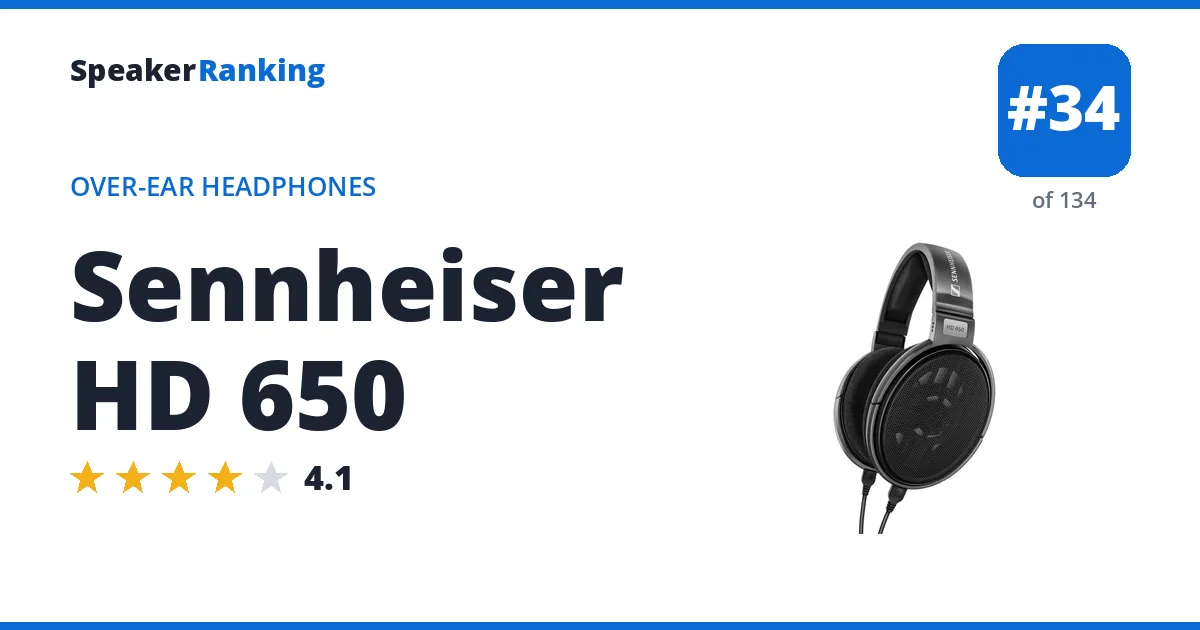
Pros: A preference score of 84 and a warm tilt of minus 0.27 give a relaxed, smooth sound, with bass from 60 to 200 Hz, mids and presence all within about 0.6 dB of target. The largest peak in the upper range is just 1.1 dB, so it avoids harshness on vocals and guitars. At 260 g it is fairly light, and it is a good match for listeners who like a warm tonality.
Cons: Sub-bass is about 7 dB under target and the 6 to 10 kHz treble is nearly 5 dB low, with a 9 dB dip near 9.3 kHz, so cymbals and air sound dull and rumble is missing. At 300 ohms it wants a dedicated headphone amp to reach its potential, and the open back leaks sound.
Full Sennheiser HD 650 review and specifications →
| Released | 2003 (23 years ago) |
|---|---|
| Back | Open |
| Connection | Wired |
| Deviation From Target | 2.10 dB standard deviation |
| Driver Type | Dynamic |
| Drivers | 1 x 42mm dynamic |
| Form Factor | Over-ear |
| Frequency Response | 10Hz - 41kHz (Manufacturer specified) |
| Harman Preference Score | 84 (measured by oratory1990, via AutoEQ) |
| Impedance | 300 ohms |
| Sensitivity | 103 dB SPL/V |
| Tonal Tilt | -0.27 (negative is warmer, positive brighter) |
| Weight | 0.6 lbs (260 g) |
EQ preset to match the Harman target
Set a preamp of -6.1 dB, then add these filters in any parametric equalizer (Wavelet, Equalizer APO, Peace, or a player with parametric EQ). Calculated by AutoEQ from its measured frequency response.
| Filter | Frequency | Gain | Q |
|---|---|---|---|
| Low shelf | 105 Hz | +6.4 dB | 0.70 |
| Peak | 8,800 Hz | +5.1 dB | 1.42 |
| Peak | 118 Hz | -3.1 dB | 0.50 |
| Peak | 37 Hz | +0.7 dB | 3.96 |
| Peak | 3,169 Hz | -1.7 dB | 3.89 |
| High shelf | 10,000 Hz | -2.1 dB | 0.70 |
| Peak | 1,227 Hz | -1.2 dB | 2.53 |
| Peak | 2,055 Hz | +1.2 dB | 3.23 |
| Peak | 587 Hz | +0.4 dB | 1.19 |
| Peak | 5,332 Hz | -1.1 dB | 5.75 |
- Reviews, Comparisons and Sound Samples
- Head-to-Head Comparisons