Short answer: the Sennheiser HD 600. Both are rated 4.4/5 for sound quality (#7 and #8 of 134 over-ear headphones), and the Sennheiser HD 600 costs $272.36 against $303.69 for the Austrian Audio Hi-X60, and with sound quality even, the cheaper one is the better buy.
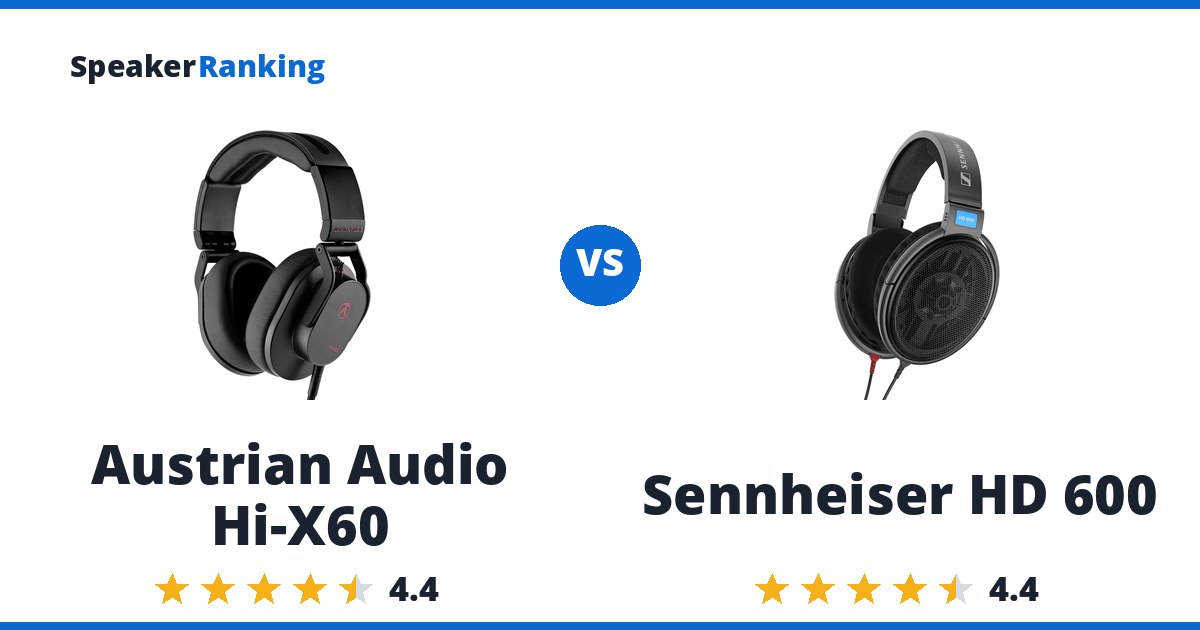
The case for the Austrian Audio Hi-X60: A preference score of 91 comes from a response within about 1.7 dB of the Harman target, with sub-bass 1.4 dB and bass 1.0 dB above target for a full, slightly warm foundation. Watch for: There is a 3.9 dB dip near 2 kHz, which can pull some vocals and snare detail slightly back, and a 3.1 dB peak near 5.6 kHz adds a touch of edge.
The case for the Sennheiser HD 600: It earns a preference score of 91, with the midrange from 200 Hz to 6 kHz within about 0.1 dB of target, giving vocals and acoustic instruments a very natural tone. The catch: Sub-bass is about 7.9 dB below target, so bass lacks rumble and weight on electronic and hip hop tracks.
Buy the Sennheiser HD 600. Both are rated the same for sound quality, and it costs $31.33 less than the Austrian Audio Hi-X60.
Looking for alternatives? See the complete Headphones rankings.
Specifications Side By Side
| Austrian Audio Hi-X60 | Sennheiser HD 600 | |
|---|---|---|
| Price | $303.69 | $272.36 |
| Ranked | #8 of 134 in Over-Ear Headphones | #7 of 134 in Over-Ear Headphones |
| Form Factor | Over-ear | Over-ear |
| Harman Preference Score | 91 (measured by oratory1990, via AutoEQ) | 91 (measured by oratory1990, via AutoEQ) |
| Deviation From Target | 1.65 dB standard deviation | 1.88 dB standard deviation |
| Tonal Tilt | -0.20 (negative is warmer, positive brighter) | +0.02 (negative is warmer, positive brighter) |
| Connection | Wired | Wired |
| Back | Closed | Open |
| Driver Type | Dynamic | Dynamic |
| Impedance | 25 ohms | 300 ohms |
| Sensitivity | 110 dB SPL/V | 97 dB SPL/V |
| Weight | 0.7 lbs (320 g) | 0.6 lbs (260 g) |
| Frequency Response | 5Hz - 28kHz (Manufacturer specified) | 12Hz - 40.5kHz (Manufacturer specified) |
| Built-in Microphone | No | - |
| Drivers | - | 1 x 42mm dynamic |
Related Headphone Comparisons
How Sennheiser HD 600 compares with other leading options:
- Beyerdynamic MMX 300 vs Sennheiser HD 600
- Sennheiser HD 600 vs Sennheiser HD 505
- Sennheiser HD 600 vs Sennheiser HD 650
- Sennheiser HD 600 vs Sennheiser HD 599
- Sennheiser HD 600 vs Sennheiser HD 569
Prices on this page were last checked October 10, 2026 at 5:37 PM UTC. Product prices and availability are accurate as of that date/time and are subject to change; the price and availability shown on Amazon at the time of purchase will apply to the purchase of this product.
As an eBay Partner, we may be compensated if you make a purchase.
The Two Headphones In Full
 Austrian Audio Hi-X60: $303.69 Amazon eBay
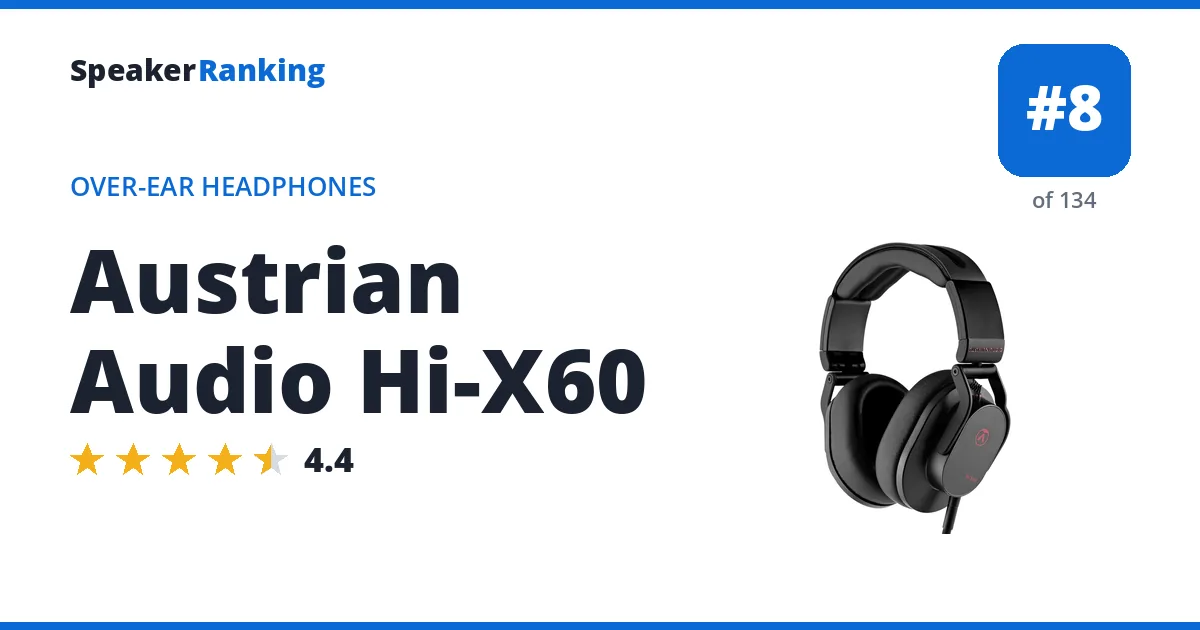
Pros: A preference score of 91 comes from a response within about 1.7 dB of the Harman target, with sub-bass 1.4 dB and bass 1.0 dB above target for a full, slightly warm foundation. At 25 ohms and 110 dB SPL/V it plays loudly from a phone, and the closed back isolates from outside noise. The 320 g weight is moderate.
Cons: There is a 3.9 dB dip near 2 kHz, which can pull some vocals and snare detail slightly back, and a 3.1 dB peak near 5.6 kHz adds a touch of edge. It has no built-in microphone, unlike the Beyerdynamic MMX 300, so it is less suited to calls and gaming.
Full Austrian Audio Hi-X60 review and specifications →
| Back | Closed |
|---|---|
| Built-in Microphone | No |
| Connection | Wired |
| Deviation From Target | 1.65 dB standard deviation |
| Driver Type | Dynamic |
| Form Factor | Over-ear |
| Frequency Response | 5Hz - 28kHz (Manufacturer specified) |
| Harman Preference Score | 91 (measured by oratory1990, via AutoEQ) |
| Impedance | 25 ohms |
| Sensitivity | 110 dB SPL/V |
| Tonal Tilt | -0.20 (negative is warmer, positive brighter) |
| Weight | 0.7 lbs (320 g) |
EQ preset to match the Harman target
Set a preamp of -4.7 dB, then add these filters in any parametric equalizer (Wavelet, Equalizer APO, Peace, or a player with parametric EQ). Calculated by AutoEQ from its measured frequency response.
| Filter | Frequency | Gain | Q |
|---|---|---|---|
| Low shelf | 105 Hz | -9.8 dB | 0.70 |
| Peak | 138 Hz | -14.9 dB | 0.60 |
| Peak | 81 Hz | +18.3 dB | 0.36 |
| Peak | 1,919 Hz | +4.6 dB | 3.37 |
| Peak | 1,025 Hz | -2.1 dB | 2.33 |
| High shelf | 10,000 Hz | -3.2 dB | 0.70 |
| Peak | 9,712 Hz | +2.5 dB | 2.24 |
| Peak | 3,637 Hz | +1.6 dB | 1.17 |
| Peak | 2,676 Hz | -3.1 dB | 5.21 |
| Peak | 5,733 Hz | -3.6 dB | 5.64 |
- Reviews, Comparisons and Sound Samples
- Head-to-Head Comparisons
 Sennheiser HD 600: $272.36 Amazon eBay
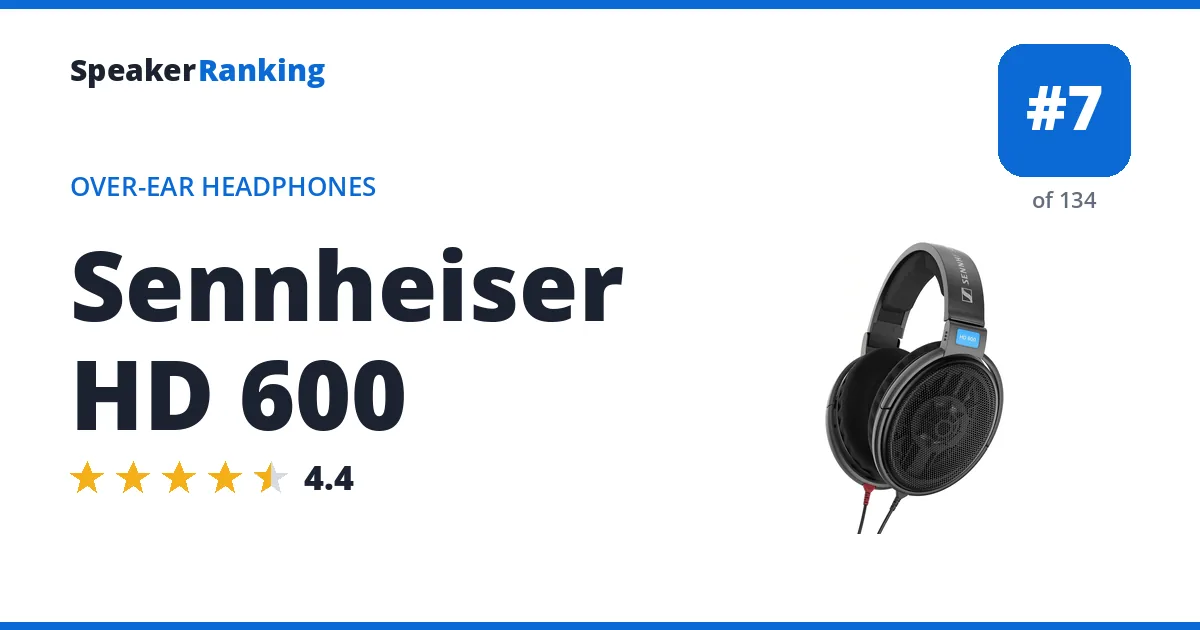
Pros: It earns a preference score of 91, with the midrange from 200 Hz to 6 kHz within about 0.1 dB of target, giving vocals and acoustic instruments a very natural tone. At 260 g it is light, and the long-running design from 1997 remains a reference for neutral midrange tuning. The warm and neutral tilt suits listeners who dislike bright treble.
Cons: Sub-bass is about 7.9 dB below target, so bass lacks rumble and weight on electronic and hip hop tracks. Treble from 6 to 10 kHz is about 3.6 dB low, with a 7.5 dB dip near 9.6 kHz that softens cymbals. At 300 ohms and 97 dB SPL/V it needs a dedicated headphone amp for proper volume, and the open back leaks sound.
Full Sennheiser HD 600 review and specifications →
| Released | 1997 (29 years ago) |
|---|---|
| Back | Open |
| Connection | Wired |
| Deviation From Target | 1.88 dB standard deviation |
| Driver Type | Dynamic |
| Drivers | 1 x 42mm dynamic |
| Form Factor | Over-ear |
| Frequency Response | 12Hz - 40.5kHz (Manufacturer specified) |
| Harman Preference Score | 91 (measured by oratory1990, via AutoEQ) |
| Impedance | 300 ohms |
| Sensitivity | 97 dB SPL/V |
| Tonal Tilt | +0.02 (negative is warmer, positive brighter) |
| Weight | 0.6 lbs (260 g) |
EQ preset to match the Harman target
Set a preamp of -6.3 dB, then add these filters in any parametric equalizer (Wavelet, Equalizer APO, Peace, or a player with parametric EQ). Calculated by AutoEQ from its measured frequency response.
| Filter | Frequency | Gain | Q |
|---|---|---|---|
| Low shelf | 105 Hz | +6.5 dB | 0.70 |
| Peak | 125 Hz | -2.7 dB | 0.55 |
| Peak | 8,445 Hz | +3.3 dB | 1.61 |
| Peak | 522 Hz | +0.7 dB | 1.02 |
| Peak | 1,298 Hz | -1.2 dB | 2.14 |
| High shelf | 10,000 Hz | -3.1 dB | 0.70 |
| Peak | 3,158 Hz | -1.8 dB | 3.67 |
| Peak | 2,166 Hz | +0.9 dB | 3.32 |
| Peak | 6,639 Hz | +2.2 dB | 5.82 |
| Peak | 5,433 Hz | -1.2 dB | 5.70 |
- Reviews, Comparisons and Sound Samples
- Head-to-Head Comparisons