Short answer: the JBL Tune 720BT. It ranks #47 of 231 over-ear headphones by sound quality, rated 4.1/5, at $89.95; the Marshall Major V ranks #185, rated 2.8/5, and costs $89.99, which makes this an easy call rather than a real tradeoff.
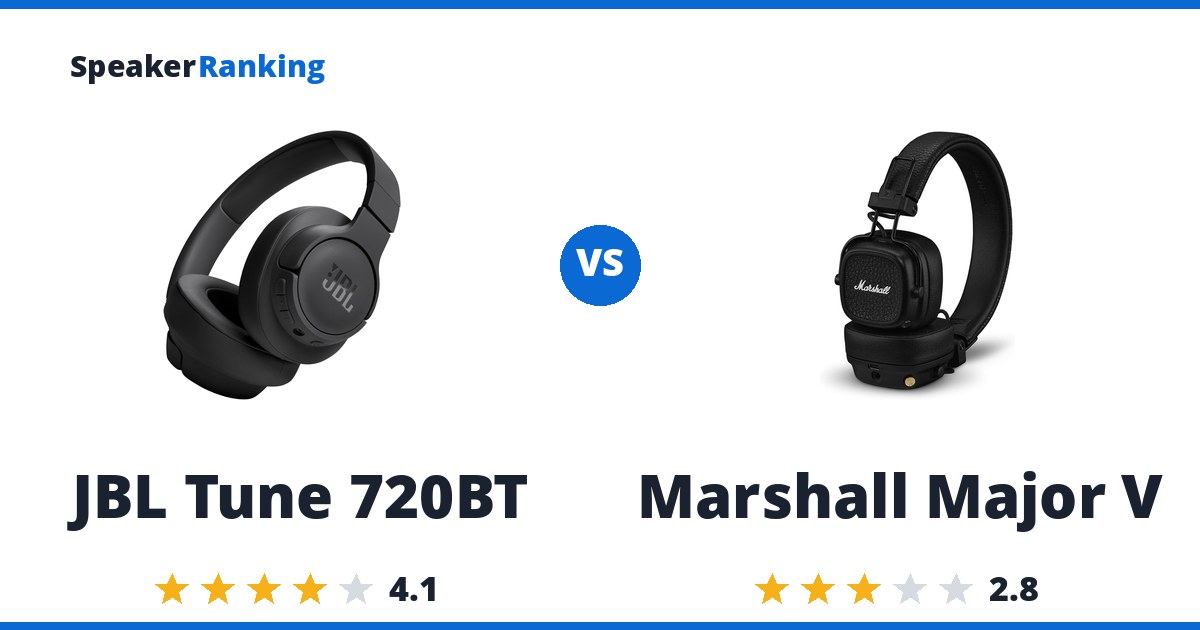
The JBL Tune 720BT is the better-sounding option. In hobbyist measurements it scores 84.9 for closeness to the preferred target with a smooth 2.07 dB deviation, an unusually accurate tuning for an affordable wireless headphone. Watch for: There is no active noise cancelling, so it blocks only as much noise as a closed back can.
The Marshall Major V is the longer-running pick. A claimed 100 hours of battery is among the longest of any wireless headphone, and LC3 support is ready for newer Bluetooth LE Audio devices. It is rated for 100 hours of battery against 76 for the JBL Tune 720BT. Watch for: In hobbyist measurements sub-bass sits about 11.6 dB below target and is 10.8 dB down at 30 Hz, so bass lines lack weight and rumble.
Buy the JBL Tune 720BT. It is rated higher for sound quality than the Marshall Major V and costs less, which makes it the one to get unless you need something the other one does better.
Still deciding? The full Headphones rankings cover every ranked option.
Specifications Side By Side
| JBL Tune 720BT | Marshall Major V | |
|---|---|---|
| Price | $89.95 | $89.99 |
| Ranked | #47 of 231 in Over-Ear Headphones | #185 of 231 in Over-Ear Headphones |
| Form Factor | Over-ear | Over-ear |
| Harman Preference Score | 85 (median of 2 squig.link measurements, calibrated to AutoEQ) | 55 (median of 1 squig.link measurements, calibrated to AutoEQ) |
| Deviation From Target | 2.07 dB standard deviation | 3.78 dB standard deviation |
| Tonal Tilt | -0.12 (negative is warmer, positive brighter) | +0.73 (negative is warmer, positive brighter) |
| Sub-bass Extension | Falls 6 dB below target at 40 Hz (-9.4 dB at 30 Hz) | Falls 6 dB below target at 50 Hz (-10.8 dB at 30 Hz) |
| Connection | Wireless and wired | Wireless and wired |
| Back | Closed | Closed |
| Driver Type | Dynamic | Dynamic |
| Drivers | 1 x 40mm dynamic | 1 x 40mm dynamic |
| Impedance | 32 ohms | 32 ohms |
| Sensitivity | 101 dB SPL @ 1kHz/1mW | 106 dB SPL (100mV @ 1kHz) |
| Weight | 0.5 lbs (220 g) | 0.4 lbs (186 g) |
| Frequency Response | 20Hz - 20kHz (Manufacturer specified) | 20Hz - 20kHz (Manufacturer specified) |
| Active Noise Cancelling | No | No |
| Battery Life | 76 hours (Manufacturer specified) | 100 hours (Manufacturer specified) |
| Bluetooth Version | 5.3 | 5.3 |
| Bluetooth Codecs | SBC, AAC | SBC, AAC, LC3 |
| Built-in Microphone | Yes | Yes |
| IP Rating | - | None |
Related Headphone Comparisons
More worthwhile head-to-heads for JBL Tune 720BT:
- JBL Live 770NC vs JBL Tune 720BT
- Anker Soundcore Space One vs Sennheiser ACCENTUM
- Sennheiser HD 280 Pro vs Sennheiser ACCENTUM
- Shure SRH440A vs Sennheiser ACCENTUM
- Sennheiser ACCENTUM vs Audio-Technica ATH-AD500X
Prices on this page were last checked October 11, 2026 at 4:59 PM UTC. Product prices and availability are accurate as of that date/time and are subject to change; the price and availability shown on Amazon at the time of purchase will apply to the purchase of this product.
As an eBay Partner, we may be compensated if you make a purchase.
The Two Headphones In Full
 JBL Tune 720BT: $89.95 Wireless Amazon $89.95 eBay
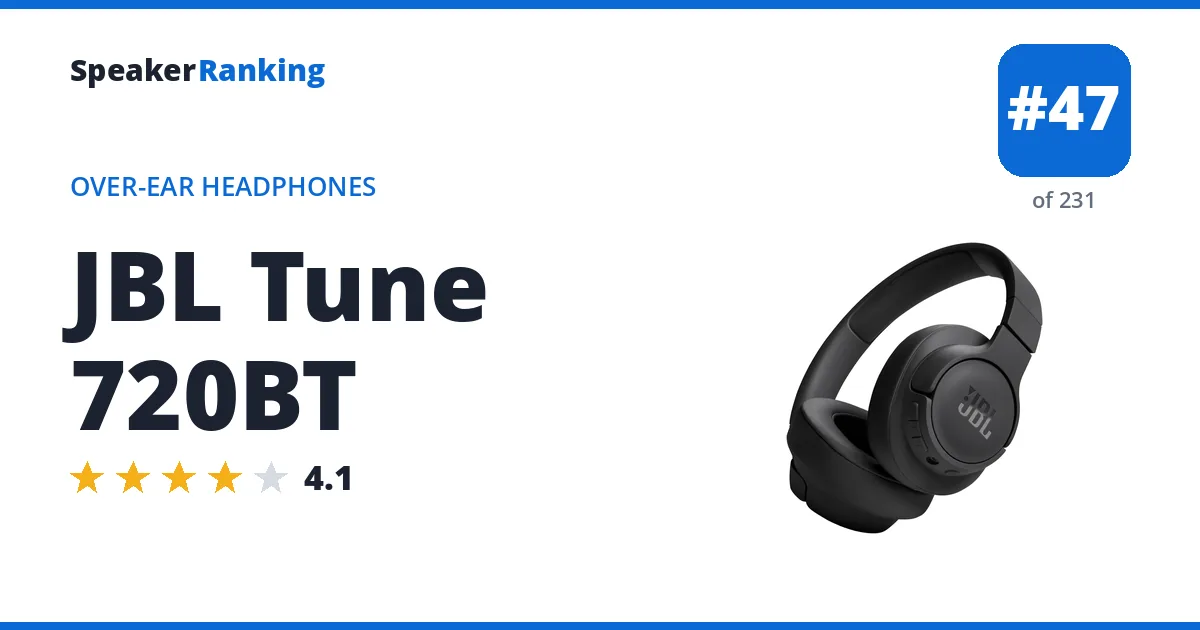
Pros: In hobbyist measurements it scores 84.9 for closeness to the preferred target with a smooth 2.07 dB deviation, an unusually accurate tuning for an affordable wireless headphone. Bass from 60 to 200 Hz lands right on target and the midrange stays within about 1.6 dB, so vocals and instruments sound balanced and clear. A claimed 76 hours of battery covers weeks of commuting, and the 32 ohm, 101 dB sensitivity drivers also play loudly when used wired. It matches the rating of the Sony MDR-7506 for less money while adding Bluetooth.
Cons: There is no active noise cancelling, so it blocks only as much noise as a closed back can. Sub-bass falls 6 dB below target at 40 Hz and is 9.4 dB down at 30 Hz, so the deepest rumble in electronic music and films is thin. A 6.2 dB peak near 11.9 kHz can add a little glare to cymbals.
Full JBL Tune 720BT review and specifications →
| Released | 2023 (3 years ago) |
|---|---|
| Active Noise Cancelling | No |
| Back | Closed |
| Battery Life | 76 hours (Manufacturer specified) |
| Bluetooth Codecs | SBC, AAC |
| Bluetooth Version | 5.3 |
| Built-in Microphone | Yes |
| Connection | Wireless and wired |
| Deviation From Target | 2.07 dB standard deviation |
| Driver Type | Dynamic |
| Drivers | 1 x 40mm dynamic |
| Form Factor | Over-ear |
| Frequency Response | 20Hz - 20kHz (Manufacturer specified) |
| Harman Preference Score | 85 (median of 2 squig.link measurements, calibrated to AutoEQ) |
| Impedance | 32 ohms |
| Sensitivity | 101 dB SPL @ 1kHz/1mW |
| Sub-bass Extension | Falls 6 dB below target at 40 Hz (-9.4 dB at 30 Hz) |
| Tonal Tilt | -0.12 (negative is warmer, positive brighter) |
| Weight | 0.5 lbs (220 g) |
- Reviews, Comparisons and Sound Samples
- Head-to-Head Comparisons
 Marshall Major V: $89.99 Wireless Amazon $89.99 eBay
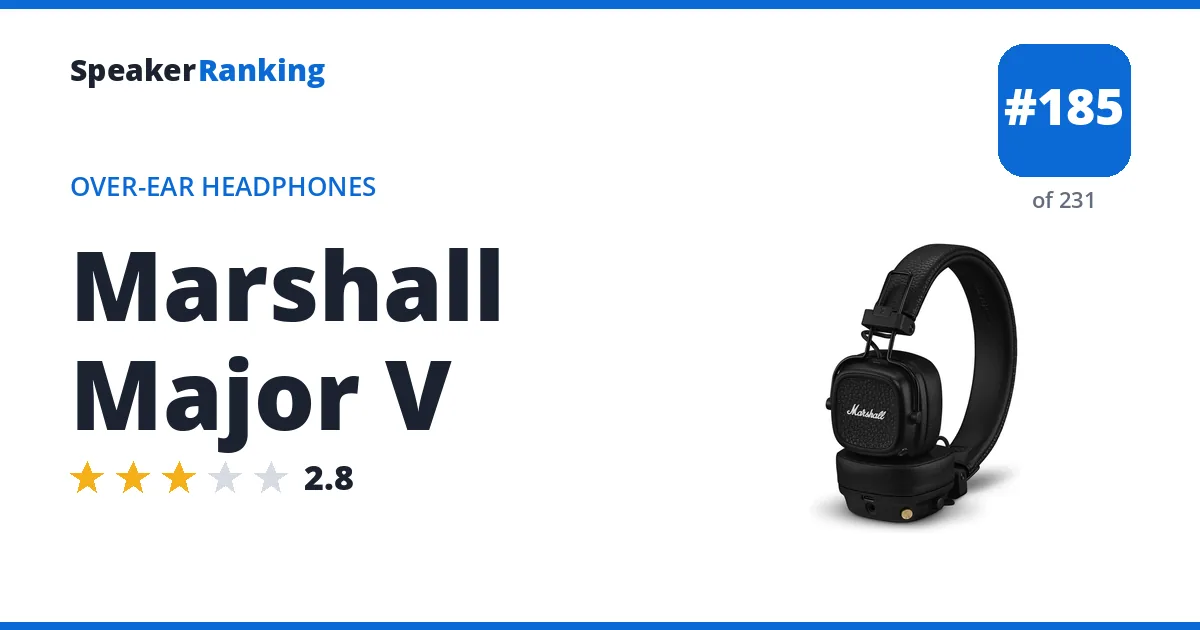
Pros: A claimed 100 hours of battery is among the longest of any wireless headphone, and LC3 support is ready for newer Bluetooth LE Audio devices. At 186 grams it is very light for an over-ear, and the 32 ohm, 106 dB sensitivity drivers also play loudly when wired. Its profile fits listeners who like a lean, bright, vocal forward sound.
Cons: In hobbyist measurements sub-bass sits about 11.6 dB below target and is 10.8 dB down at 30 Hz, so bass lines lack weight and rumble. A 7.2 dB peak near 3.3 kHz can make vocals and guitars shouty, and a 12.8 dB dip near 9.5 kHz dulls cymbals. There is no active noise cancelling and no IP rating, and the Sennheiser ACCENTUM rates higher for a little more money.
Full Marshall Major V review and specifications →
| Released | Apr 2024 (2 years ago) |
|---|---|
| Active Noise Cancelling | No |
| Back | Closed |
| Battery Life | 100 hours (Manufacturer specified) |
| Bluetooth Codecs | SBC, AAC, LC3 |
| Bluetooth Version | 5.3 |
| Built-in Microphone | Yes |
| Connection | Wireless and wired |
| Deviation From Target | 3.78 dB standard deviation |
| Driver Type | Dynamic |
| Drivers | 1 x 40mm dynamic |
| Form Factor | Over-ear |
| Frequency Response | 20Hz - 20kHz (Manufacturer specified) |
| Harman Preference Score | 55 (median of 1 squig.link measurements, calibrated to AutoEQ) |
| IP Rating | None |
| Impedance | 32 ohms |
| Sensitivity | 106 dB SPL (100mV @ 1kHz) |
| Sub-bass Extension | Falls 6 dB below target at 50 Hz (-10.8 dB at 30 Hz) |
| Tonal Tilt | +0.73 (negative is warmer, positive brighter) |
| Weight | 0.4 lbs (186 g) |
- Reviews, Comparisons and Sound Samples