Short answer: the EPZ Q5. It ranks #6 of 450 in-ear headphones by sound quality, rated 4.9/5, at $99; the Simgot EA500LM ranks #21, rated 4.8/5, and costs $101.99, which makes this an easy call rather than a real tradeoff.

Why pick the EPZ Q5: The median of 28 hobbyist measurements gives it a preference score of 87 with only about 0.85 dB average deviation, so tonal balance is very close to what most listeners prefer. Watch for: The 10 to 16 kHz air region sits about 4 dB above target, so bright recordings and hi hats can sound slightly sharp.
What the Simgot EA500LM does well: Squig.link measurements across 35 hobbyist samples give it a preference score of 83, with a lively, mildly V shaped balance that suits warm and V shaped tastes. Watch for: Air from 10 to 16 kHz sits about 4 dB above target and there is a 4.8 dB peak near 8.1 kHz, so bright recordings and sibilant voices can sound edgy.
Buy the EPZ Q5. It is rated higher for sound quality than the Simgot EA500LM and costs less, so it is the default pick unless a specific strength of the other one matters more to you.
Want more options? Browse the full Headphones rankings.
Specifications Side By Side
| EPZ Q5 | Simgot EA500LM | |
|---|---|---|
| Price | $99.00 | $101.99 |
| Ranked | #6 of 450 in In-Ear Headphones | #21 of 450 in In-Ear Headphones |
| Form Factor | In-ear | In-ear |
| Back | Closed | Closed |
| Harman Preference Score | 87 (median of 28 squig.link measurements, calibrated to AutoEQ) | 84 (median of 36 squig.link measurements, calibrated to AutoEQ) |
| Deviation From Target | 0.85 dB standard deviation | 1.11 dB standard deviation |
| Tonal Tilt | -0.12 (negative is warmer, positive brighter) | -0.17 (negative is warmer, positive brighter) |
| Sub-bass Extension | Within 6 dB of target down to 20 Hz (+0.5 dB at 30 Hz) | Within 6 dB of target down to 20 Hz (+0.3 dB at 30 Hz) |
| Connection | Wired | Wired |
| Driver Type | Dynamic | Dynamic |
| Drivers | 1 x 10mm dynamic | 1 x 10mm dynamic |
| Impedance | 26 ohms | 21 ohms |
| Sensitivity | 109 dB | 123 dB/Vrms |
| Frequency Response | 20Hz - 20kHz (Manufacturer specified) | 10Hz - 50kHz (Manufacturer specified) |
| Built-in Microphone | No | No |
Related Headphone Comparisons
How EPZ Q5 compares with other leading options:
- EPZ Q5 vs TANGZU x AZLA Noir Blanc
- EPZ Q5 vs Juzear 81T
- Simgot EA500LM vs Moondrop Golden Ages 2
- Juzear 81T vs Simgot EA500LM
- Truthear x Crinacle Zero RED vs Tin HiFi T4
Prices on this page were last checked October 11, 2026 at 4:59 PM UTC. Product prices and availability are accurate as of that date/time and are subject to change; the price and availability shown on Amazon at the time of purchase will apply to the purchase of this product.
As an eBay Partner, we may be compensated if you make a purchase.
The Two Headphones In Full
 EPZ Q5: $99.00 Amazon eBay
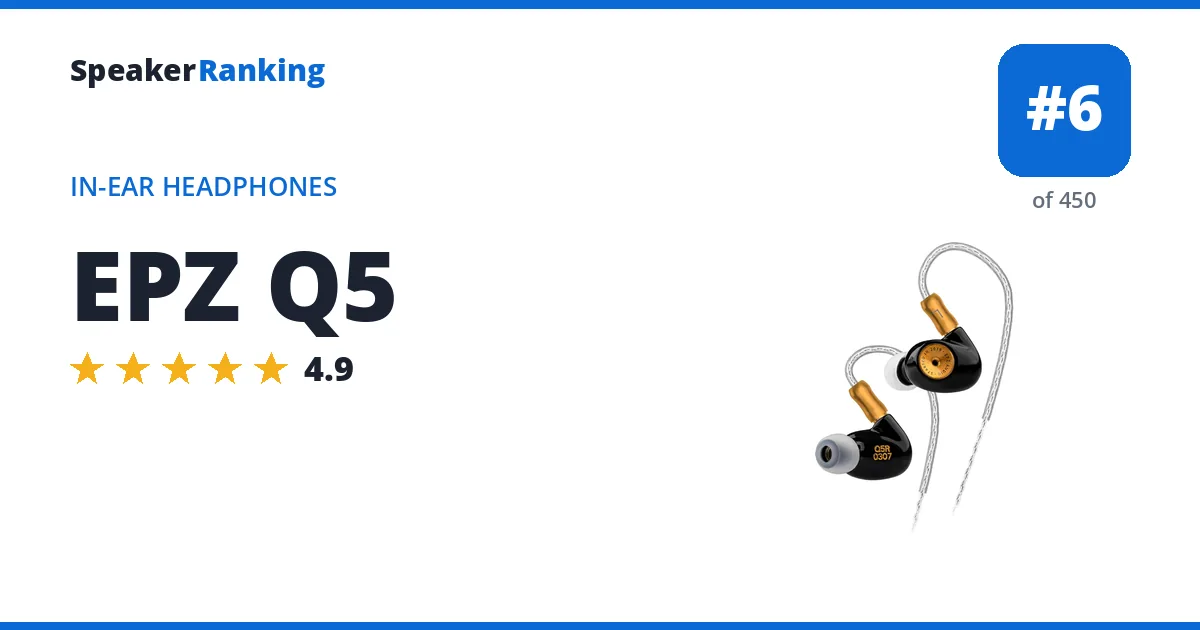
Pros: The median of 28 hobbyist measurements gives it a preference score of 87 with only about 0.85 dB average deviation, so tonal balance is very close to what most listeners prefer. Bass, midrange and lower treble all sit within about 1.3 dB of target, with a slight bass lift that adds warmth. It shares its rating with the EPZ P40 while costing noticeably less.
Cons: The 10 to 16 kHz air region sits about 4 dB above target, so bright recordings and hi hats can sound slightly sharp. A single dynamic driver and no built-in microphone mean no inline calling, and the Truthear Zero Blue 2 shares its rating for less money.
Full EPZ Q5 review and specifications →
| Released | 2023 (3 years ago) |
|---|---|
| Back | Closed |
| Built-in Microphone | No |
| Connection | Wired |
| Deviation From Target | 0.85 dB standard deviation |
| Driver Type | Dynamic |
| Drivers | 1 x 10mm dynamic |
| Form Factor | In-ear |
| Frequency Response | 20Hz - 20kHz (Manufacturer specified) |
| Harman Preference Score | 87 (median of 28 squig.link measurements, calibrated to AutoEQ) |
| Impedance | 26 ohms |
| Sensitivity | 109 dB |
| Sub-bass Extension | Within 6 dB of target down to 20 Hz (+0.5 dB at 30 Hz) |
| Tonal Tilt | -0.12 (negative is warmer, positive brighter) |
- Reviews, Comparisons and Sound Samples
- Head-to-Head Comparisons
 Simgot EA500LM: $101.99 Amazon eBay
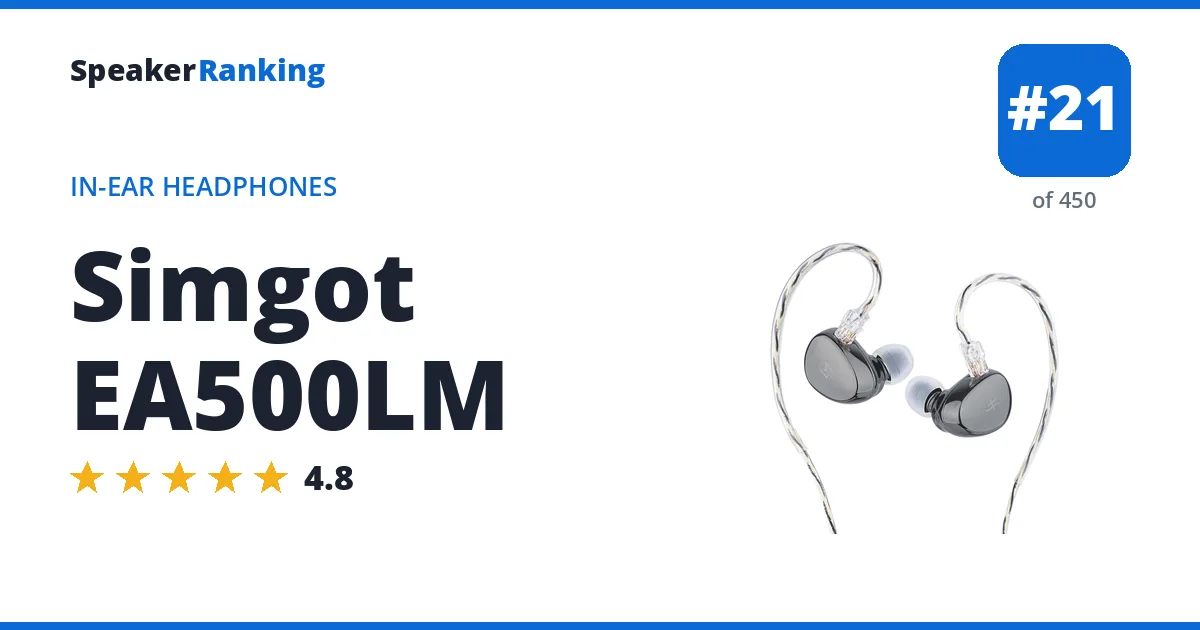
Pros: Squig.link measurements across 35 hobbyist samples give it a preference score of 83, with a lively, mildly V shaped balance that suits warm and V shaped tastes. Upper bass sits about 2 dB above target, giving punchy drums and full bass lines, and the presence region is right on target, so vocals stay clear. The single 10 mm dynamic driver at 123 dB/Vrms gets loud from any phone. It shares its rating with the pricier Simgot SuperMix 4.
Cons: Air from 10 to 16 kHz sits about 4 dB above target and there is a 4.8 dB peak near 8.1 kHz, so bright recordings and sibilant voices can sound edgy. The extra upper bass slightly thickens the lower midrange, and there is no built-in microphone.
Full Simgot EA500LM review and specifications →
| Back | Closed |
|---|---|
| Built-in Microphone | No |
| Connection | Wired |
| Deviation From Target | 1.11 dB standard deviation |
| Driver Type | Dynamic |
| Drivers | 1 x 10mm dynamic |
| Form Factor | In-ear |
| Frequency Response | 10Hz - 50kHz (Manufacturer specified) |
| Harman Preference Score | 84 (median of 36 squig.link measurements, calibrated to AutoEQ) |
| Impedance | 21 ohms |
| Sensitivity | 123 dB/Vrms |
| Sub-bass Extension | Within 6 dB of target down to 20 Hz (+0.3 dB at 30 Hz) |
| Tonal Tilt | -0.17 (negative is warmer, positive brighter) |
- Reviews, Comparisons and Sound Samples
- Head-to-Head Comparisons