Short answer: the HyperX Cloud III. It ranks #168 of 231 over-ear headphones by sound quality, rated 3.1/5, at $57.99; the Corsair HS80 RGB Wireless ranks #214, rated 1.9/5, and costs $159.99, so there is little reason to consider the other one.
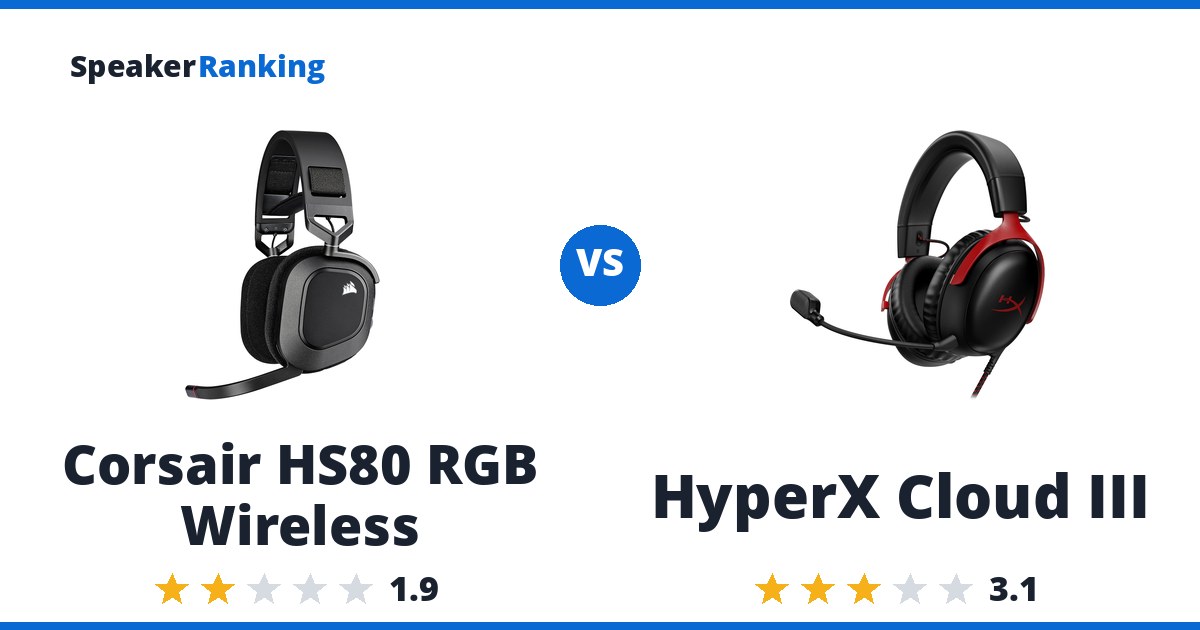
The case for the Corsair HS80 RGB Wireless: It works both wirelessly and over a cable, with a manufacturer rated 20 hours of battery and a built-in microphone for voice chat. Watch for: A 14 dB dip near 7.1 kHz and treble about 7.4 dB below target make cymbals, footsteps and detail sound veiled, and the preference score is only 35 in a squig.link measurement.
The HyperX Cloud III is the better-sounding pick. Bass runs about 3 dB above target in a squig.link measurement, giving games and music a warm, punchy low end. The catch: A 9.1 dB dip near 11.5 kHz and air about 3.6 dB below target dull the sparkle of cymbals and the sense of space, while a 3.9 dB presence shortfall pushes voices back.
Buy the HyperX Cloud III. It is rated higher for sound quality than the Corsair HS80 RGB Wireless and costs less, so only choose the other one for a particular feature it does better.
Still deciding? The full Headphones rankings cover every ranked option.
Specifications Side By Side
| Corsair HS80 RGB Wireless | HyperX Cloud III | |
|---|---|---|
| Price | $159.99 | $57.99 |
| Ranked | #214 of 231 in Over-Ear Headphones | #168 of 231 in Over-Ear Headphones |
| Form Factor | Over-ear | Over-ear |
| Harman Preference Score | 35 (median of 1 squig.link measurements, calibrated to AutoEQ) | 60 (median of 1 squig.link measurements, calibrated to AutoEQ) |
| Deviation From Target | 4.24 dB standard deviation | 3.12 dB standard deviation |
| Tonal Tilt | -1.72 (negative is warmer, positive brighter) | -0.92 (negative is warmer, positive brighter) |
| Sub-bass Extension | Within 6 dB of target down to 20 Hz (-5.2 dB at 30 Hz) | Within 6 dB of target down to 20 Hz (-3.5 dB at 30 Hz) |
| Connection | Wireless and wired | Wired |
| Driver Type | Dynamic | Dynamic |
| Drivers | 1 x 50mm dynamic | 1 x 53mm dynamic |
| Impedance | 32 ohms | 64 ohms |
| Sensitivity | 116 dB (+/-3dB) | - |
| Frequency Response | 20Hz - 40kHz (Manufacturer specified) | 10Hz - 21kHz (Manufacturer specified) |
| Battery Life | 20 hours (Manufacturer specified) | - |
| Built-in Microphone | Yes | Yes |
| Back | - | Closed |
| Weight | - | 0.7 lbs (308 g) |
Related Headphone Comparisons
How HyperX Cloud III compares with other leading options:
- HyperX Cloud III vs Logitech G733
- HyperX Cloud Alpha vs HyperX Cloud III
- HyperX Cloud II vs HyperX Cloud III
- Beyerdynamic DT 770 M vs Sennheiser HD 569
- Beyerdynamic DT 770 M vs Audio-Technica ATH-G1
Prices on this page were last checked October 11, 2026 at 4:59 PM UTC. Product prices and availability are accurate as of that date/time and are subject to change; the price and availability shown on Amazon at the time of purchase will apply to the purchase of this product.
As an eBay Partner, we may be compensated if you make a purchase.
The Two Headphones In Full
 Corsair HS80 RGB Wireless: $159.99 Wireless Amazon $159.99 eBay
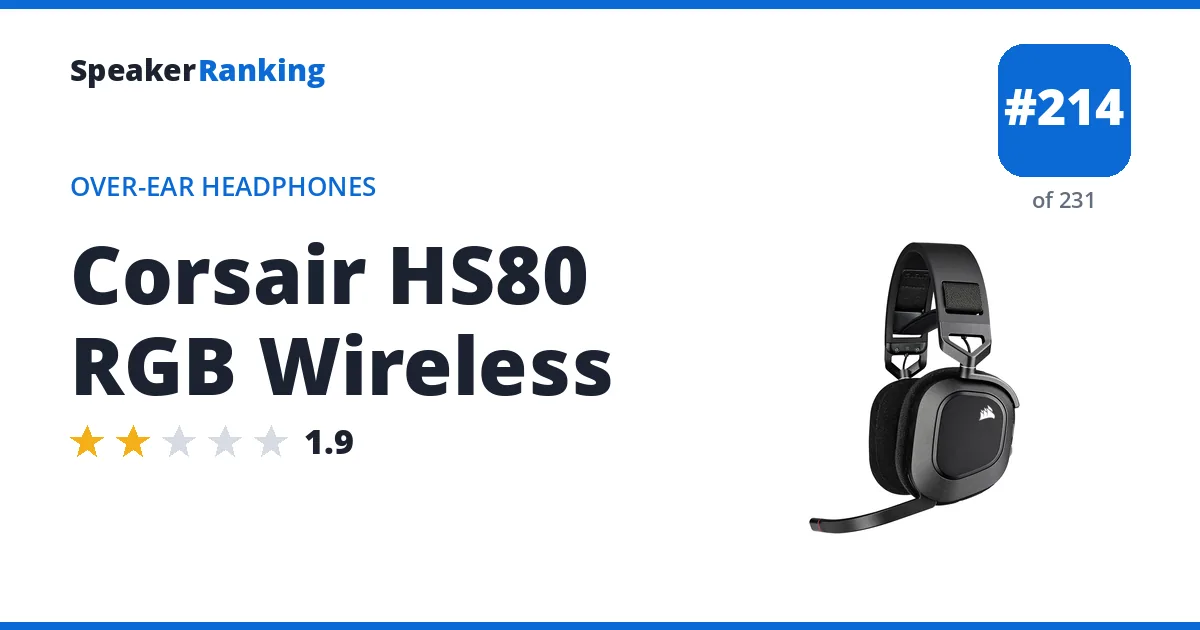
Pros: It works both wirelessly and over a cable, with a manufacturer rated 20 hours of battery and a built-in microphone for voice chat. High sensitivity of 116 dB and a 32 ohm load make it easy to drive from any source when wired. Bass sits about 1.4 dB above target, so listeners who like a warm tilt get a full low end.
Cons: A 14 dB dip near 7.1 kHz and treble about 7.4 dB below target make cymbals, footsteps and detail sound veiled, and the preference score is only 35 in a squig.link measurement. Sub-bass falls about 4.3 dB short of target, so explosions lack rumble. Battery life is well short of the Logitech G Pro X 2 Lightspeed, which earns the same rating.
Full Corsair HS80 RGB Wireless review and specifications →
| Released | 2021 (5 years ago) |
|---|---|
| Battery Life | 20 hours (Manufacturer specified) |
| Built-in Microphone | Yes |
| Connection | Wireless and wired |
| Deviation From Target | 4.24 dB standard deviation |
| Driver Type | Dynamic |
| Drivers | 1 x 50mm dynamic |
| Form Factor | Over-ear |
| Frequency Response | 20Hz - 40kHz (Manufacturer specified) |
| Harman Preference Score | 35 (median of 1 squig.link measurements, calibrated to AutoEQ) |
| Impedance | 32 ohms |
| Sensitivity | 116 dB (+/-3dB) |
| Sub-bass Extension | Within 6 dB of target down to 20 Hz (-5.2 dB at 30 Hz) |
| Tonal Tilt | -1.72 (negative is warmer, positive brighter) |
- Reviews, Comparisons and Sound Samples
 HyperX Cloud III: $57.99 Amazon $57.99 eBay
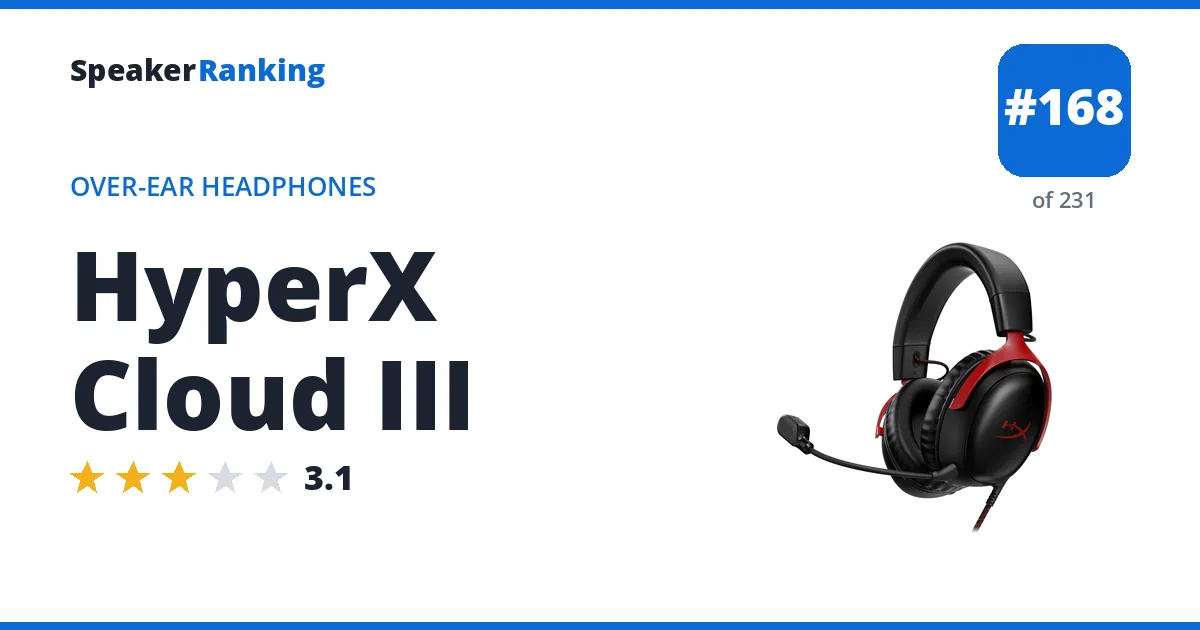
Pros: Bass runs about 3 dB above target in a squig.link measurement, giving games and music a warm, punchy low end. The closed back keeps sound in and outside noise out, and the built-in microphone covers voice chat. A 64 ohm load is still easy for a PC, console controller or phone to drive.
Cons: A 9.1 dB dip near 11.5 kHz and air about 3.6 dB below target dull the sparkle of cymbals and the sense of space, while a 3.9 dB presence shortfall pushes voices back. Sub-bass also sits 3.6 dB under target, so the deepest rumble is soft. The Audio-Technica ATH-M20x rates higher at nearly the same price.
Full HyperX Cloud III review and specifications →
| Released | May 2023 (3 years ago) |
|---|---|
| Back | Closed |
| Built-in Microphone | Yes |
| Connection | Wired |
| Deviation From Target | 3.12 dB standard deviation |
| Driver Type | Dynamic |
| Drivers | 1 x 53mm dynamic |
| Form Factor | Over-ear |
| Frequency Response | 10Hz - 21kHz (Manufacturer specified) |
| Harman Preference Score | 60 (median of 1 squig.link measurements, calibrated to AutoEQ) |
| Impedance | 64 ohms |
| Sub-bass Extension | Within 6 dB of target down to 20 Hz (-3.5 dB at 30 Hz) |
| Tonal Tilt | -0.92 (negative is warmer, positive brighter) |
| Weight | 0.7 lbs (308 g) |
- Reviews, Comparisons and Sound Samples
- Head-to-Head Comparisons