Short answer: the Sivga Oriole. Both are rated 4.1/5 for sound quality (#58 and #40 of 216 over-ear headphones), and the Sivga Oriole costs $239 against $259.99 for the AKG K702, so with nothing between them on sound quality, price settles it.

The case for the AKG K702: A preference score of 85 with a neutral to warm balance, with bass from 60 to 200 Hz essentially on target and low mids within 1 dB. Watch for: A 7.3 dB dip near 9.5 kHz combined with a 4.3 dB peak near 5.6 kHz makes the treble uneven, so some sibilance and a slightly forward upper mid range are possible.
What the Sivga Oriole does well: A preference score of 83 from a closed back design, with sub-bass extension right on target at 30 Hz, so it delivers deep, solid bass while blocking outside noise. The tradeoff: An 8.5 dB dip near 5.6 kHz pulls the presence band 3.8 dB below target, softening vocal clarity and the attack of guitars and snares.
Buy the Sivga Oriole. Both are rated the same for sound quality, and it costs $20.99 less than the AKG K702.
Want more options? Browse the full Headphones rankings.
Specifications Side By Side
| AKG K702 | Sivga Oriole | |
|---|---|---|
| Price | $259.99 | $239.00 |
| Ranked | #40 of 216 in Over-Ear Headphones | #58 of 216 in Over-Ear Headphones |
| Form Factor | Over-ear | Over-ear |
| Harman Preference Score | 85 (measured by oratory1990, via AutoEQ) | 83 (measured by oratory1990, via AutoEQ) |
| Deviation From Target | 2.24 dB standard deviation | 2.28 dB standard deviation |
| Tonal Tilt | +0.10 (negative is warmer, positive brighter) | -0.20 (negative is warmer, positive brighter) |
| Sub-bass Extension | Falls 6 dB below target at 27 Hz (-5.6 dB at 30 Hz) | Within 6 dB of target down to 20 Hz (+0.4 dB at 30 Hz) |
| Connection | Wired | Wired |
| Back | Open | Closed |
| Driver Type | Dynamic | Dynamic |
| Drivers | 1 x 45mm dynamic | 1 x 50mm dynamic |
| Impedance | 62 ohms | 32 ohms |
| Sensitivity | 105 dB SPL/V | 108 dB |
| Frequency Response | 10Hz - 39.8kHz (Manufacturer specified) | 20Hz - 20kHz (Manufacturer specified) |
| Weight | 0.5 lbs (235 g) | 0.6 lbs (280 g) |
| Built-in Microphone | - | No |
Related Headphone Comparisons
How AKG K702 compares with other leading options:
- AKG K702 vs Sennheiser HD 650
- AKG K701 vs AKG K702
- AKG K702 vs Audio-Technica ATH-R50x
- AKG K702 vs AKG K612
- AKG K701 vs Sivga Oriole
Prices on this page were last checked October 11, 2026 at 4:59 PM UTC. Product prices and availability are accurate as of that date/time and are subject to change; the price and availability shown on Amazon at the time of purchase will apply to the purchase of this product.
As an eBay Partner, we may be compensated if you make a purchase.
The Two Headphones In Full
 AKG K702: $259.99 Amazon eBay
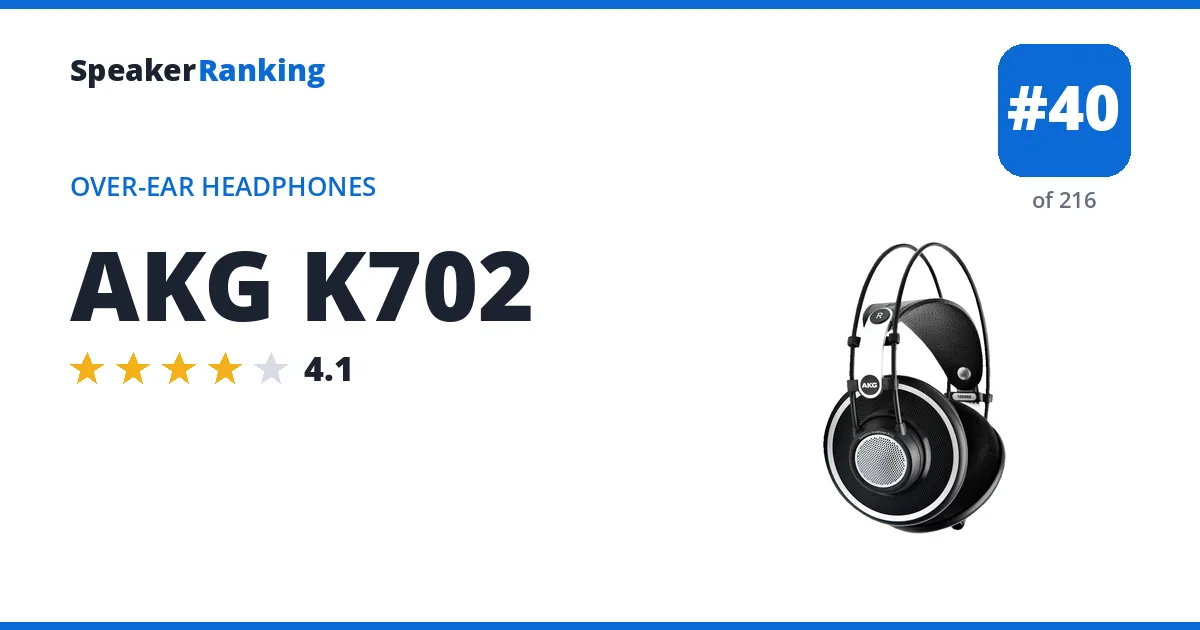
Pros: A preference score of 85 with a neutral to warm balance, with bass from 60 to 200 Hz essentially on target and low mids within 1 dB. At 235 g it is a light open-back design, and the 62 ohm impedance with 105 dB per volt sensitivity runs from most sources. It rates the same as the AKG K701.
Cons: A 7.3 dB dip near 9.5 kHz combined with a 4.3 dB peak near 5.6 kHz makes the treble uneven, so some sibilance and a slightly forward upper mid range are possible. Sub-bass is about 5 dB under target, limiting rumble. The open back leaks sound and offers no isolation.
Full AKG K702 review and specifications →
| Back | Open |
|---|---|
| Connection | Wired |
| Deviation From Target | 2.24 dB standard deviation |
| Driver Type | Dynamic |
| Drivers | 1 x 45mm dynamic |
| Form Factor | Over-ear |
| Frequency Response | 10Hz - 39.8kHz (Manufacturer specified) |
| Harman Preference Score | 85 (measured by oratory1990, via AutoEQ) |
| Impedance | 62 ohms |
| Sensitivity | 105 dB SPL/V |
| Sub-bass Extension | Falls 6 dB below target at 27 Hz (-5.6 dB at 30 Hz) |
| Tonal Tilt | +0.10 (negative is warmer, positive brighter) |
| Weight | 0.5 lbs (235 g) |
EQ preset to match the Harman target
Set a preamp of -6.1 dB, then add these filters in any parametric equalizer (Wavelet, Equalizer APO, Peace, or a player with parametric EQ). Calculated by AutoEQ from its measured frequency response.
| Filter | Frequency | Gain | Q |
|---|---|---|---|
| Low shelf | 105 Hz | +7.1 dB | 0.70 |
| Peak | 119 Hz | -2.7 dB | 0.23 |
| Peak | 9,459 Hz | +3.2 dB | 3.19 |
| Peak | 730 Hz | +3.2 dB | 1.22 |
| Peak | 2,241 Hz | -3.5 dB | 3.80 |
| High shelf | 10,000 Hz | -1.7 dB | 0.70 |
| Peak | 3,721 Hz | +3.4 dB | 2.02 |
| Peak | 5,483 Hz | -4.7 dB | 4.79 |
| Peak | 2,633 Hz | -2.0 dB | 5.29 |
| Peak | 56 Hz | -0.6 dB | 2.62 |
- Reviews, Comparisons and Sound Samples
- Head-to-Head Comparisons
 Sivga Oriole: $239.00 HiFiGo eBay
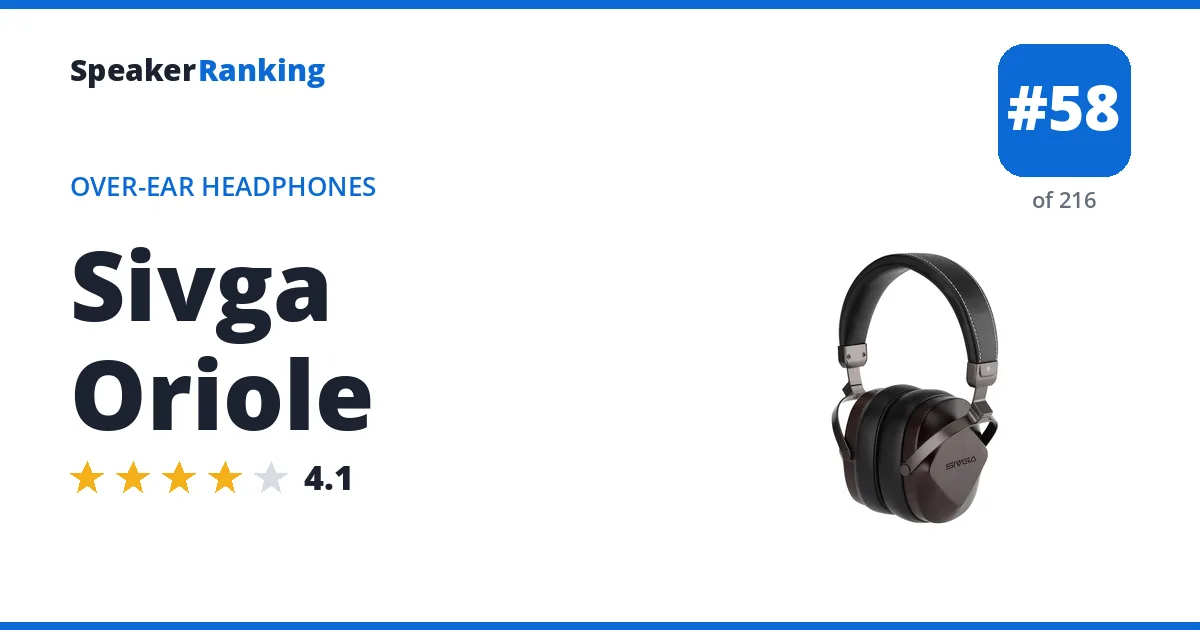
Pros: A preference score of 83 from a closed back design, with sub-bass extension right on target at 30 Hz, so it delivers deep, solid bass while blocking outside noise. Its 32 ohm impedance and 108 dB sensitivity mean a phone or laptop drives it to full volume without an amp. At 280 g it is light, and the bassy, warm balance suits listeners who like a fuller sound.
Cons: An 8.5 dB dip near 5.6 kHz pulls the presence band 3.8 dB below target, softening vocal clarity and the attack of guitars and snares. Low mids sit 2 dB under target, which can thin out the body of voices slightly. The AKG K371 shares the same rating at a much lower price.
Full Sivga Oriole review and specifications →
| Released | Oct 2022 (4 years ago) |
|---|---|
| Back | Closed |
| Built-in Microphone | No |
| Connection | Wired |
| Deviation From Target | 2.28 dB standard deviation |
| Driver Type | Dynamic |
| Drivers | 1 x 50mm dynamic |
| Form Factor | Over-ear |
| Frequency Response | 20Hz - 20kHz (Manufacturer specified) |
| Harman Preference Score | 83 (measured by oratory1990, via AutoEQ) |
| Impedance | 32 ohms |
| Sensitivity | 108 dB |
| Sub-bass Extension | Within 6 dB of target down to 20 Hz (+0.4 dB at 30 Hz) |
| Tonal Tilt | -0.20 (negative is warmer, positive brighter) |
| Weight | 0.6 lbs (280 g) |
EQ preset to match the Harman target
Set a preamp of -5.7 dB, then add these filters in any parametric equalizer (Wavelet, Equalizer APO, Peace, or a player with parametric EQ). Calculated by AutoEQ from its measured frequency response.
| Filter | Frequency | Gain | Q |
|---|---|---|---|
| Low shelf | 105 Hz | -1.1 dB | 0.70 |
| Peak | 1,128 Hz | -2.9 dB | 1.10 |
| Peak | 203 Hz | +8.6 dB | 1.90 |
| Peak | 5,371 Hz | +5.2 dB | 3.75 |
| Peak | 145 Hz | -3.3 dB | 0.66 |
| High shelf | 10,000 Hz | -8.7 dB | 0.70 |
| Peak | 9,481 Hz | +2.5 dB | 0.88 |
| Peak | 46 Hz | -1.1 dB | 2.44 |
| Peak | 3,926 Hz | -1.7 dB | 5.44 |
| Peak | 80 Hz | +0.9 dB | 2.91 |
- Reviews, Comparisons and Sound Samples
- Head-to-Head Comparisons