Short answer: the AKG K612. It ranks #73 of 216 over-ear headphones by sound quality, rated 4.0/5, at $279; the Meze 105 Aer ranks #86, rated 3.9/5, and costs $299, which makes this an easy call rather than a real tradeoff.
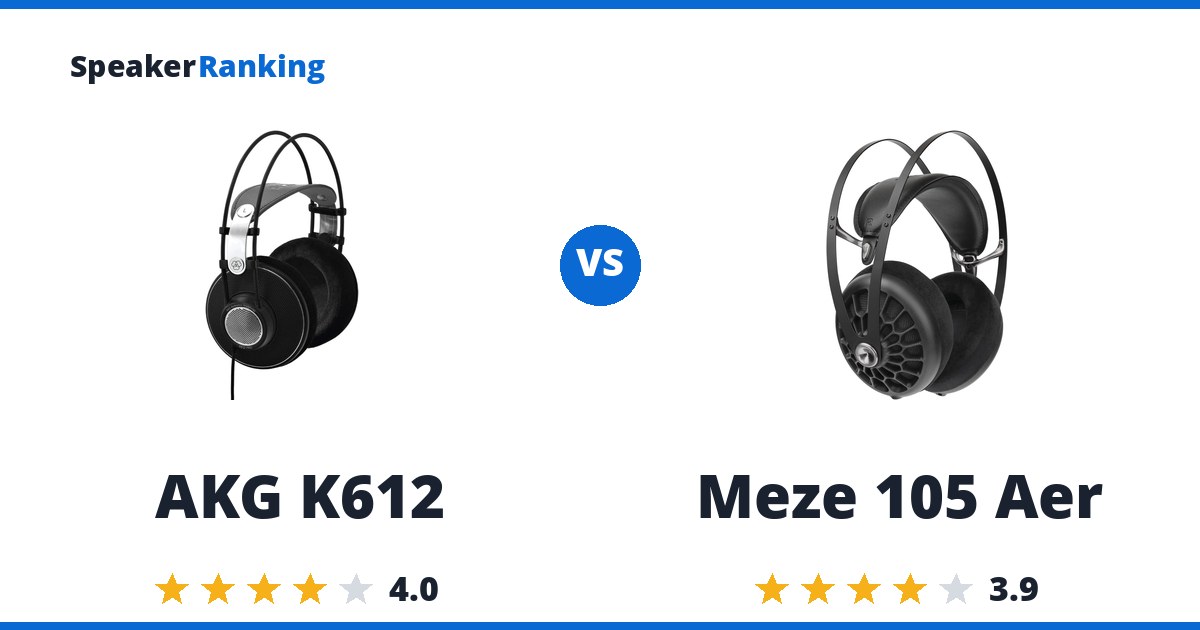
The case for the AKG K612: A preference score of 81 in oratory1990’s measurement puts the K612 close to the response most listeners prefer, and a deviation of only about 2 dB around target means few bands stand out. The catch: Sub-bass falls 6 dB below target by 34 Hz, so the deepest rumble in electronic and film soundtracks is thin.
Why pick the Meze 105 Aer: The open back tuning is warm, with bass from 60 to 200 Hz about 2 dB above target and the low mids about 1.6 dB above, so voices and instruments sound full and relaxed. The tradeoff: An 8 dB dip near 8.8 kHz and treble about 2.6 dB below target take the shimmer off cymbals and sibilance, so the top end can sound dull and veiled.
Buy the AKG K612. It is rated higher for sound quality than the Meze 105 Aer and costs less, which makes it the one to get unless you need something the other one does better.
Looking for alternatives? See the complete Headphones rankings.
Specifications Side By Side
| AKG K612 | Meze 105 Aer | |
|---|---|---|
| Price | $279.00 | $299.00 |
| Ranked | #73 of 216 in Over-Ear Headphones | #86 of 216 in Over-Ear Headphones |
| Form Factor | Over-ear | Over-ear |
| Harman Preference Score | 81 (measured by oratory1990, via AutoEQ) | 79 (measured by oratory1990, via AutoEQ) |
| Deviation From Target | 2.06 dB standard deviation | 2.15 dB standard deviation |
| Tonal Tilt | +0.50 (negative is warmer, positive brighter) | -0.51 (negative is warmer, positive brighter) |
| Sub-bass Extension | Falls 6 dB below target at 34 Hz (-6.7 dB at 30 Hz) | Within 6 dB of target down to 20 Hz (-3.1 dB at 30 Hz) |
| Connection | Wired | Wired |
| Back | Open | Open |
| Driver Type | Dynamic | Dynamic |
| Impedance | 120 ohms | - |
| Sensitivity | 101 dB SPL/V | - |
| Weight | 0.5 lbs (235 g) | - |
| Frequency Response | 12Hz - 39.5kHz (Manufacturer specified) | - |
| Built-in Microphone | No | - |
| Drivers | - | 1 x 50mm dynamic |
Related Headphone Comparisons
How AKG K612 compares with other leading options:
- AKG K702 vs AKG K612
- AKG K612 vs Sivga Luan
- Meze 105 Aer vs Beyerdynamic DT 700 Pro X
- Meze 105 Aer vs Austrian Audio Hi-X65
- Meze 105 Aer vs Sivga Luan
Prices on this page were last checked October 11, 2026 at 4:59 PM UTC. Product prices and availability are accurate as of that date/time and are subject to change; the price and availability shown on Amazon at the time of purchase will apply to the purchase of this product.
As an eBay Partner, we may be compensated if you make a purchase.
The Two Headphones In Full
 AKG K612: $279.00 B&H Photo Video eBay
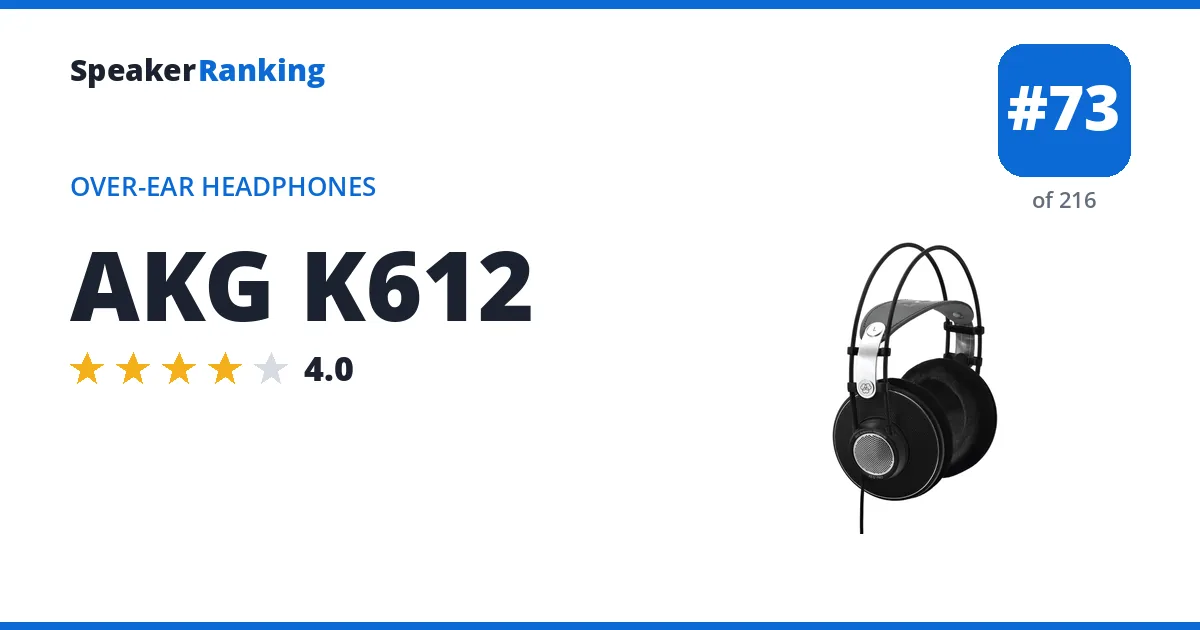
Pros: A preference score of 81 in oratory1990’s measurement puts the K612 close to the response most listeners prefer, and a deviation of only about 2 dB around target means few bands stand out. Bass from 60 to 200 Hz sits within 1 dB of target and the mids are nearly flat, so voices and instruments keep a natural balance. Neutral and bright listeners are the best match, and at 235 g it is a light open-back design.
Cons: Sub-bass falls 6 dB below target by 34 Hz, so the deepest rumble in electronic and film soundtracks is thin. A 5.2 dB dip near 9.4 kHz dulls cymbal shimmer slightly, while a 4.2 dB peak near 5.9 kHz can make some recordings edgy. At 120 ohms and 101 dB/V it needs more voltage than a phone comfortably supplies, and the open back leaks sound and offers no isolation.
Full AKG K612 review and specifications →
| Released | 2013 (13 years ago) |
|---|---|
| Back | Open |
| Built-in Microphone | No |
| Connection | Wired |
| Deviation From Target | 2.06 dB standard deviation |
| Driver Type | Dynamic |
| Form Factor | Over-ear |
| Frequency Response | 12Hz - 39.5kHz (Manufacturer specified) |
| Harman Preference Score | 81 (measured by oratory1990, via AutoEQ) |
| Impedance | 120 ohms |
| Sensitivity | 101 dB SPL/V |
| Sub-bass Extension | Falls 6 dB below target at 34 Hz (-6.7 dB at 30 Hz) |
| Tonal Tilt | +0.50 (negative is warmer, positive brighter) |
| Weight | 0.5 lbs (235 g) |
EQ preset to match the Harman target
Set a preamp of -6.0 dB, then add these filters in any parametric equalizer (Wavelet, Equalizer APO, Peace, or a player with parametric EQ). Calculated by AutoEQ from its measured frequency response.
| Filter | Frequency | Gain | Q |
|---|---|---|---|
| Low shelf | 105 Hz | +6.1 dB | 0.70 |
| Peak | 189 Hz | -1.7 dB | 0.52 |
| Peak | 752 Hz | +2.6 dB | 1.37 |
| Peak | 2,509 Hz | -2.5 dB | 2.16 |
| Peak | 9,792 Hz | +2.0 dB | 3.44 |
| High shelf | 10,000 Hz | -2.9 dB | 0.70 |
| Peak | 5,824 Hz | -3.3 dB | 5.79 |
| Peak | 4,131 Hz | +1.3 dB | 3.22 |
| Peak | 68 Hz | -0.7 dB | 2.89 |
| Peak | 86 Hz | +0.8 dB | 5.22 |
- Reviews, Comparisons and Sound Samples
- Head-to-Head Comparisons
 Meze 105 Aer: $299.00 Amazon eBay
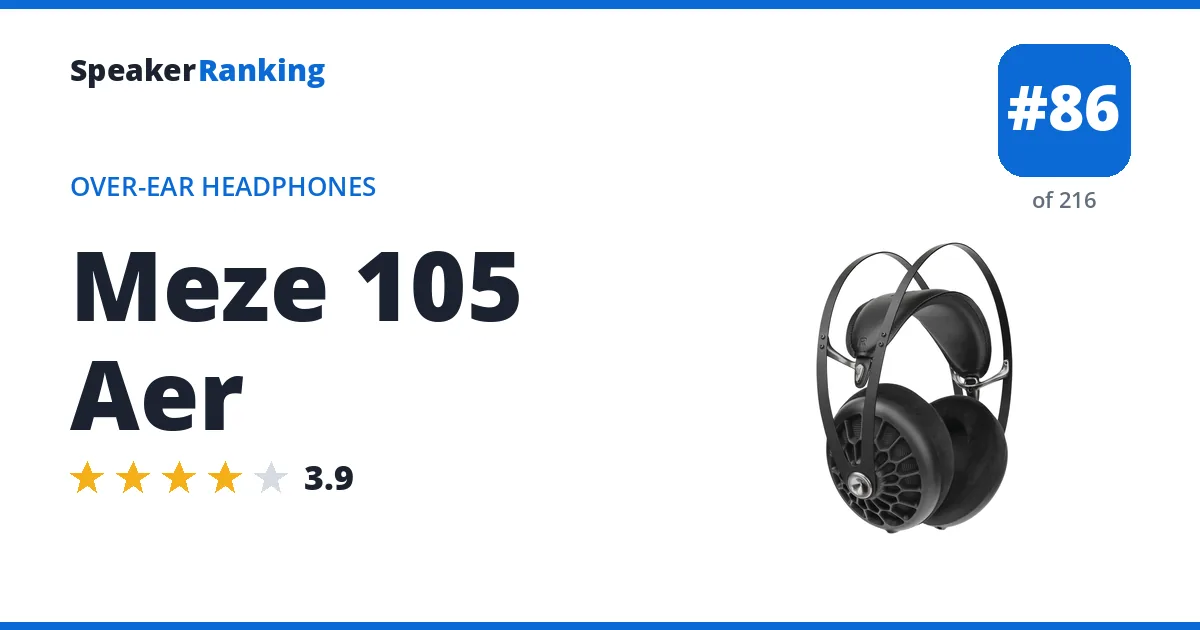
Pros: The open back tuning is warm, with bass from 60 to 200 Hz about 2 dB above target and the low mids about 1.6 dB above, so voices and instruments sound full and relaxed. Presence from 3 to 6 kHz is lifted about 2.8 dB, which adds clarity to vocals, and the preference score is 79. It uses a single 50 mm dynamic driver and matches the Sivga Luan on rating at the same price.
Cons: An 8 dB dip near 8.8 kHz and treble about 2.6 dB below target take the shimmer off cymbals and sibilance, so the top end can sound dull and veiled. A 4.4 dB peak near 4 kHz adds some forwardness to vocals. The open back leaks sound and offers no isolation.
Full Meze 105 Aer review and specifications →
| Back | Open |
|---|---|
| Connection | Wired |
| Deviation From Target | 2.15 dB standard deviation |
| Driver Type | Dynamic |
| Drivers | 1 x 50mm dynamic |
| Form Factor | Over-ear |
| Harman Preference Score | 79 (measured by oratory1990, via AutoEQ) |
| Sub-bass Extension | Within 6 dB of target down to 20 Hz (-3.1 dB at 30 Hz) |
| Tonal Tilt | -0.51 (negative is warmer, positive brighter) |
EQ preset to match the Harman target
Set a preamp of -4.9 dB, then add these filters in any parametric equalizer (Wavelet, Equalizer APO, Peace, or a player with parametric EQ). Calculated by AutoEQ from its measured frequency response.
| Filter | Frequency | Gain | Q |
|---|---|---|---|
| Low shelf | 105 Hz | +10.0 dB | 0.70 |
| Peak | 51 Hz | -8.2 dB | 0.36 |
| Peak | 1,943 Hz | +4.9 dB | 1.54 |
| Peak | 8,128 Hz | +5.6 dB | 1.84 |
| Peak | 5,283 Hz | -3.8 dB | 0.58 |
| High shelf | 10,000 Hz | -2.1 dB | 0.70 |
| Peak | 470 Hz | +0.8 dB | 2.44 |
| Peak | 4,703 Hz | +3.1 dB | 5.89 |
| Peak | 5,659 Hz | -1.5 dB | 5.63 |
| Peak | 4,063 Hz | -1.3 dB | 6.00 |
- Reviews, Comparisons and Sound Samples
- Head-to-Head Comparisons