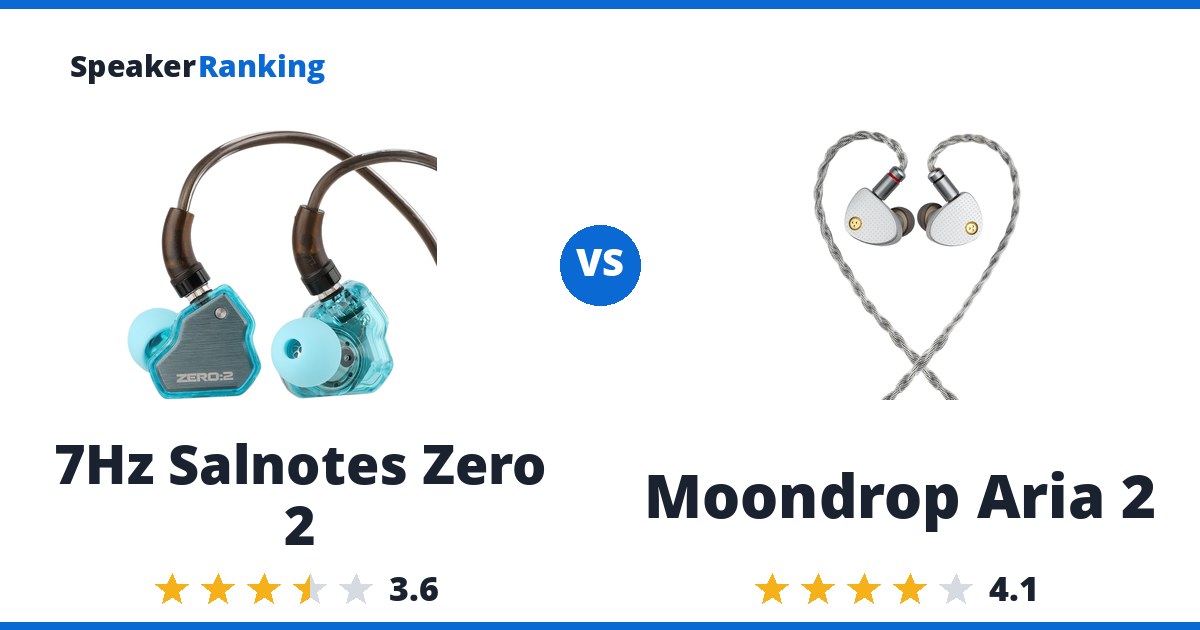
Short answer: the Moondrop Aria 2 if sound quality matters most, the 7Hz Salnotes Zero 2 if price matters most. The Moondrop Aria 2 ranks #240 of 467 in-ear headphones, rated 4.1/5, at $99.99. The 7Hz Salnotes Zero 2 ranks #360, rated 3.6/5, at $24.99, $75 cheaper.
The case for the 7Hz Salnotes Zero 2: Bass and sub-bass both run 1.5 to 1.8 dB above target in hobbyist measurements, giving a warm, full low end that suits listeners who like some extra weight. The catch: Presence falls about 4 dB below target with a 5.9 dB dip near 6 kHz, so vocals and cymbals sound recessed and a bit dull.
The Moondrop Aria 2 is the better-sounding pick. In squig.link measurements it reaches a preference score of 75 with a smooth response, deviating only about 2 dB on average from the Harman target. The tradeoff: A 4.8 dB dip near 6 kHz and presence about 2.8 dB below target take some bite and detail off snares and consonants.
Buy the 7Hz Salnotes Zero 2 when the price outweighs sound quality for you, and the Moondrop Aria 2 when sound quality outweighs the price instead.
Looking for alternatives? See the complete Headphones rankings.
Specifications Side By Side
| 7Hz Salnotes Zero 2 | Moondrop Aria 2 | |
|---|---|---|
| Price | $24.99 | $99.99 |
| Ranked | #360 of 467 in In-Ear Headphones | #240 of 467 in In-Ear Headphones |
| Form Factor | In-ear | In-ear |
| Back | Closed | Closed |
| Harman Preference Score | 69 (median of 15 squig.link measurements, calibrated to AutoEQ) | 75 (median of 22 squig.link measurements, calibrated to AutoEQ) |
| Deviation From Target | 2.11 dB standard deviation | 1.97 dB standard deviation |
| Tonal Tilt | -0.87 (negative is warmer, positive brighter) | -0.13 (negative is warmer, positive brighter) |
| Sub-bass Extension | Within 6 dB of target down to 20 Hz (+1.2 dB at 30 Hz) | Within 6 dB of target down to 20 Hz (-2.7 dB at 30 Hz) |
| Connection | Wired | Wired |
| Driver Type | Dynamic | Dynamic |
| Drivers | 1 x 10mm dynamic | 1 x 10mm dynamic |
| Impedance | 32 ohms | 33 ohms |
| Sensitivity | 108 dB/V | 122 dB/Vrms |
| Frequency Response | 10Hz - 20kHz (Manufacturer specified) | 16Hz - 22kHz (Manufacturer specified) |
| Built-in Microphone | No | No |
Related Headphone Comparisons
How Moondrop Aria 2 compares with other leading options:
- 7Hz Salnotes Zero vs 7Hz Salnotes Zero 2
- ARTTI T10 vs Simgot EG280
- KZ Zenith vs Simgot EG280
- Simgot EG280 vs Kiwi Ears Canta
- Beats Fit Pro vs Beats Studio Buds
Prices on this page were last checked October 11, 2026 at 4:59 PM UTC. Product prices and availability are accurate as of that date/time and are subject to change; the price and availability shown on Amazon at the time of purchase will apply to the purchase of this product.
As an eBay Partner, we may be compensated if you make a purchase.
The Two Headphones In Full
 7Hz Salnotes Zero 2: $24.99 Amazon $24.99 eBay
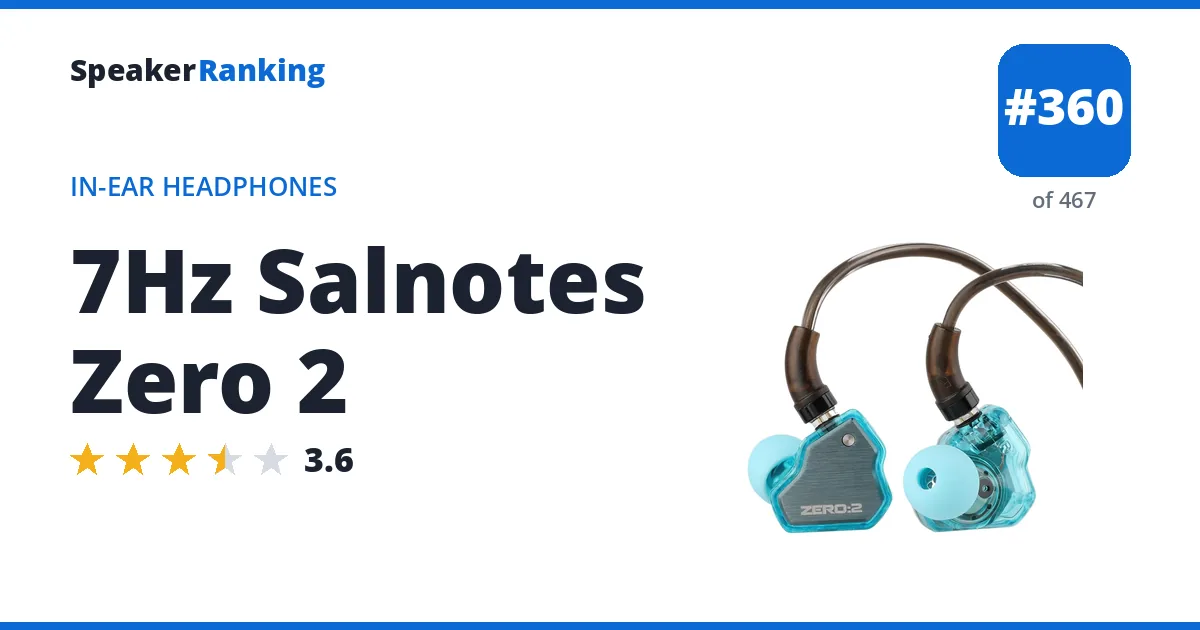
Pros: Bass and sub-bass both run 1.5 to 1.8 dB above target in hobbyist measurements, giving a warm, full low end that suits listeners who like some extra weight. The 32 ohm load is easy for a phone or laptop to drive. It earns a higher rating than the CCA CSN at a similar price.
Cons: Presence falls about 4 dB below target with a 5.9 dB dip near 6 kHz, so vocals and cymbals sound recessed and a bit dull. A preference score of 69 means the tonality is noticeably colored. The KZ ZST rates slightly higher for less money, and there is no microphone.
Full 7Hz Salnotes Zero 2 review and specifications →
| Released | 2023 (3 years ago) |
|---|---|
| Back | Closed |
| Built-in Microphone | No |
| Connection | Wired |
| Deviation From Target | 2.11 dB standard deviation |
| Driver Type | Dynamic |
| Drivers | 1 x 10mm dynamic |
| Form Factor | In-ear |
| Frequency Response | 10Hz - 20kHz (Manufacturer specified) |
| Harman Preference Score | 69 (median of 15 squig.link measurements, calibrated to AutoEQ) |
| Impedance | 32 ohms |
| Sensitivity | 108 dB/V |
| Sub-bass Extension | Within 6 dB of target down to 20 Hz (+1.2 dB at 30 Hz) |
| Tonal Tilt | -0.87 (negative is warmer, positive brighter) |
- Reviews, Comparisons and Sound Samples
- Head-to-Head Comparisons
 Moondrop Aria 2: $99.99 Amazon $99.99 eBay
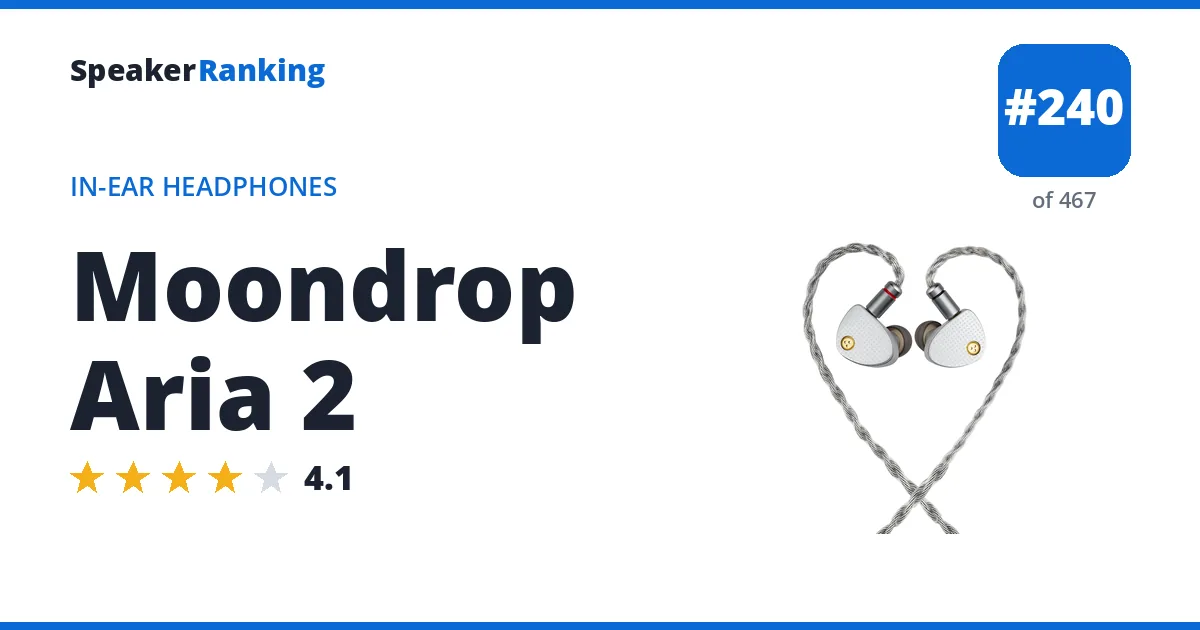
Pros: In squig.link measurements it reaches a preference score of 75 with a smooth response, deviating only about 2 dB on average from the Harman target. Bass sits about 1.4 dB above target and the upper mids land almost exactly on it, so vocals and guitars sound natural with a slightly full low end. Sensitivity of 122 dB/V and a 33 ohm load mean any phone or dongle drives it to loud levels.
Cons: A 4.8 dB dip near 6 kHz and presence about 2.8 dB below target take some bite and detail off snares and consonants. Sub-bass sits about 2.2 dB under target, so deep synth rumble is a little lighter than on a bass-focused set. There is no inline microphone for calls.
Full Moondrop Aria 2 review and specifications →
| Released | 2023 (3 years ago) |
|---|---|
| Back | Closed |
| Built-in Microphone | No |
| Connection | Wired |
| Deviation From Target | 1.97 dB standard deviation |
| Driver Type | Dynamic |
| Drivers | 1 x 10mm dynamic |
| Form Factor | In-ear |
| Frequency Response | 16Hz - 22kHz (Manufacturer specified) |
| Harman Preference Score | 75 (median of 22 squig.link measurements, calibrated to AutoEQ) |
| Impedance | 33 ohms |
| Sensitivity | 122 dB/Vrms |
| Sub-bass Extension | Within 6 dB of target down to 20 Hz (-2.7 dB at 30 Hz) |
| Tonal Tilt | -0.13 (negative is warmer, positive brighter) |
- Reviews, Comparisons and Sound Samples