Short answer: the Beats Studio Buds. It ranks #322 of 467 in-ear headphones by sound quality, rated 3.9/5, at $99.95; the Beats Fit Pro ranks #359, rated 3.6/5, and costs $124.95, so there is not much of a tradeoff to weigh.
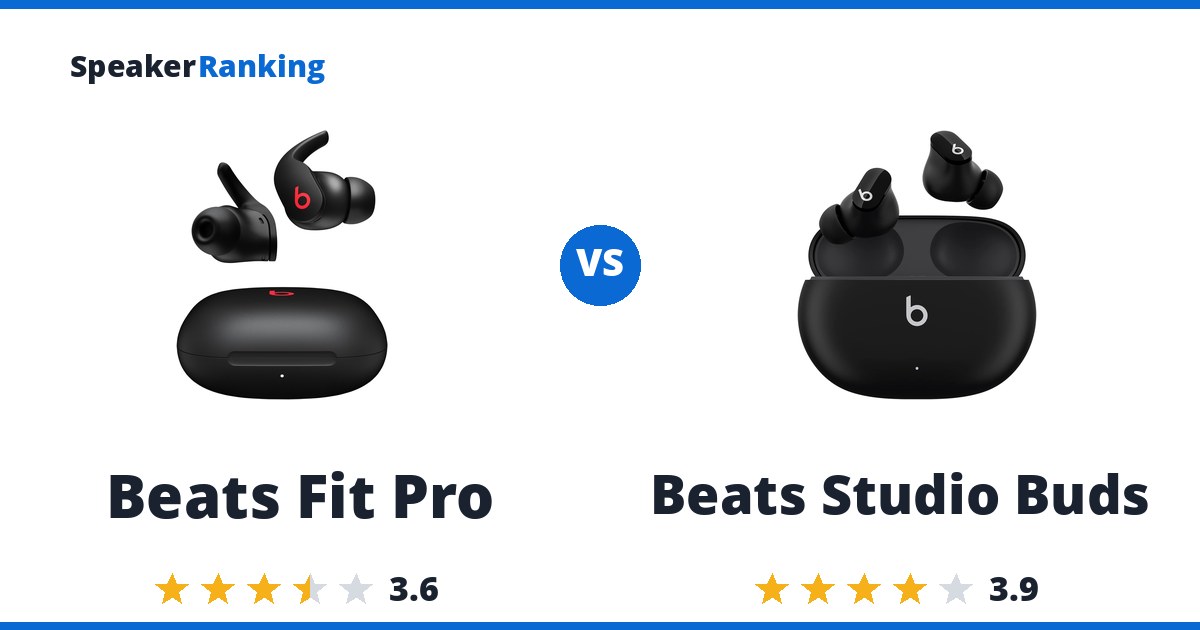
Why pick the Beats Fit Pro: In hobbyist measurements on squig.link the response tracks the Harman target evenly, with a 2.2 dB standard deviation and upper mids within 1 dB, so vocals sound clear and natural for neutral leaning listeners. The catch: Bass sits 3 to 5 dB below target from 20 to 200 Hz, so pop and hip hop sound lighter than on bass focused earbuds.
What the Beats Studio Buds does well: In oratory1990’s measurement the upper mids sit within 1 dB of target and the response holds a 2.2 dB standard deviation, so voices come through clean and forward. The tradeoff: The 60 to 200 Hz bass range sits about 4 dB below target, so bass guitar and male vocals sound leaner than the rumble down low would suggest.
Buy the Beats Studio Buds. It is rated higher for sound quality than the Beats Fit Pro and costs less, so it is the default pick unless a specific strength of the other one matters more to you.
Looking for alternatives? See the complete Headphones rankings.
Specifications Side By Side
| Beats Fit Pro | Beats Studio Buds | |
|---|---|---|
| Price | $124.95 | $99.95 |
| Ranked | #359 of 467 in In-Ear Headphones | #322 of 467 in In-Ear Headphones |
| Form Factor | In-ear | In-ear |
| Back | Closed | Closed |
| Harman Preference Score | 69 (median of 1 squig.link measurements, calibrated to AutoEQ) | 72 (measured by oratory1990, via AutoEQ) |
| Deviation From Target | 2.20 dB standard deviation | 2.22 dB standard deviation |
| Tonal Tilt | +0.78 (negative is warmer, positive brighter) | +0.13 (negative is warmer, positive brighter) |
| Sub-bass Extension | Within 6 dB of target down to 20 Hz (-4.0 dB at 30 Hz) | Within 6 dB of target down to 20 Hz (-0.8 dB at 30 Hz) |
| Connection | True wireless | True wireless |
| Weight | 0 lbs (5.6 g) per earbud | 0 lbs (5 g) per earbud |
| Active Noise Cancelling | Yes | Yes |
| Battery Life | 6 hours (24 with case, ANC on, Manufacturer specified) | 8 hours (24 with case, Manufacturer specified) |
| Bluetooth Version | 5.0 | 5.2 |
| Bluetooth Codecs | SBC, AAC | SBC, AAC |
| Built-in Microphone | Yes | Yes |
| IP Rating | IPX4 | IPX4 |
| Driver Type | - | Dynamic |
| Drivers | - | 1 x 8.2mm dynamic |
Related Headphone Comparisons
How Beats Studio Buds compares with other leading options:
- Apple AirPods Pro 3 vs Beats Fit Pro
- Beats Fit Pro vs Beats Powerbeats Pro 2
- Inawaken Dawn Mistwood vs Kiwi Ears Canta
- Inawaken Dawn Mistwood vs Melody Wings Jupiter
- Inawaken Dawn Mistwood vs KZ ZAX
Prices on this page were last checked October 11, 2026 at 4:59 PM UTC. Product prices and availability are accurate as of that date/time and are subject to change; the price and availability shown on Amazon at the time of purchase will apply to the purchase of this product.
As an eBay Partner, we may be compensated if you make a purchase.
The Two Headphones In Full
 Beats Fit Pro: $124.95 TWS Amazon $124.95 eBay
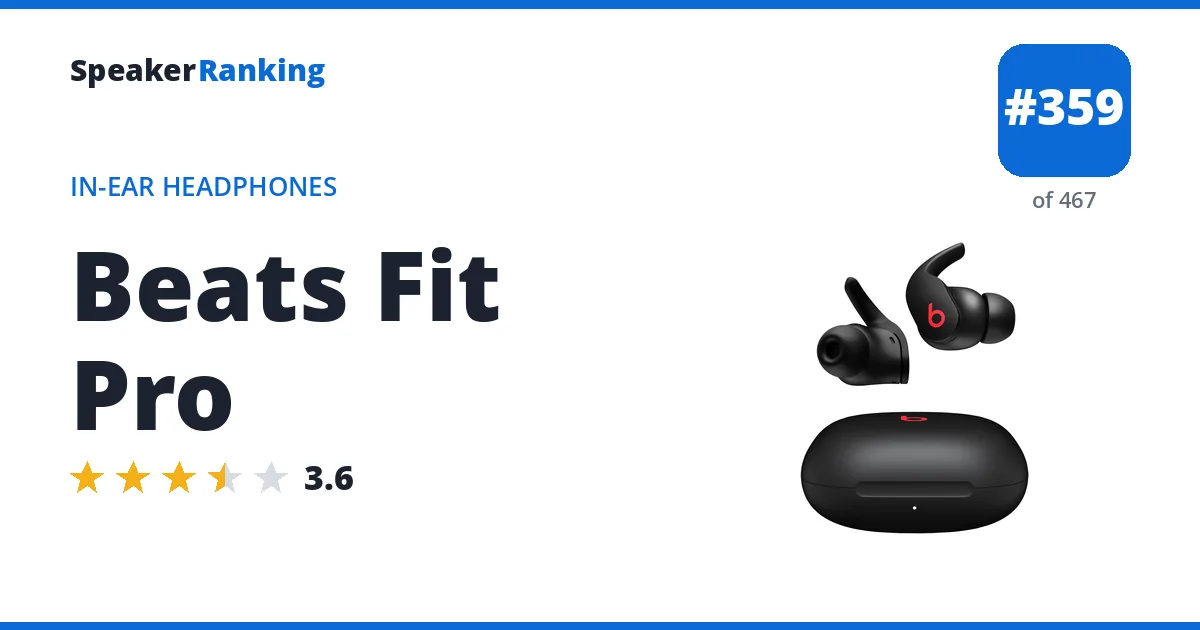
Pros: In hobbyist measurements on squig.link the response tracks the Harman target evenly, with a 2.2 dB standard deviation and upper mids within 1 dB, so vocals sound clear and natural for neutral leaning listeners. It earns a slightly higher rating than the Apple AirPods Pro 3 while costing less. Active noise cancelling, AAC support and IPX4 splash resistance cover the everyday basics.
Cons: Bass sits 3 to 5 dB below target from 20 to 200 Hz, so pop and hip hop sound lighter than on bass focused earbuds. A 6.3 dB dip near 11.2 kHz trims sparkle on cymbals, and battery life is a modest 6 hours per charge with ANC on (24 with the case).
Full Beats Fit Pro review and specifications →
| Released | Nov 2021 (4 years ago) |
|---|---|
| Active Noise Cancelling | Yes |
| Back | Closed |
| Battery Life | 6 hours (24 with case, ANC on, Manufacturer specified) |
| Bluetooth Codecs | SBC, AAC |
| Bluetooth Version | 5.0 |
| Built-in Microphone | Yes |
| Connection | True wireless |
| Deviation From Target | 2.20 dB standard deviation |
| Form Factor | In-ear |
| Harman Preference Score | 69 (median of 1 squig.link measurements, calibrated to AutoEQ) |
| IP Rating | IPX4 |
| Sub-bass Extension | Within 6 dB of target down to 20 Hz (-4.0 dB at 30 Hz) |
| Tonal Tilt | +0.78 (negative is warmer, positive brighter) |
| Weight | 0 lbs (5.6 g) per earbud |
- Reviews, Comparisons and Sound Samples
- Head-to-Head Comparisons
 Beats Studio Buds: $99.95 TWS Amazon $99.95 eBay
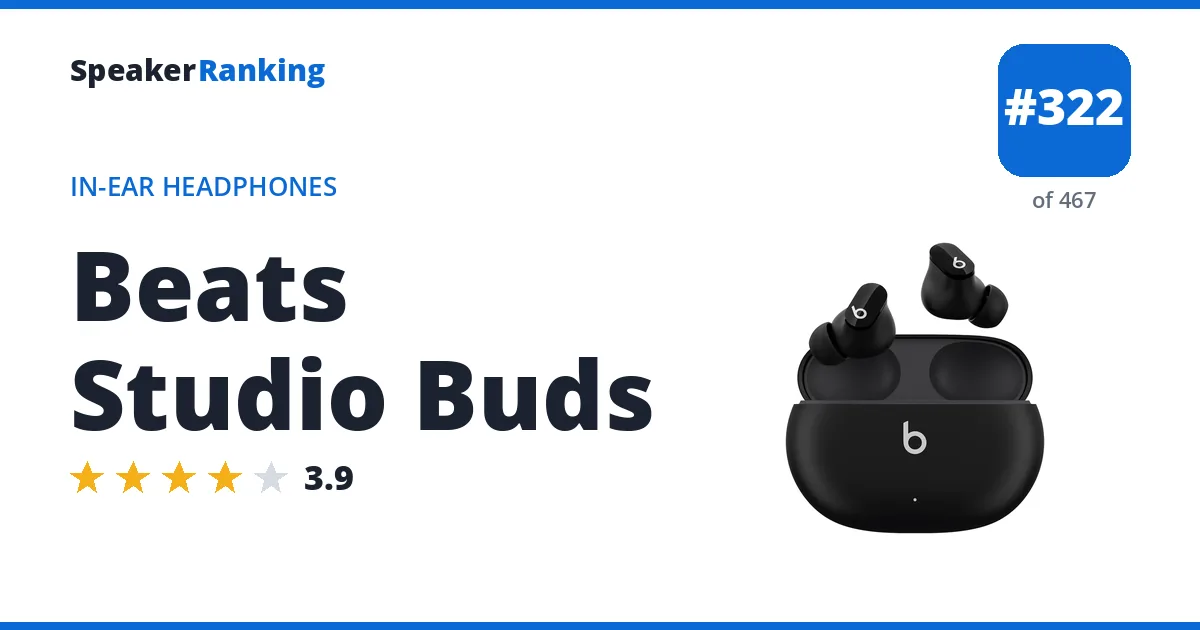
Pros: In oratory1990’s measurement the upper mids sit within 1 dB of target and the response holds a 2.2 dB standard deviation, so voices come through clean and forward. Sub-bass still reaches 30 Hz within 1 dB of target, giving kick drums a solid foundation. Active noise cancelling, 8 hours per charge (24 with the case), IPX4 splash resistance and a light 5 g earbud make it a practical daily pair.
Cons: The 60 to 200 Hz bass range sits about 4 dB below target, so bass guitar and male vocals sound leaner than the rumble down low would suggest. Treble runs about 5 dB under target from 3 to 10 kHz with a 7.5 dB dip near 6.4 kHz, which softens detail and can sound veiled. The EarFun Air Pro 4 matches its rating for less money.
Full Beats Studio Buds review and specifications →
| Released | Jun 2021 (5 years ago) |
|---|---|
| Active Noise Cancelling | Yes |
| Back | Closed |
| Battery Life | 8 hours (24 with case, Manufacturer specified) |
| Bluetooth Codecs | SBC, AAC |
| Bluetooth Version | 5.2 |
| Built-in Microphone | Yes |
| Connection | True wireless |
| Deviation From Target | 2.22 dB standard deviation |
| Driver Type | Dynamic |
| Drivers | 1 x 8.2mm dynamic |
| Form Factor | In-ear |
| Harman Preference Score | 72 (measured by oratory1990, via AutoEQ) |
| IP Rating | IPX4 |
| Sub-bass Extension | Within 6 dB of target down to 20 Hz (-0.8 dB at 30 Hz) |
| Tonal Tilt | +0.13 (negative is warmer, positive brighter) |
| Weight | 0 lbs (5 g) per earbud |
EQ preset to match the Harman target
Set a preamp of -4.3 dB, then add these filters in any parametric equalizer (Wavelet, Equalizer APO, Peace, or a player with parametric EQ). Calculated by AutoEQ from its measured frequency response.
| Filter | Frequency | Gain | Q |
|---|---|---|---|
| Low shelf | 105 Hz | -2.2 dB | 0.70 |
| Peak | 1,819 Hz | -4.7 dB | 0.74 |
| Peak | 145 Hz | +3.3 dB | 0.23 |
| Peak | 6,271 Hz | +4.8 dB | 1.67 |
| Peak | 568 Hz | -2.4 dB | 1.88 |
| High shelf | 10,000 Hz | +0.3 dB | 0.70 |
| Peak | 3,619 Hz | +2.3 dB | 4.81 |
| Peak | 2,771 Hz | -1.7 dB | 3.92 |
| Peak | 68 Hz | +0.8 dB | 1.75 |
| Peak | 127 Hz | -0.8 dB | 1.91 |
- Reviews, Comparisons and Sound Samples