Short answer: the Sennheiser HD 550. It ranks #5 of 165 over-ear headphones by sound quality, rated 4.5/5, at $199.95; the Sennheiser HD 650 ranks #37, rated 4.1/5, and costs $329.80, which makes this an easy call rather than a real tradeoff.
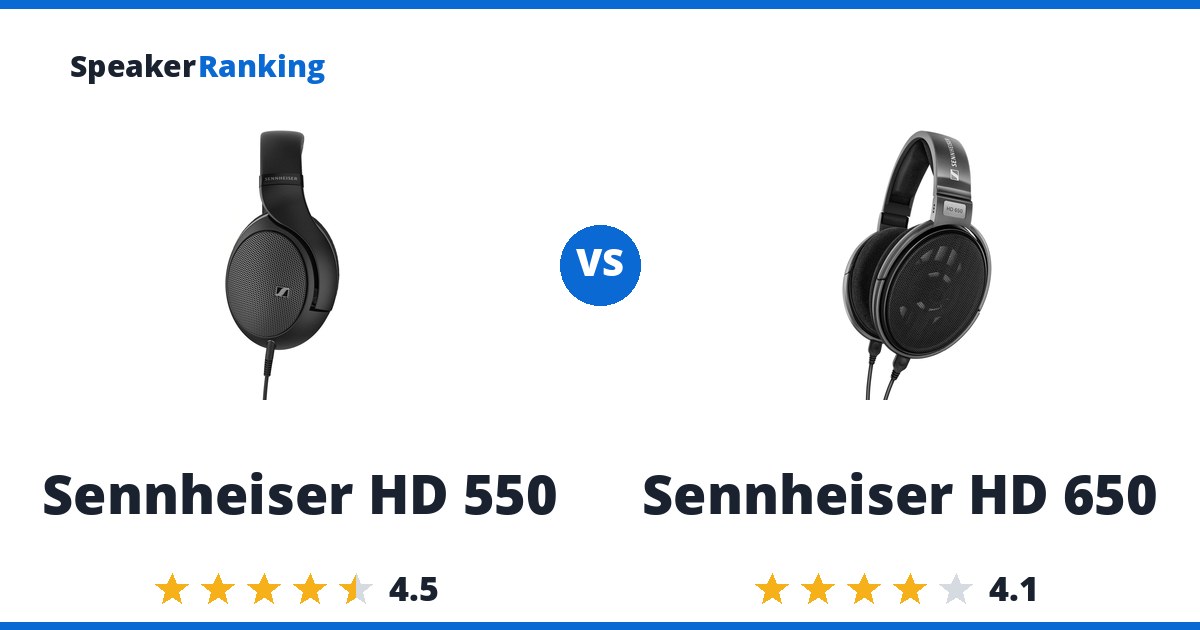
The Sennheiser HD 550 is the better-sounding pick. A preference score of 94 in oratory1990’s measurement, with only 1.63 dB of deviation and an almost perfectly neutral tilt, means voices, instruments and mixes sound natural and accurate. The catch: Sub-bass averages 6 dB below target and falls 6 dB under by 34 Hz, so deep electronic bass and organ notes lack rumble.
What the Sennheiser HD 650 does well: A preference score of 84 and a warm tilt of minus 0.27 give a relaxed, smooth sound, with bass from 60 to 200 Hz, mids and presence all within about 0.6 dB of target. The tradeoff: Sub-bass is about 7 dB under target and the 6 to 10 kHz treble is nearly 5 dB low, with a 9 dB dip near 9.3 kHz, so cymbals and air sound dull and rumble is missing.
Buy the Sennheiser HD 550. It is rated higher for sound quality than the Sennheiser HD 650 and costs less, so it is the default pick unless a specific strength of the other one matters more to you.
Want more options? Browse the full Headphones rankings.
Specifications Side By Side
| Sennheiser HD 550 | Sennheiser HD 650 | |
|---|---|---|
| Price | $199.95 | $329.80 |
| Ranked | #5 of 165 in Over-Ear Headphones | #37 of 165 in Over-Ear Headphones |
| Form Factor | Over-ear | Over-ear |
| Harman Preference Score | 94 (measured by oratory1990, via AutoEQ) | 84 (measured by oratory1990, via AutoEQ) |
| Deviation From Target | 1.63 dB standard deviation | 2.10 dB standard deviation |
| Tonal Tilt | +0.01 (negative is warmer, positive brighter) | -0.27 (negative is warmer, positive brighter) |
| Sub-bass Extension | Falls 6 dB below target at 34 Hz (-6.8 dB at 30 Hz) | Falls 6 dB below target at 40 Hz (-7.9 dB at 30 Hz) |
| Connection | Wired | Wired |
| Back | Open | Open |
| Driver Type | Dynamic | Dynamic |
| Drivers | 1 x 38mm dynamic | 1 x 42mm dynamic |
| Impedance | 150 ohms | 300 ohms |
| Sensitivity | 106.7 dB/mW | 103 dB SPL/V |
| Weight | 0.5 lbs (237 g) | 0.6 lbs (260 g) |
| Frequency Response | 6Hz - 39.5kHz (Manufacturer specified) | 10Hz - 41kHz (Manufacturer specified) |
| Built-in Microphone | No | - |
Related Headphone Comparisons
More top alternatives to Sennheiser HD 550:
- Sennheiser HD 550 vs Sennheiser HD 600
- Sennheiser HD 505 vs Sennheiser HD 550
- Sennheiser HD 550 vs Sennheiser HD 599
- Sennheiser HD 550 vs Sennheiser HD 820
- Sennheiser HD 550 vs Sennheiser HD 569
Prices on this page were last checked October 10, 2026 at 5:37 PM UTC. Product prices and availability are accurate as of that date/time and are subject to change; the price and availability shown on Amazon at the time of purchase will apply to the purchase of this product.
As an eBay Partner, we may be compensated if you make a purchase.
The Two Headphones In Full
 Sennheiser HD 550: $199.95 B&H Photo Video eBay
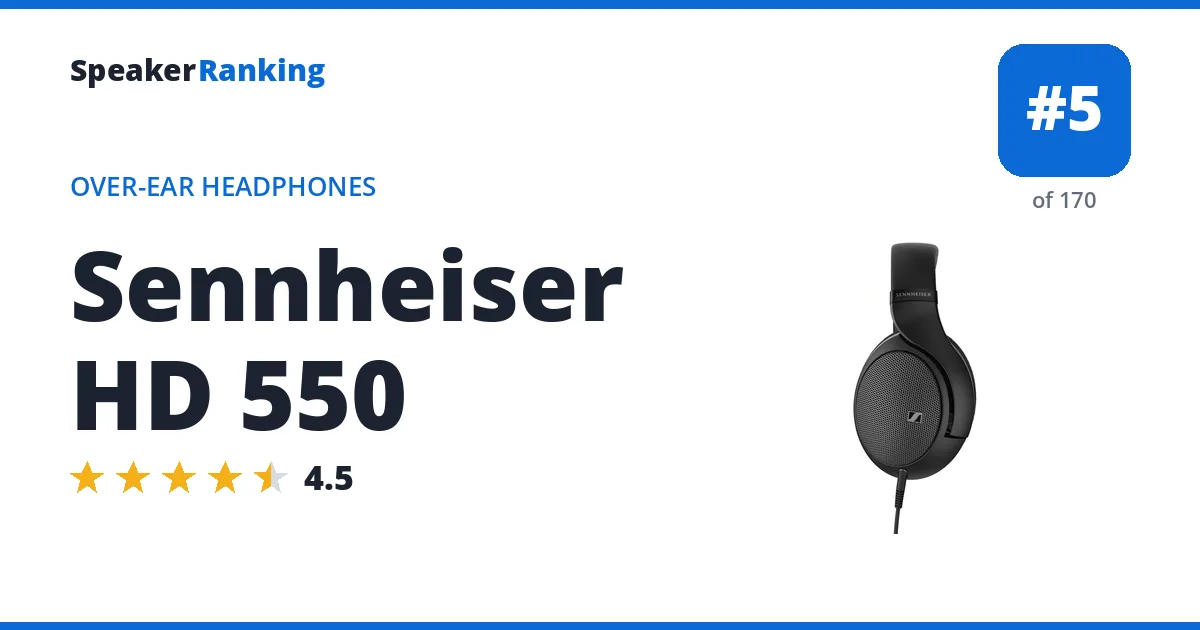
Pros: A preference score of 94 in oratory1990’s measurement, with only 1.63 dB of deviation and an almost perfectly neutral tilt, means voices, instruments and mixes sound natural and accurate. Midrange and presence stay within about 1 dB of target, so vocals are clear without any harshness. At 237 g it is light, and 106.7 dB/mW sensitivity lets it reach normal levels from most sources despite its 150 ohm impedance.
Cons: Sub-bass averages 6 dB below target and falls 6 dB under by 34 Hz, so deep electronic bass and organ notes lack rumble. A 5.9 dB dip near 9.5 kHz slightly softens cymbal shimmer, and the open back leaks sound and offers no isolation. The Philips Fidelio X2HR earns the same rating for less money.
Full Sennheiser HD 550 review and specifications →
| Released | Mar 2025 (1 year ago) |
|---|---|
| Back | Open |
| Built-in Microphone | No |
| Connection | Wired |
| Deviation From Target | 1.63 dB standard deviation |
| Driver Type | Dynamic |
| Drivers | 1 x 38mm dynamic |
| Form Factor | Over-ear |
| Frequency Response | 6Hz - 39.5kHz (Manufacturer specified) |
| Harman Preference Score | 94 (measured by oratory1990, via AutoEQ) |
| Impedance | 150 ohms |
| Sensitivity | 106.7 dB/mW |
| Sub-bass Extension | Falls 6 dB below target at 34 Hz (-6.8 dB at 30 Hz) |
| Tonal Tilt | +0.01 (negative is warmer, positive brighter) |
| Weight | 0.5 lbs (237 g) |
EQ preset to match the Harman target
Set a preamp of -6.3 dB, then add these filters in any parametric equalizer (Wavelet, Equalizer APO, Peace, or a player with parametric EQ). Calculated by AutoEQ from its measured frequency response.
| Filter | Frequency | Gain | Q |
|---|---|---|---|
| Low shelf | 105 Hz | +8.0 dB | 0.70 |
| Peak | 67 Hz | -3.4 dB | 0.34 |
| Peak | 9,968 Hz | +3.2 dB | 1.23 |
| Peak | 1,280 Hz | -2.1 dB | 1.99 |
| Peak | 2,040 Hz | +2.2 dB | 1.90 |
| High shelf | 10,000 Hz | -4.3 dB | 0.70 |
| Peak | 4,135 Hz | +2.3 dB | 5.98 |
| Peak | 5,001 Hz | -1.7 dB | 5.47 |
| Peak | 56 Hz | -0.7 dB | 2.46 |
| Peak | 83 Hz | +0.6 dB | 3.02 |
- Reviews, Comparisons and Sound Samples
- Head-to-Head Comparisons
 Sennheiser HD 650: $329.80 Amazon eBay
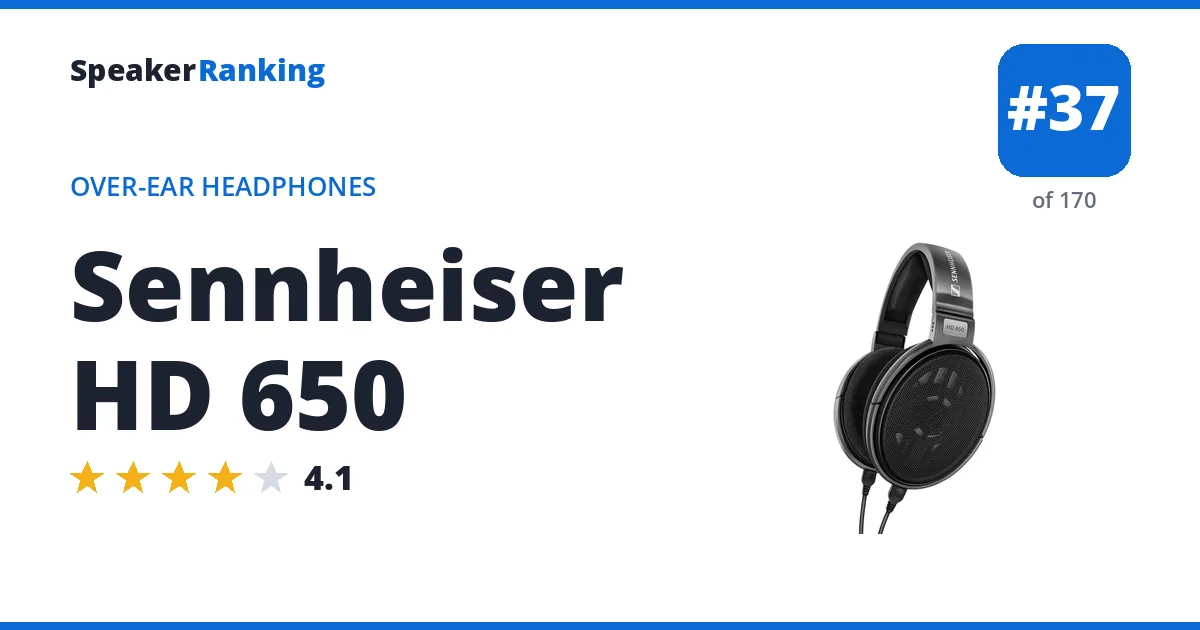
Pros: A preference score of 84 and a warm tilt of minus 0.27 give a relaxed, smooth sound, with bass from 60 to 200 Hz, mids and presence all within about 0.6 dB of target. The largest peak in the upper range is just 1.1 dB, so it avoids harshness on vocals and guitars. At 260 g it is fairly light, and it is a good match for listeners who like a warm tonality.
Cons: Sub-bass is about 7 dB under target and the 6 to 10 kHz treble is nearly 5 dB low, with a 9 dB dip near 9.3 kHz, so cymbals and air sound dull and rumble is missing. At 300 ohms it wants a dedicated headphone amp to reach its potential, and the open back leaks sound.
Full Sennheiser HD 650 review and specifications →
| Released | 2003 (23 years ago) |
|---|---|
| Back | Open |
| Connection | Wired |
| Deviation From Target | 2.10 dB standard deviation |
| Driver Type | Dynamic |
| Drivers | 1 x 42mm dynamic |
| Form Factor | Over-ear |
| Frequency Response | 10Hz - 41kHz (Manufacturer specified) |
| Harman Preference Score | 84 (measured by oratory1990, via AutoEQ) |
| Impedance | 300 ohms |
| Sensitivity | 103 dB SPL/V |
| Sub-bass Extension | Falls 6 dB below target at 40 Hz (-7.9 dB at 30 Hz) |
| Tonal Tilt | -0.27 (negative is warmer, positive brighter) |
| Weight | 0.6 lbs (260 g) |
EQ preset to match the Harman target
Set a preamp of -6.1 dB, then add these filters in any parametric equalizer (Wavelet, Equalizer APO, Peace, or a player with parametric EQ). Calculated by AutoEQ from its measured frequency response.
| Filter | Frequency | Gain | Q |
|---|---|---|---|
| Low shelf | 105 Hz | +6.4 dB | 0.70 |
| Peak | 8,800 Hz | +5.1 dB | 1.42 |
| Peak | 118 Hz | -3.1 dB | 0.50 |
| Peak | 37 Hz | +0.7 dB | 3.96 |
| Peak | 3,169 Hz | -1.7 dB | 3.89 |
| High shelf | 10,000 Hz | -2.1 dB | 0.70 |
| Peak | 1,227 Hz | -1.2 dB | 2.53 |
| Peak | 2,055 Hz | +1.2 dB | 3.23 |
| Peak | 587 Hz | +0.4 dB | 1.19 |
| Peak | 5,332 Hz | -1.1 dB | 5.75 |
- Reviews, Comparisons and Sound Samples
- Head-to-Head Comparisons