Short answer: the Sennheiser HD 505. It ranks #21 of 165 over-ear headphones by sound quality, rated 4.3/5, at $199.95; the Sennheiser HD 820 ranks #139, rated 2.7/5, and costs $1,999.95, so there is little reason to consider the other one.
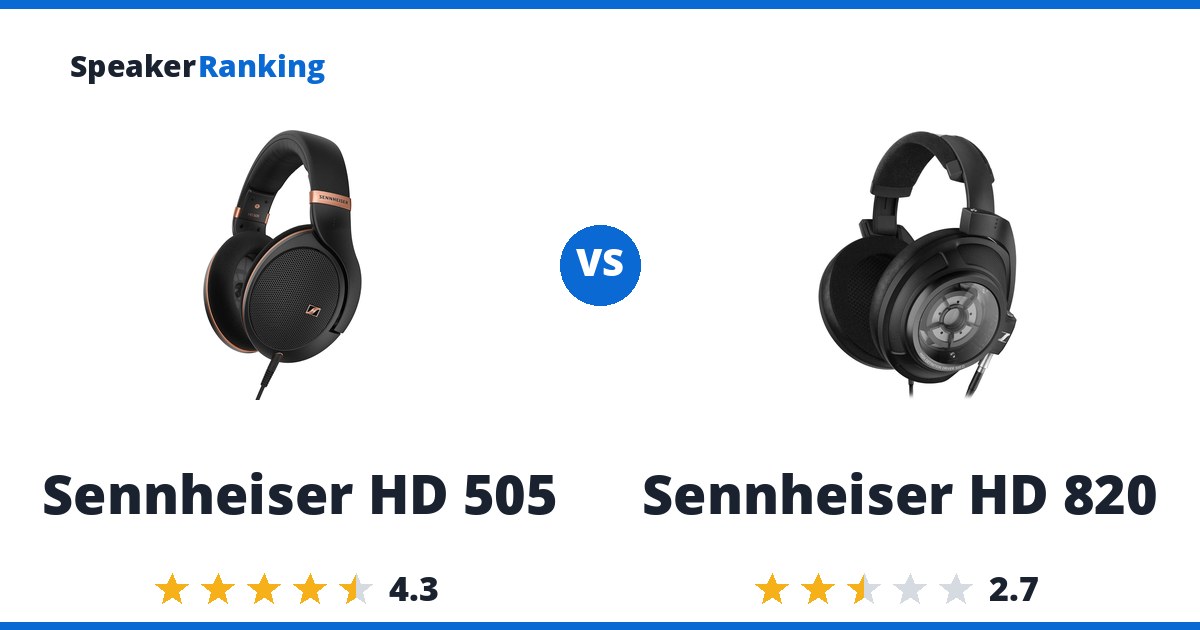
The Sennheiser HD 505 is the better-sounding choice. A preference score of 88 in oratory1990’s measurement puts it among the closest to the Harman target, with the midrange from 200 Hz to 6 kHz within about 0.5 dB of target, so vocals and instruments sound natural and unforced. The catch: Sub-bass under 60 Hz sits about 6 dB below target, so deep synth bass and kick drum weight are thin.
What the Sennheiser HD 820 does well: It is a closed back flagship, so it isolates and keeps sound in, unlike most headphones at this price. The catch: In oratory1990’s measurement presence and treble sit about 3 dB below target from 3 to 10 kHz with a 6.6 dB dip near 11.7 kHz, so cymbals and detail sound dull and veiled.
Buy the Sennheiser HD 505. It is rated higher for sound quality than the Sennheiser HD 820 and costs less, so only choose the other one for a particular feature it does better.
Want more options? Browse the full Headphones rankings.
Specifications Side By Side
| Sennheiser HD 505 | Sennheiser HD 820 | |
|---|---|---|
| Price | $199.95 | $1,999.95 |
| Ranked | #21 of 165 in Over-Ear Headphones | #139 of 165 in Over-Ear Headphones |
| Form Factor | Over-ear | Over-ear |
| Harman Preference Score | 88 (measured by oratory1990, via AutoEQ) | 52 (measured by oratory1990, via AutoEQ) |
| Deviation From Target | 1.85 dB standard deviation | 3.55 dB standard deviation |
| Tonal Tilt | +0.17 (negative is warmer, positive brighter) | -1.15 (negative is warmer, positive brighter) |
| Sub-bass Extension | Falls 6 dB below target at 32 Hz (-6.5 dB at 30 Hz) | Within 6 dB of target down to 20 Hz (+4.0 dB at 30 Hz) |
| Connection | Wired | Wired |
| Back | Open | Closed |
| Driver Type | Dynamic | Dynamic |
| Impedance | 120 ohms | 300 ohms |
| Sensitivity | 107.9 dB SPL/V | 103 dB SPL/V |
| Weight | 0.5 lbs (237 g) | 0.8 lbs (360 g) |
| Frequency Response | 12Hz - 38.5kHz (Manufacturer specified) | 12Hz - 43.8kHz (Manufacturer specified) |
| Drivers | - | 1 x 56mm dynamic |
| Built-in Microphone | - | No |
Related Headphone Comparisons
More worthwhile head-to-heads for Sennheiser HD 505:
- Sennheiser HD 505 vs Sennheiser HD 550
- Sennheiser HD 600 vs Sennheiser HD 505
- Sennheiser HD 505 vs Sennheiser HD 650
- Sennheiser HD 505 vs Sennheiser HD 599
- Sennheiser HD 505 vs Sennheiser HD 569
Prices on this page were last checked October 10, 2026 at 5:37 PM UTC. Product prices and availability are accurate as of that date/time and are subject to change; the price and availability shown on Amazon at the time of purchase will apply to the purchase of this product.
As an eBay Partner, we may be compensated if you make a purchase.
The Two Headphones In Full
 Sennheiser HD 505: $199.95 Amazon eBay
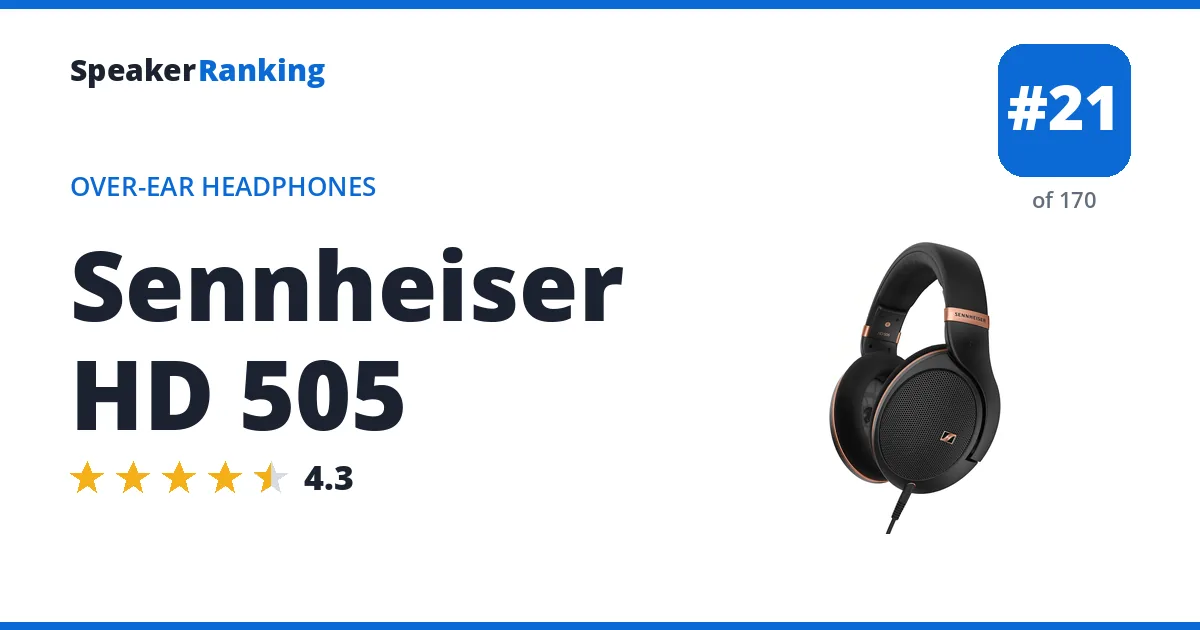
Pros: A preference score of 88 in oratory1990’s measurement puts it among the closest to the Harman target, with the midrange from 200 Hz to 6 kHz within about 0.5 dB of target, so vocals and instruments sound natural and unforced. The 120 ohm impedance and 107.9 dB per volt sensitivity let it run from a decent DAC or portable amp, and at 237 g the open-back design is light.
Cons: Sub-bass under 60 Hz sits about 6 dB below target, so deep synth bass and kick drum weight are thin. A narrow 9 dB dip near 9.9 kHz and treble running about 2.7 dB low soften cymbals and make it a little dark on airy recordings. Being open-back it leaks sound and offers no isolation.
Full Sennheiser HD 505 review and specifications →
| Back | Open |
|---|---|
| Connection | Wired |
| Deviation From Target | 1.85 dB standard deviation |
| Driver Type | Dynamic |
| Form Factor | Over-ear |
| Frequency Response | 12Hz - 38.5kHz (Manufacturer specified) |
| Harman Preference Score | 88 (measured by oratory1990, via AutoEQ) |
| Impedance | 120 ohms |
| Sensitivity | 107.9 dB SPL/V |
| Sub-bass Extension | Falls 6 dB below target at 32 Hz (-6.5 dB at 30 Hz) |
| Tonal Tilt | +0.17 (negative is warmer, positive brighter) |
| Weight | 0.5 lbs (237 g) |
EQ preset to match the Harman target
Set a preamp of -6.3 dB, then add these filters in any parametric equalizer (Wavelet, Equalizer APO, Peace, or a player with parametric EQ). Calculated by AutoEQ from its measured frequency response.
| Filter | Frequency | Gain | Q |
|---|---|---|---|
| Low shelf | 105 Hz | +7.0 dB | 0.70 |
| Peak | 9,030 Hz | +3.9 dB | 2.25 |
| Peak | 84 Hz | -2.7 dB | 0.44 |
| Peak | 560 Hz | +1.1 dB | 1.13 |
| Peak | 1,256 Hz | -1.5 dB | 1.71 |
| High shelf | 10,000 Hz | -2.5 dB | 0.70 |
| Peak | 3,218 Hz | -1.8 dB | 2.89 |
| Peak | 5,479 Hz | -2.6 dB | 4.99 |
| Peak | 4,145 Hz | +2.5 dB | 5.93 |
| Peak | 6,870 Hz | +2.4 dB | 5.70 |
- Reviews, Comparisons and Sound Samples
- Head-to-Head Comparisons
 Sennheiser HD 820: $1,999.95 Amazon eBay
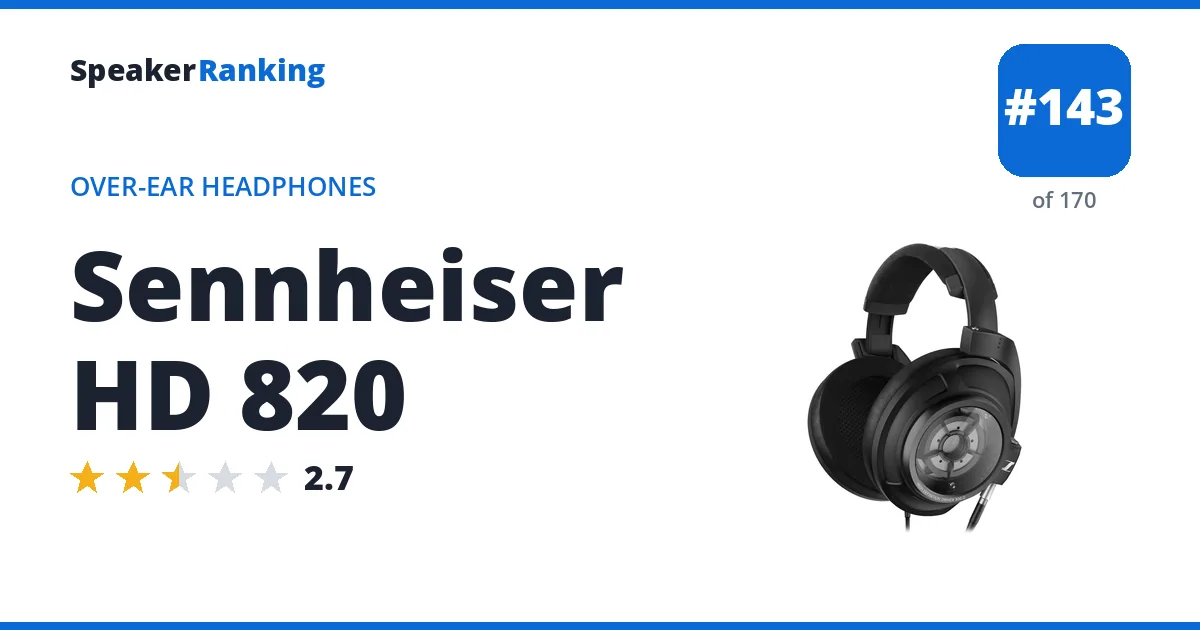
Pros: It is a closed back flagship, so it isolates and keeps sound in, unlike most headphones at this price. Bass sits 3 to 4 dB above the Harman target and holds down to 20 Hz, which suits warm and bassy taste profiles. It rates above the AKG K872 Pro and the Fostex TH900 at about the same price.
Cons: In oratory1990’s measurement presence and treble sit about 3 dB below target from 3 to 10 kHz with a 6.6 dB dip near 11.7 kHz, so cymbals and detail sound dull and veiled. The 300 ohm impedance needs a dedicated headphone amp to reach proper volume, and the Dan Clark Audio Voce and the Focal Stellia both rate higher.
Full Sennheiser HD 820 review and specifications →
| Released | 2018 (8 years ago) |
|---|---|
| Back | Closed |
| Built-in Microphone | No |
| Connection | Wired |
| Deviation From Target | 3.55 dB standard deviation |
| Driver Type | Dynamic |
| Drivers | 1 x 56mm dynamic |
| Form Factor | Over-ear |
| Frequency Response | 12Hz - 43.8kHz (Manufacturer specified) |
| Harman Preference Score | 52 (measured by oratory1990, via AutoEQ) |
| Impedance | 300 ohms |
| Sensitivity | 103 dB SPL/V |
| Sub-bass Extension | Within 6 dB of target down to 20 Hz (+4.0 dB at 30 Hz) |
| Tonal Tilt | -1.15 (negative is warmer, positive brighter) |
| Weight | 0.8 lbs (360 g) |
EQ preset to match the Harman target
Set a preamp of -6.2 dB, then add these filters in any parametric equalizer (Wavelet, Equalizer APO, Peace, or a player with parametric EQ). Calculated by AutoEQ from its measured frequency response.
| Filter | Frequency | Gain | Q |
|---|---|---|---|
| Low shelf | 105 Hz | -2.9 dB | 0.70 |
| Peak | 147 Hz | -8.6 dB | 1.79 |
| Peak | 294 Hz | +7.6 dB | 2.24 |
| Peak | 5,732 Hz | +1.8 dB | 0.18 |
| Peak | 965 Hz | -3.9 dB | 1.74 |
| High shelf | 10,000 Hz | -1.1 dB | 0.70 |
| Peak | 74 Hz | +6.7 dB | 2.74 |
| Peak | 69 Hz | -2.8 dB | 0.80 |
| Peak | 3,823 Hz | +3.6 dB | 5.33 |
| Peak | 5,091 Hz | -4.0 dB | 5.68 |
- Reviews, Comparisons and Sound Samples
- Head-to-Head Comparisons