Short answer: the PreSonus Eris Sub 8BT. It ranks #13 of 73 subwoofers by sound quality, rated 3.6/5, at $209.99. The Polk Audio PSW108 ranks #30, rated 3.4/5, at $179, $30.99 cheaper, not enough of a saving to outweigh the sound-quality gap.
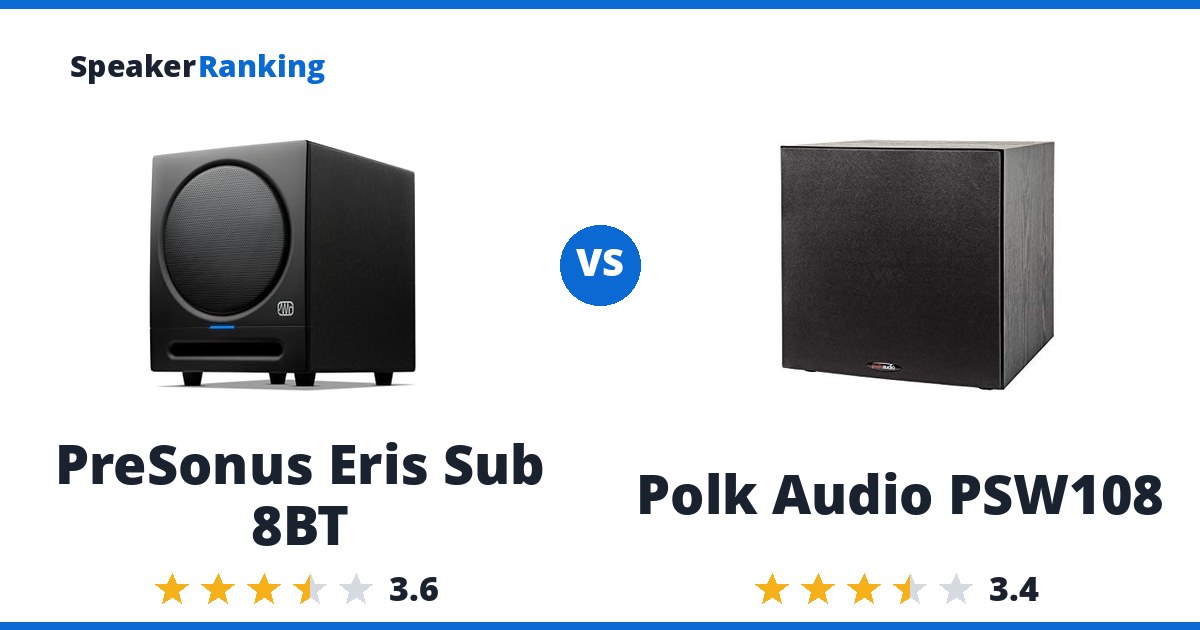
Why pick the PreSonus Eris Sub 8BT: Independent CEA-2010 testing records 77.7 dB at 20 Hz and 111.3 dB through 40-80 Hz. Watch for: Warranty is a below-average 1 year.
What the Polk Audio PSW108 does well: The cosmetic and retail refresh of Polk’s legendary PSW10 budget subwoofer. The catch: The 50W internal amplifier is modest by modern subwoofer standards and will compress or produce audible port turbulence when pushed hard on heavy movie low-frequency effects.
Buy the PreSonus Eris Sub 8BT. It is rated higher for sound quality, and the $30.99 saving on the Polk Audio PSW108 is not enough to make up the difference.
Looking for alternatives? See the complete Subwoofers rankings.
Specifications Side By Side
| PreSonus Eris Sub 8BT | Polk Audio PSW108 | |
|---|---|---|
| Price | $209.99 | $179.00 each |
| Ranked | #13 of 73 in Small Home Subwoofers (Under 30 lbs) | #30 of 73 in Small Home Subwoofers (Under 30 lbs) |
| Enclosure | ported | Ported, front-firing port |
| Output SPL at 20 Hz | 77.7 dB | - |
| Output SPL at 25 Hz | 93.5 dB | - |
| Output SPL at 31.5 Hz | 99.6 dB | 96.1 dB |
| Output SPL at 40 Hz | 105.7 dB | 104.7 dB |
| Output SPL at 50 Hz | 109.4 dB | 109.7 dB |
| Output SPL at 63 Hz | 115.0 dB | 113.8 dB |
| Output SPL at 80 Hz | 115.3 dB | 113.1 dB |
| CEA-2010-A Average (40-80Hz) | 111.3 dB | 110.3 dB |
| Dimensions | 11.7”H x 9.8”W x 12.7”D (297.9 x 249.9 x 323.1 mm) | 14.4” x 14” x 16.1” (365 x 356 x 409 mm) |
| Weight | 16.3 lbs (7.4 kg) | 26 lbs (11.8 kg) |
| Warranty | 1 | 5/3 |
| Measurement Source | Brent Butterworth | ErinsAudioCorner |
| Drivers | 8” (203mm) driver | 10” dynamic balance polymer composite woofer |
| Country | China | United States |
| Amplifier Power | - | 50W RMS, 100W peak |
| Bass Extension (-3dB) | - | 35Hz (Manufacturer specified) |
| Crossover Frequency | - | 80Hz - 160Hz variable |
| Frequency Response | - | 35Hz - 200Hz (-3dB, Manufacturer specified) |
| Inputs | - | RCA line in, speaker-level spring terminals |
| Output SPL at 100 Hz | - | 112.2 dB |
| Output SPL at 125 Hz | - | 110.7 dB |
| Phase Control | - | 0° / 180° switch |
| RCA Input | - | Yes |
Related Speaker Comparisons
More top alternatives to PreSonus Eris Sub 8BT:
- Edifier T5s vs PreSonus Eris Sub 8BT
- Dayton Audio CS1000 vs PreSonus Eris Sub 8BT
- PreSonus Eris Sub 8BT vs Dayton Audio MKSX4
- PreSonus Eris Sub 8BT vs Klipsch Flexus Sub 100
- PreSonus Eris Sub 8BT vs Dayton Audio SUB-1000L
Prices on this page were last checked October 11, 2026 at 4:59 PM UTC. Product prices and availability are accurate as of that date/time and are subject to change; the price and availability shown on Amazon at the time of purchase will apply to the purchase of this product.
As an eBay Partner, we may be compensated if you make a purchase.
The Two Speakers In Full
 PreSonus Eris Sub 8BT: $209.99 Amazon eBay
Same family: the PreSonus Eris E3.5 2nd Gen (bookshelf, rated 2.5/5). See every PreSonus Eris generation.
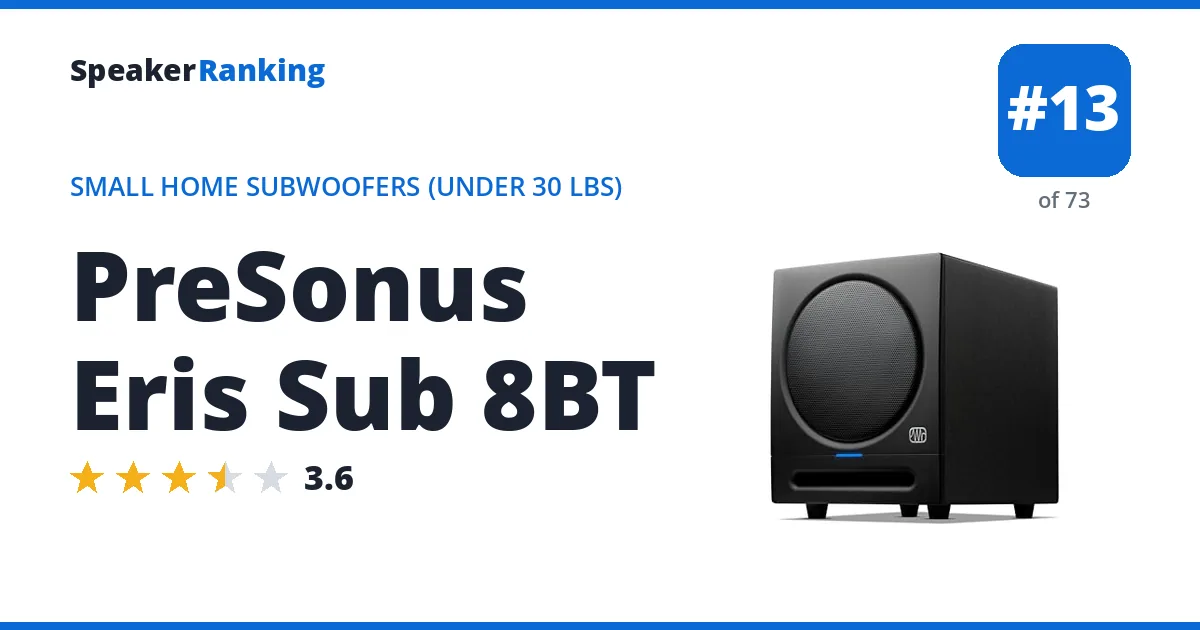
Pros: Independent CEA-2010 testing records 77.7 dB at 20 Hz and 111.3 dB through 40-80 Hz. The ported enclosure with an 8” driver suits a small room or desktop-adjacent setup.
Cons: Warranty is a below-average 1 year. The 297.9H x 249.9W x 323.1D mm cabinet and 7.4 kg mass still need deliberate placement.
Full PreSonus Eris Sub 8BT review and specifications →
| Released | Nov 2023 (2 years ago) |
|---|---|
| CEA-2010-A Average (40-80Hz) | 111.3 dB |
| Country | China |
| Dimensions | 11.7”H x 9.8”W x 12.7”D (297.9 x 249.9 x 323.1 mm) |
| Drivers | 8” (203mm) driver |
| Enclosure | ported |
| Measurement Source | Brent Butterworth |
| Output SPL at 20 Hz | 77.7 dB |
| Output SPL at 25 Hz | 93.5 dB |
| Output SPL at 31.5 Hz | 99.6 dB |
| Output SPL at 40 Hz | 105.7 dB |
| Output SPL at 50 Hz | 109.4 dB |
| Output SPL at 63 Hz | 115.0 dB |
| Output SPL at 80 Hz | 115.3 dB |
| Warranty | 1 |
| Weight | 16.3 lbs (7.4 kg) |
- Links
- Reviews, Comparisons and Sound Samples
- Independently measured by Brent Butterworth; the published figures above come from this ASR subwoofer measurement thread.
- Head-to-Head Comparisons
 Polk Audio PSW108: $179.00 each Amazon eBay
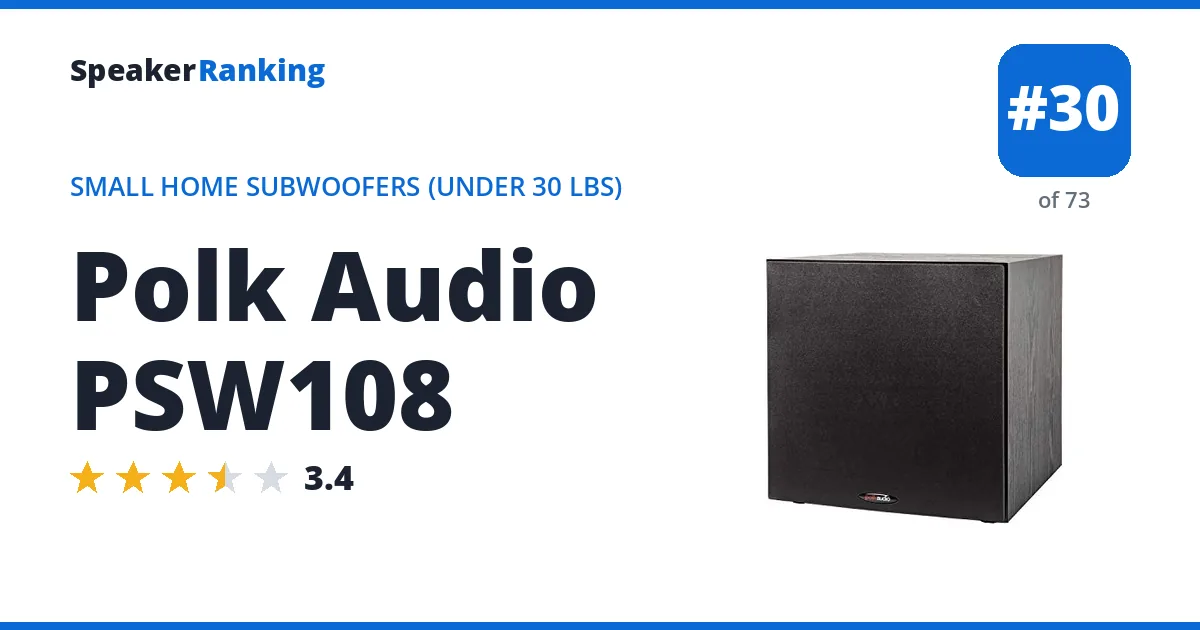
Pros: The cosmetic and retail refresh of Polk’s legendary PSW10 budget subwoofer. Pairs a 10-inch dynamic balance polymer composite woofer with a 50W RMS / 100W peak Class A/B amplifier and front-firing tuned port. Clean, compact black vinyl cabinet fits easily into tight living spaces or corners, providing noticeable bass fullness down to 35Hz for budget music and home theater systems. Includes both RCA line-level inputs and speaker-level binding posts for easy integration with vintage receivers lacking a dedicated sub out.
Cons: The 50W internal amplifier is modest by modern subwoofer standards and will compress or produce audible port turbulence when pushed hard on heavy movie low-frequency effects. Bass extension drops off rapidly below 35Hz.
Full Polk Audio PSW108 review and specifications →
| Amplifier Power | 50W RMS, 100W peak |
|---|---|
| Bass Extension (-3dB) | 35Hz (Manufacturer specified) |
| CEA-2010-A Average (40-80Hz) | 110.3 dB |
| Country | United States |
| Crossover Frequency | 80Hz - 160Hz variable |
| Dimensions | 14.4” x 14” x 16.1” (365 x 356 x 409 mm) |
| Drivers | 10” dynamic balance polymer composite woofer |
| Enclosure | Ported, front-firing port |
| Frequency Response | 35Hz - 200Hz (-3dB, Manufacturer specified) |
| Inputs | RCA line in, speaker-level spring terminals |
| Measurement Source | ErinsAudioCorner |
| Output SPL at 31.5 Hz | 96.1 dB |
| Output SPL at 40 Hz | 104.7 dB |
| Output SPL at 50 Hz | 109.7 dB |
| Output SPL at 63 Hz | 113.8 dB |
| Output SPL at 80 Hz | 113.1 dB |
| Output SPL at 100 Hz | 112.2 dB |
| Output SPL at 125 Hz | 110.7 dB |
| Phase Control | 0° / 180° switch |
| RCA Input | Yes |
| Warranty | 5/3 |
| Weight | 26 lbs (11.8 kg) |
- Links
- Reviews, Comparisons and Sound Samples
- Head-to-Head Comparisons