Short answer: the Moondrop Aria 2, if you are buying new. The Moondrop Aria ranks higher than it (#114 vs #259 of 584 in-ear headphones, 4.4/5 vs 4.1/5) but is discontinued, so only consider it used; the Moondrop Aria 2 is still sold new at $99.99.
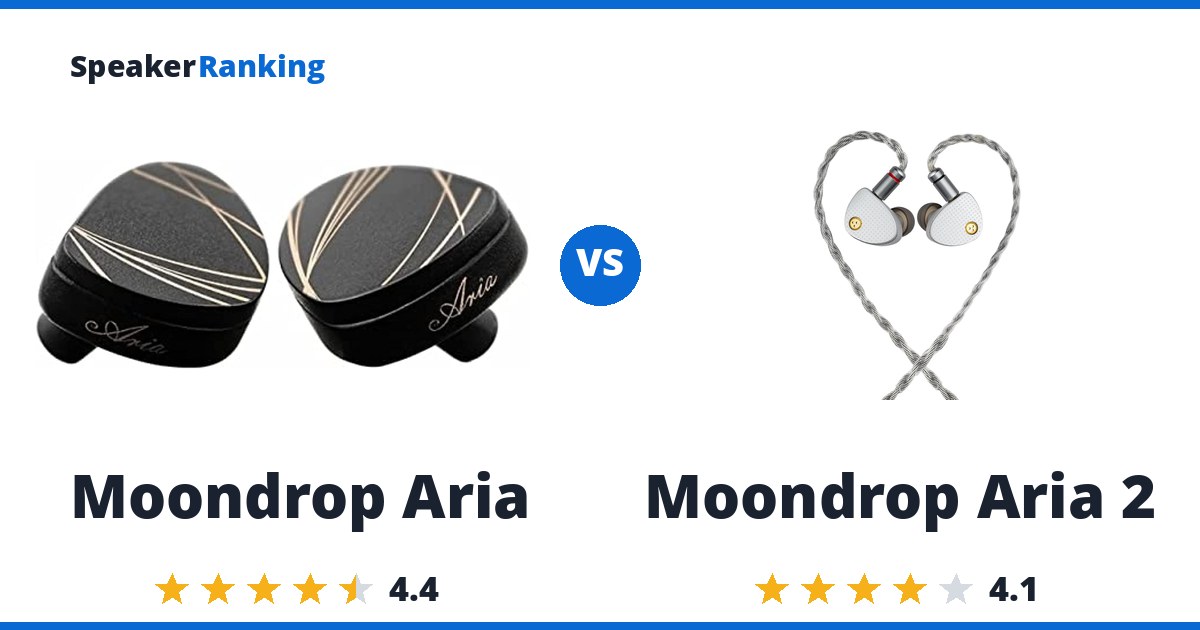
The Moondrop Aria is the better-sounding pick. A budget favorite that scores 79 with a 1.61 dB spread: warm bass about 2 dB above target, accurate mids and a little extra upper air. Watch for: Discontinued and replaced by the Moondrop Aria 2.
Why pick the Moondrop Aria 2: In squig.link measurements it reaches a preference score of 75 with a smooth response, deviating only about 2 dB on average from the Harman target. The tradeoff: A 4.8 dB dip near 6 kHz and presence about 2.8 dB below target take some bite and detail off snares and consonants.
Buy the Moondrop Aria 2 if you want one new; the Moondrop Aria is discontinued, so only look for it used.
Looking for alternatives? See the complete Headphones rankings.
Specifications Side By Side
| Moondrop Aria | Moondrop Aria 2 | |
|---|---|---|
| Price | Discontinued | $99.99 |
| Ranked | #114 of 584 in In-Ear Headphones | #259 of 584 in In-Ear Headphones |
| Form Factor | In-ear | In-ear |
| Back | Closed | Closed |
| Connection | Wired | Wired |
| Driver Type | Dynamic | Dynamic |
| Drivers | 1 x 10mm dynamic (LCP diaphragm) | 1 x 10mm dynamic |
| Impedance | 32 ohms | 33 ohms |
| Sensitivity | 122 dB/Vrms | 122 dB/Vrms |
| Frequency Response | 5Hz - 36kHz (Manufacturer specified) | 16Hz - 22kHz (Manufacturer specified) |
| Harman Preference Score | 79 (measured by oratory1990, via AutoEQ) | 75 (median of 22 squig.link measurements, calibrated to AutoEQ) |
| Deviation From Target | 1.61 dB standard deviation | 1.97 dB standard deviation |
| Tonal Tilt | -0.46 (negative is warmer, positive brighter) | -0.13 (negative is warmer, positive brighter) |
| Sub-bass Extension | Within 6 dB of target down to 20 Hz (-0.6 dB at 30 Hz) | Within 6 dB of target down to 20 Hz (-2.7 dB at 30 Hz) |
| Built-in Microphone | - | No |
Related Headphone Comparisons
More worthwhile head-to-heads for Moondrop Aria:
- 7Hz x Crinacle Zero 2 vs Moondrop Aria 2
- Oriveti Bleqk Lowmaster vs Colorfly Silver Reference
- Oriveti Bleqk Lowmaster vs Etymotic ER2XR
- 7Hz Divine vs Oriveti Bleqk Lowmaster
- Oriveti Bleqk Lowmaster vs Twistura Woodnote
Prices on this page were last checked October 12, 2026 at 4:13 PM UTC. Product prices and availability are accurate as of that date/time and are subject to change; the price and availability shown on Amazon at the time of purchase will apply to the purchase of this product.
As an eBay Partner, we may be compensated if you make a purchase.
The Two Headphones In Full
 Moondrop Aria Discontinued eBay
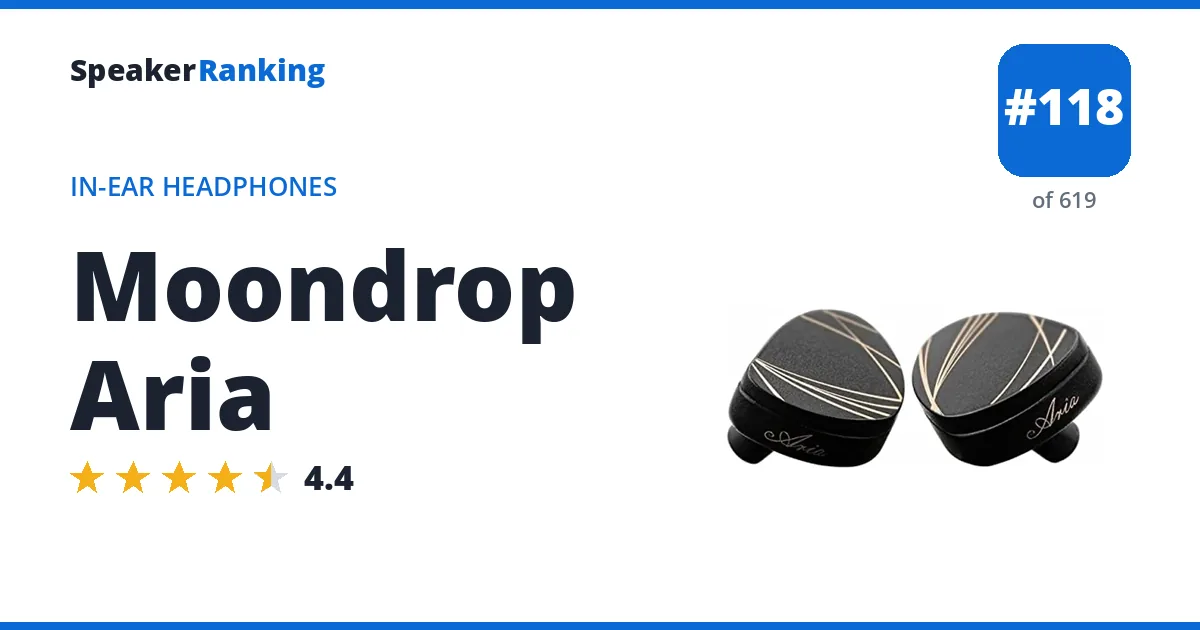
Newer model: the Moondrop Aria 2, ranked lower, rated 4.1/5, released 2023. See every Moondrop Aria generation.
Pros: A budget favorite that scores 79 with a 1.61 dB spread: warm bass about 2 dB above target, accurate mids and a little extra upper air. The LCP dynamic driver extends to 20 Hz.
Cons: Discontinued and replaced by the Moondrop Aria 2. Presence dips about 2 dB with a 4 dB low point near 6.3 kHz, so it sounds slightly relaxed rather than detailed.
Full Moondrop Aria review and specifications →
| Released | 2021 (5 years ago) |
|---|---|
| Back | Closed |
| Connection | Wired |
| Deviation From Target | 1.61 dB standard deviation |
| Driver Type | Dynamic |
| Drivers | 1 x 10mm dynamic (LCP diaphragm) |
| Form Factor | In-ear |
| Frequency Response | 5Hz - 36kHz (Manufacturer specified) |
| Harman Preference Score | 79 (measured by oratory1990, via AutoEQ) |
| Impedance | 32 ohms |
| Sensitivity | 122 dB/Vrms |
| Sub-bass Extension | Within 6 dB of target down to 20 Hz (-0.6 dB at 30 Hz) |
| Tonal Tilt | -0.46 (negative is warmer, positive brighter) |
EQ preset to match the Harman target
Set a preamp of -3.4 dB, then add these filters in any parametric equalizer (Wavelet, Equalizer APO, Peace, or a player with parametric EQ). Calculated by AutoEQ from its measured frequency response.
| Filter | Frequency | Gain | Q |
|---|---|---|---|
| Low shelf | 105 Hz | -0.2 dB | 0.70 |
| Peak | 164 Hz | -2.6 dB | 0.92 |
| Peak | 6,460 Hz | +3.5 dB | 2.43 |
| Peak | 659 Hz | +1.4 dB | 1.59 |
| Peak | 3,108 Hz | +0.5 dB | 1.51 |
| High shelf | 10,000 Hz | -5.3 dB | 0.70 |
| Peak | 8,665 Hz | +2.1 dB | 2.79 |
| Peak | 1,408 Hz | -0.5 dB | 2.30 |
| Peak | 54 Hz | +0.9 dB | 5.32 |
| Peak | 31 Hz | -0.4 dB | 2.21 |
- Reviews, Comparisons and Sound Samples
 Moondrop Aria 2: $99.99 Amazon $99.99 eBay
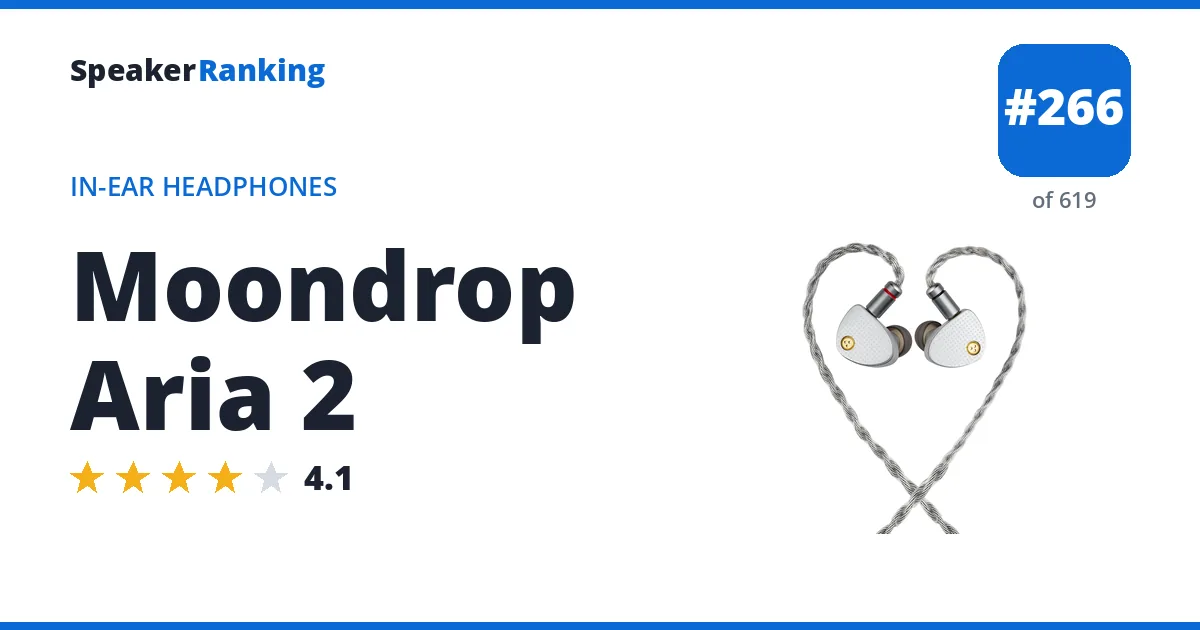
Older model: the Moondrop Aria (ranked higher, rated 4.4/5). See every Moondrop Aria generation.
Pros: In squig.link measurements it reaches a preference score of 75 with a smooth response, deviating only about 2 dB on average from the Harman target. Bass sits about 1.4 dB above target and the upper mids land almost exactly on it, so vocals and guitars sound natural with a slightly full low end. Sensitivity of 122 dB/V and a 33 ohm load mean any phone or dongle drives it to loud levels.
Cons: A 4.8 dB dip near 6 kHz and presence about 2.8 dB below target take some bite and detail off snares and consonants. Sub-bass sits about 2.2 dB under target, so deep synth rumble is a little lighter than on a bass-focused set. There is no inline microphone for calls.
Full Moondrop Aria 2 review and specifications →
| Released | 2023 (3 years ago) |
|---|---|
| Back | Closed |
| Built-in Microphone | No |
| Connection | Wired |
| Deviation From Target | 1.97 dB standard deviation |
| Driver Type | Dynamic |
| Drivers | 1 x 10mm dynamic |
| Form Factor | In-ear |
| Frequency Response | 16Hz - 22kHz (Manufacturer specified) |
| Harman Preference Score | 75 (median of 22 squig.link measurements, calibrated to AutoEQ) |
| Impedance | 33 ohms |
| Sensitivity | 122 dB/Vrms |
| Sub-bass Extension | Within 6 dB of target down to 20 Hz (-2.7 dB at 30 Hz) |
| Tonal Tilt | -0.13 (negative is warmer, positive brighter) |
- Reviews, Comparisons and Sound Samples
- Head-to-Head Comparisons